There’s a quiet moment in meaningful work when your idea begins to live in someone else. You see it in the way they talk about it. You hear it in their enthusiasm. You notice how they add their experience and their language to it until the idea carries their imprint as much as yours.
It can feel strange the first time it happens. You know the origin, but they suddenly feel the spark of the idea for themselves. That’s the moment you know your idea has begun to grow.
Real success often arrives like this, but we don’t always notice it. People begin to adopt your idea, reshape it, and eventually believe in it with a conviction that can be surprising. They explain it to others in their own voice. They defend it. They improve it. If the idea spreads far enough, some will forget where it began. Your name may fade from the origin story. That loss of attribution can sting if you hold the idea too tightly. It should feel like success instead.
Leaders have a responsibility here. Ideas rarely spread through logic alone. They spread through emotional ownership that grows when people discover a piece of themselves in the idea. When that happens, they carry the idea farther than you ever could by insisting on authorship.
A leader’s task is to create the conditions for this transfer. You offer the early shape of the idea, then invite others to step inside and help build the next version. You ask for their insight, their experience, and their concerns. You let their fingerprints gather on the surface until the idea becomes a shared creation. People support what they help to shape.
As others begin to adopt your idea, they’ll need to feel safety in their new enthusiasm. They need to know they’re not the only ones who believe in this direction. A wise leader pays attention to this. They take the people who have embraced their idea and introduce them to others who have done the same. They form new connections, helping to create a small community where confidence strengthens and courage grows. When people see others adopting the same idea, they feel validated, understood, and ready to act.
This is how ideas gain momentum inside organizations. One person sees the promise. Another begins to shape it. A third begins to feel inspired. Before long, it becomes a shared narrative. It starts with your imagination, but it continues through their belief and conviction.
Once people begin to adopt your idea, you must release it. You may or may not receive credit for it. Either outcome is acceptable.
The goal was never to build a monument to your creativity. The goal was to move the organization forward. When others bring your idea into new conversations without you, your contribution has done its job.
Your attention can return to the horizon. There’s always another idea waiting for you, another possibility that needs your curiosity, another problem that needs new framing.
Good leaders plant seeds. Great leaders celebrate when those seeds take root across the organization.
Inspired by Dr. Michael Levin’s post, h/t – Tim Ferriss
Photo by Alex Beauchamp on Unsplash – a new idea taking root and growing beyond its beginning.
Imagine owning a well-trained thoroughbred racehorse. Born and bred for speed, this horse thrives on competition and lives to run fast.
Every day, six days a week, this horse trains relentlessly. It has one purpose and one passion: running and winning races. Nothing else matters.
But on race day, you grow cautious. You worry, despite all the training, despite the horse’s proven skill, that it might not pace itself properly. So, you ask the jockey to override its instinct to run fast. You instruct the jockey to hold back the reins from the start.
As the race unfolds, your horse struggles against this restraint. Instead of feeling exhilarated, it grows frustrated. Its natural drive diminishes with each stride as the jockey pulls back, second-guessing the horse’s desire to run.
Finally, as the last turn approaches, the jockey releases the reins and shouts encouragement. It’s time to unleash all that pent-up speed.
But the horse no longer cares. He’s not even paying attention. He lost his competitive edge about a half mile ago as the jockey kept holding him back. Sure, the horse goes through the motions, picking up just enough speed to appear engaged, to show respect for the jockey’s urging. But the spark is gone.
This is a very fast horse, so even his partial effort makes for a close finish. But unfortunately, the horse doesn’t win the race. One he could have easily won if he hadn’t been held back from the start.
If you’re a manager, how often do you treat your employees like this horse? How often do you hold them back from doing the very thing you hired them to do? Do you second-guess their instincts, micromanage their decisions, and restrain their natural abilities out of fear, caution, or to protect your ego?
Consider how demoralizing it is for your team when you take away their autonomy. The freedom to run their own race. When employees lose the ability to make meaningful decisions, their enthusiasm, creativity, and ownership suffer. These are the very qualities that fuel success, and when suppressed, diminish the team’s potential and their performance.
Take a look around your organization. Are your people fully engaged, and running with purpose? Or have you inadvertently drained their passion and energy by holding them back?
There’s something else that’s easy to overlook. When you don’t allow your people to take on challenges, make decisions, and occasionally stumble, you’re not just holding them back today. You’re limiting who they can become tomorrow. Without the opportunity to stretch, fail, and grow, your employees can’t develop the judgment and endurance that leadership demands.
Playing it safe and keeping them on a tight rein risks weakening your bench strength and jeopardizing your organization’s ability to thrive in the future. We’re not just running one race; we’re running a never-ending series of tough races that stretch out long into the future.
Imagine how powerful your organization could be if you simply let your thoroughbreds—all the talent and skills you’ve carefully assembled—run their races the way they know best. Imagine letting them succeed and fail with your support, as part of your team, and not just your assistant waiting for you to make all the decisions.
It’s time to loosen the reins and let the ponies run. Because if you don’t, they might find somewhere else where they can.
Thought leaders play a critical role in any organization. Sometimes, they have titles like CEO, COO, CIO, etc. Other times, the real thought leaders are deep within the organization—formally or informally influencing the speed and direction of progress. Often, it’s a mix of both (most ideal, in my opinion).
It doesn’t take long working with people (in business or everyday life) to recognize some common personality types. See if any of these sound familiar:
The Opportunist – “What’s in it for me?”
The Rule Follower – “What will our boss think?”
The Naysayer – “Let me tell you all the ways this won’t work.”
The Over-Analyzer – “Shouldn’t we think about this more?”
The Idea Generator – ”What about this new approach to the problem?”
The Go-Getter – “Why are we sitting here doing nothing… let’s move!”
The Rebel – “Who cares what the boss thinks?”
The Doer – “We’ve got all we need, so let’s start.”
The Supporter – “How can I help you with your goals?”
The Invisible Worker – “I don’t want to get noticed.”
The Minimalist – “How can I get by doing the least amount of work?”
The Escape Artist – “If this goes wrong, I wasn’t here.”
Which one is best?
That depends on the situation.
I tend to gravitate toward those who accept responsibility, take risks, and aggressively seek solutions. I like working with people who act first, ask for forgiveness later, and push organizations toward innovation and progress.
But even the most action-driven person benefits from a counterbalance. Someone who asks the tough questions, who sees the risks, who insists on analyzing every angle. Their input can temper an ambitious plan, provide a broader perspective, and uncover blind spots the team might otherwise miss.
Too many cautious over-analyzers, and an organization stalls. But completely ignoring their input? That’s a recipe for reckless decision making.
Look around your organization, your circle of friends, and the people you admire. How many of them fit into one or more of these categories? More importantly, which one(s) fits you?
And if you’re building a team for your next big project, who do you want on that team? Who will give your project the highest chance of success?
The key to a successful team isn’t about having just one type of person. It’s about striking the right balance. Recognizing that the strengths and weaknesses of each personality type will allow you to build a team that works effectively together, balancing momentum with careful consideration.
The best teams blend different perspectives and working styles to make smarter decisions and drive lasting progress.
Choose wisely, because the right mix can be the difference between failure and success.
There’s a saying that often floats around in entrepreneurial circles: “Fail fast, fail often.” While the origins of this phrase are up for debate, its lesson is clear. Failure isn’t just an inevitable part of leadership. It’s one of the most defining. How a leader reacts to failure (their own or their team’s) can reveal their true character and shape the trajectory of their future success.
But here’s the thing: writing about failure and leadership can quickly sound like a series of cliches. We’ve all heard the platitudes about “learning from mistakes” and “rising stronger.” But there’s a deeper message about what truly separates those who lead with integrity and vision from those who crumble when things go wrong.
When failure strikes, leaders face a choice. They can own it, adapt, and come back stronger. Or they can point fingers, wallow in resentment, and stall out. The decision often happens in an instant, but its impact can last a lifetime.
Great leaders take ownership of failure, even when it’s not entirely their fault. Why? Because owning failure builds trust. When a leader says, “This didn’t go as planned, let’s discuss what we’ll do to fix it,” they inspire confidence. They create a culture where the team feels safe to take risks, knowing that mistakes are part of growth, not reasons for punishment.
When leaders blame others, they erode trust. Pointing fingers, whether at the team, external circumstances, or bad luck, signals an unwillingness to reflect and adapt. Over time, this creates a toxic environment where innovation dies and progress stalls.
“Fail fast, fail often” isn’t about being reckless. It’s about embracing experimentation and accepting that not every idea will succeed. Failing quickly means you can pivot sooner, learn faster, and ultimately get to a better solution.
This idea requires two things:
Humility: The willingness to admit when something isn’t working.
Agility: The ability to adapt and try again without becoming paralyzed by setbacks.
Elon Musk is a great example. From continual iterations of experimentation and failure at SpaceX—including multiple RUDs (rapid unscheduled disassembly in rocket speak)—to the challenges Tesla faced in scaling production and support, he’s built companies on the idea of learning through failure. Musk doesn’t see failure as an end point. He sees it as feedback. A necessary step on the path to success.
To handle failure effectively, leaders need more than optimism. They need a process. Here’s a simple approach that works (notice I didn’t say it’s an easy approach):
-Recognize the failure and what it means. Be transparent with your team.
-Reflect on what went wrong without assigning blame. Focus on systems and strategies, not personal shortcomings.
-Identify key takeaways. What worked? What didn’t? What’s worth trying again?
-Adjust your approach based on lessons learned.
-Recommit to the goal with a renewed focus and determination.
Failure doesn’t only teach leaders how to solve problems. It shapes their emotional intelligence (if they allow it). Leaders who’ve faced setbacks tend to have more empathy and patience. They’ve had to overcome multiple failures themselves, so they know how challenging failures can be for their teams.
When leaders normalize failure, they create cultures where people aren’t afraid to take risks or push boundaries. That’s where breakthroughs happen.
The mark of a true leader isn’t perfection. It’s how they handle failure. Whether they embrace it as a teacher or fear it as an enemy. The choice of owning mistakes, adapting, and persevering defines not just their success, but the success of everyone they lead.
The next time failure arises, ask yourself: Will I let this moment shape me for the better? Will I lead my team through it with grace and determination? Will we learn from this failure?
The answers will set the course for everything that follows.
“You can have everything in life you want, if you will just help enough other people get what they want.” – Zig Ziglar
I remember a friend of mine who was promoted from being a very successful salesman to being the branch manager for a large insurance company. It is amazing to think this was almost 30 years ago.
He told me that he’d finally get to tell people what to do, and he looked forward to that. Plus, he’d get to take long lunches and charge the lunches to his expense account.
I knew that if that was his approach to his new manager role, he’d probably fail miserably…and quickly. I told him as much.
I suggested that he start by meeting with his new team members one-on-one. Just because he’d worked alongside many of them before didn’t mean he knew them well enough as their manager. I encouraged him to take the time to understand each of their roles, how they saw their future, and what they hoped to see change at the company.
I said it would help him get to know them and, even more importantly, show them he valued them and wanted them to succeed. And if he let them know that he needed their help, too, it would go a long way. This wasn’t just his chance to lead, it was a chance to connect directly with each team member.
He thought that was a waste of his time. He had been a very successful salesman, knew how the company operated, and already knew what made the branch tick. He told me that he knew what needed to be fixed and he’d hit the ground running to get those changes implemented.
I saw him again about three or four months later. When I asked him how his new job was going, he just shook his head. “Not good. Nobody is listening to me. I’ve had a couple of people quit already, and I think some others are out looking for new jobs. Our sales are way down. My boss is asking me what I’m going to do about it.”
I didn’t say, “I told you so,” but that’s what I was thinking. A few months later, he was demoted back to sales, but at the lower pay structure in place for new hires. Not long after that, he left the company.
I’ve been blessed with multiple opportunities to take over business operations in fields where I had little or no expertise or experience. Sometimes, from outside looking in, I had some ideas about how things should operate, but I always kept it to myself when I arrived.
Even in situations where I thought I knew all the answers, I purposely and methodically asked as many questions as possible. I took my own advice to meet with as many employees as possible, asking them about their job, how they do it, why they do it, where they hope to be in the future, the problems they are having, the things the company is doing wrong, the things the company is doing right. There are no wrong answers in these types of discussions.
It is truly amazing how much a new manager can learn from the people already in place, especially if that manager genuinely wants those people to be successful. It also helps to be extremely curious and thirsty to learn as many details about an operation as possible.
The most successful managers I’ve known have operated this way. They ask questions and listen carefully to the answers. They work as hard as they can to help each of their team members get what they want (as Zig so eloquently said).
If you’re stepping into a leadership role with the mindset of lording authority over others, expecting everyone to follow your lead just because you’re in charge, you might have short-term success, but it won’t last. Real leadership is about seeking ways to enrich others and the organization before yourself. And in doing so, you build an environment of trust where people thrive and truly enjoy their work.
Helping others succeed isn’t just a management tactic. It’s the only way to real success.
A professional manager understands that managing is an active role. It requires proactive effort, not just sitting back and overseeing tasks. A good manager knows how to delegate responsibility and authority. It’s a key skill that helps multiply their impact and develop the next generation of leaders.
There’s no shortage of books and articles that dive deeply into the art of delegation. Many are worth reading and putting into practice. But here’s the thing: no matter how much you delegate, you can’t delegate your influence. That personal touch—the way you listen, share your perspective, and guide the conversation—is something only you can bring to the table.
Managers have a unique viewpoint. They understand the critical questions facing the organization in a way others often don’t. Their value lies in their ability to communicate directly, to really hear what’s being said (and often what isn’t), and to guide the organization toward the right path. That’s what makes their influence so crucial.
Now, picture this: a manager sends one of their team members to a meeting with internal customers. The goal? For the subordinate to represent the manager’s ability to listen, understand, and guide the discussion. Sure, it can work if that person has full decision-making authority and can make agreements that hold the manager accountable. But that’s rarely the case.
So, we come back to the reality: a manager has to prioritize where they spend their time and energy, making sure they’re showing up where their influence is most needed. It’s not just about sitting in meetings or making decisions on the fly—it’s about really understanding the dynamics in play, both spoken and unspoken.
A manager’s influence over the direction of projects, processes, and people can’t be handed off. At best, subordinates can carry a “shadow” of that influence. It might get the job done, but it’s not likely to push the organization in the bold direction it needs to go.
In the end, while delegation is a powerful tool, influence is personal. And if you’re serious about leading, you need to make sure you’re showing up where it counts.
“Manners are of more importance than laws. Upon them, in a great measure, the laws depend. The law touches us but here and there, and now and then. Manners are what vex or soothe, corrupt or purify, exalt or debase, barbarize or refine us, by a constant, steady, uniform, insensible operation, like that of the air we breathe in.” – Edmund Burke
-Why do we say Please and Thank You?
-Why do we hold the door for the next person?
-Why do we show respect for our elders?
-Why don’t we interrupt someone when they’re speaking (at least, most of the time)?
Mostly because we were taught these behaviors by our parents, or someone in authority, when we were growing up. We may have learned by being told explicitly, or by watching others that we admire acting in these ways.
As Burke points out, manners are more important than laws. They are fundamental in establishing the boundaries of our behavior, of integrating us within our community.
Manners show our respect for those around us. They create a standard for how we work with others.
Consider the manners (customs) that are in play where you work. It doesn’t matter if you work in construction, nursing, information technology, or any other field. If you work with people (which you always do whether they are your co-workers, your customers, or both), your manner of behavior will be critical to your success. Good manners create a positive environment, build strong relationships, and foster a culture of respect and professionalism.
Since we are creatures of habit, it’s easy to establish either a habit for lacking manners, or for having them. The disciplined decision to operate your life within the bounds of good manners is a decision that will pay consistent dividends. Good manners can be the foundation for a disciplined approach across all areas of your life. When we are polite and considerate, we remind ourselves of our values and our commitment to treating others (and ourselves) with dignity.
The simple act of saying “Please” and “Thank You” (and meaning it) shows our vulnerability to others, and at the same time, our appreciation for what they have done for us. Powerful ways to remind us of our humility and gratitude many times each day.
Edmund Burke observed, “Example is the school of mankind, and they will learn at no other.” Our behavior and proper manners will be a teacher to those around us, whether we intend it or not. Our actions, grounded in good manners, can inspire those around us to adopt similar behaviors.
It’s easy for each new generation to look at the rules and traditions of prior generations (manners) as archaic, overly formalized, and irrelevant in their “new modern era.” They may rationalize away the need for good manners on this basis. However, dismissing the importance of manners can lead to a breakdown in social cohesion. Our challenge is to adapt the principles to modern contexts while preserving the core values of respect and consideration.
Manners are a timeless currency that never loses value—so spend them generously and watch how rich life can become.
Early in my career, during my time as an internal auditor, I learned a lot about people. I spent countless hours observing and interacting with individuals at all levels of organizations, from front-line employees to CEOs. This unique vantage point taught me a foundational lesson: the success of any organization usually hinges on the character and behavior of its leaders.
In our small audit teams, we developed a shorthand to quickly convey our impressions of the people we interviewed. We’d use these labels —like Adam Henry and Don Henry— to help summarize complex personalities in a few words. After interview meetings, we might describe our interviewee as a good guy, a solid operator, an Adam Henry, a Don Henry, or perhaps someone who was DUP, or DUC.
Let me translate those last four:
Adam Henry – Asshole
Don Henry – Dickhead
DUP – Definitely Unpleasant (not quite an Adam Henry)
DUC – Definitely Unclear (meaning they seemed like an idiot)
What’s the difference between an Adam Henry and a Don Henry? While both are problematic, the distinction lies in their approach and the impact on those around them. Adam might be uncooperative and arrogant, but Don takes it a step further—using their position to intimidate others and make them feel as dumb as possible. Don loves to belittle people and fosters a toxic environment that stifles collaboration and creativity.
Were our shorthand judgments fair? They may not have been, but they were usually quite accurate based on our interactions. Remember, most people are on their “best” behavior when talking to an auditor (even though most of us would rather not talk to auditors). Imagine if they weren’t on their best behavior.
These judgments, though informal, often reflected deeper truths about the individuals we encountered. A company with too many Don Henrys, for instance, might struggle with low morale, high turnover, and a lack of innovation—challenges that will cripple long-term success.
There was nothing special about us, as auditors, making these assessments of the people we were interviewing. All of us make these assessments as we work with other people. These same assessments are being made about us by other people all the time.
Is this person a good guy, a strong operator, a pleasant person, a team player? Or are they on the opposite end of the spectrum? Should I trust this person to have my best interests at heart, or are they solely in this for their own gain at all costs?
Companies of all sizes, no matter the industry, are made up of human beings, working as a group (hopefully as a team, but not always) to achieve key goals (hopefully the organization’s goals).
If the people who manage a company are Adam Henrys, or worse—Don Henrys, that organization will have difficulty succeeding. They might succeed in the short term, but over a multi-year time horizon, these negative traits in the people managing the business will lead to poor morale, declining creativity, declining teamwork, and declining execution.
Recognizing and addressing “Don Henry” behaviors is crucial for any organization aiming for sustained success. Leaders who prioritize their team’s well-being, encourage collaboration, and foster a positive work environment are far more likely to achieve lasting results.
The next time you’re interacting with colleagues, ask yourself: Am I being an Adam Henry, a Don Henry, or something better?
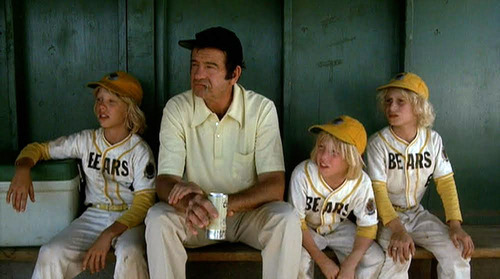
Park league baseball season came to an end recently. We had four grandsons between the ages of 8 and 10 playing on teams. The teams had a few “veteran” players, but for most of the players this was their first experience playing organized baseball. They had a lot to learn…and we saw amazing improvements in all the players in one short season.
It’s clear that the lessons they learned can extend far beyond the field, if we are willing to pay attention.
Panicking When the Ball Comes
My most vivid memory from the season is seeing the panic for many of the kids when the ball would come their way. Will they catch the ball? Where will they throw it once they have it? Do they know why they’re throwing it in a particular direction? Will the player they’re throwing to catch the ball?
The drama was real. It was clear that a lot of the kids didn’t expect the ball to come toward them. I saw a few kids jump away from the ball to avoid fielding it.
As a spectator, it’s easy to see what’s happening. It’s easy to assume that surely, we’d field the ball properly, and immediately know where to go with the play.
It’s not always as easy as it looks. Unexpected situations arise, and our response (or lack thereof) can significantly impact what happens next. Learning to stay calm and doing some pre-thinking about our actions (before the play) will significantly improve our chance of success.
Understanding Game Situations
Many young players struggle with understanding the game situation—who’s on base, how many outs are there, what’s the best play to make when the ball comes to them, and how to act strategically.
This lack of situational awareness highlights a crucial lesson: the importance of context and awareness in decision-making. Understanding the bigger picture allows for more informed and effective actions. The coaches encouraged the kids to think ahead (pre-thinking) and consider various outcomes. Whether the kids listened and embraced their advice was another thing entirely.
Are you thinking about your “game” situation? The macro and micro aspects of the challenges you and your organization are facing. Are you thinking ahead and considering various outcomes as part of your decision-making process?
Learning the Basics: Throwing and Catching
It’s not uncommon for young players to throw the ball the wrong way or miss it entirely. These fundamental skills require practice and patience. This aspect of the game underscores the importance of mastering basics before tackling more complex tasks. In any field, solid foundational skills are essential for success. Nearly every pursuit or profession has basic foundational skills that need to be mastered along the way toward more advanced skills. A football analogy fits well here…it’s important to understand the blocking and tackling part of the game before you can advance to running with the ball.
Position-Specific Skills and Aspiration
In youth park league baseball, most of the hits stay in the infield. This leaves the outfielders without much to do. I heard lots of outfielders wishing they could play an infield position like second base, or catcher. None of them understood what those positions entailed, but they knew that those positions had more action.
A few of them took the time to learn about the infield positions from their coach. They showed their interest and willingness to work their way to the infield. This shows the value of preparation and skills development. It’s important to work on the necessary skills before aiming for a specific role, whether in sports or any other endeavor. It also emphasizes the value of seeing a goal and then taking the concrete steps to learn, grow, and achieve that goal.
Strikeouts Aren’t Failures
Consider that an excellent hitter in the big leagues gets a hit about 30% of the time. They may get walked occasionally, but the rest of their at bats result in fly outs, ground outs, or strikeouts.
We saw a ton of strikeouts this past season. I was always impressed with the kids who struck out and immediately came back to the dugout to ask their coach what they should be doing to avoid striking out next time. Each strikeout was a learning opportunity…but only if the player saw it that way.
We saw a few kids melt down in disappointment and embarrassment. One kid from an opposing team stomped off the field and took himself out of the game (an extremely negative response to be sure).
When things go wrong, or we don’t get the result we want, that’s the time to buckle down and learn why it happened. Consider ways to improve so the results can improve next time. It’s only a failure if you give up.
Teamwork and Collective Goals
We are all self-centered. As we mature, we usually learn how to control our self-centeredness or at least how to channel it productively. Ten-year-old kids are no different. Their focus is on their own performance. Whether or not they’re hitting the ball. Whether or not they made the right play.
They often forget that the goal is for their team to win. They can help the team achieve that goal by having a strong performance, but also by helping and supporting their teammates. This is a powerful reminder of the importance of teamwork and the collective effort required to achieve a common goal. It’s easy to get caught up in individual performance, but true success usually comes from working together and supporting each other. Collaboration and shared successes build strong teams. Strong teams create successful outcomes.
Consistency Matters
Ask an excellent bowler, pitcher, batter, shooter (basketballs or bullets), pole vaulter, or pickle ball player how they deliver such excellent results. They’ll mention practice, dedication, and a strong mental approach. Eventually they’ll talk about consistency. Each of these pursuits (and countless others) require consistency above all else. The exact motions, body positions, eye contact, and calmness of breath that they can count on happening whether they consciously think about it or not.
Their practice process is all about achieving repeatable actions that their body remembers…every time. They also know that they aren’t swinging for the fences every time they’re at bat, not trying to set the world record or do something extraordinary with every outing.
They are working to become a steady and consistent performer at the highest level possible…and always reaching a little higher.
Consistency, patience, and incremental progress should be the goals…repeatable excellent outcomes will happen as a result of achieving these goals.
Park league baseball is a ton of fun. The drama is real. Teams experienced the “thrill of victory and the agony of defeat” throughout the season. We saw players improving and gaining confidence as the season unfolded.
I don’t know where the teams ended up in the standings at the end of the season.
I know the kids learned a lot and hopefully they’ll incorporate some of what they learned well beyond the game.
Imagine presenting your boss with a blank canvas, expecting them to sketch out the details of your plan—not impressive.
Instead, consider offering a detailed outline of your proposed actions, complete with timelines and expected outcomes. This approach allows your boss to review your thoroughness and provide feedback, while still enabling you to take the lead on the initiative.
As you consistently demonstrate the quality and reliability of your ideas, your boss may rely less on reviewing your plans in detail, knowing they align with your track record of success. This trust opens the door for you to play a more significant role in decision-making and strategy development.
Bosses appreciate having the opportunity to refine and improve upon existing ideas rather than starting from scratch. They usually don’t have the time or are unwilling to take the time to create from scratch. That’s your job.
By presenting well-researched proposals supported by data and evidence, you provide a solid foundation for collaboration. Offering multiple options allows your boss to feel involved in the decision-making process while subtly guiding them toward your preferred solution.
Timing matters. Choose moments when your boss is receptive and avoid times of stress or distraction. By seeking feedback and actively listening to your boss’s input, you demonstrate a willingness to collaborate, adapt, and learn.
Your goal is always to build a relationship of trust and collaboration. When this happens, your ideas have an opportunity to thrive and contribute to your organization’s innovation and growth.
You can walk around with your blank canvas, wondering why your ideas never get attention. Or, you can raise your hand, and share your ideas in a way that multiplies your boss’s (and your) effectiveness. I choose the second option every time.
p/c – Jonny Caspari, Unsplash.com
I have one favor to ask. If you enjoyed this post and found it useful, please forward it to someone else. Thanks!










 Grandpa Bob Encouraging Leadership
You must be logged in to post a comment.