Life is filled with stepping stones—moments that can either define us or simply become a small part of our journey.
When faced with challenges or opportunities, we can see them as just another step or as a moment for growth and clarity. Carl Jung once said, “I am not what happened to me, I am what I choose to become.”
I recently re-watched a documentary about the Navy SEALs. Every Navy SEAL candidate faces grueling hardships: physical exhaustion, frigid cold water, mental strain, and the constant threat of failure.
Some candidates see each challenge as an opportunity, a chance to push beyond their perceived limits and grow stronger. They embrace the pain, keep their focus. They find strength in their determination and their fellow candidates. These candidates transform the hardships into defining moments, emerging on the other side as Navy SEALs.
Others, however, let the same hardships overwhelm them. Fear, frustration, and exhaustion cloud their resolve. The challenges, instead of being opportunities for growth, become insurmountable barriers. These candidates wash out, not because they lacked physical capability, but because they couldn’t shift their mindset to see the hardships as stepping stones rather than obstacles.
None of us are born with skills. It’s easy to watch some Youtube videos and think woodworking is totally doable. Any new woodworker can attest to the uneven cuts, the wobbly joints, and the frustrations that can come from trying this new hobby. But, by learning from the mistakes, honing skills through practice and even more failures, projects begin to go more smoothly. The final products are less uneven and wobbly…and the process becomes much more enjoyable.
Learning and growth come from our willingness to take lessons from every experience. Reflecting on each attempt, seeking feedback, and choosing to improve. It’s the decision to learn from every encounter that turns these stepping stones into personal and professional development milestones.
However, clouding our experiences with fear, frustration, anger, or other limiting emotions can lead us to ignore the growth opportunities these experiences present. When we let negative emotions dominate, we risk missing out on valuable lessons that can propel us forward.
It’s difficult, but essential, to manage our emotions and maintain a positive outlook to fully benefit from the lessons we can learn.
The stepping stones in our lives are all potential defining moments. It’s up to us to decide whether we let them pass by or seize the opportunity to let them shape us. We can turn every step into a defining part of our journey.
It’s not just about the stones we step on but how we choose to step on them that defines our path.
Asking what if about your past is a waste of time. Asking what if about your future is tremendously productive. – Kevin Kelly
It’s easy to focus on what could have been, what you should have done, what someone did or didn’t do to you (or for you), and all the mistakes you’ve made.
It’s even easier to let all that stuff in the past dictate what you’ll do in the future. Our past has tons of built-in excuses. Excuses that help us stick with the status quo, protect us against taking new risks, prevent us from trying something new, or exploring where we’ve never been.
Our lizard brains love the barriers that the past can provide. Like a protective cocoon…one we never have to leave.
What if you choose your future without the limitations or excuses of your past?
That’s the harder and much more rewarding path. You might fail. You might be embarrassed. You’ll surely make new mistakes.
But you might succeed, and you’ll probably discover something you never knew you were seeking.
You can accept the lessons of your past as you drop the past from your thinking.
When was the last time you did something for the first time?
Did you take more than 30 seconds to answer that question?
What if you purposely pursue the surprises that come from diving headfirst into new experiences and adventures?
It’s time to find out.
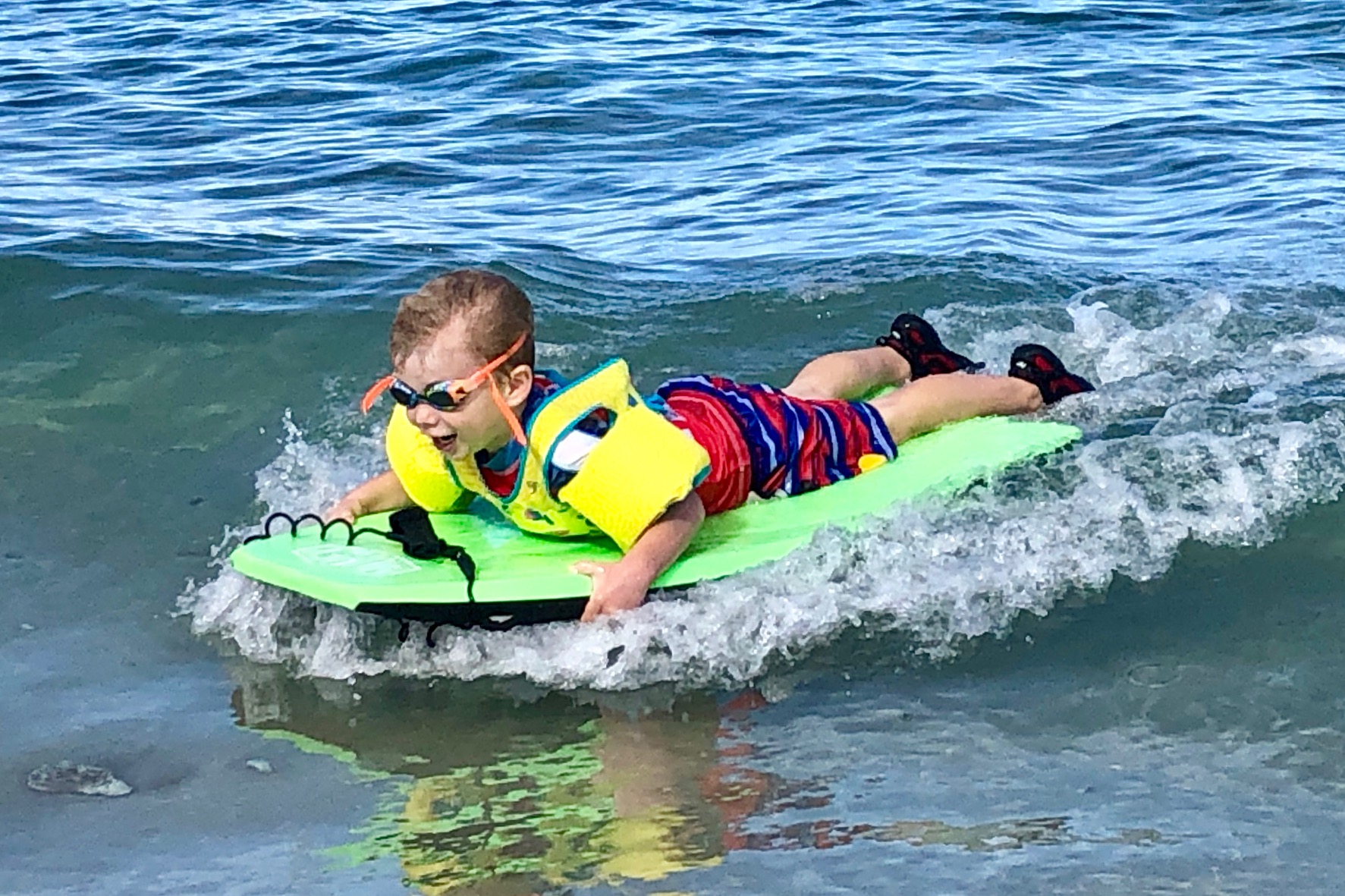
Photo: My grandson, Charlie, boogie boarding for the first time (about 5 years ago). May we each experience the same joy when we’re trying something for the first time.
I follow a small handful of Youtubers. Most of the channels I watch focus on small business owners in various industries, or folks who are building an independent lifestyle…mostly off-grid.
I love to watch them create something valuable and useful out of nothing but an idea and their belief that they can do it. Sometimes they succeed on their first try, other times they need to adjust and try again. I admire their willingness to push themselves way outside their comfort zone in pursuit of the way they want to live.
This past weekend, I watched as the twenty-year-old daughter of someone I follow took the plunge to start her own coffee house. She has 1-2 years of experience being a barista and talked about how much she loved that job, her teammates, and her customers.
She told a nice story about how her mom met her dad 20-plus years ago. He and his band came to perform at the coffee house where her mom worked as a barista. She said that she would be investing her life savings in this new venture.
She started by leasing a 1,900 square-foot space that had all the bones to become a great coffee house location. She and her mom set about visualizing and planning the space, identifying the equipment she’d need, and how they’d work together to remodel the space. They talked about where the small kitchen would go, how the prep tables would be organized, where the coffee counter and espresso machines would go, how the space would be decorated for comfort and a relaxing vibe.
As I watched them walk around visualizing, the experienced business manager in me started thinking about all the paperwork she’d need to file. The health code permits, the special equipment she’d need, the certifications that may be required to serve food, the creation of a business and DBA, opening bank accounts, capitalizing, and accounting for the business…sales and income tax filings.
I wondered how many customers she’d need to serve each day to generate an adequate cash flow and profit. Had she identified her suppliers? Did she know the supply costs yet? How many employees would she need to hire to cover all the shifts? Was she ready to establish a payroll process for her new employees, establish HR systems, purchase the various insurance coverages she’d need, including worker’s compensation coverage.
Cut to the next scene in their video, and they’re filing the DBA paperwork, and starting to file the health code paperwork and forms. It turns out that there is a healthy server certification that she’ll need to obtain (which includes a ton of study materials and a written test).
She was undeterred. She plowed straight into the process, all the while renovating and remodeling the space along with the help of friends and family. It was truly a labor of love for her. After 3-4 weeks of work, the place was starting to take shape.
What happens next? I’ll be tuning in next week to find out.
There’s a prevailing stereotype that youth and inexperience are synonymous with recklessness and abandon.
How can this 20-year-old possibly know enough to successfully launch her new coffee business?
Look more closely and it may be that her lack of experience and knowledge are the catalyst for her leap into entrepreneurship. She knows that she doesn’t want to work for someone else, and she loved her experience being a barista. Why not create her own coffee house?
One of the paradoxes of entrepreneurship is that knowledge, while valuable, can sometimes become a barrier to action. Older generations, armed with years of experience and a deep understanding of the intricacies involved in starting and running a business, may find themselves paralyzed by the fear of failure, or an unwillingness to put in all the work they know lies ahead. Knowing what they know, they can easily talk themselves out of almost anything.
On the other hand, young entrepreneurs often possess an infectious optimism and a sense of invincibility that propels them forward. Unencumbered by the weight of past failures or the mounting responsibilities of adulthood, they approach new ventures with a boldness that can be both exhilarating and inspiring. Their willingness to take risks stems not from ignorance, but from a belief that they can overcome any obstacle that stands in their way.
They are adaptable, more willing to pivot and change course when facing unexpected challenges. They haven’t yet become set in their ways or entrenched in established routines, allowing them to embrace change with a sense of excitement rather than fear. They view setbacks not as roadblocks, but as opportunities for growth and learning.
Young entrepreneurs understand the value of learning by doing. They’re not afraid to dive into the nitty-gritty of running a business, knowing that experience is the best teacher.
Will any of it be easy? No.
Will she have moments of self-doubt, and fear of failing? Yes.
Will she overcome the wall of worry and doubt, plus all the challenges associated with owning and running a successful business? Maybe, but I know she has what it takes to make it successful.
Would I open a coffee house at this point in my life? Nope.
But I love that she’s pursuing her dream. I love that her parents are there to help. I can already see that they’re being supportive, but also letting her drive the process, take the risks, and make the decisions.
If she were to ask for my advice, I’d tell her to consider the following (in no particular order):
Create or join a network of trusted allies and service providers. Join the local Chamber of Commerce, a BNI chapter, or a group that has other business owners as members. You’ll get to meet other entrepreneurs, compare notes with them, and many of them will provide services and expertise that you can use.
Focus on the customer’s experience in everything you do. Advocate for your customers and they will advocate for you.
Start your marketing and awareness campaign long before the day you open your business. While you’re remodeling the interior or your space, take the time to remodel and brand the exterior. Put up “coming soon” signs. Try to generate as much anticipation in your surrounding neighborhood as possible…again, long before opening day.
If possible, ensure that your business has at least 3 months (or more) of operating capital in the bank at any time. The more, the better. You never know when something unexpected might happen…a big expense or capital investment opportunity, or maybe a cyclical downturn in your business.
Remember that leaders always eat last. This means you’ll probably have some lean times, financially. Keeping your business healthy and paying your employees must come first. It’s quite possible that you won’t be pulling anything that looks like a paycheck from your business for 6-12 months. Prepare for this and realize it’s completely normal.
As you hire employees, whether they’re part-time or full-time, make sure they know your values, why your coffee house is special, why they are fortunate to be part of your team and that you feel blessed and fortunate to have them on your team.
Advocate for your employees, but don’t be afraid to quickly let go of employees who aren’t embracing your company culture. You need to employ believers in your mission…anything less is unacceptable. I don’t remember who said it but hire slowly and fire fast. Both are extremely difficult to do in practice but will pay off with amazing results if you’re able to do it.
p/c – Nathan Lemon – Unsplash
Want to see what happens next with Belle’s coffee house?
Imagine presenting your boss with a blank canvas, expecting them to sketch out the details of your plan—not impressive.
Instead, consider offering a detailed outline of your proposed actions, complete with timelines and expected outcomes. This approach allows your boss to review your thoroughness and provide feedback, while still enabling you to take the lead on the initiative.
As you consistently demonstrate the quality and reliability of your ideas, your boss may rely less on reviewing your plans in detail, knowing they align with your track record of success. This trust opens the door for you to play a more significant role in decision-making and strategy development.
Bosses appreciate having the opportunity to refine and improve upon existing ideas rather than starting from scratch. They usually don’t have the time or are unwilling to take the time to create from scratch. That’s your job.
By presenting well-researched proposals supported by data and evidence, you provide a solid foundation for collaboration. Offering multiple options allows your boss to feel involved in the decision-making process while subtly guiding them toward your preferred solution.
Timing matters. Choose moments when your boss is receptive and avoid times of stress or distraction. By seeking feedback and actively listening to your boss’s input, you demonstrate a willingness to collaborate, adapt, and learn.
Your goal is always to build a relationship of trust and collaboration. When this happens, your ideas have an opportunity to thrive and contribute to your organization’s innovation and growth.
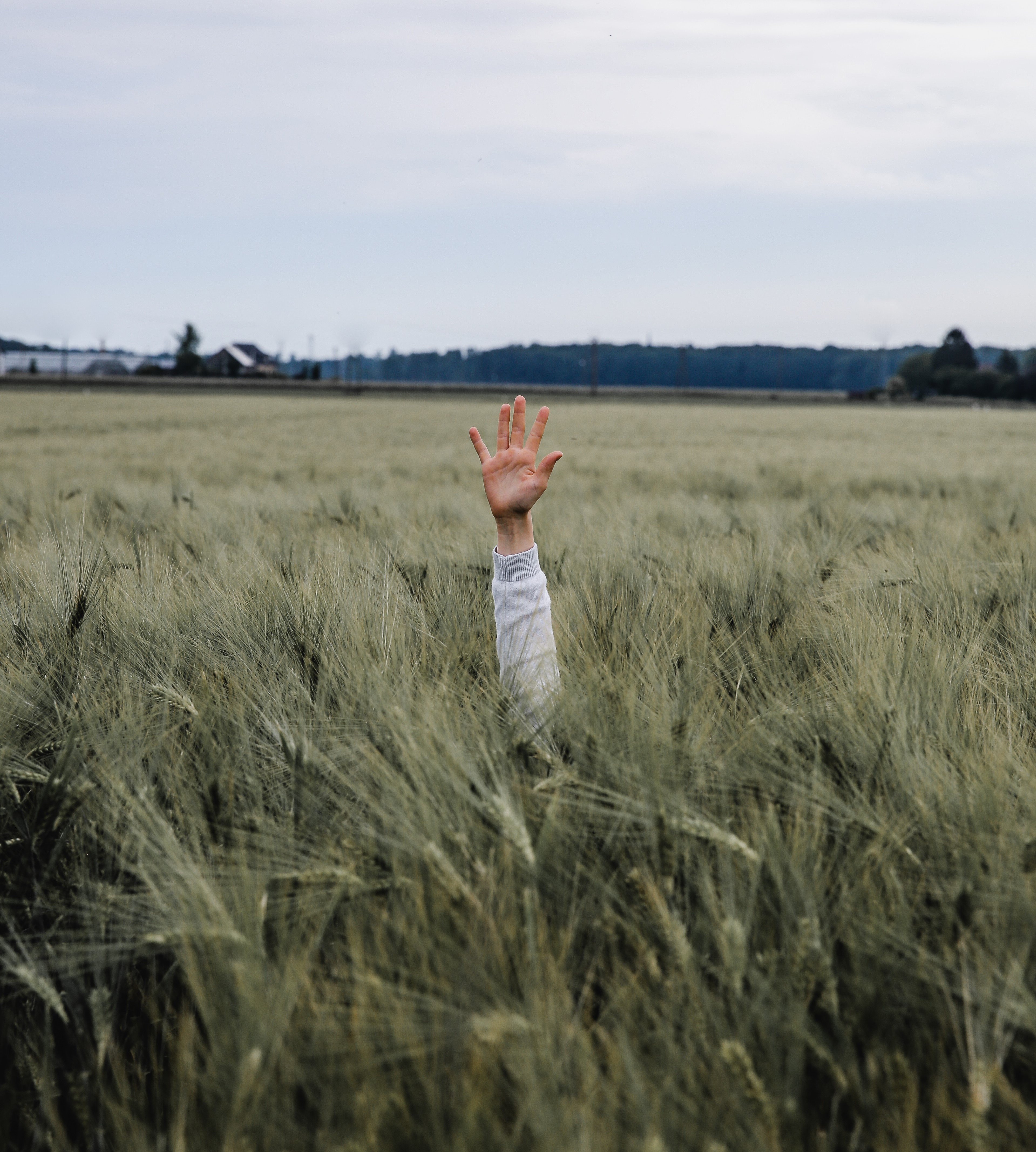
You can walk around with your blank canvas, wondering why your ideas never get attention. Or, you can raise your hand, and share your ideas in a way that multiplies your boss’s (and your) effectiveness. I choose the second option every time.
p/c – Jonny Caspari, Unsplash.com
I have one favor to ask. If you enjoyed this post and found it useful, please forward it to someone else. Thanks!
Fear is like that well-meaning friend who occasionally oversteps boundaries. It’s a survival instinct, a leftover trait from our ancestors who needed it to avoid becoming someone else’s lunch. It can guide us toward wise choices and help us steer clear of danger.
Our imagination, on the other hand, is a bit of a storyteller, especially when it comes to tales that can hold us back. With all our experiences and secrets tucked away in our minds, our imagination can whip up some remarkably dreadful future scenarios. And our lizard brains? They thrive on responding to fear.
Fear is undoubtedly real. The fear of failure, loss, embarrassment, injury, loneliness, helplessness, and death can have profound impacts on our thoughts and actions. However, if we recognize, understand, and confront these fears head-on, it will be like flicking on the lights in a dark room – suddenly, the monsters lose their scariness.
By acknowledging that fear is a living part of us, we can take steps toward asserting our control over it. Fear shouldn’t be in the driver’s seat.
“Yea, though I walk through the valley of the shadow of death, I will fear no evil: for thou art with me; thy rod and thy staff they comfort me.” – Psalm 23
We aren’t alone in this journey of conquering fear. We have a loving God, supportive family, and caring friends to help us face our fears. They can offer a broader perspective and lend a hand when we need it most.
Life is a rollercoaster of unknowns, and fear hates rollercoasters. Instead of fearing the unknown, befriend it. New ideas, experiences, and relationships? Embrace them as opportunities, be curious, and let the adventure unfold.
Life is rarely easy, and sometimes truly terrible things happen to us. But, fear should be the backseat driver, not our navigator.
“I must not fear. Fear is the mind-killer.
Fear is the little-death that brings total obliteration.
I will face my fear. I will permit it to pass over me and through me.
And, when it has gone past, I will turn the inner eye to see its path.
Where the fear has gone there will be nothing. Only I will remain.”
–Paul Atreides in the novel Dune, by Frank Herbert
Photo: Why hot air balloons? Well, taking a ride in a hot air balloon would not be possible if we let fear make the decision. I’m happy to report the balloon ride was amazing!
I have one favor to ask: If you find this information useful, please forward and recommend it to someone else. Thanks!
I originally wrote this poem eight or nine years ago. It was an exercise in using contrasting words, contrasting rhythms, active and passive voices, sensory symbolism, and a few other style toys that I thought would be fun to try (for a hobbyist writing nerd).
As often happens when I write, the theme I had in mind when I started was quickly overtaken by other ideas. The words and symbolism began pointing the way. A new theme slowly emerged.
Then, just as I was gaining momentum, some shiny objects interrupted, and I set this poem aside. A whole bunch of amazing life events started happening and years (eight or nine to be exact) came and went.
This poem sat on the hard drive of what would become my “old” computer. When I moved over to the new computer, somehow all the data didn’t get transferred properly to the new computer (or to any of the cloud storage locations I use today).
I forgot about the poem until a couple of weeks ago when I was looking for a fictional story I’d written. After some searching, I realized the only place it could be was on that old computer that we hadn’t turned on in years (and that we kept for some reason). Imagine my surprise when I was able to boot it up and look around on the hard drive for some of my old (nearly lost) work.
I found that fictional story I was looking for (maybe I’ll publish it in some form in the future), along with a bunch of other work I had forgotten…including this poem. Again, shiny objects intervened, and I didn’t get around to re-reading this poem until today. The toys I’d been playing with so many years ago were just lying about where this big kid had left them.
I picked up my writing toys and continued playing with the words, the styles, and the symbols. The theme that was there so many years ago was showing itself but in a new way that I hadn’t quite seen in the past. Again, the words and symbols pointed the way (just like Mr. Cox told us in eleventh grade English class).
I hope you enjoy it. Let me know what you think in the comments.
The Dance of Light and Dark
Lengthening shadows descend across the forest floor.
The perpetual dance as day gives way to night.
Glorious palettes of color and light,
Surrendering to shadows in the growing darkness.
The air grows cold with the smell of decay.
Death wins a battle in its forever war on life.
Your heartbeat echoes behind your ears.
A quiet rhythm of life.
You hear the mournful wail of a distant companion, howling for a moon not yet risen.
Stars shine like pinholes through a curtain.
The moon rises in the distance, casting new light in the dark.
While creatures of the night toil in the shadows,
Hunting and evading, hiding and pouncing, dying and surviving.
They don’t know what their future holds.
Pain or comfort.
Life or death.
Trees moan quietly as they sway against the wind’s unending assault.
Each is alone in the crowd to persevere as they must.
These trees know without knowing that morning will come.
A distant dream in the long cold night that’s just beginning.
Morning brings new light.
An eternity of hope.
Wistful breezes carry the freshness of this glorious day.
The sun lends its brilliant glow to all that it touches.
Back in the day, we used to grab our boogie boards and take the bus down to Seal Beach (in California). It cost 25 cents each way. Perfect for a budget-minded 6th grader and his buddies.
Side note: nobody thought it was the least bit strange for a bunch of 6th and 7th graders to go to the beach on a public bus without their parents…my how times have changed in 40 years.
That first step into the waves was always the coldest. It never failed that a wave would break right on shore, just as we were trying to slowly enter the water.
We always knew that the moment the water hit our stomachs, we might as well just dive in and swim out through the waves.
Within about thirty seconds, we were used to the water temperature. We didn’t think about it for the rest of the day. All we were thinking about was catching the next wave and buying a hot dog and a Coke for something like a dollar at lunch time.
We humans have an incredible ability to adapt. Sure, we feel the shock of a new challenge deep in our gut at first. We’ll wonder how in the world we’re going to deal with this new set of problems. But, give us a little time, and we have what it takes to not only adapt, but to overcome.
The only question is whether we choose to adapt.
It’s our choice.
We decide whether we’ll dive into the cold waves and paddle out, or retreat to the warm safety of the beach.
The beach may be safe, but the waves we’re trying to catch are out in the water.
Time to dive in and start paddling.
Photo Credit: That’s our grandson, Charlie. He’s riding his first wave on a boogie board, at Beach 69 on the Big Island, a few weeks ago. He turns 4 this weekend. Cowabunga, Charlie!
What do I know? I know that I don’t know much, even though I know a lot.
Consider everything you know…
All the things you’ve learned since you were born.
All the things you’ve forgotten…in the last five years.
The capital of Vermont. Montpelier. I remember that one from 5th grade, even though I’ve never been to Vermont or Montpelier. I like the way it sounds, and the word Montpelier always makes me think of potato peelers.
“I” always comes before “E,” except after “C” and in weird words like weird.
Over ninety-eight percent of the population of Australia lives within 25 miles of the country’s coastline. I learned that from a tour guide. I assume it’s true.
Now, consider everything you don’t know.
Like, how to sew. Or, how to find top dead center on a Volkswagen engine. What about the method for calculating the orbital decay of a satellite? The percentage of nitrogen and oxygen in our atmosphere?
How about the exact weather forecast for a month from now? What your customers will want or need or expect one year, two years, five years from now? The truth is, they probably don’t know either.
I’d venture to say that what we don’t know is “Infinity minus One” larger than what we do know. Sounds hopeless.
But it’s the unknowns that make our little journey interesting. Discovering the secrets of an unknown is the reward for our curiosity.
How does cruise control work?
How and when did someone decide it was a good idea to pick certain red berries, dry them in the sun, then put them over a fire for just the right amount of time (whatever that is), then grind up what’s left and run hot water over it to make coffee?
Where does castor oil come from?
Curiosity and the humility to admit our ignorance, in pursuit of new knowledge is the key to learning.
Understanding that our decisions will never have the luxury of complete or perfect knowledge. We’ll never know everything before making the decision.
In fact, taking that risk and making the (uninformed) decision is another way we learn. If our decision is wrong, we learn from it (hopefully) and make a new decision that is less wrong.
Knowledge is power, and ignorance is bliss. Both are right.
But I believe ignorance can have more power. The power to try. The power to seek. The power to chase the unknown.
What do I know? I know that I don’t know much, even though I know a lot.
Knowing that I don’t know drives me to ask the dumb question(s), to search for answers, to seek the unknown, to leap, to discover, to practice, and most of all, to never stop learning.
…the most important choice each of us can make is the choice to step into the game.
Surely, reading a book on pushups is the best way to learn how to do them.
The proper techniques. The most effective forms.
When should you do your pushups? How often each week?
While doing your pushups, what should your mind be doing?
What’s the proper number of pushups per set? How many sets should you do?
What are all the available variations of pushups?
Why should you do pushups in the first place?
Are there any risks associated with doing pushups? What about the rewards?
What if the author also provides weekly blog posts and podcasts about pushups…or YouTube videos of people doing pushups?
All of this is helpful. None will match what you learn by doing your first pushup.
That first one will be awkward. It’ll shock your system. It’ll be much harder than you imagined after seeing all those happy people doing them on YouTube.
Your technique will be terrible. Your body will scream in protest. Your wrists will ache, your shoulders will burn, you’ll probably feel muscles in your lower back you haven’t felt in a while.
Now that you’ve done that first one, what about the next ten? The next hundred? Will you make this a habit? Will you do pushups every day, every-other-day?
Maybe you’ll decide they’re too hard and just skip them altogether…
It’s the same with most things in life. Reading about it, talking about it, or watching it provide only one dimension of understanding.
Doing is an entirely different thing.
Doing brings the risk of failure, the risk of embarrassment.
Doing requires discipline and endurance for the journey you’ve chosen.
Doing requires personal drive and motivation to push through the awkward (and sometimes painful) beginning.
It’s easy to sit on the sidelines of life, casually watching and listening to what everyone else is doing. But, the most important choice each of us can make is the choice to step into the game.








 Grandpa Bob Encouraging Leadership
You must be logged in to post a comment.