Mesmerism and the Rhythm of Showing Up

“When I’m in writing mode for a novel, I get up at four a.m. and work for five to six hours. In the afternoon, I run for ten kilometers or swim for fifteen hundred meters (or do both), then I read a bit and listen to some music. I go to bed at nine p.m. I keep to this routine every day without variation. The repetition itself becomes the important thing; it’s a form of mesmerism. I mesmerize myself to reach a deeper state of mind.” — Haruki Murakami

Haruki Murakami has written some of the most widely read novels and screenplays — Norwegian Wood, Kafka on the Shore, 1Q84, and others. His stories are wide and varied. But his process? Based on this quote, it’s as simple as it gets (on first glance).

He wakes early. He works. He exercises. He reads. He rests. Then he does it all again. Every day. Without variation.

What makes that interesting isn’t just the discipline. It’s what that discipline creates. He calls it mesmerism.

He’s not trying to force creativity. He’s building a space, mentally and physically, where creativity knows it’s welcome. And he shows up to that space every day, without fail.

This kind of repetition, over time, can shift your state of mind. It can take you to a quieter, more focused place. It can help you bypass distraction and access something deeper.

He doesn’t wait for inspiration to strike. He prepares for it. He builds a rhythm and shows up to it daily. Over time, his mind knows—it’s time to create. And that, he says, is when the real writing happens.

It’s easy to think of habits as something utilitarian. A way to squeeze productivity out of our day. But what if repetition isn’t just a tool for efficiency? What if it’s a path into something more meaningful?

What if the act of doing the same thing, at the same time, in the same way, becomes a form of permission to go deeper?

Murakami’s routine isn’t about optimization. It’s about entry. It’s a way of reaching the part of himself that doesn’t respond well to noise, pressure, or force. And the only way in is repetition.

This idea of mesmerism applies to more than writing novels or screenplays.

Maybe your “deep work” is building a business, raising a family, managing a new venture, or simply trying to stay anchored when life is anything but steady.

The specific rhythm doesn’t matter. What matters is that it’s yours. That it becomes familiar enough, trusted enough, to lower your resistance and invite your mind to settle.

A short walk each morning before the day begins.

A time and place for reading, thinking, or praying without interruption.

A quiet moment after dinner, before sleep.

These aren’t productivity hacks. They’re entry points. Invitations to go below the surface of reaction and noise.  To meet yourself in a more focused, honest way.

Reflecting on this quote, I see it as less about writing and more about living on purpose.

There’s no perfect rhythm. No universal method. But there is something powerful in choosing to show up each day, in the same way, with the same posture of readiness…even if it feels small.

Because over time, that rhythm changes us. It makes us less reliant on inspiration and more connected to our purpose.

Less reactive, more rooted. Less scattered, steadier.

Show up.
Repeat.
Let the repetition carry you deeper.

That’s where the real work—and the real exploration—can begin.

h/t – once again, Tim Ferris’s 5 Bullet Friday newsletter.  He recently highlighted this Murakami quote.  When I first read it, it didn’t make much of an impression.  Who uses mesmerism in a sentence?  Then I decided to re-read it, even though it’s a long one.   

On my second reading, the quote sunk in and got me thinking about how his process of mesmerizing through repetition can be applied to anything we’re trying to accomplish (it even showed me how to use the word mesmerizing in a sentence). It takes us past brute discipline and into a rhythm-based approach that prepares our mind to do the work we want it to do; in the space that repetition provides.   

Photo by Jack Sharp on Unsplash

Resist the Rut

It’s easy to fall into the rut.

To assume that delays are normal.
That long lead times are just “the way things are.”
That bureaucracy is an immovable force we’re all meant to quietly and endlessly orbit.

But here’s the question we should be asking:
Does something really take months to get done…or is that just the rut talking?

Ruts are sneaky. They dress up as policies, forms, regulatory frameworks, meetings, approvals.

They start small.  Maybe with one postponed decision or an overcautious email.  Before long, they’re a deep trench. One that feels safer to live in than escape.

Some processes do require time. Some decisions need careful research and thoughtful consideration.

But not everything takes as long as we pretend.  And if we’re being honest, we often lean on red tape as a crutch. To justify inaction, to mask fear, to cover for indecision, to avoid risk. Maybe to avoid the work altogether.

We say things like:

-“That’s how our system works.”

-“These things take time.”

-“We’ll have to check with Legal.”

-“I’m waiting on approvals before I can move forward.”

But what if we stopped waiting?

The 10 Million Dollar Question:

If you or your organization were promised $10 million the moment this project is completed—this thing you’re currently delaying—how long would it actually take to finish?

-How focused would you suddenly become?
-How many hurdles would get knocked out of your way?
-How quickly would meetings be scheduled, decisions made, and steps taken?

If your answer is “much faster,” then the rut is running the show. You’re not stuck. You and your organization are settling for the slow lane.

What if we challenge the assumptions about how long things should take?

What if we stop admiring and massaging the problem and started solving it?

What if we stop delegating or offloading the issue to another department, and just fixed it ourselves…today?

Organizations that resist the rut move faster. They ask better questions. They take the time to consider how to eliminate hurdles. They focus on outcomes, not just process. They know when structure helps, and when it hinders. They trim what’s unnecessary and protect what’s essential.

This isn’t about being reckless. It’s about refusing to be lulled into complacency. It’s about bringing urgency back to the table.

It’s about remembering that progress often begins with someone brave enough to say: “Why not now?”

If you’re feeling stuck, ask yourself:
-Are you really bound by rules and timelines? Or just by a habit of delay?

Resist the rut.

Challenge the default.

Challenge the impossible and make it possible.

Push for better.

It might take less time than you think.

h/t – my colleague, Jacob Smith.  An extremely productive and prolific software development manager who regularly challenges the default and always pushes for better.

Photo by Towfiqu barbhuiya on Unsplash

Through His Eyes: A Lifetime of Wisdom Captured on Canvas

There are some paintings that do more than just depict a subject.  They capture an entire story, an entire lifetime, in a single moment. This piece is one of those rare works that demands to be seen. It grips its viewer, pulling them into a world of experience, emotion, and wisdom.

I see far more than just an old man with a pipe. I see the passage of time written across his face.  Lines carved by laughter, sorrow, resilience, and acceptance.

His piercing gaze holds stories of joy, regret, belief, triumph, failure, love, admiration, and appreciation. His expression speaks of a man who has not just existed but has truly lived, embracing all that life has offered, both the good and the bad.

Beyond his gaze, I see a hand that tells a story all its own.  His hands have endured hard work.  They’ve held the people he loves. These hands have fought, and they’ve also comforted. They are worn, yet steady.  A testament to a life of resilience, labor, and tenderness.

His grip on the pipe isn’t just a habit.  It’s a ritual.  A moment of reflection held between calloused fingers that have stood the test of time.

I didn’t know Richard Hatch personally before his recent passing.  But I can see through his painting that he had a remarkable ability to portray humanity on canvas. He wasn’t just painting a face.  He was capturing the soul of this man for each of us to see. 

Every brushstroke tells a story.  Every shade of color conveys emotion, and every detail reflects a life filled with lessons. His is the kind of art that doesn’t just sit on a wall.  It reaches out, starts a conversation, and lingers in your mind long after you’ve looked away.

Our days become years, our years become decades, and before we know it, our decades are a lifetime. This painting reminds me of that stark reality.  Not in a sad way, but in a way that urges me to embrace every moment while I can. To live fully, to love deeply, and to accept this journey for the adventure that it is.

Mr. Hatch’s painting reminds us of the beauty in aging, the dignity in experience, and the wisdom of acceptance.

p/c – Painting by Richard Hatch 

The Ribbon of Music in Our Lives

Life is a long and winding road.  Along the way, music teaches us to let it be, to take it easy, and to carry on. Sometimes, it whispers, “you’ve got a friend,” and other times it shouts, “don’t stop believing!” Through every high and low, music lifts us when we’re down and brings light to our darkest days.

It inspires us to learn to fly, take the long way home, and dream the impossible dream. It tells us to follow the yellow brick road and live like you were dying. When the world gets heavy, we can put our toes in the water, our ass in the sand and live knee deep in the water somewhere. It’s a gentle reminder to hold on loosely or to simply keep the faith.

When we’re all alone, it wraps us in a warm embrace, softly humming, “I’m with you,” and promising, “I’ll stand by you.” It keeps us company when we’re wasting away again in Margaritaville or stranded in the purple rain (whatever that is).  

Music sets the tone for life’s moments. It’s the sweet sound of silence in the still of the night, the easy rhythms of cheeseburgers in paradise, and the fiery rush of being thunderstruck. It’s the gentle plea of someone asking, “Have you ever seen the rain?” and the daring call to take a walk on the wild side. It urges us to dance in the dark and reminds us that it’s five o’clock somewhere.

It can challenge us to ask what’s going on, or who are you? It paints visions of wide-open spaces, islands in the sun, and clear mountain mornings. It reminds us that we’re merely candles in the wind and there’s never a wish better than this when you’ve only got one hundred years to live.  So, dream until your dreams come true.

Music brings us together to clap our hands, stomp our feet, and feel the beat.  It calls us to praise every morning. It’s a bridge over troubled water.  It’s an anthem of unity.  We’re rockin’ in the free world. There ain’t no stopping us now.   

Music is more than sound.  It’s a ribbon in the sky, an endless summer, a stairway to heaven, and friends shaking hands. It weaves through our lives, bringing joy to each new day.  

Take it to the limit.  Don’t stop thinking about tomorrow.

After all, music reminds us what a wonderful world it truly is.

A quick word about copyrights.  This post is my attempt to create a cohesive thematic message using as many song lyrics as possible (trust me, there are 100’s more that didn’t fit) from artists I’ve loved over the years.  Borrowing their words was a fun writing challenge, and an homage to the original artists. 

By my quick count, I’ve referenced lyrics from over 50 songs, placing them like Easter eggs or tile fragments in a mosaic.  Most are obvious and easy to find…a few may be obscure and tougher to recognize.

In the end, it’s only rock ‘n roll, but I like it.  (couldn’t resist one more).   

Photo by Kelly Sikkema on Unsplash

Goals for 2025

I’ve never been a New Year’s resolution person.

Maybe it’s all my time spent working in businesses over the past four decades. We often start each year with a set of specific strategic goals. Some are grounded and achievable; others are wish casting—a small dream of what we might accomplish if everything aligns perfectly (spoiler alert: it rarely does).

This year my goals are simple, but not easy: 

Serve the quests of others over my own.
True fulfillment comes from supporting others in their quest, even if that means setting aside my own ambitions.

Offer insights and advice, not direction.
The path others take isn’t mine to choose. My role is to illuminate possibilities, not dictate outcomes.

Push beyond my comfort zone and (hopefully) inspire others to do the same.
Growth begins at the edge of what’s familiar. By challenging my own boundaries, I hope to encourage others to stretch theirs as well.

Bring the loaves and fishes—and trust God with the rest.
(h/t to Dallas Jenkins for this beautiful idea) It’s a reminder to offer what I can and trust in someone much greater to amplify my impact.

Warmest wishes for a Happy New Year in 2025!

Photo by BoliviaInteligente on Unsplash

Leaving on Time, the Next Higher Gear, and Traction: A few lessons Uncle Denby taught me

Most of my childhood outside of school is a blur of off-road riding and racing (and lots of water skiing, but that’s another story).

We were either preparing to ride, camping in the desert to ride, racing in the desert (although I didn’t race nearly as much as everyone else), or providing pit support for others who were racing.

By the time I was about 10 years old, Uncle Denby (my dad’s younger brother) had become a serious racer in Baja.  By the time I was about to enter high school, he was racing for Team Honda in Baja.  The Hilltoppers, the motorcycle club my dad and Uncle Denby belonged to (that I’d join a little later) put on annual Grand Prix races in Rosarito Beach. 

Between the Baja racing, pre-running trips, adventure riding to Mike’s Sky Ranch and San Felipe, and numerous trips to Rosarito Beach to set up the race each year, we were in Baja a lot.  I remember watching the Dallas “who shot JR” episode on a small television in a hotel bar in Rosarito Beach.

All of this meant I got to ride with Uncle Denby regularly.  He was always ready.  His bike was perfectly tuned.  His gear was impeccably organized.  He was dialed in.  He expected everyone around him to be as dialed in as he was. 

For most Baja rides, we had a scheduled time for departure.  Maybe at first light, or 7:30am.  To Uncle Denby, this meant we’d be putting our bikes in gear and leaving at the scheduled departure time.  Not putting gas in our bikes, trying to find our goggles, or figuring out why our backpack wouldn’t fit right.  He’d say, “Do all of that on your own time.  If you need an hour to get ready, wake up early and get it done.” 

Since I rarely knew where we were going, and Uncle Denby was usually leading the way, I quickly learned to be fully ready with my bike idling at departure time.  I operate this way today, even though I haven’t ridden a motorcycle in decades. 

Whoops are a fact of life in off-road riding.  These are undulations in the trail caused by countless vehicles digging a little bit of dirt and relocating it to the top of the whoop behind it as they race by.  Certain sections of the California desert where we used to ride are notorious for miles of 2-3 foot (or larger) whoops.  Sections of Baja are similarly whooped-out. 

I struggled with whoops.  I don’t know anyone who likes riding whoops, but some people can fly through them.  That wasn’t me.  Lucky for me, Uncle Denby happened to come up behind me in a whoop section.  He had stopped to help someone else, so I and many others in our group got ahead of him on the trail.  Once he was back on his bike, it didn’t take him long to catch me.    

This time, he didn’t pass.  He stayed behind me for a couple of miles.  Then he rolled on the throttle and went right by me, smooth as ever.  When we regrouped for gas a while later, he came over and asked me what gear I was in when he came past.  I was in third gear, maybe three-quarter throttle. 

He said I was riding in too low of a gear.  I needed to work on riding the next higher gear if I wanted to find a smooth way through the whoops.  He told me he was watching me ride and getting exhausted for me.  He could tell that I was working way too hard.  Moving to the next higher gear at half-throttle would get me on top of the whoops with more speed and reduce my workload on the bike. 

None of this was obvious to me, but second nature to Uncle Denby.  Later that day, we came up to another (shorter) section of whoops.  I eased into fourth gear and carried a lot more smoothness into the section.  The whoops were still challenging, but not nearly as hard as before…and I was moving at a much higher pace.  I was conserving energy and riding faster (and safer) by clicking up one gear.

Something else about that next higher gear…traction.  Ride in too low of a gear, especially on a two-stroke, and your back tire has a tough time staying stuck to the ground.  Forward motion is all about smooth and consistent traction.  If your power isn’t making it to the ground, you’re not moving.  A spinning rear tire isn’t taking you anywhere.  Everything is working hard, but nothing is happening. 

We had another riding day, this time out on the Rosarito Beach Grand Prix course.  We rode most of the loop together.  The course had lots of high-speed sections and fast turns.  We were having a great time, riding wheel-to-wheel.  Obviously, he could have left me in the dust, but he pushed me at my pace and showed me how to brake before the turns, and then accelerate out to maintain the most speed and control. 

Yet another aspect of traction.  No traction, no turning.  If you’re on the brakes in the turn, you don’t have the same traction and control as you do if you’re accelerating out of the top of the turn.  Timing when to get off the gas, when to brake, and when to accelerate made all the difference in the world. 

Something else Uncle Denby taught me that day.

I was sad to hear that Uncle Denby passed away last night.  He battled a tough disease for quite some time.

I will always treasure the lessons he taught me.  He probably thought he was teaching his nephew how to ride a motorcycle faster and smoother. 

But he was really teaching me how to dial myself in, how to find the next gear, and how to maintain proper traction in all situations.

Godspeed, Uncle Denby, and thank you for riding with me.

Leadership Pitfalls: Don’t Be a Don Henry

Early in my career, during my time as an internal auditor, I learned a lot about people. I spent countless hours observing and interacting with individuals at all levels of organizations, from front-line employees to CEOs. This unique vantage point taught me a foundational lesson: the success of any organization usually hinges on the character and behavior of its leaders.

In our small audit teams, we developed a shorthand to quickly convey our impressions of the people we interviewed. We’d use these labels —like Adam Henry and Don Henry— to help summarize complex personalities in a few words. After interview meetings, we might describe our interviewee as a good guy, a solid operator, an Adam Henry, a Don Henry, or perhaps someone who was DUP, or DUC.

Let me translate those last four:

  • Adam Henry – Asshole
  • Don Henry – Dickhead
  • DUP – Definitely Unpleasant (not quite an Adam Henry)
  • DUC – Definitely Unclear (meaning they seemed like an idiot)

What’s the difference between an Adam Henry and a Don Henry? While both are problematic, the distinction lies in their approach and the impact on those around them. Adam might be uncooperative and arrogant, but Don takes it a step further—using their position to intimidate others and make them feel as dumb as possible.  Don loves to belittle people and fosters a toxic environment that stifles collaboration and creativity.

Were our shorthand judgments fair? They may not have been, but they were usually quite accurate based on our interactions. Remember, most people are on their “best” behavior when talking to an auditor (even though most of us would rather not talk to auditors). Imagine if they weren’t on their best behavior.

These judgments, though informal, often reflected deeper truths about the individuals we encountered. A company with too many Don Henrys, for instance, might struggle with low morale, high turnover, and a lack of innovation—challenges that will cripple long-term success.

There was nothing special about us, as auditors, making these assessments of the people we were interviewing. All of us make these assessments as we work with other people. These same assessments are being made about us by other people all the time.

Is this person a good guy, a strong operator, a pleasant person, a team player? Or are they on the opposite end of the spectrum? Should I trust this person to have my best interests at heart, or are they solely in this for their own gain at all costs?

Companies of all sizes, no matter the industry, are made up of human beings, working as a group (hopefully as a team, but not always) to achieve key goals (hopefully the organization’s goals).

If the people who manage a company are Adam Henrys, or worse—Don Henrys, that organization will have difficulty succeeding. They might succeed in the short term, but over a multi-year time horizon, these negative traits in the people managing the business will lead to poor morale, declining creativity, declining teamwork, and declining execution.

Recognizing and addressing “Don Henry” behaviors is crucial for any organization aiming for sustained success. Leaders who prioritize their team’s well-being, encourage collaboration, and foster a positive work environment are far more likely to achieve lasting results.

The next time you’re interacting with colleagues, ask yourself: Am I being an Adam Henry, a Don Henry, or something better?

p/c – Ben White, Unsplash.com

If Kamala is ready…

I always encourage strong leadership.  I extol the value of leaders who take bold action, make decisions, who are prepared to fail, learn, and try again…all in the pursuit of excellence. 

The President of the United States is often called “the leader of the free world.” 

Maybe that’s why the moment I heard that President Biden is ending his reelection campaign today, and endorsing Kamala Harris for the job, I immediately started thinking of the things a strong leader would do with this opportunity.     

So, here’s my short list of what Kamala Harris should do over the next 10 days:

  • She must take bold and decisive steps to show that she is presidential material; that she is the leader the country needs.  This will mean stripping away the layers of spokespeople, surrogates, and others who often represent our political leaders.  This effort is 100% on her and her alone, as the strong leader she wants voters to see.
  • She should immediately schedule 30-minute live interviews with anchors of each network (ABC, NBC, CBS, FOX, MSNBC, CNN, OANN, etc.), and 30-minute interviews with the top 10 podcasts (both liberal and conservative). 

Making these interviews “live” events does two things: 

  1. Shows that she doesn’t need teleprompters, jump-cuts, or any other gimmicks to handle questions from news anchors or podcasters.
  2. Shows that she can energetically express and articulate her vision for the next four years, and competently address questions from all sides of the political spectrum.
  • She should travel to 7-10 of the most contentious (“battleground”) states, visiting multiple cities in each of the states to hold campaign events.  She should invite each of her potential VP hopefuls to attend as well so she and the nation can see what they have to offer in this “new” post-Biden environment.    
  • When reporters ask her about the 25th Amendment and why she hasn’t attempted to invoke it over the past year, she should state that while she hasn’t seen the need up to this point, she will be evaluating that need considering what’s taken place over the past 30 days. 

This will put the nation and the President on notice that she may take action between now and January 20, 2025, if necessary.  It will also allow her to step further outside of his shadow and stand on her own. 

Does Kamala Harris have what it takes to show this type of strong and bold leadership?  Does she have the energy and drive to pull this off?   

We shall see. 

She often says we should focus on “what can be, unburdened by what has been.” 

This is her chance to follow her own advice. 

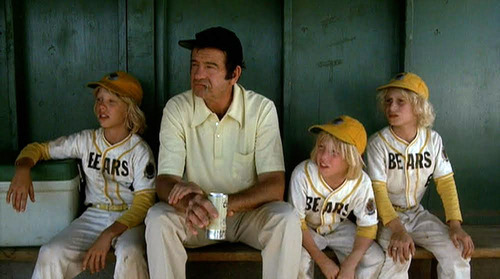
Hand me the ball…Life Lessons from Park League Baseball

Park league baseball season came to an end recently.  We had four grandsons between the ages of 8 and 10 playing on teams.  The teams had a few “veteran” players, but for most of the players this was their first experience playing organized baseball.  They had a lot to learn…and we saw amazing improvements in all the players in one short season.   

It’s clear that the lessons they learned can extend far beyond the field, if we are willing to pay attention. 

Panicking When the Ball Comes

My most vivid memory from the season is seeing the panic for many of the kids when the ball would come their way. Will they catch the ball?  Where will they throw it once they have it?  Do they know why they’re throwing it in a particular direction?  Will the player they’re throwing to catch the ball?

The drama was real.  It was clear that a lot of the kids didn’t expect the ball to come toward them.  I saw a few kids jump away from the ball to avoid fielding it.

As a spectator, it’s easy to see what’s happening.  It’s easy to assume that surely, we’d field the ball properly, and immediately know where to go with the play. 

It’s not always as easy as it looks.  Unexpected situations arise, and our response (or lack thereof) can significantly impact what happens next.  Learning to stay calm and doing some pre-thinking about our actions (before the play) will significantly improve our chance of success.

Understanding Game Situations

Many young players struggle with understanding the game situation—who’s on base, how many outs are there, what’s the best play to make when the ball comes to them, and how to act strategically.

This lack of situational awareness highlights a crucial lesson: the importance of context and awareness in decision-making. Understanding the bigger picture allows for more informed and effective actions. The coaches encouraged the kids to think ahead (pre-thinking) and consider various outcomes.  Whether the kids listened and embraced their advice was another thing entirely.

Are you thinking about your “game” situation?  The macro and micro aspects of the challenges you and your organization are facing.  Are you thinking ahead and considering various outcomes as part of your decision-making process? 

Learning the Basics: Throwing and Catching

It’s not uncommon for young players to throw the ball the wrong way or miss it entirely. These fundamental skills require practice and patience. This aspect of the game underscores the importance of mastering basics before tackling more complex tasks. In any field, solid foundational skills are essential for success. Nearly every pursuit or profession has basic foundational skills that need to be mastered along the way toward more advanced skills.  A football analogy fits well here…it’s important to understand the blocking and tackling part of the game before you can advance to running with the ball. 

Position-Specific Skills and Aspiration

In youth park league baseball, most of the hits stay in the infield.  This leaves the outfielders without much to do.  I heard lots of outfielders wishing they could play an infield position like second base, or catcher.  None of them understood what those positions entailed, but they knew that those positions had more action. 

A few of them took the time to learn about the infield positions from their coach.  They showed their interest and willingness to work their way to the infield.  This shows the value of preparation and skills development. It’s important to work on the necessary skills before aiming for a specific role, whether in sports or any other endeavor. It also emphasizes the value of seeing a goal and then taking the concrete steps to learn, grow, and achieve that goal. 

Strikeouts Aren’t Failures

Consider that an excellent hitter in the big leagues gets a hit about 30% of the time.  They may get walked occasionally, but the rest of their at bats result in fly outs, ground outs, or strikeouts. 

We saw a ton of strikeouts this past season.  I was always impressed with the kids who struck out and immediately came back to the dugout to ask their coach what they should be doing to avoid striking out next time.  Each strikeout was a learning opportunity…but only if the player saw it that way. 

We saw a few kids melt down in disappointment and embarrassment.  One kid from an opposing team stomped off the field and took himself out of the game (an extremely negative response to be sure). 

When things go wrong, or we don’t get the result we want, that’s the time to buckle down and learn why it happened.  Consider ways to improve so the results can improve next time.  It’s only a failure if you give up. 

Teamwork and Collective Goals

We are all self-centered.  As we mature, we usually learn how to control our self-centeredness or at least how to channel it productively.  Ten-year-old kids are no different.  Their focus is on their own performance.  Whether or not they’re hitting the ball.  Whether or not they made the right play. 

They often forget that the goal is for their team to win.  They can help the team achieve that goal by having a strong performance, but also by helping and supporting their teammates.  This is a powerful reminder of the importance of teamwork and the collective effort required to achieve a common goal. It’s easy to get caught up in individual performance, but true success usually comes from working together and supporting each other. Collaboration and shared successes build strong teams.  Strong teams create successful outcomes.

Consistency Matters

Ask an excellent bowler, pitcher, batter, shooter (basketballs or bullets), pole vaulter, or pickle ball player how they deliver such excellent results.  They’ll mention practice, dedication, and a strong mental approach.  Eventually they’ll talk about consistency.  Each of these pursuits (and countless others) require consistency above all else.  The exact motions, body positions, eye contact, and calmness of breath that they can count on happening whether they consciously think about it or not. 

Their practice process is all about achieving repeatable actions that their body remembers…every time.  They also know that they aren’t swinging for the fences every time they’re at bat, not trying to set the world record or do something extraordinary with every outing. 

They are working to become a steady and consistent performer at the highest level possible…and always reaching a little higher.

Consistency, patience, and incremental progress should be the goals…repeatable excellent outcomes will happen as a result of achieving these goals. 

Park league baseball is a ton of fun.  The drama is real.  Teams experienced the “thrill of victory and the agony of defeat” throughout the season.  We saw players improving and gaining confidence as the season unfolded.

I don’t know where the teams ended up in the standings at the end of the season. 

I know the kids learned a lot and hopefully they’ll incorporate some of what they learned well beyond the game.

Embracing the Unknown: Why Young Entrepreneurs Can Thrive

I follow a small handful of Youtubers.  Most of the channels I watch focus on small business owners in various industries, or folks who are building an independent lifestyle…mostly off-grid. 

I love to watch them create something valuable and useful out of nothing but an idea and their belief that they can do it.  Sometimes they succeed on their first try, other times they need to adjust and try again.  I admire their willingness to push themselves way outside their comfort zone in pursuit of the way they want to live.      

This past weekend, I watched as the twenty-year-old daughter of someone I follow took the plunge to start her own coffee house.  She has 1-2 years of experience being a barista and talked about how much she loved that job, her teammates, and her customers. 

She told a nice story about how her mom met her dad 20-plus years ago.  He and his band came to perform at the coffee house where her mom worked as a barista.  She said that she would be investing her life savings in this new venture. 

She started by leasing a 1,900 square-foot space that had all the bones to become a great coffee house location. She and her mom set about visualizing and planning the space, identifying the equipment she’d need, and how they’d work together to remodel the space.  They talked about where the small kitchen would go, how the prep tables would be organized, where the coffee counter and espresso machines would go, how the space would be decorated for comfort and a relaxing vibe. 

As I watched them walk around visualizing, the experienced business manager in me started thinking about all the paperwork she’d need to file.  The health code permits, the special equipment she’d need, the certifications that may be required to serve food, the creation of a business and DBA, opening bank accounts, capitalizing, and accounting for the business…sales and income tax filings. 

I wondered how many customers she’d need to serve each day to generate an adequate cash flow and profit.  Had she identified her suppliers?  Did she know the supply costs yet?  How many employees would she need to hire to cover all the shifts?  Was she ready to establish a payroll process for her new employees, establish HR systems, purchase the various insurance coverages she’d need, including worker’s compensation coverage. 

Cut to the next scene in their video, and they’re filing the DBA paperwork, and starting to file the health code paperwork and forms.  It turns out that there is a healthy server certification that she’ll need to obtain (which includes a ton of study materials and a written test). 

She was undeterred.  She plowed straight into the process, all the while renovating and remodeling the space along with the help of friends and family. It was truly a labor of love for her.  After 3-4 weeks of work, the place was starting to take shape. 

What happens next?  I’ll be tuning in next week to find out.        

There’s a prevailing stereotype that youth and inexperience are synonymous with recklessness and abandon.

How can this 20-year-old possibly know enough to successfully launch her new coffee business? 

Look more closely and it may be that her lack of experience and knowledge are the catalyst for her leap into entrepreneurship.  She knows that she doesn’t want to work for someone else, and she loved her experience being a barista.  Why not create her own coffee house?   

One of the paradoxes of entrepreneurship is that knowledge, while valuable, can sometimes become a barrier to action. Older generations, armed with years of experience and a deep understanding of the intricacies involved in starting and running a business, may find themselves paralyzed by the fear of failure, or an unwillingness to put in all the work they know lies ahead. Knowing what they know, they can easily talk themselves out of almost anything.

On the other hand, young entrepreneurs often possess an infectious optimism and a sense of invincibility that propels them forward. Unencumbered by the weight of past failures or the mounting responsibilities of adulthood, they approach new ventures with a boldness that can be both exhilarating and inspiring. Their willingness to take risks stems not from ignorance, but from a belief that they can overcome any obstacle that stands in their way.

They are adaptable, more willing to pivot and change course when facing unexpected challenges. They haven’t yet become set in their ways or entrenched in established routines, allowing them to embrace change with a sense of excitement rather than fear. They view setbacks not as roadblocks, but as opportunities for growth and learning.

Young entrepreneurs understand the value of learning by doing. They’re not afraid to dive into the nitty-gritty of running a business, knowing that experience is the best teacher.

Will any of it be easy?  No.

Will she have moments of self-doubt, and fear of failing?  Yes. 

Will she overcome the wall of worry and doubt, plus all the challenges associated with owning and running a successful business?  Maybe, but I know she has what it takes to make it successful. 

Would I open a coffee house at this point in my life?  Nope. 

But I love that she’s pursuing her dream.  I love that her parents are there to help.  I can already see that they’re being supportive, but also letting her drive the process, take the risks, and make the decisions. 

If she were to ask for my advice, I’d tell her to consider the following (in no particular order):

  • Create or join a network of trusted allies and service providers.  Join the local Chamber of Commerce, a BNI chapter, or a group that has other business owners as members.  You’ll get to meet other entrepreneurs, compare notes with them, and many of them will provide services and expertise that you can use.
  • Focus on the customer’s experience in everything you do.  Advocate for your customers and they will advocate for you.
  • Start your marketing and awareness campaign long before the day you open your business.  While you’re remodeling the interior or your space, take the time to remodel and brand the exterior.  Put up “coming soon” signs.  Try to generate as much anticipation in your surrounding neighborhood as possible…again, long before opening day. 
  • If possible, ensure that your business has at least 3 months (or more) of operating capital in the bank at any time.  The more, the better.  You never know when something unexpected might happen…a big expense or capital investment opportunity, or maybe a cyclical downturn in your business. 
  • Remember that leaders always eat last.  This means you’ll probably have some lean times, financially.  Keeping your business healthy and paying your employees must come first.  It’s quite possible that you won’t be pulling anything that looks like a paycheck from your business for 6-12 months.  Prepare for this and realize it’s completely normal.   
  • As you hire employees, whether they’re part-time or full-time, make sure they know your values, why your coffee house is special, why they are fortunate to be part of your team and that you feel blessed and fortunate to have them on your team. 
  • Advocate for your employees, but don’t be afraid to quickly let go of employees who aren’t embracing your company culture. You need to employ believers in your mission…anything less is unacceptable.  I don’t remember who said it but hire slowly and fire fast.  Both are extremely difficult to do in practice but will pay off with amazing results if you’re able to do it. 

p/c – Nathan Lemon – Unsplash

Want to see what happens next with Belle’s coffee house?