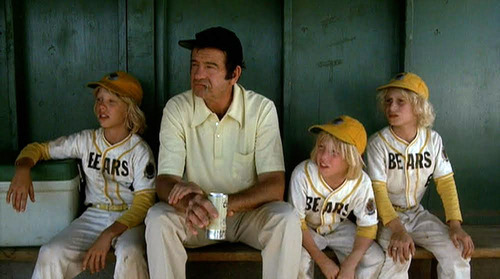
Hand me the ball…Life Lessons from Park League Baseball

Park league baseball season came to an end recently.  We had four grandsons between the ages of 8 and 10 playing on teams.  The teams had a few “veteran” players, but for most of the players this was their first experience playing organized baseball.  They had a lot to learn…and we saw amazing improvements in all the players in one short season.   

It’s clear that the lessons they learned can extend far beyond the field, if we are willing to pay attention. 

Panicking When the Ball Comes

My most vivid memory from the season is seeing the panic for many of the kids when the ball would come their way. Will they catch the ball?  Where will they throw it once they have it?  Do they know why they’re throwing it in a particular direction?  Will the player they’re throwing to catch the ball?

The drama was real.  It was clear that a lot of the kids didn’t expect the ball to come toward them.  I saw a few kids jump away from the ball to avoid fielding it.

As a spectator, it’s easy to see what’s happening.  It’s easy to assume that surely, we’d field the ball properly, and immediately know where to go with the play. 

It’s not always as easy as it looks.  Unexpected situations arise, and our response (or lack thereof) can significantly impact what happens next.  Learning to stay calm and doing some pre-thinking about our actions (before the play) will significantly improve our chance of success.

Understanding Game Situations

Many young players struggle with understanding the game situation—who’s on base, how many outs are there, what’s the best play to make when the ball comes to them, and how to act strategically.

This lack of situational awareness highlights a crucial lesson: the importance of context and awareness in decision-making. Understanding the bigger picture allows for more informed and effective actions. The coaches encouraged the kids to think ahead (pre-thinking) and consider various outcomes.  Whether the kids listened and embraced their advice was another thing entirely.

Are you thinking about your “game” situation?  The macro and micro aspects of the challenges you and your organization are facing.  Are you thinking ahead and considering various outcomes as part of your decision-making process? 

Learning the Basics: Throwing and Catching

It’s not uncommon for young players to throw the ball the wrong way or miss it entirely. These fundamental skills require practice and patience. This aspect of the game underscores the importance of mastering basics before tackling more complex tasks. In any field, solid foundational skills are essential for success. Nearly every pursuit or profession has basic foundational skills that need to be mastered along the way toward more advanced skills.  A football analogy fits well here…it’s important to understand the blocking and tackling part of the game before you can advance to running with the ball. 

Position-Specific Skills and Aspiration

In youth park league baseball, most of the hits stay in the infield.  This leaves the outfielders without much to do.  I heard lots of outfielders wishing they could play an infield position like second base, or catcher.  None of them understood what those positions entailed, but they knew that those positions had more action. 

A few of them took the time to learn about the infield positions from their coach.  They showed their interest and willingness to work their way to the infield.  This shows the value of preparation and skills development. It’s important to work on the necessary skills before aiming for a specific role, whether in sports or any other endeavor. It also emphasizes the value of seeing a goal and then taking the concrete steps to learn, grow, and achieve that goal. 

Strikeouts Aren’t Failures

Consider that an excellent hitter in the big leagues gets a hit about 30% of the time.  They may get walked occasionally, but the rest of their at bats result in fly outs, ground outs, or strikeouts. 

We saw a ton of strikeouts this past season.  I was always impressed with the kids who struck out and immediately came back to the dugout to ask their coach what they should be doing to avoid striking out next time.  Each strikeout was a learning opportunity…but only if the player saw it that way. 

We saw a few kids melt down in disappointment and embarrassment.  One kid from an opposing team stomped off the field and took himself out of the game (an extremely negative response to be sure). 

When things go wrong, or we don’t get the result we want, that’s the time to buckle down and learn why it happened.  Consider ways to improve so the results can improve next time.  It’s only a failure if you give up. 

Teamwork and Collective Goals

We are all self-centered.  As we mature, we usually learn how to control our self-centeredness or at least how to channel it productively.  Ten-year-old kids are no different.  Their focus is on their own performance.  Whether or not they’re hitting the ball.  Whether or not they made the right play. 

They often forget that the goal is for their team to win.  They can help the team achieve that goal by having a strong performance, but also by helping and supporting their teammates.  This is a powerful reminder of the importance of teamwork and the collective effort required to achieve a common goal. It’s easy to get caught up in individual performance, but true success usually comes from working together and supporting each other. Collaboration and shared successes build strong teams.  Strong teams create successful outcomes.

Consistency Matters

Ask an excellent bowler, pitcher, batter, shooter (basketballs or bullets), pole vaulter, or pickle ball player how they deliver such excellent results.  They’ll mention practice, dedication, and a strong mental approach.  Eventually they’ll talk about consistency.  Each of these pursuits (and countless others) require consistency above all else.  The exact motions, body positions, eye contact, and calmness of breath that they can count on happening whether they consciously think about it or not. 

Their practice process is all about achieving repeatable actions that their body remembers…every time.  They also know that they aren’t swinging for the fences every time they’re at bat, not trying to set the world record or do something extraordinary with every outing. 

They are working to become a steady and consistent performer at the highest level possible…and always reaching a little higher.

Consistency, patience, and incremental progress should be the goals…repeatable excellent outcomes will happen as a result of achieving these goals. 

Park league baseball is a ton of fun.  The drama is real.  Teams experienced the “thrill of victory and the agony of defeat” throughout the season.  We saw players improving and gaining confidence as the season unfolded.

I don’t know where the teams ended up in the standings at the end of the season. 

I know the kids learned a lot and hopefully they’ll incorporate some of what they learned well beyond the game.
The Silent Threat of Delayed Management

Management is an active responsibility.  It requires timely decisions and actions.

When managers delay addressing issues, providing support, or offering guidance, it has detrimental effects on both employees and their organization. This form of extreme procrastination, delayed management, erodes trust, hinders efficiency, and can cause long-term damage.

Delayed management occurs when managers, consciously or subconsciously, avoid performing their duties. They may fear confrontation, they may be overwhelmed, or they might just be lazy. Unlike regular procrastination, delayed management specifically involves neglecting critical managerial responsibilities.

When managers delay, employees feel neglected and undervalued. This can lead to decreased motivation and trust. Employees might interpret the manager’s inaction as a lack of belief in their abilities or interest in their well-being. Delayed management stalls projects and misses opportunities.

Picture a small water leak in your walls that goes unnoticed for weeks. The water continues to seep, causing mold to spread and wood to rot. By the time you notice the damage, extensive repairs are necessary. Delayed management causes similar deterioration within an organization, where small issues fester and become major problems.

Managers may fear making the wrong decisions or confronting difficult situations, leading to a cycle of inaction. High workloads and stress can cause managers to feel overwhelmed, making it easier to delay tasks. Some managers assume that someone else will handle the problem, leading to inaction.

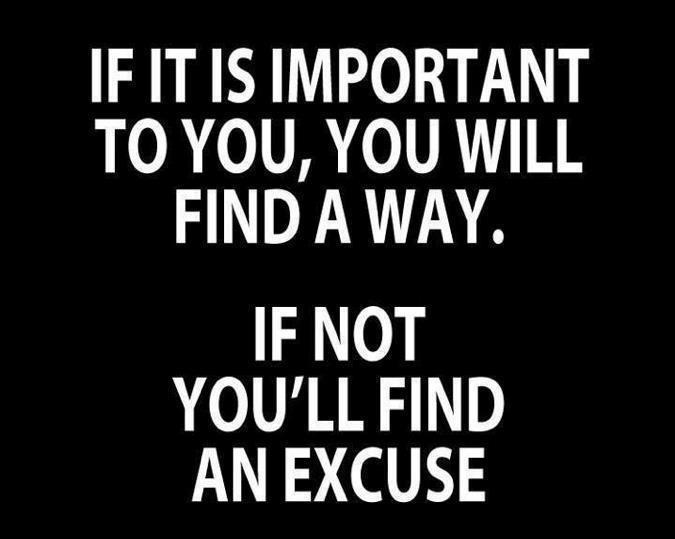
Each of these are reasons, not excuses, for delaying management.  For employees, none of these reasons matter.  The employees’ success relies on their managers doing their job…providing direction, feedback, and expending management energy on behalf of their employees.  There is no excuse for delaying management.

Managers should adopt proactive techniques such as regular check-ins with team members and timely feedback. Setting aside dedicated time each day for management tasks can help prevent delays. Effective delegation can distribute workload and empower team members, reducing the burden on managers. Implementing systems to hold managers accountable for their actions ensures they remain committed to their responsibilities. Regular performance reviews and feedback loops can help identify and address delayed management behavior early on.

Delayed management is a silent threat that undermines employee trust, hinders organizational efficiency, and causes long-term damage. Managers can foster a positive work environment and drive organizational success…but only if they do their job without delay. 

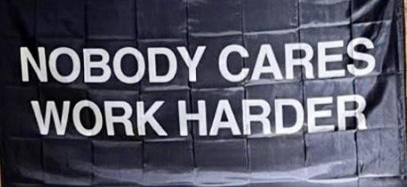
p/c – I saw this sign recently and loved its simple and direct message

You are the Observer: Using the Hawthorne Effect for Self-Improvement

The Hawthorne Effect refers to a psychological phenomenon where humans modify their behavior in response to being observed or studied. This effect was first observed in the 1920s and 30s during a series of studies conducted at the Western Electric Hawthorne Works in Chicago, hence the name.

The studies were designed to investigate the relationship between lighting conditions and worker productivity. But researchers found that regardless of changes in lighting, workers’ productivity improved when they knew they were being observed. This meant that the mere act of being the subject of an experiment or receiving attention could influence individuals to perform better.

It also means this powerful personal growth tool is available to you. It turns out that you are the observer you’ve been waiting for, the catalyst for your own transformation.

“You can’t learn to swim by reading a book about swimming. You have to get in the water.” – Unknown

The Burpee Quest

Funny thing about burpees:  watching someone do a burpee makes it look super easy (barely an inconvenience).  If a Crossfit guy tells you that a good warmup is 10 burpees per minute for 10 minutes, you might think that’s totally doable…until you try it.  You’ll learn about muscles you haven’t used in years.  You’ll be reminded that gravity is not your friend, and that you’re not as coordinated as you thought.

What if you start by doing 10?  Not 10 per minute for 10 minutes.  Just 10.  Each day.

That’s a tangible and doable goal to start.  You can observe (there’s that word) your progress and set incremental milestones for more.  Maybe you move up to 20 per day the second week, 40 per day the third week. 

A great way to keep track of your progress is to track your progress.  Sounds simple…but most people skip the tracking.  Tracking is your way to observe (there’s it is) your progress, and lets you become your own motivating force.  Write the date and burpee count down on a piece of paper, in your favorite journaling app, or maybe in an Excel spreadsheet. 

You are incrementally moving toward 100 burpees in a day.  You’re tracking your progress and will start to see the significance of each step toward your goal.

There’s something else you can observe (that word again).  Your body’s responses while you’re doing the exercise.  It will get easier as you go.  Easy?  No, just easier.  Your body (and mind) will begin to move to a higher level of performance.  Your baseline capability will increase.  Gravity still isn’t your friend, but you’re starting to learn how to partner with gravity to do the next burpee.

“Learning without reflection is a waste. Reflection without learning is dangerous.” – Confucius

It’s been 4 or 5 weeks since you started this quest.  You’re now able to do 3 sets of 25 burpees each day.  You haven’t reached 100 burpees yet, but you’re well on your way.  If you’re like most people, you might observe (there it is) that you can lighten up a bit at this point.  You’ve totally got this.  You don’t need to push as hard to improve from here.  Your goal is in sight.  Don’t fall into this trap!

This is the moment to refocus your goal…push it out a bit…extend the finish line.  You’ve already mastered the movements, now you need to apply discipline and blow past your original goal of 100 burpees per day.  Parlay this achievement into the next goal? 

Maybe actually using the 100 burpees as the warmup that Crossfit guy described.  You’ve been working on just getting to 100 burpees in a day, but what’s the next exercise you can do after your burpee warmup?    

Same process.  Take it in increments, track your progress, celebrate your milestones, welcome to another new baseline, continue to improve, set the next goal.        

How can you apply this to your profession? 

Actively seek opportunities to acquire new skills. Embrace the awkwardness of not knowing exactly how to do something…and do it anyway.  Remember that the satisfaction of learning and growth is uniquely yours. You, as the observer, choose the path of continuous learning.  It’s the best way (the only way) to adapt to the evolving demands of your profession.

Improve your value in increments, track your progress, establish new baselines, continue to improve.  Sound familiar? 

Solicit constructive feedback from colleagues and mentors, appreciating external input as valuable guidance. However, remember that you are the only one who can internalize and implement these insights.  Nobody will do it for you.

“Experience is a hard teacher because she gives the test first, the lesson afterward.” – Vernon Law

Your Keys to Self-Improvement

  1. Consistently integrate self-observation and improvement into your routine, recognizing that only you can chart the course of your personal growth.
  2. Reflect on your experiences, setbacks, and successes, understanding that the satisfaction of improvement is a personal journey. You are the sole interpreter of your progress.
  3. Remain flexible and open-minded, adjusting your methods based on feedback and new insights. As the observer, you continually determine refinements to your approach.
  4. Embrace setbacks as opportunities for growth, understanding that the satisfaction derived from overcoming challenges is a deeply personal experience. Stay committed to your objectives, recognizing that only you can appreciate the significance of your efforts.

The Hawthorne Effect is your friend (unlike gravity).  Use it and always remember that you are the observer, the driver, and the one who benefits most from your continuous improvement journey. 

A Season for Renewal

True renewal is a deliberate act of self-reclamation…

p/c: a recent sunset at our little homestead

Prayer to Saint Joseph the Worker

O Glorious Saint Joseph, model of all those who are devoted to labor,

obtain for me the grace to work in a spirit of penance for the expiation of my many sins;

to work conscientiously, putting the call of duty above my natural inclinations;

to work with thankfulness and joy, considering it an honor to employ and develop by means of labor the gifts received from God;

to work with order, peace, moderation, and patience, never shrinking from weariness and trials;

to work above all with purity of intention and detachment from self, keeping unceasingly before my eyes death and the account that I must give of time lost, talents unused, good omitted, and vain complacency in success, so fatal to the work of God.

All for Jesus, all through Mary, all after thy example, O Patriarch, Saint Joseph. Such shall be my watch-word in life and in death. Amen.  – Pope St. Pius X

In life’s journey, we may find ourselves off course or losing track of our original path. We may even fail ourselves or those we love. It is in these moments that we are being called to profound self-discovery and renewal. 

Renewal is not a passive occurrence.  As the prayer to Saint Joseph states, it requires us “to work conscientiously, putting the call of duty above [our] natural inclinations.”  True renewal is a deliberate act of self-reclamation.  We have a duty to ourselves and those we love to put in the work that leads to our self-transformation. 

It isn’t easy (nothing worthwhile ever is).  It involves adapting, finding new ways, and being intentional about embracing change. 

When we realize that ours is always a season of renewal, that we can “work in a spirit of penance for the expiation of [our] many sins,” then we will be able “to work with order, peace, moderation, and patience, never shrinking from [the] weariness and trials” of our self-improvement. 

May the spirit of renewal be our guide, not diverting us from our journey but enhancing it.  May we find the resilience within us to adapt, renew, and move forward with a fresh sense of purpose and determination.

The Unsung Heroes: Driving Excellence in the Shadows of Mediocrity

The pursuit of excellence is always a journey worth taking. Do you have what it takes?

It’s an unfortunate truth that a large cohort of our society defines their success as doing the minimum.  For them, success means not failing (or being seen to fail). 

They’re okay with mediocrity, inefficiency, and ineffectiveness. They believe they can’t make a difference anyway, so they welcome the warm embrace of the status quo.  They take comfort in joining the flock of mediocrity. 

Do you find success in simply avoiding failure, or are you one of the rare renegades who can’t stand mediocrity?

In a landscape where inefficiency and ineffectiveness are accepted norms, there’s a shrinking community of individuals who see an opportunity for improvement. They envision a future defined by hard work, creativity, and continuous efforts to break free from the shackles of the status quo.

These unsung heroes view mediocrity as a chance to make a difference. They are willing to undertake the hard work necessary for transformation. These passionate individuals are the driving force behind organizational change, pushing boundaries and overcoming obstacles in the relentless pursuit of excellence.

They are willing to try.      

They’re willing to risk failure, often multiple times, to pull themselves and their organization kicking and screaming toward a better future. 

In a perfect world, organizations would recognize and elevate these passionate individuals, recognizing their contribution. 

Unfortunately, we don’t live in a perfect world.  Status quo is like a warm blanket.  Those who threaten to take away that blanket are often seen as a threat. The well-organized flock of mediocrity is a powerful deterrent to new ideas and improvement. 

Do you have what it takes to be one of the renegades?  One of the unsung heroes? 

Are you willing to toil in relative obscurity, pushing back the walls of mediocrity, making room for excellence in their place? 

Few are up to this challenge.  But organizations count on these renegades for their success everyday…even if they don’t realize it.

Premature Judging

The easiest approach is to prematurely judge, declare failure and decide who to blame…

Should a new home construction project be judged when only its blueprint exists?  How about when the site has been prepared?  What about when the materials like wood, rebar, and electrical conduit are delivered?

Should we wait to judge the home build until the framing is complete?  Should we wait until the walls and roof are added?  Or, wait until all the windows are installed?  What about the paint and other finishing touches on the house?  Should you wait for those to be completed?

Can you judge the success of the home build before it’s finished?

When making chocolate chip cookies, do you judge the success of the cookies while mixing the ingredients?  How about when the chocolate chips are poured into the batter?

What if the recipe called for real butter, but you only have that non-diary butter substitute that’s supposed to be healthier than butter?  Are your cookies doomed at that point?  Should you call-off the project and declare it a failure?

Assuming you’ve made it past the butter/non-dairy butter issue, is it right to judge the cookies after they’re spooned out onto the cookie sheet, but not yet baked?

Just before placing those filled cookie sheets into the preheated oven, is that the time to re-evaluate the entire cookie-making process to determine if it’s failing?  Should you call a meeting to discuss whether the cooking temperature listed in the recipe is the correct one for your cookies?

Houses and cookies are obvious examples of “projects” that have a lot of moving parts.  They build from a set of raw ingredients, mixed with time and effort, into a completed item.

What about less obvious events in our lives?  When’s the right time to judge these for success or failure (using whatever measures you’ve chosen)?

  • new job
  • new business
  • new business strategy
  • new information system
  • new software development project
  • new friends
  • new marriage
  • new workout regimen
  • new hobby
  • new home

The easiest approach is to prematurely judge, declare failure and decide who to blame.  Failure is comforting.  The status quo is easy.

The new thing is never easy.  Creating something new is almost always uncomfortable.

When we judge too early, failure soon follows.

By the way, the cookies were amazing, but not until they came out of the oven.

Photo by NeONBRAND on Unsplash

That’s all great. But, what does your customer think?

The customer is the only reason we exist…

  • “We had an awesome meeting yesterday. We finalized our growth plans for next year.  We’ll be presenting them to the CFO next week.”
  • “That conference was amazing. The speakers really hit the nail on the head about what’s coming in our industry.”
  • “We finished all the employee reviews before the deadline. We start every year with this fire drill!  I’m glad that’s behind us!”
  • “This new software update will finally fix our scheduling problems.”
  • “The year-end financials are done, and our tax filing is happening on time this year.”
  • “Our new branding colors are excellent. They really pop on our mobile app!”
  • “The holiday party committee met, and we’ve got our recommendations for the venue and party theme this year. When can we meet to finalize the plans so we can put money down on the venue?”

What do all of these have in common?

They’re all statements I’ve heard, or said, during my professional career.  I could’ve rattled off 30 more sentences just like these.  All would have represented important activities, milestones, discoveries, inventions, process improvements, or events within the companies I’ve managed (or owned).

But, none of them represented what our customers think.  The customer, in this case, is the person or company that’s paying us for our products and services.

None of the sentences describe us communicating directly with our customers or our prospective customers.

None of them focus on why our customers use our products and services.

None provide a greater understanding of how our customers relate to us.

None help us understand how important we are (or aren’t) in their life.

Are we just a faceless machine that delivers something our customer needs at this moment?  Are we merely a utility to them?

If we disappeared tomorrow, would they miss us?

Do they know who we are as a company?  Do they know anything about our values?  Do we know what our values are at this company?

Do they care about our branding colors, or that we’re having a nice holiday party this year?  Probably not.

Even when we fail to ask, our customers have powerful ways to tell us how we’re doing:

  • When they continue paying us, we know that they value what we’re doing today. They haven’t found anyone else who does it better, cheaper, or both.  They haven’t found anyone that they think cares more about them than we do.  We’ve won today.
  • When they call or write to complain or ask for something new and improved, we can infer that they care enough to ask. They trust that we’ll listen.  Our response lets them know whether their trust is well-placed, or not.

Winning today is nice.  Winning tomorrow, next week, next month, and next year is far more important when it comes to customers.

While we take care of all the tasks associated with keeping our organization afloat, it’s easy to forget why our organization exists in the first place:  to serve our customers and attract new ones.

The customer is the only reason we exist.

Something to keep in mind the next time you put off calling your customer back until after you’ve finalized your company’s holiday party plans.

P.S.  This riff about customers applies to our internal customers as well.  After all, our internal customers are often the ones who deliver service to our external customers.  If we fail to serve our internal customers, you can easily guess what’s going to happen to our external customers.


Photo by Tyler Nix on Unsplash

Anything You Write…

What will you write today?

“Anything you write can be fixed, except for the pristine perfection of the blank page.” –Neil Gaiman

Our future is the ultimate blank page.  The cursor blinks patiently, endlessly.  Waiting for us to write something.

That cursor doesn’t care what we’ve written in the past.  It doesn’t really care what we’ll write in the future.  Still it blinks…waiting.

Writers sometimes talk about writer’s block.  The intimidating view of a blank page that beckons them to write something…anything.

I agree with Seth Godin, that there’s no such thing as writer’s block.  Rather, there’s fear that what I’m writing won’t be as perfect as I want it to be.  It won’t be accepted by my readers.  It may be shunned, castigated, or otherwise flamed by someone I don’t even know.

So, my lizard brain protects me by making sure I don’t write a thing.

The same is true in life.  What we write into our life today may not be perfect.  It may not make sense to anyone.  It may be wrong.

That’s okay.  As Mr. Gaiman says, we can fix it.

Today’s page will be written, whether we do the writing or not.

What will you write today?


Photo Credit:  Bob’s computer screen before and after writing this post


The Dodge

I’m often most productive when dodging the thing I’m supposed to be doing.

Here’s a paradox about productivity:

I’m often most productive when dodging the thing I’m supposed to be doing.

I always know when I’m avoiding a task, even if tell myself I’m not.  That task that seems undoable, requires multiple synchronized steps, requires difficult decisions, involves lots of other people who may not be “on board,” or the task with a nebulous benefit way out in the future.

It’s easy to dodge these challenging tasks and focus on the simple stuff.  That list of to-dos I can knock out in an afternoon.

I know I’m not doing the tough thing, but at least I’m being productive.  Nobody can accuse me of being lazy if I just keep moving.

This is the curse of staying busy, while not accomplishing anything.

I can dodge all I want.  I can tell myself stories to justify my delay.

It doesn’t matter, the tough task will still be there, waiting.

Here’s another paradox:

When I finally face the tough task, the one I’ve been avoiding, it usually starts to look a lot easier.  The next indicated steps begin to show themselves.  The unwieldy becomes doable.

The dodge makes the tough task appear bigger than it really is.

It comes down to fear.  Fear of the unknown.  Fear of the difficult.  Fear of embarrassment.  Fear of failure.  Fear of success (yes, this is a thing).

What if this task is harder than I imagined?  What if it owns me?  What if I can’t do it?  What if someone sees me fail?

The answer to all these questions is, “So what.  Get started anyway.  Stop dodging and start doing.”

“Knowing what to do is very, very different than actually doing it.” – Seth Godin

Photo by Glenn Carstens-Peters on Unsplash


Iteration is Everything

Iteration is the journey…

Iteration knows none of us know.

Iteration recognizes our first try isn’t our only try.

Iteration feeds innovation.

Iteration is fueled by our commitment.

Iteration is the only path to knowing.

Iteration overcomes our Resistance.

Iteration makes the mysterious familiar.

Iteration makes the impossible possible.

Iteration makes mistakes.

Iteration requires failure to find success.

Iteration sheds light on the darkness we fear.

Iteration is the journey to greater understanding.

Iteration always gives us another try.  The question is:  Do we have the courage to try again?


Photo by Tommy Lisbin on Unsplash