
Creating Like Children

When you watch a five-year-old, a ten-year-old, even a twelve-year-old create, you see what unfettered creative freedom really looks like. Whether it’s a drawing, a Lego tower, or a clay sculpture, they throw themselves into the process with joyous abandon. In their mind, they can see clearly what they’re making. They know why they’re making it. And there’s almost always a story behind it.

They aren’t self-conscious. They aren’t trying to impress anyone. Sure, they like to show their creations to parents, grandparents, and teachers.  But their motivation isn’t just about approval. It’s about expression.

Most children are free from the baggage of expectation. They don’t wonder if what they’re making is good enough. And when they finish, they move right on to the next thing. Their self-worth isn’t tied to the outcome. The value of the work comes from their own perspective, not from what others think.

But around age thirteen (sometimes earlier) things change.

After years of chasing approval, learning the “right” way to do things, being graded and corrected by well-meaning adults, something fundamental happens. Their freedom to create without judgment slowly gets buried. Doubt takes root. Worry about what others might think starts to shape their process. Fear of looking foolish holds them back.

And as the years pass, it only gets worse.

Tell someone you’re going to take up oil painting, stained glass, sculpture, or any new creative pursuit as an adult, and they’ll likely have two reactions: a polite smile of encouragement, and quiet skepticism that anything worthwhile will ever come of it.

Starting something creative as an adult feels strange. It’s outside the bounds of what “normal” people do. It’s far easier to stay in line, avoid looking foolish, and sidestep the discomfort of being a beginner again.

But we are all beginners at birth. Even the rare prodigies had to take their first step (the one that happens long before we see the gifted 5-year-old who can play a piano concerto). For the rest of us, every new skill—whether it’s creative, practical, or professional—requires courage, repetition, failure, and patience.

I’ve learned that when I let go of expectations (not easy) and stop worrying about looking foolish (also not easy), the magic happens. With this new frame of reference, trying something new, something creative, or something unfamiliar, brings a new energy having nothing to do with the outcomes.

It doesn’t seek approval or chase productivity. It simply opens the door to wonder—something we often unlearn as we grow older.

I’m lucky. I get to spend time with my grandchildren, who remind me what fearless creativity looks like. They show me that learning and creating, and the fun we have along the way, are all that matters. 

Maybe we all need a little more of that. 

To create like children again.
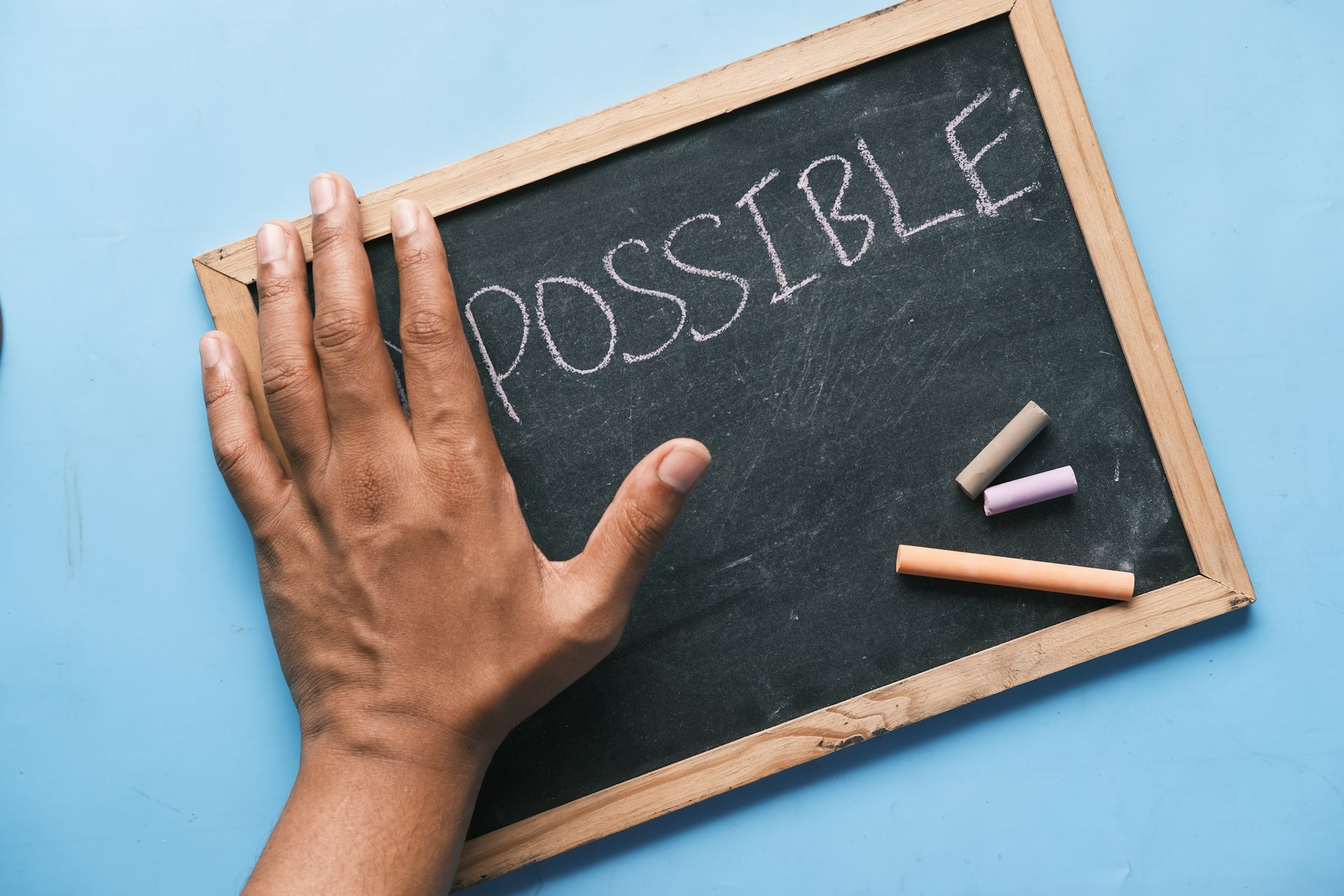
Photo by pine watt on Unsplash

Resist the Rut

It’s easy to fall into the rut.

To assume that delays are normal.
That long lead times are just “the way things are.”
That bureaucracy is an immovable force we’re all meant to quietly and endlessly orbit.

But here’s the question we should be asking:
Does something really take months to get done…or is that just the rut talking?

Ruts are sneaky. They dress up as policies, forms, regulatory frameworks, meetings, approvals.

They start small.  Maybe with one postponed decision or an overcautious email.  Before long, they’re a deep trench. One that feels safer to live in than escape.

Some processes do require time. Some decisions need careful research and thoughtful consideration.

But not everything takes as long as we pretend.  And if we’re being honest, we often lean on red tape as a crutch. To justify inaction, to mask fear, to cover for indecision, to avoid risk. Maybe to avoid the work altogether.

We say things like:

-“That’s how our system works.”

-“These things take time.”

-“We’ll have to check with Legal.”

-“I’m waiting on approvals before I can move forward.”

But what if we stopped waiting?

The 10 Million Dollar Question:

If you or your organization were promised $10 million the moment this project is completed—this thing you’re currently delaying—how long would it actually take to finish?

-How focused would you suddenly become?
-How many hurdles would get knocked out of your way?
-How quickly would meetings be scheduled, decisions made, and steps taken?

If your answer is “much faster,” then the rut is running the show. You’re not stuck. You and your organization are settling for the slow lane.

What if we challenge the assumptions about how long things should take?

What if we stop admiring and massaging the problem and started solving it?

What if we stop delegating or offloading the issue to another department, and just fixed it ourselves…today?

Organizations that resist the rut move faster. They ask better questions. They take the time to consider how to eliminate hurdles. They focus on outcomes, not just process. They know when structure helps, and when it hinders. They trim what’s unnecessary and protect what’s essential.

This isn’t about being reckless. It’s about refusing to be lulled into complacency. It’s about bringing urgency back to the table.

It’s about remembering that progress often begins with someone brave enough to say: “Why not now?”

If you’re feeling stuck, ask yourself:
-Are you really bound by rules and timelines? Or just by a habit of delay?

Resist the rut.

Challenge the default.

Challenge the impossible and make it possible.

Push for better.

It might take less time than you think.

h/t – my colleague, Jacob Smith.  An extremely productive and prolific software development manager who regularly challenges the default and always pushes for better.

Photo by Towfiqu barbhuiya on Unsplash

The Work Before the Work

Everyone loves the big idea. The bold plan. A strong vision of what can be.

It’s easy to get excited about an amazing result.  A finished project, a better version of ourselves, a breakthrough moment. But big plans mean nothing without the tools and materials to carry them out.

Goals and aspirations get a lot of attention.  Preparation, usually not so much. 

Preparation isn’t glamorous. No one sees the early mornings, the quiet practice, the reading, the repetitions, the small decisions and adjustments that come from thinking deeply about how to be better. But that’s where everything starts. That’s the real work.

You can’t build a tower by imagining the top floor. You start by stacking bricks. And before that, you must gather the bricks. Along with mortar. Along with the tools to lift, cut, measure, and shape. That’s what preparation is.  Gathering what you’ll need to be ready when it’s time to build.

This applies to everything in life.

Want to be a better leader? Prepare by learning how to listen, how to stay calm and think under pressure, how to help your team to be their very best.

Want to level up at work? Prepare by always sharpening your skills, staying curious, looking for problems that need solutions, becoming someone your team can rely on.

Want to be a better friend, spouse, or parent? Prepare by learning to listen, to be present, and to lead with patience and love.

Want to face hard times with strength? Prepare by choosing the hard things before they choose you.

Don’t wait for life to demand something from you before you get ready. Always prepare so you will be ready.

Ask yourself:
-What materials am I gathering?

-What tools am I building?

-What productive habits am I forming when no one’s looking?

Preparation isn’t just a phase. It’s a mindset. A lifestyle. 

You’re either gathering bricks—or you’re preparing to fail.

Because in the end, you won’t rise to the level of your ambition. 

You’ll fall to the level of your preparation.

h/t – my friend Pete Hilger as we were discussing how to get building supplies to a rural Guatemalan city for a medical facility build project.  He tossed out the line, “You can’t build a tower without first gathering a lot of bricks and mortar.”

Photo by Peyman Shojaei on Unsplash

Starting is the Hardest Part

The blinking cursor on a blank document. The empty stretch of land where you’ll soon be building a shop. The new web application your company wants to develop that will revolutionize your industry. These are just a few examples of standing on the edge of something new, something important, yet feeling completely unsure of where to begin.

You might have a vision of the final result—the finished document, the completed shop, the fully functioning app. But that doesn’t mean you know how to get there.

It’s easy to get lost in the variables and the endless possibilities. What if I make the wrong decision? Are there more resources out there? What do other people think? Should I read more articles? Watch more videos? Seek more advice? What if I mess it all up?

In every case, the hardest part is starting.

It’s taking that first step. Writing the first sentence. Sketching out the first screen of an app. Nailing the first stakes into the ground—the ones you’ll attach a string to, so you can visualize where your new shop will go.

It’s a commitment to action over hesitation. A moment of bravery that marks the beginning of making something real.

An amazing thing happens when you start. Your mind shifts from a place of endless “what-ifs” to a place of positive motion. You begin to focus on the next steps and real solutions. All the challenges you imagined before starting—that, in many cases, won’t even come to pass—are forgotten. The path ahead becomes clearer, and each small step forward makes your next decision easier.

Does this mean everything goes perfectly after you start? Of course not. You’ll make mistakes, adjust, learn, and pivot along the way.

But here’s where starting becomes crucial: it provides a tangible foundation. It gives you something to measure against, something to refine, something to edit. You might completely change your initial idea, but you wouldn’t have discovered the need to change if you hadn’t started.

Starting is hard, but it’s also the most important part.

Take the first step, even if it feels uncomfortable. You’ll learn more from those first few steps than you will from standing still…wondering what might happen.

Once you start, momentum kicks in. And from there, the possibilities are endless.

Photo by Jon Tyson on Unsplash

Busy Isn’t the Problem…Ineffectively Busy Is

Almost everyone claims to be busy. Many will even describe their endless to-do list—what they’ve done, what they’re doing, and what’s next—justifying their busyness.

Lots of articles explore different types of busyness. One that stands out for me, Busyness 101: Why Are We SO BUSY in Modern Life?, lists the following types:

-Busyness as a badge of honor and trendy status symbol

-Busyness as job security

-Busyness as Fear of Missing Out (FOMO)

-Busyness as a byproduct of the digital age

-Busyness as a time filler

-Busyness as a necessity

-Busyness as escapism

The last one stands out to me: busyness as escapism.

When we’re constantly busy, we get to avoid the hard things in life. No time to reflect on priorities. No time to find smarter ways to work. No time to focus on meaningful goals…ours or our organization’s.

Busyness lets us sacrifice our other responsibilities. We convince ourselves that our sacrifices are necessary, without questioning what they truly cost us or those around us. And we tell ourselves that once we’re “less busy,” we’ll focus on the important things we’ve been neglecting. The problem? We rarely become “less busy” (at least, from our perspective).

But the busiest effective people operate differently. These individuals aren’t just busy for the sake of it.  They work with intention, with purpose.  They prioritize. They seek smarter ways to work. They focus on meaningful goals rather than just checking off task lists. 

These are the people who not only get things done but get the right things done. And they do it faster than everyone else. Why? Because they’re too busy to be distracted by nonsense and trivialities. They tackle the big things first, and often, the smaller things take care of themselves.

When I managed large organizations, I valued these employees the most. They weren’t just productive, but they were leaders.  They inspired everyone around them to be more effective. Whenever a new project or opportunity arose, I sought them out. I knew they’d prioritize the new project well and deliver great results.

The difference between being busy and being effectively busy comes down to mindset. The most productive people don’t just fill their days.  They own them.

Next time you catch yourself saying, “I’m so busy,” pause and think. Are your tasks productive and effective, or just occupying your time? 

You may find that you’re not as busy as you thought.

Photo by Anna Samoylova on Unsplash…my eye is on the girl in pink who’s walking away from the rope (I bet you didn’t notice her at first)

Breaking the Rhythm of Mediocrity

Each of us has a natural speed.  A rhythm that feels comfortable. Some of us move fast, always pushing, never stopping. Others take a slow, methodical approach. And some avoid movement altogether.

Occasionally, we can shift gears and speed up for a short-term need. But the comfort of our standard speed usually draws us back.

Dialing up is hard. It’s difficult to imagine doing more than we’re doing now. It’s harder still to visualize the better outcomes that could come from pushing ourselves and our organizations beyond the status quo.

Even worse is when we deliberately slow our pace to fit in.  To blindly match our rhythm to those around us, in our workplace, our social circles, our environment. The groups we allow to shape us.

The slow, almost imperceptible tick-tock of our internal metronome feels safe, especially if it’s set to someone else’s rhythm. It’s predictable. It gives us a (false) sense of control when we have no control at all.

We tell ourselves that changing our settings would bring chaos.  Better to stay safe and avoid the challenge. 

If we’re willing to turn our settings down to accommodate others, why not turn them up to pursue our own goals?

Why not push beyond our comfort zone to improve, to evolve?  Why not try to inspire those around us to ramp up? 

The things we don’t change are the things we’re actively choosing. Doing nothing is a choice.

Life moves at a relentless pace, largely outside our control. What we can control is our response.  We can set our internal rhythm to match what’s happening or set it to create what we want to happen.

Here’s a brutal truth: The outside world doesn’t grant or deny us anything. It keeps moving, with or without us.

It’s up to us to set our own tempo—not for the group, not for the organization, but for ourselves and the people who matter most.

Photo by Lance Anderson on Unsplash

Climbing 10% of the Mountain

“…climbing 10% of the mountain ten times is not as useful as climbing to the top once.” – Adam Mastroianni

This quote reminds me of the old adage about project resourcing: sometimes projects can’t be completed faster merely by adding more people to it.  After all, the story goes, nine women can’t make a baby in a month.

Does this climbing quote ignore our preparation?  Route scouting, equipment testing, and countless workouts that make the summit climb possible.  Not to mention the like-minded team we built to support the climb.

Maybe it’s not about preparation.  Maybe it’s about the false-starts, the simulated progress, the big talk and no action that we engage in to make it seem like we’re climbing when we’re not.  We think we’re fooling everyone, but we’re only fooling ourselves as we take the comfortable way out and choose not to climb at all.

It’s easy to climb 10% of the mountain or achieve 10% of the goal.  It’s easy to get 50%.  60%.  Even 75%.  But as the challenges compound near the top, we let doubts creep in.  The grinding effort becomes exhausting.  We lose sight of the summit or forget why we’re climbing in the first place. 

We make excuses.  We can come back another day and try again.  The summit will always be there, and maybe next time… 

That’s just it.  We’re rarely “ready” for the climbs that matter, whether in business, fitness, or life’s hardships.  Waiting for the perfect time often means waiting forever. 

You have the power to choose the summit run every time.  Committing 100% effort, even when you feel 60% ready.  Trusting that you’ll figure out the rest along the way. 

Life’s summits rarely wait for us to feel ready. The question is: will you take the first step…and then push beyond 10%, all the way to the top?

Photo by Paolo Feser on Unsplash

The Comfort Trap

There’s nothing like your own bed, your own pillow, and nice warm blankets when it’s time to sleep. To confirm this truism, try backpacking for a few nights in freezing conditions. Your lightweight sleeping pad and mummy sack might keep you alive, but they’re no match for the comfort of home.

Or spend a couple of weeks living out of a suitcase, hopping from one hotel bed to another. It’s rare for a hotel bed to be anything but “hammock-shaped” with giant pillows that defy logic and offer little comfort. 

We all love to be comfortable. Ask most people, and they’ll tell you they’d rather sit at home in their jammies in their favorite chair, watching their favorite movie with their go-to snacks and drink in hand.

Comfort is easy. It requires little effort, and even less thought.

It’s safe, predictable, and free of fear. We know exactly how to achieve it, and we stay there because it feels good.

That’s the problem. Comfort is about staying. It’s about achieving sameness.

Growth doesn’t happen in comfort. The magic begins when we step outside our cozy bubble.

Trying new things, exploring unfamiliar places, or learning new skills rarely feels comfortable at first. It’s awkward and often frustrating. But with time, practice, and patience, we adjust. The uncomfortable becomes comfortable. We expand our boundaries. We redefine what normal feels like.

We grow.

Comfort is incredible. It’s that perfect combination of warmth, ease, and familiarity. It offers a necessary break from life’s challenges. But if we make it our ultimate goal, it lulls us into complacency. It encourages us to settle, to avoid risks, to stop growing.

Celebrate the moments of comfort when they come. Appreciate them for what they are—a place to rest and recharge. But don’t let comfort hold you back.

Keep exploring.

Keep taking risks.

Keep pushing past the edges of your comfort zone.

That’s where the real magic happens.

Photo by Amy Humphries on Unsplash

It’s Up to You

Consider all the things that are up to you:

  • Your mood when you wake up.  Waking up on the wrong side of the bed is your choice.  You alone decide how you’ll approach each new day.
  • Your morning routine.  What’s included or excluded?  How much time are you providing for yourself in the morning?  Are you rushing, or welcoming the day at the pace of your choosing?    
  • The tone of interactions you have with others.  Are you smiling when you’re talking (whether in person or by phone)?  Are you looking for faults in others, or the good in others?  The energy you bring is your choice.
  • Your career choice.  Unhappy at work?  What are you doing to change it?  Are you changing your situation, or just complaining.  Not sure if you should work in your chosen profession?  What are you doing to figure it out?  If this profession isn’t for you, what concrete steps are you taking to prepare to work in another profession?  You decide all of it.
  • Whether you choose to manage your day, or let it manage you.
  • The places you visit and frequent.
  • Your hobbies.  Do you even have a hobby, or are you too “busy” for anything that brings you joy or peace outside of work? 
  • Your friends.  Are they lifting you up or bringing you down?  Jim Rohn said, “You are the average of the five people you spend the most time with.”  Choose wisely.
  • The organizations you choose to join or support.

This list only scratches the surface. 

It’s easiest to let someone, or something, else make the decisions for you.  But remember—choosing not to decide is a decision, and you own it.    

So, what kind of day will you have?  What kind of life will you live? 

It’s up to you.   

Photo by Eric Prouzet on Unsplash

Two Steps Forward, One Step Back…

Is still progress.

Pick any project—it doesn’t matter if it’s something you’ve assigned to yourself or something your boss has given you. It could be a huge, long-term project, or something that should take less than a week.

Chances are, that project will turn out to be harder than expected.  It will require effort that nobody saw during the planning process (whether planning consisted of a 5-minute conversation, or a multi-month series of meetings and discussions). 

Here’s something else about projects: even when we’re given full ownership, most of us will try to find ways to make sure we’re not fully responsible for the outcome.

But no matter what, the project remains. We own it. We also own the goal of getting it done right.

“The man who moves a mountain begins by carrying away small stones.” – Chinese Proverb

Progress is made through consistent effort, one step at a time. Then another. Then another. It’s the steps toward the goal that matter, almost as much as the goal itself. 

What if some of the steps we take are the wrong ones?  What if we have to go back and redo some of our work?  What if somebody sees us make mistakes along the way?

Each of these are (almost) guaranteed to happen. 

Embrace it.  Learn from it.  Carry on.

Keep stepping forward.  Learn along the way and give yourself permission to take a step (or two) back from time to time. 

The progress you’re making is the reward.    

Photo by NEOM on Unsplash