The Work Before the Work

Everyone loves the big idea. The bold plan. A strong vision of what can be.

It’s easy to get excited about an amazing result.  A finished project, a better version of ourselves, a breakthrough moment. But big plans mean nothing without the tools and materials to carry them out.

Goals and aspirations get a lot of attention.  Preparation, usually not so much. 

Preparation isn’t glamorous. No one sees the early mornings, the quiet practice, the reading, the repetitions, the small decisions and adjustments that come from thinking deeply about how to be better. But that’s where everything starts. That’s the real work.

You can’t build a tower by imagining the top floor. You start by stacking bricks. And before that, you must gather the bricks. Along with mortar. Along with the tools to lift, cut, measure, and shape. That’s what preparation is.  Gathering what you’ll need to be ready when it’s time to build.

This applies to everything in life.

Want to be a better leader? Prepare by learning how to listen, how to stay calm and think under pressure, how to help your team to be their very best.

Want to level up at work? Prepare by always sharpening your skills, staying curious, looking for problems that need solutions, becoming someone your team can rely on.

Want to be a better friend, spouse, or parent? Prepare by learning to listen, to be present, and to lead with patience and love.

Want to face hard times with strength? Prepare by choosing the hard things before they choose you.

Don’t wait for life to demand something from you before you get ready. Always prepare so you will be ready.

Ask yourself:
-What materials am I gathering?

-What tools am I building?

-What productive habits am I forming when no one’s looking?

Preparation isn’t just a phase. It’s a mindset. A lifestyle. 

You’re either gathering bricks—or you’re preparing to fail.

Because in the end, you won’t rise to the level of your ambition. 

You’ll fall to the level of your preparation.

h/t – my friend Pete Hilger as we were discussing how to get building supplies to a rural Guatemalan city for a medical facility build project.  He tossed out the line, “You can’t build a tower without first gathering a lot of bricks and mortar.”

Photo by Peyman Shojaei on Unsplash

Garbage In, Garbage Out: Your Focus Defines Your Success

“Garbage In, Garbage Out” doesn’t just apply to computers—it applies to your life. The people you spend time with, the content you consume, and the habits you build shape your future. Want better results? Choose better inputs.

“You are the average of the five people you spend the most time with.” – Jim Rohn

“You are what you repeatedly do.” – Aristotle

“Show me your friends, and I’ll show you your future.” – John Kuebler

“Your life is controlled by what you focus on.” – Tony Robbins

The old phrase, “garbage in, garbage out” doesn’t only apply to computers and databases. It applies to how we live our lives.

Our inputs—the people we surround ourselves with, the information we consume, and the habits we cultivate—shape our outcomes.

If you spend time with amazing, imaginative, productive, and adventurous people, chances are you’ll start adopting some of those same qualities. At a minimum, you’ll develop personal goals that push you to emulate those qualities in your own way.

On the other hand, if you surround yourself with negative, self-destructive, bitter, or complacent people, their mindset and behaviors will slowly seep into your own life. Even if you think you’re immune, habits and attitudes are contagious.

Small Choices Compound Over Time

Consider this simple example.

If you exercise at least three days per week, you’ll see progress. Do it five days per week, and your results will be even better.

But if you instead have the habit of drinking a large chocolate shake for lunch every day, the impact won’t be immediate, but with time you’ll notice a negative shift in your health and energy levels.

Neither of these changes happen overnight.  But over months and years, they define who you become.

Our small choices create big results.

The Status Quo Trap—It’s Hard to Change

It’s obvious that if you run toward a cliff, ignoring all the warning signs, you’re in for a big fall. But in real life, it’s rarely that clear.

Like the boiling frog who doesn’t realize the water is heating up until it’s too late, many people stay in toxic environments, bad habits, or unproductive routines because the declining results are slow and gradual. It doesn’t feel urgent—until suddenly, it is.

Our Inputs Dictate Our Outputs—So Choose Wisely

Our mind works like an algorithm.  What we feed it shapes what it returns to us.

If we constantly consume negative news, gossip, or toxic social media, our mindset will reflect it.

If we surround ourselves with people who challenge us to grow, read books that inspire us, and engage in meaningful conversations, our perspective will shift toward productivity and fulfillment.

The good news? We choose. And by making intentional choices, we set the trajectory for our future.

Challenge: Take an Inventory of Your Inputs

For the next week, pay attention to what’s influencing you.  Your environment, the content you consume, and the habits you engage in.

Who are the five people you spend the most time with? Are they making you better?

What are you reading, watching, and listening to? Is it fueling growth or draining your potential?

What small habit could you start today that would improve your future?

The inputs you choose today will shape who you become tomorrow, next year, and a decade from now.

Your choices matter.  Make them count.

Photo by William Topa on Unsplash

Through His Eyes: A Lifetime of Wisdom Captured on Canvas

There are some paintings that do more than just depict a subject.  They capture an entire story, an entire lifetime, in a single moment. This piece is one of those rare works that demands to be seen. It grips its viewer, pulling them into a world of experience, emotion, and wisdom.

I see far more than just an old man with a pipe. I see the passage of time written across his face.  Lines carved by laughter, sorrow, resilience, and acceptance.

His piercing gaze holds stories of joy, regret, belief, triumph, failure, love, admiration, and appreciation. His expression speaks of a man who has not just existed but has truly lived, embracing all that life has offered, both the good and the bad.

Beyond his gaze, I see a hand that tells a story all its own.  His hands have endured hard work.  They’ve held the people he loves. These hands have fought, and they’ve also comforted. They are worn, yet steady.  A testament to a life of resilience, labor, and tenderness.

His grip on the pipe isn’t just a habit.  It’s a ritual.  A moment of reflection held between calloused fingers that have stood the test of time.

I didn’t know Richard Hatch personally before his recent passing.  But I can see through his painting that he had a remarkable ability to portray humanity on canvas. He wasn’t just painting a face.  He was capturing the soul of this man for each of us to see. 

Every brushstroke tells a story.  Every shade of color conveys emotion, and every detail reflects a life filled with lessons. His is the kind of art that doesn’t just sit on a wall.  It reaches out, starts a conversation, and lingers in your mind long after you’ve looked away.

Our days become years, our years become decades, and before we know it, our decades are a lifetime. This painting reminds me of that stark reality.  Not in a sad way, but in a way that urges me to embrace every moment while I can. To live fully, to love deeply, and to accept this journey for the adventure that it is.

Mr. Hatch’s painting reminds us of the beauty in aging, the dignity in experience, and the wisdom of acceptance.

p/c – Painting by Richard Hatch 

Choosing Your Team Wisely

Thought leaders play a critical role in any organization. Sometimes, they have titles like CEO, COO, CIO, etc. Other times, the real thought leaders are deep within the organization—formally or informally influencing the speed and direction of progress. Often, it’s a mix of both (most ideal, in my opinion).

It doesn’t take long working with people (in business or everyday life) to recognize some common personality types. See if any of these sound familiar:

The Opportunist – “What’s in it for me?”

The Rule Follower – “What will our boss think?”

The Naysayer – “Let me tell you all the ways this won’t work.”

The Over-Analyzer – “Shouldn’t we think about this more?”

The Idea Generator – ”What about this new approach to the problem?”

The Go-Getter – “Why are we sitting here doing nothing… let’s move!”

The Rebel – “Who cares what the boss thinks?”

The Doer – “We’ve got all we need, so let’s start.”

The Supporter – “How can I help you with your goals?”

The Invisible Worker – “I don’t want to get noticed.”

The Minimalist – “How can I get by doing the least amount of work?”

The Escape Artist – “If this goes wrong, I wasn’t here.”

Which one is best?

That depends on the situation.

I tend to gravitate toward those who accept responsibility, take risks, and aggressively seek solutions. I like working with people who act first, ask for forgiveness later, and push organizations toward innovation and progress.

But even the most action-driven person benefits from a counterbalance.  Someone who asks the tough questions, who sees the risks, who insists on analyzing every angle. Their input can temper an ambitious plan, provide a broader perspective, and uncover blind spots the team might otherwise miss.

Too many cautious over-analyzers, and an organization stalls. But completely ignoring their input? That’s a recipe for reckless decision making.

Look around your organization, your circle of friends, and the people you admire. How many of them fit into one or more of these categories? More importantly, which one(s) fits you?

And if you’re building a team for your next big project, who do you want on that team? Who will give your project the highest chance of success?

The key to a successful team isn’t about having just one type of person.  It’s about striking the right balance. Recognizing that the strengths and weaknesses of each personality type will allow you to build a team that works effectively together, balancing momentum with careful consideration.

The best teams blend different perspectives and working styles to make smarter decisions and drive lasting progress.

Choose wisely, because the right mix can be the difference between failure and success.

Photo by Mpho Mojapelo on Unsplash

Busy Isn’t the Problem…Ineffectively Busy Is

Almost everyone claims to be busy. Many will even describe their endless to-do list—what they’ve done, what they’re doing, and what’s next—justifying their busyness.

Lots of articles explore different types of busyness. One that stands out for me, Busyness 101: Why Are We SO BUSY in Modern Life?, lists the following types:

-Busyness as a badge of honor and trendy status symbol

-Busyness as job security

-Busyness as Fear of Missing Out (FOMO)

-Busyness as a byproduct of the digital age

-Busyness as a time filler

-Busyness as a necessity

-Busyness as escapism

The last one stands out to me: busyness as escapism.

When we’re constantly busy, we get to avoid the hard things in life. No time to reflect on priorities. No time to find smarter ways to work. No time to focus on meaningful goals…ours or our organization’s.

Busyness lets us sacrifice our other responsibilities. We convince ourselves that our sacrifices are necessary, without questioning what they truly cost us or those around us. And we tell ourselves that once we’re “less busy,” we’ll focus on the important things we’ve been neglecting. The problem? We rarely become “less busy” (at least, from our perspective).

But the busiest effective people operate differently. These individuals aren’t just busy for the sake of it.  They work with intention, with purpose.  They prioritize. They seek smarter ways to work. They focus on meaningful goals rather than just checking off task lists. 

These are the people who not only get things done but get the right things done. And they do it faster than everyone else. Why? Because they’re too busy to be distracted by nonsense and trivialities. They tackle the big things first, and often, the smaller things take care of themselves.

When I managed large organizations, I valued these employees the most. They weren’t just productive, but they were leaders.  They inspired everyone around them to be more effective. Whenever a new project or opportunity arose, I sought them out. I knew they’d prioritize the new project well and deliver great results.

The difference between being busy and being effectively busy comes down to mindset. The most productive people don’t just fill their days.  They own them.

Next time you catch yourself saying, “I’m so busy,” pause and think. Are your tasks productive and effective, or just occupying your time? 

You may find that you’re not as busy as you thought.

Photo by Anna Samoylova on Unsplash…my eye is on the girl in pink who’s walking away from the rope (I bet you didn’t notice her at first)

Splitting Logs – The Firewood’s Promise (and my “Why”)

If you were to visit me on my mountainside, next to a huge pile of bucked-up logs that I’ve cut and collected over the past year, using my fancy new log splitter, what would you see? 

A grandpa dressed in a snow suit and beanie, warding off the low-teens temperature and wind chill, wearing eye and ear protection, splitting one log after another. 

I’m stacking the split firewood into an “outdoor fire” bin (the crummy stuff that’s showing some signs of water damage that may or may not burn so great), and an “indoor fire bin” for the good stuff.  We have so much that I use IBC totes that I can forklift and move around with my tractor.   

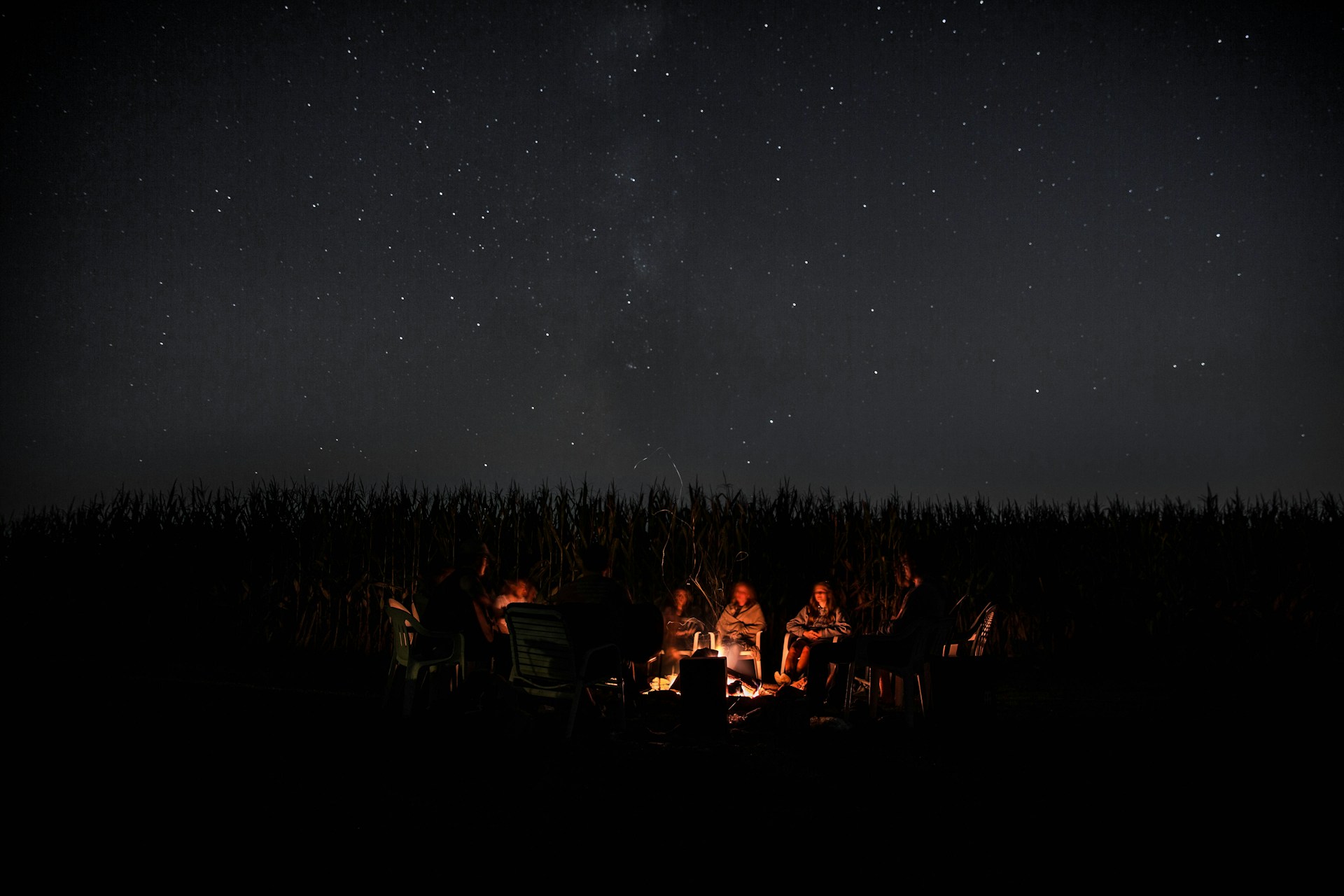
What you’d miss is what this guy’s thinking.  Of all the campfires these logs will deliver.  The warmth, the beauty, and the cheery faces reflected in the golden firelight.  The togetherness, the raucous fun, and always the smoke that’ll chase each of us in time.    

Lately, I’ve been thinking about words that rhyme with stories, memories, starlight, marshmallows, love, and family. Of a way to express my “why” behind all this work.

My new splitter hums, its rhythm is true,
Each log cracks clean, split in two.
And with each piece, I see what’s ahead—
Fires that warm, where stories are said.

Golden flames dance in their eyes,
Joyful voices filling the skies.
Kids with marshmallows on sticks they will hold,
Turning white fluff to crispy gold.

The stars above will steal their gaze,
A quiet pause from the firelight’s haze.
But soon enough, they’ll leap to their feet,
Cousins chasing cousins, the night complete.

This work is heavy, my labor long,
But in each log, I hear a song.
A promise of warmth, connection, and love,
Of smoke below and stars above.

Each crack of the wood a memory in waiting,
Moments of joy we’ll spend creating.
I keep splitting, I’ll keep the pace,
Knowing the fire will hold its place.

One split, one stack, one stick at a time,
Building a future that’s warm and divine.
A pile of firewood, yes—but so much more,
It’s family, it’s laughter, it’s life to the core.

I can’t think of a better “why” than this. 

Photo by Kevin Erdvig on Unsplash

The Ribbon of Music in Our Lives

Life is a long and winding road.  Along the way, music teaches us to let it be, to take it easy, and to carry on. Sometimes, it whispers, “you’ve got a friend,” and other times it shouts, “don’t stop believing!” Through every high and low, music lifts us when we’re down and brings light to our darkest days.

It inspires us to learn to fly, take the long way home, and dream the impossible dream. It tells us to follow the yellow brick road and live like you were dying. When the world gets heavy, we can put our toes in the water, our ass in the sand and live knee deep in the water somewhere. It’s a gentle reminder to hold on loosely or to simply keep the faith.

When we’re all alone, it wraps us in a warm embrace, softly humming, “I’m with you,” and promising, “I’ll stand by you.” It keeps us company when we’re wasting away again in Margaritaville or stranded in the purple rain (whatever that is).  

Music sets the tone for life’s moments. It’s the sweet sound of silence in the still of the night, the easy rhythms of cheeseburgers in paradise, and the fiery rush of being thunderstruck. It’s the gentle plea of someone asking, “Have you ever seen the rain?” and the daring call to take a walk on the wild side. It urges us to dance in the dark and reminds us that it’s five o’clock somewhere.

It can challenge us to ask what’s going on, or who are you? It paints visions of wide-open spaces, islands in the sun, and clear mountain mornings. It reminds us that we’re merely candles in the wind and there’s never a wish better than this when you’ve only got one hundred years to live.  So, dream until your dreams come true.

Music brings us together to clap our hands, stomp our feet, and feel the beat.  It calls us to praise every morning. It’s a bridge over troubled water.  It’s an anthem of unity.  We’re rockin’ in the free world. There ain’t no stopping us now.   

Music is more than sound.  It’s a ribbon in the sky, an endless summer, a stairway to heaven, and friends shaking hands. It weaves through our lives, bringing joy to each new day.  

Take it to the limit.  Don’t stop thinking about tomorrow.

After all, music reminds us what a wonderful world it truly is.

A quick word about copyrights.  This post is my attempt to create a cohesive thematic message using as many song lyrics as possible (trust me, there are 100’s more that didn’t fit) from artists I’ve loved over the years.  Borrowing their words was a fun writing challenge, and an homage to the original artists. 

By my quick count, I’ve referenced lyrics from over 50 songs, placing them like Easter eggs or tile fragments in a mosaic.  Most are obvious and easy to find…a few may be obscure and tougher to recognize.

In the end, it’s only rock ‘n roll, but I like it.  (couldn’t resist one more).   

Photo by Kelly Sikkema on Unsplash

Enriching Others – the Best Path to Leadership Success

“You can have everything in life you want, if you will just help enough other people get what they want.” – Zig Ziglar

I remember a friend of mine who was promoted from being a very successful salesman to being the branch manager for a large insurance company.  It is amazing to think this was almost 30 years ago. 

He told me that he’d finally get to tell people what to do, and he looked forward to that.  Plus, he’d get to take long lunches and charge the lunches to his expense account. 

I knew that if that was his approach to his new manager role, he’d probably fail miserably…and quickly.  I told him as much. 

I suggested that he start by meeting with his new team members one-on-one. Just because he’d worked alongside many of them before didn’t mean he knew them well enough as their manager. I encouraged him to take the time to understand each of their roles, how they saw their future, and what they hoped to see change at the company.

I said it would help him get to know them and, even more importantly, show them he valued them and wanted them to succeed. And if he let them know that he needed their help, too, it would go a long way. This wasn’t just his chance to lead, it was a chance to connect directly with each team member.

He thought that was a waste of his time.  He had been a very successful salesman, knew how the company operated, and already knew what made the branch tick.  He told me that he knew what needed to be fixed and he’d hit the ground running to get those changes implemented. 

I saw him again about three or four months later.  When I asked him how his new job was going, he just shook his head.  “Not good.  Nobody is listening to me.  I’ve had a couple of people quit already, and I think some others are out looking for new jobs.  Our sales are way down.  My boss is asking me what I’m going to do about it.”

I didn’t say, “I told you so,” but that’s what I was thinking. A few months later, he was demoted back to sales, but at the lower pay structure in place for new hires. Not long after that, he left the company.

I’ve been blessed with multiple opportunities to take over business operations in fields where I had little or no expertise or experience.  Sometimes, from outside looking in, I had some ideas about how things should operate, but I always kept it to myself when I arrived. 

Even in situations where I thought I knew all the answers, I purposely and methodically asked as many questions as possible.  I took my own advice to meet with as many employees as possible, asking them about their job, how they do it, why they do it, where they hope to be in the future, the problems they are having, the things the company is doing wrong, the things the company is doing right.  There are no wrong answers in these types of discussions.

It is truly amazing how much a new manager can learn from the people already in place, especially if that manager genuinely wants those people to be successful.  It also helps to be extremely curious and thirsty to learn as many details about an operation as possible. 

The most successful managers I’ve known have operated this way.  They ask questions and listen carefully to the answers.  They work as hard as they can to help each of their team members get what they want (as Zig so eloquently said). 

If you’re stepping into a leadership role with the mindset of lording authority over others, expecting everyone to follow your lead just because you’re in charge, you might have short-term success, but it won’t last. Real leadership is about seeking ways to enrich others and the organization before yourself. And in doing so, you build an environment of trust where people thrive and truly enjoy their work.

Helping others succeed isn’t just a management tactic.  It’s the only way to real success.

When you lift others, you rise too.

Photo by Matteo Vistocco on Unsplash

It’s Up to You

Consider all the things that are up to you:

  • Your mood when you wake up.  Waking up on the wrong side of the bed is your choice.  You alone decide how you’ll approach each new day.
  • Your morning routine.  What’s included or excluded?  How much time are you providing for yourself in the morning?  Are you rushing, or welcoming the day at the pace of your choosing?    
  • The tone of interactions you have with others.  Are you smiling when you’re talking (whether in person or by phone)?  Are you looking for faults in others, or the good in others?  The energy you bring is your choice.
  • Your career choice.  Unhappy at work?  What are you doing to change it?  Are you changing your situation, or just complaining.  Not sure if you should work in your chosen profession?  What are you doing to figure it out?  If this profession isn’t for you, what concrete steps are you taking to prepare to work in another profession?  You decide all of it.
  • Whether you choose to manage your day, or let it manage you.
  • The places you visit and frequent.
  • Your hobbies.  Do you even have a hobby, or are you too “busy” for anything that brings you joy or peace outside of work? 
  • Your friends.  Are they lifting you up or bringing you down?  Jim Rohn said, “You are the average of the five people you spend the most time with.”  Choose wisely.
  • The organizations you choose to join or support.

This list only scratches the surface. 

It’s easiest to let someone, or something, else make the decisions for you.  But remember—choosing not to decide is a decision, and you own it.    

So, what kind of day will you have?  What kind of life will you live? 

It’s up to you.   

Photo by Eric Prouzet on Unsplash

You Can’t Delegate Your Influence

A professional manager understands that managing is an active role. It requires proactive effort, not just sitting back and overseeing tasks. A good manager knows how to delegate responsibility and authority. It’s a key skill that helps multiply their impact and develop the next generation of leaders.

There’s no shortage of books and articles that dive deeply into the art of delegation. Many are worth reading and putting into practice. But here’s the thing: no matter how much you delegate, you can’t delegate your influence. That personal touch—the way you listen, share your perspective, and guide the conversation—is something only you can bring to the table.

Managers have a unique viewpoint. They understand the critical questions facing the organization in a way others often don’t. Their value lies in their ability to communicate directly, to really hear what’s being said (and often what isn’t), and to guide the organization toward the right path. That’s what makes their influence so crucial.

Now, picture this: a manager sends one of their team members to a meeting with internal customers. The goal? For the subordinate to represent the manager’s ability to listen, understand, and guide the discussion. Sure, it can work if that person has full decision-making authority and can make agreements that hold the manager accountable. But that’s rarely the case.

So, we come back to the reality: a manager has to prioritize where they spend their time and energy, making sure they’re showing up where their influence is most needed. It’s not just about sitting in meetings or making decisions on the fly—it’s about really understanding the dynamics in play, both spoken and unspoken.

A manager’s influence over the direction of projects, processes, and people can’t be handed off. At best, subordinates can carry a “shadow” of that influence. It might get the job done, but it’s not likely to push the organization in the bold direction it needs to go.

In the end, while delegation is a powerful tool, influence is personal. And if you’re serious about leading, you need to make sure you’re showing up where it counts.

Photo by Katja Anokhina on Unsplash