Your mood when you wake up. Waking up on the wrong side of the bed is your choice. You alone decide how you’ll approach each new day.
Your morning routine. What’s included or excluded? How much time are you providing for yourself in the morning? Are you rushing, or welcoming the day at the pace of your choosing?
The tone of interactions you have with others. Are you smiling when you’re talking (whether in person or by phone)? Are you looking for faults in others, or the good in others? The energy you bring is your choice.
Your career choice. Unhappy at work? What are you doing to change it? Are you changing your situation, or just complaining. Not sure if you should work in your chosen profession? What are you doing to figure it out? If this profession isn’t for you, what concrete steps are you taking to prepare to work in another profession? You decide all of it.
Whether you choose to manage your day, or let it manage you.
The places you visit and frequent.
Your hobbies. Do you even have a hobby, or are you too “busy” for anything that brings you joy or peace outside of work?
Your friends. Are they lifting you up or bringing you down? Jim Rohn said, “You are the average of the five people you spend the most time with.” Choose wisely.
The organizations you choose to join or support.
This list only scratches the surface.
It’s easiest to let someone, or something, else make the decisions for you. But remember—choosing not to decide is a decision, and you own it.
So, what kind of day will you have? What kind of life will you live?
“Manners are of more importance than laws. Upon them, in a great measure, the laws depend. The law touches us but here and there, and now and then. Manners are what vex or soothe, corrupt or purify, exalt or debase, barbarize or refine us, by a constant, steady, uniform, insensible operation, like that of the air we breathe in.” – Edmund Burke
-Why do we say Please and Thank You?
-Why do we hold the door for the next person?
-Why do we show respect for our elders?
-Why don’t we interrupt someone when they’re speaking (at least, most of the time)?
Mostly because we were taught these behaviors by our parents, or someone in authority, when we were growing up. We may have learned by being told explicitly, or by watching others that we admire acting in these ways.
As Burke points out, manners are more important than laws. They are fundamental in establishing the boundaries of our behavior, of integrating us within our community.
Manners show our respect for those around us. They create a standard for how we work with others.
Consider the manners (customs) that are in play where you work. It doesn’t matter if you work in construction, nursing, information technology, or any other field. If you work with people (which you always do whether they are your co-workers, your customers, or both), your manner of behavior will be critical to your success. Good manners create a positive environment, build strong relationships, and foster a culture of respect and professionalism.
Since we are creatures of habit, it’s easy to establish either a habit for lacking manners, or for having them. The disciplined decision to operate your life within the bounds of good manners is a decision that will pay consistent dividends. Good manners can be the foundation for a disciplined approach across all areas of your life. When we are polite and considerate, we remind ourselves of our values and our commitment to treating others (and ourselves) with dignity.
The simple act of saying “Please” and “Thank You” (and meaning it) shows our vulnerability to others, and at the same time, our appreciation for what they have done for us. Powerful ways to remind us of our humility and gratitude many times each day.
Edmund Burke observed, “Example is the school of mankind, and they will learn at no other.” Our behavior and proper manners will be a teacher to those around us, whether we intend it or not. Our actions, grounded in good manners, can inspire those around us to adopt similar behaviors.
It’s easy for each new generation to look at the rules and traditions of prior generations (manners) as archaic, overly formalized, and irrelevant in their “new modern era.” They may rationalize away the need for good manners on this basis. However, dismissing the importance of manners can lead to a breakdown in social cohesion. Our challenge is to adapt the principles to modern contexts while preserving the core values of respect and consideration.
Manners are a timeless currency that never loses value—so spend them generously and watch how rich life can become.
The year spent training for a triathlon isn’t just about race day. It’s about the discipline, endurance, and self-discovery that come with each mile ran, every beach swim, and each grueling mile logged on the bike. The race is the goal, but the transformation to triathlete happens during the journey to the starting line.
What about Basic Training for the Marine Corps (something I haven’t personally experienced)? Recruits aren’t merely learning the basic skills they’ll need to be successful. They are becoming something entirely new…a Marine. The recruit is transformed into a Marine by the training process.
Consider a four-year college degree. It’s been said (not sure who said it first) that the main thing a recruiter learns about a college graduate is that they had to apply themselves adequately over a four (or five, or six) year period to get enough class credits to graduate in their chosen major. Each college graduates’ journey is different, and that journey is often as valuable as the classes they had to take to get their degree.
Even smaller experiences like a short hike, a long drive to visit family, or a phone call with a friend can offer more than just their immediate outcomes. They can provide moments of reflection, connection, and growth.
Life’s experiences are not just a series of goals to be checked off or memories to be cherished.
When we learn to enjoy the process and the lessons along the way, we gain something far more valuable: growth, understanding, and the ability to appreciate the transforming power of our journey.
“You will know that your children will be many, and your descendants like the grass of the earth.” – Job 5:25
This image of my granddaughter running through the tall grass lingers in my mind, a snapshot of pure joy and freedom. The grass climbs high as her shoulders, swaying in the gentle breeze as she runs, her laughter echoing across the open field.
The sun, high in the sky, casts a warm glow across the landscape, reflecting off the stalks and highlighting the strands of her long blonde hair. It’s a moment of unbridled innocence, an expression of life at its most carefree—a reminder of the potential and possibilities that lie ahead in her life.
Watching her, I’m struck by how this simple act of running, so natural and effortless, captures the essence of childhood. Children have an innate ability to live fully in the present, to see the world as a place of wonder and adventure. For them, the future is not something to be feared, but something to eagerly anticipate. Every new experience is a chance to explore, to learn, to grow. In her dash through the tall grass, we get a glimpse of how life is meant to be lived—full of energy, curiosity, and a fearless embrace of the unknown.
As the years (decades) go by, it’s easy to lose our innocence, our thirst for adventure. We may see our future with a sense of foreboding, even doom…rather than an opportunity to expand our journey. We allow the sense of adventure that once propelled us forward to be dulled by the responsibilities and challenges that life inevitably brings. Our carefree days of childhood disappear into the past.
The passage of time doesn’t have to diminish our sense of adventure. We can choose to embrace life with the same enthusiasm and curiosity that we had as children. We can still find joy in the simple pleasures, still run toward the unknown with hope in our hearts.
Life’s journey is not about avoiding the tall grass, but about diving into it, feeling the sun warm our backs and the gentle breeze cooling our faces. It’s about seeing each day as an opportunity to expand our horizons, to live fully and freely, just as my grandkids do.
The tall grass may rise like a challenge, but it is also where the most profound discoveries await. And as I step into that field, I carry with me the certainty that the journey ahead, like the path I’ve already walked, holds boundless potential.
In a field of tall grass she runs, her golden hair warmed by the sun, each step a whisper of freedom, the horizon an open invitation.
I watch her and remember— the world for me was once this wide, full of endless possibilities, before fear narrowed that view.
But the grass still sways, and I can still run, following her laughter, knowing the path ahead will bring great discoveries,
a promise of new beginnings.
p/c – My daughter, Julianne, texted this photo earlier this week of Lizzy running through the tall grass of their pasture. The moment I saw the photo, I knew the topic of my next blog post.
Early in my career, during my time as an internal auditor, I learned a lot about people. I spent countless hours observing and interacting with individuals at all levels of organizations, from front-line employees to CEOs. This unique vantage point taught me a foundational lesson: the success of any organization usually hinges on the character and behavior of its leaders.
In our small audit teams, we developed a shorthand to quickly convey our impressions of the people we interviewed. We’d use these labels —like Adam Henry and Don Henry— to help summarize complex personalities in a few words. After interview meetings, we might describe our interviewee as a good guy, a solid operator, an Adam Henry, a Don Henry, or perhaps someone who was DUP, or DUC.
Let me translate those last four:
Adam Henry – Asshole
Don Henry – Dickhead
DUP – Definitely Unpleasant (not quite an Adam Henry)
DUC – Definitely Unclear (meaning they seemed like an idiot)
What’s the difference between an Adam Henry and a Don Henry? While both are problematic, the distinction lies in their approach and the impact on those around them. Adam might be uncooperative and arrogant, but Don takes it a step further—using their position to intimidate others and make them feel as dumb as possible. Don loves to belittle people and fosters a toxic environment that stifles collaboration and creativity.
Were our shorthand judgments fair? They may not have been, but they were usually quite accurate based on our interactions. Remember, most people are on their “best” behavior when talking to an auditor (even though most of us would rather not talk to auditors). Imagine if they weren’t on their best behavior.
These judgments, though informal, often reflected deeper truths about the individuals we encountered. A company with too many Don Henrys, for instance, might struggle with low morale, high turnover, and a lack of innovation—challenges that will cripple long-term success.
There was nothing special about us, as auditors, making these assessments of the people we were interviewing. All of us make these assessments as we work with other people. These same assessments are being made about us by other people all the time.
Is this person a good guy, a strong operator, a pleasant person, a team player? Or are they on the opposite end of the spectrum? Should I trust this person to have my best interests at heart, or are they solely in this for their own gain at all costs?
Companies of all sizes, no matter the industry, are made up of human beings, working as a group (hopefully as a team, but not always) to achieve key goals (hopefully the organization’s goals).
If the people who manage a company are Adam Henrys, or worse—Don Henrys, that organization will have difficulty succeeding. They might succeed in the short term, but over a multi-year time horizon, these negative traits in the people managing the business will lead to poor morale, declining creativity, declining teamwork, and declining execution.
Recognizing and addressing “Don Henry” behaviors is crucial for any organization aiming for sustained success. Leaders who prioritize their team’s well-being, encourage collaboration, and foster a positive work environment are far more likely to achieve lasting results.
The next time you’re interacting with colleagues, ask yourself: Am I being an Adam Henry, a Don Henry, or something better?
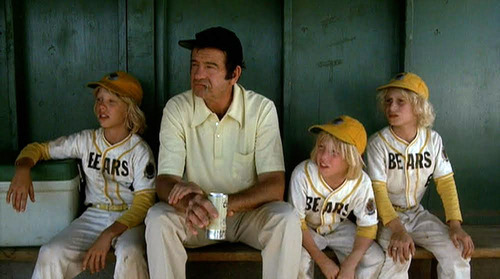
Park league baseball season came to an end recently. We had four grandsons between the ages of 8 and 10 playing on teams. The teams had a few “veteran” players, but for most of the players this was their first experience playing organized baseball. They had a lot to learn…and we saw amazing improvements in all the players in one short season.
It’s clear that the lessons they learned can extend far beyond the field, if we are willing to pay attention.
Panicking When the Ball Comes
My most vivid memory from the season is seeing the panic for many of the kids when the ball would come their way. Will they catch the ball? Where will they throw it once they have it? Do they know why they’re throwing it in a particular direction? Will the player they’re throwing to catch the ball?
The drama was real. It was clear that a lot of the kids didn’t expect the ball to come toward them. I saw a few kids jump away from the ball to avoid fielding it.
As a spectator, it’s easy to see what’s happening. It’s easy to assume that surely, we’d field the ball properly, and immediately know where to go with the play.
It’s not always as easy as it looks. Unexpected situations arise, and our response (or lack thereof) can significantly impact what happens next. Learning to stay calm and doing some pre-thinking about our actions (before the play) will significantly improve our chance of success.
Understanding Game Situations
Many young players struggle with understanding the game situation—who’s on base, how many outs are there, what’s the best play to make when the ball comes to them, and how to act strategically.
This lack of situational awareness highlights a crucial lesson: the importance of context and awareness in decision-making. Understanding the bigger picture allows for more informed and effective actions. The coaches encouraged the kids to think ahead (pre-thinking) and consider various outcomes. Whether the kids listened and embraced their advice was another thing entirely.
Are you thinking about your “game” situation? The macro and micro aspects of the challenges you and your organization are facing. Are you thinking ahead and considering various outcomes as part of your decision-making process?
Learning the Basics: Throwing and Catching
It’s not uncommon for young players to throw the ball the wrong way or miss it entirely. These fundamental skills require practice and patience. This aspect of the game underscores the importance of mastering basics before tackling more complex tasks. In any field, solid foundational skills are essential for success. Nearly every pursuit or profession has basic foundational skills that need to be mastered along the way toward more advanced skills. A football analogy fits well here…it’s important to understand the blocking and tackling part of the game before you can advance to running with the ball.
Position-Specific Skills and Aspiration
In youth park league baseball, most of the hits stay in the infield. This leaves the outfielders without much to do. I heard lots of outfielders wishing they could play an infield position like second base, or catcher. None of them understood what those positions entailed, but they knew that those positions had more action.
A few of them took the time to learn about the infield positions from their coach. They showed their interest and willingness to work their way to the infield. This shows the value of preparation and skills development. It’s important to work on the necessary skills before aiming for a specific role, whether in sports or any other endeavor. It also emphasizes the value of seeing a goal and then taking the concrete steps to learn, grow, and achieve that goal.
Strikeouts Aren’t Failures
Consider that an excellent hitter in the big leagues gets a hit about 30% of the time. They may get walked occasionally, but the rest of their at bats result in fly outs, ground outs, or strikeouts.
We saw a ton of strikeouts this past season. I was always impressed with the kids who struck out and immediately came back to the dugout to ask their coach what they should be doing to avoid striking out next time. Each strikeout was a learning opportunity…but only if the player saw it that way.
We saw a few kids melt down in disappointment and embarrassment. One kid from an opposing team stomped off the field and took himself out of the game (an extremely negative response to be sure).
When things go wrong, or we don’t get the result we want, that’s the time to buckle down and learn why it happened. Consider ways to improve so the results can improve next time. It’s only a failure if you give up.
Teamwork and Collective Goals
We are all self-centered. As we mature, we usually learn how to control our self-centeredness or at least how to channel it productively. Ten-year-old kids are no different. Their focus is on their own performance. Whether or not they’re hitting the ball. Whether or not they made the right play.
They often forget that the goal is for their team to win. They can help the team achieve that goal by having a strong performance, but also by helping and supporting their teammates. This is a powerful reminder of the importance of teamwork and the collective effort required to achieve a common goal. It’s easy to get caught up in individual performance, but true success usually comes from working together and supporting each other. Collaboration and shared successes build strong teams. Strong teams create successful outcomes.
Consistency Matters
Ask an excellent bowler, pitcher, batter, shooter (basketballs or bullets), pole vaulter, or pickle ball player how they deliver such excellent results. They’ll mention practice, dedication, and a strong mental approach. Eventually they’ll talk about consistency. Each of these pursuits (and countless others) require consistency above all else. The exact motions, body positions, eye contact, and calmness of breath that they can count on happening whether they consciously think about it or not.
Their practice process is all about achieving repeatable actions that their body remembers…every time. They also know that they aren’t swinging for the fences every time they’re at bat, not trying to set the world record or do something extraordinary with every outing.
They are working to become a steady and consistent performer at the highest level possible…and always reaching a little higher.
Consistency, patience, and incremental progress should be the goals…repeatable excellent outcomes will happen as a result of achieving these goals.
Park league baseball is a ton of fun. The drama is real. Teams experienced the “thrill of victory and the agony of defeat” throughout the season. We saw players improving and gaining confidence as the season unfolded.
I don’t know where the teams ended up in the standings at the end of the season.
I know the kids learned a lot and hopefully they’ll incorporate some of what they learned well beyond the game.
Life is filled with stepping stones—moments that can either define us or simply become a small part of our journey.
When faced with challenges or opportunities, we can see them as just another step or as a moment for growth and clarity. Carl Jung once said, “I am not what happened to me, I am what I choose to become.”
I recently re-watched a documentary about the Navy SEALs. Every Navy SEAL candidate faces grueling hardships: physical exhaustion, frigid cold water, mental strain, and the constant threat of failure.
Some candidates see each challenge as an opportunity, a chance to push beyond their perceived limits and grow stronger. They embrace the pain, keep their focus. They find strength in their determination and their fellow candidates. These candidates transform the hardships into defining moments, emerging on the other side as Navy SEALs.
Others, however, let the same hardships overwhelm them. Fear, frustration, and exhaustion cloud their resolve. The challenges, instead of being opportunities for growth, become insurmountable barriers. These candidates wash out, not because they lacked physical capability, but because they couldn’t shift their mindset to see the hardships as stepping stones rather than obstacles.
None of us are born with skills. It’s easy to watch some Youtube videos and think woodworking is totally doable. Any new woodworker can attest to the uneven cuts, the wobbly joints, and the frustrations that can come from trying this new hobby. But, by learning from the mistakes, honing skills through practice and even more failures, projects begin to go more smoothly. The final products are less uneven and wobbly…and the process becomes much more enjoyable.
Learning and growth come from our willingness to take lessons from every experience. Reflecting on each attempt, seeking feedback, and choosing to improve. It’s the decision to learn from every encounter that turns these stepping stones into personal and professional development milestones.
However, clouding our experiences with fear, frustration, anger, or other limiting emotions can lead us to ignore the growth opportunities these experiences present. When we let negative emotions dominate, we risk missing out on valuable lessons that can propel us forward.
It’s difficult, but essential, to manage our emotions and maintain a positive outlook to fully benefit from the lessons we can learn.
The stepping stones in our lives are all potential defining moments. It’s up to us to decide whether we let them pass by or seize the opportunity to let them shape us. We can turn every step into a defining part of our journey.
It’s not just about the stones we step on but how we choose to step on them that defines our path.
Emotional energy is the most important personal resource for a leader. Leadership is demanding. Leading is a verb and that action requires a tremendous amount of energy, emotional energy.
If your emotional energy reserves are low, your leadership will suffer.
What is Emotional Energy?
Emotional energy is your internal fuel tank. It’s what keeps you motivated, resilient, and mentally strong. For leaders, high emotional energy is essential. It fuels your ability to inspire and guide your team. When you’re full of energy, you’re more positive, proactive, and effective.
Emotional Energy Drains
Several things can sap your emotional energy:
Troubles at Home: Personal issues and family conflicts can weigh heavily on your mind, leaving you drained.
Doing Too Much at Once: Multitasking and overcommitting can lead to burnout.
Feeling Like a Failure: Constant self-doubt and feelings of inadequacy can deplete your energy.
Worrying About Small Stuff: Focusing too much on minor details that don’t matter will waste your energy.
Emotional Energy Boosters
To keep your emotional energy high, think and act strategically:
Prioritize energizing activities: Engage in things that make you happy and relaxed, like hobbies, exercise, and spending time with loved ones.
Eliminate Energy Drains: Identify tasks and responsibilities that drain you and find ways to reduce or eliminate them. Delegate when possible and don’t be afraid to say no.
Practice self-care in your daily habits: Make time to get enough sleep, eat well, and have quiet time for your brain to relax. Purposely practice gratitude, take breaks, and prioritize good boundaries around your work-life schedule (this last one will take some effort, but the payback is huge).
Create a supportive environment: Surround yourself with positive people both at work and home. Foster open communication and a culture of mutual respect and understanding. Recognize and celebrate achievements…when was the last time you wrote a personal email or sent a handwritten card to someone congratulating them on an achievement or milestone?
Emotional Energy and Leadership
When your emotional energy is high, you’ll handle challenges better, inspire your team more, and maintain a positive outlook. Your positive energy will ripple across your team and multiply the potential for the entire organization.
What will you do today to protect and recharge your emotional energy?
More importantly, how will you use it to transform your leadership approach tomorrow?
p/c – yours truly at a small lake in Hillsdale, Michigan. An energizing place for some quiet time.
Life can often feel like a series of unpredictable events coming at you without end. In this whirlwind, maintaining a sense of humor helps make sense of it all. Humor helps us see challenges not as obstacles, but as opportunities to grow and understand.
Make the Absurd your Friend
Consider this: you’re in the middle of a presentation when your computer suddenly decides to restart for updates. Everyone in the room is waiting, and you’re left standing there. In that moment, you have a choice. You can panic, or you can laugh and say, “Well, I guess my computer decided the razzle-dazzle portion of this presentation is over.” Embracing the absurdity of the situation lightens the mood for everyone involved and shows that you can think on your feet.
Imagine you’re about to start a remote interview. You take that last sip of coffee and spill some on your shirt. You realize this nice brown spot is visible on the screen just as the person interviewing you joins the meeting. It’s easy to let this ruin your day. Instead, you can chuckle and say, “Nothing like spilling coffee on yourself to make a great first impression!” This acknowledges the problem and humanizes the situation. Plus, you’ll have a great story to tell later.
Adding humor to our lives makes us more resilient and improves our attitude. Not taking life too seriously is crucial. Our worries and anxieties are often fleeting. Finding humor in our daily routines, like laughing off an unexpected reboot, shifts our focus from what’s going wrong to what’s funny, fostering a more positive outlook.
Laughter’s Power
Think about a time you were stuck in traffic with friends, running late for an event. Instead of stewing in frustration, someone starts making jokes about the situation, and soon everyone is laughing. The shared humor transforms a stressful experience into a memorable one, strengthening the bonds among your friends.
Laughter connects us to others, breaks down barriers and builds a sense of community. When we share a laugh with someone, we create a bond that transcends differences and fosters empathy. In a world that often feels divided, shared humor can unify. Moments of shared joy are essential to our well-being, reminding us that we are not alone in our experiences.
Life’s unpredictability can be daunting, but it’s definitely a source of great humor if we’re looking for it. By adopting a mindset that finds humor in the unexpected twists and turns of life, we learn to appreciate the randomness of our experiences. Next time something unexpected happens, imagine it as a scene from a sitcom, with you as the lovable main character.
Find humor in the little things. Accept the absurdity, laugh at the unexpected, and share a joke with those around you. Maintaining a sense of humor is not just about finding joy—it’s about making sense of a life that doesn’t always make sense.
As Jerry Seinfeld puts it, “If you can find humor in anything, you can survive it.”
Newton’s first law of motion (also called the law of inertia), states that an object at rest will stay at rest, and an object in motion will stay in motion unless acted upon by an external force. While this principle is foundational in physics, it can be applied to the way we live our lives.
In our daily lives, it’s easy to remain at rest. We experience moments of doubt and confusion, low motivation, and a natural tendency to avoid change. This mental and emotional inertia can keep us stuck, making it difficult to take action or move forward. Organizations often reinforce this inertia with incentives that promote the perceived “safety” of maintaining the status quo.
As we age, this resistance to movement can become even stronger. We rely on past experiences, often using them as justifications for inaction. “It didn’t work before, so why would it work this time?” This mindset is a barrier to personal growth and fulfillment.
Unfortunately, a life at rest, devoid of risk and new experiences, can become empty and unfulfilling.
Our goal should be to actively push against the inertia holding us in place. This involves taking risks, trying new things, and offering our time and energy to others. Overcoming inertia requires a conscious effort to break free from the comfort of staying still.
The second part of Newton’s law of inertia emphasizes that an object in motion tends to stay in motion. This should be a powerful motivator. Once we start moving in a direction, it’s likely that we’ll continue to do so unless something actively stops us.
Turns out that those around us are battling their own inertia and may not have the energy to impede our progress.
By choosing to move, we can capitalize on opportunities that arise. While others remain stuck in their self-imposed rest, we can explore new paths, achieve our goals, and live our most fulfilling life long before they even notice what we’re doing.
Embrace the motion. Take action. Push past the barriers, especially self-imposed barriers. The world is full of opportunities for those who dare to tap into the Newtonian motion that’s available to each of us…all we have to do is move.









 Grandpa Bob Encouraging Leadership
You must be logged in to post a comment.