Who Will Hold the Boulder? (a short parable)

There once was a village named Smithville, tucked neatly beneath a mountain. Life was simple until the mayor spotted a massive boulder teetering on the slope. Experts confirmed the obvious. The massive boulder might fall and crush the town.

In a flash of civic urgency, the mayor declared: “We must secure the boulder!” And so they did. With ropes, pulleys, and sheer determination, ten villagers at a time held the lines to keep the boulder in place. They rotated shifts around the clock. It became routine, then tradition, then law.

Children sang, “Hold the boulder, hold the boulder, we must resolve to hold that boulder!” before school each morning. A cabin was built for the rope holders. A trail crew was hired to keep the path safe for the endless march of workers. Rope suppliers prospered since the intricate rope system required constant maintenance. Soon, nearly half the town’s budget went to “boulder security.”

Still, the village flourished. Visitors came to marvel at the rope-wrapped rock. “Come see our mighty gravity defying boulder!” proclaimed their glossy posters. A bond was passed to fund a visitor center and tour buses. Hotels filled. Restaurants boomed. Property values soared near “Boulder View Estates.”

One day, a newcomer named Brunswick questioned the logic of leaving the boulder where it was. “Why not break the boulder into smaller, harmless pieces?” The council laughed at his question.

The mayor beamed with pride, “Our boulder isn’t a threat. It’s our livelihood! Besides, we have a rope system to protect us.”

The townspeople nodded, waving their SAVE OUR BOULDER signs in support.

Who could argue with prosperity?

Brunswick left shaking his head.

Years later, despite the ropes, despite the cables, despite the slogans, the inevitable happened. That winter, the boulder grew heavier than ever with snow and ice. Villagers had trouble reaching the ropes, as storms blocked the trail. Shifts went unfilled. Fewer villagers meant fewer ropes to hold the boulder.

“The forecasters said it wouldn’t be this bad,” the mayor reassured them, as though the weather itself had broken its promise.

Workers tugged and shouted, trying to keep their grip. Fingers numbed, feet slipped, and a few gave up entirely.  The remaining ropes snapped one by one. The sound echoed through the valley like rifle shots. The mountain itself seemed to groan.

Then came the moment. The final rope gave way with a thunderous crack. The boulder lurched forward, dragging what remained of the cable nets with it.

As it tumbled down the mountain, the ground shook violently. Houses rattled, dishes shattered, and children screamed.

The mighty rock careened toward the valley, smashing trees like twigs and carving deep scars into the earth. Clouds of dust rose as if the mountain were on fire. Each bounce sent shockwaves through Smithville, knocking people off their feet. The villagers ran in terror, listening to the deafening roar as the great stone rolled ever closer.

When it finally came to rest, the devastation was complete. The visitor center lay in ruins. Boulder View Estates was flattened into rubble. Streets were cracked, and smoke rose from shattered chimneys.

Yet by some miracle, no one was hurt. The thunder of the falling boulder gave everyone time to flee. Amid the destruction, whispers of a miracle could be heard all over the battered town. 

As the dust cleared, townsfolk began to consider their plans for rebuilding. Some sketched designs for a grand new visitor center. This one would tell the story of The Great Fall.

A five-year plan was drafted to study rope alternatives, complete with a Rope Oversight Committee and quarterly progress reports.

Bureaucracy bloomed again, strong as ever.

Though no one mentioned the missing boulder.

Story behind the image – I used Google’s new Nano Banana image generator for this image. I asked it to produce a large and evil boulder sitting on top of a mountain, held by ropes, overlooking a nice town that it’s threatening…in a cartoonish style. This is the first image it produced. It missed the part about the ropes, but I like the over-the-top (see what I did there?) theme of this rendering. And that boulder may appear in a few more stories in the future.

© 2025 Bob Dailey. Licensed under Creative Commons BY-NC-ND 4.0.

What I Thought I Knew

What I Thought I Knew

There was a time I made a big leap “out the window.” I walked away from something I thought I had to escape. I didn’t have a detailed plan, just a deep sense that staying where I was would burn me out.

What I should have realized at the time was that while I was escaping one fire, I was just trading for another.

That’s the thing about decisions. They rarely come with clarity. They come wrapped in burdens and hope and urgency, all dressed up to look like certainty. But certainty is often just a story we tell ourselves to keep moving.

I’ve gone back and questioned plenty of decisions. I’ve hit pause, looked around, and asked, “Was that the right thing to do?”

Sometimes the answer is no. And that’s okay.

I’ve made wrong turns. I’ve said yes when I shouldn’t have. I’ve said no when I was afraid. But here’s something I’ve learned the hard way: wrong turns can still move us forward. Even the “mistakes” taught me something. Sometimes they were the only way I could learn the lessons I needed to learn.

Side note: If you can learn from watching someone else’s journey, that’s often preferable to taking the hard knocks that accompany most of the big lessons in life.

The truth is, not every decision will hold up to hindsight. And not every success will look like success right away. Some answers show themselves slowly. They show up only after struggle, reflection, and time. They need hardship to help them mature. Sometimes they even need failure.

I’m lucky. Along the way, there were people who didn’t try to fix me. They just stood with me while I figured it out. They gave me space to question, to re-route, to second guess. That kind of support is rare. And I’m grateful.

To those people: thank you. You helped me see what I wasn’t ready to see. You let me grow into the answers I didn’t even know I was seeking.

These days, I’ve learned to forgive myself for the detours. For the second thoughts. For the “what ifs” I’ll probably carry forever. I’ve changed my mind, more than once. With every shift, I’ve learned to find moments of peace.

Here’s the point: Maybe wandering is the way.

Wisdom doesn’t show up all at once. It grows, shifts, even contradicts itself. Sometimes it stumbles. Sometimes it starts over.

One thing I know for sure: What I thought I knew was only the beginning.

Photo by Andrew DesLauriers on Unsplash

Lessons in Failure – the Mark of a True Leader

There’s a saying that often floats around in entrepreneurial circles: “Fail fast, fail often.” While the origins of this phrase are up for debate, its lesson is clear. Failure isn’t just an inevitable part of leadership.  It’s one of the most defining. How a leader reacts to failure (their own or their team’s) can reveal their true character and shape the trajectory of their future success.

But here’s the thing: writing about failure and leadership can quickly sound like a series of cliches. We’ve all heard the platitudes about “learning from mistakes” and “rising stronger.” But there’s a deeper message about what truly separates those who lead with integrity and vision from those who crumble when things go wrong.

When failure strikes, leaders face a choice. They can own it, adapt, and come back stronger. Or they can point fingers, wallow in resentment, and stall out. The decision often happens in an instant, but its impact can last a lifetime.

Great leaders take ownership of failure, even when it’s not entirely their fault. Why? Because owning failure builds trust. When a leader says, “This didn’t go as planned, let’s discuss what we’ll do to fix it,” they inspire confidence. They create a culture where the team feels safe to take risks, knowing that mistakes are part of growth, not reasons for punishment.

When leaders blame others, they erode trust. Pointing fingers, whether at the team, external circumstances, or bad luck, signals an unwillingness to reflect and adapt. Over time, this creates a toxic environment where innovation dies and progress stalls.

“Fail fast, fail often” isn’t about being reckless.  It’s about embracing experimentation and accepting that not every idea will succeed. Failing quickly means you can pivot sooner, learn faster, and ultimately get to a better solution.

This idea requires two things:

Humility: The willingness to admit when something isn’t working.

Agility: The ability to adapt and try again without becoming paralyzed by setbacks.

Elon Musk is a great example. From continual iterations of experimentation and failure at SpaceX—including multiple RUDs (rapid unscheduled disassembly in rocket speak)—to the challenges Tesla faced in scaling production and support, he’s built companies on the idea of learning through failure. Musk doesn’t see failure as an end point.  He sees it as feedback.  A necessary step on the path to success.

To handle failure effectively, leaders need more than optimism.  They need a process. Here’s a simple approach that works (notice I didn’t say it’s an easy approach):

-Recognize the failure and what it means. Be transparent with your team.

-Reflect on what went wrong without assigning blame. Focus on systems and strategies, not personal shortcomings.

-Identify key takeaways. What worked? What didn’t? What’s worth trying again?

-Adjust your approach based on lessons learned.

-Recommit to the goal with a renewed focus and determination.

Failure doesn’t only teach leaders how to solve problems.  It shapes their emotional intelligence (if they allow it). Leaders who’ve faced setbacks tend to have more empathy and patience. They’ve had to overcome multiple failures themselves, so they know how challenging failures can be for their teams.

When leaders normalize failure, they create cultures where people aren’t afraid to take risks or push boundaries. That’s where breakthroughs happen.

The mark of a true leader isn’t perfection. It’s how they handle failure.  Whether they embrace it as a teacher or fear it as an enemy. The choice of owning mistakes, adapting, and persevering defines not just their success, but the success of everyone they lead.

The next time failure arises, ask yourself: Will I let this moment shape me for the better? Will I lead my team through it with grace and determination? Will we learn from this failure? 

The answers will set the course for everything that follows.

Photo by David Trinks on Unsplash

Hand me the ball…Life Lessons from Park League Baseball

Park league baseball season came to an end recently.  We had four grandsons between the ages of 8 and 10 playing on teams.  The teams had a few “veteran” players, but for most of the players this was their first experience playing organized baseball.  They had a lot to learn…and we saw amazing improvements in all the players in one short season.   

It’s clear that the lessons they learned can extend far beyond the field, if we are willing to pay attention. 

Panicking When the Ball Comes

My most vivid memory from the season is seeing the panic for many of the kids when the ball would come their way. Will they catch the ball?  Where will they throw it once they have it?  Do they know why they’re throwing it in a particular direction?  Will the player they’re throwing to catch the ball?

The drama was real.  It was clear that a lot of the kids didn’t expect the ball to come toward them.  I saw a few kids jump away from the ball to avoid fielding it.

As a spectator, it’s easy to see what’s happening.  It’s easy to assume that surely, we’d field the ball properly, and immediately know where to go with the play. 

It’s not always as easy as it looks.  Unexpected situations arise, and our response (or lack thereof) can significantly impact what happens next.  Learning to stay calm and doing some pre-thinking about our actions (before the play) will significantly improve our chance of success.

Understanding Game Situations

Many young players struggle with understanding the game situation—who’s on base, how many outs are there, what’s the best play to make when the ball comes to them, and how to act strategically.

This lack of situational awareness highlights a crucial lesson: the importance of context and awareness in decision-making. Understanding the bigger picture allows for more informed and effective actions. The coaches encouraged the kids to think ahead (pre-thinking) and consider various outcomes.  Whether the kids listened and embraced their advice was another thing entirely.

Are you thinking about your “game” situation?  The macro and micro aspects of the challenges you and your organization are facing.  Are you thinking ahead and considering various outcomes as part of your decision-making process? 

Learning the Basics: Throwing and Catching

It’s not uncommon for young players to throw the ball the wrong way or miss it entirely. These fundamental skills require practice and patience. This aspect of the game underscores the importance of mastering basics before tackling more complex tasks. In any field, solid foundational skills are essential for success. Nearly every pursuit or profession has basic foundational skills that need to be mastered along the way toward more advanced skills.  A football analogy fits well here…it’s important to understand the blocking and tackling part of the game before you can advance to running with the ball. 

Position-Specific Skills and Aspiration

In youth park league baseball, most of the hits stay in the infield.  This leaves the outfielders without much to do.  I heard lots of outfielders wishing they could play an infield position like second base, or catcher.  None of them understood what those positions entailed, but they knew that those positions had more action. 

A few of them took the time to learn about the infield positions from their coach.  They showed their interest and willingness to work their way to the infield.  This shows the value of preparation and skills development. It’s important to work on the necessary skills before aiming for a specific role, whether in sports or any other endeavor. It also emphasizes the value of seeing a goal and then taking the concrete steps to learn, grow, and achieve that goal. 

Strikeouts Aren’t Failures

Consider that an excellent hitter in the big leagues gets a hit about 30% of the time.  They may get walked occasionally, but the rest of their at bats result in fly outs, ground outs, or strikeouts. 

We saw a ton of strikeouts this past season.  I was always impressed with the kids who struck out and immediately came back to the dugout to ask their coach what they should be doing to avoid striking out next time.  Each strikeout was a learning opportunity…but only if the player saw it that way. 

We saw a few kids melt down in disappointment and embarrassment.  One kid from an opposing team stomped off the field and took himself out of the game (an extremely negative response to be sure). 

When things go wrong, or we don’t get the result we want, that’s the time to buckle down and learn why it happened.  Consider ways to improve so the results can improve next time.  It’s only a failure if you give up. 

Teamwork and Collective Goals

We are all self-centered.  As we mature, we usually learn how to control our self-centeredness or at least how to channel it productively.  Ten-year-old kids are no different.  Their focus is on their own performance.  Whether or not they’re hitting the ball.  Whether or not they made the right play. 

They often forget that the goal is for their team to win.  They can help the team achieve that goal by having a strong performance, but also by helping and supporting their teammates.  This is a powerful reminder of the importance of teamwork and the collective effort required to achieve a common goal. It’s easy to get caught up in individual performance, but true success usually comes from working together and supporting each other. Collaboration and shared successes build strong teams.  Strong teams create successful outcomes.

Consistency Matters

Ask an excellent bowler, pitcher, batter, shooter (basketballs or bullets), pole vaulter, or pickle ball player how they deliver such excellent results.  They’ll mention practice, dedication, and a strong mental approach.  Eventually they’ll talk about consistency.  Each of these pursuits (and countless others) require consistency above all else.  The exact motions, body positions, eye contact, and calmness of breath that they can count on happening whether they consciously think about it or not. 

Their practice process is all about achieving repeatable actions that their body remembers…every time.  They also know that they aren’t swinging for the fences every time they’re at bat, not trying to set the world record or do something extraordinary with every outing. 

They are working to become a steady and consistent performer at the highest level possible…and always reaching a little higher.

Consistency, patience, and incremental progress should be the goals…repeatable excellent outcomes will happen as a result of achieving these goals. 

Park league baseball is a ton of fun.  The drama is real.  Teams experienced the “thrill of victory and the agony of defeat” throughout the season.  We saw players improving and gaining confidence as the season unfolded.

I don’t know where the teams ended up in the standings at the end of the season. 

I know the kids learned a lot and hopefully they’ll incorporate some of what they learned well beyond the game.

The Silent Threat of Delayed Management

Management is an active responsibility.  It requires timely decisions and actions.

When managers delay addressing issues, providing support, or offering guidance, it has detrimental effects on both employees and their organization. This form of extreme procrastination, delayed management, erodes trust, hinders efficiency, and can cause long-term damage.

Delayed management occurs when managers, consciously or subconsciously, avoid performing their duties. They may fear confrontation, they may be overwhelmed, or they might just be lazy. Unlike regular procrastination, delayed management specifically involves neglecting critical managerial responsibilities.

When managers delay, employees feel neglected and undervalued. This can lead to decreased motivation and trust. Employees might interpret the manager’s inaction as a lack of belief in their abilities or interest in their well-being. Delayed management stalls projects and misses opportunities.

Picture a small water leak in your walls that goes unnoticed for weeks. The water continues to seep, causing mold to spread and wood to rot. By the time you notice the damage, extensive repairs are necessary. Delayed management causes similar deterioration within an organization, where small issues fester and become major problems.

Managers may fear making the wrong decisions or confronting difficult situations, leading to a cycle of inaction. High workloads and stress can cause managers to feel overwhelmed, making it easier to delay tasks. Some managers assume that someone else will handle the problem, leading to inaction.

Each of these are reasons, not excuses, for delaying management.  For employees, none of these reasons matter.  The employees’ success relies on their managers doing their job…providing direction, feedback, and expending management energy on behalf of their employees.  There is no excuse for delaying management.

Managers should adopt proactive techniques such as regular check-ins with team members and timely feedback. Setting aside dedicated time each day for management tasks can help prevent delays. Effective delegation can distribute workload and empower team members, reducing the burden on managers. Implementing systems to hold managers accountable for their actions ensures they remain committed to their responsibilities. Regular performance reviews and feedback loops can help identify and address delayed management behavior early on.

Delayed management is a silent threat that undermines employee trust, hinders organizational efficiency, and causes long-term damage. Managers can foster a positive work environment and drive organizational success…but only if they do their job without delay. 

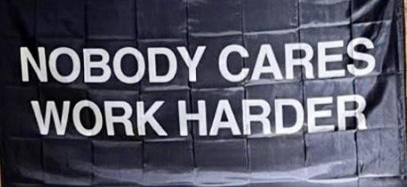
p/c – I saw this sign recently and loved its simple and direct message

Stepping Stones or Defining Moments? The Choice is Yours

Life is filled with stepping stones—moments that can either define us or simply become a small part of our journey.

When faced with challenges or opportunities, we can see them as just another step or as a moment for growth and clarity. Carl Jung once said, “I am not what happened to me, I am what I choose to become.”

I recently re-watched a documentary about the Navy SEALs.  Every Navy SEAL candidate faces grueling hardships: physical exhaustion, frigid cold water, mental strain, and the constant threat of failure.

Some candidates see each challenge as an opportunity, a chance to push beyond their perceived limits and grow stronger. They embrace the pain, keep their focus.  They find strength in their determination and their fellow candidates. These candidates transform the hardships into defining moments, emerging on the other side as Navy SEALs.

Others, however, let the same hardships overwhelm them. Fear, frustration, and exhaustion cloud their resolve. The challenges, instead of being opportunities for growth, become insurmountable barriers. These candidates wash out, not because they lacked physical capability, but because they couldn’t shift their mindset to see the hardships as stepping stones rather than obstacles.

None of us are born with skills.  It’s easy to watch some Youtube videos and think woodworking is totally doable.  Any new woodworker can attest to the uneven cuts, the wobbly joints, and the frustrations that can come from trying this new hobby.  But, by learning from the mistakes, honing skills through practice and even more failures, projects begin to go more smoothly.  The final products are less uneven and wobbly…and the process becomes much more enjoyable.    

Learning and growth come from our willingness to take lessons from every experience. Reflecting on each attempt, seeking feedback, and choosing to improve.  It’s the decision to learn from every encounter that turns these stepping stones into personal and professional development milestones.

However, clouding our experiences with fear, frustration, anger, or other limiting emotions can lead us to ignore the growth opportunities these experiences present. When we let negative emotions dominate, we risk missing out on valuable lessons that can propel us forward.

It’s difficult, but essential, to manage our emotions and maintain a positive outlook to fully benefit from the lessons we can learn. 

The stepping stones in our lives are all potential defining moments. It’s up to us to decide whether we let them pass by or seize the opportunity to let them shape us. We can turn every step into a defining part of our journey.

It’s not just about the stones we step on but how we choose to step on them that defines our path.

p/c – Joshua Earle, Unsplash.com

The Unsung Heroes: Driving Excellence in the Shadows of Mediocrity

The pursuit of excellence is always a journey worth taking. Do you have what it takes?

It’s an unfortunate truth that a large cohort of our society defines their success as doing the minimum.  For them, success means not failing (or being seen to fail). 

They’re okay with mediocrity, inefficiency, and ineffectiveness. They believe they can’t make a difference anyway, so they welcome the warm embrace of the status quo.  They take comfort in joining the flock of mediocrity. 

Do you find success in simply avoiding failure, or are you one of the rare renegades who can’t stand mediocrity?

In a landscape where inefficiency and ineffectiveness are accepted norms, there’s a shrinking community of individuals who see an opportunity for improvement. They envision a future defined by hard work, creativity, and continuous efforts to break free from the shackles of the status quo.

These unsung heroes view mediocrity as a chance to make a difference. They are willing to undertake the hard work necessary for transformation. These passionate individuals are the driving force behind organizational change, pushing boundaries and overcoming obstacles in the relentless pursuit of excellence.

They are willing to try.      

They’re willing to risk failure, often multiple times, to pull themselves and their organization kicking and screaming toward a better future. 

In a perfect world, organizations would recognize and elevate these passionate individuals, recognizing their contribution. 

Unfortunately, we don’t live in a perfect world.  Status quo is like a warm blanket.  Those who threaten to take away that blanket are often seen as a threat. The well-organized flock of mediocrity is a powerful deterrent to new ideas and improvement. 

Do you have what it takes to be one of the renegades?  One of the unsung heroes? 

Are you willing to toil in relative obscurity, pushing back the walls of mediocrity, making room for excellence in their place? 

Few are up to this challenge.  But organizations count on these renegades for their success everyday…even if they don’t realize it.

Premature Judging

The easiest approach is to prematurely judge, declare failure and decide who to blame…

Should a new home construction project be judged when only its blueprint exists?  How about when the site has been prepared?  What about when the materials like wood, rebar, and electrical conduit are delivered?

Should we wait to judge the home build until the framing is complete?  Should we wait until the walls and roof are added?  Or, wait until all the windows are installed?  What about the paint and other finishing touches on the house?  Should you wait for those to be completed?

Can you judge the success of the home build before it’s finished?

When making chocolate chip cookies, do you judge the success of the cookies while mixing the ingredients?  How about when the chocolate chips are poured into the batter?

What if the recipe called for real butter, but you only have that non-diary butter substitute that’s supposed to be healthier than butter?  Are your cookies doomed at that point?  Should you call-off the project and declare it a failure?

Assuming you’ve made it past the butter/non-dairy butter issue, is it right to judge the cookies after they’re spooned out onto the cookie sheet, but not yet baked?

Just before placing those filled cookie sheets into the preheated oven, is that the time to re-evaluate the entire cookie-making process to determine if it’s failing?  Should you call a meeting to discuss whether the cooking temperature listed in the recipe is the correct one for your cookies?

Houses and cookies are obvious examples of “projects” that have a lot of moving parts.  They build from a set of raw ingredients, mixed with time and effort, into a completed item.

What about less obvious events in our lives?  When’s the right time to judge these for success or failure (using whatever measures you’ve chosen)?

  • new job
  • new business
  • new business strategy
  • new information system
  • new software development project
  • new friends
  • new marriage
  • new workout regimen
  • new hobby
  • new home

The easiest approach is to prematurely judge, declare failure and decide who to blame.  Failure is comforting.  The status quo is easy.

The new thing is never easy.  Creating something new is almost always uncomfortable.

When we judge too early, failure soon follows.

By the way, the cookies were amazing, but not until they came out of the oven.

Photo by NeONBRAND on Unsplash

Blame and Our Ego

Why do we play the blame game?

“If you get your ego in your way, you will only look to other people and circumstances to blame.” –Jocko Willink

Here’s a thought experiment…

Looking back over the past few weeks (or months, or years), how many times did you blame:

  • someone
  • some thing
  • traffic
  • an injury
  • a disability
  • the weather
  • the economy
  • the government
  • your boss
  • your employee
  • social media
  • a company
  • a bad memory
  • anything but yourself?

No matter the subject, there are plenty of candidates for our blame…as long as we can aim it outward.

Our ego prefers blaming “the other” rather than accepting responsibility.  Life’s easier that way.

Blame doesn’t just apply to things that happened in the past.  Blame is most powerful (and crippling) when it prevents something from happening in the future:

  • I won’t be able to make it out there tomorrow. The traffic is just too crazy at that time.
  • I hate this job, but I don’t have time to learn a new trade.
  • I’d love to help you move, but with my bad back, I wouldn’t be very helpful.
  • There’s no way I’d ever start my own business in this economy. Besides, who needs all the government regulations and hassle?
  • It’s way too cold out there to go for a walk today.
  • I’d love to travel more, but there’s no way my boss would ever give me the time off.

How many times have you used blame to avoid doing something new, or something that could fail?

Blame is useful when it establishes a foundation for improvement.  When it represents a first step toward identifying root causes that can be solved.

Beyond that, blame has very little value, except stroking our ego (and keeping us nice and warm in our cacoon of status quo).

Photo by Casey Horner on Unsplash

Time for a Lens Change?

We control our settings.  We control our lenses…

Way back in junior high (in the last century), I learned about photography with 35mm SLR cameras.  These were the “real thing.”  They were a far cry from the cheap Instamatics that everyone I knew used at the time.

We learned about shutter speeds, f-stops, light meters, focus points, passive and active lighting, shadows, framing, composition, film types, and lenses.

Did we want to capture the action close-up, or in the distance?  Blur the action, or stop it?  Shadow the subject, or light it?  Black and white, or color?  Grainy or smooth?  Focus on the foreground or the background?  Capture the subject from the left, or right?

It didn’t matter if we were photographing a mountain, a flower, a person, or a can of tomatoes.  Using all the tools at our disposal, we controlled what happened in each photo.

Don’t even get me started on developing film in a darkroom.  We learned about that too.  More ways to control the image that appears in the photo.  For younger readers, darkrooms are the place where the exposed film was transformed into photos.  Using various methods, we could edit an image like you can today in your phone’s photo editor or Photoshop.

The main lesson about all this wasn’t the tools and techniques of photography. It was the realization that the camera was only a tool to capture a moment.  That moment, with all its beauty, drama, imperfections, and emotions.

More specifically, the camera captures a feeling that comes from the image and our memory of that feeling.  The image is merely a pathway to our feelings about the subject.

We capture moments and feelings every day.  Usually without a camera.  We control how these moments and feelings appear on the canvas that matters the most.  In our heart and in our mind.

If the world seems to be against you, and all you see is ugliness and despair, that’s probably because of the way you’re choosing to see the world.

If everything is amazing and perfect, that’s also a result of the way you’re choosing to see the world.

Neither view is 100% accurate.  Reality has its ups and downs.  We face challenges and triumphs, victories and defeats, every day.

The key is to understand that we have way more to do with the way these moments are captured and interpreted than anyone or anything in our world.

We control our settings.  We control our lenses.  We choose where we focus.

Ultimately, we choose how to frame our moments.  Not the other way around.

Photo by Warren Wong on Unsplash