Creating Like Children

When you watch a five-year-old, a ten-year-old, even a twelve-year-old create, you see what unfettered creative freedom really looks like. Whether it’s a drawing, a Lego tower, or a clay sculpture, they throw themselves into the process with joyous abandon. In their mind, they can see clearly what they’re making. They know why they’re making it. And there’s almost always a story behind it.

They aren’t self-conscious. They aren’t trying to impress anyone. Sure, they like to show their creations to parents, grandparents, and teachers.  But their motivation isn’t just about approval. It’s about expression.

Most children are free from the baggage of expectation. They don’t wonder if what they’re making is good enough. And when they finish, they move right on to the next thing. Their self-worth isn’t tied to the outcome. The value of the work comes from their own perspective, not from what others think.

But around age thirteen (sometimes earlier) things change.

After years of chasing approval, learning the “right” way to do things, being graded and corrected by well-meaning adults, something fundamental happens. Their freedom to create without judgment slowly gets buried. Doubt takes root. Worry about what others might think starts to shape their process. Fear of looking foolish holds them back.

And as the years pass, it only gets worse.

Tell someone you’re going to take up oil painting, stained glass, sculpture, or any new creative pursuit as an adult, and they’ll likely have two reactions: a polite smile of encouragement, and quiet skepticism that anything worthwhile will ever come of it.

Starting something creative as an adult feels strange. It’s outside the bounds of what “normal” people do. It’s far easier to stay in line, avoid looking foolish, and sidestep the discomfort of being a beginner again.

But we are all beginners at birth. Even the rare prodigies had to take their first step (the one that happens long before we see the gifted 5-year-old who can play a piano concerto). For the rest of us, every new skill—whether it’s creative, practical, or professional—requires courage, repetition, failure, and patience.

I’ve learned that when I let go of expectations (not easy) and stop worrying about looking foolish (also not easy), the magic happens. With this new frame of reference, trying something new, something creative, or something unfamiliar, brings a new energy having nothing to do with the outcomes.

It doesn’t seek approval or chase productivity. It simply opens the door to wonder—something we often unlearn as we grow older.

I’m lucky. I get to spend time with my grandchildren, who remind me what fearless creativity looks like. They show me that learning and creating, and the fun we have along the way, are all that matters. 

Maybe we all need a little more of that. 

To create like children again.

Photo by pine watt on Unsplash

Pressure is a Privilege

I heard this a while back and it resonated with me.  That it’s a privilege to be under pressure.

At first, this may seem counterintuitive. Pressure can feel heavy. It weighs on us, steals our sleep, tightens our chest.

The pressure to perform. Pressure to deliver results. Pressure to be the best spouse, parent, grandparent, or friend we can be.

Pressure to grow. Improve. Rise to the moment.

We feel pressure because someone is counting on us.
Our family.
Our coworkers.
Our teams.
Our communities.

That pressure? It only exists where there’s a purpose. It’s a signal that we matter to someone. That our role isn’t meaningless. That someone out there is relying on us to show up, do our best, and help them move forward.

The alternative?

No responsibilities. No pressure at all. No one looking our way.
No one expecting anything from us. No one counting on us.

No promises, no demands (we don’t get enough Love is a Battlefield references in life). 

Maybe, no purpose.

The next time you feel the world pressing in, take a deep breath and reframe the situation.

That weight on your shoulders? It’s a sign of trust. A signal of opportunity. A reminder that you have a place in someone else’s story.

In the end, pressure is a byproduct of the privilege to lead, to love, and to serve.

And what a gift that is.

h/t – Marques Brownlee (watch his video to the end)

Photo by Paul Harris on Unsplash

Garbage In, Garbage Out: Your Focus Defines Your Success

“Garbage In, Garbage Out” doesn’t just apply to computers—it applies to your life. The people you spend time with, the content you consume, and the habits you build shape your future. Want better results? Choose better inputs.

“You are the average of the five people you spend the most time with.” – Jim Rohn

“You are what you repeatedly do.” – Aristotle

“Show me your friends, and I’ll show you your future.” – John Kuebler

“Your life is controlled by what you focus on.” – Tony Robbins

The old phrase, “garbage in, garbage out” doesn’t only apply to computers and databases. It applies to how we live our lives.

Our inputs—the people we surround ourselves with, the information we consume, and the habits we cultivate—shape our outcomes.

If you spend time with amazing, imaginative, productive, and adventurous people, chances are you’ll start adopting some of those same qualities. At a minimum, you’ll develop personal goals that push you to emulate those qualities in your own way.

On the other hand, if you surround yourself with negative, self-destructive, bitter, or complacent people, their mindset and behaviors will slowly seep into your own life. Even if you think you’re immune, habits and attitudes are contagious.

Small Choices Compound Over Time

Consider this simple example.

If you exercise at least three days per week, you’ll see progress. Do it five days per week, and your results will be even better.

But if you instead have the habit of drinking a large chocolate shake for lunch every day, the impact won’t be immediate, but with time you’ll notice a negative shift in your health and energy levels.

Neither of these changes happen overnight.  But over months and years, they define who you become.

Our small choices create big results.

The Status Quo Trap—It’s Hard to Change

It’s obvious that if you run toward a cliff, ignoring all the warning signs, you’re in for a big fall. But in real life, it’s rarely that clear.

Like the boiling frog who doesn’t realize the water is heating up until it’s too late, many people stay in toxic environments, bad habits, or unproductive routines because the declining results are slow and gradual. It doesn’t feel urgent—until suddenly, it is.

Our Inputs Dictate Our Outputs—So Choose Wisely

Our mind works like an algorithm.  What we feed it shapes what it returns to us.

If we constantly consume negative news, gossip, or toxic social media, our mindset will reflect it.

If we surround ourselves with people who challenge us to grow, read books that inspire us, and engage in meaningful conversations, our perspective will shift toward productivity and fulfillment.

The good news? We choose. And by making intentional choices, we set the trajectory for our future.

Challenge: Take an Inventory of Your Inputs

For the next week, pay attention to what’s influencing you.  Your environment, the content you consume, and the habits you engage in.

Who are the five people you spend the most time with? Are they making you better?

What are you reading, watching, and listening to? Is it fueling growth or draining your potential?

What small habit could you start today that would improve your future?

The inputs you choose today will shape who you become tomorrow, next year, and a decade from now.

Your choices matter.  Make them count.

Photo by William Topa on Unsplash

Busy Isn’t the Problem…Ineffectively Busy Is

Almost everyone claims to be busy. Many will even describe their endless to-do list—what they’ve done, what they’re doing, and what’s next—justifying their busyness.

Lots of articles explore different types of busyness. One that stands out for me, Busyness 101: Why Are We SO BUSY in Modern Life?, lists the following types:

-Busyness as a badge of honor and trendy status symbol

-Busyness as job security

-Busyness as Fear of Missing Out (FOMO)

-Busyness as a byproduct of the digital age

-Busyness as a time filler

-Busyness as a necessity

-Busyness as escapism

The last one stands out to me: busyness as escapism.

When we’re constantly busy, we get to avoid the hard things in life. No time to reflect on priorities. No time to find smarter ways to work. No time to focus on meaningful goals…ours or our organization’s.

Busyness lets us sacrifice our other responsibilities. We convince ourselves that our sacrifices are necessary, without questioning what they truly cost us or those around us. And we tell ourselves that once we’re “less busy,” we’ll focus on the important things we’ve been neglecting. The problem? We rarely become “less busy” (at least, from our perspective).

But the busiest effective people operate differently. These individuals aren’t just busy for the sake of it.  They work with intention, with purpose.  They prioritize. They seek smarter ways to work. They focus on meaningful goals rather than just checking off task lists. 

These are the people who not only get things done but get the right things done. And they do it faster than everyone else. Why? Because they’re too busy to be distracted by nonsense and trivialities. They tackle the big things first, and often, the smaller things take care of themselves.

When I managed large organizations, I valued these employees the most. They weren’t just productive, but they were leaders.  They inspired everyone around them to be more effective. Whenever a new project or opportunity arose, I sought them out. I knew they’d prioritize the new project well and deliver great results.

The difference between being busy and being effectively busy comes down to mindset. The most productive people don’t just fill their days.  They own them.

Next time you catch yourself saying, “I’m so busy,” pause and think. Are your tasks productive and effective, or just occupying your time? 

You may find that you’re not as busy as you thought.

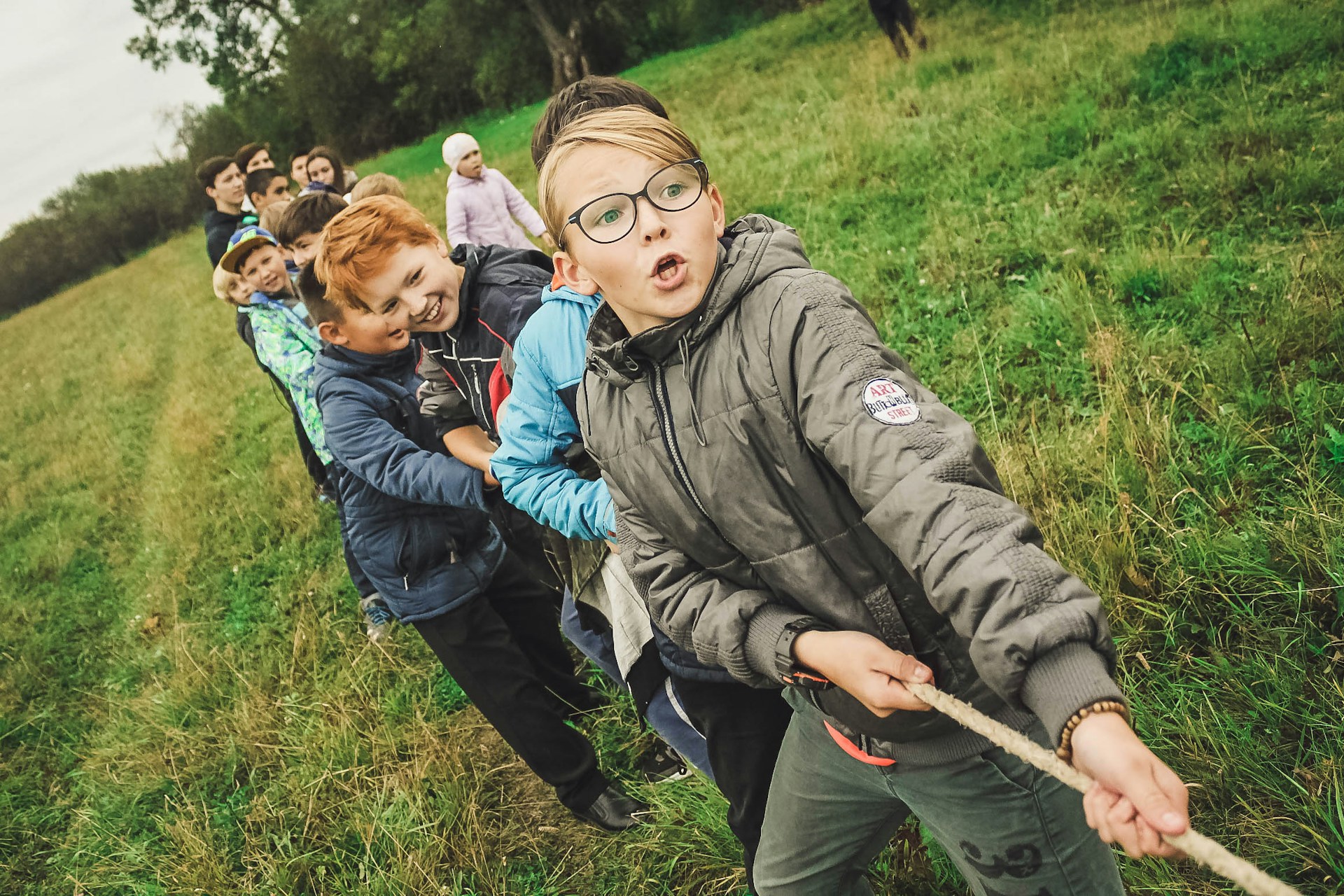
Photo by Anna Samoylova on Unsplash…my eye is on the girl in pink who’s walking away from the rope (I bet you didn’t notice her at first)

Splitting Logs – The Firewood’s Promise (and my “Why”)

If you were to visit me on my mountainside, next to a huge pile of bucked-up logs that I’ve cut and collected over the past year, using my fancy new log splitter, what would you see? 

A grandpa dressed in a snow suit and beanie, warding off the low-teens temperature and wind chill, wearing eye and ear protection, splitting one log after another. 

I’m stacking the split firewood into an “outdoor fire” bin (the crummy stuff that’s showing some signs of water damage that may or may not burn so great), and an “indoor fire bin” for the good stuff.  We have so much that I use IBC totes that I can forklift and move around with my tractor.   

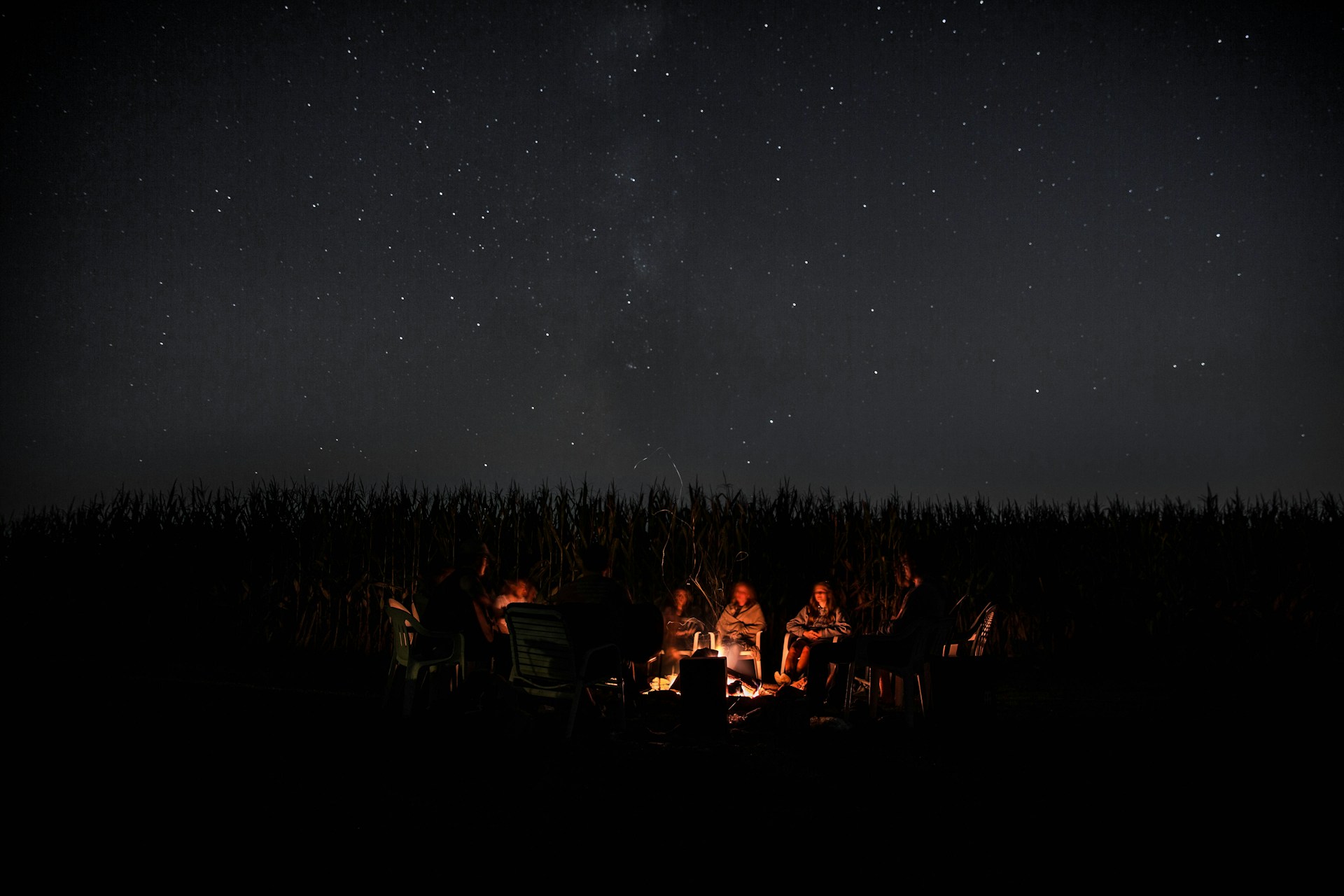
What you’d miss is what this guy’s thinking.  Of all the campfires these logs will deliver.  The warmth, the beauty, and the cheery faces reflected in the golden firelight.  The togetherness, the raucous fun, and always the smoke that’ll chase each of us in time.    

Lately, I’ve been thinking about words that rhyme with stories, memories, starlight, marshmallows, love, and family. Of a way to express my “why” behind all this work.

My new splitter hums, its rhythm is true,
Each log cracks clean, split in two.
And with each piece, I see what’s ahead—
Fires that warm, where stories are said.

Golden flames dance in their eyes,
Joyful voices filling the skies.
Kids with marshmallows on sticks they will hold,
Turning white fluff to crispy gold.

The stars above will steal their gaze,
A quiet pause from the firelight’s haze.
But soon enough, they’ll leap to their feet,
Cousins chasing cousins, the night complete.

This work is heavy, my labor long,
But in each log, I hear a song.
A promise of warmth, connection, and love,
Of smoke below and stars above.

Each crack of the wood a memory in waiting,
Moments of joy we’ll spend creating.
I keep splitting, I’ll keep the pace,
Knowing the fire will hold its place.

One split, one stack, one stick at a time,
Building a future that’s warm and divine.
A pile of firewood, yes—but so much more,
It’s family, it’s laughter, it’s life to the core.

I can’t think of a better “why” than this. 

Photo by Kevin Erdvig on Unsplash

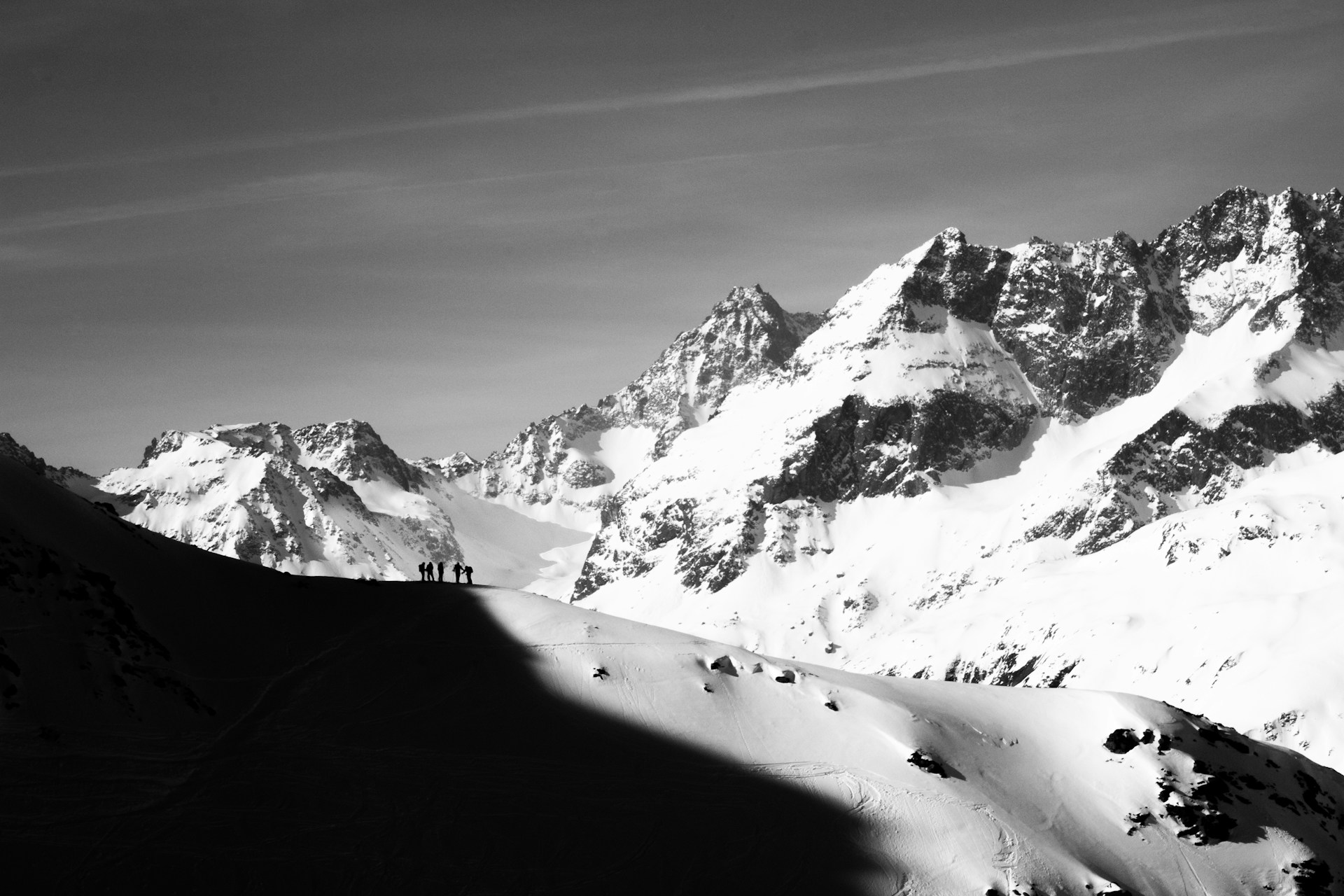
Climbing 10% of the Mountain

“…climbing 10% of the mountain ten times is not as useful as climbing to the top once.” – Adam Mastroianni

This quote reminds me of the old adage about project resourcing: sometimes projects can’t be completed faster merely by adding more people to it.  After all, the story goes, nine women can’t make a baby in a month.

Does this climbing quote ignore our preparation?  Route scouting, equipment testing, and countless workouts that make the summit climb possible.  Not to mention the like-minded team we built to support the climb.

Maybe it’s not about preparation.  Maybe it’s about the false-starts, the simulated progress, the big talk and no action that we engage in to make it seem like we’re climbing when we’re not.  We think we’re fooling everyone, but we’re only fooling ourselves as we take the comfortable way out and choose not to climb at all.

It’s easy to climb 10% of the mountain or achieve 10% of the goal.  It’s easy to get 50%.  60%.  Even 75%.  But as the challenges compound near the top, we let doubts creep in.  The grinding effort becomes exhausting.  We lose sight of the summit or forget why we’re climbing in the first place. 

We make excuses.  We can come back another day and try again.  The summit will always be there, and maybe next time… 

That’s just it.  We’re rarely “ready” for the climbs that matter, whether in business, fitness, or life’s hardships.  Waiting for the perfect time often means waiting forever. 

You have the power to choose the summit run every time.  Committing 100% effort, even when you feel 60% ready.  Trusting that you’ll figure out the rest along the way. 

Life’s summits rarely wait for us to feel ready. The question is: will you take the first step…and then push beyond 10%, all the way to the top?

Photo by Paolo Feser on Unsplash

In the Steps of Trailblazers

I’ve probably hiked or biked hundreds, maybe thousands of trail miles in my life.  Most of the trails had been there for many years…even decades. 

Other than clearing some fallen branches from a trail or participating in a trail volunteer day, I never gave much thought to how the trails were built, or who originally built them.  They were always there.  It didn’t matter if the trails started out as animal paths, or were built by hand, carved through the forest.  The trails seemed to belong right where they were.  

My perspective shifted when we were fortunate enough to purchase acreage that includes a forested hillside, a mostly dry pond, rocky escarpments, and a meadow thick with trees and scrub brush. 

Where others may have seen a tangle of impenetrable forest, I could see trails winding through it, paths crisscrossing up and down the hill, around the pond, and maybe a little campsite down in the meadow under the tall trees. 

I had no idea where to start or where exactly the trails would go.  I just knew the hillside and meadow were calling for a trail system and a campsite that my family and friends could enjoy exploring for years to come.    

When we moved here, I didn’t own a chain saw, a tractor, or any of the fancy attachments that make tractors such useful (and fun) tools.  I had the standard set of homeowner hand tools from our lifetime of living in a tract home that didn’t have a yard big enough for a lawn.

The real work began when our new property was hit by a 90 mile per hour derecho that effectively found all the unhealthy trees and snapped them in half or knocked them to the ground.  As I worked my way across our property over the next six months, cutting and clearing all of the downed trees (40-50 trees in all), I got a ton of practice with my new chainsaws, my upgraded tractor (the small one we purchased initially didn’t cut it, so I did what every tractor guy worth his salt does when faced with this dilemma…I upsized), the 5-foot brush hog attachment, and the front loader grapple attachment. 

As I worked to complete the clearing process, I could see where new trails might go.  As I brush-hogged large swaths of overgrown scrub brush and brambles, new openings showed themselves.  In the areas where I cleared away the dead and fallen trees, nice new grassy areas greeted the sunlight that finally penetrated to the ground.  I could see how trimming up some of the remaining trees would improve the sight lines through the area. 

Once the land clearing process was mostly done, the real trailblazing process began. Deciding exactly where to cut the trails, which routes worked best given the lay of the land, the gradient of the hillside, natural features, and tree coverage.  Could I veer up and to the right a bit to maintain the trail flow while leaving more trees intact?  Will a hiker be able to maintain their footing if I use the existing (slightly) flatter terrain on the hillside?  Can I make this trail intersect in an interesting way with the other one that’s 200 yards away? 

So far, I’ve been talking about literal trails and the (rewarding) process of carving a trail system by hand into my property.  I’ve known my share of trailblazers in life and work, and I’ve even been one myself on occasion. It’s funny how, like the paths I was carving through the woods, new trails—whether they’re businesses, inventions, ideas, or methods—often seem inevitable after the fact.

Once they’re established, they feel as if they’ve always been there. But every one of those trails began with someone willing to face the unknown, to push forward without a clear end in sight, risking failure or embarrassment in the name of carving a new path. 

Only the people who actually built these trails know what it took to get there.  The obstacles that had to be moved, the dead ends they hit along the way, their moments of doubt. They alone understand the learning curve, the time, and the sheer energy it took to bring the trail to life. And as they move forward, bit by bit, the final route often ends up looking different from what they first imagined.

Our new trail system is amazing.  It has straight sections, switchback sections, offshoots, shortcuts, climbs, and descents.  Parts of the trail are under a tunnel-like canopy of thick forest and other areas open to the sky, providing amazing hilltop views.  Walking along the trails feels like the landscape was made for them…even though there were countless hours of planning, experimenting, cutting, clearing, and adapting along the way.     

Sometimes the trailblazer is driven by an obsessive need to see where the trail can go.  To see what lies over the next hill, or around the next bend.  Others visualize how their trail will be enjoyed for years (decades?) to come. 

While their motivations may differ, the result is often the same.  A path that seems to have always been, enjoyed by countless people who may never stop to wonder how it got there. 

For those who wonder, the trail offers something more than just a route.  It’s a reminder that someone, somewhere, once walked an untamed path and decided it was worth carving a trail for those who’d come later. 

Photo by Judy Beth Morris on Unsplash

It’s Up to You

Consider all the things that are up to you:

  • Your mood when you wake up.  Waking up on the wrong side of the bed is your choice.  You alone decide how you’ll approach each new day.
  • Your morning routine.  What’s included or excluded?  How much time are you providing for yourself in the morning?  Are you rushing, or welcoming the day at the pace of your choosing?    
  • The tone of interactions you have with others.  Are you smiling when you’re talking (whether in person or by phone)?  Are you looking for faults in others, or the good in others?  The energy you bring is your choice.
  • Your career choice.  Unhappy at work?  What are you doing to change it?  Are you changing your situation, or just complaining.  Not sure if you should work in your chosen profession?  What are you doing to figure it out?  If this profession isn’t for you, what concrete steps are you taking to prepare to work in another profession?  You decide all of it.
  • Whether you choose to manage your day, or let it manage you.
  • The places you visit and frequent.
  • Your hobbies.  Do you even have a hobby, or are you too “busy” for anything that brings you joy or peace outside of work? 
  • Your friends.  Are they lifting you up or bringing you down?  Jim Rohn said, “You are the average of the five people you spend the most time with.”  Choose wisely.
  • The organizations you choose to join or support.

This list only scratches the surface. 

It’s easiest to let someone, or something, else make the decisions for you.  But remember—choosing not to decide is a decision, and you own it.    

So, what kind of day will you have?  What kind of life will you live? 

It’s up to you.   

Photo by Eric Prouzet on Unsplash

Commitment Leads to Fulfillment

Zig Ziglar once said, “It was character that got us out of bed, commitment that moved us into action, and discipline that enabled us to follow through.”

This perfectly describes the driver of true achievement. It’s not just the initial desire or excitement that propel us, but the dedication to stick with something until the end.

I accidentally saw this idea come to life during a recent road trip.  I stopped by a taco shop.  It happened to be near a beach and was clearly a popular local destination.  The tacos were excellent, but that’s not the point of this story.

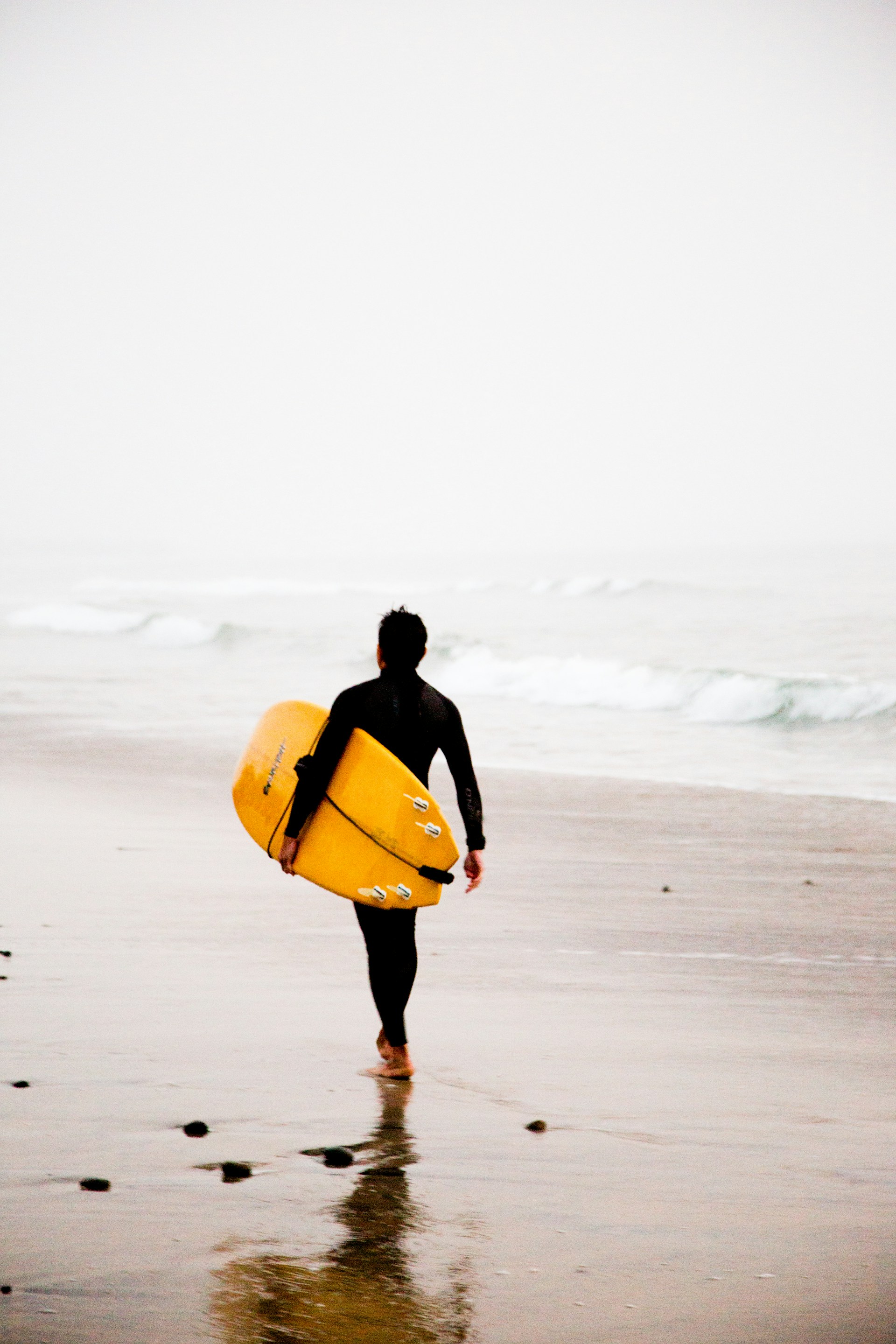
As I sat on the patio eating my carnitas tacos and enjoying the view, I couldn’t help overhearing a conversation at the table that less than two feet away.  Two early-twenties (by my estimation) men were talking about how amazing the surfing had been earlier that morning. 

I got from the conversation that they had been surfing together since they were teenagers and this morning’s session was a long-overdue reunion of sorts since they hadn’t surfed together in quite some time. 

One of them made a comment that stuck with me: “Surfing is the only time I’m really alive. I know what I’m doing and can feel the water telling me what to do. I wish I could get that kind of fulfillment out of the rest of my life. I feel like I’m just wandering around, waiting until I can surf again.”

It wasn’t long before his friend responded, “I know what you mean. I’ve had to settle down these past couple of years. I got a dog, and it’s been a lot of responsibility, but he’s amazing. He loves the beach, so I take him there as often as I can.”

Then came the real kicker. The first guy, the “wandering” one, responded, “Maybe that’s something I should do. I can’t get motivated at work and just want to quit. Maybe getting a dog would help me commit to the work.”

He used an extremely important word—commit. It was evident these two men are deeply committed to surfing. It’s their passion, and it gives them a sense of fulfillment that’s absent in other areas of their lives. Surfing isn’t something they merely do—it is something they live for. But beyond surfing, they lack the same kind of dedication. Their passion for the sport brings them joy because they are fully invested in it, heart and soul.

The wandering friend’s dilemma isn’t uncommon. Many people struggle with finding motivation in their daily lives.  They haven’t truly committed to something that extends beyond their comfort zone or personal hobbies. They desire fulfillment without realizing that commitment is often their missing link.

It was as though this young man had stumbled upon the key to unlocking motivation and purpose: he needed to commit. Whether it is work, relationships, or another area of his life, the power to find meaning and fulfillment can only come from his willingness to fully invest in something.

Goethe once said, “At the moment of commitment, the entire universe conspires to assist you.” This idea aligns with the realization that real fulfillment only comes from investing fully in what we do. When we are all in, we aren’t just going through the motions—we are owning the process, taking charge of the outcome, and continually working toward our goals.

The wandering surfer may never have thought about his job as something worth committing to. To him, it was just a means to an end, something he had to do so he could afford to spend time doing what he really wanted—to surf. But if he can shift his mindset and fully invest in his work with the same passion and dedication he gives to surfing, the fulfillment he seeks might not seem so elusive.

Fulfillment doesn’t come from merely reaching a goal or winning a trophy. As Cardinal Pell put it, “Commitment to a worthwhile goal brings fulfillment and meaning, even if the path is difficult.” The true joy and deep sense of satisfaction come from the commitment itself—the effort, discipline, and perseverance that drive us toward our goal.

If you’re handed a trophy without having worked for it, it’s meaningless. You know deep down that you didn’t earn it, didn’t push through the challenges, didn’t grow in the process. But if you earn that trophy through your own hard work and dedication, it’s a symbol of something far greater than the achievement—it’s proof of your commitment.

In the end, what we commit to is what brings meaning to our lives. Whether it’s our relationships, our careers, or even something as personal as surfing, the act of giving our all, of pushing through the hard times, is what fills us with a sense of purpose.

The wandering surfer wasn’t lost because he lacked passion; he was lost because he hadn’t fully committed to anything beyond the waves.

To truly live a fulfilling life, we must commit wholeheartedly. When we do, we’ll find that the truest sense of fulfillment comes from the dedication and growth that only commitment can bring.

Photo by Blake Hunter on Unsplash

Two Steps Forward, One Step Back…

Is still progress.

Pick any project—it doesn’t matter if it’s something you’ve assigned to yourself or something your boss has given you. It could be a huge, long-term project, or something that should take less than a week.

Chances are, that project will turn out to be harder than expected.  It will require effort that nobody saw during the planning process (whether planning consisted of a 5-minute conversation, or a multi-month series of meetings and discussions). 

Here’s something else about projects: even when we’re given full ownership, most of us will try to find ways to make sure we’re not fully responsible for the outcome.

But no matter what, the project remains. We own it. We also own the goal of getting it done right.

“The man who moves a mountain begins by carrying away small stones.” – Chinese Proverb

Progress is made through consistent effort, one step at a time. Then another. Then another. It’s the steps toward the goal that matter, almost as much as the goal itself. 

What if some of the steps we take are the wrong ones?  What if we have to go back and redo some of our work?  What if somebody sees us make mistakes along the way?

Each of these are (almost) guaranteed to happen. 

Embrace it.  Learn from it.  Carry on.

Keep stepping forward.  Learn along the way and give yourself permission to take a step (or two) back from time to time. 

The progress you’re making is the reward.    

Photo by NEOM on Unsplash