The winds arrive, sharp-edged with frost, Carrying whispers of all we’ve lost. Yet still, we gather where light abides, Tracing joys where memory hides.
The manger waits beneath the sky, Its humble wood holds heaven’s cry. A Child is born, both meek and bold, To mend the hearts that grow cold.
Here at the manger, shadow and light, Joy interwoven with sorrow’s might. A promise breathes where silence stirs: “Fear not—for I have heard your cry.”
Words awaken, dormant long, Noel and tidings weave their song. Through flickering trees and spiced perfumes, Old faces linger in quiet rooms.
Empty chairs hold stories near, A laughter faint, a single tear. Yet love persists where loss has tread, Its echoes call where angels led.
Here at the manger, shadow and light, Joy interwoven with sorrow’s might. A promise breathes where silence stirs: “Fear not—for I am sending my Child.”
O silverware that gleams with fire, O fragile ornaments that inspire. In every sparkle, a truth takes hold: The story that’s not fully told.
For every shadow cast by light, There burns a flame against the night. And every sorrow, every tear, Is met by love that lingers near.
Here at the manger, shadow and light, Joy interwoven with sorrow’s might. A promise breathes where silence stirs: “Fear not—for the Child is here.”
Across the miles, through time and space, The ties of love refuse to break. Each prayer, each carol, each whispered word Carries the weight of the Hope we’ve heard.
The Child has come, and so we sing, For in His hands rest everything. The hollow aches, the brightest cheer— All held in grace, all gathered here.
Here at the manger, shadow and light, Joy interwoven with sorrow’s might. A promise breathes where silence stirs: “Fear not—for I AM with you until the end of time.”
The bells resound with heaven’s cheer, For Christ is born, and love draws near. The angels sing, the nations rise, A holy joy fills earth and skies.
O love that soars, O joy that stays, We join the hymn of endless praise. In manger low, our hearts proclaim: The world redeemed by Jesus’ name.
Here at the manger, shadow and light, Joy interwoven with sorrow’s might. A promise breathes where silence stirs: “Fear not—for the Child Jesus is Born.”
There’s nothing like your own bed, your own pillow, and nice warm blankets when it’s time to sleep. To confirm this truism, try backpacking for a few nights in freezing conditions. Your lightweight sleeping pad and mummy sack might keep you alive, but they’re no match for the comfort of home.
Or spend a couple of weeks living out of a suitcase, hopping from one hotel bed to another. It’s rare for a hotel bed to be anything but “hammock-shaped” with giant pillows that defy logic and offer little comfort.
We all love to be comfortable. Ask most people, and they’ll tell you they’d rather sit at home in their jammies in their favorite chair, watching their favorite movie with their go-to snacks and drink in hand.
Comfort is easy. It requires little effort, and even less thought.
It’s safe, predictable, and free of fear. We know exactly how to achieve it, and we stay there because it feels good.
That’s the problem. Comfort is about staying. It’s about achieving sameness.
Growth doesn’t happen in comfort. The magic begins when we step outside our cozy bubble.
Trying new things, exploring unfamiliar places, or learning new skills rarely feels comfortable at first. It’s awkward and often frustrating. But with time, practice, and patience, we adjust. The uncomfortable becomes comfortable. We expand our boundaries. We redefine what normal feels like.
We grow.
Comfort is incredible. It’s that perfect combination of warmth, ease, and familiarity. It offers a necessary break from life’s challenges. But if we make it our ultimate goal, it lulls us into complacency. It encourages us to settle, to avoid risks, to stop growing.
Celebrate the moments of comfort when they come. Appreciate them for what they are—a place to rest and recharge. But don’t let comfort hold you back.
“You can have everything in life you want, if you will just help enough other people get what they want.” – Zig Ziglar
I remember a friend of mine who was promoted from being a very successful salesman to being the branch manager for a large insurance company. It is amazing to think this was almost 30 years ago.
He told me that he’d finally get to tell people what to do, and he looked forward to that. Plus, he’d get to take long lunches and charge the lunches to his expense account.
I knew that if that was his approach to his new manager role, he’d probably fail miserably…and quickly. I told him as much.
I suggested that he start by meeting with his new team members one-on-one. Just because he’d worked alongside many of them before didn’t mean he knew them well enough as their manager. I encouraged him to take the time to understand each of their roles, how they saw their future, and what they hoped to see change at the company.
I said it would help him get to know them and, even more importantly, show them he valued them and wanted them to succeed. And if he let them know that he needed their help, too, it would go a long way. This wasn’t just his chance to lead, it was a chance to connect directly with each team member.
He thought that was a waste of his time. He had been a very successful salesman, knew how the company operated, and already knew what made the branch tick. He told me that he knew what needed to be fixed and he’d hit the ground running to get those changes implemented.
I saw him again about three or four months later. When I asked him how his new job was going, he just shook his head. “Not good. Nobody is listening to me. I’ve had a couple of people quit already, and I think some others are out looking for new jobs. Our sales are way down. My boss is asking me what I’m going to do about it.”
I didn’t say, “I told you so,” but that’s what I was thinking. A few months later, he was demoted back to sales, but at the lower pay structure in place for new hires. Not long after that, he left the company.
I’ve been blessed with multiple opportunities to take over business operations in fields where I had little or no expertise or experience. Sometimes, from outside looking in, I had some ideas about how things should operate, but I always kept it to myself when I arrived.
Even in situations where I thought I knew all the answers, I purposely and methodically asked as many questions as possible. I took my own advice to meet with as many employees as possible, asking them about their job, how they do it, why they do it, where they hope to be in the future, the problems they are having, the things the company is doing wrong, the things the company is doing right. There are no wrong answers in these types of discussions.
It is truly amazing how much a new manager can learn from the people already in place, especially if that manager genuinely wants those people to be successful. It also helps to be extremely curious and thirsty to learn as many details about an operation as possible.
The most successful managers I’ve known have operated this way. They ask questions and listen carefully to the answers. They work as hard as they can to help each of their team members get what they want (as Zig so eloquently said).
If you’re stepping into a leadership role with the mindset of lording authority over others, expecting everyone to follow your lead just because you’re in charge, you might have short-term success, but it won’t last. Real leadership is about seeking ways to enrich others and the organization before yourself. And in doing so, you build an environment of trust where people thrive and truly enjoy their work.
Helping others succeed isn’t just a management tactic. It’s the only way to real success.
I’ve probably hiked or biked hundreds, maybe thousands of trail miles in my life. Most of the trails had been there for many years…even decades.
Other than clearing some fallen branches from a trail or participating in a trail volunteer day, I never gave much thought to how the trails were built, or who originally built them. They were always there. It didn’t matter if the trails started out as animal paths, or were built by hand, carved through the forest. The trails seemed to belong right where they were.
My perspective shifted when we were fortunate enough to purchase acreage that includes a forested hillside, a mostly dry pond, rocky escarpments, and a meadow thick with trees and scrub brush.
Where others may have seen a tangle of impenetrable forest, I could see trails winding through it, paths crisscrossing up and down the hill, around the pond, and maybe a little campsite down in the meadow under the tall trees.
I had no idea where to start or where exactly the trails would go. I just knew the hillside and meadow were calling for a trail system and a campsite that my family and friends could enjoy exploring for years to come.
When we moved here, I didn’t own a chain saw, a tractor, or any of the fancy attachments that make tractors such useful (and fun) tools. I had the standard set of homeowner hand tools from our lifetime of living in a tract home that didn’t have a yard big enough for a lawn.
The real work began when our new property was hit by a 90 mile per hour derecho that effectively found all the unhealthy trees and snapped them in half or knocked them to the ground. As I worked my way across our property over the next six months, cutting and clearing all of the downed trees (40-50 trees in all), I got a ton of practice with my new chainsaws, my upgraded tractor (the small one we purchased initially didn’t cut it, so I did what every tractor guy worth his salt does when faced with this dilemma…I upsized), the 5-foot brush hog attachment, and the front loader grapple attachment.
As I worked to complete the clearing process, I could see where new trails might go. As I brush-hogged large swaths of overgrown scrub brush and brambles, new openings showed themselves. In the areas where I cleared away the dead and fallen trees, nice new grassy areas greeted the sunlight that finally penetrated to the ground. I could see how trimming up some of the remaining trees would improve the sight lines through the area.
Once the land clearing process was mostly done, the real trailblazing process began. Deciding exactly where to cut the trails, which routes worked best given the lay of the land, the gradient of the hillside, natural features, and tree coverage. Could I veer up and to the right a bit to maintain the trail flow while leaving more trees intact? Will a hiker be able to maintain their footing if I use the existing (slightly) flatter terrain on the hillside? Can I make this trail intersect in an interesting way with the other one that’s 200 yards away?
So far, I’ve been talking about literal trails and the (rewarding) process of carving a trail system by hand into my property. I’ve known my share of trailblazers in life and work, and I’ve even been one myself on occasion. It’s funny how, like the paths I was carving through the woods, new trails—whether they’re businesses, inventions, ideas, or methods—often seem inevitable after the fact.
Once they’re established, they feel as if they’ve always been there. But every one of those trails began with someone willing to face the unknown, to push forward without a clear end in sight, risking failure or embarrassment in the name of carving a new path.
Only the people who actually built these trails know what it took to get there. The obstacles that had to be moved, the dead ends they hit along the way, their moments of doubt. They alone understand the learning curve, the time, and the sheer energy it took to bring the trail to life. And as they move forward, bit by bit, the final route often ends up looking different from what they first imagined.
Our new trail system is amazing. It has straight sections, switchback sections, offshoots, shortcuts, climbs, and descents. Parts of the trail are under a tunnel-like canopy of thick forest and other areas open to the sky, providing amazing hilltop views. Walking along the trails feels like the landscape was made for them…even though there were countless hours of planning, experimenting, cutting, clearing, and adapting along the way.
Sometimes the trailblazer is driven by an obsessive need to see where the trail can go. To see what lies over the next hill, or around the next bend. Others visualize how their trail will be enjoyed for years (decades?) to come.
While their motivations may differ, the result is often the same. A path that seems to have always been, enjoyed by countless people who may never stop to wonder how it got there.
For those who wonder, the trail offers something more than just a route. It’s a reminder that someone, somewhere, once walked an untamed path and decided it was worth carving a trail for those who’d come later.
Pick any project—it doesn’t matter if it’s something you’ve assigned to yourself or something your boss has given you. It could be a huge, long-term project, or something that should take less than a week.
Chances are, that project will turn out to be harder than expected. It will require effort that nobody saw during the planning process (whether planning consisted of a 5-minute conversation, or a multi-month series of meetings and discussions).
Here’s something else about projects: even when we’re given full ownership, most of us will try to find ways to make sure we’re not fully responsible for the outcome.
But no matter what, the project remains. We own it. We also own the goal of getting it done right.
“The man who moves a mountain begins by carrying away small stones.” – Chinese Proverb
Progress is made through consistent effort, one step at a time. Then another. Then another. It’s the steps toward the goal that matter, almost as much as the goal itself.
What if some of the steps we take are the wrong ones? What if we have to go back and redo some of our work? What if somebody sees us make mistakes along the way?
Each of these are (almost) guaranteed to happen.
Embrace it. Learn from it. Carry on.
Keep stepping forward. Learn along the way and give yourself permission to take a step (or two) back from time to time.
A professional manager understands that managing is an active role. It requires proactive effort, not just sitting back and overseeing tasks. A good manager knows how to delegate responsibility and authority. It’s a key skill that helps multiply their impact and develop the next generation of leaders.
There’s no shortage of books and articles that dive deeply into the art of delegation. Many are worth reading and putting into practice. But here’s the thing: no matter how much you delegate, you can’t delegate your influence. That personal touch—the way you listen, share your perspective, and guide the conversation—is something only you can bring to the table.
Managers have a unique viewpoint. They understand the critical questions facing the organization in a way others often don’t. Their value lies in their ability to communicate directly, to really hear what’s being said (and often what isn’t), and to guide the organization toward the right path. That’s what makes their influence so crucial.
Now, picture this: a manager sends one of their team members to a meeting with internal customers. The goal? For the subordinate to represent the manager’s ability to listen, understand, and guide the discussion. Sure, it can work if that person has full decision-making authority and can make agreements that hold the manager accountable. But that’s rarely the case.
So, we come back to the reality: a manager has to prioritize where they spend their time and energy, making sure they’re showing up where their influence is most needed. It’s not just about sitting in meetings or making decisions on the fly—it’s about really understanding the dynamics in play, both spoken and unspoken.
A manager’s influence over the direction of projects, processes, and people can’t be handed off. At best, subordinates can carry a “shadow” of that influence. It might get the job done, but it’s not likely to push the organization in the bold direction it needs to go.
In the end, while delegation is a powerful tool, influence is personal. And if you’re serious about leading, you need to make sure you’re showing up where it counts.
“Manners are of more importance than laws. Upon them, in a great measure, the laws depend. The law touches us but here and there, and now and then. Manners are what vex or soothe, corrupt or purify, exalt or debase, barbarize or refine us, by a constant, steady, uniform, insensible operation, like that of the air we breathe in.” – Edmund Burke
-Why do we say Please and Thank You?
-Why do we hold the door for the next person?
-Why do we show respect for our elders?
-Why don’t we interrupt someone when they’re speaking (at least, most of the time)?
Mostly because we were taught these behaviors by our parents, or someone in authority, when we were growing up. We may have learned by being told explicitly, or by watching others that we admire acting in these ways.
As Burke points out, manners are more important than laws. They are fundamental in establishing the boundaries of our behavior, of integrating us within our community.
Manners show our respect for those around us. They create a standard for how we work with others.
Consider the manners (customs) that are in play where you work. It doesn’t matter if you work in construction, nursing, information technology, or any other field. If you work with people (which you always do whether they are your co-workers, your customers, or both), your manner of behavior will be critical to your success. Good manners create a positive environment, build strong relationships, and foster a culture of respect and professionalism.
Since we are creatures of habit, it’s easy to establish either a habit for lacking manners, or for having them. The disciplined decision to operate your life within the bounds of good manners is a decision that will pay consistent dividends. Good manners can be the foundation for a disciplined approach across all areas of your life. When we are polite and considerate, we remind ourselves of our values and our commitment to treating others (and ourselves) with dignity.
The simple act of saying “Please” and “Thank You” (and meaning it) shows our vulnerability to others, and at the same time, our appreciation for what they have done for us. Powerful ways to remind us of our humility and gratitude many times each day.
Edmund Burke observed, “Example is the school of mankind, and they will learn at no other.” Our behavior and proper manners will be a teacher to those around us, whether we intend it or not. Our actions, grounded in good manners, can inspire those around us to adopt similar behaviors.
It’s easy for each new generation to look at the rules and traditions of prior generations (manners) as archaic, overly formalized, and irrelevant in their “new modern era.” They may rationalize away the need for good manners on this basis. However, dismissing the importance of manners can lead to a breakdown in social cohesion. Our challenge is to adapt the principles to modern contexts while preserving the core values of respect and consideration.
Manners are a timeless currency that never loses value—so spend them generously and watch how rich life can become.
Early in my career, during my time as an internal auditor, I learned a lot about people. I spent countless hours observing and interacting with individuals at all levels of organizations, from front-line employees to CEOs. This unique vantage point taught me a foundational lesson: the success of any organization usually hinges on the character and behavior of its leaders.
In our small audit teams, we developed a shorthand to quickly convey our impressions of the people we interviewed. We’d use these labels —like Adam Henry and Don Henry— to help summarize complex personalities in a few words. After interview meetings, we might describe our interviewee as a good guy, a solid operator, an Adam Henry, a Don Henry, or perhaps someone who was DUP, or DUC.
Let me translate those last four:
Adam Henry – Asshole
Don Henry – Dickhead
DUP – Definitely Unpleasant (not quite an Adam Henry)
DUC – Definitely Unclear (meaning they seemed like an idiot)
What’s the difference between an Adam Henry and a Don Henry? While both are problematic, the distinction lies in their approach and the impact on those around them. Adam might be uncooperative and arrogant, but Don takes it a step further—using their position to intimidate others and make them feel as dumb as possible. Don loves to belittle people and fosters a toxic environment that stifles collaboration and creativity.
Were our shorthand judgments fair? They may not have been, but they were usually quite accurate based on our interactions. Remember, most people are on their “best” behavior when talking to an auditor (even though most of us would rather not talk to auditors). Imagine if they weren’t on their best behavior.
These judgments, though informal, often reflected deeper truths about the individuals we encountered. A company with too many Don Henrys, for instance, might struggle with low morale, high turnover, and a lack of innovation—challenges that will cripple long-term success.
There was nothing special about us, as auditors, making these assessments of the people we were interviewing. All of us make these assessments as we work with other people. These same assessments are being made about us by other people all the time.
Is this person a good guy, a strong operator, a pleasant person, a team player? Or are they on the opposite end of the spectrum? Should I trust this person to have my best interests at heart, or are they solely in this for their own gain at all costs?
Companies of all sizes, no matter the industry, are made up of human beings, working as a group (hopefully as a team, but not always) to achieve key goals (hopefully the organization’s goals).
If the people who manage a company are Adam Henrys, or worse—Don Henrys, that organization will have difficulty succeeding. They might succeed in the short term, but over a multi-year time horizon, these negative traits in the people managing the business will lead to poor morale, declining creativity, declining teamwork, and declining execution.
Recognizing and addressing “Don Henry” behaviors is crucial for any organization aiming for sustained success. Leaders who prioritize their team’s well-being, encourage collaboration, and foster a positive work environment are far more likely to achieve lasting results.
The next time you’re interacting with colleagues, ask yourself: Am I being an Adam Henry, a Don Henry, or something better?
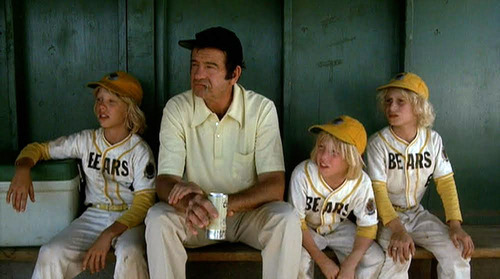
Park league baseball season came to an end recently. We had four grandsons between the ages of 8 and 10 playing on teams. The teams had a few “veteran” players, but for most of the players this was their first experience playing organized baseball. They had a lot to learn…and we saw amazing improvements in all the players in one short season.
It’s clear that the lessons they learned can extend far beyond the field, if we are willing to pay attention.
Panicking When the Ball Comes
My most vivid memory from the season is seeing the panic for many of the kids when the ball would come their way. Will they catch the ball? Where will they throw it once they have it? Do they know why they’re throwing it in a particular direction? Will the player they’re throwing to catch the ball?
The drama was real. It was clear that a lot of the kids didn’t expect the ball to come toward them. I saw a few kids jump away from the ball to avoid fielding it.
As a spectator, it’s easy to see what’s happening. It’s easy to assume that surely, we’d field the ball properly, and immediately know where to go with the play.
It’s not always as easy as it looks. Unexpected situations arise, and our response (or lack thereof) can significantly impact what happens next. Learning to stay calm and doing some pre-thinking about our actions (before the play) will significantly improve our chance of success.
Understanding Game Situations
Many young players struggle with understanding the game situation—who’s on base, how many outs are there, what’s the best play to make when the ball comes to them, and how to act strategically.
This lack of situational awareness highlights a crucial lesson: the importance of context and awareness in decision-making. Understanding the bigger picture allows for more informed and effective actions. The coaches encouraged the kids to think ahead (pre-thinking) and consider various outcomes. Whether the kids listened and embraced their advice was another thing entirely.
Are you thinking about your “game” situation? The macro and micro aspects of the challenges you and your organization are facing. Are you thinking ahead and considering various outcomes as part of your decision-making process?
Learning the Basics: Throwing and Catching
It’s not uncommon for young players to throw the ball the wrong way or miss it entirely. These fundamental skills require practice and patience. This aspect of the game underscores the importance of mastering basics before tackling more complex tasks. In any field, solid foundational skills are essential for success. Nearly every pursuit or profession has basic foundational skills that need to be mastered along the way toward more advanced skills. A football analogy fits well here…it’s important to understand the blocking and tackling part of the game before you can advance to running with the ball.
Position-Specific Skills and Aspiration
In youth park league baseball, most of the hits stay in the infield. This leaves the outfielders without much to do. I heard lots of outfielders wishing they could play an infield position like second base, or catcher. None of them understood what those positions entailed, but they knew that those positions had more action.
A few of them took the time to learn about the infield positions from their coach. They showed their interest and willingness to work their way to the infield. This shows the value of preparation and skills development. It’s important to work on the necessary skills before aiming for a specific role, whether in sports or any other endeavor. It also emphasizes the value of seeing a goal and then taking the concrete steps to learn, grow, and achieve that goal.
Strikeouts Aren’t Failures
Consider that an excellent hitter in the big leagues gets a hit about 30% of the time. They may get walked occasionally, but the rest of their at bats result in fly outs, ground outs, or strikeouts.
We saw a ton of strikeouts this past season. I was always impressed with the kids who struck out and immediately came back to the dugout to ask their coach what they should be doing to avoid striking out next time. Each strikeout was a learning opportunity…but only if the player saw it that way.
We saw a few kids melt down in disappointment and embarrassment. One kid from an opposing team stomped off the field and took himself out of the game (an extremely negative response to be sure).
When things go wrong, or we don’t get the result we want, that’s the time to buckle down and learn why it happened. Consider ways to improve so the results can improve next time. It’s only a failure if you give up.
Teamwork and Collective Goals
We are all self-centered. As we mature, we usually learn how to control our self-centeredness or at least how to channel it productively. Ten-year-old kids are no different. Their focus is on their own performance. Whether or not they’re hitting the ball. Whether or not they made the right play.
They often forget that the goal is for their team to win. They can help the team achieve that goal by having a strong performance, but also by helping and supporting their teammates. This is a powerful reminder of the importance of teamwork and the collective effort required to achieve a common goal. It’s easy to get caught up in individual performance, but true success usually comes from working together and supporting each other. Collaboration and shared successes build strong teams. Strong teams create successful outcomes.
Consistency Matters
Ask an excellent bowler, pitcher, batter, shooter (basketballs or bullets), pole vaulter, or pickle ball player how they deliver such excellent results. They’ll mention practice, dedication, and a strong mental approach. Eventually they’ll talk about consistency. Each of these pursuits (and countless others) require consistency above all else. The exact motions, body positions, eye contact, and calmness of breath that they can count on happening whether they consciously think about it or not.
Their practice process is all about achieving repeatable actions that their body remembers…every time. They also know that they aren’t swinging for the fences every time they’re at bat, not trying to set the world record or do something extraordinary with every outing.
They are working to become a steady and consistent performer at the highest level possible…and always reaching a little higher.
Consistency, patience, and incremental progress should be the goals…repeatable excellent outcomes will happen as a result of achieving these goals.
Park league baseball is a ton of fun. The drama is real. Teams experienced the “thrill of victory and the agony of defeat” throughout the season. We saw players improving and gaining confidence as the season unfolded.
I don’t know where the teams ended up in the standings at the end of the season.
I know the kids learned a lot and hopefully they’ll incorporate some of what they learned well beyond the game.
Life is filled with stepping stones—moments that can either define us or simply become a small part of our journey.
When faced with challenges or opportunities, we can see them as just another step or as a moment for growth and clarity. Carl Jung once said, “I am not what happened to me, I am what I choose to become.”
I recently re-watched a documentary about the Navy SEALs. Every Navy SEAL candidate faces grueling hardships: physical exhaustion, frigid cold water, mental strain, and the constant threat of failure.
Some candidates see each challenge as an opportunity, a chance to push beyond their perceived limits and grow stronger. They embrace the pain, keep their focus. They find strength in their determination and their fellow candidates. These candidates transform the hardships into defining moments, emerging on the other side as Navy SEALs.
Others, however, let the same hardships overwhelm them. Fear, frustration, and exhaustion cloud their resolve. The challenges, instead of being opportunities for growth, become insurmountable barriers. These candidates wash out, not because they lacked physical capability, but because they couldn’t shift their mindset to see the hardships as stepping stones rather than obstacles.
None of us are born with skills. It’s easy to watch some Youtube videos and think woodworking is totally doable. Any new woodworker can attest to the uneven cuts, the wobbly joints, and the frustrations that can come from trying this new hobby. But, by learning from the mistakes, honing skills through practice and even more failures, projects begin to go more smoothly. The final products are less uneven and wobbly…and the process becomes much more enjoyable.
Learning and growth come from our willingness to take lessons from every experience. Reflecting on each attempt, seeking feedback, and choosing to improve. It’s the decision to learn from every encounter that turns these stepping stones into personal and professional development milestones.
However, clouding our experiences with fear, frustration, anger, or other limiting emotions can lead us to ignore the growth opportunities these experiences present. When we let negative emotions dominate, we risk missing out on valuable lessons that can propel us forward.
It’s difficult, but essential, to manage our emotions and maintain a positive outlook to fully benefit from the lessons we can learn.
The stepping stones in our lives are all potential defining moments. It’s up to us to decide whether we let them pass by or seize the opportunity to let them shape us. We can turn every step into a defining part of our journey.
It’s not just about the stones we step on but how we choose to step on them that defines our path.











You must be logged in to post a comment.