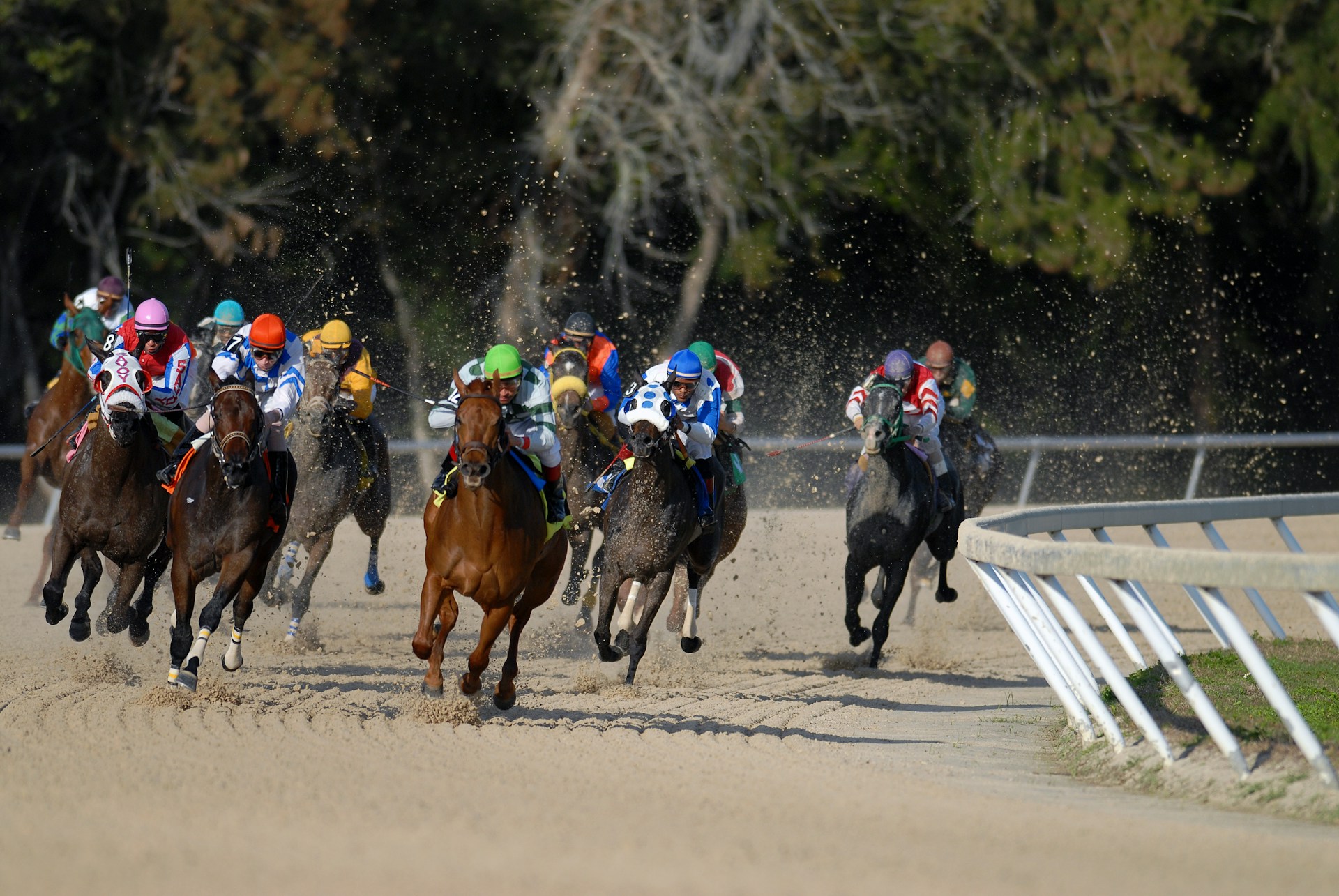
Imagine owning a well-trained thoroughbred racehorse. Born and bred for speed, this horse thrives on competition and lives to run fast.
Every day, six days a week, this horse trains relentlessly. It has one purpose and one passion: running and winning races. Nothing else matters.
But on race day, you grow cautious. You worry, despite all the training, despite the horse’s proven skill, that it might not pace itself properly. So, you ask the jockey to override its instinct to run fast. You instruct the jockey to hold back the reins from the start.
As the race unfolds, your horse struggles against this restraint. Instead of feeling exhilarated, it grows frustrated. Its natural drive diminishes with each stride as the jockey pulls back, second-guessing the horse’s desire to run.
Finally, as the last turn approaches, the jockey releases the reins and shouts encouragement. It’s time to unleash all that pent-up speed.
But the horse no longer cares. He’s not even paying attention. He lost his competitive edge about a half mile ago as the jockey kept holding him back. Sure, the horse goes through the motions, picking up just enough speed to appear engaged, to show respect for the jockey’s urging. But the spark is gone.
This is a very fast horse, so even his partial effort makes for a close finish. But unfortunately, the horse doesn’t win the race. One he could have easily won if he hadn’t been held back from the start.
If you’re a manager, how often do you treat your employees like this horse? How often do you hold them back from doing the very thing you hired them to do? Do you second-guess their instincts, micromanage their decisions, and restrain their natural abilities out of fear, caution, or to protect your ego?
Consider how demoralizing it is for your team when you take away their autonomy. The freedom to run their own race. When employees lose the ability to make meaningful decisions, their enthusiasm, creativity, and ownership suffer. These are the very qualities that fuel success, and when suppressed, diminish the team’s potential and their performance.
Take a look around your organization. Are your people fully engaged, and running with purpose? Or have you inadvertently drained their passion and energy by holding them back?
There’s something else that’s easy to overlook. When you don’t allow your people to take on challenges, make decisions, and occasionally stumble, you’re not just holding them back today. You’re limiting who they can become tomorrow. Without the opportunity to stretch, fail, and grow, your employees can’t develop the judgment and endurance that leadership demands.
Playing it safe and keeping them on a tight rein risks weakening your bench strength and jeopardizing your organization’s ability to thrive in the future. We’re not just running one race; we’re running a never-ending series of tough races that stretch out long into the future.
Imagine how powerful your organization could be if you simply let your thoroughbreds—all the talent and skills you’ve carefully assembled—run their races the way they know best. Imagine letting them succeed and fail with your support, as part of your team, and not just your assistant waiting for you to make all the decisions.
It’s time to loosen the reins and let the ponies run. Because if you don’t, they might find somewhere else where they can.
At kilometer 32 just south of San Felipe, where warm breezes wandered, and stars blanketed the sky — more stars than anywhere I’ve ever been.
Off-road racing brought us there, wide sandy beaches just a short walk away, bathtub-warm waters stretching out forever, the tides carving their quiet stories in the sand.
Under their shady palapa, watching the sun rise and fall on the horizon, Mom and Dad built their place from scratch, one humble project at a time. It was luxury camping at its very best.
Their place was just across the arroyo from the beach, where Dad taught Julianne to drive a stick shift on the wide-open sand.
How I long to beam back there. To see them again.
To hear their voices busy with new plans, to see what they’ve been working on, to sit with them in the shade at cocktail hour, chips, salsa, and all the shrimp we could eat, as the afternoon melts softly into evening.
I’d love to hear who’s come to visit lately.
Both are gone now, but the memories remain. Their laughter rides the breeze, as fresh as the salty air, that still stirs in my heart.
Backstory: A Campo Sahuaro Adventure
When Mom and Dad bought their lot around 1988, it was nothing more than a small concrete slab and four stakes marking the corners of their sandy “oasis.” What made this campo special was its access to a fresh water well…rare in that part of Baja.
Their lot sat on a bluff overlooking an arroyo, with the Sea of Cortez just beyond the sandy beach. In Mexico, buying a lot like this meant purchasing a long-term lease from the property owner. As long as you pay the annual lease (which was under $1,000 per year) you control the land. Anything they built on it was theirs.
Because Mexico has nationalized property in the past, many Americans build semi-permanent structures that can be dismantled and hauled away if needed. That kind of caution remains, even though nothing like that has happened in a very long time.
Being a concrete guy, Dad’s priority was pouring a lot of concrete. He laid down a huge patio that would become the base for everything else, including one of the largest shade structures I’ve ever seen. It didn’t happen overnight. This was a multi-trip (multi-year) endeavor, often coinciding with supporting Team Honda’s off-road racing efforts. They’d haul supplies and tools down along with pit equipment. In the early ’90s, sourcing building materials in Baja was still hit or miss so they brought most of what they needed with them.
By around 1991, Dad was ready to build a workshop. It would be like a shipping container, made of wood, with big swing-down doors on each end that doubled as ramps. He welded little leveling stands to the top of each door so they could serve as sleeping platforms when opened. I slept on those doors under the stars every chance I got.
As with everything at Campo Sahuaro, there’s a story behind that build.
We were down there pitting for Team Honda, which meant several fellow pit crew members were staying at my parents’ place. At that point, it was mostly a shaded patio and a small pump room. Many of the guys were carpenters, so they brought their tools and were ready to build.
Dad’s motorhome was packed. The center aisle was filled with 2x4s, stacked at least five feet high. Getting around inside was nearly impossible. Behind the motorhome, he towed a converted motorcycle trailer that he’d built at least ten years earlier. It was loaded with a perfectly stacked cube of 4×8 plywood sheets. The walls of the future workshop.
I happened to be traveling with them on that trip, ready to help with both pitting and construction. About 50 miles from the campo, we heard a loud crash and scraping noise. We were driving across a dry lakebed, the road raised 15–20 feet above the flat terrain. I looked out just in time to see the trailer tumbling down the embankment.
Dad got the motorhome stopped, and we rushed out to assess the damage. The trailer tongue had sheared clean off under the weight of the plywood. Thankfully, it hadn’t failed earlier, during high-traffic sections of our trip. The trailer was upside down in the lakebed, still lashed to its cargo. That cube of plywood was completely intact.
Within minutes, two vans carrying some of our crew pulled up behind us. We counted heads — at least ten of us, including a few high school football players. It wouldn’t take long to relocate all that wood.
A chain gang formed. We passed sheet after sheet of plywood up the embankment and loaded it onto the vans, lashing them down with tie-downs and ropes we’d salvaged from the trailer. We even hauled the trailer carcass back up the hill. At the very least, we figured we’d salvage the tires and axle.
That’s when an old Toyota pickup rolled up. A local man hopped out. I greeted him with my high-school-turned-Baja-race-pit-guy-Spanish. Lots of smiling, gesturing, and broken sentences later, we learned he was a welder and fabricator. He was heading to San Felipe to visit family and watch the race.
He looked over our trailer, nodding thoughtfully. He said he could take the trailer on his truck bed along with the remains of the tongue and hitch. He’d rebuild it and leave the rebuilt trailer at his brother’s restaurant in San Felipe. We asked him how much he’d charge us for that service. His response was $20(!).
I confirmed that his plan was to haul our trailer back to his shop (about 40-50 miles back), rebuild it, and then he’d tow it all the way down to San Felipe for $20. We told him there was no way we’d let him do that for anything less than $200. His eyes got real wide. I don’t think he believed what I was saying. I said that we’d gladly pay him that amount for all that he’d be doing for us.
We loaded the trailer carcass onto his truck bed, shook his hand, and paid him the agreed $200. We wouldn’t be able to see him at the conclusion of the job, so pre-payment was our only option. He turned around with his new load and headed back to his shop.
We mounted up and continued to Campo Sahuaro, wondering if we’d ever see that trailer again.
The Workshop Rises
The race went great. The workshop was built in a day or two with the expert help of our crew. The carpenters led the way and the rest of us did our best to help and stay out of their way. Copious amounts of alcohol were consumed around the campfire, many snacks and excellent meals were eaten, heroic stories (some of them true) were shared with lots of laughter along the way.
On the way home, we stopped at Baja 2000, the restaurant where our mystery welder said he’d leave the repaired trailer. And there it was.
Not only had he fixed it. He’d reinforced it, straightened the bent parts, and welded it all back together better than before.
Legacy
Over the years, I visited Campo Sahuaro many times, sometimes with my wife and daughters. As mentioned earlier, Dad taught my oldest daughter to drive a stick shift truck on the beach in front of their place when she was probably 12 or 13 years old.
I loved knowing the stories behind everything built there. Most of the stories involved improvisation, imagination, and always perseverance. There were a ton of lessons at their property about staying focused and overcoming obstacles in the pursuit of your goals.
I loved sleeping under that blanket of stars, watching satellites traverse the sky (there’s a lot more of them up there nowadays). I loved swimming in the warm ocean. Most of all, I loved being with Mom and Dad, sharing good times and making memories with them at their special place, 32 kilometers south of San Felipe.
p/c – I asked ChatGPT to make an image of a starry night on the beach based on my story. Amazingly, the image it rendered is mostly how I remember it…except for the houses on the front row (Mom and Dad’s place was on the second row), and the dry-docked fishing skiffs that used the campo as their base of operations.
I heard this a while back and it resonated with me. That it’s a privilege to be under pressure.
At first, this may seem counterintuitive. Pressure can feel heavy. It weighs on us, steals our sleep, tightens our chest.
The pressure to perform. Pressure to deliver results. Pressure to be the best spouse, parent, grandparent, or friend we can be.
Pressure to grow. Improve. Rise to the moment.
We feel pressure because someone is counting on us. Our family. Our coworkers. Our teams. Our communities.
That pressure? It only exists where there’s a purpose. It’s a signal that we matter to someone. That our role isn’t meaningless. That someone out there is relying on us to show up, do our best, and help them move forward.
The alternative?
No responsibilities. No pressure at all. No one looking our way. No one expecting anything from us. No one counting on us.
No promises, no demands (we don’t get enough Love is a Battlefield references in life).
Maybe, no purpose.
The next time you feel the world pressing in, take a deep breath and reframe the situation.
That weight on your shoulders? It’s a sign of trust. A signal of opportunity. A reminder that you have a place in someone else’s story.
In the end, pressure is a byproduct of the privilege to lead, to love, and to serve.
To assume that delays are normal. That long lead times are just “the way things are.” That bureaucracy is an immovable force we’re all meant to quietly and endlessly orbit.
But here’s the question we should be asking: Does something really take months to get done…or is that just the rut talking?
Ruts are sneaky. They dress up as policies, forms, regulatory frameworks, meetings, approvals.
They start small. Maybe with one postponed decision or an overcautious email. Before long, they’re a deep trench. One that feels safer to live in than escape.
Some processes do require time. Some decisions need careful research and thoughtful consideration.
But not everything takes as long as we pretend. And if we’re being honest, we often lean on red tape as a crutch. To justify inaction, to mask fear, to cover for indecision, to avoid risk. Maybe to avoid the work altogether.
We say things like:
-“That’s how our system works.”
-“These things take time.”
-“We’ll have to check with Legal.”
-“I’m waiting on approvals before I can move forward.”
But what if we stopped waiting?
The 10 Million Dollar Question:
If you or your organization were promised $10 million the moment this project is completed—this thing you’re currently delaying—how long would it actually take to finish?
-How focused would you suddenly become? -How many hurdles would get knocked out of your way? -How quickly would meetings be scheduled, decisions made, and steps taken?
If your answer is “much faster,” then the rut is running the show. You’re not stuck. You and your organization are settling for the slow lane.
What if we challenge the assumptions about how long things should take?
What if we stop admiring and massaging the problem and started solving it?
What if we stop delegating or offloading the issue to another department, and just fixed it ourselves…today?
Organizations that resist the rut move faster. They ask better questions. They take the time to consider how to eliminate hurdles. They focus on outcomes, not just process. They know when structure helps, and when it hinders. They trim what’s unnecessary and protect what’s essential.
This isn’t about being reckless. It’s about refusing to be lulled into complacency. It’s about bringing urgency back to the table.
It’s about remembering that progress often begins with someone brave enough to say: “Why not now?”
If you’re feeling stuck, ask yourself: -Are you really bound by rules and timelines? Or just by a habit of delay?
Resist the rut.
Challenge the default.
Challenge the impossible and make it possible.
Push for better.
It might take less time than you think.
h/t – my colleague, Jacob Smith. An extremely productive and prolific software development manager who regularly challenges the default and always pushes for better.
The blinking cursor on a blank document. The empty stretch of land where you’ll soon be building a shop. The new web application your company wants to develop that will revolutionize your industry. These are just a few examples of standing on the edge of something new, something important, yet feeling completely unsure of where to begin.
You might have a vision of the final result—the finished document, the completed shop, the fully functioning app. But that doesn’t mean you know how to get there.
It’s easy to get lost in the variables and the endless possibilities. What if I make the wrong decision? Are there more resources out there? What do other people think? Should I read more articles? Watch more videos? Seek more advice? What if I mess it all up?
In every case, the hardest part is starting.
It’s taking that first step. Writing the first sentence. Sketching out the first screen of an app. Nailing the first stakes into the ground—the ones you’ll attach a string to, so you can visualize where your new shop will go.
It’s a commitment to action over hesitation. A moment of bravery that marks the beginning of making something real.
An amazing thing happens when you start. Your mind shifts from a place of endless “what-ifs” to a place of positive motion. You begin to focus on the next steps and real solutions. All the challenges you imagined before starting—that, in many cases, won’t even come to pass—are forgotten. The path ahead becomes clearer, and each small step forward makes your next decision easier.
Does this mean everything goes perfectly after you start? Of course not. You’ll make mistakes, adjust, learn, and pivot along the way.
But here’s where starting becomes crucial: it provides a tangible foundation. It gives you something to measure against, something to refine, something to edit. You might completely change your initial idea, but you wouldn’t have discovered the need to change if you hadn’t started.
Starting is hard, but it’s also the most important part.
Take the first step, even if it feels uncomfortable. You’ll learn more from those first few steps than you will from standing still…wondering what might happen.
Once you start, momentum kicks in. And from there, the possibilities are endless.
“Garbage In, Garbage Out” doesn’t just apply to computers—it applies to your life. The people you spend time with, the content you consume, and the habits you build shape your future. Want better results? Choose better inputs.
“You are the average of the five people you spend the most time with.” – Jim Rohn
“You are what you repeatedly do.” – Aristotle
“Show me your friends, and I’ll show you your future.” – John Kuebler
“Your life is controlled by what you focus on.” – Tony Robbins
The old phrase, “garbage in, garbage out” doesn’t only apply to computers and databases. It applies to how we live our lives.
Our inputs—the people we surround ourselves with, the information we consume, and the habits we cultivate—shape our outcomes.
If you spend time with amazing, imaginative, productive, and adventurous people, chances are you’ll start adopting some of those same qualities. At a minimum, you’ll develop personal goals that push you to emulate those qualities in your own way.
On the other hand, if you surround yourself with negative, self-destructive, bitter, or complacent people, their mindset and behaviors will slowly seep into your own life. Even if you think you’re immune, habits and attitudes are contagious.
Small Choices Compound Over Time
Consider this simple example.
If you exercise at least three days per week, you’ll see progress. Do it five days per week, and your results will be even better.
But if you instead have the habit of drinking a large chocolate shake for lunch every day, the impact won’t be immediate, but with time you’ll notice a negative shift in your health and energy levels.
Neither of these changes happen overnight. But over months and years, they define who you become.
Our small choices create big results.
The Status Quo Trap—It’s Hard to Change
It’s obvious that if you run toward a cliff, ignoring all the warning signs, you’re in for a big fall. But in real life, it’s rarely that clear.
Like the boiling frog who doesn’t realize the water is heating up until it’s too late, many people stay in toxic environments, bad habits, or unproductive routines because the declining results are slow and gradual. It doesn’t feel urgent—until suddenly, it is.
Our Inputs Dictate Our Outputs—So Choose Wisely
Our mind works like an algorithm. What we feed it shapes what it returns to us.
If we constantly consume negative news, gossip, or toxic social media, our mindset will reflect it.
If we surround ourselves with people who challenge us to grow, read books that inspire us, and engage in meaningful conversations, our perspective will shift toward productivity and fulfillment.
The good news? We choose. And by making intentional choices, we set the trajectory for our future.
Challenge: Take an Inventory of Your Inputs
For the next week, pay attention to what’s influencing you. Your environment, the content you consume, and the habits you engage in.
Who are the five people you spend the most time with? Are they making you better?
What are you reading, watching, and listening to? Is it fueling growth or draining your potential?
What small habit could you start today that would improve your future?
The inputs you choose today will shape who you become tomorrow, next year, and a decade from now.
Each of us has a natural speed. A rhythm that feels comfortable. Some of us move fast, always pushing, never stopping. Others take a slow, methodical approach. And some avoid movement altogether.
Occasionally, we can shift gears and speed up for a short-term need. But the comfort of our standard speed usually draws us back.
Dialing up is hard. It’s difficult to imagine doing more than we’re doing now. It’s harder still to visualize the better outcomes that could come from pushing ourselves and our organizations beyond the status quo.
Even worse is when we deliberately slow our pace to fit in. To blindly match our rhythm to those around us, in our workplace, our social circles, our environment. The groups we allow to shape us.
The slow, almost imperceptible tick-tock of our internal metronome feels safe, especially if it’s set to someone else’s rhythm. It’s predictable. It gives us a (false) sense of control when we have no control at all.
We tell ourselves that changing our settings would bring chaos. Better to stay safe and avoid the challenge.
If we’re willing to turn our settings down to accommodate others, why not turn them up to pursue our own goals?
Why not push beyond our comfort zone to improve, to evolve? Why not try to inspire those around us to ramp up?
The things we don’t change are the things we’re actively choosing. Doing nothing is a choice.
Life moves at a relentless pace, largely outside our control. What we can control is our response. We can set our internal rhythm to match what’s happening or set it to create what we want to happen.
Here’s a brutal truth: The outside world doesn’t grant or deny us anything. It keeps moving, with or without us.
It’s up to us to set our own tempo—not for the group, not for the organization, but for ourselves and the people who matter most.
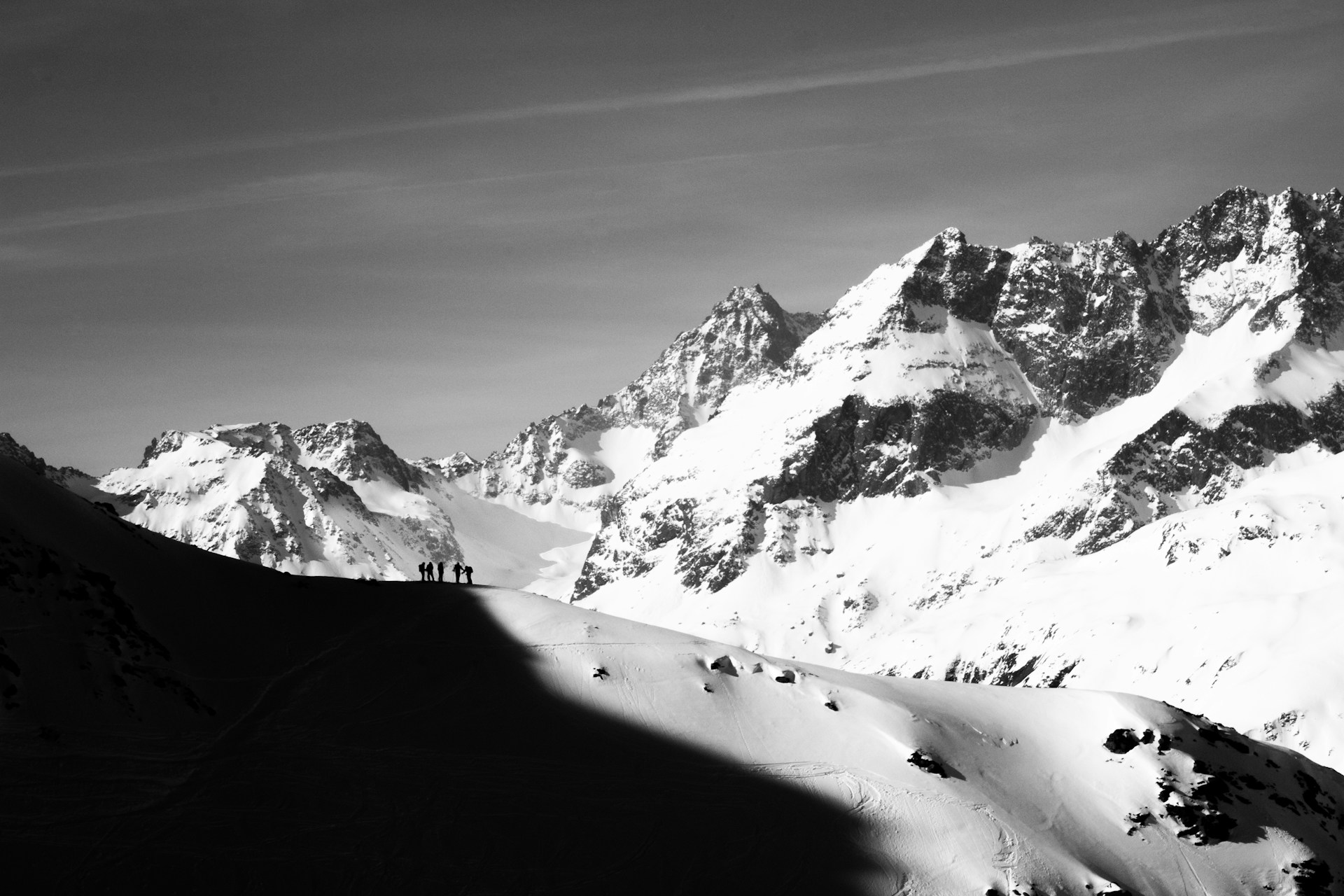
“…climbing 10% of the mountain ten times is not as useful as climbing to the top once.” – Adam Mastroianni
This quote reminds me of the old adage about project resourcing: sometimes projects can’t be completed faster merely by adding more people to it. After all, the story goes, nine women can’t make a baby in a month.
Does this climbing quote ignore our preparation? Route scouting, equipment testing, and countless workouts that make the summit climb possible. Not to mention the like-minded team we built to support the climb.
Maybe it’s not about preparation. Maybe it’s about the false-starts, the simulated progress, the big talk and no action that we engage in to make it seem like we’re climbing when we’re not. We think we’re fooling everyone, but we’re only fooling ourselves as we take the comfortable way out and choose not to climb at all.
It’s easy to climb 10% of the mountain or achieve 10% of the goal. It’s easy to get 50%. 60%. Even 75%. But as the challenges compound near the top, we let doubts creep in. The grinding effort becomes exhausting. We lose sight of the summit or forget why we’re climbing in the first place.
We make excuses. We can come back another day and try again. The summit will always be there, and maybe next time…
That’s just it. We’re rarely “ready” for the climbs that matter, whether in business, fitness, or life’s hardships. Waiting for the perfect time often means waiting forever.
You have the power to choose the summit run every time. Committing 100% effort, even when you feel 60% ready. Trusting that you’ll figure out the rest along the way.
Life’s summits rarely wait for us to feel ready. The question is: will you take the first step…and then push beyond 10%, all the way to the top?
Maybe it’s all my time spent working in businesses over the past four decades. We often start each year with a set of specific strategic goals. Some are grounded and achievable; others are wish casting—a small dream of what we might accomplish if everything aligns perfectly (spoiler alert: it rarely does).
This year my goals are simple, but not easy:
Serve the quests of others over my own. True fulfillment comes from supporting others in their quest, even if that means setting aside my own ambitions.
Offer insights and advice, not direction. The path others take isn’t mine to choose. My role is to illuminate possibilities, not dictate outcomes.
Push beyond my comfort zone and (hopefully) inspire others to do the same. Growth begins at the edge of what’s familiar. By challenging my own boundaries, I hope to encourage others to stretch theirs as well.
Bring the loaves and fishes—and trust God with the rest. (h/t to Dallas Jenkins for this beautiful idea) It’s a reminder to offer what I can and trust in someone much greater to amplify my impact.
There’s nothing like your own bed, your own pillow, and nice warm blankets when it’s time to sleep. To confirm this truism, try backpacking for a few nights in freezing conditions. Your lightweight sleeping pad and mummy sack might keep you alive, but they’re no match for the comfort of home.
Or spend a couple of weeks living out of a suitcase, hopping from one hotel bed to another. It’s rare for a hotel bed to be anything but “hammock-shaped” with giant pillows that defy logic and offer little comfort.
We all love to be comfortable. Ask most people, and they’ll tell you they’d rather sit at home in their jammies in their favorite chair, watching their favorite movie with their go-to snacks and drink in hand.
Comfort is easy. It requires little effort, and even less thought.
It’s safe, predictable, and free of fear. We know exactly how to achieve it, and we stay there because it feels good.
That’s the problem. Comfort is about staying. It’s about achieving sameness.
Growth doesn’t happen in comfort. The magic begins when we step outside our cozy bubble.
Trying new things, exploring unfamiliar places, or learning new skills rarely feels comfortable at first. It’s awkward and often frustrating. But with time, practice, and patience, we adjust. The uncomfortable becomes comfortable. We expand our boundaries. We redefine what normal feels like.
We grow.
Comfort is incredible. It’s that perfect combination of warmth, ease, and familiarity. It offers a necessary break from life’s challenges. But if we make it our ultimate goal, it lulls us into complacency. It encourages us to settle, to avoid risks, to stop growing.
Celebrate the moments of comfort when they come. Appreciate them for what they are—a place to rest and recharge. But don’t let comfort hold you back.









 Grandpa Bob Encouraging Leadership
You must be logged in to post a comment.