I received an email from Noah Kagan this week. Not because we’re personal friends, but because I subscribe to his newsletter. Noah, the CEO of AppSumo, often shares practical insights and thought-provoking questions from his journey in the tech world.
This particular message stood out. He talked about being fearful for his 10-month-old daughter’s future. With all the chaos in the world, the deepening divides, the rise of AI and robotics, the general noise of modern life, he wonders what kind of world she’ll inherit.
But instead of spiraling into worry, Noah laid out how he’s choosing to respond: by creating clarity, limiting distractions, and doubling down on the things that matter most. He’s building a foundation, not just for his own peace of mind, but for his daughter to inherit.
His email reminded me of a quote often attributed to Mark Twain: “The future is in the hands of a generation that isn’t ready for it.”
We didn’t have AI, social media, or the internet back in Mr. Twain’s day. But even then, concerns about “the next generation” were nothing new. Parents, teachers, and elders across every era in history have wondered if the next generation is truly ready.
Noah’s concern isn’t just that the next generation might be unprepared. It’s that the world itself might be too broken to navigate well. But history offers some perspective.
Every generation has faced challenges. Wars, famines, political collapse, pandemics, technological upheaval, moral drift. And yet, the world moves forward. Somehow, each generation rises to meet its moment…even if their preparation feels lacking.
We don’t get to control the future, but we do influence it by how we live, what we model, and what we choose to pass on. We can’t predict what our children and grandchildren will face, or how they’ll respond. But we can teach them how to think, how to hold on to timeless values, and how to walk through hardship with strength and grace.
It’s natural to worry.
Let’s not forget that hardship doesn’t cancel out beauty.
Struggles don’t erase joy.
There will be triumphs ahead, too. If we’ve taught them well, they’ll learn to spot their small victories, celebrate them, and then pass along what matters to those who come after.
The future always arrives in the hands of the young—and the young are never quite ready. But then again, neither were we.
We know about Maslow’s Hierarchy of Needs and how our wants and desires are like a pyramid that goes from our basic needs up to our desire for self-actualization. The Pareto Principle reminds us that 80% of our results come from 20% of our efforts, helping us focus on what truly moves the needle. Saint Ignatius’s Spiritual Exercises guide us through discernment, teaching us to distinguish between what brings life and what drains it.
But there’s another framework worth considering: the evolution of what we consider important throughout our lives.
As kids, we know what’s most important. It usually revolves around attention, followed by winning at whatever we are doing, which we think will get us more of that attention we crave. Everything feels urgent. Every disappointment feels permanent. The world revolves around us, and that’s exactly as it should be for a child learning to navigate life.
Teenagers start to focus on freedom, independence, and figuring out what they’re going to do when they grow up (whatever that means). They often reject what their parents value. Sometimes for good reasons, sometimes solely because rebellion feels necessary for finding their own path. What matters most is breaking free from the constraints that feel suffocating, even when those constraints were designed to protect them.
As young adults, we’re getting started, establishing our independent life, our financial foundations, our career foundations…at least we’re trying to get these things established. We’re in acquisition mode: getting the job, the apartment (maybe a house), the relationship, the respect (something we crave more than attention at this stage). We often dismiss advice from older generations, convinced they don’t understand how different the world is now.
Then something interesting happens.
As the decades flow by, what was important a few years ago, isn’t. We start to think about how to serve others, help our kids flourish, help their kids flourish. The shift is gradual but profound. From getting to giving, from proving ourselves to improving the lives of others.
Major life events accelerate this evolution. A health scare makes us realize that all the success in the world doesn’t matter if we’re not here to enjoy the fruits of our labor. The birth of a child or grandchild suddenly makes legacy more important than achievement. The loss of a parent reminds us that time is finite, and relationships are irreplaceable.
Sometimes the shift happens more quietly. Earlier this week, two co-workers were discussing the NBA finals and asked me what I thought of Game 2. I had to admit that I haven’t followed basketball since the Magic Johnson era of the Lakers. As we talked, it became clear to me that I haven’t followed any sports—except for the Savannah Bananas baseball team’s shenanigans—in many years.
What captures my attention now? I’m drawn to watching people live their best lives in rural settings, building homesteads for themselves and their families. I find myself rooting for others to succeed in their chosen vocations, nothing more, nothing less. It’s not that sports became unimportant because they were bad. They just became less important than something else that feeds my soul more deeply.
As we get older, preserving our health, and the freedom that comes with it, moves toward the top of our priority list. Interesting how the freedom we sought as teenagers is still important to us in our senior years, but for different reasons. Then, we wanted freedom and thought we were ready for responsibility.
Now, we want freedom to focus on what truly matters. Freedom to be present for the people we love, freedom to contribute in meaningful ways, freedom from the noise that once seemed so important.
There’s a beautiful irony in how we often spend the first half of our lives accumulating things, achievements, and accolades, only to spend the second half learning to let go of what doesn’t serve us. We chase complexity when we’re young and value simplicity as we mature.
Questions worth considering:
– What would happen if we could skip ahead and see what our 70-year-old self considers important? What about our 80-year-old self? Would we make different choices today knowing what they know?
– Why do we have to learn the hard way that some of the things we chase don’t matter? Is there wisdom in the struggle, or are we just stubborn?
– How can we be more intentional about evolving our priorities on our terms instead of waiting for time to do it?
– What if we could honor the lessons each life stage provides without completely losing face and dismissing what came before?
The evolution of importance isn’t about getting it right or wrong at any particular stage. It’s recognizing that growth means what we value will shift.
That’s not a bug in the system. It’s a feature. The teenager’s desire for freedom isn’t foolish. It’s necessary for their development. The young adult’s focus on building a foundation isn’t shallow. It’s essential for future stability.
Perhaps the real wisdom comes in staying curious about what matters most. Knowing that the answer will keep evolving. And maybe, just maybe, we can learn to trust that each stage of life has something valuable to teach us about what’s truly important.
The key is staying awake to the lessons, even when they challenge what we thought we knew for certain.
The other night, over a casual taco dinner, one of my grandkids hit me with a question I wasn’t expecting.
“Grandpa, how old will you be in the year 2100?”
Without missing a beat, I shot back, “Nearly 140. Way too old to still be around!”
I may have been off by a few years, but we all agreed: the odds are stacked against me making it to 2100.
Then we started doing the math together, and that’s where things got interesting. They’ll be in their 90s by then. Their children and grandchildren—my great-grandchildren and great-great-grandchildren—will be alive and thriving in that future world. A reminder that we’re part of something much bigger. Connected to the past, but carried forward by those who will come long after we’ve gone.
“Okay, but how old will you be in 2050?”
That one felt closer, more real. “Well,” I said, “not quite 90, but almost. And you’ll be under 50.”
“What will we be doing in 2050, Grandpa?”
That’s a question only they can answer. I won’t pretend to know. I hope I’m there for at least part of it. I hope I get to laugh with them, to listen, to remind them where they came from, and to cheer them on wherever they’re headed.
Our conversation turned into something more than tacos and timelines. We started talking about how every generation builds on what came before. We carry what we’ve learned from our parents and grandparents, along with our own experiences, and hand all of that to our children and grandchildren. And they, in turn, will do the same.
Their children, my great-grandchildren, aren’t here yet, but I already have high hopes for them. I look forward to holding them, hearing their stories, and watching them discover the world just as their parents are starting to do today.
I hope they’ll learn the big things:
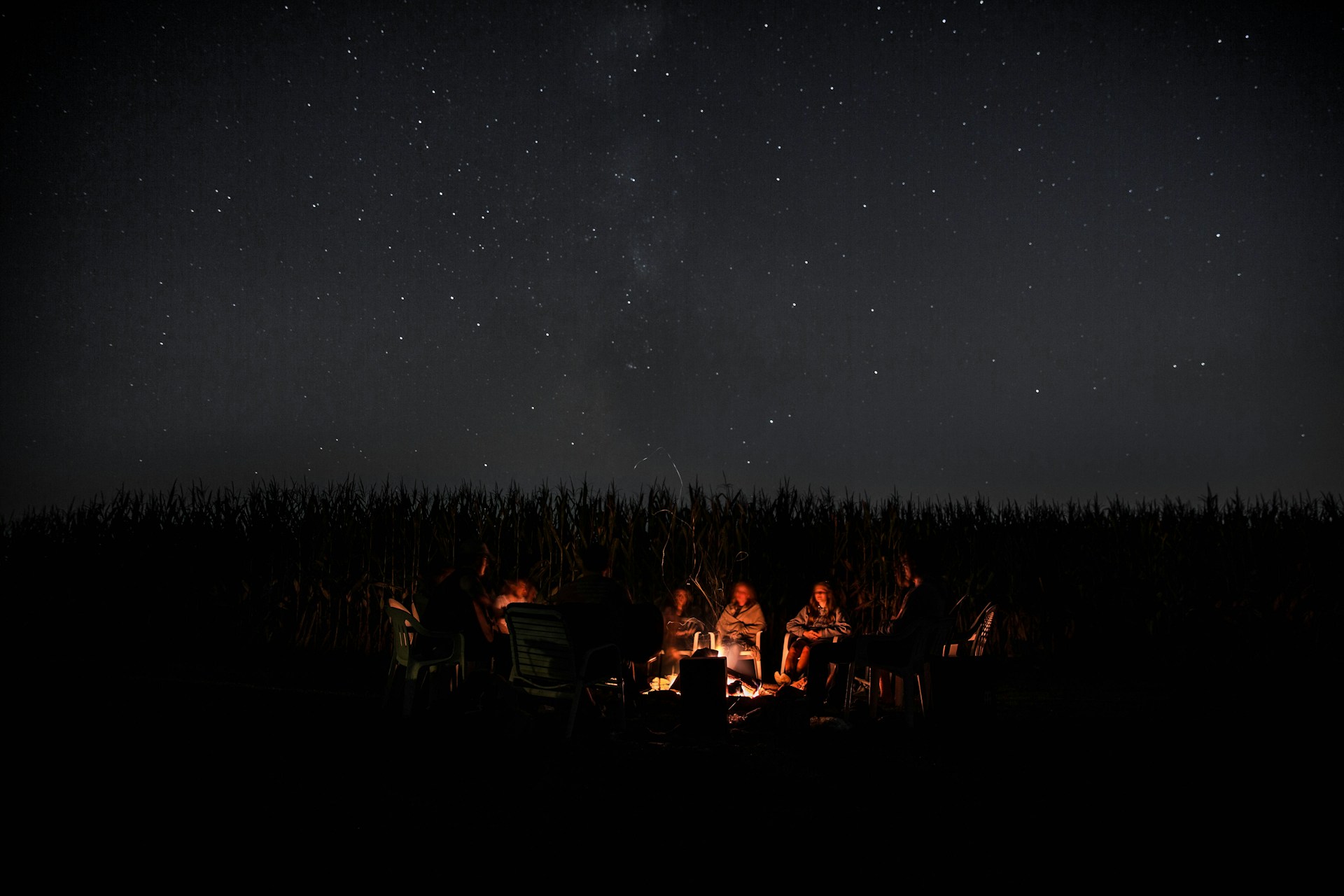
-How a starry sky can quiet our soul.
-How to throw and catch with confidence (it’s baseball season, so this one is top of mind right now).
-How warm and magical a campfire can be…and that S’mores taste better when your hands are sticky.
-How good it feels to help without being asked.
-How to sit quietly with someone we love and say nothing at all.
-How to cheer for someone else, even when the spotlight isn’t ours.
-The peace that comes from a walk in the woods or along a sandy shore.
But I also know they’ll learn things I’ll never understand. Things I can’t even imagine. And that’s exactly as it should be.
My deepest hope is that they’ll carry forward the timeless lessons. That love matters more than being right. That kindness isn’t weakness. That telling the truth is not only brave, but also the only way.
And that family stories are worth retelling…especially the funny ones.
So, here’s to future taco dinners, to great-grandkids I haven’t met, and to the storytellers of tomorrow.
May they keep the best of us within them always.
A Poem for My Grandkids
We sat with tacos, our chips in hand, When you asked a question I hadn’t planned. “Grandpa, will you still be here in 2100?” “Not likely,” I laughed, “I’d be too old by then.”
And then we wondered who’ll be around, Your kids and theirs, with dreams unbound. Building a world we won’t see, Carrying forward the best from you and from me.
We talked of shooting stars and catching balls, Of S’mores by the fire and the night’s gentle call. Of helping for nothing, of walking alone, And learning to love with a heart fully grown.
You’ll learn things I’ll never know, With gadgets and wonders I can’t imagine. Even so, I hope what we’ve lived still finds its place, In stories you tell with a smile on your face.
Here’s to the moments that grow into more, To questions and memories, and tales we explore. May love be your guide in all that you do, And may our stories stay with you, and echo on through time.
p/c – That’s Charlie (in the cowboy hat) and Marcus from a few years ago, perfecting their marshmallow roasting techniques.
This week, a new set of eyes entered the world — our ninth grandchild, a baby girl. Her eyes are just beginning their work. They don’t yet see clearly. Like all newborns, her vision starts in soft focus. She sees light, shadows, movement, and faces held close. She knows the warmth of her mother’s arms, the cadence of her father’s voice, and, if I’m lucky, the gentle presence of her grandparents too.
In time, her eyes will begin to sharpen. She’ll see faces from across the room, the toys just out of her reach, her siblings and cousins. Then, the world outside the window. A broader picture will come into her view.
But even as her eyesight expands, her perspective will remain near. She’ll see how things affect her first. Hunger, comfort, joy, frustration. Her world will center on her own experience, as it should for a child learning what it means to be alive.
And then she will grow. With years and love and bumps along the way, she will begin to see more than just herself. She’ll learn to recognize others’ emotions, to feel their joy and pain. Her perspective will widen to include her friends, her extended family, her community. She will see how her actions ripple and impact others, how choices matter not just to her, but to those around her.
As more time passes, she may begin to understand something deeper. That perception is not the same as truth. That others see the same moment, the same memory, from very different angles. She’ll begin to recognize that we all wear lenses shaped by experience, belief, hope, and hurt.
And if she keeps growing, keeps learning, keeps loving, she may even come to understand the beauty in those differences. To act not just from clarity of vision, but from clarity of heart.
Even as her vision someday blurs a bit, may her wisdom sharpen. May she see what matters most. May she understand not only what is, but what could be. May she seek the life-giving fulfilment of a loving life.
And may she, in time, pass on her vision.
What We Learn to See
She was born into light too bright to grasp, her gaze flickering toward warmth, held by arms she could not name.
A nose. A smile. A voice that hums, these are the shapes she first learns to trust.
Her world is inches wide.
Then, little by little, the room expands. Familiar faces move, toys beckon from across the room.
Still, her eyes are mirrors, reflecting only her own need: Am I safe? Am I loved? Does the world answer me?
Time stretches her view. She sees hurt in another’s face. Joy in someone else’s triumph. She learns that not all stories are her own.
She learns to ask: How do you see it? And to listen for an answer.
Mistakes come. Grace follows. She learns that sight alone isn’t understanding. That clarity is earned, not given.
Years pass. Vision fades. But somehow, she sees more than ever, about herself and the world around her.
What once was blur is now meaning. What once was noise is now truth. What once was about her becomes about others.
And in her twilight vision, she turns to the child, whose eyes are still new, and whispers:
Look close, little one, and then look again. You’ll stumble, and that’s part of the seeing. You’ll hurt, and that’s part of the knowing.
Take the vision I’ve earned — not perfect, but practiced. Carry it forward, along with all my love, and the hopes I hold in my heart for you.
p/c – A photo of our daughters taken almost 30 years ago (!) They’re now passing their love, perspectives, and life lessons to their own children. Happy Mother’s Day!
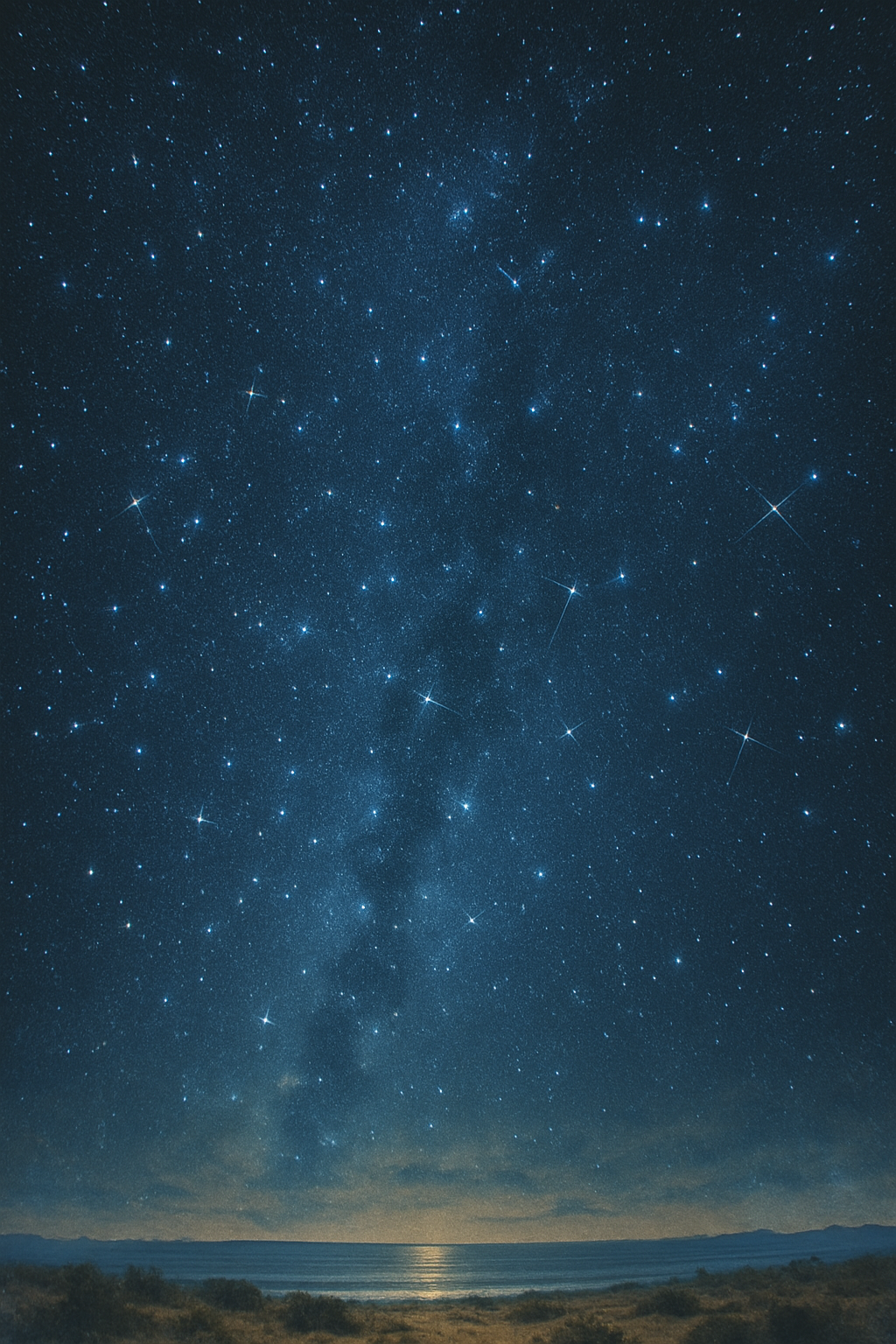
At kilometer 32 just south of San Felipe, where warm breezes wandered, and stars blanketed the sky — more stars than anywhere I’ve ever been.
Off-road racing brought us there, wide sandy beaches just a short walk away, bathtub-warm waters stretching out forever, the tides carving their quiet stories in the sand.
Under their shady palapa, watching the sun rise and fall on the horizon, Mom and Dad built their place from scratch, one humble project at a time. It was luxury camping at its very best.
Their place was just across the arroyo from the beach, where Dad taught Julianne to drive a stick shift on the wide-open sand.
How I long to beam back there. To see them again.
To hear their voices busy with new plans, to see what they’ve been working on, to sit with them in the shade at cocktail hour, chips, salsa, and all the shrimp we could eat, as the afternoon melts softly into evening.
I’d love to hear who’s come to visit lately.
Both are gone now, but the memories remain. Their laughter rides the breeze, as fresh as the salty air, that still stirs in my heart.
Backstory: A Campo Sahuaro Adventure
When Mom and Dad bought their lot around 1988, it was nothing more than a small concrete slab and four stakes marking the corners of their sandy “oasis.” What made this campo special was its access to a fresh water well…rare in that part of Baja.
Their lot sat on a bluff overlooking an arroyo, with the Sea of Cortez just beyond the sandy beach. In Mexico, buying a lot like this meant purchasing a long-term lease from the property owner. As long as you pay the annual lease (which was under $1,000 per year) you control the land. Anything they built on it was theirs.
Because Mexico has nationalized property in the past, many Americans build semi-permanent structures that can be dismantled and hauled away if needed. That kind of caution remains, even though nothing like that has happened in a very long time.
Being a concrete guy, Dad’s priority was pouring a lot of concrete. He laid down a huge patio that would become the base for everything else, including one of the largest shade structures I’ve ever seen. It didn’t happen overnight. This was a multi-trip (multi-year) endeavor, often coinciding with supporting Team Honda’s off-road racing efforts. They’d haul supplies and tools down along with pit equipment. In the early ’90s, sourcing building materials in Baja was still hit or miss so they brought most of what they needed with them.
By around 1991, Dad was ready to build a workshop. It would be like a shipping container, made of wood, with big swing-down doors on each end that doubled as ramps. He welded little leveling stands to the top of each door so they could serve as sleeping platforms when opened. I slept on those doors under the stars every chance I got.
As with everything at Campo Sahuaro, there’s a story behind that build.
We were down there pitting for Team Honda, which meant several fellow pit crew members were staying at my parents’ place. At that point, it was mostly a shaded patio and a small pump room. Many of the guys were carpenters, so they brought their tools and were ready to build.
Dad’s motorhome was packed. The center aisle was filled with 2x4s, stacked at least five feet high. Getting around inside was nearly impossible. Behind the motorhome, he towed a converted motorcycle trailer that he’d built at least ten years earlier. It was loaded with a perfectly stacked cube of 4×8 plywood sheets. The walls of the future workshop.
I happened to be traveling with them on that trip, ready to help with both pitting and construction. About 50 miles from the campo, we heard a loud crash and scraping noise. We were driving across a dry lakebed, the road raised 15–20 feet above the flat terrain. I looked out just in time to see the trailer tumbling down the embankment.
Dad got the motorhome stopped, and we rushed out to assess the damage. The trailer tongue had sheared clean off under the weight of the plywood. Thankfully, it hadn’t failed earlier, during high-traffic sections of our trip. The trailer was upside down in the lakebed, still lashed to its cargo. That cube of plywood was completely intact.
Within minutes, two vans carrying some of our crew pulled up behind us. We counted heads — at least ten of us, including a few high school football players. It wouldn’t take long to relocate all that wood.
A chain gang formed. We passed sheet after sheet of plywood up the embankment and loaded it onto the vans, lashing them down with tie-downs and ropes we’d salvaged from the trailer. We even hauled the trailer carcass back up the hill. At the very least, we figured we’d salvage the tires and axle.
That’s when an old Toyota pickup rolled up. A local man hopped out. I greeted him with my high-school-turned-Baja-race-pit-guy-Spanish. Lots of smiling, gesturing, and broken sentences later, we learned he was a welder and fabricator. He was heading to San Felipe to visit family and watch the race.
He looked over our trailer, nodding thoughtfully. He said he could take the trailer on his truck bed along with the remains of the tongue and hitch. He’d rebuild it and leave the rebuilt trailer at his brother’s restaurant in San Felipe. We asked him how much he’d charge us for that service. His response was $20(!).
I confirmed that his plan was to haul our trailer back to his shop (about 40-50 miles back), rebuild it, and then he’d tow it all the way down to San Felipe for $20. We told him there was no way we’d let him do that for anything less than $200. His eyes got real wide. I don’t think he believed what I was saying. I said that we’d gladly pay him that amount for all that he’d be doing for us.
We loaded the trailer carcass onto his truck bed, shook his hand, and paid him the agreed $200. We wouldn’t be able to see him at the conclusion of the job, so pre-payment was our only option. He turned around with his new load and headed back to his shop.
We mounted up and continued to Campo Sahuaro, wondering if we’d ever see that trailer again.
The Workshop Rises
The race went great. The workshop was built in a day or two with the expert help of our crew. The carpenters led the way and the rest of us did our best to help and stay out of their way. Copious amounts of alcohol were consumed around the campfire, many snacks and excellent meals were eaten, heroic stories (some of them true) were shared with lots of laughter along the way.
On the way home, we stopped at Baja 2000, the restaurant where our mystery welder said he’d leave the repaired trailer. And there it was.
Not only had he fixed it. He’d reinforced it, straightened the bent parts, and welded it all back together better than before.
Legacy
Over the years, I visited Campo Sahuaro many times, sometimes with my wife and daughters. As mentioned earlier, Dad taught my oldest daughter to drive a stick shift truck on the beach in front of their place when she was probably 12 or 13 years old.
I loved knowing the stories behind everything built there. Most of the stories involved improvisation, imagination, and always perseverance. There were a ton of lessons at their property about staying focused and overcoming obstacles in the pursuit of your goals.
I loved sleeping under that blanket of stars, watching satellites traverse the sky (there’s a lot more of them up there nowadays). I loved swimming in the warm ocean. Most of all, I loved being with Mom and Dad, sharing good times and making memories with them at their special place, 32 kilometers south of San Felipe.
p/c – I asked ChatGPT to make an image of a starry night on the beach based on my story. Amazingly, the image it rendered is mostly how I remember it…except for the houses on the front row (Mom and Dad’s place was on the second row), and the dry-docked fishing skiffs that used the campo as their base of operations.
There was a time I made a big leap “out the window.” I walked away from something I thought I had to escape. I didn’t have a detailed plan, just a deep sense that staying where I was would burn me out.
What I should have realized at the time was that while I was escaping one fire, I was just trading for another.
That’s the thing about decisions. They rarely come with clarity. They come wrapped in burdens and hope and urgency, all dressed up to look like certainty. But certainty is often just a story we tell ourselves to keep moving.
I’ve gone back and questioned plenty of decisions. I’ve hit pause, looked around, and asked, “Was that the right thing to do?”
Sometimes the answer is no. And that’s okay.
I’ve made wrong turns. I’ve said yes when I shouldn’t have. I’ve said no when I was afraid. But here’s something I’ve learned the hard way: wrong turns can still move us forward. Even the “mistakes” taught me something. Sometimes they were the only way I could learn the lessons I needed to learn.
Side note: If you can learn from watching someone else’s journey, that’s often preferable to taking the hard knocks that accompany most of the big lessons in life.
The truth is, not every decision will hold up to hindsight. And not every success will look like success right away. Some answers show themselves slowly. They show up only after struggle, reflection, and time. They need hardship to help them mature. Sometimes they even need failure.
I’m lucky. Along the way, there were people who didn’t try to fix me. They just stood with me while I figured it out. They gave me space to question, to re-route, to second guess. That kind of support is rare. And I’m grateful.
To those people: thank you. You helped me see what I wasn’t ready to see. You let me grow into the answers I didn’t even know I was seeking.
These days, I’ve learned to forgive myself for the detours. For the second thoughts. For the “what ifs” I’ll probably carry forever. I’ve changed my mind, more than once. With every shift, I’ve learned to find moments of peace.
Here’s the point: Maybe wandering is the way.
Wisdom doesn’t show up all at once. It grows, shifts, even contradicts itself. Sometimes it stumbles. Sometimes it starts over.
One thing I know for sure: What I thought I knew was only the beginning.
Thinking about how to tell you about the infinite power of love, I realize how important it is to share this letter with you. To help you understand just how much love will shape your lives.
You’re still growing, discovering who you are and what you want from the world. As I reflect on everything I’ve learned and everything I’ve seen, I can’t help but realize that love has been the guiding force in all of it. If there’s one truth I want you to know, it’s this: love is the one thing that never runs out. It is truly infinite.
Love has no limits. It’s a gift from God that never empties. “True love is infinite. It has no end, no limits, and no boundaries” (Unknown). I want you to remember this when life gets tough or when you start to feel like there’s not enough love to go around. The love you give will always come back to you. It grows, just like a tiny mustard seed turns into a mighty tree. The more you pour out, the more you’ll have. And love? It keeps on giving.
Love has the power to change things. To transform everything. It’s not just a feeling. It’s something far more powerful than that. Love is what changes hearts. It softens the hardest of feelings and brings people together.
I’ve seen this truth unfold many times in my life. When you approach someone with love, even if they’ve hurt you, that love has the power to melt away your bitterness, to open a door where there was once a wall. “Love is the only force capable of transforming an enemy into a friend” (Martin Luther King Jr.). That’s the kind of love I want for you. The kind that can heal, the kind that builds bridges instead of walls.
Love isn’t passive. It’s not something that just happens to you. It’s something you choose every day. Love calls for action, for intention. It’s an active force. And when you lead with love, you’ll see the world differently. I’ve learned that love moves you in ways you can’t predict, but it will always be the guide that matters most.
You will never have all the answers. Just choose love. “To love is to will the good of another” (St. Thomas Aquinas). That’s the essence of it. When you love someone, you are choosing to want the best for them, to care for them, and to be there for them, even when it’s hard.
Sometimes, we make mistakes. We hurt each other. There are moments when we carry the burden of regret or hard feelings. But love, I’ve learned, is about letting go. It’s about forgiving. You can’t move forward while holding on to old wounds. Love is what frees you from that burden. It’s what gives you the strength to keep going, even when it feels impossible. “Love is an endless act of forgiveness” (Maya Angelou). This resonates deeply with me, even when I forget its lesson. You see, when you forgive, you allow love to take root again, to grow and bring healing.
And the beautiful thing about love is that it never ends. Even when someone leaves us, their love remains. It stays with us. It lives on in the memories we carry and in the ways we continue to love others by their example. The love we give and receive stays with us, shaping us, and guiding us through the rest of our lives. “Love has no age, no limit; and no death” (John Galsworthy). When someone you love passes away, their love is still alive within you. It never dies. It’s a part of who you are forever.
I want you to know that love isn’t something you will always understand. It’s not something that always makes sense. Sometimes it feels irrational or confusing, but that’s what makes it so powerful.
Love comes from a place deep inside that logic can’t explain. It’s a mystery. “The heart has its reasons of which reason knows nothing” (Blaise Pascal). That’s the beauty of love. It doesn’t need to be explained. You feel it. You know it. And that’s all there is.
Love is also not confined by time or space. It’s already free. “Love is an infinite ocean, where every drop is a reflection of the entire universe” (Unknown). Love stretches. It connects us all, no matter where we are, no matter what we’ve been through. It doesn’t have walls. Love is limitless. It grows as we share it, and the more we live it.
I think about St. Paul’s words to the Corinthians when he wrote about love. It’s a love that’s patient and kind, that doesn’t boast or get angry easily. It’s love that seeks the good, that keeps no record of wrongs, that always protects, always trusts, always hopes. “Love is patient, love is kind. It does not envy, it does not boast, it is not proud. It does not dishonor others, it is not self-seeking, it is not easily angered, it keeps no record of wrongs. Love does not delight in evil but rejoices with the truth. It always protects, always trusts, always hopes, always perseveres” (1 Corinthians 13:4-7). That’s the love I want you to know.
At its core, love is what makes life worth living. Without love, we would have nothing. Without love, we would be lost. “Love is the only reality, and it is not a mere sentiment. It is the ultimate truth that lies at the heart of creation” (Rabindranath Tagore). God’s creation. It’s love that drives us to seek goodness for others, not just ourselves. It makes the world a better place, one loving act at a time.
There’s one last thing I want you to know. Love never runs out. Its supply is unlimited. “There is no remedy for love but to love more” (Henry David Thoreau). That’s the key. The more you love, the more you’ll understand, the more you’ll see. Love opens new possibilities that you didn’t even know were there. It’s a wellspring that you can always draw upon, as long as you’re willing to give.
Love is the one thing that will always be with you. It doesn’t matter where life takes you or how far you go. It will be there. Love is constant, unchanging, but always expanding. And in that love, you’ll find the freedom to be who you’re meant to be, to live fully, by loving deeply.
The more you love, the freer you become. The more love you give, the more you’ll find in return.
As your grandpa, I love each of you with all my heart and soul. I want nothing more than for you to lead lives filled with love—guided by love, surrounded by love, and sharing love with everyone you meet.
A life full of love is a life full of joy and meaning.
Love always,
Grandpa Bob
Photo by Diane Anderson – That’s 7 of our 8 grandkids…and we have another on the way in May. Diane is their great grandmother. God is good.
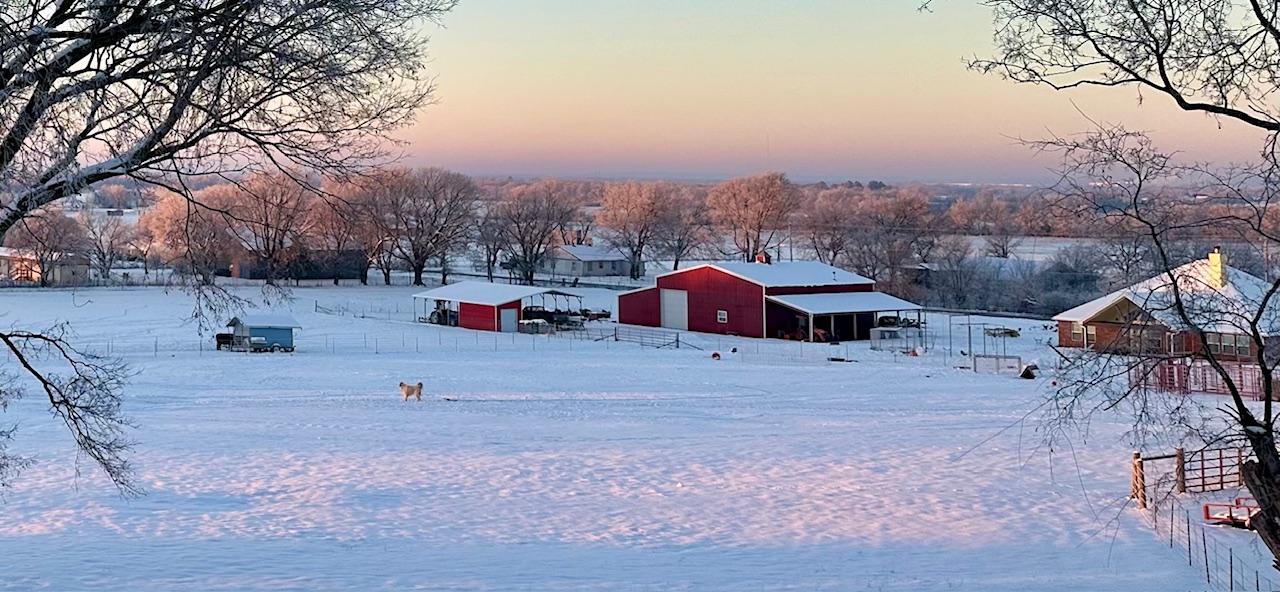
If you were to visit me on my mountainside, next to a huge pile of bucked-up logs that I’ve cut and collected over the past year, using my fancy new log splitter, what would you see?
A grandpa dressed in a snow suit and beanie, warding off the low-teens temperature and wind chill, wearing eye and ear protection, splitting one log after another.
I’m stacking the split firewood into an “outdoor fire” bin (the crummy stuff that’s showing some signs of water damage that may or may not burn so great), and an “indoor fire bin” for the good stuff. We have so much that I use IBC totes that I can forklift and move around with my tractor.
What you’d miss is what this guy’s thinking. Of all the campfires these logs will deliver. The warmth, the beauty, and the cheery faces reflected in the golden firelight. The togetherness, the raucous fun, and always the smoke that’ll chase each of us in time.
Lately, I’ve been thinking about words that rhyme with stories, memories, starlight, marshmallows, love, and family. Of a way to express my “why” behind all this work.
My new splitter hums, its rhythm is true, Each log cracks clean, split in two. And with each piece, I see what’s ahead— Fires that warm, where stories are said.
Golden flames dance in their eyes, Joyful voices filling the skies. Kids with marshmallows on sticks they will hold, Turning white fluff to crispy gold.
The stars above will steal their gaze, A quiet pause from the firelight’s haze. But soon enough, they’ll leap to their feet, Cousins chasing cousins, the night complete.
This work is heavy, my labor long, But in each log, I hear a song. A promise of warmth, connection, and love, Of smoke below and stars above.
Each crack of the wood a memory in waiting, Moments of joy we’ll spend creating. I keep splitting, I’ll keep the pace, Knowing the fire will hold its place.
One split, one stack, one stick at a time, Building a future that’s warm and divine. A pile of firewood, yes—but so much more, It’s family, it’s laughter, it’s life to the core.
There’s a line in a Frank Sinatra song that asks if we’d like to, “…carry moonbeams home in a jar.” A crazy idea. Moonbeams can’t be contained or put in a jar, but their magic can be carried home just the same. What if we could carry home the kind of wonder and light that moonbeams represent?
Life throws challenges at us every day. Deadlines. Difficult conversations. The relentless tug-of-war between expectations and reality. Yet, amid the noise, we often stumble upon moments of beauty. Unexpected acts of kindness, moments of connection with strangers, or simply a sunrise or sunset that stops us in our tracks. These are moonbeams.
Have you ever met someone for the first time and felt their kindness so deeply that it stayed with you? Maybe it was a stranger who gave you directions with a smile, a colleague who truly listened, or someone who saw you struggling and extended their hand. These are glimpses of humanity’s greatness. Magic moments where we see the best of who we are reflected in someone else.
What if we made it our mission to carry that magic home with us?
It’s easy to bring home the worries of the day. Our frustrations, our stresses, our nagging self-doubt. But alongside these, we can also bring moonbeams: the small, bright moments of beauty, hope, and love that we encounter every day. We can share the wonder of a chance conversation, the joy of something new we learned, or the inspiration we felt when we saw someone overcoming adversity.
Carrying moonbeams is about being conscious of what we pass on to those we love. It’s about choosing to share curiosity instead of cynicism, gratitude instead of grumbling. It’s about being the explorer who brings back stories of the world’s beauty to share with those at home, inspiring them to see the magic in their own lives, too.
Imagine if we all carried moonbeams in our metaphorical jars. How much brighter would our homes, our communities, and our world become?
What if we could embrace the day with the motivated curiosity of an explorer. Purposely looking for the moonbeams—the fleeting magic of kindness, beauty, and connection.
Imagine carrying them home to share, not in jars, but in our words, our actions, and our presence.
Because moonbeams, once shared, have a way of multiplying.
Photo by me, capturing a “moonbeam” of a sunrise view outside my kitchen window the other day
Hope is extremely powerful. Its power rates right up there with the power of love. It’s the whisper of aspiration that accompanies our desires and dreams. We hope for success, for love, for fulfillment.
But hope alone is not enough. Hope is not an action—it is merely the spark that ignites the flame of possibility. To transform hope into reality, we must take tangible steps toward our goals.
Consider these hopes (I could list 20 more examples):
“I hope I can pass this class.”
“I hope I find someone I want to spend the rest of my life with.”
“I hope I get to my appointment on time.”
“I hope I can get promoted at work.”
These statements reflect our desires. Our aspirations. But they do not guarantee outcomes. Hope, though powerful, cannot materialize our wishes on its own.
Hope is most powerful when it energizes our ideas, motivating us to translate our hopes into concrete plans and steps.
The journey from hope to action is challenging. It requires us to believe in our possibilities and commit to making them happen. It requires us to confront our own inertia, to overcome self-doubt, and to navigate the uncertainties of the future. It demands courage—the willingness to take risks, to persevere in the face of setbacks, and to embrace the unknown.
Will our actions always lead to success? Can we get everything we hope for?
Of course not. Life is filled with obstacles and disappointments. However, by taking proactive steps toward our aspirations, we increase the likelihood of realizing our dreams. Actions propel us forward, opening doors to opportunities we never imagined possible.
While hope is undeniably powerful, it is action that transforms hope into reality. We can’t merely hope for a better future. We must actively strive to create it.
In the end, it is only through action that we shape our destiny and manifest the life we envision.





 Grandpa Bob Encouraging Leadership
You must be logged in to post a comment.