The Day We Visited the Taj Mahal and Never Saw It

There are certain destinations in the world that feel larger than life. The Taj Mahal is one of those places. For many travelers, seeing it with their own eyes is a once-in-a-lifetime moment.

We were finally there. We had made it to Agra. All that remained was to step inside the gates and witness the iconic white marble glowing in the sun.

Only one problem.

There was no sun. There was no white marble. There was no Taj Mahal.

There was only fog.

We woke that morning filled with hope. The rooftop restaurant gave us a commanding view of… absolutely nothing. We stared into a wall of haze, sipping coffee and laughing at the absurdity of our timing. Surely the fog would lift. Surely the Taj Mahal would reveal itself.

Our guide, Kuldeep, assured us everything would be fine. He had led more than 500 tours of the Taj Mahal. He knew everything there was to know about its history and its beauty. We boarded our bus, grabbing our special cloth bags with a picture of the Taj printed on them. These were designed to hold the single water bottle we were allowed to bring inside the property. And we set off with excitement.

Fog. All the way there. Fog in the parking lot. Fog at the security lines. Fog as we walked the long approach toward the main viewing area. Each time Kuldeep stopped to point out an “excellent vantage point,” we nodded with wide eyes, imagining the magnificent structure hidden somewhere in the mist.

We took photos pointing at the picture on our water bottle bags. That was the only Taj Mahal available to us from any vantage point.

As we walked toward the building, we eventually reached the outer wall and finally saw something. White marble appeared just a few feet above our heads. Then the stone vanished again into the haze. The grand dome. The sweeping arches. The delicate inlays. All shrouded in fog.

We were standing beside one of the wonders of the world and could only see a sliver of it.

Our group laughed so much that day. Not because we had traveled halfway around the world only to miss the view. We laughed because we were sharing something unforgettable and slightly ridiculous. We were experiencing a story that would last much longer than a postcard-perfect photograph.

Kuldeep shook his head with disbelief. In all his tours, he had never experienced this. He told us we were a very select group of visitors who could claim something few on Earth could say. We visited the Taj Mahal, but we have never actually seen it.

He was right. I still have never seen the Taj Mahal in person.

The destination was never the prize

You might think this would be a disappointment. But when I look back on that trip, the fog made everything richer.

The destination was never the prize. The people were.

We shared meals and conversations and inside jokes. We tried foods that were new to us. We navigated chaos and beauty side by side. We saw India’s contrasts and colors and kindness. We saw devotion expressed in temples and marketplaces. We saw how history and modern life can exist on top of each other without barriers.

The Taj Mahal is extraordinary. I would love to see it someday with clear skies and a rising sun. Yet I already have what I came for.

When I think about all the amazing places I have been blessed to visit, a pattern appears. I never say, “Remember when we saw that famous landmark.” I say things like:

– Remember how we got lost trying to find it?
– Remember the tiny restaurant we discovered afterward?
– Remember the guide who became a friend?
– Remember that amazing gelato place in the middle of nowhere?

I have my memory of that rooftop breakfast. I have the echo of laughter on the bus. I have the photos of my family and friends pointing to a water bottle bag as if it were the crown jewel of Indian architecture.

The world is full of wonders. But relationships are the wonders that stay with us.

The real bucket list

If someday I return to the Taj Mahal and finally see it, I’ll smile and take it in. But I know the picture etched into my heart is already complete. It’s filled with faces and voices and laughter. It has the beauty of our shared experience.

Checklists are fine for airplanes. But our lives deserve something better.

The best adventures can’t be captured by a camera or a perfect view. What lasts are the relationships made stronger by shared surprises, setbacks, and moments of wonder.

This story, fog and all, remains one of my favorites.

Photo by Mark Harpur on Unsplash showing the majestic beauty of the Taj without fog. 

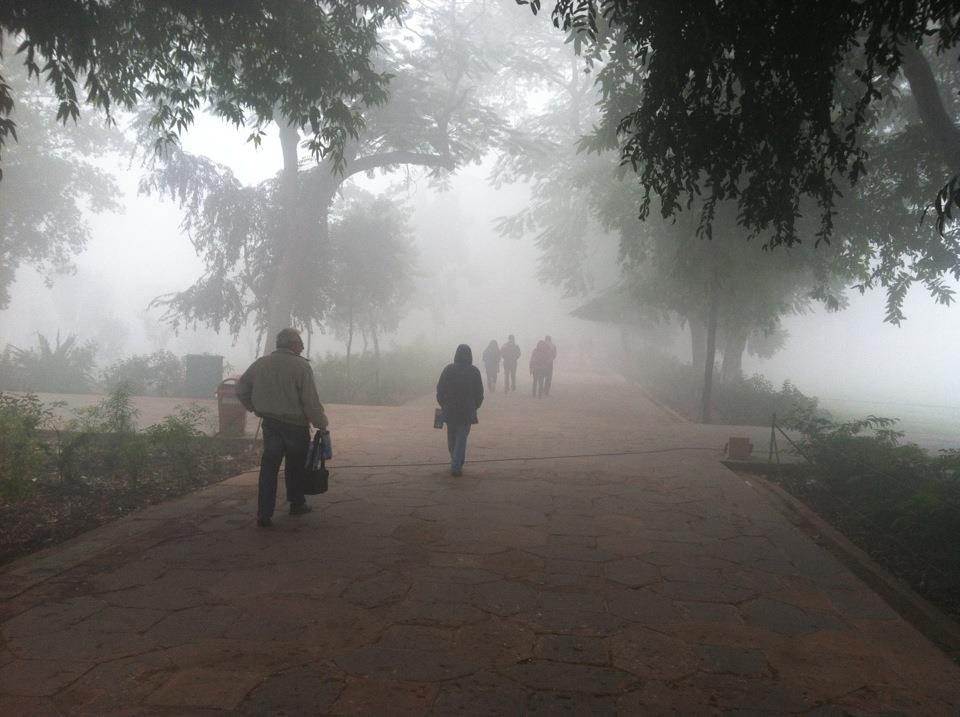
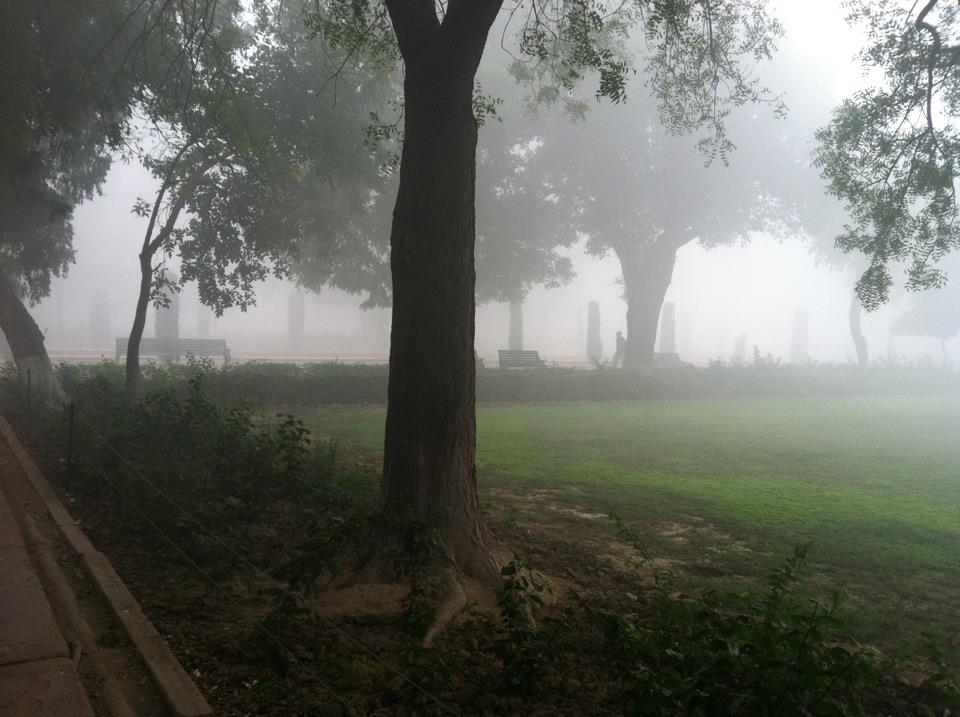
The photos below are mine showing what we actually saw.  Unfortunately, the amazing water bottle bag photos are stored on a drive I can’t see…a little bit like that morning in Agra more than a decade ago.    

Time Does Not Heal All Wounds

“Time heals all wounds,” people say when someone we love dies. It’s a phrase offered like a Band-Aid for a broken bone. Well meaning, but inadequate for the depth of what we’re facing.

For those who have lost a daughter, a son, a spouse, a parent, a sibling, a dear friend, the truth is something different. Time doesn’t heal. It changes things, yes. It allows us to move, to function, to smile even, but it does not erase their absence. That lives inside us, a permanent resident.

When I searched for quotes and stories from others who had walked this path before me (writers, psychologists, fellow travelers through loss), I discovered that my feelings aren’t unique or abnormal.

The bereaved across time echo the same truths I’m living.

I’ve heard that grief follows a pattern of denial, anger, bargaining, withdrawal, and finally, acceptance. That may all be true. It sounds like a clean process. Just a series of steps we must go through to get to the other side.

But that path has no clean endpoint. It can stall, restart at the beginning, skip and repeat steps while never reaching a conclusion. The grieving process never ends. We merely learn to function with our grief, and we do so in our own way, as imperfectly as we do everything else in life.

Author Jamie Anderson found words for what many of us feel but struggle to express: “Grief, I’ve learned, is really just love. It’s all the love you want to give but cannot. All that unspent love gathers up in the corners of your eyes, the lump in your throat, and in that hollow part of your chest. Grief is just love with no place to go.”

This captures exactly what happens when we reach for the phone to call them or save up a story we can’t wait to tell them. Only to remember a second later that they’re gone.

Grief isn’t a single event but a series of small realizations, each one a fresh cut.

C.S. Lewis, after losing his wife Joy, wrote about the persistence of absence: “Her absence is like the sky, spread over everything.” In his book “A Grief Observed,” Lewis documented what it feels like to live inside loss. “No one ever told me that grief felt so like fear. I am not afraid, but the sensation is like being afraid. The same fluttering in the stomach, the same restlessness, the yawning. I keep on swallowing. At other times it feels like being mildly drunk, or concussed.”

This is the lived experience of a body trying to process what the mind struggles to accept.

Joan Didion echoed this truth when she lost her husband, John Gregory Dunne. In “The Year of Magical Thinking,” she wrote, “Grief turns out to be a place none of us know until we reach it. It’s a foreign country with its own customs, its own weather, its own bewildering geography.”

There is no timeline. No tidy arc where pain transforms into peace according to some predetermined set of rules.

Dr. Lois Tonkin, working as a grief counselor in the 1990s, discovered a different truth about what healing actually looks like. A client whose child had died years earlier drew her a picture showing how her grief had initially filled her entire life. A small circle almost completely consumed by loss.

But over time, something unexpected happened. The grief didn’t shrink. Instead, her life grew larger around it. There was now space for new experiences, relationships, and meaning alongside the loss. This became known as Tonkin’s Model of Grief.

Like a tree growing around a piece of metal embedded in its trunk. We don’t absorb or eliminate the foreign object. We grow around it, incorporating it into our new shape.

This model shows us that time doesn’t diminish our grief. But it expands our capacity to hold other things along with it. Some days our grief surprises us with its suddenness. A song, a scent, a birthday or anniversary, seeing a classic car they used to drive. Other days we’re living fully in the expanded space around our grief, discovering we can hold both the wound and the wonder.

We must learn to carry the sharp pain of their absence while having gratitude for the gift of having known them at all. Our capacity to feel gratitude for the life we shared can provide much needed comfort, even though we’ll never stop missing them.

Some of the most tender truths come from those who’ve lost children. Elizabeth Edwards, who lost her 16-year-old son Wade in a car accident, offered this reminder, “If you know someone who has lost a child, and you’re afraid to mention them because you think you might make them sad by reminding them that they died, you’re not reminding them. They didn’t forget they died. What you’re reminding them of is that you remembered that they lived, and that is a great gift.”

Writer Megan O’Rourke, in her memoir “The Long Goodbye” about losing her mother, captured the peculiar contrasts of grief. “You look fine. You act fine. But inside, you are not fine. And you know it will never be the same.”

This is the hard reality of grief. The simultaneous existence of functioning and not-functioning, of healing and not-healing, of being okay and not-okay. We learn to carry both states, often within the same moments.

So no, time does not heal all wounds.

Time teaches us that we can be broken and whole simultaneously. That we can miss someone terribly and still find reasons to laugh. That love doesn’t end with death. It merely changes form, expressed as the very grief we wish we could escape.

In learning to live with our wounds, we hopefully discover something about ourselves. Our capacity to grieve deeply is evidence of our capacity to love more deeply than we ever thought possible.

And maybe that’s the real truth about time and grief.

“Blessed are those who mourn, for they shall be comforted.” – Mathew 5:4

“The Lord is near to the brokenhearted and saves the crushed in spirit.” – Psalm 34:18

“Love never ends.” – 1 Corinthians 13:8

Photo by Noah Silliman on Unsplash

Why Manners Matter

“Manners are of more importance than laws. Upon them, in a great measure, the laws depend. The law touches us but here and there, and now and then. Manners are what vex or soothe, corrupt or purify, exalt or debase, barbarize or refine us, by a constant, steady, uniform, insensible operation, like that of the air we breathe in.” – Edmund Burke

-Why do we say Please and Thank You? 

-Why do we hold the door for the next person? 

-Why do we show respect for our elders? 

-Why don’t we interrupt someone when they’re speaking (at least, most of the time)?

Mostly because we were taught these behaviors by our parents, or someone in authority, when we were growing up.  We may have learned by being told explicitly, or by watching others that we admire acting in these ways. 

As Burke points out, manners are more important than laws.  They are fundamental in establishing the boundaries of our behavior, of integrating us within our community.

Manners show our respect for those around us.  They create a standard for how we work with others.    

Consider the manners (customs) that are in play where you work.  It doesn’t matter if you work in construction, nursing, information technology, or any other field.  If you work with people (which you always do whether they are your co-workers, your customers, or both), your manner of behavior will be critical to your success. Good manners create a positive environment, build strong relationships, and foster a culture of respect and professionalism.

Since we are creatures of habit, it’s easy to establish either a habit for lacking manners, or for having them.  The disciplined decision to operate your life within the bounds of good manners is a decision that will pay consistent dividends.  Good manners can be the foundation for a disciplined approach across all areas of your life.  When we are polite and considerate, we remind ourselves of our values and our commitment to treating others (and ourselves) with dignity.

The simple act of saying “Please” and “Thank You” (and meaning it) shows our vulnerability to others, and at the same time, our appreciation for what they have done for us.  Powerful ways to remind us of our humility and gratitude many times each day. 

Edmund Burke observed, “Example is the school of mankind, and they will learn at no other.”  Our behavior and proper manners will be a teacher to those around us, whether we intend it or not.  Our actions, grounded in good manners, can inspire those around us to adopt similar behaviors.

It’s easy for each new generation to look at the rules and traditions of prior generations (manners) as archaic, overly formalized, and irrelevant in their “new modern era.”   They may rationalize away the need for good manners on this basis.  However, dismissing the importance of manners can lead to a breakdown in social cohesion. Our challenge is to adapt the principles to modern contexts while preserving the core values of respect and consideration.

Manners are a timeless currency that never loses value—so spend them generously and watch how rich life can become.

p/c Robert Collins on Unsplash

The Gentle Shepherd

This poem is dedicated to the Gentle Shepherds God brings to each of us as we make our way along His path… 

Photo by Jelle de Gier on Unsplash

Our pastor recently announced that he’ll be leaving our parish after serving here for 10 years.  Needless to say, he has had a profoundly positive impact on all of us, and he will be dearly missed. 

During his homily last Sunday, announcing that he’ll be returning home to Spain in a few short months, I kept hearing the words, Gentle Shepherd, in my mind. 

I realized these words were describing the amazing and loving man who was speaking to his flock about trusting God and the path He has for each of us.  

Inspired by Father Sergio’s loving service to our parish and his homily last Sunday, this poem is dedicated to the Gentle Shepherds God brings to each of us as we make our way along His path:     

The Gentle Shepherd

Graced with the compassionate love of God,

Through valleys of darkness, and deserts of despair,

He humbly guides his flock.

He is the Gentle Shepherd.

With fidelity to God and His Church,

Our shepherd shares with us the Word of God,

Unwrapping its sacred mysteries for all to hear.

He is the Gentle Shepherd.

Strengthened by our loving God,

He brings great tidings of joy and mercy,

Of God’s forgiveness and redemption.

He is the Gentle Shepherd.

He trusts and serves the Lord,

His purposes and His desires,

By loving and protecting each of his flock.

He is the Gentle Shepherd.

May the Lord’s blessings always shine down upon our Gentle Shepherd.

-Bob Dailey, 2022

Serve others first…

Tim Ferriss asks a question of most of his podcast guests:

“If you had a billboard that millions of people would see every day, what would you put on that billboard?”

Tim’s guests have given answers ranging from the comedic to the serious.  Some have talked about a cause that is their passion, or an inspirational passage they’d like people to see.

Each time I hear the question, I come up with the same three words:

Serve others first.

Serving others first means:

  • taking others’ needs and desires into account before our own
  • looking out for their best interest first
  • our decisions are more thoroughly considered because we’ll be taking time to think about how our decisions impact others
  • trying to make someone else’s job easier and more rewarding
  • showing someone gratitude for the work they’re doing
  • minding our manners (as my mom used to say when I was a kid)
  • listening to, and respecting others (even if we disagree with them)
  • looking for ways to improve a situation rather than making things worse
  • being the first to forgive.

It’s easy to focus on our own interests and challenges first.  It’s easy to think everything happening in the world is directed toward us, personally.  This “me first” mindset is hard-wired into our DNA…our DNA is selfish about 99.99% of the time.

The tougher path?

It’s the one that leads to serving others first.  It goes against our wiring, which takes significant effort.

None of us will be perfect on this path.  We’ll stumble, and we may even wander a bit.  But, we can be a blessing for others along our journey, and that’s what we should be seeking.

The good news is that following this path gets easier with practice.

Photo by Adrià Crehuet Cano on Unsplash


The Value of Goodwill

Do you serve others first?

How much is your goodwill worth?

The accounting definition of goodwill describes it as the established reputation of a business, quantifiable by taking the fair market value of the tangible assets of a company, subtracting that amount from the full purchase price, blah, blah, blah.

The accounting definition is important, but the goodwill I’m interested in is your personal goodwill, which is measured with the answers to these questions (in no particular order):

  • Do you have a personal reputation as a good person?
  • Are you a person who can be trusted?
  • Are you reliable?
  • Do you work with others based on honesty and integrity first, above all else?
  • When people describe you to others, do they do so fondly or derisively?
  • Are you a person who people want to be around?
  • Do you repel people, or gather people?
  • Do you have a track record of acting fairly in all situations?
  • Do you serve others first?
  • When the proverbial chips are down and everything is going wrong, can others rely on you to rise above the chaos, identify root causes, and get to work solving the problems?
  • Are you known as the person who runs from trouble?
  • Are you the one who looks to blame rather than solve?

The answers to these questions will matter more to your long-term success than any college degree or career accomplishment you may achieve.

Your actions and attitudes will show people your answers more vividly than anything you say.

It’s easy to say words like honesty, integrity, trustworthiness, or empathy.  The real test is how you act and what you choose to do, whether or not other people are watching.

Show me a team of people who don’t value their own personal goodwill or that of their teammates, and I’ll show you a team that fails 99 times out of 100.

The most important choices you’ll make in life are the ones that either add value to, or take value away from your personal goodwill.

Choose wisely.  Your happiness and success depend on it.

Photo by Jukan Tateisi on Unsplash

Advice for College Graduates

The college graduate is supposed to know “what they’ll be doing with their life,” or “where they’re going after graduation.”  The real world is out there waiting for them to take it by the horns and wrestle it to the ground!

It’s graduation season.  An exciting time!  For the college graduate, this is an especially challenging time (whether the graduate realizes it or not).  With other graduations that led up to this one (kindergarten, sixth grade, eighth grade, even twelfth grade), there wasn’t much of an expectation placed on the graduate to have things figured out.

Those prior graduations were mostly about celebrating the achievement and passing a milestone on the way to adulthood.

College graduation is different.  The college graduate is supposed to know “what they’ll be doing with their life,” or “where they’re going after graduation.”  The real world is out there waiting for them to take it by the horns and wrestle it to the ground!

Everyone assumes that since the college graduate spent most of their life getting an education, now’s the time when they should be ready to leap into the next stage of their life.  Ready to go forth and conquer…following their dream and delivering on all that potential they’ve been gathering.

Listen to almost any commencement speech (there are some excellent ones on YouTube).  The speeches often contain solid advice, encouragement, and usually a bit of a life story of the person giving the speech.

I’ve never delivered a commencement speech.  I’m not sure how I’d approach such a talk, or what personal stories I’d tell.  But, I know that my commencement speech would, at a minimum, cover this short list of items:

Life doesn’t come with an answer key.

The answer key is the Holy Grail of any textbook.  Put simply, it contains all the answers.  It can quickly tell us if we’re right or wrong.  Of course, life doesn’t come with an answer key.  In fact, many of the toughest problems you’ll face don’t have specific right or wrong answers.

To make it even more challenging, something that’s right for one person or situation is wrong for another.

How will you know when you’re right?  You won’t get that luxury very often in life.  But, I’ve found that when I narrow my focus on a problem or question down to its impact solely on me, I usually make the wrong choice.  When I consider how the outcome of a problem or question will impact the people I love, the people I work with, and the people that rely on me, I usually make far better decisions.

Nobody will tell you if this or that will be on the exam.

This is sort of related to number one.  The reality is that there are very few final exams in life, and nobody will tell you what’s on the exam.  It’s up to you to determine what’s most important, not only to yourself but to your audience.  In this case, your audience is anyone that matters to you.  This could be a boss, a loved one, a work associate, or all of the above at the same time.

The project, assignment, or paper that’s due at the end of the semester doesn’t exist in the real world.

Sure, there will be deadlines, but the semester doesn’t end. Even if you’re working on a project at work, the work doesn’t end when you turn in that project.  That project is probably part of an even larger project or set of projects that are all part of some larger strategy.

The project isn’t the goal, even when it’s consuming all your time and attention.  Understanding how this project fits into the overall mission is what matters.  When you learn to think about the bigger-picture goals, while focusing on the specifics of the project at hand, you’ll leap ahead of most people.

But, what if your work doesn’t seem to be part of anything larger.  Maybe it isn’t, but that still doesn’t mean that it ends when you turn it in.  Chances are that the work you’ve completed will take on a life of its own, and you’ll get to see that happen.  You’ll also be called to defend it, especially when things go wrong.  And, if you stay around long enough, you may be the person who works to replace the result of your prior work with a new and improved version.

To be successful, you must be willing to seek out the best solutions to problems and new challenges, even when those new solutions make something you did in the past obsolete.

Get used to the concept of constructive destruction, because it’s with you all the time.  There’s a quote about the caterpillar thinking everything was over just before turning into a butterfly.  For the butterfly to emerge, the caterpillar must cease to exist.  In fact, the caterpillar works its entire life to fulfill the goal of destroying itself so it can become the butterfly.

When you create something or become part of something that’s successful, always be on the lookout for ways to improve upon that success.  Celebrate the success, but never be satisfied.  Always look for ways to tear down what you’ve built to make room for a new way of achieving that success.  Trust me, if you’re not looking for, and embracing new possibilities, your competition will.

Life doesn’t divide itself into perfectly scheduled segments like school does.

This isn’t entirely true.  Life has years, and each year has four quarters.  When each year ends, you’ll be asked to look back (if only briefly) and tell Uncle Sam about how you did, financially.  And, Uncle Sam will want to share in whatever you did in the prior year.

Most companies, whether privately- or publicly-held (or governmental agencies) operate on an annual financial reporting calendar.  They look at their performance monthly, quarterly, and annually.  This cycle will become a constant for you in almost any line of work.  It’s a cycle that will have even greater importance to you as your level of responsibility within an organization grows.

What did you do this year?  How does that compare to last year?  How does this quarter compare to the same quarter last year?  What are you expecting to happen in the next quarter, the next year?

Ironically, one thing most people are missing when they graduate is a working knowledge of how income taxes, property taxes, Social Security taxes, Medicare taxes, and the IRS operate.

Always think of your accounting systems (whether personal or business) as a conversation between you and the IRS.  Be prepared for a conversation with an IRS auditor, always maintain copious records of your financial activities, and take an active role in planning your financial strategies with their tax implications in mind.  The day may never come where you’re asked to defend yourself in an audit, but if you’re purposely and actively preparing for that day, it won’t be a problem.

This reminds me to mention that as smart as you are, you will need some expert advisors in your lifetime.  Examples are CPA’s, financial planners, insurance agents, and attorneys.  Don’t be afraid of these folks.  In fact, seek them out as early in your life as possible.  They will help you understand a complex web of rules and strategies that are best to learn when you’re young.  Don’t wait twenty years to find these people.  By then, you’ve probably caused a bunch of financial damage for yourself without even knowing it.  On all things financial, start early, be consistent, and understand that you aren’t as smart as you think you are when it comes to finance.  None of us are.

Mentors matter more than money. 

Hopefully, by now you’ve had at least one teacher, coach, or professor who you can call a mentor.  They pushed you farther than you thought you could go.  They asked all the tough questions…and then they took the time to listen to you and challenge some of the nonsense you gave as your answers.

I can’t over-emphasize the importance of mentors in your life.  Find them, listen to them, and let them elevate you beyond anything you can imagine.

One thing most of us need is a little more humility, and openness to new ideas.  A good mentor is great for tearing down the barriers we erect around ourselves to shield us from our humility.

Mentors tell you what just happened in that meeting where you thought everything went great, but the opposite is true.

They tell you the “why” when you’re only thinking about the “what” of a situation.

Building lasting relationships is more important than money.

This is a cousin to the one about mentors.  Friends and loved ones bring beauty to our lives.  If you’re presented with a set of career options that force you to sacrifice your friends and loved ones along the way, find new options.  It’s as simple as that.

I’ve heard that if you have a friend for 10 years, they become a family member to you on a subconscious level.  I buy this theory, wholeheartedly.

Lasting relationships are built.  They take time.  They take effort.  They take patience.  They require you to care about someone else at least as much as you care about yourself.

By the way, it’s much easier to get a job when you’re referred or recommended by a friend.  It’s also an awesome feeling to know that you helped one of your friends find a rewarding career.

Okay, we’re running out of time, so here are some rapid-fire things to remember (in no particular order):

  • The popular kids aren’t always the ones with the answers or the ones having the best time. Seek out the quiet ones, the ones who spend their time listening more than speaking.


  • Be sure to attend as many weddings as possible. As a college graduate, you’ll get your fill of weddings for the next 5-7 years.  Enjoy them.  Let the positive vibes energize you.


  • Listening is the key to your success. Always be ready to listen.  You’ll find a lot more correct answers in your life when you listen.


  • Resist the temptation to panic. It’s easy to become overwhelmed or perceive yourself as being overwhelmed, and then to panic. Panic is a fight-or-flight mechanism and usually doesn’t have any use in our daily lives. This may sound easy to you now, but you’ll face more than your share of “panic-worthy” moments in your life.  Don’t panic!


  • If you’ve made a bad decision, make another decision and undo the bad one. Don’t just live with your bad decision. This also sounds easy, but this is a tricky one.  Things like pride, sunk costs, and pride (yep, it deserves to be repeated) will get in your way (if you allow them).


  • Don’t waste time second-guessing your choices. “Wait!?” you’re saying.  “What about the one above that talks about having the courage to change a bad decision?”  You’ll make lots of decisions that aren’t bad, and still, you’ll be tempted to second-guess them.  The challenge with most decisions is that the other alternative has its attraction.  This means you may be tempted to look back and let your mind imagine how things could be if only you’d chosen that other good alternative.  This is a fool’s errand.  It’s a form of self-torture and most of us are experts at it.


  • You are the most powerful enemy you’ll ever face. You know all the right buttons to push.  You know all your weaknesses, all your fears.  You know how to discredit your strengths.  You have the most unfair advantage against yourself of anyone.  That’s what makes you such a powerful enemy.


Last but not least.  Your life is a journey, not a destination.  If my daughters are reading this, I bet they’re rolling their eyes because they heard this a lot when they were kids.  It’s so simple that it’s become a cliché.

Understand that with each finish line you cross (and you’ve just crossed a big one by graduating from college), there’s an infinite number of new starting lines waiting for you.  I don’t mention this to overwhelm you, but as a reminder that your journey is continuous and it’s where you’ll find the most happiness.

Find joy in each day…even the hard days when everything seems to be going against you.  Enjoy the mundane chores of life.  Embrace the quiet but don’t be afraid to make lots of noise.  After all, shouldn’t this journey we’re on be filled with fun?

Enjoy the small pleasures that come from being present in the moment, present for the people you love, and aware of just how fortunate you are to be alive each and every day.


Photo by Vasily Koloda on Unsplash


Momma’s Song

We’ll always sing along!

I have a friend.  I haven’t seen him in at least 40 years.  Though all these years have passed, I have nothing but fond memories of our childhood together…usually in the desert, climbing on rocks, playing in the dirt, getting too close to the campfire.

His name is Jack now, but he’ll always be Jackie to me.  Just like I’m Bob now, but I’ll always be Bobby to him.

I couldn’t believe it when I heard Jackie’s wife had died.  It was sudden and unexpected.  There he was, facing this tragedy, trying to tell their daughter where her mom had gone.  I couldn’t imagine the heartbreak.

For some reason, each time I thought about Jackie and his daughter, I couldn’t help thinking about playing momma’s song and singing along.  I had no idea what any of it meant, but still, this refrain continued…singing along to momma’s song.

A couple weeks later, I was sitting in an airport (as I often do nowadays) waiting for a delayed flight to take me home.  I decided to pull out a yellow pad and see where this refrain about momma’s song would take me.

Here’s what was on that yellow pad when they finally called us for our flight:

Momma’s Song

Looking back…

We were so complete

Everything was sweet until that day

we heard the news.

Our silence grew

How could this be?


We never knew until that day

The doctor said it was too late

Her momma was gone, all too fast

There was nothing the doc could do

He shook my hand and held me close.


My only thought was of her song

That one I used to sing along

It was our Endless Summer

It had just begun

And now, alone, I faced her setting sun.


Oh Lord, please won’t you play her song!

I only want to sing along

You know the one I need, won’t you help me sing along!


And there she was, our sweet Lorraine

I could see through all her tears

All she felt was numbness and pain

Who would ever play her song?

Especially now that momma’s gone.


Oh Lord, please won’t you play her song!

She only wants to sing along

You know the one she needs—won’t you help her sing along!


We sat and cried

I held her close

I felt so weak, but it was our sweet Lorraine

Who gave me strength.

There we sat, I had no plan

What should we do now that momma’s gone?

And there it was, her words so sweet

The melody we knew complete

She was singing to us once again

The sun was rising, her new day was born

We could feel her in those words

We couldn’t help but sing along.


It’s been many years since that day

It’s our sweet Lorraine’s wedding day.

As we started to dance the Father’s dance, my daughter cried

Oh Daddy please won’t you sing her song

The one momma used to sing

I only want to sing along

You know the one, won’t you help me sing along!


And so we danced, and her momma sang

Her words so clear, she’s singing now and that’s all we can hear

Oh, momma, we can hear your song

We’ll always sing along!

Photo by Olivier Fahrni on Unsplash