Each of us has a natural speed. A rhythm that feels comfortable. Some of us move fast, always pushing, never stopping. Others take a slow, methodical approach. And some avoid movement altogether.
Occasionally, we can shift gears and speed up for a short-term need. But the comfort of our standard speed usually draws us back.
Dialing up is hard. It’s difficult to imagine doing more than we’re doing now. It’s harder still to visualize the better outcomes that could come from pushing ourselves and our organizations beyond the status quo.
Even worse is when we deliberately slow our pace to fit in. To blindly match our rhythm to those around us, in our workplace, our social circles, our environment. The groups we allow to shape us.
The slow, almost imperceptible tick-tock of our internal metronome feels safe, especially if it’s set to someone else’s rhythm. It’s predictable. It gives us a (false) sense of control when we have no control at all.
We tell ourselves that changing our settings would bring chaos. Better to stay safe and avoid the challenge.
If we’re willing to turn our settings down to accommodate others, why not turn them up to pursue our own goals?
Why not push beyond our comfort zone to improve, to evolve? Why not try to inspire those around us to ramp up?
The things we don’t change are the things we’re actively choosing. Doing nothing is a choice.
Life moves at a relentless pace, largely outside our control. What we can control is our response. We can set our internal rhythm to match what’s happening or set it to create what we want to happen.
Here’s a brutal truth: The outside world doesn’t grant or deny us anything. It keeps moving, with or without us.
It’s up to us to set our own tempo—not for the group, not for the organization, but for ourselves and the people who matter most.
If you were to visit me on my mountainside, next to a huge pile of bucked-up logs that I’ve cut and collected over the past year, using my fancy new log splitter, what would you see?
A grandpa dressed in a snow suit and beanie, warding off the low-teens temperature and wind chill, wearing eye and ear protection, splitting one log after another.
I’m stacking the split firewood into an “outdoor fire” bin (the crummy stuff that’s showing some signs of water damage that may or may not burn so great), and an “indoor fire bin” for the good stuff. We have so much that I use IBC totes that I can forklift and move around with my tractor.
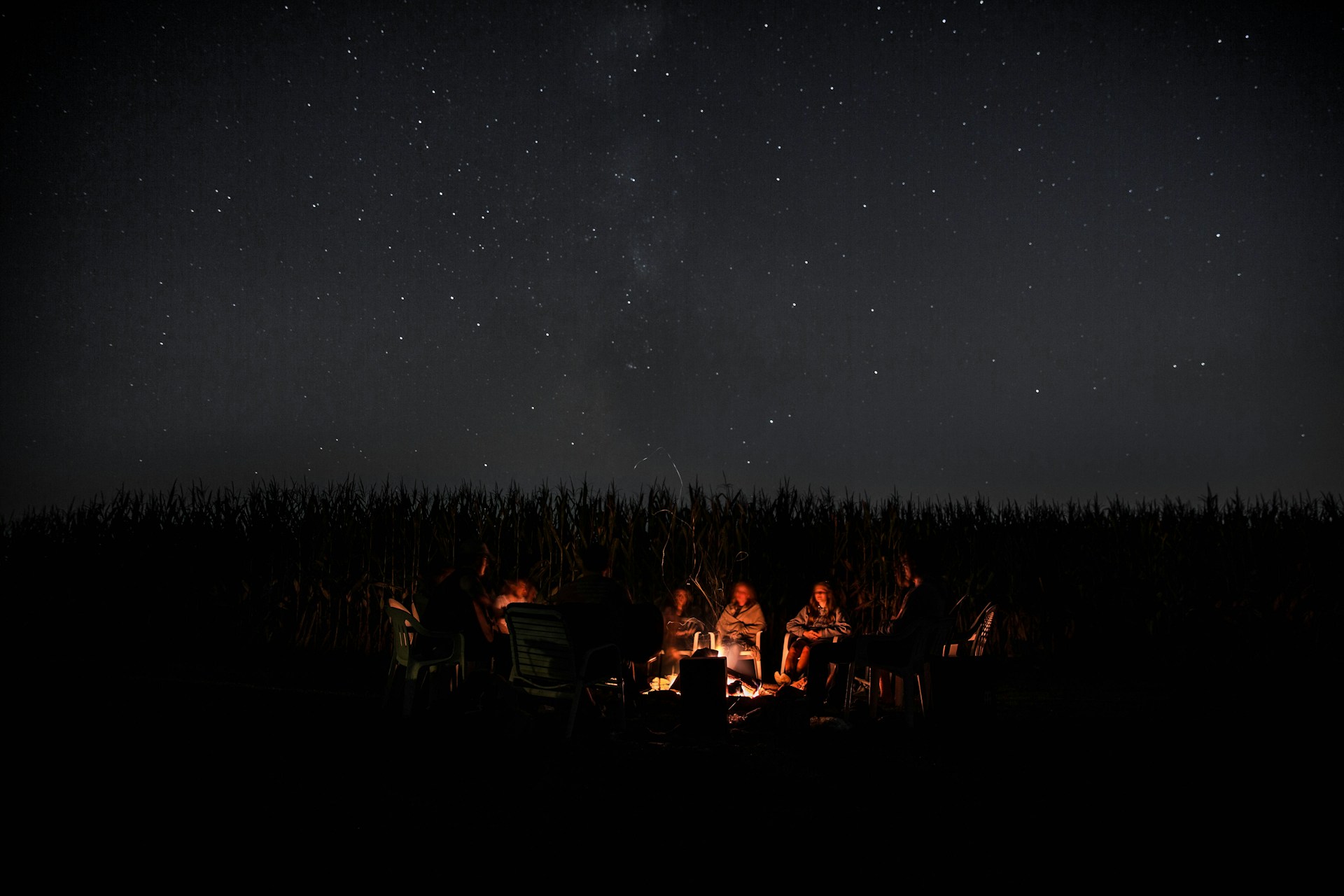
What you’d miss is what this guy’s thinking. Of all the campfires these logs will deliver. The warmth, the beauty, and the cheery faces reflected in the golden firelight. The togetherness, the raucous fun, and always the smoke that’ll chase each of us in time.
Lately, I’ve been thinking about words that rhyme with stories, memories, starlight, marshmallows, love, and family. Of a way to express my “why” behind all this work.
My new splitter hums, its rhythm is true, Each log cracks clean, split in two. And with each piece, I see what’s ahead— Fires that warm, where stories are said.
Golden flames dance in their eyes, Joyful voices filling the skies. Kids with marshmallows on sticks they will hold, Turning white fluff to crispy gold.
The stars above will steal their gaze, A quiet pause from the firelight’s haze. But soon enough, they’ll leap to their feet, Cousins chasing cousins, the night complete.
This work is heavy, my labor long, But in each log, I hear a song. A promise of warmth, connection, and love, Of smoke below and stars above.
Each crack of the wood a memory in waiting, Moments of joy we’ll spend creating. I keep splitting, I’ll keep the pace, Knowing the fire will hold its place.
One split, one stack, one stick at a time, Building a future that’s warm and divine. A pile of firewood, yes—but so much more, It’s family, it’s laughter, it’s life to the core.
There’s a line in a Frank Sinatra song that asks if we’d like to, “…carry moonbeams home in a jar.” A crazy idea. Moonbeams can’t be contained or put in a jar, but their magic can be carried home just the same. What if we could carry home the kind of wonder and light that moonbeams represent?
Life throws challenges at us every day. Deadlines. Difficult conversations. The relentless tug-of-war between expectations and reality. Yet, amid the noise, we often stumble upon moments of beauty. Unexpected acts of kindness, moments of connection with strangers, or simply a sunrise or sunset that stops us in our tracks. These are moonbeams.
Have you ever met someone for the first time and felt their kindness so deeply that it stayed with you? Maybe it was a stranger who gave you directions with a smile, a colleague who truly listened, or someone who saw you struggling and extended their hand. These are glimpses of humanity’s greatness. Magic moments where we see the best of who we are reflected in someone else.
What if we made it our mission to carry that magic home with us?
It’s easy to bring home the worries of the day. Our frustrations, our stresses, our nagging self-doubt. But alongside these, we can also bring moonbeams: the small, bright moments of beauty, hope, and love that we encounter every day. We can share the wonder of a chance conversation, the joy of something new we learned, or the inspiration we felt when we saw someone overcoming adversity.
Carrying moonbeams is about being conscious of what we pass on to those we love. It’s about choosing to share curiosity instead of cynicism, gratitude instead of grumbling. It’s about being the explorer who brings back stories of the world’s beauty to share with those at home, inspiring them to see the magic in their own lives, too.
Imagine if we all carried moonbeams in our metaphorical jars. How much brighter would our homes, our communities, and our world become?
What if we could embrace the day with the motivated curiosity of an explorer. Purposely looking for the moonbeams—the fleeting magic of kindness, beauty, and connection.
Imagine carrying them home to share, not in jars, but in our words, our actions, and our presence.
Because moonbeams, once shared, have a way of multiplying.
Photo by me, capturing a “moonbeam” of a sunrise view outside my kitchen window the other day
“Manners are of more importance than laws. Upon them, in a great measure, the laws depend. The law touches us but here and there, and now and then. Manners are what vex or soothe, corrupt or purify, exalt or debase, barbarize or refine us, by a constant, steady, uniform, insensible operation, like that of the air we breathe in.” – Edmund Burke
-Why do we say Please and Thank You?
-Why do we hold the door for the next person?
-Why do we show respect for our elders?
-Why don’t we interrupt someone when they’re speaking (at least, most of the time)?
Mostly because we were taught these behaviors by our parents, or someone in authority, when we were growing up. We may have learned by being told explicitly, or by watching others that we admire acting in these ways.
As Burke points out, manners are more important than laws. They are fundamental in establishing the boundaries of our behavior, of integrating us within our community.
Manners show our respect for those around us. They create a standard for how we work with others.
Consider the manners (customs) that are in play where you work. It doesn’t matter if you work in construction, nursing, information technology, or any other field. If you work with people (which you always do whether they are your co-workers, your customers, or both), your manner of behavior will be critical to your success. Good manners create a positive environment, build strong relationships, and foster a culture of respect and professionalism.
Since we are creatures of habit, it’s easy to establish either a habit for lacking manners, or for having them. The disciplined decision to operate your life within the bounds of good manners is a decision that will pay consistent dividends. Good manners can be the foundation for a disciplined approach across all areas of your life. When we are polite and considerate, we remind ourselves of our values and our commitment to treating others (and ourselves) with dignity.
The simple act of saying “Please” and “Thank You” (and meaning it) shows our vulnerability to others, and at the same time, our appreciation for what they have done for us. Powerful ways to remind us of our humility and gratitude many times each day.
Edmund Burke observed, “Example is the school of mankind, and they will learn at no other.” Our behavior and proper manners will be a teacher to those around us, whether we intend it or not. Our actions, grounded in good manners, can inspire those around us to adopt similar behaviors.
It’s easy for each new generation to look at the rules and traditions of prior generations (manners) as archaic, overly formalized, and irrelevant in their “new modern era.” They may rationalize away the need for good manners on this basis. However, dismissing the importance of manners can lead to a breakdown in social cohesion. Our challenge is to adapt the principles to modern contexts while preserving the core values of respect and consideration.
Manners are a timeless currency that never loses value—so spend them generously and watch how rich life can become.
I’m working on an autobiography of sorts. It’s a compilation of my answers to a series of questions. There are about 75 of them that act as prompts. Here are some examples:
Tell me about your childhood home.
What were your school days like?
What was your favorite fashion trend when you were a kid?
How did you meet your spouse?
The idea is that my kids and grandkids and anyone else who’s interested can learn more about my life as they read through my answers to these questions. It’s been a fun project that I’ve been working on over the past 3-4 months.
I just finished answering this question and thought I’d share my answer here:
Can you share a favorite quote or saying of yours?
Life is a journey, not a destination.
I’m not sure who said this first. It’s something I said for years before learning that it was a famous quote from someone else. Turns out there are posters and artwork that you can buy that highlight this quote. Maybe I saw the quote decades ago and it lived in my subconscious mind until later in life.
I don’t have anything against goal setting or visualizing a future and going after it. But it’s important to avoid having tunnel vision in your pursuit of goal achievement since you may miss other opportunities and experiences that introduce themselves along the way.
I’m reminded of a drawing of a stickperson on a ladder. They are locked in on their goal: reaching the top of that ladder before anyone else. This person even jumps over someone and kicks another person off the ladder in their effort to reach the top first. When this person finally reaches the top, they find that the ladder doesn’t actually lead anywhere. Their ladder is standing in the air and not leaning against anything.
The lesson is to make sure the ladder you’re climbing is going somewhere you really want to go.
When you reach your goal, no matter how lofty and difficult it was to achieve, you are merely at a new starting point or more accurately, you’ve made it to one of an infinite number of stops in your life-long journey.
The real goal should be to maximize your enjoyment of the journey itself. To appreciate the small things that happen, the surprises, the diversions, the successes and the failures, the people you meet, and the places you get to experience along the way.
Life is that thing that happens while you’re busy making other plans.
This one is closely related to the first quote. Life is a series of “nows” that are happening in real-time. You can make plans, point yourself in a particular direction, and even tell yourself that you’re in control of all the things that are happening in your life (spoiler alert – you’re not in control of all the things, you only control your response to all the things).
The time to start something new or something that will improve your life is always six months ago. While you’re busy talking about your future, it’s already happening. That thing you’re thinking about doing today but procrastinating while you do more planning will become that thing you should have done six months ago.
Plans are valuable, and you should have a broad plan with some key pillars that you can stand on throughout your life. It’s equally important to avoid hiding behind the planning phases of your life and forgetting to live your life purposely. It turns out that life’s happening anyway, so you might as well live it proactively and not reactively.
These are the good times.
The shortened version of this among friends is, “Good times.” Meaning these are the good times we’ll look back on fondly when we get older. No matter how screwed up something is, or how hard the thing you’re doing right now is, or how much you just failed… all of it will be lumped into your mind and memory as “good times” from your past.
In fact, some of your worst life experiences or life failures might even become the fondest memories you share in the future. You might reflect on how great something was, or how it was good that you had that failure or that heartbreak so you could apply what you learned later in life.
It’s unfortunate that we usually don’t realize this when these things are happening to us in the present.
Newton’s first law of motion (also called the law of inertia), states that an object at rest will stay at rest, and an object in motion will stay in motion unless acted upon by an external force. While this principle is foundational in physics, it can be applied to the way we live our lives.
In our daily lives, it’s easy to remain at rest. We experience moments of doubt and confusion, low motivation, and a natural tendency to avoid change. This mental and emotional inertia can keep us stuck, making it difficult to take action or move forward. Organizations often reinforce this inertia with incentives that promote the perceived “safety” of maintaining the status quo.
As we age, this resistance to movement can become even stronger. We rely on past experiences, often using them as justifications for inaction. “It didn’t work before, so why would it work this time?” This mindset is a barrier to personal growth and fulfillment.
Unfortunately, a life at rest, devoid of risk and new experiences, can become empty and unfulfilling.
Our goal should be to actively push against the inertia holding us in place. This involves taking risks, trying new things, and offering our time and energy to others. Overcoming inertia requires a conscious effort to break free from the comfort of staying still.
The second part of Newton’s law of inertia emphasizes that an object in motion tends to stay in motion. This should be a powerful motivator. Once we start moving in a direction, it’s likely that we’ll continue to do so unless something actively stops us.
Turns out that those around us are battling their own inertia and may not have the energy to impede our progress.
By choosing to move, we can capitalize on opportunities that arise. While others remain stuck in their self-imposed rest, we can explore new paths, achieve our goals, and live our most fulfilling life long before they even notice what we’re doing.
Embrace the motion. Take action. Push past the barriers, especially self-imposed barriers. The world is full of opportunities for those who dare to tap into the Newtonian motion that’s available to each of us…all we have to do is move.
Asking what if about your past is a waste of time. Asking what if about your future is tremendously productive. – Kevin Kelly
It’s easy to focus on what could have been, what you should have done, what someone did or didn’t do to you (or for you), and all the mistakes you’ve made.
It’s even easier to let all that stuff in the past dictate what you’ll do in the future. Our past has tons of built-in excuses. Excuses that help us stick with the status quo, protect us against taking new risks, prevent us from trying something new, or exploring where we’ve never been.
Our lizard brains love the barriers that the past can provide. Like a protective cocoon…one we never have to leave.
What if you choose your future without the limitations or excuses of your past?
That’s the harder and much more rewarding path. You might fail. You might be embarrassed. You’ll surely make new mistakes.
But you might succeed, and you’ll probably discover something you never knew you were seeking.
You can accept the lessons of your past as you drop the past from your thinking.
When was the last time you did something for the first time?
Did you take more than 30 seconds to answer that question?
What if you purposely pursue the surprises that come from diving headfirst into new experiences and adventures?
It’s time to find out.
Photo: My grandson, Charlie, boogie boarding for the first time (about 5 years ago). May we each experience the same joy when we’re trying something for the first time.
I follow a small handful of Youtubers. Most of the channels I watch focus on small business owners in various industries, or folks who are building an independent lifestyle…mostly off-grid.
I love to watch them create something valuable and useful out of nothing but an idea and their belief that they can do it. Sometimes they succeed on their first try, other times they need to adjust and try again. I admire their willingness to push themselves way outside their comfort zone in pursuit of the way they want to live.
This past weekend, I watched as the twenty-year-old daughter of someone I follow took the plunge to start her own coffee house. She has 1-2 years of experience being a barista and talked about how much she loved that job, her teammates, and her customers.
She told a nice story about how her mom met her dad 20-plus years ago. He and his band came to perform at the coffee house where her mom worked as a barista. She said that she would be investing her life savings in this new venture.
She started by leasing a 1,900 square-foot space that had all the bones to become a great coffee house location. She and her mom set about visualizing and planning the space, identifying the equipment she’d need, and how they’d work together to remodel the space. They talked about where the small kitchen would go, how the prep tables would be organized, where the coffee counter and espresso machines would go, how the space would be decorated for comfort and a relaxing vibe.
As I watched them walk around visualizing, the experienced business manager in me started thinking about all the paperwork she’d need to file. The health code permits, the special equipment she’d need, the certifications that may be required to serve food, the creation of a business and DBA, opening bank accounts, capitalizing, and accounting for the business…sales and income tax filings.
I wondered how many customers she’d need to serve each day to generate an adequate cash flow and profit. Had she identified her suppliers? Did she know the supply costs yet? How many employees would she need to hire to cover all the shifts? Was she ready to establish a payroll process for her new employees, establish HR systems, purchase the various insurance coverages she’d need, including worker’s compensation coverage.
Cut to the next scene in their video, and they’re filing the DBA paperwork, and starting to file the health code paperwork and forms. It turns out that there is a healthy server certification that she’ll need to obtain (which includes a ton of study materials and a written test).
She was undeterred. She plowed straight into the process, all the while renovating and remodeling the space along with the help of friends and family. It was truly a labor of love for her. After 3-4 weeks of work, the place was starting to take shape.
What happens next? I’ll be tuning in next week to find out.
There’s a prevailing stereotype that youth and inexperience are synonymous with recklessness and abandon.
How can this 20-year-old possibly know enough to successfully launch her new coffee business?
Look more closely and it may be that her lack of experience and knowledge are the catalyst for her leap into entrepreneurship. She knows that she doesn’t want to work for someone else, and she loved her experience being a barista. Why not create her own coffee house?
One of the paradoxes of entrepreneurship is that knowledge, while valuable, can sometimes become a barrier to action. Older generations, armed with years of experience and a deep understanding of the intricacies involved in starting and running a business, may find themselves paralyzed by the fear of failure, or an unwillingness to put in all the work they know lies ahead. Knowing what they know, they can easily talk themselves out of almost anything.
On the other hand, young entrepreneurs often possess an infectious optimism and a sense of invincibility that propels them forward. Unencumbered by the weight of past failures or the mounting responsibilities of adulthood, they approach new ventures with a boldness that can be both exhilarating and inspiring. Their willingness to take risks stems not from ignorance, but from a belief that they can overcome any obstacle that stands in their way.
They are adaptable, more willing to pivot and change course when facing unexpected challenges. They haven’t yet become set in their ways or entrenched in established routines, allowing them to embrace change with a sense of excitement rather than fear. They view setbacks not as roadblocks, but as opportunities for growth and learning.
Young entrepreneurs understand the value of learning by doing. They’re not afraid to dive into the nitty-gritty of running a business, knowing that experience is the best teacher.
Will any of it be easy? No.
Will she have moments of self-doubt, and fear of failing? Yes.
Will she overcome the wall of worry and doubt, plus all the challenges associated with owning and running a successful business? Maybe, but I know she has what it takes to make it successful.
Would I open a coffee house at this point in my life? Nope.
But I love that she’s pursuing her dream. I love that her parents are there to help. I can already see that they’re being supportive, but also letting her drive the process, take the risks, and make the decisions.
If she were to ask for my advice, I’d tell her to consider the following (in no particular order):
Create or join a network of trusted allies and service providers. Join the local Chamber of Commerce, a BNI chapter, or a group that has other business owners as members. You’ll get to meet other entrepreneurs, compare notes with them, and many of them will provide services and expertise that you can use.
Focus on the customer’s experience in everything you do. Advocate for your customers and they will advocate for you.
Start your marketing and awareness campaign long before the day you open your business. While you’re remodeling the interior or your space, take the time to remodel and brand the exterior. Put up “coming soon” signs. Try to generate as much anticipation in your surrounding neighborhood as possible…again, long before opening day.
If possible, ensure that your business has at least 3 months (or more) of operating capital in the bank at any time. The more, the better. You never know when something unexpected might happen…a big expense or capital investment opportunity, or maybe a cyclical downturn in your business.
Remember that leaders always eat last. This means you’ll probably have some lean times, financially. Keeping your business healthy and paying your employees must come first. It’s quite possible that you won’t be pulling anything that looks like a paycheck from your business for 6-12 months. Prepare for this and realize it’s completely normal.
As you hire employees, whether they’re part-time or full-time, make sure they know your values, why your coffee house is special, why they are fortunate to be part of your team and that you feel blessed and fortunate to have them on your team.
Advocate for your employees, but don’t be afraid to quickly let go of employees who aren’t embracing your company culture. You need to employ believers in your mission…anything less is unacceptable. I don’t remember who said it but hire slowly and fire fast. Both are extremely difficult to do in practice but will pay off with amazing results if you’re able to do it.
p/c – Nathan Lemon – Unsplash
Want to see what happens next with Belle’s coffee house?
Fear is like that well-meaning friend who occasionally oversteps boundaries. It’s a survival instinct, a leftover trait from our ancestors who needed it to avoid becoming someone else’s lunch. It can guide us toward wise choices and help us steer clear of danger.
Our imagination, on the other hand, is a bit of a storyteller, especially when it comes to tales that can hold us back. With all our experiences and secrets tucked away in our minds, our imagination can whip up some remarkably dreadful future scenarios. And our lizard brains? They thrive on responding to fear.
Fear is undoubtedly real. The fear of failure, loss, embarrassment, injury, loneliness, helplessness, and death can have profound impacts on our thoughts and actions. However, if we recognize, understand, and confront these fears head-on, it will be like flicking on the lights in a dark room – suddenly, the monsters lose their scariness.
By acknowledging that fear is a living part of us, we can take steps toward asserting our control over it. Fear shouldn’t be in the driver’s seat.
“Yea, though I walk through the valley of the shadow of death, I will fear no evil: for thou art with me; thy rod and thy staff they comfort me.” – Psalm 23
We aren’t alone in this journey of conquering fear. We have a loving God, supportive family, and caring friends to help us face our fears. They can offer a broader perspective and lend a hand when we need it most.
Life is a rollercoaster of unknowns, and fear hates rollercoasters. Instead of fearing the unknown, befriend it. New ideas, experiences, and relationships? Embrace them as opportunities, be curious, and let the adventure unfold.
Life is rarely easy, and sometimes truly terrible things happen to us. But, fear should be the backseat driver, not our navigator.
“I must not fear. Fear is the mind-killer.
Fear is the little-death that brings total obliteration.
I will face my fear. I will permit it to pass over me and through me.
And, when it has gone past, I will turn the inner eye to see its path.
Where the fear has gone there will be nothing. Only I will remain.”
–Paul Atreides in the novel Dune, by Frank Herbert
Photo: Why hot air balloons? Well, taking a ride in a hot air balloon would not be possible if we let fear make the decision. I’m happy to report the balloon ride was amazing!
I have one favor to ask: If you find this information useful, please forward and recommend it to someone else. Thanks!
Tim Ferriss asks a question of most of his podcast guests:
“If you had a billboard that millions of people would see every day, what would you put on that billboard?”
Tim’s guests have given answers ranging from the comedic to the serious. Some have talked about a cause that is their passion, or an inspirational passage they’d like people to see.
Each time I hear the question, I come up with the same three words:
Serve others first.
Serving others first means:
taking others’ needs and desires into account before our own
looking out for their best interest first
our decisions are more thoroughly considered because we’ll be taking time to think about how our decisions impact others
trying to make someone else’s job easier and more rewarding
showing someone gratitude for the work they’re doing
minding our manners (as my mom used to say when I was a kid)
listening to, and respecting others (even if we disagree with them)
looking for ways to improve a situation rather than making things worse
being the first to forgive.
It’s easy to focus on our own interests and challenges first. It’s easy to think everything happening in the world is directed toward us, personally. This “me first” mindset is hard-wired into our DNA…our DNA is selfish about 99.99% of the time.
The tougher path?
It’s the one that leads to serving others first. It goes against our wiring, which takes significant effort.
None of us will be perfect on this path. We’ll stumble, and we may even wander a bit. But, we can be a blessing for others along our journey, and that’s what we should be seeking.
The good news is that following this path gets easier with practice.
You must be logged in to post a comment.