Always Improve Your Position

A few days ago, I was listening to Jocko Willink speak about the quiet discipline behind Brazilian jiu-jitsu. I’m not a jiu-jitsu person, but one idea landed for me. It’s a truth I already knew but had never heard spoken so simply:

Always improve your position.

In jiu-jitsu, nothing happens all at once. A submission arrives like lightning, but only to the untrained eye. What looks like a sudden victory is really the final expression of dozens of subtle movements that came before it. A hip shifts. A grip tightens. An elbow gains an inch of space. Most of these moves go unnoticed. Each small adjustment creates a little more room, a little more leverage, a little more advantage.

I’ve always believed real progress works this way. It’s rarely dramatic. It’s quiet and patient. The accumulated effect of showing up, learning something new, adding a bit more care, and preparing a little more than required.

Breakthroughs rarely come from a single moment of inspiration. They come from the quiet work no one sees. The thoughtful practice that sharpens your skills, the trust built over months of ordinary conversations, the time spent learning before making a decision. When opportunity arrives, it looks sudden to others. To you, it feels like the next logical step.

This truth showed up clearly for me after a derecho tore through our property on Father’s Day weekend a few years ago. Ninety-mile-per-hour winds knocked down at least thirty trees across multiple acres. When I walked our land the next morning, everything felt broken and overwhelming. The cleanup looked like a project that would take months. I didn’t have months to devote to it.

But I did have mornings. So, I decided to work for an hour and a half every day before work. I cleared a small section each morning. It was incredibly slow. I dragged branches, cut trunks, chipped debris, split firewood, and made countless trips to our local dump. Small steps, small progress, one morning at a time.

Over the course of a year (maybe more), I worked my way across our entire property. Along the way, I cut in new hiking trails and removed a number of unhealthy trees. What started as a mess became a healthier stand of trees and a network of paths that look like they’ve been here forever.

Out of destruction came a daily habit that changed my life. I still work outside every morning. Clearing brush, trimming trees, expanding trails, building chicken coops, restoring a rustic barn. All in small ninety-minute bites. It’s like a time-lapse video created through countless quiet mornings of small improvements.

The pattern I saw on my land is exactly what Jocko described on the mat. I didn’t need a grand plan or a burst of superhuman effort. I needed to improve my position every day, just by a little.

Improve your position today, even by an inch, and tomorrow becomes easier. Improve it again tomorrow, and the day after that reveals options that didn’t exist before. You don’t need surges of motivation or dramatic reinvention. You only need the willingness to keep moving, always improving.

Careers grow this way. Trust grows this way. Faith deepens this way. Families strengthen this way.

Progress won’t always be linear. Some days distractions will pull us off course, or setbacks will undo work we thought was finished. All of this is part of the journey. Even then, the way forward still comes through small steps. Imperfect, uneven, but the work of always improving our position remains the same.

We improve our position slowly, almost without noticing. That’s enough. Tomorrow, we’ll improve again. Then one day, we’ll find ourselves able to take a step that would have felt impossible a year ago.

Focus on the next inch. The miles will take care of themselves.

Photo by Walter Martin on Unsplash – a great rendition of my early morning work environment for at least a year.

How Limits Bring Art to Life

Inspired by G. K. Chesterton

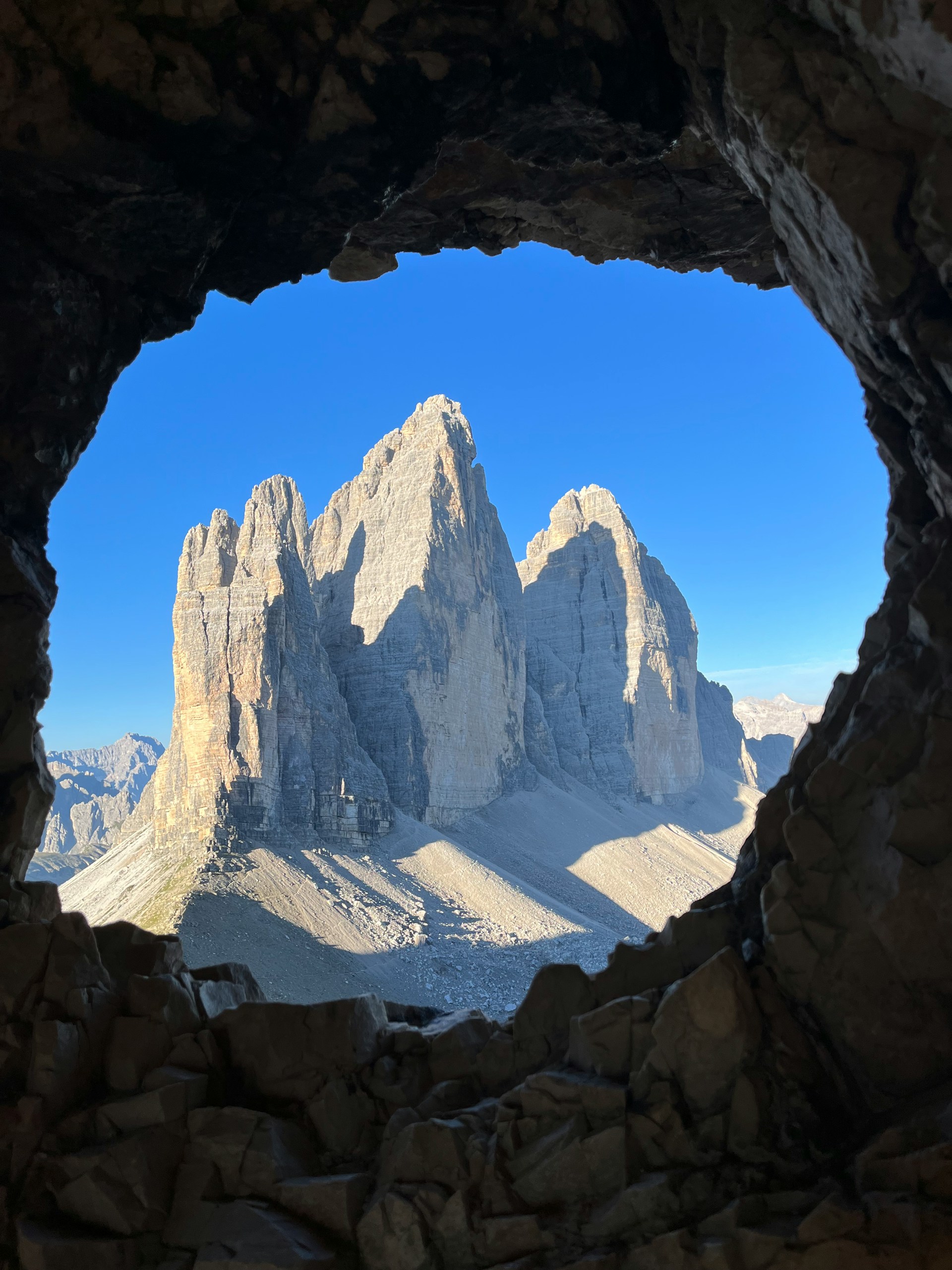
I’ve come to believe what Chesterton once said. Art is limitation, and the essence of every picture is the frame. It took me time to see that truth.

Many of us grow up thinking freedom creates great work. Unlimited time. Unlimited canvas. Unlimited choice.

But if you’ve ever stared too long at a blank page, you know what real freedom can feel like. Paralyzing.

Nothing takes shape until the edges appear. A story waits forever if the writer can’t decide where it begins. Music is noisy until the composer chooses a key. The frame gives the work its purpose.

The same is true in leadership and life. A budget helps us decide what we value. A deadline turns a dream into something real. A small team learns to trade excess for imagination. Limited resources push us to invent new ways to adapt. The frame brings focus.

Still, the frame itself matters. A picture can feel cramped when the frame becomes too tight. A project can drift when the wrong thing fills the center. When the boundaries are off, the whole image loses clarity. That’s why wise leaders spend time defining the edges before the work begins.

Whenever I work on a puzzle, I start by finding all the edge pieces. Once the border comes together, I can see how everything else might fit. The same principle applies to creative work and leadership. The edges give us context. They help us imagine where the middle pieces belong and how the picture will come to life.

Frames should change as we grow. The world shifts. We learn more about what we’re building. Every so often, we step back and see whether the picture still fits. Sometimes the frame needs widening. Sometimes the colors need more light. Adjusting the frame keeps the beauty true.

Constraints give possibility its shape. They reveal what truly matters. Choosing the right limitations helps us see what is essential.

When you feel boxed in or limited, pause before you push against the edges. The frame around your work may be the very thing helping the picture appear. And when the picture becomes clear, refresh the frame so the beauty within it continues to grow.

Thanks to James Clear for sharing this G. K. Chesterton quote: “Art is limitation; the essence of every picture is the frame.”

Photo by pine watt on Unsplash

Bring Them On the Journey

You can tell people what to do, and sometimes that’s the right call. Yet, direction without participation creates compliance instead of commitment.

When people understand the purpose, see where they fit, and have a voice in the direction, they’ll take emotional ownership.

The best leaders invite that ownership by asking questions that open doors to insight. What are we missing? What would you try? Where do you see the risk? These questions are invitations to shape the work and the results.

When a product manager asks her team, “How would you approach this?” instead of presenting a finished plan, the solutions that emerge are sharper, and the team building them gets stronger.

Humans are built for both independence and belonging, desires that often pull in different directions. Wise leaders guide this tension well. They give people space to grow while connecting them to something larger than themselves.

To bring others on the journey is to build together. Growth is shared. Trust expands. When the path gets steep, they’ll keep climbing with purpose.

They remember the reasons, because they helped shape the path.

Photo by Powrock Mountain Guides on Unsplash – Unsplash has a ton of amazing hiking photos, mountain climbing photos, pictures of maps, legos, and winding paths. All would have represented the themes of this post admirably. But this photo caught my eye.

How do you see it connecting to this post? What makes this photo stand out? How hard do you think it is to hike across to that gleaming white mountain in the distance?

Beautiful Things Don’t Ask for Attention

I saw The Secret Life of Walter Mitty on an airplane ride recently. At a significant moment in the story, we hear the line, “Beautiful things don’t ask for attention.”

The photographer in the story chooses not to take a coveted photo of the elusive snow leopard. Instead, he simply enjoys the beautiful moment with his own eyes.

Real beauty doesn’t need to perform. It’s authentic and humble, whether anyone stops to notice or not.

A person of character lives this way. They have no need to prove themselves. They show up with kindness, consistency, and honesty. The neighbor who shovels snow from an elderly woman’s driveway before dawn, leaving no trace. Or the teacher who stays late to help a struggling student, never mentioning it to anyone.

The beauty of their character reveals itself in the way they live each day.

Humility makes this possible. It allows a life to shine without glare, to influence others by being genuine. Like mountains that reflect the glow of sunrise or wildflowers blooming unseen in a meadow, people of quiet integrity embody a beauty that doesn’t depend on recognition.

In our culture that rewards noise and spectacle, this is easy to forget. We’re told to broadcast accomplishments and measure our worth by attention. Yet the most meaningful lives belong to those who live true to themselves, free from the need for applause.

The things that endure, whether in people or in nature, carry their beauty without fanfare. They simply are.

There’s a paradox in writing about something that exists most powerfully in silence. Maybe that’s the point. Celebrating this kind of beauty without claiming it for ourselves.

But we can learn to recognize it. To be shaped and inspired by it. And, in our quieter moments, we can strive to live it.

Photo by Patrick Schaudel on Unsplash – some of my fondest memories involve waking up in a tent on crisp mountain mornings, basking in the beautiful glow of the rising sun.

The Noonday Devil and the Lie of Boredom

Psalm 91 promises safety from dangers both visible and invisible, from “the terror by night” to “the arrow that flieth by day.”

In verse 6, we read: “Nor for the pestilence that walketh in darkness; nor for the destruction that wasteth at noonday.”

The Desert Fathers, those early Christians who left the cities around the third and fourth centuries to live in the desert, drew on this verse to describe one of their deepest spiritual struggles. They called it the noonday devil.

This devil represents an interior battle, a weariness of the soul that crept in at midday when the sun beat down, the silence grew heavy, and the temptation to abandon their prayer and vocation felt overwhelming.

They named this struggle acedia. Sometimes it’s translated as sloth, but it is much more than that.

How many kids have said to their parents, “I’m bored.” We remind them that boredom is in their heads. They can use their imagination, find a book, or play outside. And if that doesn’t land, we parents always have another cure for their boredom: chores.

It’s amazing how quickly boredom vanishes when a child is handed a rake, a shovel, or a basket of laundry to fold.

Boredom is what happens when we can’t see the meaning in what we’re doing. Acedia is boredom’s older cousin. Spiritual weariness with much deeper stakes.

It’s restlessness, a refusal to care, a loss of joy in the very things that give life meaning. It can show up as distraction or busyness. Acedia tempts us to walk away when the middle of the journey feels too long and too heavy.

I think of the countless days spent inching along in rush-hour traffic, morning after morning, just to get to work. I’d put in a full day’s work, then crawl through another hour or more of brake lights to get home. The next day brought the same routine. After a while, it was easy to think maybe the whole thing had no meaning.

That’s the noonday devil at work.

The midpoints of life test us in a similar way. Paying bills, the daily grind of a career without clear progress, responsibilities that seem to grow heavier without much relief. Our internal voice asks, “How can I escape? Should I look for something easier?”

Jean-Charles Nault’s The Noonday Devil: Acedia, the Unnamed Evil of Our Times says this ancient struggle is alive and well today. It shows up in constant scrolling, in working ourselves to exhaustion to avoid deeper questions, in chasing novelty because the present moment feels too heavy.

The Desert Fathers found the answer was to persevere through, but with far more than sheer willpower. Keep praying, even when prayer feels dry. Stay faithful to commitments, even when they feel heavy. Lean into your community rather than isolating from it. Practice humility and remember that perseverance is possible only by God’s grace.

What does this look like? When we feel the pull toward endless scrolling, we might instead text a friend or call a family member. When work feels meaningless, we can remember the people our efforts serve, even if indirectly. When prayer feels empty, we show up anyway, trusting that faithfulness itself has value beyond our feelings in the moment.

The noonday devil tempts us to think that only extraordinary lives matter. But as Oliver Burkeman points out in his idea of “cosmic insignificance therapy,” recognizing our smallness frees us to find profound meaning in ordinary acts.

The daily work of caring for children, preparing meals, or showing up for neighbors and friends carries as much weight as anything could. These acts may never make headlines, but in God’s eyes they shine with eternal value.

Persevering in small, steady commitments resists acedia and helps us discover joy in the very places where meaning often hides.

Psalm 91 carries a promise, “He shall cover thee with his feathers, and under his wings shalt thou trust.”

God invites us to rest beneath His wings, to trust Him in the heat of the day, and to discover joy at the very heart of our journey.

Faithfulness in the ordinary is never wasted. Under His wings, even the smallest acts take on eternal meaning.

h/t – Hallow app – Noonday Devil; Tim Ferris – Oliver Burkeman’s Cosmic Insignificance Therapy

Photo by Mauro Lima on Unsplash

Mesmerism and the Rhythm of Showing Up

“When I’m in writing mode for a novel, I get up at four a.m. and work for five to six hours. In the afternoon, I run for ten kilometers or swim for fifteen hundred meters (or do both), then I read a bit and listen to some music. I go to bed at nine p.m. I keep to this routine every day without variation. The repetition itself becomes the important thing; it’s a form of mesmerism. I mesmerize myself to reach a deeper state of mind.” — Haruki Murakami

Haruki Murakami has written some of the most widely read novels and screenplays — Norwegian Wood, Kafka on the Shore, 1Q84, and others. His stories are wide and varied. But his process? Based on this quote, it’s as simple as it gets (on first glance).

He wakes early. He works. He exercises. He reads. He rests. Then he does it all again. Every day. Without variation.

What makes that interesting isn’t just the discipline. It’s what that discipline creates. He calls it mesmerism.

He’s not trying to force creativity. He’s building a space, mentally and physically, where creativity knows it’s welcome. And he shows up to that space every day, without fail.

This kind of repetition, over time, can shift your state of mind. It can take you to a quieter, more focused place. It can help you bypass distraction and access something deeper.

He doesn’t wait for inspiration to strike. He prepares for it. He builds a rhythm and shows up to it daily. Over time, his mind knows—it’s time to create. And that, he says, is when the real writing happens.

It’s easy to think of habits as something utilitarian. A way to squeeze productivity out of our day. But what if repetition isn’t just a tool for efficiency? What if it’s a path into something more meaningful?

What if the act of doing the same thing, at the same time, in the same way, becomes a form of permission to go deeper?

Murakami’s routine isn’t about optimization. It’s about entry. It’s a way of reaching the part of himself that doesn’t respond well to noise, pressure, or force. And the only way in is repetition.

This idea of mesmerism applies to more than writing novels or screenplays.

Maybe your “deep work” is building a business, raising a family, managing a new venture, or simply trying to stay anchored when life is anything but steady.

The specific rhythm doesn’t matter. What matters is that it’s yours. That it becomes familiar enough, trusted enough, to lower your resistance and invite your mind to settle.

A short walk each morning before the day begins.

A time and place for reading, thinking, or praying without interruption.

A quiet moment after dinner, before sleep.

These aren’t productivity hacks. They’re entry points. Invitations to go below the surface of reaction and noise.  To meet yourself in a more focused, honest way.

Reflecting on this quote, I see it as less about writing and more about living on purpose.

There’s no perfect rhythm. No universal method. But there is something powerful in choosing to show up each day, in the same way, with the same posture of readiness…even if it feels small.

Because over time, that rhythm changes us. It makes us less reliant on inspiration and more connected to our purpose.

Less reactive, more rooted. Less scattered, steadier.

Show up.
Repeat.
Let the repetition carry you deeper.

That’s where the real work—and the real exploration—can begin.

h/t – once again, Tim Ferris’s 5 Bullet Friday newsletter.  He recently highlighted this Murakami quote.  When I first read it, it didn’t make much of an impression.  Who uses mesmerism in a sentence?  Then I decided to re-read it, even though it’s a long one.   

On my second reading, the quote sunk in and got me thinking about how his process of mesmerizing through repetition can be applied to anything we’re trying to accomplish (it even showed me how to use the word mesmerizing in a sentence). It takes us past brute discipline and into a rhythm-based approach that prepares our mind to do the work we want it to do; in the space that repetition provides.   

Photo by Jack Sharp on Unsplash

Let the Ponies Run

Imagine owning a well-trained thoroughbred racehorse. Born and bred for speed, this horse thrives on competition and lives to run fast.

Every day, six days a week, this horse trains relentlessly. It has one purpose and one passion: running and winning races. Nothing else matters.

But on race day, you grow cautious. You worry, despite all the training, despite the horse’s proven skill, that it might not pace itself properly. So, you ask the jockey to override its instinct to run fast. You instruct the jockey to hold back the reins from the start.

As the race unfolds, your horse struggles against this restraint. Instead of feeling exhilarated, it grows frustrated. Its natural drive diminishes with each stride as the jockey pulls back, second-guessing the horse’s desire to run.

Finally, as the last turn approaches, the jockey releases the reins and shouts encouragement. It’s time to unleash all that pent-up speed.

But the horse no longer cares. He’s not even paying attention. He lost his competitive edge about a half mile ago as the jockey kept holding him back. Sure, the horse goes through the motions, picking up just enough speed to appear engaged, to show respect for the jockey’s urging. But the spark is gone.

This is a very fast horse, so even his partial effort makes for a close finish. But unfortunately, the horse doesn’t win the race. One he could have easily won if he hadn’t been held back from the start.

If you’re a manager, how often do you treat your employees like this horse? How often do you hold them back from doing the very thing you hired them to do? Do you second-guess their instincts, micromanage their decisions, and restrain their natural abilities out of fear, caution, or to protect your ego?

Consider how demoralizing it is for your team when you take away their autonomy. The freedom to run their own race. When employees lose the ability to make meaningful decisions, their enthusiasm, creativity, and ownership suffer. These are the very qualities that fuel success, and when suppressed, diminish the team’s potential and their performance.

Take a look around your organization. Are your people fully engaged, and running with purpose? Or have you inadvertently drained their passion and energy by holding them back?

There’s something else that’s easy to overlook. When you don’t allow your people to take on challenges, make decisions, and occasionally stumble, you’re not just holding them back today. You’re limiting who they can become tomorrow. Without the opportunity to stretch, fail, and grow, your employees can’t develop the judgment and endurance that leadership demands.

Playing it safe and keeping them on a tight rein risks weakening your bench strength and jeopardizing your organization’s ability to thrive in the future. We’re not just running one race; we’re running a never-ending series of tough races that stretch out long into the future.

Imagine how powerful your organization could be if you simply let your thoroughbreds—all the talent and skills you’ve carefully assembled—run their races the way they know best. Imagine letting them succeed and fail with your support, as part of your team, and not just your assistant waiting for you to make all the decisions.

It’s time to loosen the reins and let the ponies run. Because if you don’t, they might find somewhere else where they can.

Photo by Jeff Griffith on Unsplash

Maybe So…

“Maybe so.”

It’s such a quiet phrase. Almost a shrug. A way of saying, yes, that’s true…but that’s not the whole story.

Life is full of maybe so…

This challenge I’m facing is hard. Maybe so.
Someone else got the credit I worked for. Maybe so.
The odds are stacked against me. Maybe so.
The situation is messy, complicated, unfair.  Maybe so.

Maybe so…but I’m not letting that be the final word.

Truth and hope aren’t always in competition. You can fully acknowledge the reality of something and still choose where to focus.

Perspective is a choice.

I’m tired, maybe so.
I’ve failed, maybe so.
This isn’t how I pictured it, maybe so.

But I’m also thankful.
I’m still showing up.
This might be exactly what I need, even though I may never admit it.

I’m learning to live in the tension between what is and what matters more.

We all get to decide where to place our attention.
Some people zero in on the obstacle. Others fix their eyes on the opportunity.

One sees the storm. The other watches for the rainbow.

Both are real. But only one will move you forward.

“Attitude is the difference between an ordeal and an adventure.”
Bob Bitchin (he’s a real guy with an amazing story…stories)

Life hands us situations we don’t choose.  Detours, delays, disappointments. But attitude? That’s something we bring to the table.

Sometimes the smallest shift in mindset is what turns a setback into a story worth telling. What once felt like a burden becomes the beginning of a bold new chapter.

So yes…your facts may be true. The obstacles might be real. The weariness might be justified.

Maybe so…but this is where we’re meant to be.  Besides, this story isn’t finished.

The best parts of life come after we stop fighting the facts and start choosing the lens we use to see them.

h/t – “Yeah, I know what they say, money can’t buy everything.  Well, maybe so, but it could buy me a boat.”Chris Janson

I smile every time I hear this song. Sometimes a little humor, a little honesty, and a down-to-earth dream are exactly what we need to reset our thinking. It’s not about the boat.  It’s about the choice to believe that something good still waits ahead…if we choose to see it.

Photo by Jarrett Fifield on Unsplash

Choosing Your Team Wisely

Thought leaders play a critical role in any organization. Sometimes, they have titles like CEO, COO, CIO, etc. Other times, the real thought leaders are deep within the organization—formally or informally influencing the speed and direction of progress. Often, it’s a mix of both (most ideal, in my opinion).

It doesn’t take long working with people (in business or everyday life) to recognize some common personality types. See if any of these sound familiar:

The Opportunist – “What’s in it for me?”

The Rule Follower – “What will our boss think?”

The Naysayer – “Let me tell you all the ways this won’t work.”

The Over-Analyzer – “Shouldn’t we think about this more?”

The Idea Generator – ”What about this new approach to the problem?”

The Go-Getter – “Why are we sitting here doing nothing… let’s move!”

The Rebel – “Who cares what the boss thinks?”

The Doer – “We’ve got all we need, so let’s start.”

The Supporter – “How can I help you with your goals?”

The Invisible Worker – “I don’t want to get noticed.”

The Minimalist – “How can I get by doing the least amount of work?”

The Escape Artist – “If this goes wrong, I wasn’t here.”

Which one is best?

That depends on the situation.

I tend to gravitate toward those who accept responsibility, take risks, and aggressively seek solutions. I like working with people who act first, ask for forgiveness later, and push organizations toward innovation and progress.

But even the most action-driven person benefits from a counterbalance.  Someone who asks the tough questions, who sees the risks, who insists on analyzing every angle. Their input can temper an ambitious plan, provide a broader perspective, and uncover blind spots the team might otherwise miss.

Too many cautious over-analyzers, and an organization stalls. But completely ignoring their input? That’s a recipe for reckless decision making.

Look around your organization, your circle of friends, and the people you admire. How many of them fit into one or more of these categories? More importantly, which one(s) fits you?

And if you’re building a team for your next big project, who do you want on that team? Who will give your project the highest chance of success?

The key to a successful team isn’t about having just one type of person.  It’s about striking the right balance. Recognizing that the strengths and weaknesses of each personality type will allow you to build a team that works effectively together, balancing momentum with careful consideration.

The best teams blend different perspectives and working styles to make smarter decisions and drive lasting progress.

Choose wisely, because the right mix can be the difference between failure and success.

Photo by Mpho Mojapelo on Unsplash

Enriching Others – the Best Path to Leadership Success

“You can have everything in life you want, if you will just help enough other people get what they want.” – Zig Ziglar

I remember a friend of mine who was promoted from being a very successful salesman to being the branch manager for a large insurance company.  It is amazing to think this was almost 30 years ago. 

He told me that he’d finally get to tell people what to do, and he looked forward to that.  Plus, he’d get to take long lunches and charge the lunches to his expense account. 

I knew that if that was his approach to his new manager role, he’d probably fail miserably…and quickly.  I told him as much. 

I suggested that he start by meeting with his new team members one-on-one. Just because he’d worked alongside many of them before didn’t mean he knew them well enough as their manager. I encouraged him to take the time to understand each of their roles, how they saw their future, and what they hoped to see change at the company.

I said it would help him get to know them and, even more importantly, show them he valued them and wanted them to succeed. And if he let them know that he needed their help, too, it would go a long way. This wasn’t just his chance to lead, it was a chance to connect directly with each team member.

He thought that was a waste of his time.  He had been a very successful salesman, knew how the company operated, and already knew what made the branch tick.  He told me that he knew what needed to be fixed and he’d hit the ground running to get those changes implemented. 

I saw him again about three or four months later.  When I asked him how his new job was going, he just shook his head.  “Not good.  Nobody is listening to me.  I’ve had a couple of people quit already, and I think some others are out looking for new jobs.  Our sales are way down.  My boss is asking me what I’m going to do about it.”

I didn’t say, “I told you so,” but that’s what I was thinking. A few months later, he was demoted back to sales, but at the lower pay structure in place for new hires. Not long after that, he left the company.

I’ve been blessed with multiple opportunities to take over business operations in fields where I had little or no expertise or experience.  Sometimes, from outside looking in, I had some ideas about how things should operate, but I always kept it to myself when I arrived. 

Even in situations where I thought I knew all the answers, I purposely and methodically asked as many questions as possible.  I took my own advice to meet with as many employees as possible, asking them about their job, how they do it, why they do it, where they hope to be in the future, the problems they are having, the things the company is doing wrong, the things the company is doing right.  There are no wrong answers in these types of discussions.

It is truly amazing how much a new manager can learn from the people already in place, especially if that manager genuinely wants those people to be successful.  It also helps to be extremely curious and thirsty to learn as many details about an operation as possible. 

The most successful managers I’ve known have operated this way.  They ask questions and listen carefully to the answers.  They work as hard as they can to help each of their team members get what they want (as Zig so eloquently said). 

If you’re stepping into a leadership role with the mindset of lording authority over others, expecting everyone to follow your lead just because you’re in charge, you might have short-term success, but it won’t last. Real leadership is about seeking ways to enrich others and the organization before yourself. And in doing so, you build an environment of trust where people thrive and truly enjoy their work.

Helping others succeed isn’t just a management tactic.  It’s the only way to real success.

When you lift others, you rise too.

Photo by Matteo Vistocco on Unsplash