Leadership That Lasts Beyond the Finish Line

In high school, I had the good fortune of running cross country under a man named Mr. Smuts. Our coach and my 11th grade AP U.S. History teacher. He was the kind of leader who quietly influenced growth in those around him. 

He didn’t bark commands or demand the spotlight. On race day, while other coaches were shouting themselves hoarse, Mr. Smuts would position himself at the mile markers. Calm, steady, present. As we passed, he’d simply call out our split times. No cheering. No panic. Just numbers.

We didn’t need anything else.

He had trained us so well that those times were all the feedback we needed. We knew what they meant. We knew what he expected. And we knew he believed in each of us (even the slow guys, like me).

When we crossed the finish line, sometimes ahead of the competition, sometimes not, he’d quietly remind us that the real opponent wasn’t the other team. It was the clock. It was ourselves.

That quiet challenge made us better. Not just as runners, but as young men.

Mr. Smuts embodied a rare approach to leadership. Seeing others more than being seen. His confidence in us was contagious. His calm became our calm. His consistency helped us believe that showing up and giving our best effort, day after day, was enough to grow into something exceptional.

For a bunch of teenagers full of energy and bravado, his presence could have been drowned out by flash and high school nonsense. But instead, we listened closely. We trusted deeply. And we ran harder.

His leadership style reminds me of a line from the Tao Te Ching:

“When the best leader’s work is done, the people say, ‘We did it ourselves.’”

That’s exactly how it felt. We crossed those finish lines thinking we had pulled it off on our own. Only because he had quietly laid the foundation beneath our feet.

True leaders create space for others to rise.

The Tao Te Ching calls it wu wei, effortless action. Like a river flowing around rocks instead of smashing into them. Doing the right thing at the right time and then stepping back to let the results take root.

Ronald Reagan once said, “There is no limit to what a man can do or where he can go if he doesn’t mind who gets the credit.”

This could have been written about Mr. Smuts.

He led in a way that called attention to others rather than himself. His approach shaped how we performed, how we grew, and how we learned to lead ourselves. His impact showed itself in the confidence he helped us build and the standard of excellence we still carry with us today.

The next time you find yourself in a leadership role at work, in your family, or on any team, ask yourself:

-Am I trying to be the hero, or trying to build others up?

-How can I lead with quiet influence?

-Can I let go of credit and trust the process I’ve helped shape?

The best leaders don’t stand in front of their people. They stand with them, sometimes just off to the side, calmly calling out split times as the race unfolds.

And when it’s over, they nod to themselves, knowing they’ve done their job.

The rest of the story: Mr. Smuts earned his doctorate in Leadership and became Dr. Smuts not long after my time at Cerritos High School (Class of 1984).  He went on to become the school’s principal and ultimately the school district’s Superintendent of Schools for many years, before retiring in 2012. He continues to enjoy his retirement years.

Dr. Smuts is a leader who inspired (literally) thousands of kids (and adults). 

This video provides a brief glimpse of this truly inspiring and gentle man in 2012 as he prepared to retire. It also highlights my high school campus that looks very much like it did four decades ago.  

Maybe So…

“Maybe so.”

It’s such a quiet phrase. Almost a shrug. A way of saying, yes, that’s true…but that’s not the whole story.

Life is full of maybe so…

This challenge I’m facing is hard. Maybe so.
Someone else got the credit I worked for. Maybe so.
The odds are stacked against me. Maybe so.
The situation is messy, complicated, unfair.  Maybe so.

Maybe so…but I’m not letting that be the final word.

Truth and hope aren’t always in competition. You can fully acknowledge the reality of something and still choose where to focus.

Perspective is a choice.

I’m tired, maybe so.
I’ve failed, maybe so.
This isn’t how I pictured it, maybe so.

But I’m also thankful.
I’m still showing up.
This might be exactly what I need, even though I may never admit it.

I’m learning to live in the tension between what is and what matters more.

We all get to decide where to place our attention.
Some people zero in on the obstacle. Others fix their eyes on the opportunity.

One sees the storm. The other watches for the rainbow.

Both are real. But only one will move you forward.

“Attitude is the difference between an ordeal and an adventure.”
Bob Bitchin (he’s a real guy with an amazing story…stories)

Life hands us situations we don’t choose.  Detours, delays, disappointments. But attitude? That’s something we bring to the table.

Sometimes the smallest shift in mindset is what turns a setback into a story worth telling. What once felt like a burden becomes the beginning of a bold new chapter.

So yes…your facts may be true. The obstacles might be real. The weariness might be justified.

Maybe so…but this is where we’re meant to be.  Besides, this story isn’t finished.

The best parts of life come after we stop fighting the facts and start choosing the lens we use to see them.

h/t – “Yeah, I know what they say, money can’t buy everything.  Well, maybe so, but it could buy me a boat.”Chris Janson

I smile every time I hear this song. Sometimes a little humor, a little honesty, and a down-to-earth dream are exactly what we need to reset our thinking. It’s not about the boat.  It’s about the choice to believe that something good still waits ahead…if we choose to see it.

Photo by Jarrett Fifield on Unsplash

Resist the Rut

It’s easy to fall into the rut.

To assume that delays are normal.
That long lead times are just “the way things are.”
That bureaucracy is an immovable force we’re all meant to quietly and endlessly orbit.

But here’s the question we should be asking:
Does something really take months to get done…or is that just the rut talking?

Ruts are sneaky. They dress up as policies, forms, regulatory frameworks, meetings, approvals.

They start small.  Maybe with one postponed decision or an overcautious email.  Before long, they’re a deep trench. One that feels safer to live in than escape.

Some processes do require time. Some decisions need careful research and thoughtful consideration.

But not everything takes as long as we pretend.  And if we’re being honest, we often lean on red tape as a crutch. To justify inaction, to mask fear, to cover for indecision, to avoid risk. Maybe to avoid the work altogether.

We say things like:

-“That’s how our system works.”

-“These things take time.”

-“We’ll have to check with Legal.”

-“I’m waiting on approvals before I can move forward.”

But what if we stopped waiting?

The 10 Million Dollar Question:

If you or your organization were promised $10 million the moment this project is completed—this thing you’re currently delaying—how long would it actually take to finish?

-How focused would you suddenly become?
-How many hurdles would get knocked out of your way?
-How quickly would meetings be scheduled, decisions made, and steps taken?

If your answer is “much faster,” then the rut is running the show. You’re not stuck. You and your organization are settling for the slow lane.

What if we challenge the assumptions about how long things should take?

What if we stop admiring and massaging the problem and started solving it?

What if we stop delegating or offloading the issue to another department, and just fixed it ourselves…today?

Organizations that resist the rut move faster. They ask better questions. They take the time to consider how to eliminate hurdles. They focus on outcomes, not just process. They know when structure helps, and when it hinders. They trim what’s unnecessary and protect what’s essential.

This isn’t about being reckless. It’s about refusing to be lulled into complacency. It’s about bringing urgency back to the table.

It’s about remembering that progress often begins with someone brave enough to say: “Why not now?”

If you’re feeling stuck, ask yourself:
-Are you really bound by rules and timelines? Or just by a habit of delay?

Resist the rut.

Challenge the default.

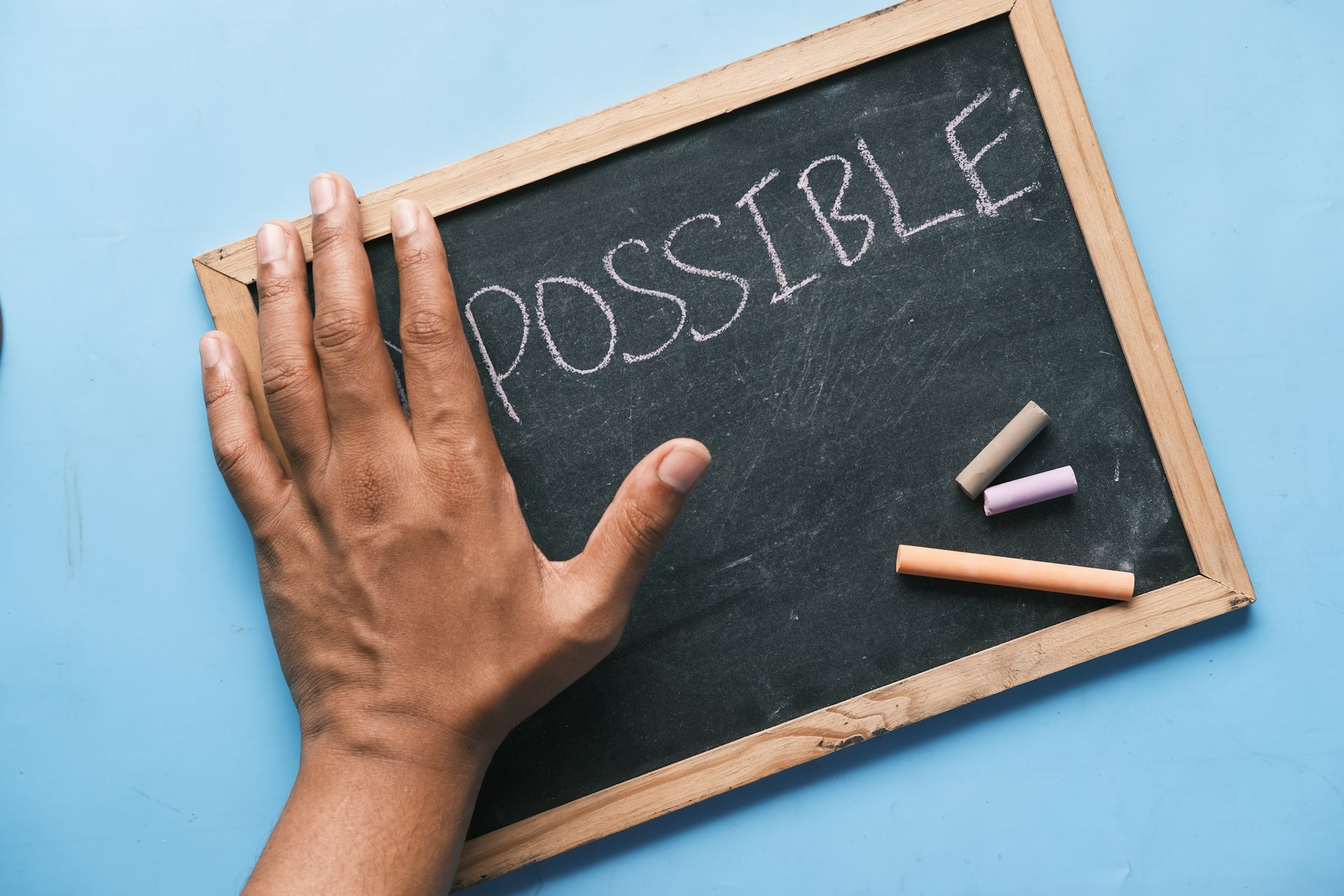
Challenge the impossible and make it possible.

Push for better.

It might take less time than you think.

h/t – my colleague, Jacob Smith.  An extremely productive and prolific software development manager who regularly challenges the default and always pushes for better.

Photo by Towfiqu barbhuiya on Unsplash

Have You Ever Seen the Rain?

I sit uncomfortably and motionless in the back of the plane. Two hours into our flight. The Credence channel beckons. I nestle into the channel’s first song, and I’m visited by a memory like a warm blanket on a frosty morning.

Someone told me long ago
There’s a calm before the storm
I know; it’s been comin’ for some time

It was the summer of ’78, or close to it. My dad was proud as he could be of our 19-foot jet ski boat. He couldn’t wait to hit the glassy sunrise waters of Lake Havasu and watch his sons ski. One, then the other.

When it’s over, so they say
It’ll rain a sunny day
I know; shinin’ down like water

Putting on a single ski binding requires a blend of finesse and strength. At least as much strength as a seventh grader can muster. The secret is to let the ski vest do the heavy lifting and just relax.

I wanna know
Have you ever seen the rain?

Moments later, the rope pulls taut, my ski is aligned just right. I’m ready and yell, “Hit it!”

I wanna know
Have you ever seen the rain
Comin’ down on a sunny day?

All 455 cubic inches of the inboard Oldsmobile engine roar to life. In seconds, the boat and the kid behind it launch out of the water.

There’s a moment, right as you break free of the lake, when all the pulling eases off at once. Water skims effortlessly under the ski.

Thoughts of speed and daring take over. I lean into my first glassy turn. My ski hums a high note as my grip tightens against the pull of the rope.

Yesterday and days before
Sun is cold and rain is hard
I know; been that way for all my time

It’s a blur of jumps and splashes. Long pulls to the side. Deep, slow turns in the opposite direction. Always a glance back to admire the rooster tail…especially when the sun catches it just right, holding the spray in the air like magic.

No time to admire it too long. Time to hammer the oncoming wake, trying to clear the other side, then do it all again. Pull wide. Pause. Dig in. Turn hard. Admire the rooster tail.

‘Til forever, on it goes
Through the circle, fast and slow
I know; it can’t stop, I wonder

The song ends, and I’m back where I started. My neighbor taps my shoulder. He needs to get to the bathroom.

We’re on our way to live new stories and make new memories. Life’s adventure continues.

I wanna know
Have you ever seen the rain?

But it sure is nice to visit with a cherished memory. Like that friend who we see less than we should…but always pick up our conversation right where we left off.

I wanna know
Have you ever seen the rain
Comin’ down on a sunny day?

No matter how long it’s been.

Photo by Ethan Walsweer on Unsplash – not a 7th grader, but a cool water skiing photo.

Splitting Logs – The Firewood’s Promise (and my “Why”)

If you were to visit me on my mountainside, next to a huge pile of bucked-up logs that I’ve cut and collected over the past year, using my fancy new log splitter, what would you see? 

A grandpa dressed in a snow suit and beanie, warding off the low-teens temperature and wind chill, wearing eye and ear protection, splitting one log after another. 

I’m stacking the split firewood into an “outdoor fire” bin (the crummy stuff that’s showing some signs of water damage that may or may not burn so great), and an “indoor fire bin” for the good stuff.  We have so much that I use IBC totes that I can forklift and move around with my tractor.   

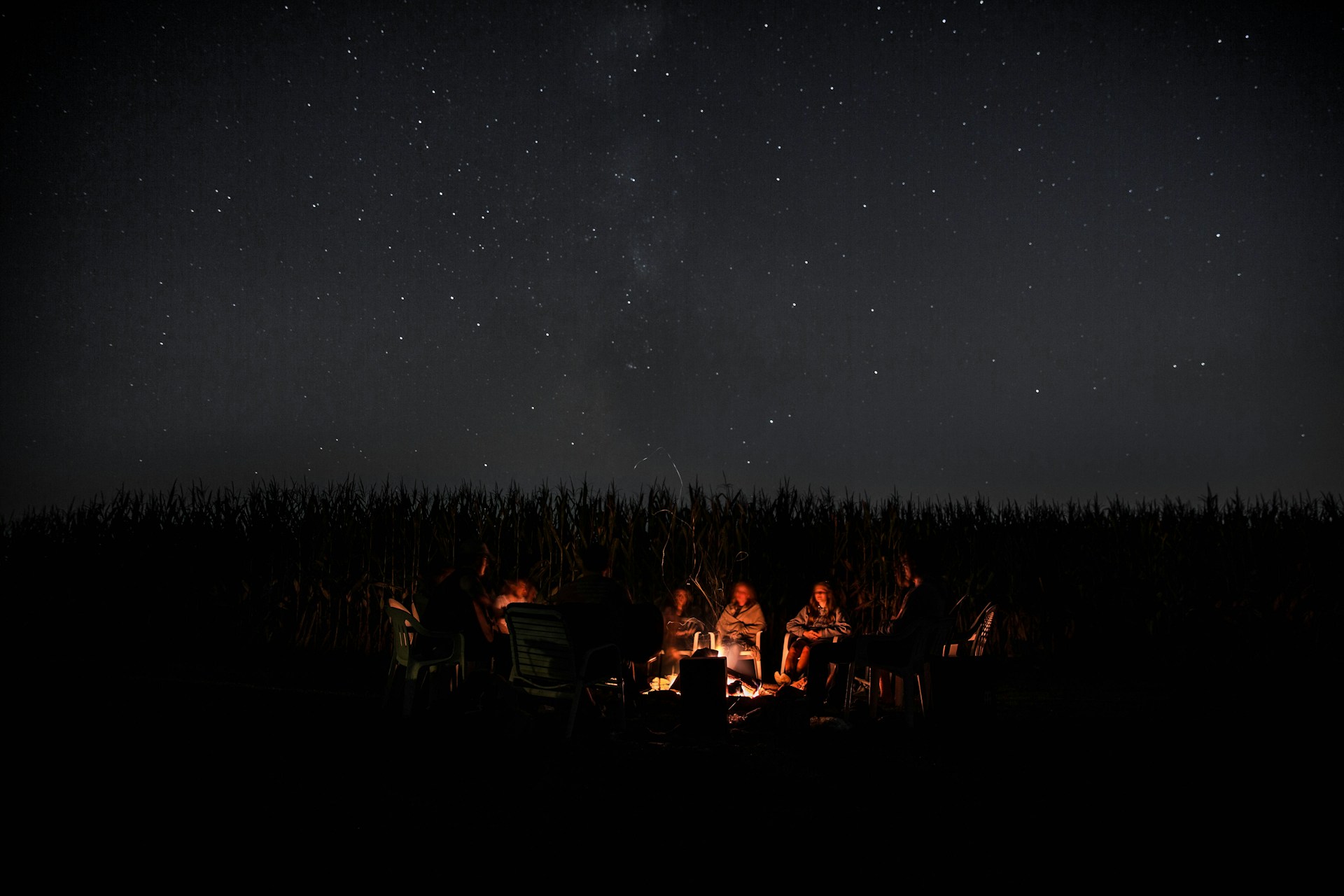
What you’d miss is what this guy’s thinking.  Of all the campfires these logs will deliver.  The warmth, the beauty, and the cheery faces reflected in the golden firelight.  The togetherness, the raucous fun, and always the smoke that’ll chase each of us in time.    

Lately, I’ve been thinking about words that rhyme with stories, memories, starlight, marshmallows, love, and family. Of a way to express my “why” behind all this work.

My new splitter hums, its rhythm is true,
Each log cracks clean, split in two.
And with each piece, I see what’s ahead—
Fires that warm, where stories are said.

Golden flames dance in their eyes,
Joyful voices filling the skies.
Kids with marshmallows on sticks they will hold,
Turning white fluff to crispy gold.

The stars above will steal their gaze,
A quiet pause from the firelight’s haze.
But soon enough, they’ll leap to their feet,
Cousins chasing cousins, the night complete.

This work is heavy, my labor long,
But in each log, I hear a song.
A promise of warmth, connection, and love,
Of smoke below and stars above.

Each crack of the wood a memory in waiting,
Moments of joy we’ll spend creating.
I keep splitting, I’ll keep the pace,
Knowing the fire will hold its place.

One split, one stack, one stick at a time,
Building a future that’s warm and divine.
A pile of firewood, yes—but so much more,
It’s family, it’s laughter, it’s life to the core.

I can’t think of a better “why” than this. 

Photo by Kevin Erdvig on Unsplash

Bringing Home the Moonbeams

There’s a line in a Frank Sinatra song that asks if we’d like to, “…carry moonbeams home in a jar.” A crazy idea. Moonbeams can’t be contained or put in a jar, but their magic can be carried home just the same. What if we could carry home the kind of wonder and light that moonbeams represent?

Life throws challenges at us every day. Deadlines. Difficult conversations. The relentless tug-of-war between expectations and reality. Yet, amid the noise, we often stumble upon moments of beauty.  Unexpected acts of kindness, moments of connection with strangers, or simply a sunrise or sunset that stops us in our tracks. These are moonbeams.

Have you ever met someone for the first time and felt their kindness so deeply that it stayed with you? Maybe it was a stranger who gave you directions with a smile, a colleague who truly listened, or someone who saw you struggling and extended their hand. These are glimpses of humanity’s greatness.  Magic moments where we see the best of who we are reflected in someone else.

What if we made it our mission to carry that magic home with us?

It’s easy to bring home the worries of the day.  Our frustrations, our stresses, our nagging self-doubt. But alongside these, we can also bring moonbeams: the small, bright moments of beauty, hope, and love that we encounter every day. We can share the wonder of a chance conversation, the joy of something new we learned, or the inspiration we felt when we saw someone overcoming adversity.

Carrying moonbeams is about being conscious of what we pass on to those we love. It’s about choosing to share curiosity instead of cynicism, gratitude instead of grumbling. It’s about being the explorer who brings back stories of the world’s beauty to share with those at home, inspiring them to see the magic in their own lives, too.

Imagine if we all carried moonbeams in our metaphorical jars. How much brighter would our homes, our communities, and our world become?

What if we could embrace the day with the motivated curiosity of an explorer. Purposely looking for the moonbeams—the fleeting magic of kindness, beauty, and connection.

Imagine carrying them home to share, not in jars, but in our words, our actions, and our presence.

Because moonbeams, once shared, have a way of multiplying.

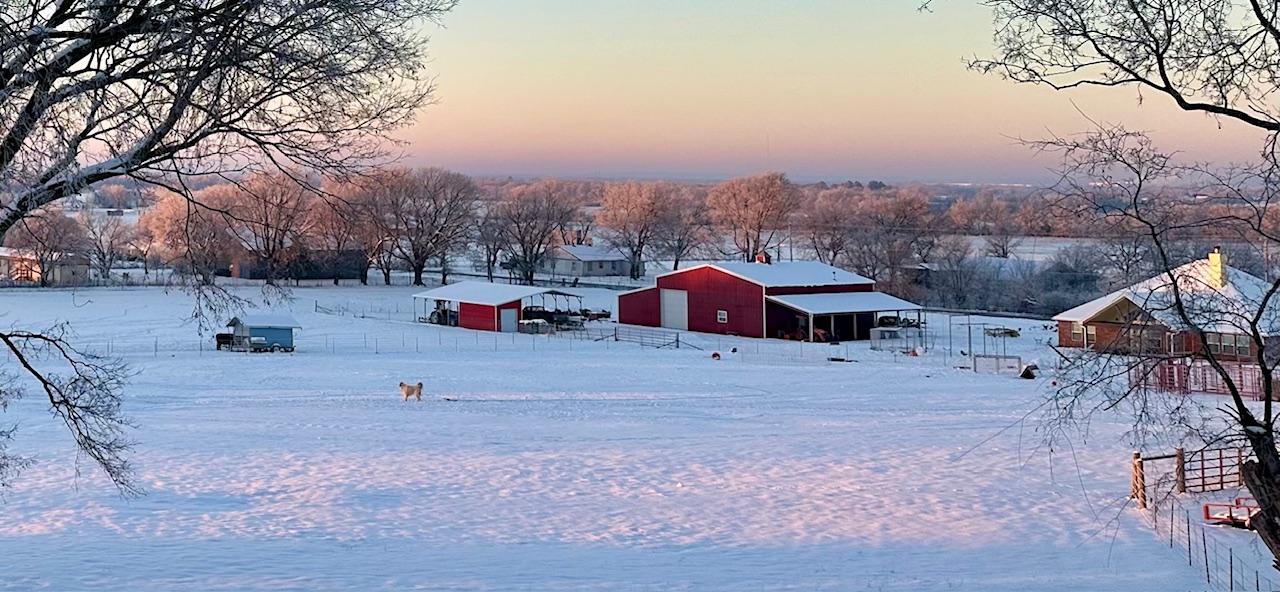
Photo by me, capturing a “moonbeam” of a sunrise view outside my kitchen window the other day

The Ribbon of Music in Our Lives

Life is a long and winding road.  Along the way, music teaches us to let it be, to take it easy, and to carry on. Sometimes, it whispers, “you’ve got a friend,” and other times it shouts, “don’t stop believing!” Through every high and low, music lifts us when we’re down and brings light to our darkest days.

It inspires us to learn to fly, take the long way home, and dream the impossible dream. It tells us to follow the yellow brick road and live like you were dying. When the world gets heavy, we can put our toes in the water, our ass in the sand and live knee deep in the water somewhere. It’s a gentle reminder to hold on loosely or to simply keep the faith.

When we’re all alone, it wraps us in a warm embrace, softly humming, “I’m with you,” and promising, “I’ll stand by you.” It keeps us company when we’re wasting away again in Margaritaville or stranded in the purple rain (whatever that is).  

Music sets the tone for life’s moments. It’s the sweet sound of silence in the still of the night, the easy rhythms of cheeseburgers in paradise, and the fiery rush of being thunderstruck. It’s the gentle plea of someone asking, “Have you ever seen the rain?” and the daring call to take a walk on the wild side. It urges us to dance in the dark and reminds us that it’s five o’clock somewhere.

It can challenge us to ask what’s going on, or who are you? It paints visions of wide-open spaces, islands in the sun, and clear mountain mornings. It reminds us that we’re merely candles in the wind and there’s never a wish better than this when you’ve only got one hundred years to live.  So, dream until your dreams come true.

Music brings us together to clap our hands, stomp our feet, and feel the beat.  It calls us to praise every morning. It’s a bridge over troubled water.  It’s an anthem of unity.  We’re rockin’ in the free world. There ain’t no stopping us now.   

Music is more than sound.  It’s a ribbon in the sky, an endless summer, a stairway to heaven, and friends shaking hands. It weaves through our lives, bringing joy to each new day.  

Take it to the limit.  Don’t stop thinking about tomorrow.

After all, music reminds us what a wonderful world it truly is.

A quick word about copyrights.  This post is my attempt to create a cohesive thematic message using as many song lyrics as possible (trust me, there are 100’s more that didn’t fit) from artists I’ve loved over the years.  Borrowing their words was a fun writing challenge, and an homage to the original artists. 

By my quick count, I’ve referenced lyrics from over 50 songs, placing them like Easter eggs or tile fragments in a mosaic.  Most are obvious and easy to find…a few may be obscure and tougher to recognize.

In the end, it’s only rock ‘n roll, but I like it.  (couldn’t resist one more).   

Photo by Kelly Sikkema on Unsplash

In the Steps of Trailblazers

I’ve probably hiked or biked hundreds, maybe thousands of trail miles in my life.  Most of the trails had been there for many years…even decades. 

Other than clearing some fallen branches from a trail or participating in a trail volunteer day, I never gave much thought to how the trails were built, or who originally built them.  They were always there.  It didn’t matter if the trails started out as animal paths, or were built by hand, carved through the forest.  The trails seemed to belong right where they were.  

My perspective shifted when we were fortunate enough to purchase acreage that includes a forested hillside, a mostly dry pond, rocky escarpments, and a meadow thick with trees and scrub brush. 

Where others may have seen a tangle of impenetrable forest, I could see trails winding through it, paths crisscrossing up and down the hill, around the pond, and maybe a little campsite down in the meadow under the tall trees. 

I had no idea where to start or where exactly the trails would go.  I just knew the hillside and meadow were calling for a trail system and a campsite that my family and friends could enjoy exploring for years to come.    

When we moved here, I didn’t own a chain saw, a tractor, or any of the fancy attachments that make tractors such useful (and fun) tools.  I had the standard set of homeowner hand tools from our lifetime of living in a tract home that didn’t have a yard big enough for a lawn.

The real work began when our new property was hit by a 90 mile per hour derecho that effectively found all the unhealthy trees and snapped them in half or knocked them to the ground.  As I worked my way across our property over the next six months, cutting and clearing all of the downed trees (40-50 trees in all), I got a ton of practice with my new chainsaws, my upgraded tractor (the small one we purchased initially didn’t cut it, so I did what every tractor guy worth his salt does when faced with this dilemma…I upsized), the 5-foot brush hog attachment, and the front loader grapple attachment. 

As I worked to complete the clearing process, I could see where new trails might go.  As I brush-hogged large swaths of overgrown scrub brush and brambles, new openings showed themselves.  In the areas where I cleared away the dead and fallen trees, nice new grassy areas greeted the sunlight that finally penetrated to the ground.  I could see how trimming up some of the remaining trees would improve the sight lines through the area. 

Once the land clearing process was mostly done, the real trailblazing process began. Deciding exactly where to cut the trails, which routes worked best given the lay of the land, the gradient of the hillside, natural features, and tree coverage.  Could I veer up and to the right a bit to maintain the trail flow while leaving more trees intact?  Will a hiker be able to maintain their footing if I use the existing (slightly) flatter terrain on the hillside?  Can I make this trail intersect in an interesting way with the other one that’s 200 yards away? 

So far, I’ve been talking about literal trails and the (rewarding) process of carving a trail system by hand into my property.  I’ve known my share of trailblazers in life and work, and I’ve even been one myself on occasion. It’s funny how, like the paths I was carving through the woods, new trails—whether they’re businesses, inventions, ideas, or methods—often seem inevitable after the fact.

Once they’re established, they feel as if they’ve always been there. But every one of those trails began with someone willing to face the unknown, to push forward without a clear end in sight, risking failure or embarrassment in the name of carving a new path. 

Only the people who actually built these trails know what it took to get there.  The obstacles that had to be moved, the dead ends they hit along the way, their moments of doubt. They alone understand the learning curve, the time, and the sheer energy it took to bring the trail to life. And as they move forward, bit by bit, the final route often ends up looking different from what they first imagined.

Our new trail system is amazing.  It has straight sections, switchback sections, offshoots, shortcuts, climbs, and descents.  Parts of the trail are under a tunnel-like canopy of thick forest and other areas open to the sky, providing amazing hilltop views.  Walking along the trails feels like the landscape was made for them…even though there were countless hours of planning, experimenting, cutting, clearing, and adapting along the way.     

Sometimes the trailblazer is driven by an obsessive need to see where the trail can go.  To see what lies over the next hill, or around the next bend.  Others visualize how their trail will be enjoyed for years (decades?) to come. 

While their motivations may differ, the result is often the same.  A path that seems to have always been, enjoyed by countless people who may never stop to wonder how it got there. 

For those who wonder, the trail offers something more than just a route.  It’s a reminder that someone, somewhere, once walked an untamed path and decided it was worth carving a trail for those who’d come later. 

Photo by Judy Beth Morris on Unsplash

Why Manners Matter

“Manners are of more importance than laws. Upon them, in a great measure, the laws depend. The law touches us but here and there, and now and then. Manners are what vex or soothe, corrupt or purify, exalt or debase, barbarize or refine us, by a constant, steady, uniform, insensible operation, like that of the air we breathe in.” – Edmund Burke

-Why do we say Please and Thank You? 

-Why do we hold the door for the next person? 

-Why do we show respect for our elders? 

-Why don’t we interrupt someone when they’re speaking (at least, most of the time)?

Mostly because we were taught these behaviors by our parents, or someone in authority, when we were growing up.  We may have learned by being told explicitly, or by watching others that we admire acting in these ways. 

As Burke points out, manners are more important than laws.  They are fundamental in establishing the boundaries of our behavior, of integrating us within our community.

Manners show our respect for those around us.  They create a standard for how we work with others.    

Consider the manners (customs) that are in play where you work.  It doesn’t matter if you work in construction, nursing, information technology, or any other field.  If you work with people (which you always do whether they are your co-workers, your customers, or both), your manner of behavior will be critical to your success. Good manners create a positive environment, build strong relationships, and foster a culture of respect and professionalism.

Since we are creatures of habit, it’s easy to establish either a habit for lacking manners, or for having them.  The disciplined decision to operate your life within the bounds of good manners is a decision that will pay consistent dividends.  Good manners can be the foundation for a disciplined approach across all areas of your life.  When we are polite and considerate, we remind ourselves of our values and our commitment to treating others (and ourselves) with dignity.

The simple act of saying “Please” and “Thank You” (and meaning it) shows our vulnerability to others, and at the same time, our appreciation for what they have done for us.  Powerful ways to remind us of our humility and gratitude many times each day. 

Edmund Burke observed, “Example is the school of mankind, and they will learn at no other.”  Our behavior and proper manners will be a teacher to those around us, whether we intend it or not.  Our actions, grounded in good manners, can inspire those around us to adopt similar behaviors.

It’s easy for each new generation to look at the rules and traditions of prior generations (manners) as archaic, overly formalized, and irrelevant in their “new modern era.”   They may rationalize away the need for good manners on this basis.  However, dismissing the importance of manners can lead to a breakdown in social cohesion. Our challenge is to adapt the principles to modern contexts while preserving the core values of respect and consideration.

Manners are a timeless currency that never loses value—so spend them generously and watch how rich life can become.

p/c Robert Collins on Unsplash

Stepping Stones or Defining Moments? The Choice is Yours

Life is filled with stepping stones—moments that can either define us or simply become a small part of our journey.

When faced with challenges or opportunities, we can see them as just another step or as a moment for growth and clarity. Carl Jung once said, “I am not what happened to me, I am what I choose to become.”

I recently re-watched a documentary about the Navy SEALs.  Every Navy SEAL candidate faces grueling hardships: physical exhaustion, frigid cold water, mental strain, and the constant threat of failure.

Some candidates see each challenge as an opportunity, a chance to push beyond their perceived limits and grow stronger. They embrace the pain, keep their focus.  They find strength in their determination and their fellow candidates. These candidates transform the hardships into defining moments, emerging on the other side as Navy SEALs.

Others, however, let the same hardships overwhelm them. Fear, frustration, and exhaustion cloud their resolve. The challenges, instead of being opportunities for growth, become insurmountable barriers. These candidates wash out, not because they lacked physical capability, but because they couldn’t shift their mindset to see the hardships as stepping stones rather than obstacles.

None of us are born with skills.  It’s easy to watch some Youtube videos and think woodworking is totally doable.  Any new woodworker can attest to the uneven cuts, the wobbly joints, and the frustrations that can come from trying this new hobby.  But, by learning from the mistakes, honing skills through practice and even more failures, projects begin to go more smoothly.  The final products are less uneven and wobbly…and the process becomes much more enjoyable.    

Learning and growth come from our willingness to take lessons from every experience. Reflecting on each attempt, seeking feedback, and choosing to improve.  It’s the decision to learn from every encounter that turns these stepping stones into personal and professional development milestones.

However, clouding our experiences with fear, frustration, anger, or other limiting emotions can lead us to ignore the growth opportunities these experiences present. When we let negative emotions dominate, we risk missing out on valuable lessons that can propel us forward.

It’s difficult, but essential, to manage our emotions and maintain a positive outlook to fully benefit from the lessons we can learn. 

The stepping stones in our lives are all potential defining moments. It’s up to us to decide whether we let them pass by or seize the opportunity to let them shape us. We can turn every step into a defining part of our journey.

It’s not just about the stones we step on but how we choose to step on them that defines our path.

p/c – Joshua Earle, Unsplash.com