Everyone loves the big idea. The bold plan. A strong vision of what can be.
It’s easy to get excited about an amazing result. A finished project, a better version of ourselves, a breakthrough moment. But big plans mean nothing without the tools and materials to carry them out.
Goals and aspirations get a lot of attention. Preparation, usually not so much.
Preparation isn’t glamorous. No one sees the early mornings, the quiet practice, the reading, the repetitions, the small decisions and adjustments that come from thinking deeply about how to be better. But that’s where everything starts. That’s the real work.
You can’t build a tower by imagining the top floor. You start by stacking bricks. And before that, you must gather the bricks. Along with mortar. Along with the tools to lift, cut, measure, and shape. That’s what preparation is. Gathering what you’ll need to be ready when it’s time to build.
This applies to everything in life.
Want to be a better leader? Prepare by learning how to listen, how to stay calm and think under pressure, how to help your team to be their very best.
Want to level up at work? Prepare by always sharpening your skills, staying curious, looking for problems that need solutions, becoming someone your team can rely on.
Want to be a better friend, spouse, or parent? Prepare by learning to listen, to be present, and to lead with patience and love.
Want to face hard times with strength? Prepare by choosing the hard things before they choose you.
Don’t wait for life to demand something from you before you get ready. Always prepare so you willbe ready.
Ask yourself: -What materials am I gathering?
-What tools am I building?
-What productive habits am I forming when no one’s looking?
Preparation isn’t just a phase. It’s a mindset. A lifestyle.
You’re either gathering bricks—or you’re preparing to fail.
Because in the end, you won’t rise to the level of your ambition.
You’ll fall to the level of your preparation.
h/t – my friend Pete Hilger as we were discussing how to get building supplies to a rural Guatemalan city for a medical facility build project. He tossed out the line, “You can’t build a tower without first gathering a lot of bricks and mortar.”
The blinking cursor on a blank document. The empty stretch of land where you’ll soon be building a shop. The new web application your company wants to develop that will revolutionize your industry. These are just a few examples of standing on the edge of something new, something important, yet feeling completely unsure of where to begin.
You might have a vision of the final result—the finished document, the completed shop, the fully functioning app. But that doesn’t mean you know how to get there.
It’s easy to get lost in the variables and the endless possibilities. What if I make the wrong decision? Are there more resources out there? What do other people think? Should I read more articles? Watch more videos? Seek more advice? What if I mess it all up?
In every case, the hardest part is starting.
It’s taking that first step. Writing the first sentence. Sketching out the first screen of an app. Nailing the first stakes into the ground—the ones you’ll attach a string to, so you can visualize where your new shop will go.
It’s a commitment to action over hesitation. A moment of bravery that marks the beginning of making something real.
An amazing thing happens when you start. Your mind shifts from a place of endless “what-ifs” to a place of positive motion. You begin to focus on the next steps and real solutions. All the challenges you imagined before starting—that, in many cases, won’t even come to pass—are forgotten. The path ahead becomes clearer, and each small step forward makes your next decision easier.
Does this mean everything goes perfectly after you start? Of course not. You’ll make mistakes, adjust, learn, and pivot along the way.
But here’s where starting becomes crucial: it provides a tangible foundation. It gives you something to measure against, something to refine, something to edit. You might completely change your initial idea, but you wouldn’t have discovered the need to change if you hadn’t started.
Starting is hard, but it’s also the most important part.
Take the first step, even if it feels uncomfortable. You’ll learn more from those first few steps than you will from standing still…wondering what might happen.
Once you start, momentum kicks in. And from there, the possibilities are endless.
If you were to visit me on my mountainside, next to a huge pile of bucked-up logs that I’ve cut and collected over the past year, using my fancy new log splitter, what would you see?
A grandpa dressed in a snow suit and beanie, warding off the low-teens temperature and wind chill, wearing eye and ear protection, splitting one log after another.
I’m stacking the split firewood into an “outdoor fire” bin (the crummy stuff that’s showing some signs of water damage that may or may not burn so great), and an “indoor fire bin” for the good stuff. We have so much that I use IBC totes that I can forklift and move around with my tractor.
What you’d miss is what this guy’s thinking. Of all the campfires these logs will deliver. The warmth, the beauty, and the cheery faces reflected in the golden firelight. The togetherness, the raucous fun, and always the smoke that’ll chase each of us in time.
Lately, I’ve been thinking about words that rhyme with stories, memories, starlight, marshmallows, love, and family. Of a way to express my “why” behind all this work.
My new splitter hums, its rhythm is true, Each log cracks clean, split in two. And with each piece, I see what’s ahead— Fires that warm, where stories are said.
Golden flames dance in their eyes, Joyful voices filling the skies. Kids with marshmallows on sticks they will hold, Turning white fluff to crispy gold.
The stars above will steal their gaze, A quiet pause from the firelight’s haze. But soon enough, they’ll leap to their feet, Cousins chasing cousins, the night complete.
This work is heavy, my labor long, But in each log, I hear a song. A promise of warmth, connection, and love, Of smoke below and stars above.
Each crack of the wood a memory in waiting, Moments of joy we’ll spend creating. I keep splitting, I’ll keep the pace, Knowing the fire will hold its place.
One split, one stack, one stick at a time, Building a future that’s warm and divine. A pile of firewood, yes—but so much more, It’s family, it’s laughter, it’s life to the core.
There’s a saying that often floats around in entrepreneurial circles: “Fail fast, fail often.” While the origins of this phrase are up for debate, its lesson is clear. Failure isn’t just an inevitable part of leadership. It’s one of the most defining. How a leader reacts to failure (their own or their team’s) can reveal their true character and shape the trajectory of their future success.
But here’s the thing: writing about failure and leadership can quickly sound like a series of cliches. We’ve all heard the platitudes about “learning from mistakes” and “rising stronger.” But there’s a deeper message about what truly separates those who lead with integrity and vision from those who crumble when things go wrong.
When failure strikes, leaders face a choice. They can own it, adapt, and come back stronger. Or they can point fingers, wallow in resentment, and stall out. The decision often happens in an instant, but its impact can last a lifetime.
Great leaders take ownership of failure, even when it’s not entirely their fault. Why? Because owning failure builds trust. When a leader says, “This didn’t go as planned, let’s discuss what we’ll do to fix it,” they inspire confidence. They create a culture where the team feels safe to take risks, knowing that mistakes are part of growth, not reasons for punishment.
When leaders blame others, they erode trust. Pointing fingers, whether at the team, external circumstances, or bad luck, signals an unwillingness to reflect and adapt. Over time, this creates a toxic environment where innovation dies and progress stalls.
“Fail fast, fail often” isn’t about being reckless. It’s about embracing experimentation and accepting that not every idea will succeed. Failing quickly means you can pivot sooner, learn faster, and ultimately get to a better solution.
This idea requires two things:
Humility: The willingness to admit when something isn’t working.
Agility: The ability to adapt and try again without becoming paralyzed by setbacks.
Elon Musk is a great example. From continual iterations of experimentation and failure at SpaceX—including multiple RUDs (rapid unscheduled disassembly in rocket speak)—to the challenges Tesla faced in scaling production and support, he’s built companies on the idea of learning through failure. Musk doesn’t see failure as an end point. He sees it as feedback. A necessary step on the path to success.
To handle failure effectively, leaders need more than optimism. They need a process. Here’s a simple approach that works (notice I didn’t say it’s an easy approach):
-Recognize the failure and what it means. Be transparent with your team.
-Reflect on what went wrong without assigning blame. Focus on systems and strategies, not personal shortcomings.
-Identify key takeaways. What worked? What didn’t? What’s worth trying again?
-Adjust your approach based on lessons learned.
-Recommit to the goal with a renewed focus and determination.
Failure doesn’t only teach leaders how to solve problems. It shapes their emotional intelligence (if they allow it). Leaders who’ve faced setbacks tend to have more empathy and patience. They’ve had to overcome multiple failures themselves, so they know how challenging failures can be for their teams.
When leaders normalize failure, they create cultures where people aren’t afraid to take risks or push boundaries. That’s where breakthroughs happen.
The mark of a true leader isn’t perfection. It’s how they handle failure. Whether they embrace it as a teacher or fear it as an enemy. The choice of owning mistakes, adapting, and persevering defines not just their success, but the success of everyone they lead.
The next time failure arises, ask yourself: Will I let this moment shape me for the better? Will I lead my team through it with grace and determination? Will we learn from this failure?
The answers will set the course for everything that follows.
Zig Ziglar once said, “It was character that got us out of bed, commitment that moved us into action, and discipline that enabled us to follow through.”
This perfectly describes the driver of true achievement. It’s not just the initial desire or excitement that propel us, but the dedication to stick with something until the end.
I accidentally saw this idea come to life during a recent road trip. I stopped by a taco shop. It happened to be near a beach and was clearly a popular local destination. The tacos were excellent, but that’s not the point of this story.
As I sat on the patio eating my carnitas tacos and enjoying the view, I couldn’t help overhearing a conversation at the table that less than two feet away. Two early-twenties (by my estimation) men were talking about how amazing the surfing had been earlier that morning.
I got from the conversation that they had been surfing together since they were teenagers and this morning’s session was a long-overdue reunion of sorts since they hadn’t surfed together in quite some time.
One of them made a comment that stuck with me: “Surfing is the only time I’m really alive. I know what I’m doing and can feel the water telling me what to do. I wish I could get that kind of fulfillment out of the rest of my life. I feel like I’m just wandering around, waiting until I can surf again.”
It wasn’t long before his friend responded, “I know what you mean. I’ve had to settle down these past couple of years. I got a dog, and it’s been a lot of responsibility, but he’s amazing. He loves the beach, so I take him there as often as I can.”
Then came the real kicker. The first guy, the “wandering” one, responded, “Maybe that’s something I should do. I can’t get motivated at work and just want to quit. Maybe getting a dog would help me commit to the work.”
He used an extremely important word—commit. It was evident these two men are deeply committed to surfing. It’s their passion, and it gives them a sense of fulfillment that’s absent in other areas of their lives. Surfing isn’t something they merely do—it is something they live for. But beyond surfing, they lack the same kind of dedication. Their passion for the sport brings them joy because they are fully invested in it, heart and soul.
The wandering friend’s dilemma isn’t uncommon. Many people struggle with finding motivation in their daily lives. They haven’t truly committed to something that extends beyond their comfort zone or personal hobbies. They desire fulfillment without realizing that commitment is often their missing link.
It was as though this young man had stumbled upon the key to unlocking motivation and purpose: he needed to commit. Whether it is work, relationships, or another area of his life, the power to find meaning and fulfillment can only come from his willingness to fully invest in something.
Goethe once said, “At the moment of commitment, the entire universe conspires to assist you.” This idea aligns with the realization that real fulfillment only comes from investing fully in what we do. When we are all in, we aren’t just going through the motions—we are owning the process, taking charge of the outcome, and continually working toward our goals.
The wandering surfer may never have thought about his job as something worth committing to. To him, it was just a means to an end, something he had to do so he could afford to spend time doing what he really wanted—to surf. But if he can shift his mindset and fully invest in his work with the same passion and dedication he gives to surfing, the fulfillment he seeks might not seem so elusive.
Fulfillment doesn’t come from merely reaching a goal or winning a trophy. As Cardinal Pell put it, “Commitment to a worthwhile goal brings fulfillment and meaning, even if the path is difficult.” The true joy and deep sense of satisfaction come from the commitment itself—the effort, discipline, and perseverance that drive us toward our goal.
If you’re handed a trophy without having worked for it, it’s meaningless. You know deep down that you didn’t earn it, didn’t push through the challenges, didn’t grow in the process. But if you earn that trophy through your own hard work and dedication, it’s a symbol of something far greater than the achievement—it’s proof of your commitment.
In the end, what we commit to is what brings meaning to our lives. Whether it’s our relationships, our careers, or even something as personal as surfing, the act of giving our all, of pushing through the hard times, is what fills us with a sense of purpose.
The wandering surfer wasn’t lost because he lacked passion; he was lost because he hadn’t fully committed to anything beyond the waves.
To truly live a fulfilling life, we must commit wholeheartedly. When we do, we’ll find that the truest sense of fulfillment comes from the dedication and growth that only commitment can bring.
A professional manager understands that managing is an active role. It requires proactive effort, not just sitting back and overseeing tasks. A good manager knows how to delegate responsibility and authority. It’s a key skill that helps multiply their impact and develop the next generation of leaders.
There’s no shortage of books and articles that dive deeply into the art of delegation. Many are worth reading and putting into practice. But here’s the thing: no matter how much you delegate, you can’t delegate your influence. That personal touch—the way you listen, share your perspective, and guide the conversation—is something only you can bring to the table.
Managers have a unique viewpoint. They understand the critical questions facing the organization in a way others often don’t. Their value lies in their ability to communicate directly, to really hear what’s being said (and often what isn’t), and to guide the organization toward the right path. That’s what makes their influence so crucial.
Now, picture this: a manager sends one of their team members to a meeting with internal customers. The goal? For the subordinate to represent the manager’s ability to listen, understand, and guide the discussion. Sure, it can work if that person has full decision-making authority and can make agreements that hold the manager accountable. But that’s rarely the case.
So, we come back to the reality: a manager has to prioritize where they spend their time and energy, making sure they’re showing up where their influence is most needed. It’s not just about sitting in meetings or making decisions on the fly—it’s about really understanding the dynamics in play, both spoken and unspoken.
A manager’s influence over the direction of projects, processes, and people can’t be handed off. At best, subordinates can carry a “shadow” of that influence. It might get the job done, but it’s not likely to push the organization in the bold direction it needs to go.
In the end, while delegation is a powerful tool, influence is personal. And if you’re serious about leading, you need to make sure you’re showing up where it counts.
Early in my career, during my time as an internal auditor, I learned a lot about people. I spent countless hours observing and interacting with individuals at all levels of organizations, from front-line employees to CEOs. This unique vantage point taught me a foundational lesson: the success of any organization usually hinges on the character and behavior of its leaders.
In our small audit teams, we developed a shorthand to quickly convey our impressions of the people we interviewed. We’d use these labels —like Adam Henry and Don Henry— to help summarize complex personalities in a few words. After interview meetings, we might describe our interviewee as a good guy, a solid operator, an Adam Henry, a Don Henry, or perhaps someone who was DUP, or DUC.
Let me translate those last four:
Adam Henry – Asshole
Don Henry – Dickhead
DUP – Definitely Unpleasant (not quite an Adam Henry)
DUC – Definitely Unclear (meaning they seemed like an idiot)
What’s the difference between an Adam Henry and a Don Henry? While both are problematic, the distinction lies in their approach and the impact on those around them. Adam might be uncooperative and arrogant, but Don takes it a step further—using their position to intimidate others and make them feel as dumb as possible. Don loves to belittle people and fosters a toxic environment that stifles collaboration and creativity.
Were our shorthand judgments fair? They may not have been, but they were usually quite accurate based on our interactions. Remember, most people are on their “best” behavior when talking to an auditor (even though most of us would rather not talk to auditors). Imagine if they weren’t on their best behavior.
These judgments, though informal, often reflected deeper truths about the individuals we encountered. A company with too many Don Henrys, for instance, might struggle with low morale, high turnover, and a lack of innovation—challenges that will cripple long-term success.
There was nothing special about us, as auditors, making these assessments of the people we were interviewing. All of us make these assessments as we work with other people. These same assessments are being made about us by other people all the time.
Is this person a good guy, a strong operator, a pleasant person, a team player? Or are they on the opposite end of the spectrum? Should I trust this person to have my best interests at heart, or are they solely in this for their own gain at all costs?
Companies of all sizes, no matter the industry, are made up of human beings, working as a group (hopefully as a team, but not always) to achieve key goals (hopefully the organization’s goals).
If the people who manage a company are Adam Henrys, or worse—Don Henrys, that organization will have difficulty succeeding. They might succeed in the short term, but over a multi-year time horizon, these negative traits in the people managing the business will lead to poor morale, declining creativity, declining teamwork, and declining execution.
Recognizing and addressing “Don Henry” behaviors is crucial for any organization aiming for sustained success. Leaders who prioritize their team’s well-being, encourage collaboration, and foster a positive work environment are far more likely to achieve lasting results.
The next time you’re interacting with colleagues, ask yourself: Am I being an Adam Henry, a Don Henry, or something better?
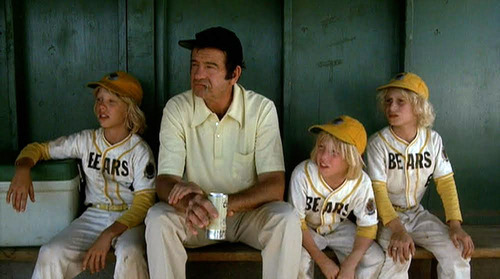
Park league baseball season came to an end recently. We had four grandsons between the ages of 8 and 10 playing on teams. The teams had a few “veteran” players, but for most of the players this was their first experience playing organized baseball. They had a lot to learn…and we saw amazing improvements in all the players in one short season.
It’s clear that the lessons they learned can extend far beyond the field, if we are willing to pay attention.
Panicking When the Ball Comes
My most vivid memory from the season is seeing the panic for many of the kids when the ball would come their way. Will they catch the ball? Where will they throw it once they have it? Do they know why they’re throwing it in a particular direction? Will the player they’re throwing to catch the ball?
The drama was real. It was clear that a lot of the kids didn’t expect the ball to come toward them. I saw a few kids jump away from the ball to avoid fielding it.
As a spectator, it’s easy to see what’s happening. It’s easy to assume that surely, we’d field the ball properly, and immediately know where to go with the play.
It’s not always as easy as it looks. Unexpected situations arise, and our response (or lack thereof) can significantly impact what happens next. Learning to stay calm and doing some pre-thinking about our actions (before the play) will significantly improve our chance of success.
Understanding Game Situations
Many young players struggle with understanding the game situation—who’s on base, how many outs are there, what’s the best play to make when the ball comes to them, and how to act strategically.
This lack of situational awareness highlights a crucial lesson: the importance of context and awareness in decision-making. Understanding the bigger picture allows for more informed and effective actions. The coaches encouraged the kids to think ahead (pre-thinking) and consider various outcomes. Whether the kids listened and embraced their advice was another thing entirely.
Are you thinking about your “game” situation? The macro and micro aspects of the challenges you and your organization are facing. Are you thinking ahead and considering various outcomes as part of your decision-making process?
Learning the Basics: Throwing and Catching
It’s not uncommon for young players to throw the ball the wrong way or miss it entirely. These fundamental skills require practice and patience. This aspect of the game underscores the importance of mastering basics before tackling more complex tasks. In any field, solid foundational skills are essential for success. Nearly every pursuit or profession has basic foundational skills that need to be mastered along the way toward more advanced skills. A football analogy fits well here…it’s important to understand the blocking and tackling part of the game before you can advance to running with the ball.
Position-Specific Skills and Aspiration
In youth park league baseball, most of the hits stay in the infield. This leaves the outfielders without much to do. I heard lots of outfielders wishing they could play an infield position like second base, or catcher. None of them understood what those positions entailed, but they knew that those positions had more action.
A few of them took the time to learn about the infield positions from their coach. They showed their interest and willingness to work their way to the infield. This shows the value of preparation and skills development. It’s important to work on the necessary skills before aiming for a specific role, whether in sports or any other endeavor. It also emphasizes the value of seeing a goal and then taking the concrete steps to learn, grow, and achieve that goal.
Strikeouts Aren’t Failures
Consider that an excellent hitter in the big leagues gets a hit about 30% of the time. They may get walked occasionally, but the rest of their at bats result in fly outs, ground outs, or strikeouts.
We saw a ton of strikeouts this past season. I was always impressed with the kids who struck out and immediately came back to the dugout to ask their coach what they should be doing to avoid striking out next time. Each strikeout was a learning opportunity…but only if the player saw it that way.
We saw a few kids melt down in disappointment and embarrassment. One kid from an opposing team stomped off the field and took himself out of the game (an extremely negative response to be sure).
When things go wrong, or we don’t get the result we want, that’s the time to buckle down and learn why it happened. Consider ways to improve so the results can improve next time. It’s only a failure if you give up.
Teamwork and Collective Goals
We are all self-centered. As we mature, we usually learn how to control our self-centeredness or at least how to channel it productively. Ten-year-old kids are no different. Their focus is on their own performance. Whether or not they’re hitting the ball. Whether or not they made the right play.
They often forget that the goal is for their team to win. They can help the team achieve that goal by having a strong performance, but also by helping and supporting their teammates. This is a powerful reminder of the importance of teamwork and the collective effort required to achieve a common goal. It’s easy to get caught up in individual performance, but true success usually comes from working together and supporting each other. Collaboration and shared successes build strong teams. Strong teams create successful outcomes.
Consistency Matters
Ask an excellent bowler, pitcher, batter, shooter (basketballs or bullets), pole vaulter, or pickle ball player how they deliver such excellent results. They’ll mention practice, dedication, and a strong mental approach. Eventually they’ll talk about consistency. Each of these pursuits (and countless others) require consistency above all else. The exact motions, body positions, eye contact, and calmness of breath that they can count on happening whether they consciously think about it or not.
Their practice process is all about achieving repeatable actions that their body remembers…every time. They also know that they aren’t swinging for the fences every time they’re at bat, not trying to set the world record or do something extraordinary with every outing.
They are working to become a steady and consistent performer at the highest level possible…and always reaching a little higher.
Consistency, patience, and incremental progress should be the goals…repeatable excellent outcomes will happen as a result of achieving these goals.
Park league baseball is a ton of fun. The drama is real. Teams experienced the “thrill of victory and the agony of defeat” throughout the season. We saw players improving and gaining confidence as the season unfolded.
I don’t know where the teams ended up in the standings at the end of the season.
I know the kids learned a lot and hopefully they’ll incorporate some of what they learned well beyond the game.
Management is an active responsibility. It requires timely decisions and actions.
When managers delay addressing issues, providing support, or offering guidance, it has detrimental effects on both employees and their organization. This form of extreme procrastination, delayed management, erodes trust, hinders efficiency, and can cause long-term damage.
Delayed management occurs when managers, consciously or subconsciously, avoid performing their duties. They may fear confrontation, they may be overwhelmed, or they might just be lazy. Unlike regular procrastination, delayed management specifically involves neglecting critical managerial responsibilities.
When managers delay, employees feel neglected and undervalued. This can lead to decreased motivation and trust. Employees might interpret the manager’s inaction as a lack of belief in their abilities or interest in their well-being. Delayed management stalls projects and misses opportunities.
Picture a small water leak in your walls that goes unnoticed for weeks. The water continues to seep, causing mold to spread and wood to rot. By the time you notice the damage, extensive repairs are necessary. Delayed management causes similar deterioration within an organization, where small issues fester and become major problems.
Managers may fear making the wrong decisions or confronting difficult situations, leading to a cycle of inaction. High workloads and stress can cause managers to feel overwhelmed, making it easier to delay tasks. Some managers assume that someone else will handle the problem, leading to inaction.
Each of these are reasons, not excuses, for delaying management. For employees, none of these reasons matter. The employees’ success relies on their managers doing their job…providing direction, feedback, and expending management energy on behalf of their employees. There is no excuse for delaying management.
Managers should adopt proactive techniques such as regular check-ins with team members and timely feedback. Setting aside dedicated time each day for management tasks can help prevent delays. Effective delegation can distribute workload and empower team members, reducing the burden on managers. Implementing systems to hold managers accountable for their actions ensures they remain committed to their responsibilities. Regular performance reviews and feedback loops can help identify and address delayed management behavior early on.
Delayed management is a silent threat that undermines employee trust, hinders organizational efficiency, and causes long-term damage. Managers can foster a positive work environment and drive organizational success…but only if they do their job without delay.
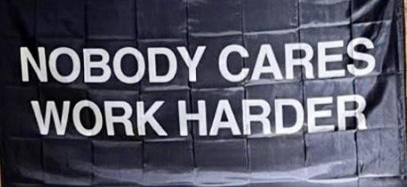
p/c – I saw this sign recently and loved its simple and direct message
Life is filled with stepping stones—moments that can either define us or simply become a small part of our journey.
When faced with challenges or opportunities, we can see them as just another step or as a moment for growth and clarity. Carl Jung once said, “I am not what happened to me, I am what I choose to become.”
I recently re-watched a documentary about the Navy SEALs. Every Navy SEAL candidate faces grueling hardships: physical exhaustion, frigid cold water, mental strain, and the constant threat of failure.
Some candidates see each challenge as an opportunity, a chance to push beyond their perceived limits and grow stronger. They embrace the pain, keep their focus. They find strength in their determination and their fellow candidates. These candidates transform the hardships into defining moments, emerging on the other side as Navy SEALs.
Others, however, let the same hardships overwhelm them. Fear, frustration, and exhaustion cloud their resolve. The challenges, instead of being opportunities for growth, become insurmountable barriers. These candidates wash out, not because they lacked physical capability, but because they couldn’t shift their mindset to see the hardships as stepping stones rather than obstacles.
None of us are born with skills. It’s easy to watch some Youtube videos and think woodworking is totally doable. Any new woodworker can attest to the uneven cuts, the wobbly joints, and the frustrations that can come from trying this new hobby. But, by learning from the mistakes, honing skills through practice and even more failures, projects begin to go more smoothly. The final products are less uneven and wobbly…and the process becomes much more enjoyable.
Learning and growth come from our willingness to take lessons from every experience. Reflecting on each attempt, seeking feedback, and choosing to improve. It’s the decision to learn from every encounter that turns these stepping stones into personal and professional development milestones.
However, clouding our experiences with fear, frustration, anger, or other limiting emotions can lead us to ignore the growth opportunities these experiences present. When we let negative emotions dominate, we risk missing out on valuable lessons that can propel us forward.
It’s difficult, but essential, to manage our emotions and maintain a positive outlook to fully benefit from the lessons we can learn.
The stepping stones in our lives are all potential defining moments. It’s up to us to decide whether we let them pass by or seize the opportunity to let them shape us. We can turn every step into a defining part of our journey.
It’s not just about the stones we step on but how we choose to step on them that defines our path.








 Grandpa Bob Encouraging Leadership
You must be logged in to post a comment.