It’s like having a guy working the door at a nightclub, deciding who or what gets in.
We assume we already know everything, so we stop listening. We nod politely. But inwardly we’ve already dismissed the person speaking. Or the article. Or the correction.
There’s often good reason for our defensiveness. Being wrong about something important can have real consequences. Our ego is trying to protect us from the genuine discomfort and potential costs of being mistaken.
The paradox is that the very thing protecting us from being wrong in the moment often prevents us from being more right in the future.
What if instead of having a bouncer who turns everyone away, we hired a smarter gatekeeper? One who doesn’t just protect us from being wrong, but actually helps us get better at being right?
What if we treat new information, even the stuff that contradicts what we think we know, as an invitation?
An opportunity to level up. To upgrade our understanding. To sharpen our thinking.
What happens when we level up? Our predictions start getting more accurate. Our explanations become clearer and more useful to others. We catch our own mistakes faster…sometimes before they even leave our mouth. We become more curious about the very areas we feel most certain.
The next time someone disagrees with you or presents information that challenges what you believe, pause before your ego’s bouncer slams the door.
Ask yourself, “What if they’re right? Can I learn something new?”
This doesn’t mean accepting everything that comes your way. But you can listen. Examine the ideas. Question them. Test them against what you know.
That’s true intellectual courage.
And it’s the only way to keep growing in a world that never stops changing.
“It is impossible for a man to learn what he thinks he already knows.” – Epictetus
I sat down recently to write a letter to my cousin (technically my first cousin once removed), who just started basic training in the Air Force.
What began as a quick note turned into something more. A personal reflection, a bit of a manifesto, and a stack of lessons I wish someone had handed to me when I was just setting out.
By the time I hit “save,” I realized this may be worth sharing with any young person taking their first real steps into the adult world.
The letter was full of life updates, jokes, birthday party planning, movie recommendations, and the occasional 10-year-old version of myself asking random questions. But the main message was you can do hard things, and you’re not alone.
What follows are some ideas that come from years of learning, leading, failing, and reflecting. These are lessons for anyone who finds themselves on the edge of something new.
Leadership begins and ends in your head. Most of your real battles are internal. That voice in your head? It can lift you up or hold you back. Especially in an environment full of rules and pressure, how you think will define who you become. Supportive self-talk, resilient thinking, steady choices. These are the foundational traits for leadership.
Start before you’re ready. Showing up takes more courage than people realize. You will rarely have everything figured out before you begin. Your best opportunities for growth will come from figuring things out while under pressure. That discomfort you feel is a sign that you’re on the edge of growth.
Do the next right thing. When life gets overwhelming (and it will), it helps to stop trying to solve everything all at once. Pause. Breathe. Do the next right thing. That’s enough. The bigger picture tends to take care of itself when we’re faithful and focus on the next indicated step.
You belong here. The feeling that maybe you’re not ready, or that someone else would be better suited for the challenge in front of you. That’s normal. But it doesn’t mean you don’t belong. The truth is you do belong. You’ve earned the right to be where you are. And you’re growing stronger every day, even if it doesn’t feel like it in the moment.
Respect is the foundation of everything. Not just the kind of respect that comes from rank or titles, but the kind you live out through humility, consistency, and quiet honor. When you offer that kind of respect, you build trust. And trust is what makes people want to follow your lead.
When the going gets tough, remember why you started. Every hard day will test your resolve. Every early morning, every setback, every lonely hour…these are the places where you’ll either lose sight of your purpose or anchor more deeply into it. Purpose doesn’t remove difficulty, but it gives meaning to the difficulty. And that’s enough to carry you through.
Discipline equals freedom. I shared this piece of advice that comes from Jocko Willink, former Navy SEAL, war veteran, and a powerful voice on discipline and leadership. He says, “Discipline equals freedom.” The more discipline you have, the more freedom you gain.
Discipline gives you control. Over your body, your mind, and your choices. Freedom to choose your future. Freedom to trust yourself. Freedom to follow through, especially when motivation fades.
You won’t always feel motivated. That’s okay. Stay disciplined. Show up. Do the work. That’s how you earn freedom. One decision at a time.
“Don’t wish it were easier. Wish you were better.” A classic quote from Jim Rohn. There’s no shortage of obstacles. The goal isn’t to escape them. It’s to grow strong enough to rise above them. The learning curve is real. Learn, adapt, overcome…become better and things will become much easier.
About those movie recommendations I mentioned earlier. It’s probably more accurate to call them story recommendations. Stories about honor, resilience, human ingenuity, and the willingness to keep going when things are difficult.
We Were Soldiers, an amazingly good movie about strategic servant leadership (which is my preferred style of management), bravery, and the love that comrades in arms have for one another. It’s a great tribute to the men who fought (many who gave their lives for the guy next to them) and their brave families back home. I think I’ve seen it at least 25 times and I’m happy to watch it anytime. Each time I watch it, I tear up in at least 2 or 3 places in the movie.
Ocean’s 11 and The Sting, two films that focus on creative problem solving and teamwork…though our “heroes” in these movies are con men and thieves.
The Princess Bride made the list. The value of honor (even among combatants), mixed with the comedic and spoofy scenes make it a classic. Even in a world of duels and danger, kindness, respect and loyalty still matter.
I suggested Seveneves by Neal Stephenson. A science fiction novel (my favorite genre for at least the past 10 years) about human survival, adaptation, and rebuilding civilization after catastrophe. The premise is that an asteroid causes the moon to shatter. What starts out as an oddity in the sky becomes a calamity as the moon breaks up into a ring and then begins to rain down to Earth (something they call the Hard Rain). Great sci-fi, lots of human ingenuity and adaptability, and a story that covers about 5,000 years. It’ll take some time to read, but it’s worth it.
Two books by Andy Weir. The first is The Martian (which became a movie starring Matt Damon), and the second is Project Hail Mary. Andy wrote The Martian in 2011 and self-published it on Amazon. It picked up fans and became a bestseller without an “official” publisher. His second book was called Artemis (takes place on the Moon). It was good, but not quite as good as The Martian (which is a high standard, so I’m probably being unfair).
His third book was Project Hail Mary. This one is also being made into a movie, starring Ryan Gosling. It is excellent.
The big thing about Andy’s books is that they are scientifically accurate. His characters deal with extremely complex challenges that require thinking and ingenuity to overcome. He writes in a way that entertains and teaches things you never knew.
I love that Andy wrote his first book from beginning to end without any publisher involved. Nobody was there to tell him what he was doing was the right thing. He believed in himself, believed in the story he was telling, focused on the work, delivered a high-quality product, and proceeded to find his audience one reader at a time.
All these stories reflect truths about the path ahead. Your journey will be hard. You’ll need grit, creativity, and perseverance. You’ll need others (family, friends, mentors, even strangers). More often than not, the tools to overcome life’s challenges will come from within yourself, quietly shaped by the stories you carry and the habits you form.
Whatever new thing you’re stepping into, whether it’s basic training, a new job, a cross-country move, or a new phase in your life, know that it’s okay to be unsure. It’s okay to feel stretched. Just remember your “why,” do the next right thing, and keep showing up with courage.
And who knows? Maybe decades from now you’ll be the one writing a letter like this, passing along what you’ve learned…
Sometimes the hardest limits aren’t what we believe we are…but what we’ve decided we’re not.
Leader: I’m hitting a wall. No matter how hard I try, something’s stuck. Coach: Where? Leader: Connecting with my direct reports. The one-on-one meetings. All the details. I’m just not wired for any of it. Coach: You sure? Leader: I’ve never been good at connection. I’m not super technical. I’m not touchy-feely. I’m not a detail person. Coach: Sounds like you’ve got your “not” list down cold. Leader: Isn’t that just self-awareness? Coach: Could be. Or maybe you’re protecting yourself with that list. Leader: I’m not trying to be someone I’m not. Coach: Are you avoiding someone you could become? What if the growth you’ve been chasing is on the other side of “I’m not”? Leader: What if I do all that work and don’t like what I find? Coach: Then you’ll learn something real. But what if you find a strength you didn’t know you had? Leader: That feels like a stretch. Coach: Growth usually does.
“Ego is as much what you don’t think you are as what you think you are.” – Joe Hudson
We usually spot ego in people who overestimate themselves. Their arrogance and swagger enter the room before they do.
But ego has a quieter side. It hides in the limits we quietly accept. Not in who we think we are, but in who we’ve decided we’re not.
“I’m not technical.” “I’m not good at details.” “I hate public speaking.”
These negations, the things we distance ourselves from, might feel like declarations of strength and clarity.
But often they are boundaries we’ve unconsciously placed around our identity. Once we’ve drawn these lines, we stop growing beyond them. They protect us from challenges, discomfort, and the hard work we know will be required.
Leaders who define themselves by what they aren’t often:
-Avoid feedback that challenges their identity.
-Miss chances to adapt or grow.
-Choose the path of least resistance.
-Struggle to connect with different types of people.
-Dismiss skills they haven’t developed (yet).
If you’re feeling stuck, ask yourself:
-What am I avoiding by saying, “I’m not that”?
-What am I protecting by holding on to that story?
-What might open up if I let it go?
Sometimes the next chapter of growth begins not with a new strength, but with a willingness to loosen our grip on the stories we tell ourselves.
If you want to grow as a leader—or help others grow—it’s not enough to ask, “Who am I?”
You also have to ask, “What am I willing to become?”
I received an email from Noah Kagan this week. Not because we’re personal friends, but because I subscribe to his newsletter. Noah, the CEO of AppSumo, often shares practical insights and thought-provoking questions from his journey in the tech world.
This particular message stood out. He talked about being fearful for his 10-month-old daughter’s future. With all the chaos in the world, the deepening divides, the rise of AI and robotics, the general noise of modern life, he wonders what kind of world she’ll inherit.
But instead of spiraling into worry, Noah laid out how he’s choosing to respond: by creating clarity, limiting distractions, and doubling down on the things that matter most. He’s building a foundation, not just for his own peace of mind, but for his daughter to inherit.
His email reminded me of a quote often attributed to Mark Twain: “The future is in the hands of a generation that isn’t ready for it.”
We didn’t have AI, social media, or the internet back in Mr. Twain’s day. But even then, concerns about “the next generation” were nothing new. Parents, teachers, and elders across every era in history have wondered if the next generation is truly ready.
Noah’s concern isn’t just that the next generation might be unprepared. It’s that the world itself might be too broken to navigate well. But history offers some perspective.
Every generation has faced challenges. Wars, famines, political collapse, pandemics, technological upheaval, moral drift. And yet, the world moves forward. Somehow, each generation rises to meet its moment…even if their preparation feels lacking.
We don’t get to control the future, but we do influence it by how we live, what we model, and what we choose to pass on. We can’t predict what our children and grandchildren will face, or how they’ll respond. But we can teach them how to think, how to hold on to timeless values, and how to walk through hardship with strength and grace.
It’s natural to worry.
Let’s not forget that hardship doesn’t cancel out beauty.
Struggles don’t erase joy.
There will be triumphs ahead, too. If we’ve taught them well, they’ll learn to spot their small victories, celebrate them, and then pass along what matters to those who come after.
The future always arrives in the hands of the young—and the young are never quite ready. But then again, neither were we.
We know about Maslow’s Hierarchy of Needs and how our wants and desires are like a pyramid that goes from our basic needs up to our desire for self-actualization. The Pareto Principle reminds us that 80% of our results come from 20% of our efforts, helping us focus on what truly moves the needle. Saint Ignatius’s Spiritual Exercises guide us through discernment, teaching us to distinguish between what brings life and what drains it.
But there’s another framework worth considering: the evolution of what we consider important throughout our lives.
As kids, we know what’s most important. It usually revolves around attention, followed by winning at whatever we are doing, which we think will get us more of that attention we crave. Everything feels urgent. Every disappointment feels permanent. The world revolves around us, and that’s exactly as it should be for a child learning to navigate life.
Teenagers start to focus on freedom, independence, and figuring out what they’re going to do when they grow up (whatever that means). They often reject what their parents value. Sometimes for good reasons, sometimes solely because rebellion feels necessary for finding their own path. What matters most is breaking free from the constraints that feel suffocating, even when those constraints were designed to protect them.
As young adults, we’re getting started, establishing our independent life, our financial foundations, our career foundations…at least we’re trying to get these things established. We’re in acquisition mode: getting the job, the apartment (maybe a house), the relationship, the respect (something we crave more than attention at this stage). We often dismiss advice from older generations, convinced they don’t understand how different the world is now.
Then something interesting happens.
As the decades flow by, what was important a few years ago, isn’t. We start to think about how to serve others, help our kids flourish, help their kids flourish. The shift is gradual but profound. From getting to giving, from proving ourselves to improving the lives of others.
Major life events accelerate this evolution. A health scare makes us realize that all the success in the world doesn’t matter if we’re not here to enjoy the fruits of our labor. The birth of a child or grandchild suddenly makes legacy more important than achievement. The loss of a parent reminds us that time is finite, and relationships are irreplaceable.
Sometimes the shift happens more quietly. Earlier this week, two co-workers were discussing the NBA finals and asked me what I thought of Game 2. I had to admit that I haven’t followed basketball since the Magic Johnson era of the Lakers. As we talked, it became clear to me that I haven’t followed any sports—except for the Savannah Bananas baseball team’s shenanigans—in many years.
What captures my attention now? I’m drawn to watching people live their best lives in rural settings, building homesteads for themselves and their families. I find myself rooting for others to succeed in their chosen vocations, nothing more, nothing less. It’s not that sports became unimportant because they were bad. They just became less important than something else that feeds my soul more deeply.
As we get older, preserving our health, and the freedom that comes with it, moves toward the top of our priority list. Interesting how the freedom we sought as teenagers is still important to us in our senior years, but for different reasons. Then, we wanted freedom and thought we were ready for responsibility.
Now, we want freedom to focus on what truly matters. Freedom to be present for the people we love, freedom to contribute in meaningful ways, freedom from the noise that once seemed so important.
There’s a beautiful irony in how we often spend the first half of our lives accumulating things, achievements, and accolades, only to spend the second half learning to let go of what doesn’t serve us. We chase complexity when we’re young and value simplicity as we mature.
Questions worth considering:
– What would happen if we could skip ahead and see what our 70-year-old self considers important? What about our 80-year-old self? Would we make different choices today knowing what they know?
– Why do we have to learn the hard way that some of the things we chase don’t matter? Is there wisdom in the struggle, or are we just stubborn?
– How can we be more intentional about evolving our priorities on our terms instead of waiting for time to do it?
– What if we could honor the lessons each life stage provides without completely losing face and dismissing what came before?
The evolution of importance isn’t about getting it right or wrong at any particular stage. It’s recognizing that growth means what we value will shift.
That’s not a bug in the system. It’s a feature. The teenager’s desire for freedom isn’t foolish. It’s necessary for their development. The young adult’s focus on building a foundation isn’t shallow. It’s essential for future stability.
Perhaps the real wisdom comes in staying curious about what matters most. Knowing that the answer will keep evolving. And maybe, just maybe, we can learn to trust that each stage of life has something valuable to teach us about what’s truly important.
The key is staying awake to the lessons, even when they challenge what we thought we knew for certain.
Ask someone how their day went, and odds are, they’ll say, “Busy.”
Dig a little deeper, and you’ll hear about the fires they had to put out, the urgent requests from their boss, or the upset customers they had to talk in off the ledge. Everyone’s racing from task to task, reacting to whatever pops up next.
What you don’t hear—at least not often—is someone saying, “Today I worked on our 30-day goals,” or, “I spent the afternoon exploring how AI might streamline our operations,” or, “I studied what our competitors are doing better than we are.”
Most people are caught in an infinite response loop. The big questions get pushed to tomorrow, especially if the boss isn’t asking about them anyway. And often, he’s just as busy reacting to his own list of urgent problems.
Response mode is easy. You don’t have to choose what matters most. Just deal with what’s in front of you. There’s no time for stepping back, rethinking the process, or preventing tomorrow’s fires today. You stay busy. That way, you can tell yourself you’re still needed.
And when the day ends, you can point to everything you handled and feel like you earned your paycheck.
But the real questions are: Did you move any of your monthly, quarterly, or annual goals forward? Do you even know what they are?
For many, the answers are no and definitely no.
Working in the business is the default. It’s safe and familiar. It keeps your hands full.
Working on the business is different. It takes time, thought, and courage. It means facing questions without clear answers. It means exploring new tools, unlearning old habits, and imagining better ways to serve your customers.
No fires today? Is your boss on vacation? Sounds like an easy day.
But if no one thinks about what’s next, if no one is asking what should change or improve, and if no one is steering the ship, that ship will eventually drift. Maybe into a storm. Maybe into the rocks.
And no one will notice until it’s too late.
So, ask yourself: Are you steering, or just responding?
Side note: These questions apply outside of work. If we’re not actively steering in our personal lives, we can just as easily find ourselves in a storm we could have avoided, running aground on some rocks, or drifting aimlessly out to sea.
This week, a new set of eyes entered the world — our ninth grandchild, a baby girl. Her eyes are just beginning their work. They don’t yet see clearly. Like all newborns, her vision starts in soft focus. She sees light, shadows, movement, and faces held close. She knows the warmth of her mother’s arms, the cadence of her father’s voice, and, if I’m lucky, the gentle presence of her grandparents too.
In time, her eyes will begin to sharpen. She’ll see faces from across the room, the toys just out of her reach, her siblings and cousins. Then, the world outside the window. A broader picture will come into her view.
But even as her eyesight expands, her perspective will remain near. She’ll see how things affect her first. Hunger, comfort, joy, frustration. Her world will center on her own experience, as it should for a child learning what it means to be alive.
And then she will grow. With years and love and bumps along the way, she will begin to see more than just herself. She’ll learn to recognize others’ emotions, to feel their joy and pain. Her perspective will widen to include her friends, her extended family, her community. She will see how her actions ripple and impact others, how choices matter not just to her, but to those around her.
As more time passes, she may begin to understand something deeper. That perception is not the same as truth. That others see the same moment, the same memory, from very different angles. She’ll begin to recognize that we all wear lenses shaped by experience, belief, hope, and hurt.
And if she keeps growing, keeps learning, keeps loving, she may even come to understand the beauty in those differences. To act not just from clarity of vision, but from clarity of heart.
Even as her vision someday blurs a bit, may her wisdom sharpen. May she see what matters most. May she understand not only what is, but what could be. May she seek the life-giving fulfilment of a loving life.
And may she, in time, pass on her vision.
What We Learn to See
She was born into light too bright to grasp, her gaze flickering toward warmth, held by arms she could not name.
A nose. A smile. A voice that hums, these are the shapes she first learns to trust.
Her world is inches wide.
Then, little by little, the room expands. Familiar faces move, toys beckon from across the room.
Still, her eyes are mirrors, reflecting only her own need: Am I safe? Am I loved? Does the world answer me?
Time stretches her view. She sees hurt in another’s face. Joy in someone else’s triumph. She learns that not all stories are her own.
She learns to ask: How do you see it? And to listen for an answer.
Mistakes come. Grace follows. She learns that sight alone isn’t understanding. That clarity is earned, not given.
Years pass. Vision fades. But somehow, she sees more than ever, about herself and the world around her.
What once was blur is now meaning. What once was noise is now truth. What once was about her becomes about others.
And in her twilight vision, she turns to the child, whose eyes are still new, and whispers:
Look close, little one, and then look again. You’ll stumble, and that’s part of the seeing. You’ll hurt, and that’s part of the knowing.
Take the vision I’ve earned — not perfect, but practiced. Carry it forward, along with all my love, and the hopes I hold in my heart for you.
p/c – A photo of our daughters taken almost 30 years ago (!) They’re now passing their love, perspectives, and life lessons to their own children. Happy Mother’s Day!
Tim Ferris has a weekly newsletter – 5 Bullet Friday. In last Friday’s update, he highlighted a quote from The Way to Love, by Anthony de Mello. This post isn’t related to that quote (although it could be). It’s based on the rabbit hole I dove into, reading other parts of the book. Right out of the gate, de Mello offers a short parable that’s simple at first glance but goes deeper the longer you sit with it.
“A group of tourists sits on a bus that is passing through gorgeously beautiful country, lakes and mountains and green fields and rivers. But the shades of the bus are pulled down. They don’t have the slightest idea of what lies beyond the windows of the bus. All the time of their journey is spent in squabbling over who will have the seat of honor in the bus, who will be applauded, who will be well considered. And so they remain until the journey’s end.”
It’s not a long parable, but it says a lot.
We are each on this ride. This one journey through life. And all around us is beauty: the people we love, small joys, the smell of fresh rain, a child’s laughter, songbirds chirping right outside our window, the warmth of a good cup of coffee in the morning.
But our shades are down. We don’t see any beauty, because we’re too busy with things that don’t matter.
We’re measuring. Comparing. Ranking. Arguing about position, prestige, attention. Scrolling, reacting. Meanwhile, the scenery goes by. Gorgeous, wild, and fleeting. We barely glance out the window.
What struck me about de Mello’s story wasn’t the travelers’ arguments. It’s the view that was always there. The view never stopped being beautiful. The issue wasn’t the lack of beauty. The issue was where they were looking.
This parable is a quiet reminder to lift the shade. To let in the light. To remember that it’s not about getting the “best seat on the bus.” It’s about not missing the view.
So today, maybe take a breath. Look around. Listen a little longer. Smile at someone. Appreciate a small thing that usually passes by unnoticed.
Another of de Mello’s insights that’s in line with his parable:
“The most difficult thing in the world is to listen, to see. We don’t want to look, because if we do, we may change. We don’t want to look, because we may discover that the world is not what we thought it was.”
Sometimes the shades stay down not because we’re distracted, but because we’re afraid. If we truly see what matters, we might have to stop chasing things that don’t. We might have to let go of the version of ourselves that depends on being applauded or admired or seen in a certain way.
But what if that’s the invitation? Not to force ourselves to change, but to wake up to what’s real in our lives. To notice the world again. To feel the wonder again.
The awareness de Mello points to is freeing, like the child’s creativity in my previous post.
It’s the kind of awareness that reminds us we’re not stuck in the noise unless we choose to be. We can pull up the shade. We can look.
Because the ride is short. The view is worth seeing.
And in that beauty, we can see we are never really far from joy.
When you watch a five-year-old, a ten-year-old, even a twelve-year-old create, you see what unfettered creative freedom really looks like. Whether it’s a drawing, a Lego tower, or a clay sculpture, they throw themselves into the process with joyous abandon. In their mind, they can see clearly what they’re making. They know why they’re making it. And there’s almost always a story behind it.
They aren’t self-conscious. They aren’t trying to impress anyone. Sure, they like to show their creations to parents, grandparents, and teachers. But their motivation isn’t just about approval. It’s about expression.
Most children are free from the baggage of expectation. They don’t wonder if what they’re making is good enough. And when they finish, they move right on to the next thing. Their self-worth isn’t tied to the outcome. The value of the work comes from their own perspective, not from what others think.
But around age thirteen (sometimes earlier) things change.
After years of chasing approval, learning the “right” way to do things, being graded and corrected by well-meaning adults, something fundamental happens. Their freedom to create without judgment slowly gets buried. Doubt takes root. Worry about what others might think starts to shape their process. Fear of looking foolish holds them back.
And as the years pass, it only gets worse.
Tell someone you’re going to take up oil painting, stained glass, sculpture, or any new creative pursuit as an adult, and they’ll likely have two reactions: a polite smile of encouragement, and quiet skepticism that anything worthwhile will ever come of it.
Starting something creative as an adult feels strange. It’s outside the bounds of what “normal” people do. It’s far easier to stay in line, avoid looking foolish, and sidestep the discomfort of being a beginner again.
But we are all beginners at birth. Even the rare prodigies had to take their first step (the one that happens long before we see the gifted 5-year-old who can play a piano concerto). For the rest of us, every new skill—whether it’s creative, practical, or professional—requires courage, repetition, failure, and patience.
I’ve learned that when I let go of expectations (not easy) and stop worrying about looking foolish (also not easy), the magic happens. With this new frame of reference, trying something new, something creative, or something unfamiliar, brings a new energy having nothing to do with the outcomes.
It doesn’t seek approval or chase productivity. It simply opens the door to wonder—something we often unlearn as we grow older.
I’m lucky. I get to spend time with my grandchildren, who remind me what fearless creativity looks like. They show me that learning and creating, and the fun we have along the way, are all that matters.
To assume that delays are normal. That long lead times are just “the way things are.” That bureaucracy is an immovable force we’re all meant to quietly and endlessly orbit.
But here’s the question we should be asking: Does something really take months to get done…or is that just the rut talking?
Ruts are sneaky. They dress up as policies, forms, regulatory frameworks, meetings, approvals.
They start small. Maybe with one postponed decision or an overcautious email. Before long, they’re a deep trench. One that feels safer to live in than escape.
Some processes do require time. Some decisions need careful research and thoughtful consideration.
But not everything takes as long as we pretend. And if we’re being honest, we often lean on red tape as a crutch. To justify inaction, to mask fear, to cover for indecision, to avoid risk. Maybe to avoid the work altogether.
We say things like:
-“That’s how our system works.”
-“These things take time.”
-“We’ll have to check with Legal.”
-“I’m waiting on approvals before I can move forward.”
But what if we stopped waiting?
The 10 Million Dollar Question:
If you or your organization were promised $10 million the moment this project is completed—this thing you’re currently delaying—how long would it actually take to finish?
-How focused would you suddenly become? -How many hurdles would get knocked out of your way? -How quickly would meetings be scheduled, decisions made, and steps taken?
If your answer is “much faster,” then the rut is running the show. You’re not stuck. You and your organization are settling for the slow lane.
What if we challenge the assumptions about how long things should take?
What if we stop admiring and massaging the problem and started solving it?
What if we stop delegating or offloading the issue to another department, and just fixed it ourselves…today?
Organizations that resist the rut move faster. They ask better questions. They take the time to consider how to eliminate hurdles. They focus on outcomes, not just process. They know when structure helps, and when it hinders. They trim what’s unnecessary and protect what’s essential.
This isn’t about being reckless. It’s about refusing to be lulled into complacency. It’s about bringing urgency back to the table.
It’s about remembering that progress often begins with someone brave enough to say: “Why not now?”
If you’re feeling stuck, ask yourself: -Are you really bound by rules and timelines? Or just by a habit of delay?
Resist the rut.
Challenge the default.
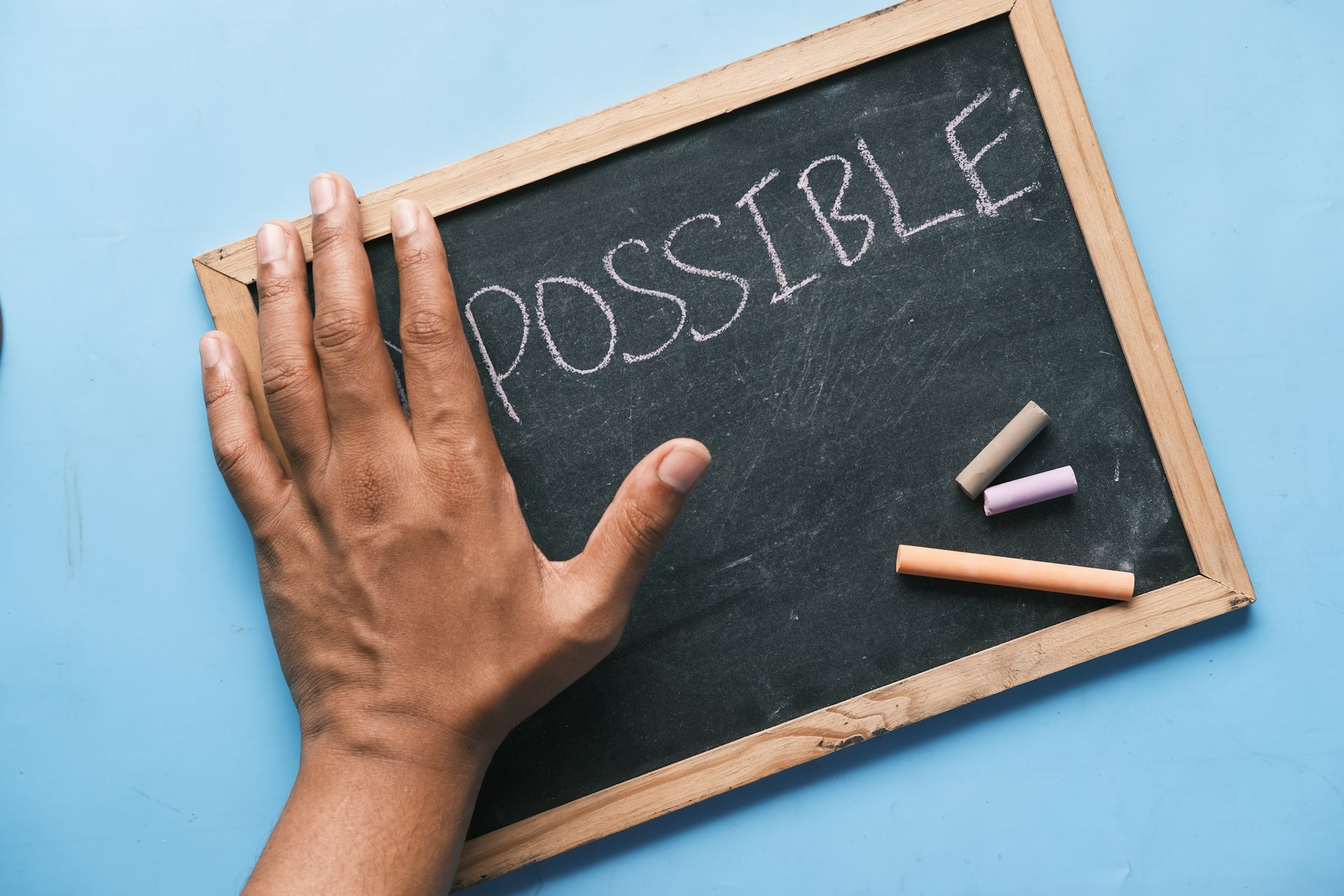
Challenge the impossible and make it possible.
Push for better.
It might take less time than you think.
h/t – my colleague, Jacob Smith. An extremely productive and prolific software development manager who regularly challenges the default and always pushes for better.






 Grandpa Bob Encouraging Leadership
You must be logged in to post a comment.