Always Be Coaching

In sales, there’s an old saying that has echoed through offices and training rooms for decades.

Always be closing.

It’s meant to keep the salesperson focused on their end goal. Keep the deal moving forward. Stay alert to opportunity. Maintain momentum.

Over the years, I’ve come to believe leaders need a different version of that advice.

Always be coaching.

As a leader, your mission is to develop the people who will come after you. You lift others through quiet, daily work that helps them grow. Your job is to bring out the best in yourself and in the people who will eventually step into your role. Coaching drives growth and keeps it moving forward.

Coaching your team is a way of saying, “Your future matters to me.” Coaching your children says, “I believe you have more inside you than you can see today.” And coaching yourself acknowledges the simple truth that growth must continue throughout life, especially for the leader.

Great coaches do more than explain ideas. They create space for practice. They help others turn new knowledge into muscle memory. They offer challenges sized just right for the moment. They ask questions that change how a person thinks about a problem. They reveal a new angle or a new path forward when something feels unsolvable.

Coaching takes learning to the next level. You learn something. You put it into practice. Then you pass it on. Teaching anchors the lesson. It deepens the insight. It turns wisdom into a gift you can hand to others.

Coaching doesn’t require perfect knowledge. It requires humble generosity. Share the insight you gained from yesterday’s challenge. Share the questions that helped you see an issue more clearly. Share the perspective that lifted your confidence when you needed it most.

Leadership is a relay. Someone handed the baton to you. One day you’ll hand it to someone else. The best leaders prepare the people who will run ahead long after they’ve finished their leg of the race.

Who have you coached today?
This week?
This month?

This is your responsibility. Your opportunity. Your mission.

Always be coaching.

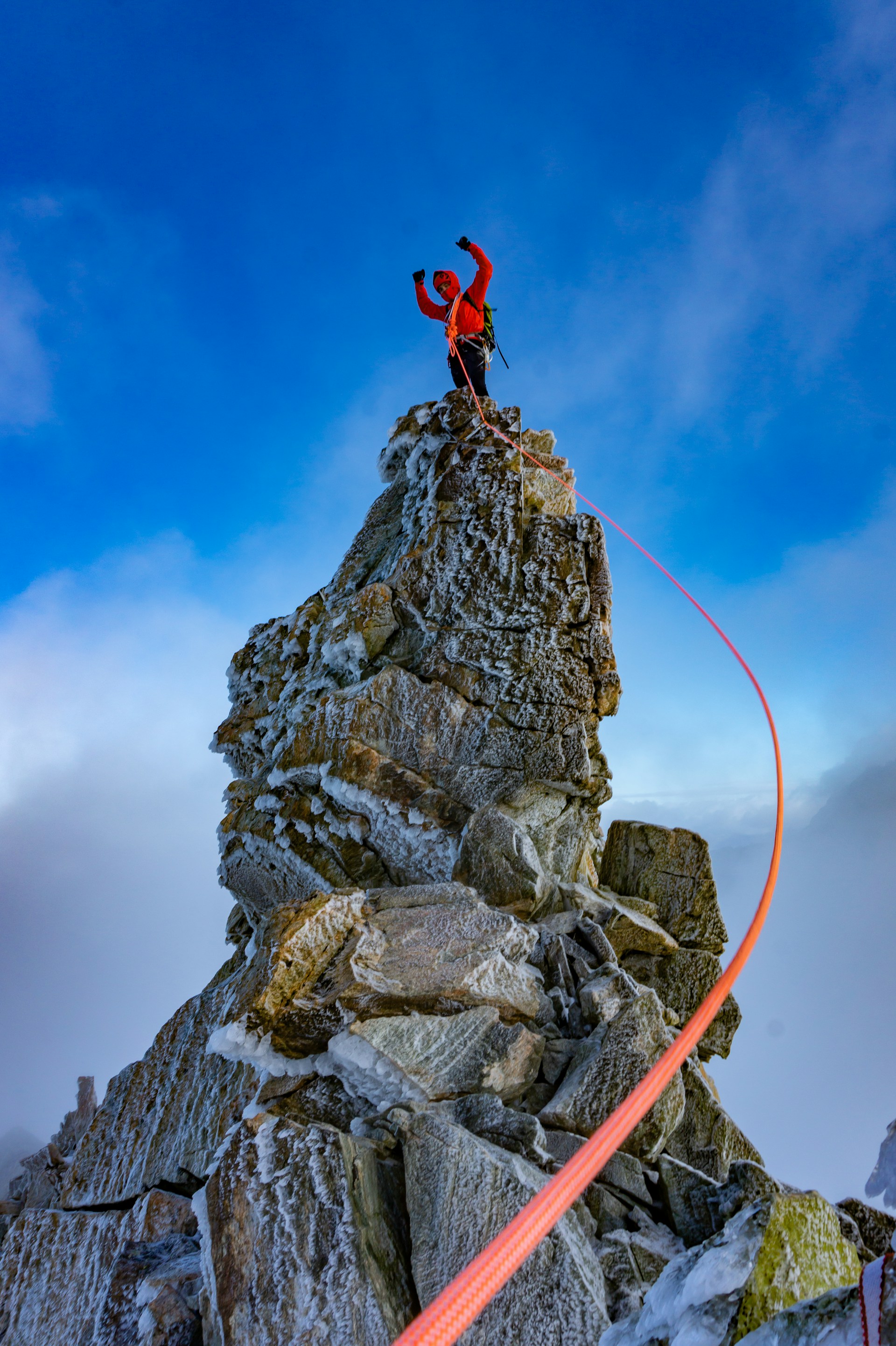
Photo by Sylvain Mauroux on Unsplash – who are you helping to climb their next mountain?

Seeing What Comes Next

The difference between reacting to the moment and preparing for it.

Most leaders spend their days responding. A problem surfaces. They fix it. A crisis hits. They mobilize.

Urgency crowds out importance. By Friday they’re exhausted from fighting fires they never saw coming.

This is leadership without anticipation.

Every action sets something in motion.

-Launch a product without considering support capacity, and you’ll be drowning in angry customers in three months.

-Promote someone before they’re ready, and you’ll spend the next year managing the fallout.

-Ignore the quiet signals in your market, and you’ll wake up one day wondering how you got disrupted.

Some outcomes can be seen in advance. Leadership is the discipline of noticing what’s coming and readying your team to meet it.

Wayne Gretzky once said, “I skate to where the puck is going to be, not where it has been.”Most leaders skate to where the puck was. They optimize for yesterday’s problem. They staff for last quarter’s workload. They strategize for a market that no longer exists.

Leaders who matter skate differently. They think past the first step and see how decisions unfold across time. When they make a choice today, they’re already anticipating the second and third-order effects.

They connect short-term actions to long-term outcomes, asking not just “Will this work?” but “What happens after it works?”

When you cultivate this habit of anticipation, something shifts. You stop being surprised by the predictable. You create space before you need it. You move with a quiet confidence that comes from seeing the terrain before you cross it.

Your team feels it too. It’s the difference between reactive and ready, between scrambling and intentional.

We can’t eliminate uncertainty. The future will always bring surprises. But we can change how we manage it. We can choose to be the leader who sees what’s coming rather than the one who’s perpetually caught off guard.

Dwight Eisenhower said, “In preparing for battle I have always found that plans are useless, but planning is indispensable.” Plans will change. They always do. But the act of planning, of thinking through trajectories, testing assumptions, and imagining scenarios, prepares you to lead when the moment arrives.

The leader who anticipates doesn’t wait for clarity. They sense it forming and courageously move toward it. They shape the path while others are still reacting to it.

Photo by Aleksander Saks on Unsplash

Planting Shade for Others

I don’t remember a lot from Mrs. Olsen’s first grade class. One event that stands out is the day we planted a bunch of seeds in a garden. First grade Bob enjoyed digging in the dirt, making small seed holes, dropping each seed into its place, and writing the plant names on popsicle sticks that we plunged into the dirt next to the seeds.

Then came the bad news.

We wouldn’t be able to see the plants we’d planted until weeks later, and they wouldn’t reach maturity (whatever that meant) for at least a year.

To a first grader, weeks (and especially a year) meant forever. First grade Bob was extremely disappointed. I never saw the plants that came from the seeds we planted that day. It would be decades before adult Bob would go to the trouble of planting seeds or transplanting potted plants into a garden.

Recently, I watched an Essential Craftsman video where he planted 25 new trees. He worked the soil, designed a hand-made watering system, dug 25 holes with exactly the right spacing, brought in a truckload of special soil, mixed it with his existing soil, and then carefully placed each tree in the ground.

At various points in this multi-week project, he worked alongside his grandsons, his wife, and one of his good friends. He said that working with them over the years, especially his wife, had made him a better person.

The finished line of trees looked amazing and will look even better over the next 10 – 20 years.

He reflected that it’s easy to take for granted the shade we enjoy from trees planted decades before. The journey from seed to shade provider is a long one, but it always begins with the person (or Nature) planting that seed.

So, what kind of “shade” are we planting today? Is it the kind that shelters others through encouragement, love, wisdom, opportunity, or sacrifice?

The things we do now may not seem significant in the moment. They may never fully bloom while we’re around to enjoy them. A kind word to a child. A story passed down. A habit of generosity. A newly taught skill. A quiet act of integrity. These are the seeds we plant for the future.

Sometimes, like first grade Bob, it’s easy to get frustrated when we don’t see results right away. We live in a world that loves fast feedback and instant gratification. But shade trees don’t grow overnight. Neither do strong families, good character, or traditions worth passing on.

What if our job, the most important job of all, is to plant and build for a future we’ll never see? To create a little more shelter for the people coming after us?

Few will notice what we’re planting. But that’s okay. We do it anyway. And someone else will get to rest in that shade.

That’s the kind of impact I hope to make. Something that lasts beyond my lifetime, even if no one remembers exactly which trees I planted.

So I’ll keep planting. I’ll keep building. I’ll keep encouraging…investing in the people I know will grow far beyond me.

Because someday, someone will enjoy the shade I may never see.

Adult Bob loves that.

“If your plan is for one year, plant rice. If your plan is for ten years, plant trees. If your plan is for one hundred years, educate children.” – Confucius

Photo by Danny Burke on Unsplash

Things I Wish I Knew When I Was Your Age

I sat down recently to write a letter to my cousin (technically my first cousin once removed), who just started basic training in the Air Force.

What began as a quick note turned into something more. A personal reflection, a bit of a manifesto, and a stack of lessons I wish someone had handed to me when I was just setting out.

By the time I hit “save,” I realized this may be worth sharing with any young person taking their first real steps into the adult world.

The letter was full of life updates, jokes, birthday party planning, movie recommendations, and the occasional 10-year-old version of myself asking random questions. But the main message was you can do hard things, and you’re not alone.

What follows are some ideas that come from years of learning, leading, failing, and reflecting. These are lessons for anyone who finds themselves on the edge of something new.

Leadership begins and ends in your head. Most of your real battles are internal. That voice in your head? It can lift you up or hold you back. Especially in an environment full of rules and pressure, how you think will define who you become. Supportive self-talk, resilient thinking, steady choices.  These are the foundational traits for leadership.

Start before you’re ready. Showing up takes more courage than people realize. You will rarely have everything figured out before you begin. Your best opportunities for growth will come from figuring things out while under pressure. That discomfort you feel is a sign that you’re on the edge of growth.

Do the next right thing. When life gets overwhelming (and it will), it helps to stop trying to solve everything all at once. Pause. Breathe. Do the next right thing. That’s enough. The bigger picture tends to take care of itself when we’re faithful and focus on the next indicated step.

You belong here. The feeling that maybe you’re not ready, or that someone else would be better suited for the challenge in front of you. That’s normal. But it doesn’t mean you don’t belong. The truth is you do belong. You’ve earned the right to be where you are. And you’re growing stronger every day, even if it doesn’t feel like it in the moment.

Respect is the foundation of everything. Not just the kind of respect that comes from rank or titles, but the kind you live out through humility, consistency, and quiet honor. When you offer that kind of respect, you build trust. And trust is what makes people want to follow your lead.

When the going gets tough, remember why you started. Every hard day will test your resolve. Every early morning, every setback, every lonely hour…these are the places where you’ll either lose sight of your purpose or anchor more deeply into it. Purpose doesn’t remove difficulty, but it gives meaning to the difficulty. And that’s enough to carry you through.

Discipline equals freedom. I shared this piece of advice that comes from Jocko Willink, former Navy SEAL, war veteran, and a powerful voice on discipline and leadership. He says, “Discipline equals freedom.” The more discipline you have, the more freedom you gain.

Discipline gives you control. Over your body, your mind, and your choices.  Freedom to choose your future. Freedom to trust yourself. Freedom to follow through, especially when motivation fades.

You won’t always feel motivated. That’s okay. Stay disciplined. Show up. Do the work. That’s how you earn freedom. One decision at a time.

“Don’t wish it were easier. Wish you were better.” A classic quote from Jim Rohn. There’s no shortage of obstacles. The goal isn’t to escape them. It’s to grow strong enough to rise above them. The learning curve is real.  Learn, adapt, overcome…become better and things will become much easier. 

About those movie recommendations I mentioned earlier. It’s probably more accurate to call them story recommendations.  Stories about honor, resilience, human ingenuity, and the willingness to keep going when things are difficult. 

We Were Soldiers, an amazingly good movie about strategic servant leadership (which is my preferred style of management), bravery, and the love that comrades in arms have for one another.  It’s a great tribute to the men who fought (many who gave their lives for the guy next to them) and their brave families back home.  I think I’ve seen it at least 25 times and I’m happy to watch it anytime. Each time I watch it, I tear up in at least 2 or 3 places in the movie. 

Ocean’s 11 and The Sting, two films that focus on creative problem solving and teamwork…though our “heroes” in these movies are con men and thieves. 

The Princess Bride made the list. The value of honor (even among combatants), mixed with the comedic and spoofy scenes make it a classic. Even in a world of duels and danger, kindness, respect and loyalty still matter.

I suggested Seveneves by Neal Stephenson. A science fiction novel (my favorite genre for at least the past 10 years) about human survival, adaptation, and rebuilding civilization after catastrophe. The premise is that an asteroid causes the moon to shatter.  What starts out as an oddity in the sky becomes a calamity as the moon breaks up into a ring and then begins to rain down to Earth (something they call the Hard Rain).  Great sci-fi, lots of human ingenuity and adaptability, and a story that covers about 5,000 years.  It’ll take some time to read, but it’s worth it.

Two books by Andy Weir.  The first is The Martian (which became a movie starring Matt Damon), and the second is Project Hail Mary.  Andy wrote The Martian in 2011 and self-published it on Amazon.  It picked up fans and became a bestseller without an “official” publisher.  His second book was called Artemis (takes place on the Moon).  It was good, but not quite as good as The Martian (which is a high standard, so I’m probably being unfair). 

His third book was Project Hail Mary.  This one is also being made into a movie, starring Ryan Gosling. It is excellent. 

The big thing about Andy’s books is that they are scientifically accurate. His characters deal with extremely complex challenges that require thinking and ingenuity to overcome. He writes in a way that entertains and teaches things you never knew.

I love that Andy wrote his first book from beginning to end without any publisher involved. Nobody was there to tell him what he was doing was the right thing.  He believed in himself, believed in the story he was telling, focused on the work, delivered a high-quality product, and proceeded to find his audience one reader at a time.     

All these stories reflect truths about the path ahead. Your journey will be hard. You’ll need grit, creativity, and perseverance. You’ll need others (family, friends, mentors, even strangers). More often than not, the tools to overcome life’s challenges will come from within yourself, quietly shaped by the stories you carry and the habits you form.

Whatever new thing you’re stepping into, whether it’s basic training, a new job, a cross-country move, or a new phase in your life, know that it’s okay to be unsure. It’s okay to feel stretched. Just remember your “why,” do the next right thing, and keep showing up with courage.

And who knows? Maybe decades from now you’ll be the one writing a letter like this, passing along what you’ve learned…

Photo by Justin Cron on Unsplash

The Next Generation—Are They Ready?

I received an email from Noah Kagan this week. Not because we’re personal friends, but because I subscribe to his newsletter. Noah, the CEO of AppSumo, often shares practical insights and thought-provoking questions from his journey in the tech world.

This particular message stood out. He talked about being fearful for his 10-month-old daughter’s future. With all the chaos in the world, the deepening divides, the rise of AI and robotics, the general noise of modern life, he wonders what kind of world she’ll inherit.

But instead of spiraling into worry, Noah laid out how he’s choosing to respond: by creating clarity, limiting distractions, and doubling down on the things that matter most. He’s building a foundation, not just for his own peace of mind, but for his daughter to inherit.

His email reminded me of a quote often attributed to Mark Twain: “The future is in the hands of a generation that isn’t ready for it.”

We didn’t have AI, social media, or the internet back in Mr. Twain’s day. But even then, concerns about “the next generation” were nothing new. Parents, teachers, and elders across every era in history have wondered if the next generation is truly ready.

Noah’s concern isn’t just that the next generation might be unprepared. It’s that the world itself might be too broken to navigate well. But history offers some perspective.

Every generation has faced challenges.  Wars, famines, political collapse, pandemics, technological upheaval, moral drift. And yet, the world moves forward. Somehow, each generation rises to meet its moment…even if their preparation feels lacking.

We don’t get to control the future, but we do influence it by how we live, what we model, and what we choose to pass on. We can’t predict what our children and grandchildren will face, or how they’ll respond. But we can teach them how to think, how to hold on to timeless values, and how to walk through hardship with strength and grace.

It’s natural to worry.

Let’s not forget that hardship doesn’t cancel out beauty.

Struggles don’t erase joy.

There will be triumphs ahead, too. If we’ve taught them well, they’ll learn to spot their small victories, celebrate them, and then pass along what matters to those who come after.

The future always arrives in the hands of the young—and the young are never quite ready. But then again, neither were we.

Photo by Timon Studler on Unsplash

What Your 70-Year-Old Self Knows That You Don’t

We know about Maslow’s Hierarchy of Needs and how our wants and desires are like a pyramid that goes from our basic needs up to our desire for self-actualization. The Pareto Principle reminds us that 80% of our results come from 20% of our efforts, helping us focus on what truly moves the needle. Saint Ignatius’s Spiritual Exercises guide us through discernment, teaching us to distinguish between what brings life and what drains it.

But there’s another framework worth considering: the evolution of what we consider important throughout our lives.

As kids, we know what’s most important. It usually revolves around attention, followed by winning at whatever we are doing, which we think will get us more of that attention we crave. Everything feels urgent. Every disappointment feels permanent. The world revolves around us, and that’s exactly as it should be for a child learning to navigate life.

Teenagers start to focus on freedom, independence, and figuring out what they’re going to do when they grow up (whatever that means). They often reject what their parents value. Sometimes for good reasons, sometimes solely because rebellion feels necessary for finding their own path. What matters most is breaking free from the constraints that feel suffocating, even when those constraints were designed to protect them.

As young adults, we’re getting started, establishing our independent life, our financial foundations, our career foundations…at least we’re trying to get these things established. We’re in acquisition mode: getting the job, the apartment (maybe a house), the relationship, the respect (something we crave more than attention at this stage). We often dismiss advice from older generations, convinced they don’t understand how different the world is now.

Then something interesting happens.

As the decades flow by, what was important a few years ago, isn’t. We start to think about how to serve others, help our kids flourish, help their kids flourish. The shift is gradual but profound. From getting to giving, from proving ourselves to improving the lives of others.

Major life events accelerate this evolution. A health scare makes us realize that all the success in the world doesn’t matter if we’re not here to enjoy the fruits of our labor. The birth of a child or grandchild suddenly makes legacy more important than achievement. The loss of a parent reminds us that time is finite, and relationships are irreplaceable.

Sometimes the shift happens more quietly. Earlier this week, two co-workers were discussing the NBA finals and asked me what I thought of Game 2.  I had to admit that I haven’t followed basketball since the Magic Johnson era of the Lakers. As we talked, it became clear to me that I haven’t followed any sports—except for the Savannah Bananas baseball team’s shenanigans—in many years.

What captures my attention now? I’m drawn to watching people live their best lives in rural settings, building homesteads for themselves and their families. I find myself rooting for others to succeed in their chosen vocations, nothing more, nothing less. It’s not that sports became unimportant because they were bad. They just became less important than something else that feeds my soul more deeply.

As we get older, preserving our health, and the freedom that comes with it, moves toward the top of our priority list. Interesting how the freedom we sought as teenagers is still important to us in our senior years, but for different reasons. Then, we wanted freedom and thought we were ready for responsibility.

Now, we want freedom to focus on what truly matters. Freedom to be present for the people we love, freedom to contribute in meaningful ways, freedom from the noise that once seemed so important.

There’s a beautiful irony in how we often spend the first half of our lives accumulating things, achievements, and accolades, only to spend the second half learning to let go of what doesn’t serve us. We chase complexity when we’re young and value simplicity as we mature.

Questions worth considering:

– What would happen if we could skip ahead and see what our 70-year-old self considers important? What about our 80-year-old self? Would we make different choices today knowing what they know?

– Why do we have to learn the hard way that some of the things we chase don’t matter? Is there wisdom in the struggle, or are we just stubborn?

– How can we be more intentional about evolving our priorities on our terms instead of waiting for time to do it?

– What if we could honor the lessons each life stage provides without completely losing face and dismissing what came before?

The evolution of importance isn’t about getting it right or wrong at any particular stage. It’s recognizing that growth means what we value will shift.

That’s not a bug in the system. It’s a feature. The teenager’s desire for freedom isn’t foolish. It’s necessary for their development. The young adult’s focus on building a foundation isn’t shallow. It’s essential for future stability.

Perhaps the real wisdom comes in staying curious about what matters most. Knowing that the answer will keep evolving. And maybe, just maybe, we can learn to trust that each stage of life has something valuable to teach us about what’s truly important.

The key is staying awake to the lessons, even when they challenge what we thought we knew for certain.

Photo by Filip Kominik on Unsplash

Tacos and Time Travelers…a Dinner Conversation About the Future (and Everything That Matters)

The other night, over a casual taco dinner, one of my grandkids hit me with a question I wasn’t expecting.

“Grandpa, how old will you be in the year 2100?”

Without missing a beat, I shot back, “Nearly 140. Way too old to still be around!”

I may have been off by a few years, but we all agreed: the odds are stacked against me making it to 2100.

Then we started doing the math together, and that’s where things got interesting. They’ll be in their 90s by then. Their children and grandchildren—my great-grandchildren and great-great-grandchildren—will be alive and thriving in that future world. A reminder that we’re part of something much bigger. Connected to the past, but carried forward by those who will come long after we’ve gone.

“Okay, but how old will you be in 2050?”

That one felt closer, more real. “Well,” I said, “not quite 90, but almost. And you’ll be under 50.”

“What will we be doing in 2050, Grandpa?”

That’s a question only they can answer. I won’t pretend to know. I hope I’m there for at least part of it. I hope I get to laugh with them, to listen, to remind them where they came from, and to cheer them on wherever they’re headed.

Our conversation turned into something more than tacos and timelines. We started talking about how every generation builds on what came before. We carry what we’ve learned from our parents and grandparents, along with our own experiences, and hand all of that to our children and grandchildren. And they, in turn, will do the same.

Their children, my great-grandchildren, aren’t here yet, but I already have high hopes for them. I look forward to holding them, hearing their stories, and watching them discover the world just as their parents are starting to do today.

I hope they’ll learn the big things:

-How a starry sky can quiet our soul.

-How to throw and catch with confidence (it’s baseball season, so this one is top of mind right now).

-How warm and magical a campfire can be…and that S’mores taste better when your hands are sticky.

-How good it feels to help without being asked.

-How to sit quietly with someone we love and say nothing at all.

-How to cheer for someone else, even when the spotlight isn’t ours.

-The peace that comes from a walk in the woods or along a sandy shore.

But I also know they’ll learn things I’ll never understand. Things I can’t even imagine. And that’s exactly as it should be.

My deepest hope is that they’ll carry forward the timeless lessons. That love matters more than being right. That kindness isn’t weakness. That telling the truth is not only brave, but also the only way.

And that family stories are worth retelling…especially the funny ones.

So, here’s to future taco dinners, to great-grandkids I haven’t met, and to the storytellers of tomorrow.

May they keep the best of us within them always.

A Poem for My Grandkids

We sat with tacos, our chips in hand,
When you asked a question I hadn’t planned.
“Grandpa, will you still be here in 2100?”
“Not likely,” I laughed, “I’d be too old by then.”

And then we wondered who’ll be around,
Your kids and theirs, with dreams unbound.
Building a world we won’t see,
Carrying forward the best from you and from me.

We talked of shooting stars and catching balls,
Of S’mores by the fire and the night’s gentle call.
Of helping for nothing, of walking alone,
And learning to love with a heart fully grown.

You’ll learn things I’ll never know,
With gadgets and wonders I can’t imagine.
Even so, I hope what we’ve lived still finds its place,
In stories you tell with a smile on your face.

Here’s to the moments that grow into more,
To questions and memories, and tales we explore.
May love be your guide in all that you do,
And may our stories stay with you, and echo on through time.

p/c – That’s Charlie (in the cowboy hat) and Marcus from a few years ago, perfecting their marshmallow roasting techniques. 

Eyes That Understand – Welcoming our Ninth Grandchild

This week, a new set of eyes entered the world — our ninth grandchild, a baby girl. Her eyes are just beginning their work. They don’t yet see clearly. Like all newborns, her vision starts in soft focus. She sees light, shadows, movement, and faces held close. She knows the warmth of her mother’s arms, the cadence of her father’s voice, and, if I’m lucky, the gentle presence of her grandparents too.

In time, her eyes will begin to sharpen. She’ll see faces from across the room, the toys just out of her reach, her siblings and cousins. Then, the world outside the window. A broader picture will come into her view.

But even as her eyesight expands, her perspective will remain near. She’ll see how things affect her first. Hunger, comfort, joy, frustration. Her world will center on her own experience, as it should for a child learning what it means to be alive.

And then she will grow. With years and love and bumps along the way, she will begin to see more than just herself. She’ll learn to recognize others’ emotions, to feel their joy and pain. Her perspective will widen to include her friends, her extended family, her community. She will see how her actions ripple and impact others, how choices matter not just to her, but to those around her.

As more time passes, she may begin to understand something deeper. That perception is not the same as truth. That others see the same moment, the same memory, from very different angles. She’ll begin to recognize that we all wear lenses shaped by experience, belief, hope, and hurt.

And if she keeps growing, keeps learning, keeps loving, she may even come to understand the beauty in those differences. To act not just from clarity of vision, but from clarity of heart.

Even as her vision someday blurs a bit, may her wisdom sharpen. May she see what matters most. May she understand not only what is, but what could be. May she seek the life-giving fulfilment of a loving life.

And may she, in time, pass on her vision.

What We Learn to See

She was born into light too bright to grasp,
her gaze flickering toward warmth,
held by arms she could not name.

A nose. A smile. A voice that hums,
these are the shapes she first learns to trust.

Her world is inches wide.

Then, little by little,
the room expands.
Familiar faces move,
toys beckon from across the room.

Still, her eyes are mirrors,
reflecting only her own need:
Am I safe? Am I loved?
Does the world answer me?

Time stretches her view. She sees hurt in another’s face.
Joy in someone else’s triumph.
She learns that not all stories are her own.

She learns to ask: How do you see it?
And to listen for an answer.

Mistakes come. Grace follows.
She learns that sight alone isn’t understanding.
That clarity is earned, not given.

Years pass. Vision fades.
But somehow, she sees more than ever,
about herself and the world around her.

What once was blur is now meaning.
What once was noise is now truth.
What once was about her becomes about others.

And in her twilight vision,
she turns to the child,
whose eyes are still new,
and whispers:

Look close, little one,
and then look again.
You’ll stumble, and that’s part of the seeing.
You’ll hurt, and that’s part of the knowing.

Take the vision I’ve earned —
not perfect, but practiced.
Carry it forward,
along with all my love,
and the hopes I hold in my heart for you.

p/c – A photo of our daughters taken almost 30 years ago (!) They’re now passing their love, perspectives, and life lessons to their own children. Happy Mother’s Day!

The Known vs. The Obvious: Embracing AI in the Workplace

For years, we’ve heard that Artificial Intelligence (AI) will revolutionize industries. The idea is so prevalent that it’s easy to stop actively thinking about it. We acknowledge AI in headlines, in passing business conversations, and in abstract discussions about the future. Yet, much like a fish is unaware of the water surrounding it, we’ve been immersed in AI without fully recognizing its impact.

That impact is now undeniable. The question is: will we embrace it—or ignore it at our peril?

AI as the Invisible Force

AI is no longer a futuristic concept, or a background presence. It’s embedded in the tools we use every day, from the smartphones in our pockets to the chatbots handling our customer inquiries. It powers business decisions, optimizes operations, and influences nearly every industry.

Yet, because AI is so familiar, we often overlook it. The term itself has become a cliché—almost old news.  Something we assume we understand. But do we? How much do we really know about its capabilities, its limitations, or its potential disruptions?

Many still view AI as a distant idea, relevant only in the future or in industries far removed from their own. This perspective is outdated.

The Shift from “Known” to “Obvious”

AI is a driving force that can shape how we work, compete, and innovate. Organizations that continue treating AI as an abstract concept risk being blindsided by its rapid evolution.

This shift—from AI being “known” to becoming “obvious”—is critical. The moment we stop seeing AI as some far-off development and recognize it as an immediate force, we can take meaningful action.

Make no mistake: AI will transform your organization, whether you engage with it or not. The only choice is whether you’re leading that change or struggling to catch up.

The Cost of Waiting

A passive approach to AI is no longer viable. Waiting for the “right time” to adopt AI means falling behind competitors who are already leveraging its power. Yes, AI is complex, and yes, there are risks. But the greater risk lies in hesitation.

I’m old enough to remember the early days of the internet (I’m that old).  Most businesses dismissed it as a fad. Others chased the new idea with reckless abandonment and wasted tons of time and money.  But a relative few (at the time) experimented, learned, made incremental changes, and ultimately thrived in their use of the new “internet-powered” approach. Not to mention all the new multi-billion (trillion) dollar businesses that were made possible by the internet. 

AI is following a similar trajectory. Many are ignoring, even shunning, AI as something other people will figure out.  They don’t want to be the one pushing these new ideas within their organization.  It’s easier to stay in the background and wait for someone else to take the leap.

But others are already leaning in (to coin a phrase), experimenting, and learning.  They are incrementally (and sometimes dramatically) shaping a new future…and remaining relevant in the process. 

Learn the Basics

AI adoption doesn’t require immediate mastery. It starts with small, intentional steps.

You don’t need to be an AI expert, but understanding its core functions and business applications is essential.

Start by exploring industry-specific AI tools already in use.  How did I make this list?  You guessed it, I asked ChatGPT to give me a list of industry-specific AI tools in use today.  Will each one be a winner?  Not sure, but it’s a great list to use as a starting point:

Retailers use Amazon Personalize and Google Recommendations AI for AI-driven product suggestions, improving customer engagement and sales.

Marketers leverage HubSpot AI for automated email campaigns, Persado for AI-powered ad copywriting, and Seventh Sense for optimizing email send times.

Financial analysts turn to Bloomberg Terminal AI for market insights, Kavout for AI-driven stock analysis, and Zest AI for smarter credit risk assessments.

Healthcare professionals rely on IBM Watson Health for AI-assisted diagnostics and Olive AI for automating administrative hospital tasks.

Manufacturers use Siemens MindSphere for AI-powered predictive maintenance and Falkonry for real-time industrial data monitoring.

Customer service teams integrate Forethought AI for automated ticket triaging and Zendesk AI for intelligent chatbot interactions.

HR and recruitment teams utilize HireVue AI for AI-driven candidate screening and Pymetrics for bias-free talent assessment.

Experiment with Broad-based AI Tools

Don’t wait for the perfect strategy.  Start small. Generalized AI tools can improve various aspects of your business (again, I asked ChatGPT for this list):

Conversational AI & Research: Tools like ChatGPT, Claude.ai, or Anthropic’s AI help generate content, answer complex questions, summarize reports, and assist in brainstorming sessions.

Automation: Platforms such as Zapier AI, UiPath, and Notion AI automate workflows, streamline repetitive tasks, and generate notes and summaries.

Data Analysis: Solutions like Tableau AI, ChatGPT’s Code Interpreter (Advanced Data Analysis), and IBM Watson process and visualize data for better decision-making.

Customer Engagement: AI-driven tools such as Drift AI, Intercom AI, and Crystal Knows enhance customer service, lead generation, and sales profiling.

These are just a few of the many AI-powered tools available today. The landscape is constantly evolving.  Exploring AI solutions that fit your specific needs is the key to personal and professional growth.

Cultivate a Growth Mindset

Learning AI is a journey, not a destination. It’s okay to make mistakes.  It’s actually necessary. Feeling uncomfortable is a sign of growth. The more you experiment, fail, and adjust, the more effectively you’ll integrate AI into your work. AI isn’t about instant perfection.  It’s about continuous learning.

Lead from the Front

If you’re in a leadership role, set the tone. Your team will look to you for guidance. Show them that AI adoption isn’t just an IT initiative.  It’s a mindset shift.

Encourage experimentation, provide resources, and support a culture of AI-driven innovation. Companies that will thrive with AI aren’t the ones waiting for a complete plan.  They’re the ones embracing AI through hands-on learning and iterative improvement while incorporating these new discoveries into their future plans.

The Future is Now

AI is not a distant disruptor—it’s an active force shaping today’s workplace. Organizations that recognize this and take action will thrive. Those that don’t will be left behind.

It’s time to stop treating AI as a theoretical innovation and start engaging with it as a business reality.

The future isn’t waiting, and neither should you.

Photo credit: The graphic was generated by DALL-E.  I asked it to generate an image of an office on the ground floor that captures the essence of the blog post I had just written. 

In its first few attempts, it tossed in robots sitting amongst the office workers.  I like to think of myself as a forward thinker, but I’m not quite ready to accept that reality…even though I’m sure it’s rapidly approaching.  I asked DALL-E to eliminate the robots (for now).      

Goals for 2025

I’ve never been a New Year’s resolution person.

Maybe it’s all my time spent working in businesses over the past four decades. We often start each year with a set of specific strategic goals. Some are grounded and achievable; others are wish casting—a small dream of what we might accomplish if everything aligns perfectly (spoiler alert: it rarely does).

This year my goals are simple, but not easy: 

Serve the quests of others over my own.
True fulfillment comes from supporting others in their quest, even if that means setting aside my own ambitions.

Offer insights and advice, not direction.
The path others take isn’t mine to choose. My role is to illuminate possibilities, not dictate outcomes.

Push beyond my comfort zone and (hopefully) inspire others to do the same.
Growth begins at the edge of what’s familiar. By challenging my own boundaries, I hope to encourage others to stretch theirs as well.

Bring the loaves and fishes—and trust God with the rest.
(h/t to Dallas Jenkins for this beautiful idea) It’s a reminder to offer what I can and trust in someone much greater to amplify my impact.

Warmest wishes for a Happy New Year in 2025!

Photo by BoliviaInteligente on Unsplash