A few days ago, I was listening to Jocko Willink speak about the quiet discipline behind Brazilian jiu-jitsu. I’m not a jiu-jitsu person, but one idea landed for me. It’s a truth I already knew but had never heard spoken so simply:
Always improve your position.
In jiu-jitsu, nothing happens all at once. A submission arrives like lightning, but only to the untrained eye. What looks like a sudden victory is really the final expression of dozens of subtle movements that came before it. A hip shifts. A grip tightens. An elbow gains an inch of space. Most of these moves go unnoticed. Each small adjustment creates a little more room, a little more leverage, a little more advantage.
I’ve always believed real progress works this way. It’s rarely dramatic. It’s quiet and patient. The accumulated effect of showing up, learning something new, adding a bit more care, and preparing a little more than required.
Breakthroughs rarely come from a single moment of inspiration. They come from the quiet work no one sees. The thoughtful practice that sharpens your skills, the trust built over months of ordinary conversations, the time spent learning before making a decision. When opportunity arrives, it looks sudden to others. To you, it feels like the next logical step.
This truth showed up clearly for me after a derecho tore through our property on Father’s Day weekend a few years ago. Ninety-mile-per-hour winds knocked down at least thirty trees across multiple acres. When I walked our land the next morning, everything felt broken and overwhelming. The cleanup looked like a project that would take months. I didn’t have months to devote to it.
But I did have mornings. So, I decided to work for an hour and a half every day before work. I cleared a small section each morning. It was incredibly slow. I dragged branches, cut trunks, chipped debris, split firewood, and made countless trips to our local dump. Small steps, small progress, one morning at a time.
Over the course of a year (maybe more), I worked my way across our entire property. Along the way, I cut in new hiking trails and removed a number of unhealthy trees. What started as a mess became a healthier stand of trees and a network of paths that look like they’ve been here forever.
Out of destruction came a daily habit that changed my life. I still work outside every morning. Clearing brush, trimming trees, expanding trails, building chicken coops, restoring a rustic barn. All in small ninety-minute bites. It’s like a time-lapse video created through countless quiet mornings of small improvements.
The pattern I saw on my land is exactly what Jocko described on the mat. I didn’t need a grand plan or a burst of superhuman effort. I needed to improve my position every day, just by a little.
Improve your position today, even by an inch, and tomorrow becomes easier. Improve it again tomorrow, and the day after that reveals options that didn’t exist before. You don’t need surges of motivation or dramatic reinvention. You only need the willingness to keep moving, always improving.
Careers grow this way. Trust grows this way. Faith deepens this way. Families strengthen this way.
Progress won’t always be linear. Some days distractions will pull us off course, or setbacks will undo work we thought was finished. All of this is part of the journey. Even then, the way forward still comes through small steps. Imperfect, uneven, but the work of always improving our position remains the same.
We improve our position slowly, almost without noticing. That’s enough. Tomorrow, we’ll improve again. Then one day, we’ll find ourselves able to take a step that would have felt impossible a year ago.
Focus on the next inch. The miles will take care of themselves.
Photo by Walter Martin on Unsplash – a great rendition of my early morning work environment for at least a year.
Psalm 91 promises safety from dangers both visible and invisible, from “the terror by night” to “the arrow that flieth by day.”
In verse 6, we read: “Nor for the pestilence that walketh in darkness; nor for the destruction that wasteth at noonday.”
The Desert Fathers, those early Christians who left the cities around the third and fourth centuries to live in the desert, drew on this verse to describe one of their deepest spiritual struggles. They called it the noonday devil.
This devil represents an interior battle, a weariness of the soul that crept in at midday when the sun beat down, the silence grew heavy, and the temptation to abandon their prayer and vocation felt overwhelming.
They named this struggle acedia. Sometimes it’s translated as sloth, but it is much more than that.
How many kids have said to their parents, “I’m bored.” We remind them that boredom is in their heads. They can use their imagination, find a book, or play outside. And if that doesn’t land, we parents always have another cure for their boredom: chores.
It’s amazing how quickly boredom vanishes when a child is handed a rake, a shovel, or a basket of laundry to fold.
Boredom is what happens when we can’t see the meaning in what we’re doing. Acedia is boredom’s older cousin. Spiritual weariness with much deeper stakes.
It’s restlessness, a refusal to care, a loss of joy in the very things that give life meaning. It can show up as distraction or busyness. Acedia tempts us to walk away when the middle of the journey feels too long and too heavy.
I think of the countless days spent inching along in rush-hour traffic, morning after morning, just to get to work. I’d put in a full day’s work, then crawl through another hour or more of brake lights to get home. The next day brought the same routine. After a while, it was easy to think maybe the whole thing had no meaning.
That’s the noonday devil at work.
The midpoints of life test us in a similar way. Paying bills, the daily grind of a career without clear progress, responsibilities that seem to grow heavier without much relief. Our internal voice asks, “How can I escape? Should I look for something easier?”
Jean-Charles Nault’s The Noonday Devil: Acedia, the Unnamed Evil of Our Times says this ancient struggle is alive and well today. It shows up in constant scrolling, in working ourselves to exhaustion to avoid deeper questions, in chasing novelty because the present moment feels too heavy.
The Desert Fathers found the answer was to persevere through, but with far more than sheer willpower. Keep praying, even when prayer feels dry. Stay faithful to commitments, even when they feel heavy. Lean into your community rather than isolating from it. Practice humility and remember that perseverance is possible only by God’s grace.
What does this look like? When we feel the pull toward endless scrolling, we might instead text a friend or call a family member. When work feels meaningless, we can remember the people our efforts serve, even if indirectly. When prayer feels empty, we show up anyway, trusting that faithfulness itself has value beyond our feelings in the moment.
The noonday devil tempts us to think that only extraordinary lives matter. But as Oliver Burkeman points out in his idea of “cosmic insignificance therapy,” recognizing our smallness frees us to find profound meaning in ordinary acts.
The daily work of caring for children, preparing meals, or showing up for neighbors and friends carries as much weight as anything could. These acts may never make headlines, but in God’s eyes they shine with eternal value.
Persevering in small, steady commitments resists acedia and helps us discover joy in the very places where meaning often hides.
Psalm 91 carries a promise, “He shall cover thee with his feathers, and under his wings shalt thou trust.”
God invites us to rest beneath His wings, to trust Him in the heat of the day, and to discover joy at the very heart of our journey.
Faithfulness in the ordinary is never wasted. Under His wings, even the smallest acts take on eternal meaning.
h/t – Hallow app – Noonday Devil; Tim Ferris – Oliver Burkeman’s Cosmic Insignificance Therapy
René Daumal titled his unfinished novel, Mount Analogue. It describes a peak, “whose summit is inaccessible by ordinary means.” The mountain can only be reached through inner transformation, making it both a place and an analogy for our journey of struggle toward resilience and clarity in the fog.
Leadership in upheaval can feel similar. Our map runs out. The ground shifts. We carry only our memories. Some sharp with regret, others shining with joy. Yet even scars can become footholds for our climb.
Daumal wrote, “You cannot stay on the summit forever; you have to come down again. So why bother in the first place? Just this: what is above knows what is below, but what is below does not know what is above.”
The summit gives leaders perspective. From above, we see connections hidden from the valley floor. The shape of the landscape, how the streams converge, where the shadows fall and light breaks through. We descend changed by what we’ve seen, and those who walk beside us are steadied by our vision.
History shows us that change always reshapes our climb. The printing press, the steam engine, electricity, space travel, and global connectivity to name a few. Artificial intelligence is the latest steep slope, bringing fear, excitement, and possibility all at once.
Leaders can steady others by naming the change clearly, framing the opportunities, modeling ways to adapt, and keeping purpose at the center of the change.
Daumal died before finishing his book. It breaks off mid-sentence. A fitting metaphor for leadership. Unfinished, unresolved, always in motion.
Leadership is the willingness to prepare others for the climb, walking faithfully with them, and offering perspective so they can see what’s possible…and dare to tackle the climb themselves.
h/t – James Clear for showing a quote from this book that sent me down the path to learn more about Mount Analogue.
Ideas and wisdom often arrive with familiar roots.
My views on leadership come from my lived experiences and lessons I’ve learned from great builders and thinkers like Andrew Carnegie, Peter Drucker, Tom Peters, Ken Blanchard, Marshall Goldsmith, Zig Ziglar, Stephen Covey, Jack Welch, Seth Godin, Jeff Bezos, Gary Vaynerchuk, Tim Ferriss, Jocko Willink, James Clear, and countless others.
I’ve also worked with amazing managers and mentors over many decades, including a few who taught me what not to do.
Since I find myself often returning to these lessons, I thought it would be useful to write them down in a list for easier reference.
Leadership Foundations
1. Leadership begins in your mind long before it shows up in your actions.
2. Self-awareness is a leader’s first and most enduring responsibility. Know how your actions land, then lead on purpose.
3. Character outweighs credentials over the long haul.
4. Integrity compounds like interest. The longer you hold on to it, the more it grows.
5. Values are the compass that keep you on course when circumstances shift.
6. Humility is the strength to put others first.
7. Influence comes from trust, not job descriptions.
Vision and Direction
8. A leader’s vision must be big enough to inspire, but clear enough to act on today.
9. Clarity reduces fear. Ambiguity fuels it.
10. Momentum builds when people see the destination and believe they can reach it.
11. Vision is not just what you see. It’s what you help others see.
12. The clearer you are about the goal, the less room there is for fear to grow.
13. Purpose is the map. Storms are just temporary detours.
14. Belief in the destination turns small steps into powerful strides.
15. Every action should feel like part of the same bigger story.
16. Sometimes waiting is the boldest move you can make. Strategic patience is powerful (and extremely difficult).
People and Relationships
17. The right people in the right roles multiply results beyond what you can imagine.
18. A culture of respect will outlast a culture of urgency.
19. Listen like the person speaking might hand you the missing puzzle piece.
20. Pass the applause to others but keep the accountability close to your chest.
21. Trust is invisible, but when it’s gone, everything feels heavier.
22. Relationships need regular deposits of attention, not just withdrawals of effort.
23. Helping someone else win creates a tailwind for your own success.
Decision-Making
24. Good decisions blend facts, values, and the courage to act.
25. The first idea is often just the trailhead. Walk farther.
26. Energy without wisdom burns out. Wisdom without energy gathers dust.
27. Choose the option you can defend in the daylight and live with in the dark.
28. A quick, small decision can open doors a perfect plan never reaches.
29. It’s easier to fix a wrong turn early than to build a new road later.
30. Never cash in tomorrow’s credibility for today’s convenience.
Resilience and Adaptability
31. A setback is a classroom, not a graveyard.
32. Flexibility is a skill, not a personality trait. Practice it.
33. Change is the proving ground where talk becomes action. Priorities sharpen, assumptions get tested, and leadership shows up in decisions, owners, and dates. If nothing changes (no decision, no owner, no date) it was only talk.
34. Adapt your tactics, but never your core.
35. The best views are earned with effort you once thought impossible.
36. Challenges test your limits so you can discover you’re stronger than you ever imagined.
37. Sticking with it usually turns “almost” into “done.”
Growth and Learning
38. The best questions are the ones you don’t yet know how to answer.
39. The moment you stop learning, you stop leading. Sometimes before you notice.
40. Pride blocks the front door to growth. Curiosity leaves it wide open.
41. Ask for feedback before circumstances force it on you.
42. Teach your knowledge, always remembering that your actions teach your values.
43. Every conversation nudges someone closer to, or further from, their best self.
44. Failure carries lessons that success hides. Corollary: High water covers a lot of stumps.
Impact and Legacy
45. Success without significance is empty.
46. The influence you have on people’s lives will outlast your achievements.
47. Your legacy is written in the lives you touch, not in the titles you hold.
48. Leadership is something you borrow from the future. It must be returned in good condition.
49. The most meaningful titles are the ones people give you, not the ones on your nameplate.
50. Think in decades when deciding what to plant today.
51. Your success is multiplied when others stand taller because of you.
52. The best proof of leadership is when growth continues without your hand on the wheel.
53. Leave every place and every person better than they were when you arrived.
Communication & Culture
54. Say the quiet part kindly and clearly. Clarity without kindness bruises. Kindness without clarity confuses.
55. Stories travel farther (and faster) than memos. Stories move people. Memos inform them. Stories turn intention into action.
56. Consistency in small signals (tone, timing, follow-through) builds culture faster than slogans.
57. Meetings should create movement. Reserve live time for decisions and collaboration. End with owners and dates. If it’s just a podcast, send an email. If only two people need to talk, make it a call and give everyone else their time back.
58. Celebrate progress out loud so people know what “right” looks like.
59. Honesty scales when leaders go first. Name the hard thing and show how to address it.
60. Culture forms around what you tolerate as much as what you teach.
Execution & Accountability
61. Strategy stalls without a calendar. Put names and dates on intentions.
62. Start now. Ship one useful thing today. Ride the wave of momentum that follows.
63. Priorities aren’t what you say first. They’re what you do first.
64. When everything is urgent, nothing is important. Choose the one thing that unlocks the next three.
65. Inspect what you expect. Review, refine, and recommit in frequent loops.
66. Own the miss publicly and fix it quickly. Speed heals trust.
67. Scoreboards matter. People work smarter when progress (or lack thereof) is visible.
Faith, Purpose & Centering
68. Quiet time isn’t empty time. It’s where courage and wisdom refuel.
69. Purpose steadies the hands when the work gets heavy.
70. Gratitude turns pressure into perspective.
71. Servant leadership begins by asking, “Who needs strength from me today?”
72. Hope is a discipline. Practice it especially when results lag.
Leading Through Change & Uncertainty
73. Name the uncertainty. People handle the unknown better when it has boundaries.
74. Trade predictions for scenarios. Prepare for several futures, not just your favorite one.
75. Replan without blame. The map changes when the terrain does.
76. Communicate more than feels necessary. The vacuum of silence fills quickly with speculation.
77. Keep experiments small and reversible, so learning is fast and affordable.
78. Endurance is contagious. Your calm can be the team’s shelter in a hard storm.
Coaching & Talent Development
79. Grow people on purpose. Make development a standing agenda item.
80. Coach with questions that build judgment and ownership.
81. When you delegate the result, delegate the authority to achieve it. Authority and responsibility should be in balance.
82. Set intent and boundaries. Agree on check-ins. Then step back so the team can step up.
83. Size stretch work to the person’s readiness. Provide the right challenge, real help, and visible sponsorship. It’s okay if they reach the result by a different route than yours.
84. Build a bench before you need one. Succession begins on day one.
Supportive Organizational Behavior
85. Make it safe to disagree. Invite the view that challenges yours.
86. Credit ideas to their source. Recognition fuels contribution.
87. Write agendas as outcomes, not topics.
Systems Thinking & Process
88. Correct the mistake and improve the system that allowed it.
89. Turn recurring work into checklists and rhythms so excellence is repeatable. Then automate it.
90. Map the flow of work end to end. Prune any step that adds no value. Unblock the rest.
91. Measure what matters. Review it at a pace that improves the work.
Stakeholders & Customer Focus
92. Start with the customer and work back to today’s priorities.
93. Define success in customer outcomes, then align processes, metrics, and rewards.
94. Close the loop by telling people what changed and why.
Conflict & Courageous Conversations
95. Address tension early while the knot is small.
96. Separate the person from the problem. Aim at the issue, not the identity.
97. Put the real issue (the skunk) on the table. Agree on facts before you debate fixes.
Energy & Well-Being
98. Protect time for deep work and recovery so decisions are sharp.
99. Model healthy boundaries. Your example sets the team’s norms.
100. Choose a sustainable pace over heroic sprints. Consistency wins the long game.
Leadership is a skill to be learned and practiced over a lifetime. It grows through steady reflection, small improvements, course corrections, and new discoveries. These reminders pull us back to what matters when life and work get noisy.
Whether you lead a company, a classroom, a project, or a family, your influence reaches far beyond the moment.
The truest measure of leadership is the people we serve and the leaders they become.
Photo by Marcus Woodbridge on Unsplash – I love the idea of a lighthouse showing the way, standing firm and steady especially when the waves are their scariest.
The glass slipper fits perfectly. The prince takes Cinderella’s hand. The castle doors swing open, and as the camera pans out over the kingdom, the narrator’s voice declares, “And they lived happily ever after.”
The end.
What comes next?
Did Cinderella and her prince travel the world together? Did they have children who drove them to the brink of exhaustion? Did she struggle to adjust to palace life? Did they face illness, loss, or financial strain? How did they support each other as they learned to build their life together?
“Happily ever after” is a blank canvas. It conjures a series of images in our head. Successes we dream of, milestones we hope to reach, adventures we’re planning, moments of pure joy we can almost taste.
For some, happily ever after is a corner office overlooking the city, business-class flights to international conferences, and coming home to a modern apartment where everything has its place.
For others, it’s Saturday morning pancakes with kids mixing the batter in a cloud of flour dust or teaching their daughter to ride a bike. Quiet evenings on the porch planning their next camping trip.
Still others may crave a life of endless travel, vagabonding from place to place, sampling cuisine from every corner of the world as they go.
There are as many versions of happiness and fulfilment as there are people.
Social media tries to curate our happiness by showing us picture-perfect moments. Engagement photos against stunning backdrops, vacation snapshots from exotic locations (often peering over two perfectly poured wine glasses on a balcony), career announcements celebrating promotions and new ventures.
These snippets of other people’s lives create a happiness catalog. A collection of achievements and experiences that can feel like requirements for a well-lived life.
We may start believing that fulfillment looks like someone else’s Instagram story, someone else’s LinkedIn update, someone else’s holiday letter.
Seeking fulfillment by following someone else’s template is always a fool’s errand.
Sure, be inspired by someone else’s success. Maybe borrow a travel idea, or try something new. But their world operates differently than ours. Their values, circumstances, and dreams belong uniquely to them.
What brings them deep satisfaction might leave us feeling empty. What fills our hearts might seem trivial to them.
True fulfillment can only come from our own perspectives, our own values, and our own definition of what makes us, and those we love, happiest.
Real “happily ever after” is wonderfully messy and beautifully imperfect. It blends all the goals and aspirations we have with all the compromises and adjustments we’ve made along the way.
Goals that seemed essential in our twenties might be irrelevant in our forties. The dreams we never imagined decades ago can suddenly become our life’s new mission.
This evolution reflects an ongoing process of learning who we are and what truly matters to us. Independent of what we thought we would want…or what others told us we should want.
Happily ever after lives in the ongoing appreciation of what we’ve built and who we’ve become. Our story matters because it’s still unfolding and it’s authentically ours. It doesn’t need to resemble the someone else’s highlight reel.
The glass slipper that fits you perfectly will look nothing like Cinderella’s. Maybe it’s a hiking boot, flip-flops, a running shoe, or something very formal, made of fancy leather…or no shoes at all.
You choose.
And that’s exactly as it should be.
Photo by Ella Heineman on Unsplash – because one of my greatest joys is making breakfast for my kids and grandkids on a Saturday morning…a wonderful part of my happily ever after.
I sat down recently to write a letter to my cousin (technically my first cousin once removed), who just started basic training in the Air Force.
What began as a quick note turned into something more. A personal reflection, a bit of a manifesto, and a stack of lessons I wish someone had handed to me when I was just setting out.
By the time I hit “save,” I realized this may be worth sharing with any young person taking their first real steps into the adult world.
The letter was full of life updates, jokes, birthday party planning, movie recommendations, and the occasional 10-year-old version of myself asking random questions. But the main message was you can do hard things, and you’re not alone.
What follows are some ideas that come from years of learning, leading, failing, and reflecting. These are lessons for anyone who finds themselves on the edge of something new.
Leadership begins and ends in your head. Most of your real battles are internal. That voice in your head? It can lift you up or hold you back. Especially in an environment full of rules and pressure, how you think will define who you become. Supportive self-talk, resilient thinking, steady choices. These are the foundational traits for leadership.
Start before you’re ready. Showing up takes more courage than people realize. You will rarely have everything figured out before you begin. Your best opportunities for growth will come from figuring things out while under pressure. That discomfort you feel is a sign that you’re on the edge of growth.
Do the next right thing. When life gets overwhelming (and it will), it helps to stop trying to solve everything all at once. Pause. Breathe. Do the next right thing. That’s enough. The bigger picture tends to take care of itself when we’re faithful and focus on the next indicated step.
You belong here. The feeling that maybe you’re not ready, or that someone else would be better suited for the challenge in front of you. That’s normal. But it doesn’t mean you don’t belong. The truth is you do belong. You’ve earned the right to be where you are. And you’re growing stronger every day, even if it doesn’t feel like it in the moment.
Respect is the foundation of everything. Not just the kind of respect that comes from rank or titles, but the kind you live out through humility, consistency, and quiet honor. When you offer that kind of respect, you build trust. And trust is what makes people want to follow your lead.
When the going gets tough, remember why you started. Every hard day will test your resolve. Every early morning, every setback, every lonely hour…these are the places where you’ll either lose sight of your purpose or anchor more deeply into it. Purpose doesn’t remove difficulty, but it gives meaning to the difficulty. And that’s enough to carry you through.
Discipline equals freedom. I shared this piece of advice that comes from Jocko Willink, former Navy SEAL, war veteran, and a powerful voice on discipline and leadership. He says, “Discipline equals freedom.” The more discipline you have, the more freedom you gain.
Discipline gives you control. Over your body, your mind, and your choices. Freedom to choose your future. Freedom to trust yourself. Freedom to follow through, especially when motivation fades.
You won’t always feel motivated. That’s okay. Stay disciplined. Show up. Do the work. That’s how you earn freedom. One decision at a time.
“Don’t wish it were easier. Wish you were better.” A classic quote from Jim Rohn. There’s no shortage of obstacles. The goal isn’t to escape them. It’s to grow strong enough to rise above them. The learning curve is real. Learn, adapt, overcome…become better and things will become much easier.
About those movie recommendations I mentioned earlier. It’s probably more accurate to call them story recommendations. Stories about honor, resilience, human ingenuity, and the willingness to keep going when things are difficult.
We Were Soldiers, an amazingly good movie about strategic servant leadership (which is my preferred style of management), bravery, and the love that comrades in arms have for one another. It’s a great tribute to the men who fought (many who gave their lives for the guy next to them) and their brave families back home. I think I’ve seen it at least 25 times and I’m happy to watch it anytime. Each time I watch it, I tear up in at least 2 or 3 places in the movie.
Ocean’s 11 and The Sting, two films that focus on creative problem solving and teamwork…though our “heroes” in these movies are con men and thieves.
The Princess Bride made the list. The value of honor (even among combatants), mixed with the comedic and spoofy scenes make it a classic. Even in a world of duels and danger, kindness, respect and loyalty still matter.
I suggested Seveneves by Neal Stephenson. A science fiction novel (my favorite genre for at least the past 10 years) about human survival, adaptation, and rebuilding civilization after catastrophe. The premise is that an asteroid causes the moon to shatter. What starts out as an oddity in the sky becomes a calamity as the moon breaks up into a ring and then begins to rain down to Earth (something they call the Hard Rain). Great sci-fi, lots of human ingenuity and adaptability, and a story that covers about 5,000 years. It’ll take some time to read, but it’s worth it.
Two books by Andy Weir. The first is The Martian (which became a movie starring Matt Damon), and the second is Project Hail Mary. Andy wrote The Martian in 2011 and self-published it on Amazon. It picked up fans and became a bestseller without an “official” publisher. His second book was called Artemis (takes place on the Moon). It was good, but not quite as good as The Martian (which is a high standard, so I’m probably being unfair).
His third book was Project Hail Mary. This one is also being made into a movie, starring Ryan Gosling. It is excellent.
The big thing about Andy’s books is that they are scientifically accurate. His characters deal with extremely complex challenges that require thinking and ingenuity to overcome. He writes in a way that entertains and teaches things you never knew.
I love that Andy wrote his first book from beginning to end without any publisher involved. Nobody was there to tell him what he was doing was the right thing. He believed in himself, believed in the story he was telling, focused on the work, delivered a high-quality product, and proceeded to find his audience one reader at a time.
All these stories reflect truths about the path ahead. Your journey will be hard. You’ll need grit, creativity, and perseverance. You’ll need others (family, friends, mentors, even strangers). More often than not, the tools to overcome life’s challenges will come from within yourself, quietly shaped by the stories you carry and the habits you form.
Whatever new thing you’re stepping into, whether it’s basic training, a new job, a cross-country move, or a new phase in your life, know that it’s okay to be unsure. It’s okay to feel stretched. Just remember your “why,” do the next right thing, and keep showing up with courage.
And who knows? Maybe decades from now you’ll be the one writing a letter like this, passing along what you’ve learned…
July 2nd is about a week away. That will be the 183rd day of the year. The halfway point.
I usually think of the summer solstice as the halfway point since the days start getting shorter after that.
Either way, it’s a good time to reflect.
Think back to January. Back then, you were probably wondering how to shed a few of those extra pounds you gained over the previous two weeks.
While sipping your leftover peppermint cocoa on New Year’s Day, what goals or intentions were on your mind? Did you write them down? Did you share them with anyone?
Be honest with yourself. What have you done that moves you closer to achieving any of the goals you set six months ago? Even small steps count.
Do those goals still matter to you? Have you added new goals since then?
Whatever your answers, write them down. Pick one thing to act on this week to get back on track. Movement builds momentum, and maintaining momentum is the key to achieving any goal.
Don’t forget to celebrate. A new productive habit. A relationship strengthened. A busy season endured (every industry seems to have one).
These quiet victories matter. They deserve your recognition.
Halfway through the year, the invitation is simple. Reflect. Realign.
Begin again.
Side note: Consider doing this exercise with an even larger time horizon.
-What were your goals 10 years ago? 20 years ago?
-Are those goals still important to you?
-Have you made progress on any of them?
-What are your goals for the next 10 years? 20 years?
-What concrete steps will you decide to take over the next 6 months to make progress on at least one of your 10-year goals?
Photo by Elliot Pannaman on Unsplash – why this image out of the thousands I could have chosen from Unsplash? My focus wasn’t on the stark, still, wintry vibe (although that’s nice). I was captured by the story it conveys. In my imagination, this person set out to cross the entire lake. Clearly, their chosen path wasn’t successful. Poor planning? Lack of vision? Who knows?
But the halfway point is a moment like this. A pause at the edge, where we get to decide if our goal still matters. If it does, it’s time to retrace, replan, and re-commit to accomplishing what we set out to achieve.
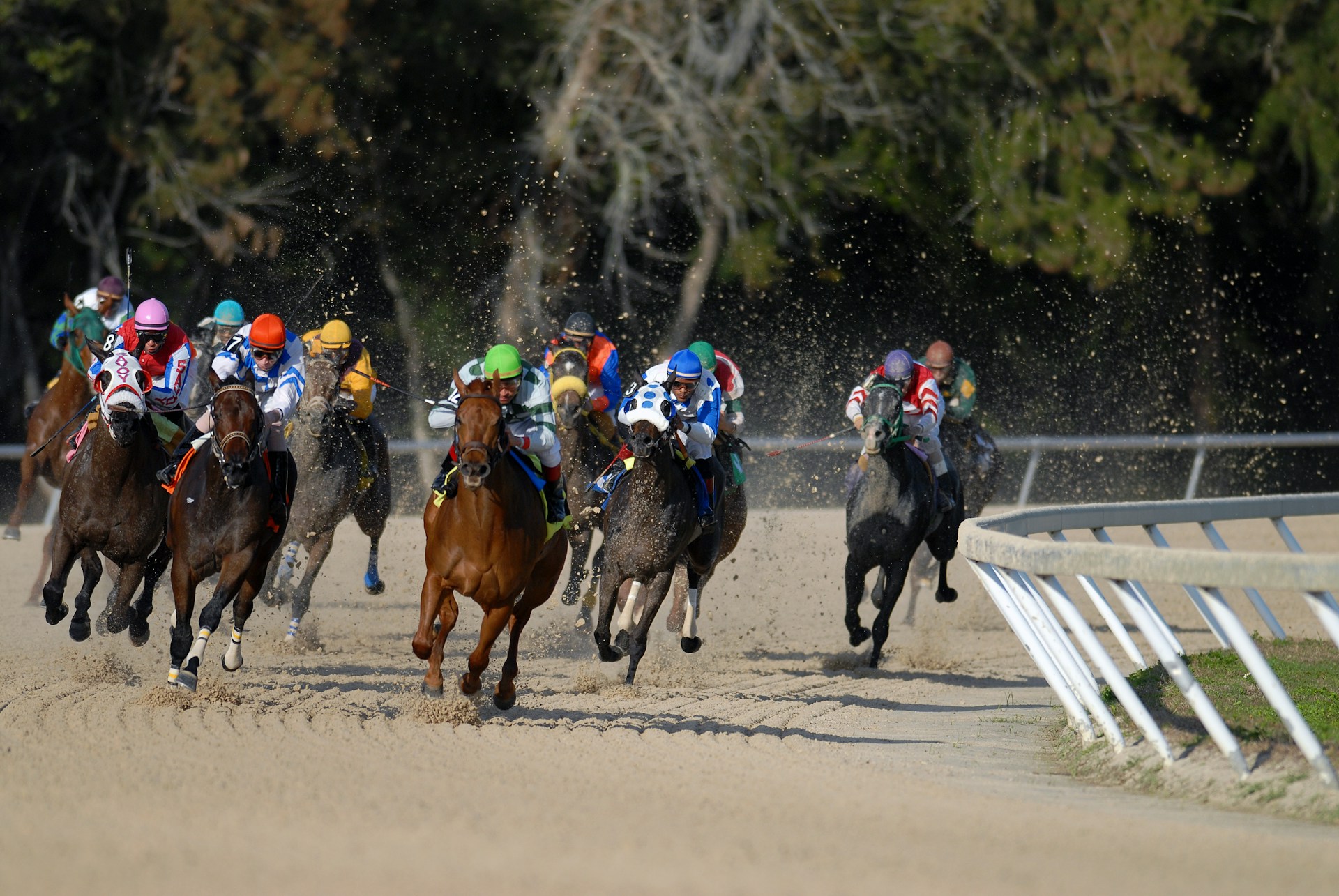
Imagine owning a well-trained thoroughbred racehorse. Born and bred for speed, this horse thrives on competition and lives to run fast.
Every day, six days a week, this horse trains relentlessly. It has one purpose and one passion: running and winning races. Nothing else matters.
But on race day, you grow cautious. You worry, despite all the training, despite the horse’s proven skill, that it might not pace itself properly. So, you ask the jockey to override its instinct to run fast. You instruct the jockey to hold back the reins from the start.
As the race unfolds, your horse struggles against this restraint. Instead of feeling exhilarated, it grows frustrated. Its natural drive diminishes with each stride as the jockey pulls back, second-guessing the horse’s desire to run.
Finally, as the last turn approaches, the jockey releases the reins and shouts encouragement. It’s time to unleash all that pent-up speed.
But the horse no longer cares. He’s not even paying attention. He lost his competitive edge about a half mile ago as the jockey kept holding him back. Sure, the horse goes through the motions, picking up just enough speed to appear engaged, to show respect for the jockey’s urging. But the spark is gone.
This is a very fast horse, so even his partial effort makes for a close finish. But unfortunately, the horse doesn’t win the race. One he could have easily won if he hadn’t been held back from the start.
If you’re a manager, how often do you treat your employees like this horse? How often do you hold them back from doing the very thing you hired them to do? Do you second-guess their instincts, micromanage their decisions, and restrain their natural abilities out of fear, caution, or to protect your ego?
Consider how demoralizing it is for your team when you take away their autonomy. The freedom to run their own race. When employees lose the ability to make meaningful decisions, their enthusiasm, creativity, and ownership suffer. These are the very qualities that fuel success, and when suppressed, diminish the team’s potential and their performance.
Take a look around your organization. Are your people fully engaged, and running with purpose? Or have you inadvertently drained their passion and energy by holding them back?
There’s something else that’s easy to overlook. When you don’t allow your people to take on challenges, make decisions, and occasionally stumble, you’re not just holding them back today. You’re limiting who they can become tomorrow. Without the opportunity to stretch, fail, and grow, your employees can’t develop the judgment and endurance that leadership demands.
Playing it safe and keeping them on a tight rein risks weakening your bench strength and jeopardizing your organization’s ability to thrive in the future. We’re not just running one race; we’re running a never-ending series of tough races that stretch out long into the future.
Imagine how powerful your organization could be if you simply let your thoroughbreds—all the talent and skills you’ve carefully assembled—run their races the way they know best. Imagine letting them succeed and fail with your support, as part of your team, and not just your assistant waiting for you to make all the decisions.
It’s time to loosen the reins and let the ponies run. Because if you don’t, they might find somewhere else where they can.
At kilometer 32 just south of San Felipe, where warm breezes wandered, and stars blanketed the sky — more stars than anywhere I’ve ever been.
Off-road racing brought us there, wide sandy beaches just a short walk away, bathtub-warm waters stretching out forever, the tides carving their quiet stories in the sand.
Under their shady palapa, watching the sun rise and fall on the horizon, Mom and Dad built their place from scratch, one humble project at a time. It was luxury camping at its very best.
Their place was just across the arroyo from the beach, where Dad taught Julianne to drive a stick shift on the wide-open sand.
How I long to beam back there. To see them again.
To hear their voices busy with new plans, to see what they’ve been working on, to sit with them in the shade at cocktail hour, chips, salsa, and all the shrimp we could eat, as the afternoon melts softly into evening.
I’d love to hear who’s come to visit lately.
Both are gone now, but the memories remain. Their laughter rides the breeze, as fresh as the salty air, that still stirs in my heart.
Backstory: A Campo Sahuaro Adventure
When Mom and Dad bought their lot around 1988, it was nothing more than a small concrete slab and four stakes marking the corners of their sandy “oasis.” What made this campo special was its access to a fresh water well…rare in that part of Baja.
Their lot sat on a bluff overlooking an arroyo, with the Sea of Cortez just beyond the sandy beach. In Mexico, buying a lot like this meant purchasing a long-term lease from the property owner. As long as you pay the annual lease (which was under $1,000 per year) you control the land. Anything they built on it was theirs.
Because Mexico has nationalized property in the past, many Americans build semi-permanent structures that can be dismantled and hauled away if needed. That kind of caution remains, even though nothing like that has happened in a very long time.
Being a concrete guy, Dad’s priority was pouring a lot of concrete. He laid down a huge patio that would become the base for everything else, including one of the largest shade structures I’ve ever seen. It didn’t happen overnight. This was a multi-trip (multi-year) endeavor, often coinciding with supporting Team Honda’s off-road racing efforts. They’d haul supplies and tools down along with pit equipment. In the early ’90s, sourcing building materials in Baja was still hit or miss so they brought most of what they needed with them.
By around 1991, Dad was ready to build a workshop. It would be like a shipping container, made of wood, with big swing-down doors on each end that doubled as ramps. He welded little leveling stands to the top of each door so they could serve as sleeping platforms when opened. I slept on those doors under the stars every chance I got.
As with everything at Campo Sahuaro, there’s a story behind that build.
We were down there pitting for Team Honda, which meant several fellow pit crew members were staying at my parents’ place. At that point, it was mostly a shaded patio and a small pump room. Many of the guys were carpenters, so they brought their tools and were ready to build.
Dad’s motorhome was packed. The center aisle was filled with 2x4s, stacked at least five feet high. Getting around inside was nearly impossible. Behind the motorhome, he towed a converted motorcycle trailer that he’d built at least ten years earlier. It was loaded with a perfectly stacked cube of 4×8 plywood sheets. The walls of the future workshop.
I happened to be traveling with them on that trip, ready to help with both pitting and construction. About 50 miles from the campo, we heard a loud crash and scraping noise. We were driving across a dry lakebed, the road raised 15–20 feet above the flat terrain. I looked out just in time to see the trailer tumbling down the embankment.
Dad got the motorhome stopped, and we rushed out to assess the damage. The trailer tongue had sheared clean off under the weight of the plywood. Thankfully, it hadn’t failed earlier, during high-traffic sections of our trip. The trailer was upside down in the lakebed, still lashed to its cargo. That cube of plywood was completely intact.
Within minutes, two vans carrying some of our crew pulled up behind us. We counted heads — at least ten of us, including a few high school football players. It wouldn’t take long to relocate all that wood.
A chain gang formed. We passed sheet after sheet of plywood up the embankment and loaded it onto the vans, lashing them down with tie-downs and ropes we’d salvaged from the trailer. We even hauled the trailer carcass back up the hill. At the very least, we figured we’d salvage the tires and axle.
That’s when an old Toyota pickup rolled up. A local man hopped out. I greeted him with my high-school-turned-Baja-race-pit-guy-Spanish. Lots of smiling, gesturing, and broken sentences later, we learned he was a welder and fabricator. He was heading to San Felipe to visit family and watch the race.
He looked over our trailer, nodding thoughtfully. He said he could take the trailer on his truck bed along with the remains of the tongue and hitch. He’d rebuild it and leave the rebuilt trailer at his brother’s restaurant in San Felipe. We asked him how much he’d charge us for that service. His response was $20(!).
I confirmed that his plan was to haul our trailer back to his shop (about 40-50 miles back), rebuild it, and then he’d tow it all the way down to San Felipe for $20. We told him there was no way we’d let him do that for anything less than $200. His eyes got real wide. I don’t think he believed what I was saying. I said that we’d gladly pay him that amount for all that he’d be doing for us.
We loaded the trailer carcass onto his truck bed, shook his hand, and paid him the agreed $200. We wouldn’t be able to see him at the conclusion of the job, so pre-payment was our only option. He turned around with his new load and headed back to his shop.
We mounted up and continued to Campo Sahuaro, wondering if we’d ever see that trailer again.
The Workshop Rises
The race went great. The workshop was built in a day or two with the expert help of our crew. The carpenters led the way and the rest of us did our best to help and stay out of their way. Copious amounts of alcohol were consumed around the campfire, many snacks and excellent meals were eaten, heroic stories (some of them true) were shared with lots of laughter along the way.
On the way home, we stopped at Baja 2000, the restaurant where our mystery welder said he’d leave the repaired trailer. And there it was.
Not only had he fixed it. He’d reinforced it, straightened the bent parts, and welded it all back together better than before.
Legacy
Over the years, I visited Campo Sahuaro many times, sometimes with my wife and daughters. As mentioned earlier, Dad taught my oldest daughter to drive a stick shift truck on the beach in front of their place when she was probably 12 or 13 years old.
I loved knowing the stories behind everything built there. Most of the stories involved improvisation, imagination, and always perseverance. There were a ton of lessons at their property about staying focused and overcoming obstacles in the pursuit of your goals.
I loved sleeping under that blanket of stars, watching satellites traverse the sky (there’s a lot more of them up there nowadays). I loved swimming in the warm ocean. Most of all, I loved being with Mom and Dad, sharing good times and making memories with them at their special place, 32 kilometers south of San Felipe.
p/c – I asked ChatGPT to make an image of a starry night on the beach based on my story. Amazingly, the image it rendered is mostly how I remember it…except for the houses on the front row (Mom and Dad’s place was on the second row), and the dry-docked fishing skiffs that used the campo as their base of operations.
I heard this a while back and it resonated with me. That it’s a privilege to be under pressure.
At first, this may seem counterintuitive. Pressure can feel heavy. It weighs on us, steals our sleep, tightens our chest.
The pressure to perform. Pressure to deliver results. Pressure to be the best spouse, parent, grandparent, or friend we can be.
Pressure to grow. Improve. Rise to the moment.
We feel pressure because someone is counting on us. Our family. Our coworkers. Our teams. Our communities.
That pressure? It only exists where there’s a purpose. It’s a signal that we matter to someone. That our role isn’t meaningless. That someone out there is relying on us to show up, do our best, and help them move forward.
The alternative?
No responsibilities. No pressure at all. No one looking our way. No one expecting anything from us. No one counting on us.
No promises, no demands (we don’t get enough Love is a Battlefield references in life).
Maybe, no purpose.
The next time you feel the world pressing in, take a deep breath and reframe the situation.
That weight on your shoulders? It’s a sign of trust. A signal of opportunity. A reminder that you have a place in someone else’s story.
In the end, pressure is a byproduct of the privilege to lead, to love, and to serve.










 Grandpa Bob Encouraging Leadership
You must be logged in to post a comment.