Eyes That Understand – Welcoming our Ninth Grandchild

This week, a new set of eyes entered the world — our ninth grandchild, a baby girl. Her eyes are just beginning their work. They don’t yet see clearly. Like all newborns, her vision starts in soft focus. She sees light, shadows, movement, and faces held close. She knows the warmth of her mother’s arms, the cadence of her father’s voice, and, if I’m lucky, the gentle presence of her grandparents too.

In time, her eyes will begin to sharpen. She’ll see faces from across the room, the toys just out of her reach, her siblings and cousins. Then, the world outside the window. A broader picture will come into her view.

But even as her eyesight expands, her perspective will remain near. She’ll see how things affect her first. Hunger, comfort, joy, frustration. Her world will center on her own experience, as it should for a child learning what it means to be alive.

And then she will grow. With years and love and bumps along the way, she will begin to see more than just herself. She’ll learn to recognize others’ emotions, to feel their joy and pain. Her perspective will widen to include her friends, her extended family, her community. She will see how her actions ripple and impact others, how choices matter not just to her, but to those around her.

As more time passes, she may begin to understand something deeper. That perception is not the same as truth. That others see the same moment, the same memory, from very different angles. She’ll begin to recognize that we all wear lenses shaped by experience, belief, hope, and hurt.

And if she keeps growing, keeps learning, keeps loving, she may even come to understand the beauty in those differences. To act not just from clarity of vision, but from clarity of heart.

Even as her vision someday blurs a bit, may her wisdom sharpen. May she see what matters most. May she understand not only what is, but what could be. May she seek the life-giving fulfilment of a loving life.

And may she, in time, pass on her vision.

What We Learn to See

She was born into light too bright to grasp,
her gaze flickering toward warmth,
held by arms she could not name.

A nose. A smile. A voice that hums,
these are the shapes she first learns to trust.

Her world is inches wide.

Then, little by little,
the room expands.
Familiar faces move,
toys beckon from across the room.

Still, her eyes are mirrors,
reflecting only her own need:
Am I safe? Am I loved?
Does the world answer me?

Time stretches her view. She sees hurt in another’s face.
Joy in someone else’s triumph.
She learns that not all stories are her own.

She learns to ask: How do you see it?
And to listen for an answer.

Mistakes come. Grace follows.
She learns that sight alone isn’t understanding.
That clarity is earned, not given.

Years pass. Vision fades.
But somehow, she sees more than ever,
about herself and the world around her.

What once was blur is now meaning.
What once was noise is now truth.
What once was about her becomes about others.

And in her twilight vision,
she turns to the child,
whose eyes are still new,
and whispers:

Look close, little one,
and then look again.
You’ll stumble, and that’s part of the seeing.
You’ll hurt, and that’s part of the knowing.

Take the vision I’ve earned —
not perfect, but practiced.
Carry it forward,
along with all my love,
and the hopes I hold in my heart for you.

p/c – A photo of our daughters taken almost 30 years ago (!) They’re now passing their love, perspectives, and life lessons to their own children. Happy Mother’s Day!

A Love Letter to My Grandchildren

My Dear Grandchildren,

Thinking about how to tell you about the infinite power of love, I realize how important it is to share this letter with you.  To help you understand just how much love will shape your lives.

You’re still growing, discovering who you are and what you want from the world. As I reflect on everything I’ve learned and everything I’ve seen, I can’t help but realize that love has been the guiding force in all of it. If there’s one truth I want you to know, it’s this: love is the one thing that never runs out. It is truly infinite.

Love has no limits.  It’s a gift from God that never empties. “True love is infinite. It has no end, no limits, and no boundaries” (Unknown).  I want you to remember this when life gets tough or when you start to feel like there’s not enough love to go around. The love you give will always come back to you. It grows, just like a tiny mustard seed turns into a mighty tree. The more you pour out, the more you’ll have. And love? It keeps on giving.

Love has the power to change things.  To transform everything. It’s not just a feeling. It’s something far more powerful than that. Love is what changes hearts. It softens the hardest of feelings and brings people together.

I’ve seen this truth unfold many times in my life. When you approach someone with love, even if they’ve hurt you, that love has the power to melt away your bitterness, to open a door where there was once a wall. “Love is the only force capable of transforming an enemy into a friend” (Martin Luther King Jr.). That’s the kind of love I want for you. The kind that can heal, the kind that builds bridges instead of walls.

Love isn’t passive. It’s not something that just happens to you. It’s something you choose every day.  Love calls for action, for intention. It’s an active force. And when you lead with love, you’ll see the world differently. I’ve learned that love moves you in ways you can’t predict, but it will always be the guide that matters most.

You will never have all the answers. Just choose love. “To love is to will the good of another” (St. Thomas Aquinas). That’s the essence of it. When you love someone, you are choosing to want the best for them, to care for them, and to be there for them, even when it’s hard.

Sometimes, we make mistakes. We hurt each other. There are moments when we carry the burden of regret or hard feelings. But love, I’ve learned, is about letting go. It’s about forgiving. You can’t move forward while holding on to old wounds. Love is what frees you from that burden. It’s what gives you the strength to keep going, even when it feels impossible. “Love is an endless act of forgiveness” (Maya Angelou).  This resonates deeply with me, even when I forget its lesson. You see, when you forgive, you allow love to take root again, to grow and bring healing.

And the beautiful thing about love is that it never ends. Even when someone leaves us, their love remains. It stays with us. It lives on in the memories we carry and in the ways we continue to love others by their example. The love we give and receive stays with us, shaping us, and guiding us through the rest of our lives. “Love has no age, no limit; and no death” (John Galsworthy). When someone you love passes away, their love is still alive within you. It never dies. It’s a part of who you are forever.

I want you to know that love isn’t something you will always understand. It’s not something that always makes sense. Sometimes it feels irrational or confusing, but that’s what makes it so powerful.

Love comes from a place deep inside that logic can’t explain. It’s a mystery. “The heart has its reasons of which reason knows nothing” (Blaise Pascal).  That’s the beauty of love. It doesn’t need to be explained. You feel it. You know it. And that’s all there is.

Love is also not confined by time or space. It’s already free. “Love is an infinite ocean, where every drop is a reflection of the entire universe” (Unknown). Love stretches. It connects us all, no matter where we are, no matter what we’ve been through. It doesn’t have walls. Love is limitless.  It grows as we share it, and the more we live it.

I think about St. Paul’s words to the Corinthians when he wrote about love. It’s a love that’s patient and kind, that doesn’t boast or get angry easily. It’s love that seeks the good, that keeps no record of wrongs, that always protects, always trusts, always hopes. “Love is patient, love is kind. It does not envy, it does not boast, it is not proud. It does not dishonor others, it is not self-seeking, it is not easily angered, it keeps no record of wrongs. Love does not delight in evil but rejoices with the truth. It always protects, always trusts, always hopes, always perseveres” (1 Corinthians 13:4-7). That’s the love I want you to know. 

At its core, love is what makes life worth living. Without love, we would have nothing. Without love, we would be lost. “Love is the only reality, and it is not a mere sentiment. It is the ultimate truth that lies at the heart of creation” (Rabindranath Tagore). God’s creation.  It’s love that drives us to seek goodness for others, not just ourselves. It makes the world a better place, one loving act at a time. 

There’s one last thing I want you to know. Love never runs out. Its supply is unlimited. “There is no remedy for love but to love more” (Henry David Thoreau). That’s the key. The more you love, the more you’ll understand, the more you’ll see. Love opens new possibilities that you didn’t even know were there. It’s a wellspring that you can always draw upon, as long as you’re willing to give.

Love is the one thing that will always be with you. It doesn’t matter where life takes you or how far you go. It will be there. Love is constant, unchanging, but always expanding. And in that love, you’ll find the freedom to be who you’re meant to be, to live fully, by loving deeply.

The more you love, the freer you become. The more love you give, the more you’ll find in return.

As your grandpa, I love each of you with all my heart and soul. I want nothing more than for you to lead lives filled with love—guided by love, surrounded by love, and sharing love with everyone you meet.

A life full of love is a life full of joy and meaning.

Love always,

Grandpa Bob

Photo by Diane Anderson – That’s 7 of our 8 grandkids…and we have another on the way in May.  Diane is their great grandmother.  God is good.  

Bringing Home the Moonbeams

There’s a line in a Frank Sinatra song that asks if we’d like to, “…carry moonbeams home in a jar.” A crazy idea. Moonbeams can’t be contained or put in a jar, but their magic can be carried home just the same. What if we could carry home the kind of wonder and light that moonbeams represent?

Life throws challenges at us every day. Deadlines. Difficult conversations. The relentless tug-of-war between expectations and reality. Yet, amid the noise, we often stumble upon moments of beauty.  Unexpected acts of kindness, moments of connection with strangers, or simply a sunrise or sunset that stops us in our tracks. These are moonbeams.

Have you ever met someone for the first time and felt their kindness so deeply that it stayed with you? Maybe it was a stranger who gave you directions with a smile, a colleague who truly listened, or someone who saw you struggling and extended their hand. These are glimpses of humanity’s greatness.  Magic moments where we see the best of who we are reflected in someone else.

What if we made it our mission to carry that magic home with us?

It’s easy to bring home the worries of the day.  Our frustrations, our stresses, our nagging self-doubt. But alongside these, we can also bring moonbeams: the small, bright moments of beauty, hope, and love that we encounter every day. We can share the wonder of a chance conversation, the joy of something new we learned, or the inspiration we felt when we saw someone overcoming adversity.

Carrying moonbeams is about being conscious of what we pass on to those we love. It’s about choosing to share curiosity instead of cynicism, gratitude instead of grumbling. It’s about being the explorer who brings back stories of the world’s beauty to share with those at home, inspiring them to see the magic in their own lives, too.

Imagine if we all carried moonbeams in our metaphorical jars. How much brighter would our homes, our communities, and our world become?

What if we could embrace the day with the motivated curiosity of an explorer. Purposely looking for the moonbeams—the fleeting magic of kindness, beauty, and connection.

Imagine carrying them home to share, not in jars, but in our words, our actions, and our presence.

Because moonbeams, once shared, have a way of multiplying.

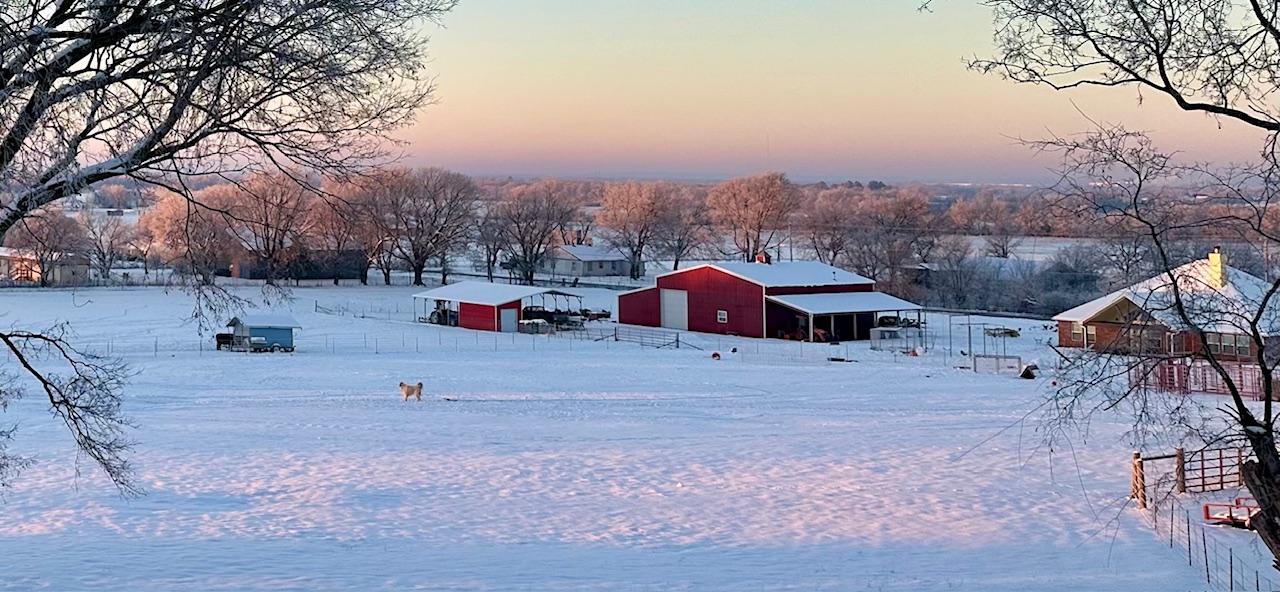
Photo by me, capturing a “moonbeam” of a sunrise view outside my kitchen window the other day

Finding Laughter Amid the Chaos

Life can often feel like a series of unpredictable events coming at you without end.  In this whirlwind, maintaining a sense of humor helps make sense of it all. Humor helps us see challenges not as obstacles, but as opportunities to grow and understand.

Make the Absurd your Friend

Consider this: you’re in the middle of a presentation when your computer suddenly decides to restart for updates. Everyone in the room is waiting, and you’re left standing there. In that moment, you have a choice. You can panic, or you can laugh and say, “Well, I guess my computer decided the razzle-dazzle portion of this presentation is over.” Embracing the absurdity of the situation lightens the mood for everyone involved and shows that you can think on your feet.

Imagine you’re about to start a remote interview.  You take that last sip of coffee and spill some on your shirt.  You realize this nice brown spot is visible on the screen just as the person interviewing you joins the meeting.  It’s easy to let this ruin your day.  Instead, you can chuckle and say, “Nothing like spilling coffee on yourself to make a great first impression!” This acknowledges the problem and humanizes the situation.  Plus, you’ll have a great story to tell later. 

Adding humor to our lives makes us more resilient and improves our attitude. Not taking life too seriously is crucial. Our worries and anxieties are often fleeting. Finding humor in our daily routines, like laughing off an unexpected reboot, shifts our focus from what’s going wrong to what’s funny, fostering a more positive outlook.

Laughter’s Power

Think about a time you were stuck in traffic with friends, running late for an event. Instead of stewing in frustration, someone starts making jokes about the situation, and soon everyone is laughing. The shared humor transforms a stressful experience into a memorable one, strengthening the bonds among your friends.

Laughter connects us to others, breaks down barriers and builds a sense of community. When we share a laugh with someone, we create a bond that transcends differences and fosters empathy. In a world that often feels divided, shared humor can unify. Moments of shared joy are essential to our well-being, reminding us that we are not alone in our experiences.

Life’s unpredictability can be daunting, but it’s definitely a source of great humor if we’re looking for it.  By adopting a mindset that finds humor in the unexpected twists and turns of life, we learn to appreciate the randomness of our experiences. Next time something unexpected happens, imagine it as a scene from a sitcom, with you as the lovable main character.

Find humor in the little things. Accept the absurdity, laugh at the unexpected, and share a joke with those around you. Maintaining a sense of humor is not just about finding joy—it’s about making sense of a life that doesn’t always make sense.

As Jerry Seinfeld puts it, “If you can find humor in anything, you can survive it.”

p/c – Frank McKenna – Unsplash.com

Nothing You Love is Lost

“Nothing you love is lost.  Not really.  Things, people – they always go away, sooner or later. 

You can’t hold them any more than you can hold moonlight.  But, if they’ve touched you, if they’re inside you, then they’re still yours. 

The only things you ever really have are the ones you hold inside your heart.”

– Bruce Coville (h/t James Clear for sharing)

I’m working on a project for my kids and grandkids that has me writing answers to a series of about 75 questions.  It’ll be an autobiography of sorts…a collection of memories and stories about life from my perspective.

While answering a question that asked me to describe a typical school day, I eventually got to my life in high school. 

I found myself thinking about the first person who I’d known well that died. 

Mr. McNally, my freshman pre-algebra and senior year chemistry teacher, was killed by a drunk driver who ran a red light and broadsided his vehicle.

I hadn’t thought about Mr. McNally for many years, but the moment I thought about my time in high school, all the wonderful memories about him came flooding back.  I could see his witty smile; the lab coat he always wore in the chemistry lab. I remembered where I sat in the chem lab and the goofy glasses we had to wear when conducting experiments.     

His untimely death was devastating news for our school and all of us who knew him.  Mr. McNally was loved by his students.  He was one of the special teachers in my life.  The kind that not only teaches their subjects extremely well but had a profound impact on my growth as a person.

The unfortunate truth about life is that as the years go by, you’ll have to say goodbye to countless special people.  Family members. Friends.  Teachers. 

Some will die, some will move away.  In each case, we will lament that it was too soon.  Their departure leaves a shadow on our soul where once they belonged.    

I think the most powerful part of Coville’s quote is the way it highlights the transience of love and our relationships.  We can’t grasp or possess the moonlight, but we can admire it and the feeling it gives us.  Similarly, we can’t possess the people or experiences we love.  We can only cherish the memories and the impact they’ve had on us, and hope that we were able to return a positive impact to them.

Coville’s quote encourages us to appreciate the moments and connections we have while we have them.  Knowing that if they end, the love we shared with them and their significance endures, enriching our lives. 

May the memories you have of your loved ones remain with you always, and may those memories be a source of light and inspiration even as your journey continues without them. 

I have one favor to ask. If you enjoyed this post, please forward it to others.

p/c – Mike Labrum – Unsplash.com

Grandma’s Hot Chocolate

There’s something special about grandma’s hot chocolate.

It doesn’t matter that she boils water and pours in the envelope of instant powder like the rest of us.

It’s what she does while the water’s boiling.  The questions she asks while stirring-in the powder.  The way she stops stirring to listen to your answers.

Grandmas have that way of listening, even to the stuff we’re not saying.

It’s the way she adds the right amount of milk to “thicken it up a bit.”  Nobody else gets it exactly right like grandma.  She knows just the way you like it.  In fact, she’s the only one who does.

It’s counting out the right number of baby marshmallows.  Enough to sweeten things, but not so many that they get in the way.

It’s the way she squeezes your shoulder as she places the cup on your placemat.

It’s the way she sits to enjoy it with you.

That first sip is such a treat.  Is it the taste of the chocolate, or seeing grandma’s warm smile across the table that makes it so good?

It doesn’t matter.  Your loving journey to the bottom of this cup of wonder is just beginning.

Funny how the simplest things in life are transformed when they’re mixed with grandma’s love.

A love she teaches us to bring to the simple things in our own lives each and every day.

Photo by Salome Alexa on Unsplash

Yahtzee Lessons

I was probably seven when Grandma Anne taught me to play Yahtzee.  I’d spend the night at her house with my cousin, Devin, and invariably, we’d be at her kitchen table, playing Yahtzee all afternoon.

It’s a simple game…on the surface.

Each player gets thirteen turns to complete their score card.

The top section of the score card consists of numbers 1 thru 6.  You need to roll three ones, three twos, three threes, etc. to get your “minimums.”  You could also roll four fives (or four of anything), which comes in handy if you were only able to roll two threes on a previous turn.  The idea on the top section is to score at least 63 total points, so you can get the 35-point bonus.

Yahtzee! scores 50 points.  That’s when you get all five dice to be the same during your turn.  Some players focus solely on getting Yahtzee at the expense of everything else.  The theory being that 50 points is huge, and if you get a second Yahtzee that one’s worth 100.  Of course, the odds of getting a Yahtzee are against you, but the payoff is big when it happens.

Grandma was always clear that while a Yahtzee is nice, the most consistent winning strategy is to get your bonus on the top section.  Rely on those 35 points as your foundation.  A Yahtzee, or a big four-of-a-kind on the bottom section of the score card would be icing on the cake.

Relying on the foundational 35 and less on the Yahtzee probably explains many of the best decisions I’ve made in life.

Each turn, you roll five dice to start.  You get two more rolls in your turn.  Depending on what the dice show after your first roll, you may not need to take those additional rolls.  Life is good when you roll a complete large straight or a Yahtzee on your first roll!

The bottom section of the score card has three-of-a-kind, four-of-a-kind, full house, small straight, large straight, Yahtzee! and Chance.

Chance comes into play when you’re rolling for something that doesn’t happen.  Like, you already have your small straight, and now you’re rolling to complete a large straight.  Unfortunately, that last number doesn’t come up.  You count-up the total of all the dice and enter that number into Chance.

Chance is a lot like a mulligan in golf.  A do-over.  In this case, you get to capture some points even though the rolls failed to produce.  They say there are no do-over’s in life, but I disagree.  There are plenty of second chances, if you’re willing to ask for forgiveness (mostly from yourself), learn from your mistake(s) (hopefully), and try again.

How often do three sixes come up in a roll?  How likely is it that you’ll be able to roll that one specific number you need to complete your straight or full house?  When you’ve used up your Chance spot, and your rolls have led to nothing, which slot are you willing to sacrifice to end this turn?  Odds and decisions.

Yahtzee seems like a game of chance.  It’s much more.  It’s a game of decisions and imperfect trade-offs.

After a while, we graduated to playing Triple Yahtzee, which entails playing three games simultaneously.  You get 39 turns.  One column is worth triple points, one is double points, and the last column is regular points.

The decisions and trade-offs from the “Single Yahtzee” game are in play, but now you want to maximize the point values in your triple column and consider sacrificing some of the slots in the regular column.

Don’t be fooled.  Mastering Triple Yahtzee isn’t just triple the challenge.  As in real life, something that should be only triple the challenge is often exponentially more challenging than it first appears.

What is the answer to all this exponential chaos?  Methodical effort and focused strategy.  The priorities and the strategy are defined.  The decisions that follow from these priorities become clear.  Maybe even simple.

There’s a certain genius in showing a seven-year-old the game of Yahtzee.  They haven’t fully formed their approach to decision making.  Success, failure, decisions, and sacrifices are in play with every turn.  Excellent practice for the real thing.

Yahtzee illustrates how something completely random and driven by chance can be managed within a solid set of priorities and strategies.

I didn’t just get to learn about rolling dice, counting numbers, and making decisions.  Grandma gave me the gift of lasting memories that I cherish to this day, playing Yahtzee at her kitchen table.

Now that I have six (!) grandkids of my own, I can’t wait to teach them the game of Yahtzee…and then, Triple Yahtzee!

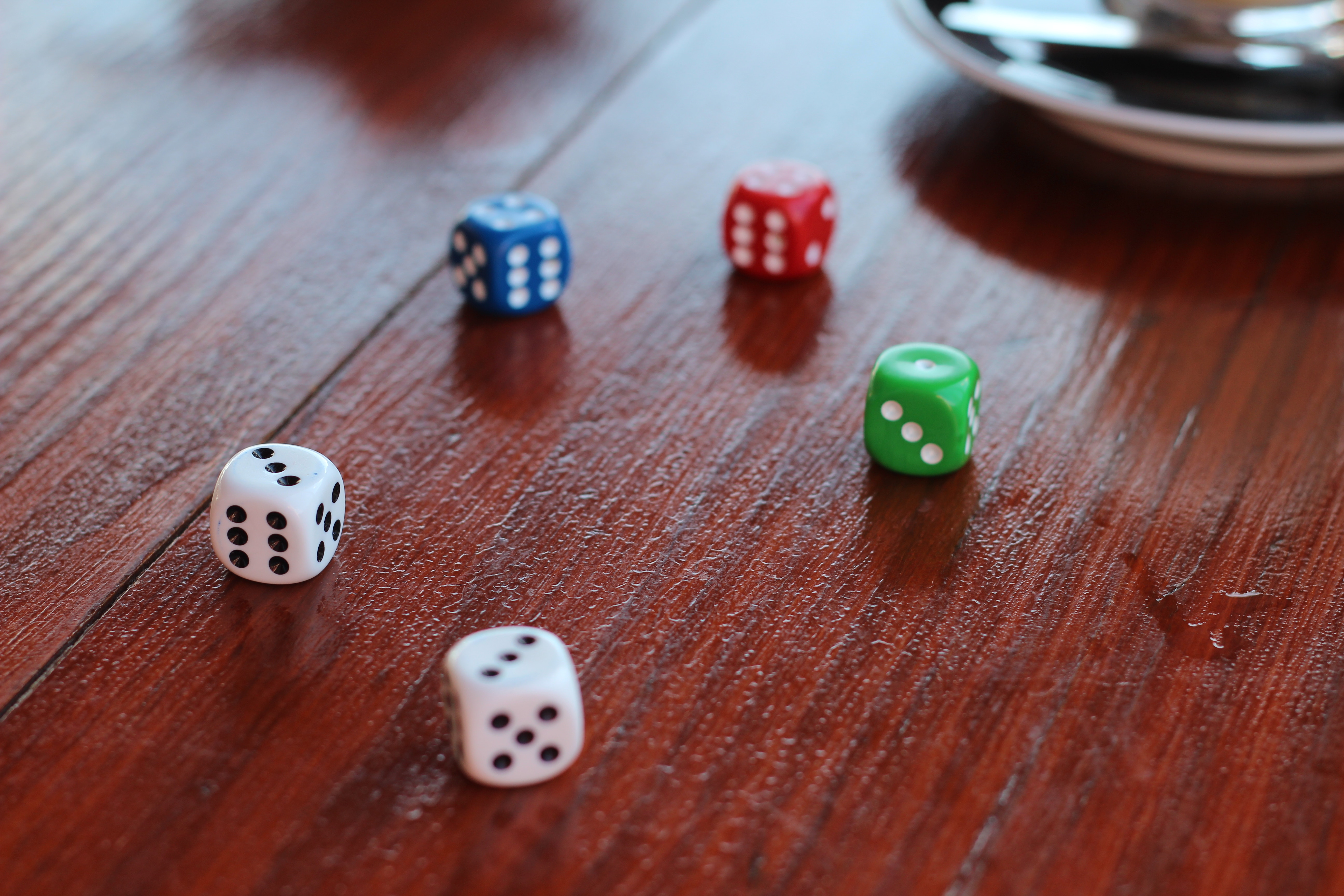
Photo by Lea Böhm on Unsplash


Fishing and Catching–Bruce Kerner Style

When I think of Bruce, I remember the fishing and the laughter.  I don’t remember the fish we caught.

Bruce Kerner loved to fish.  He didn’t get to fish often.  He was a sign painter for various studios and was away working on movies a lot.  He and his family vacationed with us many times when I was a kid.  Back then, vacation time meant Big Bend Resort on the Colorado River and day trips to Lake Havasu.

We’d get a cove on the lake and set up our day camp with a shade, lawn chairs, and coolers.  Bruce always had a bunch of fishing gear that we’d bring ashore.

While the rest of us focused on swimming and water skiing, he focused on fishing.  The pursuit.  The exploration.  Deciding which baits to try.  Changing rigs.  Trying new lures.  Moving down the beach to a new location.  Floating out in a rubber raft to cast near the “proper” pile of rocks.

He always had a look of contentment on his face as he stared at that place where the fishing line meets the water.  Constant vigilance, looking for any sign of a bite.  Maintaining soft hands to feel the slightest movement.

It didn’t matter that the fish usually showed little interest in his bait.  For Bruce, fishing was more important than catching.  When he did catch a fish, he was rarely prepared to keep it.  Somehow, his stringer was always left back at the camp.  He knew that as long as we had daylight, he could cast his bait out there another time.

Come to think of it, we fished at night as well.  Down on the dock along the river, after dinner.  A bunch of us would look across at the lights on the Arizona side and cast out.  Our quarry on the river was catfish, and that meant stink-baits and lots of waiting.

Funny thing is we didn’t catch many catfish either.  When we did, we’d get a flashlight out, or flick a Bic lighter, to see what we’d caught.  The stringer?  Usually up at the trailer.  We weren’t prepared to keep anything we caught.

Sitting there in the dark, fishing pole in hand, staring up at the stars, a kid can learn a lot talking with a fisherman like Bruce.  The meaning of patience.  The dignity of discipline.  How the journey is more important than the destination.  How quiet time is a good time.  The way opportunity meets preparation when that fish hits your bait.  How stories about nothing can mean everything when they’re gone.

Bruce was taken away too early from this world by a heart attack, many years ago.  I find him in my thoughts a lot around July 4th.  That was one of the times each year that our families vacationed at the river.

When I think of Bruce, I remember the fishing and the laughter.  I don’t remember the fish we caught.

They weren’t that important.


Photo Credit:  Unsplash.com, Andrey Trusov

I Should’ve Laughed More

Grandpa Clyde used to say, “You had to laugh…”

A photo by frank mckenna. unsplash.com/photos/EgB1uSU5tRA

Grandpa Clyde used to say, “You had to laugh!” whenever he told stories about something that had happened.

I’m not sure he was laughing when the thing was actually happening, but he knew you had to laugh when he looked back on it.

How many tough situations, crises, or plain old everyday events do you experience in a day, a week, a month…a lifetime?

What if we could pull ourselves out of these situations just long enough to hear the story we would tell?  It won’t get us out of the situation, but might help us find the reason to laugh.


Photo:  www.unsplash.com, Frank McKenna