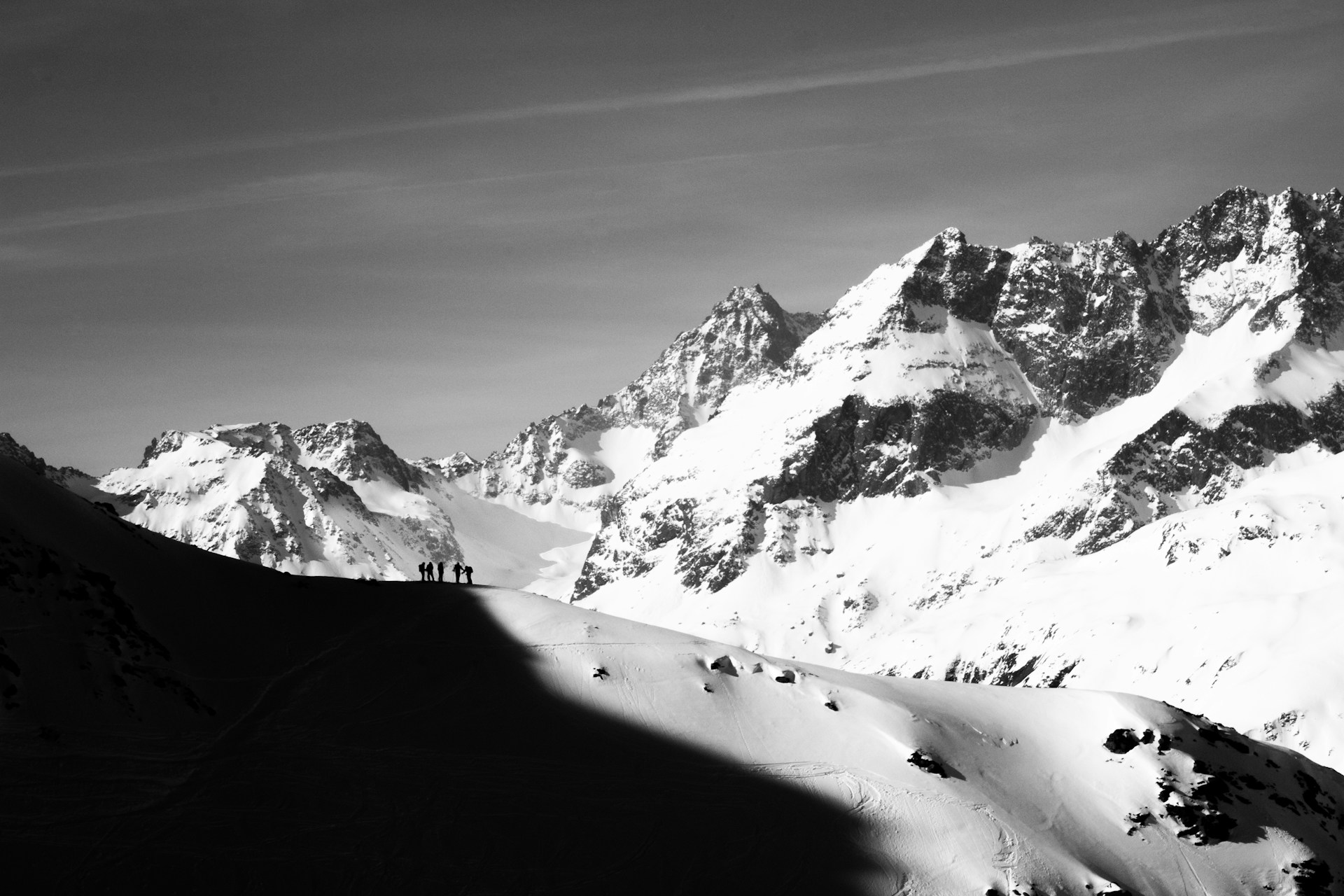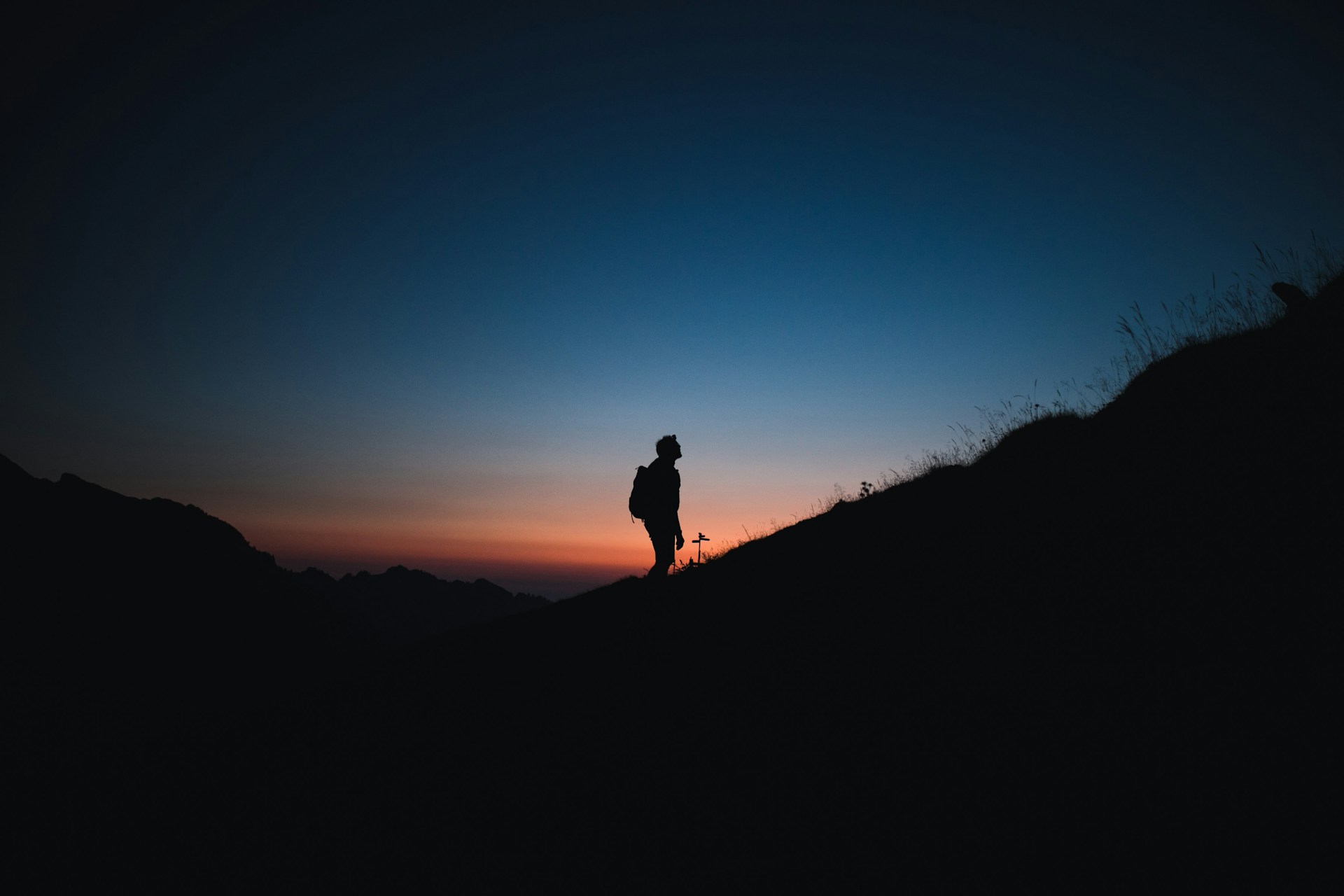
René Daumal titled his unfinished novel, Mount Analogue. It describes a peak, “whose summit is inaccessible by ordinary means.” The mountain can only be reached through inner transformation, making it both a place and an analogy for our journey of struggle toward resilience and clarity in the fog.
Leadership in upheaval can feel similar. Our map runs out. The ground shifts. We carry only our memories. Some sharp with regret, others shining with joy. Yet even scars can become footholds for our climb.
Daumal wrote, “You cannot stay on the summit forever; you have to come down again. So why bother in the first place? Just this: what is above knows what is below, but what is below does not know what is above.”
The summit gives leaders perspective. From above, we see connections hidden from the valley floor. The shape of the landscape, how the streams converge, where the shadows fall and light breaks through. We descend changed by what we’ve seen, and those who walk beside us are steadied by our vision.
History shows us that change always reshapes our climb. The printing press, the steam engine, electricity, space travel, and global connectivity to name a few. Artificial intelligence is the latest steep slope, bringing fear, excitement, and possibility all at once.
Leaders can steady others by naming the change clearly, framing the opportunities, modeling ways to adapt, and keeping purpose at the center of the change.
Daumal died before finishing his book. It breaks off mid-sentence. A fitting metaphor for leadership. Unfinished, unresolved, always in motion.
Leadership is the willingness to prepare others for the climb, walking faithfully with them, and offering perspective so they can see what’s possible…and dare to tackle the climb themselves.
h/t – James Clear for showing a quote from this book that sent me down the path to learn more about Mount Analogue.
“…climbing 10% of the mountain ten times is not as useful as climbing to the top once.” – Adam Mastroianni
This quote reminds me of the old adage about project resourcing: sometimes projects can’t be completed faster merely by adding more people to it. After all, the story goes, nine women can’t make a baby in a month.
Does this climbing quote ignore our preparation? Route scouting, equipment testing, and countless workouts that make the summit climb possible. Not to mention the like-minded team we built to support the climb.
Maybe it’s not about preparation. Maybe it’s about the false-starts, the simulated progress, the big talk and no action that we engage in to make it seem like we’re climbing when we’re not. We think we’re fooling everyone, but we’re only fooling ourselves as we take the comfortable way out and choose not to climb at all.
It’s easy to climb 10% of the mountain or achieve 10% of the goal. It’s easy to get 50%. 60%. Even 75%. But as the challenges compound near the top, we let doubts creep in. The grinding effort becomes exhausting. We lose sight of the summit or forget why we’re climbing in the first place.
We make excuses. We can come back another day and try again. The summit will always be there, and maybe next time…
That’s just it. We’re rarely “ready” for the climbs that matter, whether in business, fitness, or life’s hardships. Waiting for the perfect time often means waiting forever.
You have the power to choose the summit run every time. Committing 100% effort, even when you feel 60% ready. Trusting that you’ll figure out the rest along the way.
Life’s summits rarely wait for us to feel ready. The question is: will you take the first step…and then push beyond 10%, all the way to the top?
I’ve probably hiked or biked hundreds, maybe thousands of trail miles in my life. Most of the trails had been there for many years…even decades.
Other than clearing some fallen branches from a trail or participating in a trail volunteer day, I never gave much thought to how the trails were built, or who originally built them. They were always there. It didn’t matter if the trails started out as animal paths, or were built by hand, carved through the forest. The trails seemed to belong right where they were.
My perspective shifted when we were fortunate enough to purchase acreage that includes a forested hillside, a mostly dry pond, rocky escarpments, and a meadow thick with trees and scrub brush.
Where others may have seen a tangle of impenetrable forest, I could see trails winding through it, paths crisscrossing up and down the hill, around the pond, and maybe a little campsite down in the meadow under the tall trees.
I had no idea where to start or where exactly the trails would go. I just knew the hillside and meadow were calling for a trail system and a campsite that my family and friends could enjoy exploring for years to come.
When we moved here, I didn’t own a chain saw, a tractor, or any of the fancy attachments that make tractors such useful (and fun) tools. I had the standard set of homeowner hand tools from our lifetime of living in a tract home that didn’t have a yard big enough for a lawn.
The real work began when our new property was hit by a 90 mile per hour derecho that effectively found all the unhealthy trees and snapped them in half or knocked them to the ground. As I worked my way across our property over the next six months, cutting and clearing all of the downed trees (40-50 trees in all), I got a ton of practice with my new chainsaws, my upgraded tractor (the small one we purchased initially didn’t cut it, so I did what every tractor guy worth his salt does when faced with this dilemma…I upsized), the 5-foot brush hog attachment, and the front loader grapple attachment.
As I worked to complete the clearing process, I could see where new trails might go. As I brush-hogged large swaths of overgrown scrub brush and brambles, new openings showed themselves. In the areas where I cleared away the dead and fallen trees, nice new grassy areas greeted the sunlight that finally penetrated to the ground. I could see how trimming up some of the remaining trees would improve the sight lines through the area.
Once the land clearing process was mostly done, the real trailblazing process began. Deciding exactly where to cut the trails, which routes worked best given the lay of the land, the gradient of the hillside, natural features, and tree coverage. Could I veer up and to the right a bit to maintain the trail flow while leaving more trees intact? Will a hiker be able to maintain their footing if I use the existing (slightly) flatter terrain on the hillside? Can I make this trail intersect in an interesting way with the other one that’s 200 yards away?
So far, I’ve been talking about literal trails and the (rewarding) process of carving a trail system by hand into my property. I’ve known my share of trailblazers in life and work, and I’ve even been one myself on occasion. It’s funny how, like the paths I was carving through the woods, new trails—whether they’re businesses, inventions, ideas, or methods—often seem inevitable after the fact.
Once they’re established, they feel as if they’ve always been there. But every one of those trails began with someone willing to face the unknown, to push forward without a clear end in sight, risking failure or embarrassment in the name of carving a new path.
Only the people who actually built these trails know what it took to get there. The obstacles that had to be moved, the dead ends they hit along the way, their moments of doubt. They alone understand the learning curve, the time, and the sheer energy it took to bring the trail to life. And as they move forward, bit by bit, the final route often ends up looking different from what they first imagined.
Our new trail system is amazing. It has straight sections, switchback sections, offshoots, shortcuts, climbs, and descents. Parts of the trail are under a tunnel-like canopy of thick forest and other areas open to the sky, providing amazing hilltop views. Walking along the trails feels like the landscape was made for them…even though there were countless hours of planning, experimenting, cutting, clearing, and adapting along the way.
Sometimes the trailblazer is driven by an obsessive need to see where the trail can go. To see what lies over the next hill, or around the next bend. Others visualize how their trail will be enjoyed for years (decades?) to come.
While their motivations may differ, the result is often the same. A path that seems to have always been, enjoyed by countless people who may never stop to wonder how it got there.
For those who wonder, the trail offers something more than just a route. It’s a reminder that someone, somewhere, once walked an untamed path and decided it was worth carving a trail for those who’d come later.
You must be logged in to post a comment.