I heard a quote recently from Tony Xu, the CEO of DoorDash:
“What we’ve delivered for a customer yesterday probably isn’t good enough for what we will deliver for them today.”
It’s not about failure. Xu isn’t saying we got it wrong. He’s pointing to something more subtle that applies not only to tech companies like DoorDash, but to every business in every industry. Regional banks. Manufacturers. Educators. Consultants. Entrepreneurs. Even nonprofit leaders. No one is exempt.
It’s tempting to believe that what worked before will keep working. After all, if it’s not broken, why fix it? That quiet assumption that if we keep doing what we’ve always done, success will follow.
But that mindset is quietly dangerous. The world isn’t that simple.
Customers don’t live in yesterday. They live in the now. They’re comparing their experience with us not just to our competitors, but to the best parts of every interaction they’ve had today.
They’re comparing our website to their grocery buying app. Our onboarding process to a streaming service subscription they love. Our customer service calls to the help they received (or didn’t) from their cell phone company.
We’re not being compared to the bank down the road or the business across the street. We’re being measured against the most seamless, most helpful, most human-centered experience our customers have ever had.
That’s a very high bar. It’s unfair…and they don’t care.
It’s easy to forget their perspective from inside our organizations. We become focused on the big system conversion we’re managing, the vendor issue we’re troubleshooting, the reorganization plans we’re working on this quarter, or the new regulatory review that’s keeping us up at night.
These are real and important things. But the customer doesn’t see them, nor should they.
They’re living in their own world, with their own challenges and needs. They’re asking, quietly and constantly, “Are you making this easier, or harder, for me?”
They’re rightfully selfish in that way.
Some important questions to consider:
–What are my customers or team members quietly expecting that I haven’t noticed yet?
–What have I continued doing because it worked before, even though the market has changed?
–What future am I preparing for? The one I’ve known in the past, or the one that’s unfolding in a new direction?
–Am I making excuses that only make sense inside our organization?
I don’t think leadership is about chasing every trend. But I do believe it’s about staying awake. Staying open. Listening for what’s emerging and not just reacting to what someone else has made clear.
The fact that something worked yesterday doesn’t make it sacred. It makes it a foundation. And foundations are meant to be built upon…not celebrated as finished.
If we truly care about the people we serve, we’ll stay curious about how to serve them better. Because they’re not standing still. Their lives are shifting. Our job isn’t to cling (desperately) to relevance. It’s to keep earning it.
So, we never stop building. We keep asking the hard questions. We stay close to our customers so we can hear what they’re not saying yet. And we must choose to meet tomorrow’s expectations before they arrive at our doorstep.
Yesterday’s work mattered. It carried us here. But it’s today’s effort—and our willingness to keep stretching—that will decide if we’re still invited to serve tomorrow.
As Shunryu Suzuki once said, “In the beginner’s mind there are many possibilities. In the expert’s mind, there are few.”
It’s great to be an expert in our field. But sometimes, a beginner’s mindset is exactly what we need to see things from the most important perspective. Our current and future customers’ perspective.
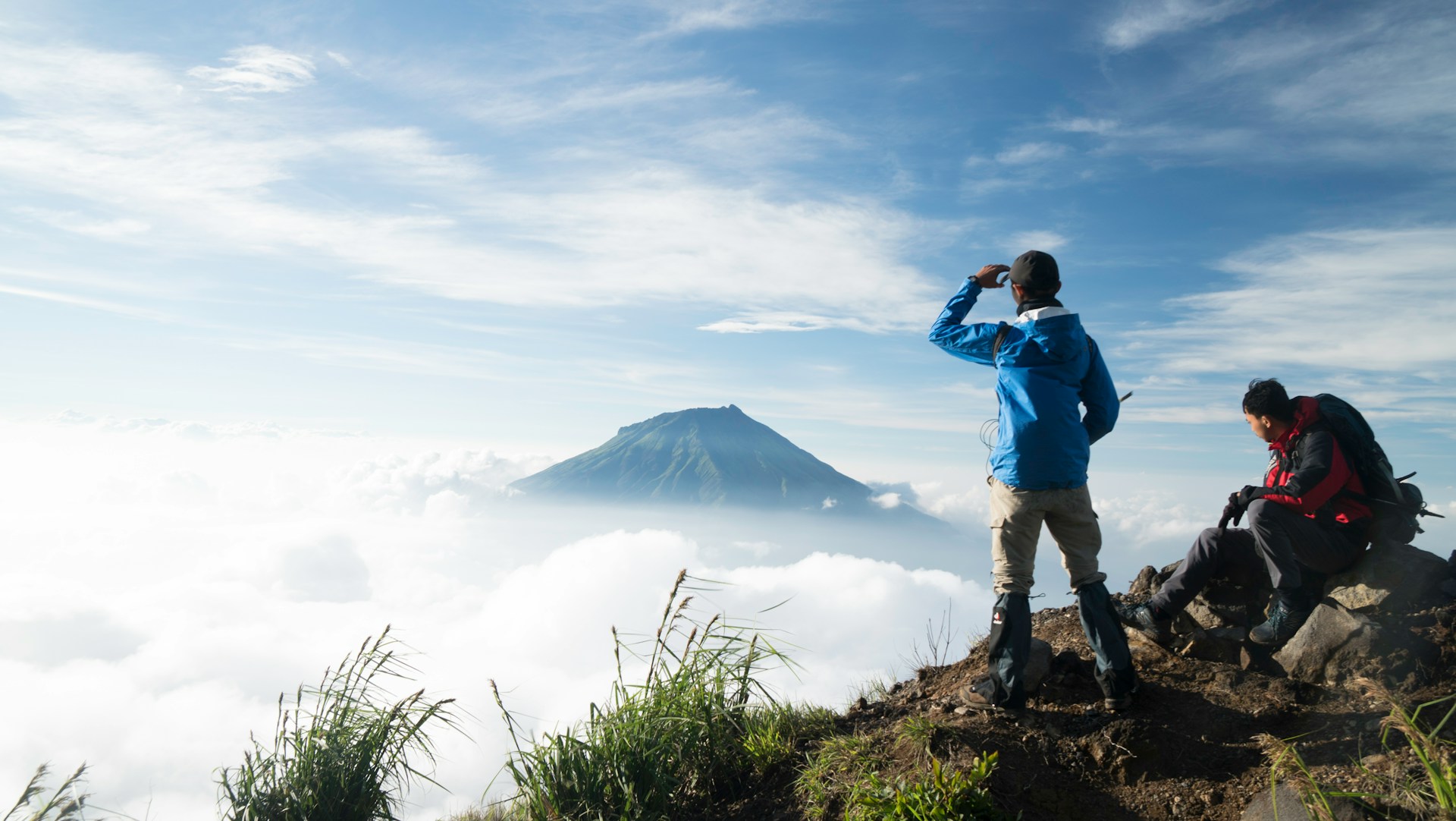
Photo by Bayu Syaits on Unsplash – I love the imagery of these two climbers at the top of a mountain. They may take a short rest to celebrate their achievement, but that next peak is already in their sights.
A friend called recently. He’s been running his own business successfully for over a decade. Things are going well, really well. That’s why he reached out.
He wanted to talk through some ideas. Usually when I get these calls, it’s because a business owner is thinking about making a major change. Maybe selling, maybe acquiring another business, maybe just trying to get unstuck from a rut. But this wasn’t that kind of conversation.
He explained that his team is doing great work. His own role had evolved into mostly business development and handling occasional fire drills. Lately, there haven’t been many fires. The business is running so smoothly that, for the first time in years, he has time on his hands. Unexpected free time.
That’s usually a good thing, right?
He thought so too at first. He ramped up his business development efforts (always wise to add growth fuel to a business), and then he did something else. He stepped back and watched. Observed. Assessed.
For the first time in a while, he was able to look at the processes and tools his company uses with a fresh set of eyes. The eyes of an outsider.
That’s when he saw the gaps.
Not because things were falling apart. But because, with a little perspective, he realized how much better things could be. He saw inefficiencies, opportunities for automation, outdated systems, and new tools that could transform how they operate.
His brain lit up. Ideas started flowing. He made lists. And more lists. He started thinking through what needed to change, planning what to build, what to retire, and how to bring the team into the improvement process.
That’s when he called me. Not for help solving the problems, but because he suddenly had too many ideas and plans.
He’d become overwhelmed by the possibilities.
So, I asked him: What would it take to give yourself permission to conclude the brainstorming, the planning…and begin?
He paused.
As the boss, no one else was going to tell him to stop generating ideas and to start work on executing them. There’s no urgent deadline forcing a decision. No one asking for a status update. The machine is humming along, profitably. But he can see how much more potential is just sitting there waiting to be tapped.
We didn’t talk about his ideas or operations at all. We talked about how to decide. How to identify the vital few initiatives that would make the biggest difference. How to involve his team. How to get moving.
We talked about starting, and how starting builds momentum.
Our brains love ideation. There are no limits, no constraints. It’s energizing to imagine improvements, design new systems, and sketch out possibilities. We feel smart. We feel alive.
But our minds? They get restless. We lie awake at night, spinning. We second-guess ourselves. We get caught in the loop of “what if” and “maybe later.”
That’s where permission to conclude enters the picture.
It’s the quiet decision that says: “I’ve thought enough. I’ve explored enough. I may not have a perfect plan, but I have enough to begin.”
It’s the green light we must give ourselves. To start, to build, to test, to course-correct.
It’s a commitment. Not to perfection, but to movement.
To gain clarity through execution. To action that reveals what thinking alone cannot.
If you find yourself spinning with ideas, take a deep breath.
Give yourself permission to conclude.
And start.
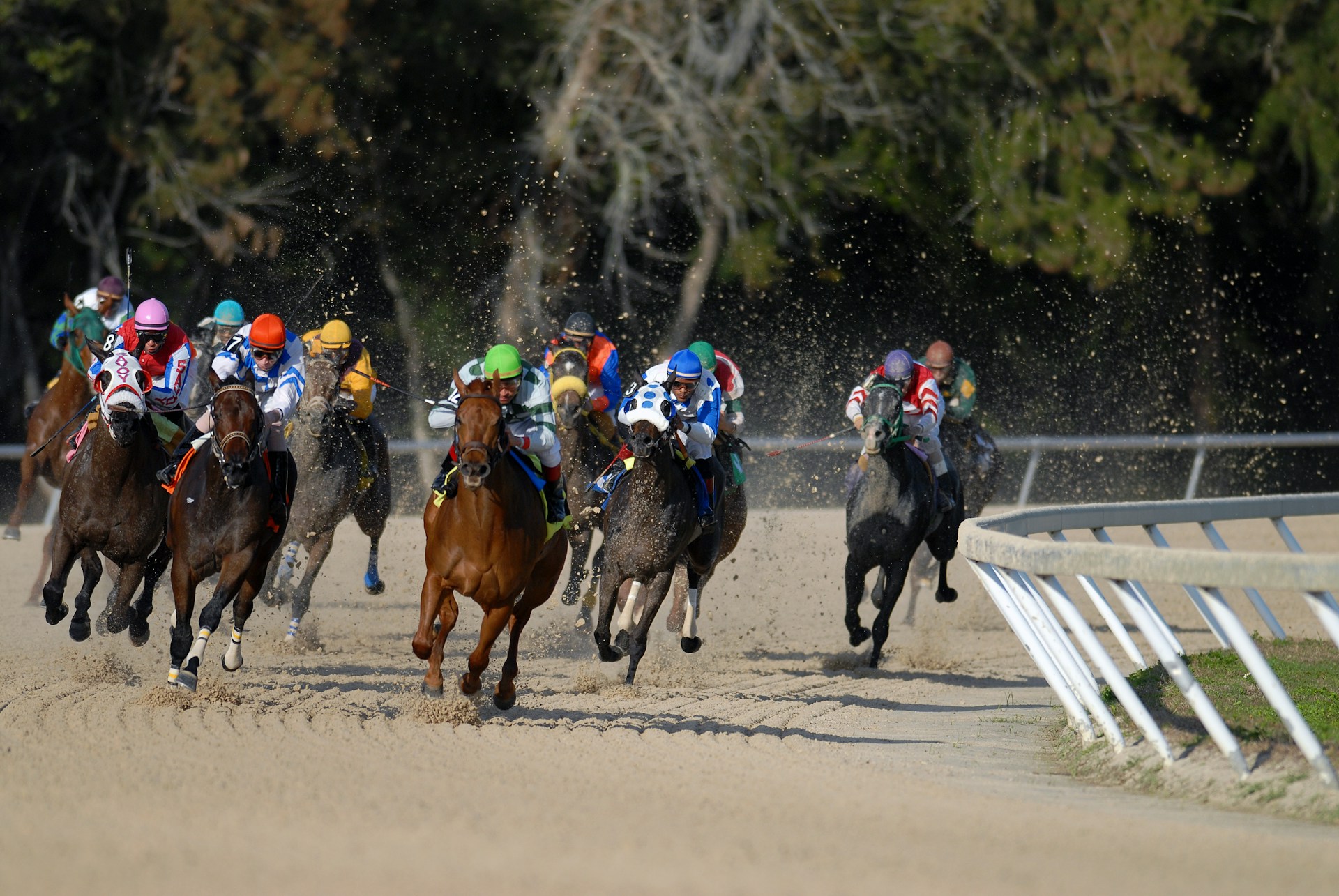
Photo by Isaac Mugwe on Unsplash – the rider has no idea what lies ahead…only guesses, maybe some visualization of what could be lurking around that dark corner. The only way to find out is to start and figure it out along the way.
h/t – I learned about the concept of the “vital few” over 20 years ago from MAP Consulting. A simple yet powerful realization that we can only work on a few things at any one time. Choose the vital few, work on them, then move to the next set of vital few items after that.
Ask someone how their day went, and odds are, they’ll say, “Busy.”
Dig a little deeper, and you’ll hear about the fires they had to put out, the urgent requests from their boss, or the upset customers they had to talk in off the ledge. Everyone’s racing from task to task, reacting to whatever pops up next.
What you don’t hear—at least not often—is someone saying, “Today I worked on our 30-day goals,” or, “I spent the afternoon exploring how AI might streamline our operations,” or, “I studied what our competitors are doing better than we are.”
Most people are caught in an infinite response loop. The big questions get pushed to tomorrow, especially if the boss isn’t asking about them anyway. And often, he’s just as busy reacting to his own list of urgent problems.
Response mode is easy. You don’t have to choose what matters most. Just deal with what’s in front of you. There’s no time for stepping back, rethinking the process, or preventing tomorrow’s fires today. You stay busy. That way, you can tell yourself you’re still needed.
And when the day ends, you can point to everything you handled and feel like you earned your paycheck.
But the real questions are: Did you move any of your monthly, quarterly, or annual goals forward? Do you even know what they are?
For many, the answers are no and definitely no.
Working in the business is the default. It’s safe and familiar. It keeps your hands full.
Working on the business is different. It takes time, thought, and courage. It means facing questions without clear answers. It means exploring new tools, unlearning old habits, and imagining better ways to serve your customers.
No fires today? Is your boss on vacation? Sounds like an easy day.
But if no one thinks about what’s next, if no one is asking what should change or improve, and if no one is steering the ship, that ship will eventually drift. Maybe into a storm. Maybe into the rocks.
And no one will notice until it’s too late.
So, ask yourself: Are you steering, or just responding?
Side note: These questions apply outside of work. If we’re not actively steering in our personal lives, we can just as easily find ourselves in a storm we could have avoided, running aground on some rocks, or drifting aimlessly out to sea.
This week, a new set of eyes entered the world — our ninth grandchild, a baby girl. Her eyes are just beginning their work. They don’t yet see clearly. Like all newborns, her vision starts in soft focus. She sees light, shadows, movement, and faces held close. She knows the warmth of her mother’s arms, the cadence of her father’s voice, and, if I’m lucky, the gentle presence of her grandparents too.
In time, her eyes will begin to sharpen. She’ll see faces from across the room, the toys just out of her reach, her siblings and cousins. Then, the world outside the window. A broader picture will come into her view.
But even as her eyesight expands, her perspective will remain near. She’ll see how things affect her first. Hunger, comfort, joy, frustration. Her world will center on her own experience, as it should for a child learning what it means to be alive.
And then she will grow. With years and love and bumps along the way, she will begin to see more than just herself. She’ll learn to recognize others’ emotions, to feel their joy and pain. Her perspective will widen to include her friends, her extended family, her community. She will see how her actions ripple and impact others, how choices matter not just to her, but to those around her.
As more time passes, she may begin to understand something deeper. That perception is not the same as truth. That others see the same moment, the same memory, from very different angles. She’ll begin to recognize that we all wear lenses shaped by experience, belief, hope, and hurt.
And if she keeps growing, keeps learning, keeps loving, she may even come to understand the beauty in those differences. To act not just from clarity of vision, but from clarity of heart.
Even as her vision someday blurs a bit, may her wisdom sharpen. May she see what matters most. May she understand not only what is, but what could be. May she seek the life-giving fulfilment of a loving life.
And may she, in time, pass on her vision.
What We Learn to See
She was born into light too bright to grasp, her gaze flickering toward warmth, held by arms she could not name.
A nose. A smile. A voice that hums, these are the shapes she first learns to trust.
Her world is inches wide.
Then, little by little, the room expands. Familiar faces move, toys beckon from across the room.
Still, her eyes are mirrors, reflecting only her own need: Am I safe? Am I loved? Does the world answer me?
Time stretches her view. She sees hurt in another’s face. Joy in someone else’s triumph. She learns that not all stories are her own.
She learns to ask: How do you see it? And to listen for an answer.
Mistakes come. Grace follows. She learns that sight alone isn’t understanding. That clarity is earned, not given.
Years pass. Vision fades. But somehow, she sees more than ever, about herself and the world around her.
What once was blur is now meaning. What once was noise is now truth. What once was about her becomes about others.
And in her twilight vision, she turns to the child, whose eyes are still new, and whispers:
Look close, little one, and then look again. You’ll stumble, and that’s part of the seeing. You’ll hurt, and that’s part of the knowing.
Take the vision I’ve earned — not perfect, but practiced. Carry it forward, along with all my love, and the hopes I hold in my heart for you.
p/c – A photo of our daughters taken almost 30 years ago (!) They’re now passing their love, perspectives, and life lessons to their own children. Happy Mother’s Day!
Imagine owning a well-trained thoroughbred racehorse. Born and bred for speed, this horse thrives on competition and lives to run fast.
Every day, six days a week, this horse trains relentlessly. It has one purpose and one passion: running and winning races. Nothing else matters.
But on race day, you grow cautious. You worry, despite all the training, despite the horse’s proven skill, that it might not pace itself properly. So, you ask the jockey to override its instinct to run fast. You instruct the jockey to hold back the reins from the start.
As the race unfolds, your horse struggles against this restraint. Instead of feeling exhilarated, it grows frustrated. Its natural drive diminishes with each stride as the jockey pulls back, second-guessing the horse’s desire to run.
Finally, as the last turn approaches, the jockey releases the reins and shouts encouragement. It’s time to unleash all that pent-up speed.
But the horse no longer cares. He’s not even paying attention. He lost his competitive edge about a half mile ago as the jockey kept holding him back. Sure, the horse goes through the motions, picking up just enough speed to appear engaged, to show respect for the jockey’s urging. But the spark is gone.
This is a very fast horse, so even his partial effort makes for a close finish. But unfortunately, the horse doesn’t win the race. One he could have easily won if he hadn’t been held back from the start.
If you’re a manager, how often do you treat your employees like this horse? How often do you hold them back from doing the very thing you hired them to do? Do you second-guess their instincts, micromanage their decisions, and restrain their natural abilities out of fear, caution, or to protect your ego?
Consider how demoralizing it is for your team when you take away their autonomy. The freedom to run their own race. When employees lose the ability to make meaningful decisions, their enthusiasm, creativity, and ownership suffer. These are the very qualities that fuel success, and when suppressed, diminish the team’s potential and their performance.
Take a look around your organization. Are your people fully engaged, and running with purpose? Or have you inadvertently drained their passion and energy by holding them back?
There’s something else that’s easy to overlook. When you don’t allow your people to take on challenges, make decisions, and occasionally stumble, you’re not just holding them back today. You’re limiting who they can become tomorrow. Without the opportunity to stretch, fail, and grow, your employees can’t develop the judgment and endurance that leadership demands.
Playing it safe and keeping them on a tight rein risks weakening your bench strength and jeopardizing your organization’s ability to thrive in the future. We’re not just running one race; we’re running a never-ending series of tough races that stretch out long into the future.
Imagine how powerful your organization could be if you simply let your thoroughbreds—all the talent and skills you’ve carefully assembled—run their races the way they know best. Imagine letting them succeed and fail with your support, as part of your team, and not just your assistant waiting for you to make all the decisions.
It’s time to loosen the reins and let the ponies run. Because if you don’t, they might find somewhere else where they can.
When you watch a five-year-old, a ten-year-old, even a twelve-year-old create, you see what unfettered creative freedom really looks like. Whether it’s a drawing, a Lego tower, or a clay sculpture, they throw themselves into the process with joyous abandon. In their mind, they can see clearly what they’re making. They know why they’re making it. And there’s almost always a story behind it.
They aren’t self-conscious. They aren’t trying to impress anyone. Sure, they like to show their creations to parents, grandparents, and teachers. But their motivation isn’t just about approval. It’s about expression.
Most children are free from the baggage of expectation. They don’t wonder if what they’re making is good enough. And when they finish, they move right on to the next thing. Their self-worth isn’t tied to the outcome. The value of the work comes from their own perspective, not from what others think.
But around age thirteen (sometimes earlier) things change.
After years of chasing approval, learning the “right” way to do things, being graded and corrected by well-meaning adults, something fundamental happens. Their freedom to create without judgment slowly gets buried. Doubt takes root. Worry about what others might think starts to shape their process. Fear of looking foolish holds them back.
And as the years pass, it only gets worse.
Tell someone you’re going to take up oil painting, stained glass, sculpture, or any new creative pursuit as an adult, and they’ll likely have two reactions: a polite smile of encouragement, and quiet skepticism that anything worthwhile will ever come of it.
Starting something creative as an adult feels strange. It’s outside the bounds of what “normal” people do. It’s far easier to stay in line, avoid looking foolish, and sidestep the discomfort of being a beginner again.
But we are all beginners at birth. Even the rare prodigies had to take their first step (the one that happens long before we see the gifted 5-year-old who can play a piano concerto). For the rest of us, every new skill—whether it’s creative, practical, or professional—requires courage, repetition, failure, and patience.
I’ve learned that when I let go of expectations (not easy) and stop worrying about looking foolish (also not easy), the magic happens. With this new frame of reference, trying something new, something creative, or something unfamiliar, brings a new energy having nothing to do with the outcomes.
It doesn’t seek approval or chase productivity. It simply opens the door to wonder—something we often unlearn as we grow older.
I’m lucky. I get to spend time with my grandchildren, who remind me what fearless creativity looks like. They show me that learning and creating, and the fun we have along the way, are all that matters.
At kilometer 32 just south of San Felipe, where warm breezes wandered, and stars blanketed the sky — more stars than anywhere I’ve ever been.
Off-road racing brought us there, wide sandy beaches just a short walk away, bathtub-warm waters stretching out forever, the tides carving their quiet stories in the sand.
Under their shady palapa, watching the sun rise and fall on the horizon, Mom and Dad built their place from scratch, one humble project at a time. It was luxury camping at its very best.
Their place was just across the arroyo from the beach, where Dad taught Julianne to drive a stick shift on the wide-open sand.
How I long to beam back there. To see them again.
To hear their voices busy with new plans, to see what they’ve been working on, to sit with them in the shade at cocktail hour, chips, salsa, and all the shrimp we could eat, as the afternoon melts softly into evening.
I’d love to hear who’s come to visit lately.
Both are gone now, but the memories remain. Their laughter rides the breeze, as fresh as the salty air, that still stirs in my heart.
Backstory: A Campo Sahuaro Adventure
When Mom and Dad bought their lot around 1988, it was nothing more than a small concrete slab and four stakes marking the corners of their sandy “oasis.” What made this campo special was its access to a fresh water well…rare in that part of Baja.
Their lot sat on a bluff overlooking an arroyo, with the Sea of Cortez just beyond the sandy beach. In Mexico, buying a lot like this meant purchasing a long-term lease from the property owner. As long as you pay the annual lease (which was under $1,000 per year) you control the land. Anything they built on it was theirs.
Because Mexico has nationalized property in the past, many Americans build semi-permanent structures that can be dismantled and hauled away if needed. That kind of caution remains, even though nothing like that has happened in a very long time.
Being a concrete guy, Dad’s priority was pouring a lot of concrete. He laid down a huge patio that would become the base for everything else, including one of the largest shade structures I’ve ever seen. It didn’t happen overnight. This was a multi-trip (multi-year) endeavor, often coinciding with supporting Team Honda’s off-road racing efforts. They’d haul supplies and tools down along with pit equipment. In the early ’90s, sourcing building materials in Baja was still hit or miss so they brought most of what they needed with them.
By around 1991, Dad was ready to build a workshop. It would be like a shipping container, made of wood, with big swing-down doors on each end that doubled as ramps. He welded little leveling stands to the top of each door so they could serve as sleeping platforms when opened. I slept on those doors under the stars every chance I got.
As with everything at Campo Sahuaro, there’s a story behind that build.
We were down there pitting for Team Honda, which meant several fellow pit crew members were staying at my parents’ place. At that point, it was mostly a shaded patio and a small pump room. Many of the guys were carpenters, so they brought their tools and were ready to build.
Dad’s motorhome was packed. The center aisle was filled with 2x4s, stacked at least five feet high. Getting around inside was nearly impossible. Behind the motorhome, he towed a converted motorcycle trailer that he’d built at least ten years earlier. It was loaded with a perfectly stacked cube of 4×8 plywood sheets. The walls of the future workshop.
I happened to be traveling with them on that trip, ready to help with both pitting and construction. About 50 miles from the campo, we heard a loud crash and scraping noise. We were driving across a dry lakebed, the road raised 15–20 feet above the flat terrain. I looked out just in time to see the trailer tumbling down the embankment.
Dad got the motorhome stopped, and we rushed out to assess the damage. The trailer tongue had sheared clean off under the weight of the plywood. Thankfully, it hadn’t failed earlier, during high-traffic sections of our trip. The trailer was upside down in the lakebed, still lashed to its cargo. That cube of plywood was completely intact.
Within minutes, two vans carrying some of our crew pulled up behind us. We counted heads — at least ten of us, including a few high school football players. It wouldn’t take long to relocate all that wood.
A chain gang formed. We passed sheet after sheet of plywood up the embankment and loaded it onto the vans, lashing them down with tie-downs and ropes we’d salvaged from the trailer. We even hauled the trailer carcass back up the hill. At the very least, we figured we’d salvage the tires and axle.
That’s when an old Toyota pickup rolled up. A local man hopped out. I greeted him with my high-school-turned-Baja-race-pit-guy-Spanish. Lots of smiling, gesturing, and broken sentences later, we learned he was a welder and fabricator. He was heading to San Felipe to visit family and watch the race.
He looked over our trailer, nodding thoughtfully. He said he could take the trailer on his truck bed along with the remains of the tongue and hitch. He’d rebuild it and leave the rebuilt trailer at his brother’s restaurant in San Felipe. We asked him how much he’d charge us for that service. His response was $20(!).
I confirmed that his plan was to haul our trailer back to his shop (about 40-50 miles back), rebuild it, and then he’d tow it all the way down to San Felipe for $20. We told him there was no way we’d let him do that for anything less than $200. His eyes got real wide. I don’t think he believed what I was saying. I said that we’d gladly pay him that amount for all that he’d be doing for us.
We loaded the trailer carcass onto his truck bed, shook his hand, and paid him the agreed $200. We wouldn’t be able to see him at the conclusion of the job, so pre-payment was our only option. He turned around with his new load and headed back to his shop.
We mounted up and continued to Campo Sahuaro, wondering if we’d ever see that trailer again.
The Workshop Rises
The race went great. The workshop was built in a day or two with the expert help of our crew. The carpenters led the way and the rest of us did our best to help and stay out of their way. Copious amounts of alcohol were consumed around the campfire, many snacks and excellent meals were eaten, heroic stories (some of them true) were shared with lots of laughter along the way.
On the way home, we stopped at Baja 2000, the restaurant where our mystery welder said he’d leave the repaired trailer. And there it was.
Not only had he fixed it. He’d reinforced it, straightened the bent parts, and welded it all back together better than before.
Legacy
Over the years, I visited Campo Sahuaro many times, sometimes with my wife and daughters. As mentioned earlier, Dad taught my oldest daughter to drive a stick shift truck on the beach in front of their place when she was probably 12 or 13 years old.
I loved knowing the stories behind everything built there. Most of the stories involved improvisation, imagination, and always perseverance. There were a ton of lessons at their property about staying focused and overcoming obstacles in the pursuit of your goals.
I loved sleeping under that blanket of stars, watching satellites traverse the sky (there’s a lot more of them up there nowadays). I loved swimming in the warm ocean. Most of all, I loved being with Mom and Dad, sharing good times and making memories with them at their special place, 32 kilometers south of San Felipe.
p/c – I asked ChatGPT to make an image of a starry night on the beach based on my story. Amazingly, the image it rendered is mostly how I remember it…except for the houses on the front row (Mom and Dad’s place was on the second row), and the dry-docked fishing skiffs that used the campo as their base of operations.
It’s such a quiet phrase. Almost a shrug. A way of saying, yes, that’s true…but that’s not the whole story.
Life is full of maybe so…
This challenge I’m facing is hard. Maybe so. Someone else got the credit I worked for. Maybe so. The odds are stacked against me. Maybe so. The situation is messy, complicated, unfair. Maybe so.
Maybe so…but I’m not letting that be the final word.
Truth and hope aren’t always in competition. You can fully acknowledge the reality of something and still choose where to focus.
Perspective is a choice.
I’m tired, maybe so. I’ve failed, maybe so. This isn’t how I pictured it, maybe so.
But I’m also thankful. I’m still showing up. This might be exactly what I need, even though I may never admit it.
I’m learning to live in the tension between what is and what matters more.
We all get to decide where to place our attention. Some people zero in on the obstacle. Others fix their eyes on the opportunity.
One sees the storm. The other watches for the rainbow.
Both are real. But only one will move you forward.
“Attitude is the difference between an ordeal and an adventure.” — Bob Bitchin (he’s a real guy with an amazing story…stories)
Life hands us situations we don’t choose. Detours, delays, disappointments. But attitude? That’s something we bring to the table.
Sometimes the smallest shift in mindset is what turns a setback into a story worth telling. What once felt like a burden becomes the beginning of a bold new chapter.
So yes…your facts may be true. The obstacles might be real. The weariness might be justified.
Maybe so…but this is where we’re meant to be. Besides, this story isn’t finished.
The best parts of life come after we stop fighting the facts and start choosing the lens we use to see them.
h/t –“Yeah, I know what they say, money can’t buy everything. Well, maybe so, but it could buy me a boat.” — Chris Janson
I smile every time I hear this song. Sometimes a little humor, a little honesty, and a down-to-earth dream are exactly what we need to reset our thinking. It’s not about the boat. It’s about the choice to believe that something good still waits ahead…if we choose to see it.
There was a time I made a big leap “out the window.” I walked away from something I thought I had to escape. I didn’t have a detailed plan, just a deep sense that staying where I was would burn me out.
What I should have realized at the time was that while I was escaping one fire, I was just trading for another.
That’s the thing about decisions. They rarely come with clarity. They come wrapped in burdens and hope and urgency, all dressed up to look like certainty. But certainty is often just a story we tell ourselves to keep moving.
I’ve gone back and questioned plenty of decisions. I’ve hit pause, looked around, and asked, “Was that the right thing to do?”
Sometimes the answer is no. And that’s okay.
I’ve made wrong turns. I’ve said yes when I shouldn’t have. I’ve said no when I was afraid. But here’s something I’ve learned the hard way: wrong turns can still move us forward. Even the “mistakes” taught me something. Sometimes they were the only way I could learn the lessons I needed to learn.
Side note: If you can learn from watching someone else’s journey, that’s often preferable to taking the hard knocks that accompany most of the big lessons in life.
The truth is, not every decision will hold up to hindsight. And not every success will look like success right away. Some answers show themselves slowly. They show up only after struggle, reflection, and time. They need hardship to help them mature. Sometimes they even need failure.
I’m lucky. Along the way, there were people who didn’t try to fix me. They just stood with me while I figured it out. They gave me space to question, to re-route, to second guess. That kind of support is rare. And I’m grateful.
To those people: thank you. You helped me see what I wasn’t ready to see. You let me grow into the answers I didn’t even know I was seeking.
These days, I’ve learned to forgive myself for the detours. For the second thoughts. For the “what ifs” I’ll probably carry forever. I’ve changed my mind, more than once. With every shift, I’ve learned to find moments of peace.
Here’s the point: Maybe wandering is the way.
Wisdom doesn’t show up all at once. It grows, shifts, even contradicts itself. Sometimes it stumbles. Sometimes it starts over.
One thing I know for sure: What I thought I knew was only the beginning.
Everyone loves the big idea. The bold plan. A strong vision of what can be.
It’s easy to get excited about an amazing result. A finished project, a better version of ourselves, a breakthrough moment. But big plans mean nothing without the tools and materials to carry them out.
Goals and aspirations get a lot of attention. Preparation, usually not so much.
Preparation isn’t glamorous. No one sees the early mornings, the quiet practice, the reading, the repetitions, the small decisions and adjustments that come from thinking deeply about how to be better. But that’s where everything starts. That’s the real work.
You can’t build a tower by imagining the top floor. You start by stacking bricks. And before that, you must gather the bricks. Along with mortar. Along with the tools to lift, cut, measure, and shape. That’s what preparation is. Gathering what you’ll need to be ready when it’s time to build.
This applies to everything in life.
Want to be a better leader? Prepare by learning how to listen, how to stay calm and think under pressure, how to help your team to be their very best.
Want to level up at work? Prepare by always sharpening your skills, staying curious, looking for problems that need solutions, becoming someone your team can rely on.
Want to be a better friend, spouse, or parent? Prepare by learning to listen, to be present, and to lead with patience and love.
Want to face hard times with strength? Prepare by choosing the hard things before they choose you.
Don’t wait for life to demand something from you before you get ready. Always prepare so you willbe ready.
Ask yourself: -What materials am I gathering?
-What tools am I building?
-What productive habits am I forming when no one’s looking?
Preparation isn’t just a phase. It’s a mindset. A lifestyle.
You’re either gathering bricks—or you’re preparing to fail.
Because in the end, you won’t rise to the level of your ambition.
You’ll fall to the level of your preparation.
h/t – my friend Pete Hilger as we were discussing how to get building supplies to a rural Guatemalan city for a medical facility build project. He tossed out the line, “You can’t build a tower without first gathering a lot of bricks and mortar.”






 Grandpa Bob Encouraging Leadership
You must be logged in to post a comment.