Pronounced: EN-KUR-UJ.com–short posts you can use every day
Author: Bob Dailey
Bob Dailey. Born and raised in Southern California...now in Oklahoma. Graduated from (and met my future wife at) Cal Poly Pomona, in 1988. Married to Janet 37-plus years. Father of two: Julianne and Jennifer. Grandfather of 9!
Held many leadership positions in small, medium, and large companies (and even owned a company for about 7 years). Tractor operator, competitive stair climber, camper, off-roader, occasional world traveler, sometimes mountain biker, and writer.
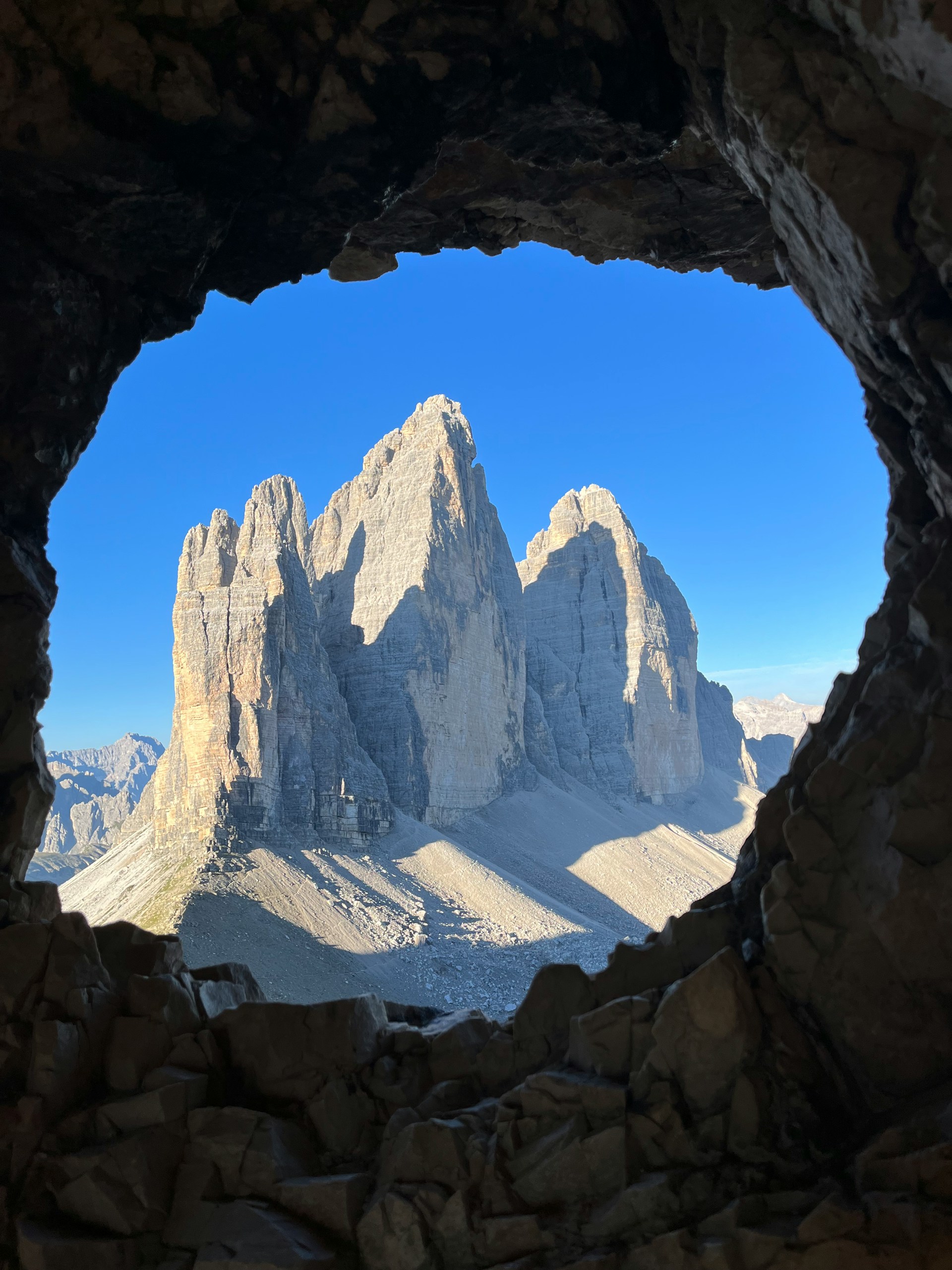
I’ve come to believe what Chesterton once said. Art is limitation, and the essence of every picture is the frame. It took me time to see that truth.
Many of us grow up thinking freedom creates great work. Unlimited time. Unlimited canvas. Unlimited choice.
But if you’ve ever stared too long at a blank page, you know what real freedom can feel like. Paralyzing.
Nothing takes shape until the edges appear. A story waits forever if the writer can’t decide where it begins. Music is noisy until the composer chooses a key. The frame gives the work its purpose.
The same is true in leadership and life. A budget helps us decide what we value. A deadline turns a dream into something real. A small team learns to trade excess for imagination. Limited resources push us to invent new ways to adapt. The frame brings focus.
Still, the frame itself matters. A picture can feel cramped when the frame becomes too tight. A project can drift when the wrong thing fills the center. When the boundaries are off, the whole image loses clarity. That’s why wise leaders spend time defining the edges before the work begins.
Whenever I work on a puzzle, I start by finding all the edge pieces. Once the border comes together, I can see how everything else might fit. The same principle applies to creative work and leadership. The edges give us context. They help us imagine where the middle pieces belong and how the picture will come to life.
Frames should change as we grow. The world shifts. We learn more about what we’re building. Every so often, we step back and see whether the picture still fits. Sometimes the frame needs widening. Sometimes the colors need more light. Adjusting the frame keeps the beauty true.
Constraints give possibility its shape. They reveal what truly matters. Choosing the right limitations helps us see what is essential.
When you feel boxed in or limited, pause before you push against the edges. The frame around your work may be the very thing helping the picture appear. And when the picture becomes clear, refresh the frame so the beauty within it continues to grow.
Thanks to James Clear for sharing this G. K. Chesterton quote: “Art is limitation; the essence of every picture is the frame.”
Writing a song is like fishing, Kenny Chesney once said. Some days you catch something beautiful. The melody, the moment, the truth. Other days, you sit there all day with nothing but frustration and a stubborn belief that it’s still worth being out there.
That kind of wisdom transcends genres. Ernest Hemingway spent his life circling the same idea. That real art happens when we show up. Whether facing a blank page, a marlin that wouldn’t bite, or a battle that couldn’t be won, he believed the only way to live fully was to move, to act, to engage.
His work embodied a simple truth. The shortest answer is doing the thing. For him, wisdom wasn’t found in thinking about life, but in living it. No clever phrasing. No shortcuts. Just the act itself. Simple, honest, alive.
We spend so much of life thinking about what we might do, planning what we should do, waiting until we feel ready to begin. But readiness rarely arrives on its own. The line stays slack until you cast it. The song stays silent until you play it. The story remains untold until you write it.
Sometimes we catch something incredible. Other times, nothing.
Either way, we were there. Present. Awake. Participating in the work and wonder of life.
Maybe that’s the whole point.
A life well-lived must first be lived.
Photo by Shojol Islam on Unsplash – I wonder if he’ll catch something on this cast. Maybe. Maybe not. But, he’s in the game, giving it his best shot and that’s what matters.
There are certain destinations in the world that feel larger than life. The Taj Mahal is one of those places. For many travelers, seeing it with their own eyes is a once-in-a-lifetime moment.
We were finally there. We had made it to Agra. All that remained was to step inside the gates and witness the iconic white marble glowing in the sun.
Only one problem.
There was no sun. There was no white marble. There was no Taj Mahal.
There was only fog.
We woke that morning filled with hope. The rooftop restaurant gave us a commanding view of… absolutely nothing. We stared into a wall of haze, sipping coffee and laughing at the absurdity of our timing. Surely the fog would lift. Surely the Taj Mahal would reveal itself.
Our guide, Kuldeep, assured us everything would be fine. He had led more than 500 tours of the Taj Mahal. He knew everything there was to know about its history and its beauty. We boarded our bus, grabbing our special cloth bags with a picture of the Taj printed on them. These were designed to hold the single water bottle we were allowed to bring inside the property. And we set off with excitement.
Fog. All the way there. Fog in the parking lot. Fog at the security lines. Fog as we walked the long approach toward the main viewing area. Each time Kuldeep stopped to point out an “excellent vantage point,” we nodded with wide eyes, imagining the magnificent structure hidden somewhere in the mist.
We took photos pointing at the picture on our water bottle bags. That was the only Taj Mahal available to us from any vantage point.
As we walked toward the building, we eventually reached the outer wall and finally saw something. White marble appeared just a few feet above our heads. Then the stone vanished again into the haze. The grand dome. The sweeping arches. The delicate inlays. All shrouded in fog.
We were standing beside one of the wonders of the world and could only see a sliver of it.
Our group laughed so much that day. Not because we had traveled halfway around the world only to miss the view. We laughed because we were sharing something unforgettable and slightly ridiculous. We were experiencing a story that would last much longer than a postcard-perfect photograph.
Kuldeep shook his head with disbelief. In all his tours, he had never experienced this. He told us we were a very select group of visitors who could claim something few on Earth could say. We visited the Taj Mahal, but we have never actually seen it.
He was right. I still have never seen the Taj Mahal in person.
The destination was never the prize
You might think this would be a disappointment. But when I look back on that trip, the fog made everything richer.
The destination was never the prize. The people were.
We shared meals and conversations and inside jokes. We tried foods that were new to us. We navigated chaos and beauty side by side. We saw India’s contrasts and colors and kindness. We saw devotion expressed in temples and marketplaces. We saw how history and modern life can exist on top of each other without barriers.
The Taj Mahal is extraordinary. I would love to see it someday with clear skies and a rising sun. Yet I already have what I came for.
When I think about all the amazing places I have been blessed to visit, a pattern appears. I never say, “Remember when we saw that famous landmark.” I say things like:
– Remember how we got lost trying to find it? – Remember the tiny restaurant we discovered afterward? – Remember the guide who became a friend? – Remember that amazing gelato place in the middle of nowhere?
I have my memory of that rooftop breakfast. I have the echo of laughter on the bus. I have the photos of my family and friends pointing to a water bottle bag as if it were the crown jewel of Indian architecture.
The world is full of wonders. But relationships are the wonders that stay with us.
The real bucket list
If someday I return to the Taj Mahal and finally see it, I’ll smile and take it in. But I know the picture etched into my heart is already complete. It’s filled with faces and voices and laughter. It has the beauty of our shared experience.
Checklists are fine for airplanes. But our lives deserve something better.
The best adventures can’t be captured by a camera or a perfect view. What lasts are the relationships made stronger by shared surprises, setbacks, and moments of wonder.
This story, fog and all, remains one of my favorites.
Photo by Mark Harpur on Unsplash showing the majestic beauty of the Taj without fog.
The photos below are mine showing what we actually saw. Unfortunately, the amazing water bottle bag photos are stored on a drive I can’t see…a little bit like that morning in Agra more than a decade ago.
There it is!Can you see the Taj in the background?Can you see the Taj on the right?
The difference between reacting to the moment and preparing for it.
Most leaders spend their days responding. A problem surfaces. They fix it. A crisis hits. They mobilize.
Urgency crowds out importance. By Friday they’re exhausted from fighting fires they never saw coming.
This is leadership without anticipation.
Every action sets something in motion.
-Launch a product without considering support capacity, and you’ll be drowning in angry customers in three months.
-Promote someone before they’re ready, and you’ll spend the next year managing the fallout.
-Ignore the quiet signals in your market, and you’ll wake up one day wondering how you got disrupted.
Some outcomes can be seen in advance. Leadership is the discipline of noticing what’s coming and readying your team to meet it.
Wayne Gretzky once said, “I skate to where the puck is going to be, not where it has been.”Most leaders skate to where the puck was. They optimize for yesterday’s problem. They staff for last quarter’s workload. They strategize for a market that no longer exists.
Leaders who matter skate differently. They think past the first step and see how decisions unfold across time. When they make a choice today, they’re already anticipating the second and third-order effects.
They connect short-term actions to long-term outcomes, asking not just “Will this work?” but “What happens after it works?”
When you cultivate this habit of anticipation, something shifts. You stop being surprised by the predictable. You create space before you need it. You move with a quiet confidence that comes from seeing the terrain before you cross it.
Your team feels it too. It’s the difference between reactive and ready, between scrambling and intentional.
We can’t eliminate uncertainty. The future will always bring surprises. But we can change how we manage it. We can choose to be the leader who sees what’s coming rather than the one who’s perpetually caught off guard.
Dwight Eisenhower said, “In preparing for battle I have always found that plans are useless, but planning is indispensable.” Plans will change. They always do. But the act of planning, of thinking through trajectories, testing assumptions, and imagining scenarios, prepares you to lead when the moment arrives.
The leader who anticipates doesn’t wait for clarity. They sense it forming and courageously move toward it. They shape the path while others are still reacting to it.
The days feel long, but our years disappear. I’ve been thinking about how easily “someday” turns into “back then.” We spend so much of life working toward what’s next that we sometimes forget we’re already living the moments we’ll one day remember with gratitude.
This truth reaches us at every age. Whether we shape our future with intention or let it unfold on its own, it arrives and quietly invites us to participate. This reflection is about the sweetness of now and noticing that these moments become the story we’re creating together.
Each day arrives on its own, small and full of potential. It doesn’t ask for much. Only our attention, our care, and our willingness to be here. The hours move like honey, slow and golden, rich with sweetness if we take time to notice. Yet the years rush by quietly. One morning we look up and realize the future we worked toward has become the past we cherish.
What we dreamed about for so long is happening now. This day, with its imperfections, interruptions, and small joys, is the life we once hoped to reach. It’s the tomorrow we imagined, already unfolding beneath our feet.
Time helps us see backward with gratitude and forward with wonder. We remember the faces and laughter that have softened into memory. We hold them gently, realizing how meaning hides in ordinary moments.
Each day is a life of its own. Complete, sacred, and fleeting. When we let its minutes open slowly, like sunlight through leaves, we find gratitude sweetening everything it touches. Our wonder grows in quiet places.
“Then” is always born of “now.” When we live this moment with attention, kindness, and a sense of awe, it never really fades. It simply changes shape, becoming the stories we tell, the lessons we pass along, and the love that lingers long after the moment has gone.
You can tell people what to do, and sometimes that’s the right call. Yet, direction without participation creates compliance instead of commitment.
When people understand the purpose, see where they fit, and have a voice in the direction, they’ll take emotional ownership.
The best leaders invite that ownership by asking questions that open doors to insight. What are we missing? What would you try? Where do you see the risk? These questions are invitations to shape the work and the results.
When a product manager asks her team, “How would you approach this?” instead of presenting a finished plan, the solutions that emerge are sharper, and the team building them gets stronger.
Humans are built for both independence and belonging, desires that often pull in different directions. Wise leaders guide this tension well. They give people space to grow while connecting them to something larger than themselves.
To bring others on the journey is to build together. Growth is shared. Trust expands. When the path gets steep, they’ll keep climbing with purpose.
They remember the reasons, because they helped shape the path.
Photo by Powrock Mountain Guides on Unsplash – Unsplash has a ton of amazing hiking photos, mountain climbing photos, pictures of maps, legos, and winding paths. All would have represented the themes of this post admirably. But this photo caught my eye.
How do you see it connecting to this post? What makes this photo stand out? How hard do you think it is to hike across to that gleaming white mountain in the distance?
It was the second day of a two-day strategic planning retreat. Revenue projections stretched across the screen. The CFO walked through all the assumptions in his spreadsheet. Customer acquisition costs will flatten, churn will improve by two points, and the new product will capture eight percent market share within six months.
Everyone nodded along, acting as if these forecasts represented knowledge rather than elaborate guesses built on dozens of assumptions, any one of which could be wrong.
Three months later, a competitor launched an unexpected feature. Customer behavior shifted. The CFO’s projections became relics of a reality that never existed. The entire strategic planning process had been built on an illusion.
What we pretend to know
In his 2022 memo The Illusion of Knowledge, Howard Marks explored how investors mistake confidence for clarity. He began with a line from historian Daniel Boorstin:
“The greatest enemy of knowledge is not ignorance, it is the illusion of knowledge.”
Leaders face a brutal paradox. Boards expect forecasts. Teams want confidence. Investors demand projections. The machinery of leadership demands certainty.
So, we build elaborate forecasts and make decisions based on assumptions we know to be fragile. We treat detailed guesses as facts.
Physicist Richard Feynman once said, “Imagine how much harder physics would be if electrons had feelings.” Electrons follow discrete laws, unlike people. People innovate, resist, panic, and occasionally do something amazing nobody saw coming. Competitors behave differently than our models assume. Markets shift for reasons we never thought possible.
Marks describes forecasting as a chain of predictions. “I predict the economy will do A. If A happens, interest rates should do B. With interest rates of B, the stock market should do C.” Even if you’re right two-thirds of the time at each step, your chance of getting all three predictions correct at once is only about thirty percent.
Leadership forecasts work in a similar way. We predict customer adoption rates. If adoption hits those numbers, we’ll need a certain operational capacity. With that capacity, we can achieve specific margins. Those margins will attract investment.
Each assumption depends on the previous one. The chain is only as strong as its weakest link.
The tools we trust
Walk into any strategic planning session and you’ll likely encounter two frameworks treated as gospel:
-SWOT analysis (strengths, weaknesses, opportunities, and threats)
-SMART goals (specific, measurable, achievable, relevant, and time-bound).
Business schools teach them. Consultants recommend them. Leaders deploy them with confidence. Each relies on assumed knowledge that may not exist.
A SWOT analysis claims to know which possible developments count as opportunities versus threats. It’s a snapshot of assumptions masquerading as strategic insight. An opportunity exists only if you can identify it, execute against it, and do so before circumstances change. The framework provides no way of acknowledging uncertainty.
SMART goals often confuse precision with accuracy. “Increase market share” becomes “increase market share in the Northeast region from 12% to 15% by Q4 2026.” It sounds specific, and therefore rigorous. It’s easy to be precise about something unpredictable.
And how do we know a goal is achievable? We make assumptions about resources, market conditions, and competitor behavior, then write a goal that treats our assumptions as facts.
Both frameworks serve a valuable purpose. They force structured thinking. But they also seduce leaders into believing they know more than they do.
What should we do instead?
To be clear, this isn’t an argument for abandoning planning. Organizations need direction, priorities, and coordinated action. The question is how to plan in ways that acknowledge what we can’t know while still making decisive progress.
A better path involves changing how we plan and how we talk about the future.
Distinguish between direction and destination. Amazon knew it wanted to be “Earth’s most customer-centric company” without knowing exactly what that would look like in year ten. “We’re moving toward increased automation” carries more truth than “we’ll reduce costs by seventeen percent by Q3 2026.” The first creates direction. The second creates false precision.
Separate what you know from what you assume. Customer complaints increased forty percent this quarter. That’s knowledge. Saying the trend will continue is extrapolation. Predicting that fixing the issue will increase retention by five points is speculation. Present plans that show what you know, what you’re inferring, what you’re assuming, and what you’ll do if you’re wrong.
Build optionality into everything. Create strategies that work across multiple futures. Hire people who can do, or think about, more than one thing. Build modular systems with flexibility in mind. Create decision points where you can change course.
Use familiar tools differently. Run a SWOT analysis, then list three ways each opportunity might fail to materialize. Write SMART goals, then document the assumptions those goals depend on and how you’ll adapt if they prove incorrect.
Here’s a concrete example. You’re deciding whether to build a new product line. The traditional approach creates a detailed business case with market projections and revenue forecasts. You present it. People debate assumptions. A decision gets made.
An alternative approach defines what success means, then identifies what must be true to achieve it. You sort those conditions into things you can validate quickly, things you can validate over time, and things you can validate only much later. Stage investments to match the timing of the validations, rather than an arbitrary quarterly schedule.
The difference in these approaches is critical. In the first, the business case pretends to represent knowledge. In the second, it becomes a set of hypotheses to test over time.
The harder path
Amos Tversky observed, “It’s frightening to think that you might lack knowledge about something, but more frightening to think that, by and large, the world is run by people who have faith that they know exactly what’s going on.”
We select leaders for their ability to project confidence about an unknowable future. We reward decisiveness over doubt. Then we wonder why strategies fail when reality diverges from our projections.
Most of us live in this system. We’ve built organizations that demand the illusion of knowledge.
Real leadership creates organizations resilient enough to find answers as circumstances unfold. It builds teams that can adapt rather than simply execute a plan written many months ago.
When did you last change a forecast because reality diverged from your assumptions?
When did you last reward someone for identifying that a plan was failing?
Start small. Pick one decision where you can be explicit about uncertainty. Structure one investment to test assumptions instead of betting on a forecast. Have one conversation where you separate what you know from what you’re guessing.
Plan in ways that acknowledge uncertainty and position your organization to learn. Lead with confidence about principles while staying adaptable around specifics. Build organizations that can adapt when reality diverges from the plan.
Because it will. The measure of leadership lies in how well your culture can face that truth.
I saw The Secret Life of Walter Mitty on an airplane ride recently. At a significant moment in the story, we hear the line, “Beautiful things don’t ask for attention.”
The photographer in the story chooses not to take a coveted photo of the elusive snow leopard. Instead, he simply enjoys the beautiful moment with his own eyes.
Real beauty doesn’t need to perform. It’s authentic and humble, whether anyone stops to notice or not.
A person of character lives this way. They have no need to prove themselves. They show up with kindness, consistency, and honesty. The neighbor who shovels snow from an elderly woman’s driveway before dawn, leaving no trace. Or the teacher who stays late to help a struggling student, never mentioning it to anyone.
The beauty of their character reveals itself in the way they live each day.
Humility makes this possible. It allows a life to shine without glare, to influence others by being genuine. Like mountains that reflect the glow of sunrise or wildflowers blooming unseen in a meadow, people of quiet integrity embody a beauty that doesn’t depend on recognition.
In our culture that rewards noise and spectacle, this is easy to forget. We’re told to broadcast accomplishments and measure our worth by attention. Yet the most meaningful lives belong to those who live true to themselves, free from the need for applause.
The things that endure, whether in people or in nature, carry their beauty without fanfare. They simply are.
There’s a paradox in writing about something that exists most powerfully in silence. Maybe that’s the point. Celebrating this kind of beauty without claiming it for ourselves.
But we can learn to recognize it. To be shaped and inspired by it. And, in our quieter moments, we can strive to live it.
Photo by Patrick Schaudel on Unsplash – some of my fondest memories involve waking up in a tent on crisp mountain mornings, basking in the beautiful glow of the rising sun.
Eighty-eight percent of AI pilots fail to reach production, according to IDC research. Most fail because organizations chase the tool instead of defining the outcome. They ask, “How do we use AI?” rather than “What problem are we solving?”
A little perspective
I’m old enough to remember when VisiCalc and SuperCalc came out. That was before Lotus 1-2-3, and way before Microsoft Excel. VisiCalc and SuperCalc were just ahead of my time, but I was a big user of Lotus 1-2-3 version 1. Back then, everyone focused on how to harness the power of spreadsheets to change the way they did business.
Teams built massive (for that time) databases inside spreadsheets to manage product lines, inventory, billing, and even entire accounting systems. If you didn’t know how to use a spreadsheet, you were last year’s news.
The same shift happened with word processing. Microsoft Word replaced WordPerfect and its maze of Ctrl and Alt key combinations. Then the World Wide Web arrived in the early 1990s and opened a new set of doors.
I could go on with databases, client-server, cloud computing, etc. Each technology wave creates new winners but also leaves some behind.
The lesson is simple each time. New tools expand possibilities. Strategy gives those tools a purpose.
The point today
AI is a modern toolkit that can read, reason (think?), write, summarize, classify, predict, and create. It shines when you give it a clear job. Your strategy defines that job. If your aim is faster cycle times, higher service quality, or new revenue, AI can be the lever that helps you reach those outcomes faster.
Three traps to avoid
Tool chasing. This looks like collecting models and platforms without a target outcome. Teams spin up ChatGPT accounts, experiment with image generators, and build proof-of-concepts that fail to connect to real business value. The result is pilot fatigue. Endless demonstrations with no measurable impact.
Shadow projects. Well-meaning teams launch skunkworks AI experiments without governance or oversight. They use unapproved tools, expose sensitive data, or build solutions that struggle to integrate with existing systems. What starts as innovation becomes a compliance nightmare that stalls broader adoption.
Fear-driven paralysis. Some organizations wait for perfect clarity about AI’s impact, regulations, or competitive implications before acting. This creates missed opportunities and learning delays while competitors gain experience and market advantage.
An AI enablement playbook
Name your outcomes. Pick three measurable goals tied to customers, cost, or growth. Examples: reduce loan processing time by 30 percent, cut customer service response time from 4 hours to 30 minutes, or increase content production by 50 percent without adding headcount.
Map the work. List the steps where people read, write, search, decide, or hand off. These are all in AI’s wheelhouse to help. Look for tasks involving document review, email responses, data analysis, report generation, or quality checks.
Run small experiments. Two to four weeks. One team. One KPI. Ship something tangible and useful. Test AI-powered invoice processing with the accounting team, or AI-assisted internal help desk with support staff.
Measure and compare. Track speed, quality, cost, and satisfaction before and after. Keep what moves the needle. If AI cuts proposal writing time by 60 percent but reduces win rates by 20 percent, you need to adjust the approach.
Harden and scale. Add access controls, audit trails, curated prompt libraries, and playbooks. Move from a cool demo to a dependable tool that works consistently across teams and use cases.
Address the human element. Most resistance comes from fear of displacement, rather than technology aversion. Show people how AI handles routine tasks so they can focus on relationship building, creative problem-solving, and strategic work. Provide concrete examples of career advancement opportunities that AI creates.
Upskill your team. Short trainings with real tasks. Provide templates and examples in their daily tools. Make AI fluency a job requirement for new hires and a development goal for existing staff.
Close the loop with customers. Ask what improved. Watch behavior and survey scores, with extra weight on what people actually do, versus what they say.
Governance that speeds you up. Good guardrails create confidence and help you scale.
Access and roles. Limit sensitive data exposure and log usage by role. Marketing might get broad access to content generation tools while finance operates under stricter controls. The concept of least privilege applies.
Data handling. Define red, yellow, and green data. Keep red data (customer SSNs, proprietary algorithms, confidential contracts) away from general public-facing tools. Yellow data needs approval and monitoring. Green data can flow freely.
Prompt and output standards. Save proven prompts in shared libraries. Require human review for customer-facing outputs, financial projections, or legal documents. Create templates that teams can adapt rather than starting from scratch.
Audit and monitoring. Capture prompts, outputs, and sources for key use cases. Build processes to detect bias, errors, or inappropriate content before it reaches customers.
Vendor review. Check security, uptime, and exit paths before heavy adoption. Understand data residency, model training practices, and integration capabilities. Consider making Bring-Your-Own-Key (BYOK) encryption the minimum standard for allowing your organization’s data to pass through or be stored on any AI vendor’s environment.
Questions for leaders
Which customer moments would benefit most from faster response or clearer guidance? Think about your highest-value interactions and biggest pain points.
Which workflows have the most repetitive reading or writing? These offer the quickest wins and clearest ROI calculations.
Which decisions would improve with better summaries or predictions? AI excels at processing large amounts of information and identifying patterns humans might miss.
Do we have the data infrastructure to support AI initiatives? Clean, accessible data is essential for most AI applications to work effectively. Solid data governance and curation are critical.
What risks must we manage as usage grows, and who owns that plan? Assign clear accountability for AI governance before problems emerge.
What will we stop doing once AI handles the routine? Define how you’ll reallocate human effort toward higher-value activities.
Who will champion AI adoption when the inevitable setbacks occur? Identify executives who understand both the potential and the challenges.
What to measure
Cycle time. Minutes or days saved per transaction.
Unit cost. Cost per ticket, per claim, per application.
AI is the enabler
Strategy sets direction. AI supplies leverage. Give your people clear goals, safe guardrails, and permission to experiment and fail along the way.
Then let the tools do what tools do best. They multiply effort. They shorten the distance between intent and execution. They help you serve today’s customers better and reach customers you couldn’t reach in the past.
The question isn’t whether AI will transform your industry.
The question is whether you’ll lead that transformation or react to it.
Which will you choose?
Photo by Jen Theodore on Unsplash – I love this old school compass, showing the way as it always has. The same way a solid strategy and set of goals should lead our thinking about leveraging the latest AI tools.
There are times when we are firmly in the right. The facts are clear. The other person made a mistake or caused harm. In that moment, we face a choice. We can leverage our position of strength and press our advantage. Or we can give grace.
Grace is the strength to let go of proving a point. The willingness to give someone space to recognize what went wrong and find their way back. Every one of us needs that space, because every one of us makes mistakes.
Grace holds truth in one hand and love in the other. It sees what happened and names it honestly. It also holds out the invitation to begin again. In this way, grace strengthens relationships and helps keep them whole.
Grace looks to the future. A person rarely grows when held down by another’s righteousness. They grow when they feel the freedom to face their mistakes with dignity. Grace creates space for that freedom.
The flow of grace is a gift that we depend on. It honors truth. It protects relationships. When we give grace, we often find that it changes us as well.
We may discover that the person we extend grace to carries burdens we never knew about. When we choose grace over vindication, we become more human, more aware of our own weaknesses, and more capable of genuine compassion.
“Put on then, as God’s chosen ones, holy and beloved, heartfelt compassion, kindness, humility, gentleness, and patience, bearing with one another and forgiving one another, if one has a grievance against another; as the Lord has forgiven you, so must you also do.” – Col 3:12–13











 Grandpa Bob Encouraging Leadership
You must be logged in to post a comment.