Reflections on Campo Sahuaro

At kilometer 32 just south of San Felipe,
where warm breezes wandered,
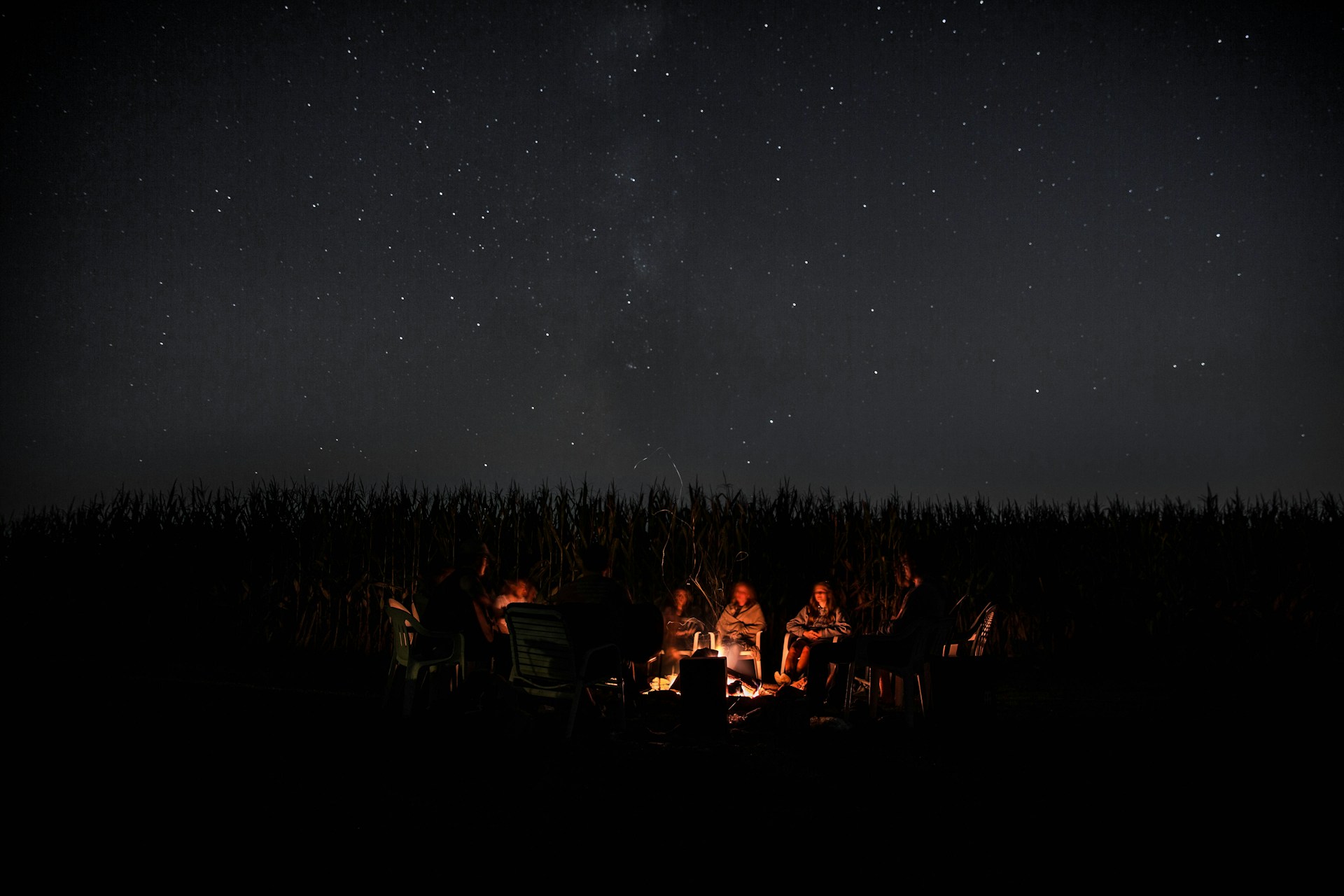
and stars blanketed the sky —
more stars than anywhere I’ve ever been.

Off-road racing brought us there,
wide sandy beaches just a short walk away,
bathtub-warm waters stretching out forever,
the tides carving their quiet stories in the sand.

Under their shady palapa,
watching the sun rise and fall on the horizon,
Mom and Dad built their place from scratch,
one humble project at a time.
It was luxury camping at its very best.

Their place was just across the arroyo from the beach,
where Dad taught Julianne to drive a stick shift
on the wide-open sand.

How I long to beam back there.
To see them again.

To hear their voices busy with new plans,
to see what they’ve been working on,
to sit with them in the shade at cocktail hour,
chips, salsa, and all the shrimp we could eat,
as the afternoon melts softly into evening.

I’d love to hear who’s come to visit lately.

Both are gone now, but the memories remain.
Their laughter rides the breeze,
as fresh as the salty air,
that still stirs in my heart.

Backstory: A Campo Sahuaro Adventure

When Mom and Dad bought their lot around 1988, it was nothing more than a small concrete slab and four stakes marking the corners of their sandy “oasis.” What made this campo special was its access to a fresh water well…rare in that part of Baja.

Their lot sat on a bluff overlooking an arroyo, with the Sea of Cortez just beyond the sandy beach. In Mexico, buying a lot like this meant purchasing a long-term lease from the property owner. As long as you pay the annual lease (which was under $1,000 per year) you control the land. Anything they built on it was theirs.

Because Mexico has nationalized property in the past, many Americans build semi-permanent structures that can be dismantled and hauled away if needed. That kind of caution remains, even though nothing like that has happened in a very long time.

Being a concrete guy, Dad’s priority was pouring a lot of concrete. He laid down a huge patio that would become the base for everything else, including one of the largest shade structures I’ve ever seen. It didn’t happen overnight.  This was a multi-trip (multi-year) endeavor, often coinciding with supporting Team Honda’s off-road racing efforts. They’d haul supplies and tools down along with pit equipment. In the early ’90s, sourcing building materials in Baja was still hit or miss so they brought most of what they needed with them.

By around 1991, Dad was ready to build a workshop. It would be like a shipping container, made of wood, with big swing-down doors on each end that doubled as ramps. He welded little leveling stands to the top of each door so they could serve as sleeping platforms when opened. I slept on those doors under the stars every chance I got.

As with everything at Campo Sahuaro, there’s a story behind that build.

We were down there pitting for Team Honda, which meant several fellow pit crew members were staying at my parents’ place.  At that point, it was mostly a shaded patio and a small pump room. Many of the guys were carpenters, so they brought their tools and were ready to build.

Dad’s motorhome was packed. The center aisle was filled with 2x4s, stacked at least five feet high. Getting around inside was nearly impossible. Behind the motorhome, he towed a converted motorcycle trailer that he’d built at least ten years earlier.  It was loaded with a perfectly stacked cube of 4×8 plywood sheets.  The walls of the future workshop.

I happened to be traveling with them on that trip, ready to help with both pitting and construction. About 50 miles from the campo, we heard a loud crash and scraping noise. We were driving across a dry lakebed, the road raised 15–20 feet above the flat terrain. I looked out just in time to see the trailer tumbling down the embankment.

Dad got the motorhome stopped, and we rushed out to assess the damage. The trailer tongue had sheared clean off under the weight of the plywood. Thankfully, it hadn’t failed earlier, during high-traffic sections of our trip. The trailer was upside down in the lakebed, still lashed to its cargo.  That cube of plywood was completely intact.

Within minutes, two vans carrying some of our crew pulled up behind us. We counted heads — at least ten of us, including a few high school football players. It wouldn’t take long to relocate all that wood.

A chain gang formed. We passed sheet after sheet of plywood up the embankment and loaded it onto the vans, lashing them down with tie-downs and ropes we’d salvaged from the trailer. We even hauled the trailer carcass back up the hill. At the very least, we figured we’d salvage the tires and axle.

That’s when an old Toyota pickup rolled up. A local man hopped out. I greeted him with my high-school-turned-Baja-race-pit-guy-Spanish. Lots of smiling, gesturing, and broken sentences later, we learned he was a welder and fabricator. He was heading to San Felipe to visit family and watch the race.

He looked over our trailer, nodding thoughtfully.  He said he could take the trailer on his truck bed along with the remains of the tongue and hitch.  He’d rebuild it and leave the rebuilt trailer at his brother’s restaurant in San Felipe.  We asked him how much he’d charge us for that service.  His response was $20(!). 

I confirmed that his plan was to haul our trailer back to his shop (about 40-50 miles back), rebuild it, and then he’d tow it all the way down to San Felipe for $20.  We told him there was no way we’d let him do that for anything less than $200.  His eyes got real wide.  I don’t think he believed what I was saying.  I said that we’d gladly pay him that amount for all that he’d be doing for us. 

We loaded the trailer carcass onto his truck bed, shook his hand, and paid him the agreed $200.  We wouldn’t be able to see him at the conclusion of the job, so pre-payment was our only option.  He turned around with his new load and headed back to his shop. 

We mounted up and continued to Campo Sahuaro, wondering if we’d ever see that trailer again. 

The Workshop Rises

The race went great. The workshop was built in a day or two with the expert help of our crew. The carpenters led the way and the rest of us did our best to help and stay out of their way.  Copious amounts of alcohol were consumed around the campfire, many snacks and excellent meals were eaten, heroic stories (some of them true) were shared with lots of laughter along the way.

On the way home, we stopped at Baja 2000, the restaurant where our mystery welder said he’d leave the repaired trailer.  And there it was.

Not only had he fixed it.  He’d reinforced it, straightened the bent parts, and welded it all back together better than before. 

Legacy

Over the years, I visited Campo Sahuaro many times, sometimes with my wife and daughters. As mentioned earlier, Dad taught my oldest daughter to drive a stick shift truck on the beach in front of their place when she was probably 12 or 13 years old.

I loved knowing the stories behind everything built there.  Most of the stories involved improvisation, imagination, and always perseverance. There were a ton of lessons at their property about staying focused and overcoming obstacles in the pursuit of your goals.

I loved sleeping under that blanket of stars, watching satellites traverse the sky (there’s a lot more of them up there nowadays).  I loved swimming in the warm ocean.  Most of all, I loved being with Mom and Dad, sharing good times and making memories with them at their special place, 32 kilometers south of San Felipe.        

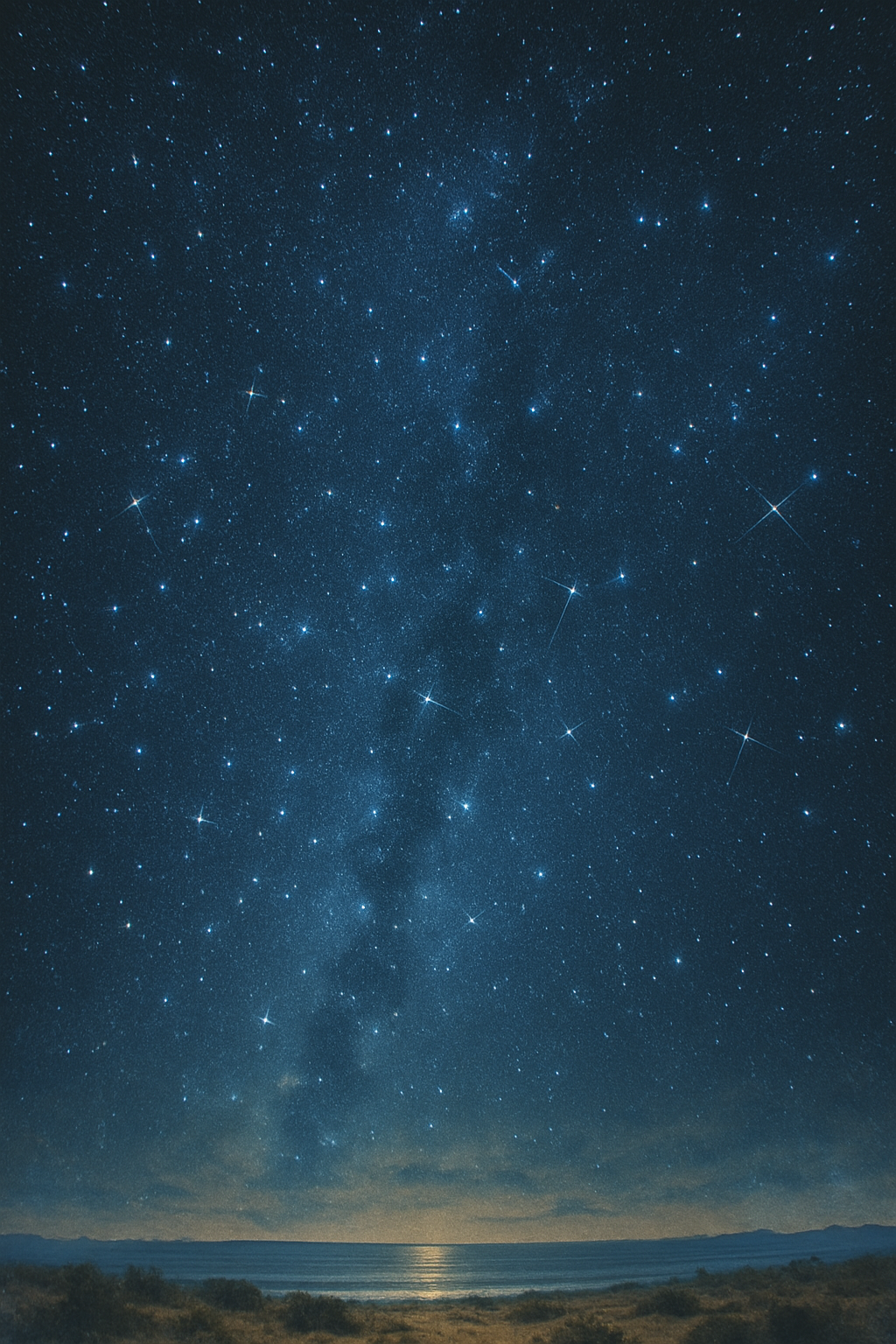
p/c – I asked ChatGPT to make an image of a starry night on the beach based on my story. Amazingly, the image it rendered is mostly how I remember it…except for the houses on the front row (Mom and Dad’s place was on the second row), and the dry-docked fishing skiffs that used the campo as their base of operations.

Maybe So…

“Maybe so.”

It’s such a quiet phrase. Almost a shrug. A way of saying, yes, that’s true…but that’s not the whole story.

Life is full of maybe so…

This challenge I’m facing is hard. Maybe so.
Someone else got the credit I worked for. Maybe so.
The odds are stacked against me. Maybe so.
The situation is messy, complicated, unfair.  Maybe so.

Maybe so…but I’m not letting that be the final word.

Truth and hope aren’t always in competition. You can fully acknowledge the reality of something and still choose where to focus.

Perspective is a choice.

I’m tired, maybe so.
I’ve failed, maybe so.
This isn’t how I pictured it, maybe so.

But I’m also thankful.
I’m still showing up.
This might be exactly what I need, even though I may never admit it.

I’m learning to live in the tension between what is and what matters more.

We all get to decide where to place our attention.
Some people zero in on the obstacle. Others fix their eyes on the opportunity.

One sees the storm. The other watches for the rainbow.

Both are real. But only one will move you forward.

“Attitude is the difference between an ordeal and an adventure.”
— Bob Bitchin (he’s a real guy with an amazing story…stories)

Life hands us situations we don’t choose.  Detours, delays, disappointments. But attitude? That’s something we bring to the table.

Sometimes the smallest shift in mindset is what turns a setback into a story worth telling. What once felt like a burden becomes the beginning of a bold new chapter.

So yes…your facts may be true. The obstacles might be real. The weariness might be justified.

Maybe so…but this is where we’re meant to be.  Besides, this story isn’t finished.

The best parts of life come after we stop fighting the facts and start choosing the lens we use to see them.

h/t – “Yeah, I know what they say, money can’t buy everything.  Well, maybe so, but it could buy me a boat.” — Chris Janson

I smile every time I hear this song. Sometimes a little humor, a little honesty, and a down-to-earth dream are exactly what we need to reset our thinking. It’s not about the boat.  It’s about the choice to believe that something good still waits ahead…if we choose to see it.

Photo by Jarrett Fifield on Unsplash

A Love Letter to My Grandchildren

My Dear Grandchildren,

Thinking about how to tell you about the infinite power of love, I realize how important it is to share this letter with you.  To help you understand just how much love will shape your lives.

You’re still growing, discovering who you are and what you want from the world. As I reflect on everything I’ve learned and everything I’ve seen, I can’t help but realize that love has been the guiding force in all of it. If there’s one truth I want you to know, it’s this: love is the one thing that never runs out. It is truly infinite.

Love has no limits.  It’s a gift from God that never empties. “True love is infinite. It has no end, no limits, and no boundaries” (Unknown).  I want you to remember this when life gets tough or when you start to feel like there’s not enough love to go around. The love you give will always come back to you. It grows, just like a tiny mustard seed turns into a mighty tree. The more you pour out, the more you’ll have. And love? It keeps on giving.

Love has the power to change things.  To transform everything. It’s not just a feeling. It’s something far more powerful than that. Love is what changes hearts. It softens the hardest of feelings and brings people together.

I’ve seen this truth unfold many times in my life. When you approach someone with love, even if they’ve hurt you, that love has the power to melt away your bitterness, to open a door where there was once a wall. “Love is the only force capable of transforming an enemy into a friend” (Martin Luther King Jr.). That’s the kind of love I want for you. The kind that can heal, the kind that builds bridges instead of walls.

Love isn’t passive. It’s not something that just happens to you. It’s something you choose every day.  Love calls for action, for intention. It’s an active force. And when you lead with love, you’ll see the world differently. I’ve learned that love moves you in ways you can’t predict, but it will always be the guide that matters most.

You will never have all the answers. Just choose love. “To love is to will the good of another” (St. Thomas Aquinas). That’s the essence of it. When you love someone, you are choosing to want the best for them, to care for them, and to be there for them, even when it’s hard.

Sometimes, we make mistakes. We hurt each other. There are moments when we carry the burden of regret or hard feelings. But love, I’ve learned, is about letting go. It’s about forgiving. You can’t move forward while holding on to old wounds. Love is what frees you from that burden. It’s what gives you the strength to keep going, even when it feels impossible. “Love is an endless act of forgiveness” (Maya Angelou).  This resonates deeply with me, even when I forget its lesson. You see, when you forgive, you allow love to take root again, to grow and bring healing.

And the beautiful thing about love is that it never ends. Even when someone leaves us, their love remains. It stays with us. It lives on in the memories we carry and in the ways we continue to love others by their example. The love we give and receive stays with us, shaping us, and guiding us through the rest of our lives. “Love has no age, no limit; and no death” (John Galsworthy). When someone you love passes away, their love is still alive within you. It never dies. It’s a part of who you are forever.

I want you to know that love isn’t something you will always understand. It’s not something that always makes sense. Sometimes it feels irrational or confusing, but that’s what makes it so powerful.

Love comes from a place deep inside that logic can’t explain. It’s a mystery. “The heart has its reasons of which reason knows nothing” (Blaise Pascal).  That’s the beauty of love. It doesn’t need to be explained. You feel it. You know it. And that’s all there is.

Love is also not confined by time or space. It’s already free. “Love is an infinite ocean, where every drop is a reflection of the entire universe” (Unknown). Love stretches. It connects us all, no matter where we are, no matter what we’ve been through. It doesn’t have walls. Love is limitless.  It grows as we share it, and the more we live it.

I think about St. Paul’s words to the Corinthians when he wrote about love. It’s a love that’s patient and kind, that doesn’t boast or get angry easily. It’s love that seeks the good, that keeps no record of wrongs, that always protects, always trusts, always hopes. “Love is patient, love is kind. It does not envy, it does not boast, it is not proud. It does not dishonor others, it is not self-seeking, it is not easily angered, it keeps no record of wrongs. Love does not delight in evil but rejoices with the truth. It always protects, always trusts, always hopes, always perseveres” (1 Corinthians 13:4-7). That’s the love I want you to know. 

At its core, love is what makes life worth living. Without love, we would have nothing. Without love, we would be lost. “Love is the only reality, and it is not a mere sentiment. It is the ultimate truth that lies at the heart of creation” (Rabindranath Tagore). God’s creation.  It’s love that drives us to seek goodness for others, not just ourselves. It makes the world a better place, one loving act at a time. 

There’s one last thing I want you to know. Love never runs out. Its supply is unlimited. “There is no remedy for love but to love more” (Henry David Thoreau). That’s the key. The more you love, the more you’ll understand, the more you’ll see. Love opens new possibilities that you didn’t even know were there. It’s a wellspring that you can always draw upon, as long as you’re willing to give.

Love is the one thing that will always be with you. It doesn’t matter where life takes you or how far you go. It will be there. Love is constant, unchanging, but always expanding. And in that love, you’ll find the freedom to be who you’re meant to be, to live fully, by loving deeply.

The more you love, the freer you become. The more love you give, the more you’ll find in return.

As your grandpa, I love each of you with all my heart and soul. I want nothing more than for you to lead lives filled with love—guided by love, surrounded by love, and sharing love with everyone you meet.

A life full of love is a life full of joy and meaning.

Love always,

Grandpa Bob

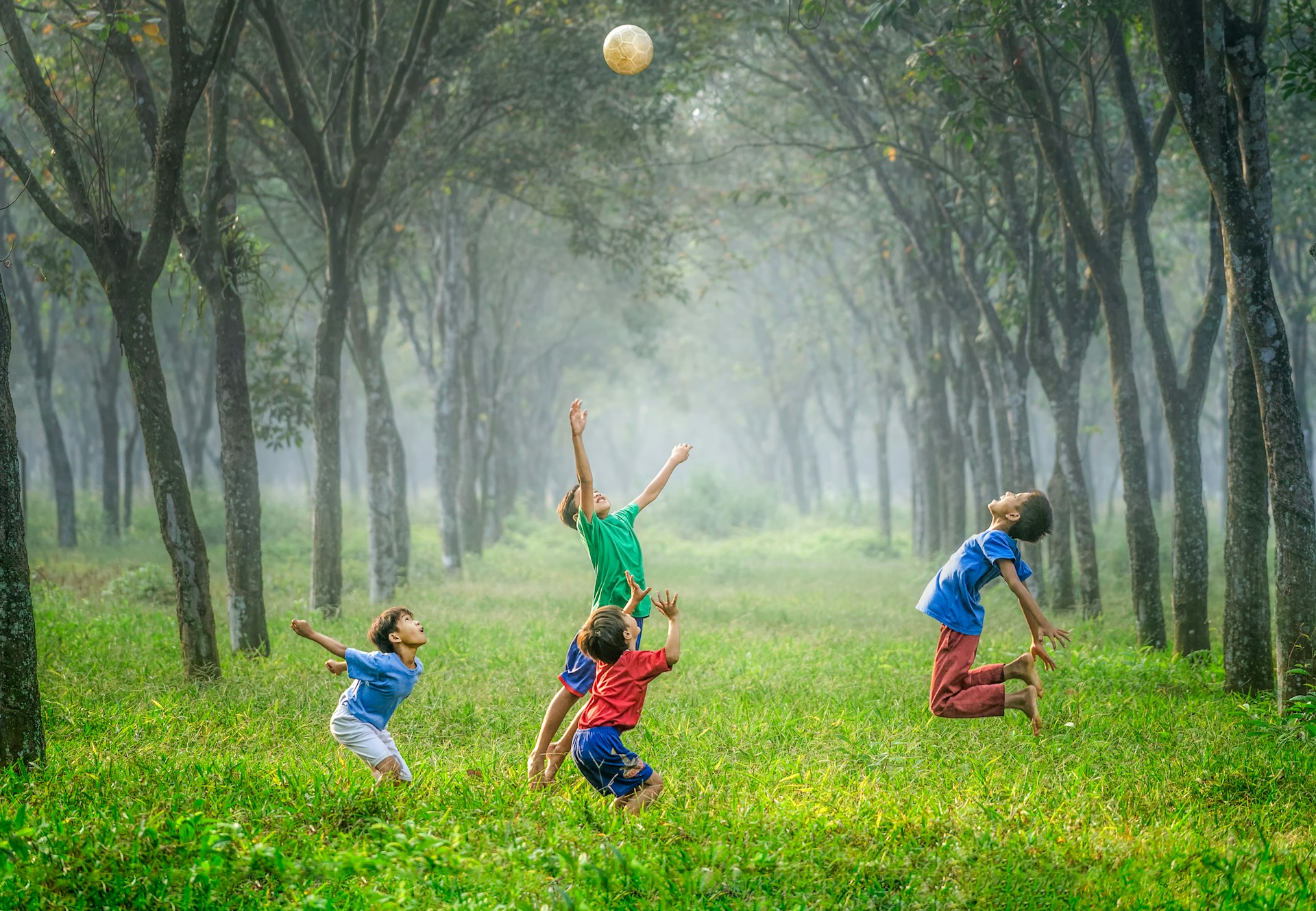
Photo by Diane Anderson – That’s 7 of our 8 grandkids…and we have another on the way in May.  Diane is their great grandmother.  God is good.  

Breaking the Rhythm of Mediocrity

Each of us has a natural speed.  A rhythm that feels comfortable. Some of us move fast, always pushing, never stopping. Others take a slow, methodical approach. And some avoid movement altogether.

Occasionally, we can shift gears and speed up for a short-term need. But the comfort of our standard speed usually draws us back.

Dialing up is hard. It’s difficult to imagine doing more than we’re doing now. It’s harder still to visualize the better outcomes that could come from pushing ourselves and our organizations beyond the status quo.

Even worse is when we deliberately slow our pace to fit in.  To blindly match our rhythm to those around us, in our workplace, our social circles, our environment. The groups we allow to shape us.

The slow, almost imperceptible tick-tock of our internal metronome feels safe, especially if it’s set to someone else’s rhythm. It’s predictable. It gives us a (false) sense of control when we have no control at all.

We tell ourselves that changing our settings would bring chaos.  Better to stay safe and avoid the challenge. 

If we’re willing to turn our settings down to accommodate others, why not turn them up to pursue our own goals?

Why not push beyond our comfort zone to improve, to evolve?  Why not try to inspire those around us to ramp up? 

The things we don’t change are the things we’re actively choosing. Doing nothing is a choice.

Life moves at a relentless pace, largely outside our control. What we can control is our response.  We can set our internal rhythm to match what’s happening or set it to create what we want to happen.

Here’s a brutal truth: The outside world doesn’t grant or deny us anything. It keeps moving, with or without us.

It’s up to us to set our own tempo—not for the group, not for the organization, but for ourselves and the people who matter most.

Photo by Lance Anderson on Unsplash

Splitting Logs – The Firewood’s Promise (and my “Why”)

If you were to visit me on my mountainside, next to a huge pile of bucked-up logs that I’ve cut and collected over the past year, using my fancy new log splitter, what would you see? 

A grandpa dressed in a snow suit and beanie, warding off the low-teens temperature and wind chill, wearing eye and ear protection, splitting one log after another. 

I’m stacking the split firewood into an “outdoor fire” bin (the crummy stuff that’s showing some signs of water damage that may or may not burn so great), and an “indoor fire bin” for the good stuff.  We have so much that I use IBC totes that I can forklift and move around with my tractor.   

What you’d miss is what this guy’s thinking.  Of all the campfires these logs will deliver.  The warmth, the beauty, and the cheery faces reflected in the golden firelight.  The togetherness, the raucous fun, and always the smoke that’ll chase each of us in time.    

Lately, I’ve been thinking about words that rhyme with stories, memories, starlight, marshmallows, love, and family. Of a way to express my “why” behind all this work.

My new splitter hums, its rhythm is true,
Each log cracks clean, split in two.
And with each piece, I see what’s ahead—
Fires that warm, where stories are said.

Golden flames dance in their eyes,
Joyful voices filling the skies.
Kids with marshmallows on sticks they will hold,
Turning white fluff to crispy gold.

The stars above will steal their gaze,
A quiet pause from the firelight’s haze.
But soon enough, they’ll leap to their feet,
Cousins chasing cousins, the night complete.

This work is heavy, my labor long,
But in each log, I hear a song.
A promise of warmth, connection, and love,
Of smoke below and stars above.

Each crack of the wood a memory in waiting,
Moments of joy we’ll spend creating.
I keep splitting, I’ll keep the pace,
Knowing the fire will hold its place.

One split, one stack, one stick at a time,
Building a future that’s warm and divine.
A pile of firewood, yes—but so much more,
It’s family, it’s laughter, it’s life to the core.

I can’t think of a better “why” than this. 

Photo by Kevin Erdvig on Unsplash

Bringing Home the Moonbeams

There’s a line in a Frank Sinatra song that asks if we’d like to, “…carry moonbeams home in a jar.” A crazy idea. Moonbeams can’t be contained or put in a jar, but their magic can be carried home just the same. What if we could carry home the kind of wonder and light that moonbeams represent?

Life throws challenges at us every day. Deadlines. Difficult conversations. The relentless tug-of-war between expectations and reality. Yet, amid the noise, we often stumble upon moments of beauty.  Unexpected acts of kindness, moments of connection with strangers, or simply a sunrise or sunset that stops us in our tracks. These are moonbeams.

Have you ever met someone for the first time and felt their kindness so deeply that it stayed with you? Maybe it was a stranger who gave you directions with a smile, a colleague who truly listened, or someone who saw you struggling and extended their hand. These are glimpses of humanity’s greatness.  Magic moments where we see the best of who we are reflected in someone else.

What if we made it our mission to carry that magic home with us?

It’s easy to bring home the worries of the day.  Our frustrations, our stresses, our nagging self-doubt. But alongside these, we can also bring moonbeams: the small, bright moments of beauty, hope, and love that we encounter every day. We can share the wonder of a chance conversation, the joy of something new we learned, or the inspiration we felt when we saw someone overcoming adversity.

Carrying moonbeams is about being conscious of what we pass on to those we love. It’s about choosing to share curiosity instead of cynicism, gratitude instead of grumbling. It’s about being the explorer who brings back stories of the world’s beauty to share with those at home, inspiring them to see the magic in their own lives, too.

Imagine if we all carried moonbeams in our metaphorical jars. How much brighter would our homes, our communities, and our world become?

What if we could embrace the day with the motivated curiosity of an explorer. Purposely looking for the moonbeams—the fleeting magic of kindness, beauty, and connection.

Imagine carrying them home to share, not in jars, but in our words, our actions, and our presence.

Because moonbeams, once shared, have a way of multiplying.

Photo by me, capturing a “moonbeam” of a sunrise view outside my kitchen window the other day

Why Manners Matter

“Manners are of more importance than laws. Upon them, in a great measure, the laws depend. The law touches us but here and there, and now and then. Manners are what vex or soothe, corrupt or purify, exalt or debase, barbarize or refine us, by a constant, steady, uniform, insensible operation, like that of the air we breathe in.” – Edmund Burke

-Why do we say Please and Thank You? 

-Why do we hold the door for the next person? 

-Why do we show respect for our elders? 

-Why don’t we interrupt someone when they’re speaking (at least, most of the time)?

Mostly because we were taught these behaviors by our parents, or someone in authority, when we were growing up.  We may have learned by being told explicitly, or by watching others that we admire acting in these ways. 

As Burke points out, manners are more important than laws.  They are fundamental in establishing the boundaries of our behavior, of integrating us within our community.

Manners show our respect for those around us.  They create a standard for how we work with others.    

Consider the manners (customs) that are in play where you work.  It doesn’t matter if you work in construction, nursing, information technology, or any other field.  If you work with people (which you always do whether they are your co-workers, your customers, or both), your manner of behavior will be critical to your success. Good manners create a positive environment, build strong relationships, and foster a culture of respect and professionalism.

Since we are creatures of habit, it’s easy to establish either a habit for lacking manners, or for having them.  The disciplined decision to operate your life within the bounds of good manners is a decision that will pay consistent dividends.  Good manners can be the foundation for a disciplined approach across all areas of your life.  When we are polite and considerate, we remind ourselves of our values and our commitment to treating others (and ourselves) with dignity.

The simple act of saying “Please” and “Thank You” (and meaning it) shows our vulnerability to others, and at the same time, our appreciation for what they have done for us.  Powerful ways to remind us of our humility and gratitude many times each day. 

Edmund Burke observed, “Example is the school of mankind, and they will learn at no other.”  Our behavior and proper manners will be a teacher to those around us, whether we intend it or not.  Our actions, grounded in good manners, can inspire those around us to adopt similar behaviors.

It’s easy for each new generation to look at the rules and traditions of prior generations (manners) as archaic, overly formalized, and irrelevant in their “new modern era.”   They may rationalize away the need for good manners on this basis.  However, dismissing the importance of manners can lead to a breakdown in social cohesion. Our challenge is to adapt the principles to modern contexts while preserving the core values of respect and consideration.

Manners are a timeless currency that never loses value—so spend them generously and watch how rich life can become.

p/c Robert Collins on Unsplash

What is your favorite quote?

I’m working on an autobiography of sorts.  It’s a compilation of my answers to a series of questions.  There are about 75 of them that act as prompts.  Here are some examples: 

  • Tell me about your childhood home.
  • What were your school days like?
  • What was your favorite fashion trend when you were a kid?
  • How did you meet your spouse?

The idea is that my kids and grandkids and anyone else who’s interested can learn more about my life as they read through my answers to these questions.  It’s been a fun project that I’ve been working on over the past 3-4 months. 

I just finished answering this question and thought I’d share my answer here:   

Can you share a favorite quote or saying of yours?

Life is a journey, not a destination. 

I’m not sure who said this first.  It’s something I said for years before learning that it was a famous quote from someone else.  Turns out there are posters and artwork that you can buy that highlight this quote.  Maybe I saw the quote decades ago and it lived in my subconscious mind until later in life. 

I don’t have anything against goal setting or visualizing a future and going after it.  But it’s important to avoid having tunnel vision in your pursuit of goal achievement since you may miss other opportunities and experiences that introduce themselves along the way. 

I’m reminded of a drawing of a stickperson on a ladder.  They are locked in on their goal: reaching the top of that ladder before anyone else.  This person even jumps over someone and kicks another person off the ladder in their effort to reach the top first.  When this person finally reaches the top, they find that the ladder doesn’t actually lead anywhere.  Their ladder is standing in the air and not leaning against anything.  

The lesson is to make sure the ladder you’re climbing is going somewhere you really want to go.   

When you reach your goal, no matter how lofty and difficult it was to achieve, you are merely at a new starting point or more accurately, you’ve made it to one of an infinite number of stops in your life-long journey.

The real goal should be to maximize your enjoyment of the journey itself.  To appreciate the small things that happen, the surprises, the diversions, the successes and the failures, the people you meet, and the places you get to experience along the way.

Life is that thing that happens while you’re busy making other plans.

This one is closely related to the first quote.  Life is a series of “nows” that are happening in real-time.  You can make plans, point yourself in a particular direction, and even tell yourself that you’re in control of all the things that are happening in your life (spoiler alert – you’re not in control of all the things, you only control your response to all the things).

The time to start something new or something that will improve your life is always six months ago.  While you’re busy talking about your future, it’s already happening.  That thing you’re thinking about doing today but procrastinating while you do more planning will become that thing you should have done six months ago. 

Plans are valuable, and you should have a broad plan with some key pillars that you can stand on throughout your life.  It’s equally important to avoid hiding behind the planning phases of your life and forgetting to live your life purposely.  It turns out that life’s happening anyway, so you might as well live it proactively and not reactively.    

These are the good times. 

The shortened version of this among friends is, “Good times.”  Meaning these are the good times we’ll look back on fondly when we get older.  No matter how screwed up something is, or how hard the thing you’re doing right now is, or how much you just failed… all of it will be lumped into your mind and memory as “good times” from your past. 

In fact, some of your worst life experiences or life failures might even become the fondest memories you share in the future.  You might reflect on how great something was, or how it was good that you had that failure or that heartbreak so you could apply what you learned later in life.    

It’s unfortunate that we usually don’t realize this when these things are happening to us in the present. 

Embrace Newton’s Motion: Breaking Free from Inertia

Newton’s first law of motion (also called the law of inertia), states that an object at rest will stay at rest, and an object in motion will stay in motion unless acted upon by an external force. While this principle is foundational in physics, it can be applied to the way we live our lives. 

In our daily lives, it’s easy to remain at rest. We experience moments of doubt and confusion, low motivation, and a natural tendency to avoid change. This mental and emotional inertia can keep us stuck, making it difficult to take action or move forward. Organizations often reinforce this inertia with incentives that promote the perceived “safety” of maintaining the status quo.

As we age, this resistance to movement can become even stronger. We rely on past experiences, often using them as justifications for inaction. “It didn’t work before, so why would it work this time?” This mindset is a barrier to personal growth and fulfillment.

Unfortunately, a life at rest, devoid of risk and new experiences, can become empty and unfulfilling.

Our goal should be to actively push against the inertia holding us in place. This involves taking risks, trying new things, and offering our time and energy to others. Overcoming inertia requires a conscious effort to break free from the comfort of staying still.

The second part of Newton’s law of inertia emphasizes that an object in motion tends to stay in motion. This should be a powerful motivator. Once we start moving in a direction, it’s likely that we’ll continue to do so unless something actively stops us.

Turns out that those around us are battling their own inertia and may not have the energy to impede our progress.

By choosing to move, we can capitalize on opportunities that arise. While others remain stuck in their self-imposed rest, we can explore new paths, achieve our goals, and live our most fulfilling life long before they even notice what we’re doing.

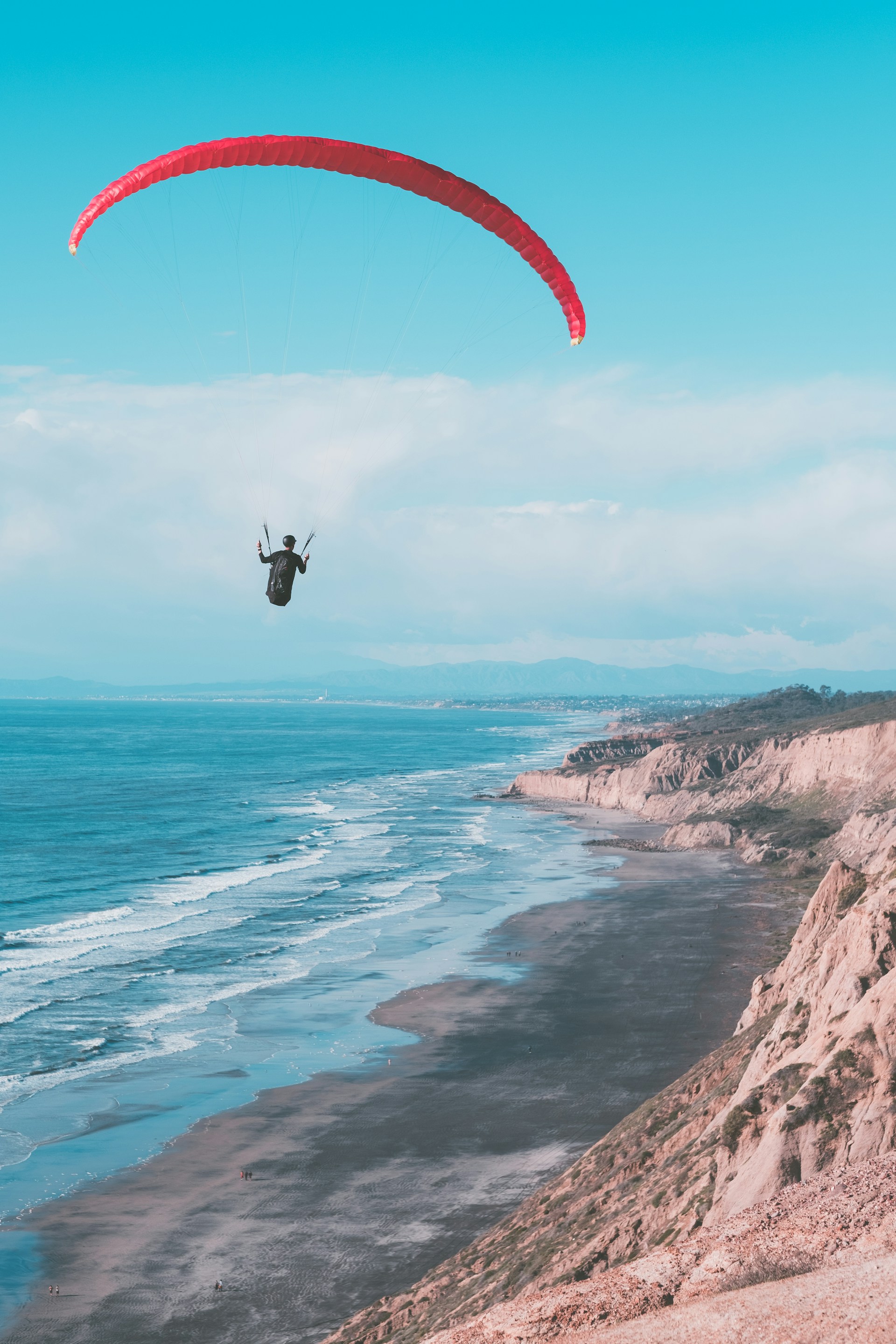
Embrace the motion. Take action. Push past the barriers, especially self-imposed barriers.   The world is full of opportunities for those who dare to tap into the Newtonian motion that’s available to each of us…all we have to do is move. 

p/c – Benjamin Voros, Unsplash.com

The What If Game

Powering your day...

I recently saw this advice:

Asking what if about your past is a waste of time.  Asking what if about your future is tremendously productive. – Kevin Kelly

It’s easy to focus on what could have been, what you should have done, what someone did or didn’t do to you (or for you), and all the mistakes you’ve made.

It’s even easier to let all that stuff in the past dictate what you’ll do in the future.  Our past has tons of built-in excuses.  Excuses that help us stick with the status quo, protect us against taking new risks, prevent us from trying something new, or exploring where we’ve never been. 

Our lizard brains love the barriers that the past can provide.  Like a protective cocoon…one we never have to leave.

What if you choose your future without the limitations or excuses of your past? 

That’s the harder and much more rewarding path.  You might fail.  You might be embarrassed.  You’ll surely make new mistakes. 

But you might succeed, and you’ll probably discover something you never knew you were seeking.

You can accept the lessons of your past as you drop the past from your thinking. 

When was the last time you did something for the first time? 

Did you take more than 30 seconds to answer that question? 

What if you purposely pursue the surprises that come from diving headfirst into new experiences and adventures?

It’s time to find out.    

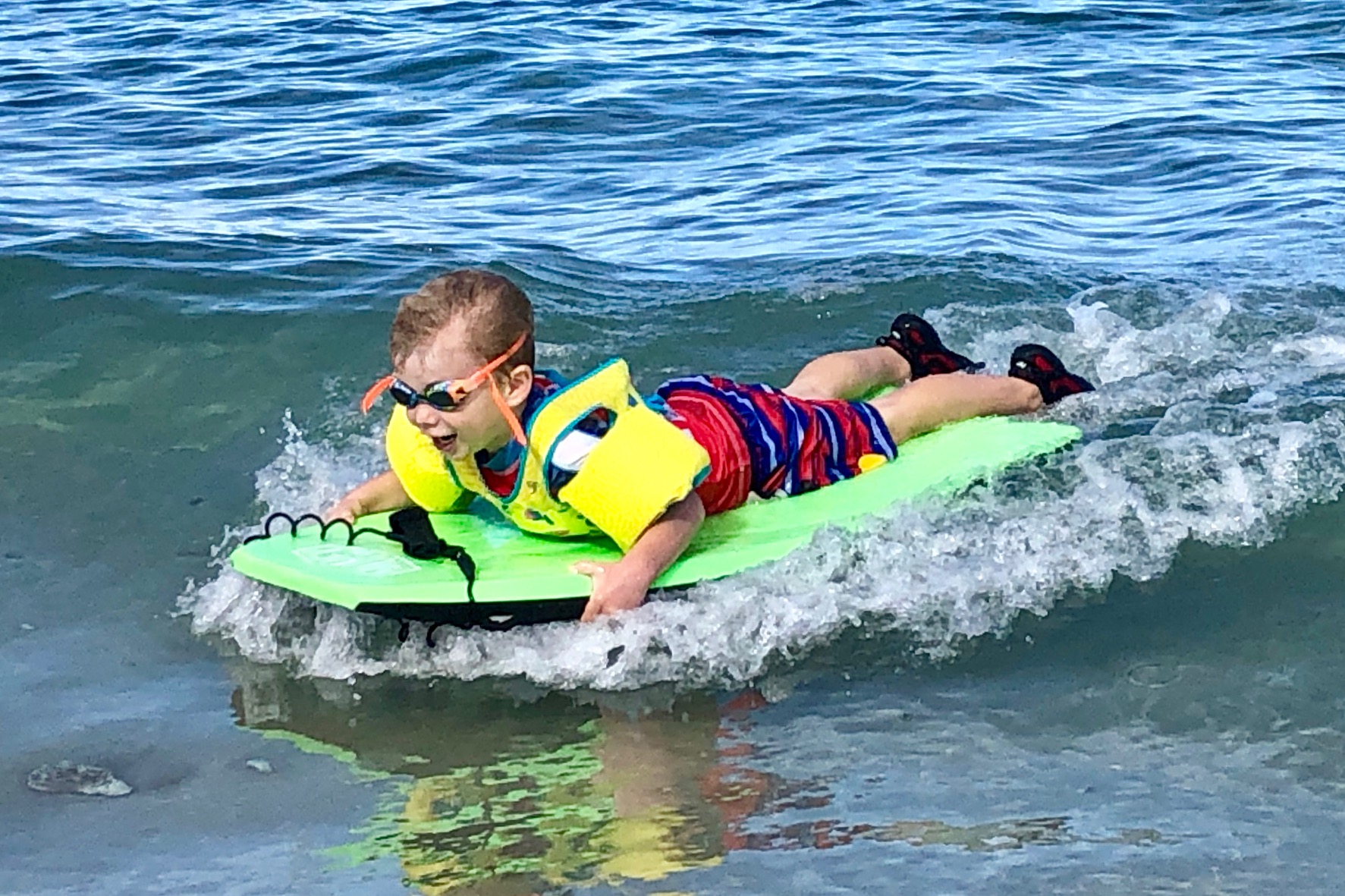
Photo: My grandson, Charlie, boogie boarding for the first time (about 5 years ago). May we each experience the same joy when we’re trying something for the first time.