When Leadership Becomes the Single Point of Failure

Some leaders wear the line outside their door like a badge of honor. People waiting with questions, approvals, decisions.

It feels like proof of trust. Proof of competence. Proof of necessity. If the team can’t move forward without your judgment, surely that means you are at the center of the work.

In many ways, you are.

But there’s a second truth hidden inside that scene. When every decision depends on you, you become the one point your organization can’t outrun.

The line reveals the fragility that forms when decisions stay in one place instead of growing across the organization.

At a certain level of responsibility, leadership effectiveness isn’t measured by the number of good decisions you make. It’s measured by whether the organization can make good decisions without you having to approve each one.

Leadership at this level is staying at the wheel while helping others learn to steer.

High-pressure operators know instinctively that a bad decision leaves a mark. A slow decision leaves a gap. Most organizations struggle more with waiting than with trying. That line at your door, day after day, is the quiet proof. The whole operation can only move as fast as the person at the center of its decisions.

There’s a time in every leader’s career when the instinct to take control is the right one. When the team is inexperienced, when stakes are high, when the risk is real and present, you become the center of gravity because someone has to be.

But later, if the business grows and the structure doesn’t change, this habit of control becomes limiting. What protected the organization early can start to quietly cap its potential, because your bandwidth is finite.

There’s a moment when the senior leader’s job shifts from “Do we have the right answer today?”to “Will we have the right judgment tomorrow?”

That shift feels slow. It feels inefficient. It feels like a luxury.

It isn’t.

It’s a protective move.

Teaching someone how to make a decision can feel like taking the long way around the problem. You could make the call in 30 seconds. Walking someone through the context and reasoning might take half an hour.

It’s natural to skip teaching and just decide. It feels faster. And today, it is.

But tomorrow it isn’t. Because they come back with the next decision. And the next. And the line gets longer.

Here’s a simple practice that changes the arc of your relationship without exposing the business to risk. When someone comes to you with a decision, don’t give the answer first. Ask them, “What would you do?”

You’re not surrendering the decision. You’re building their capacity to make it. You’re seeing how they think. You’re catching errors before they matter. You’re adding the perspective that builds judgment.

It is controlled delegation, not abandonment. Nothing is handed off recklessly.

When someone brings an answer that is close to right, you supply the context they don’t have, and then you say something specific and concrete:

“Next time this situation comes up, you can make that decision.”

Not in general. Not theoretically. For this exact decision, with a shared understanding of why it works.

Over time, the pattern shifts. Fewer decisions reach you. The ones that do are larger, higher consequence, more strategic. The team develops in the shadow of your reasoning, not separate from it. And the bench of judgment widens beneath you.

This is what protects the business from single-threaded leadership. Not a gesture toward empowerment, but a strategy of risk reduction.

Leaders don’t become less important by creating decision-makers. They become less fragile.

The organization becomes capable of sound judgment when you’re not there. The most durable form of control a leader creates.

If the business only works at full strength when you are present, you haven’t reduced the risk. You’ve concentrated it.

At the top levels of leadership, the question is rarely, “Can you decide?”Of course you can.

The real question is, “Can others decide well when you aren’t in the room?”

That’s the difference between being the operator and building the operation.

It begins quietly. A question reflected back. A recommendation explored. A context added. A decision shared. A leader shaped, one situation at a time.

The line at your door gets shorter and your organization gains strength. Not because you step away from accountability, but because you’ve built accountability into the people who stand in that line.

Leadership Homework

One question to sit with, without rationalizing it away:

If you disappeared for 30 days, what decisions would the organization be unable to make without you?

Not decisions they might make differently, different is acceptable. Decisions they could not make.

That answer will show you where the real bottleneck lives.

And where the next generation of leadership needs your attention.

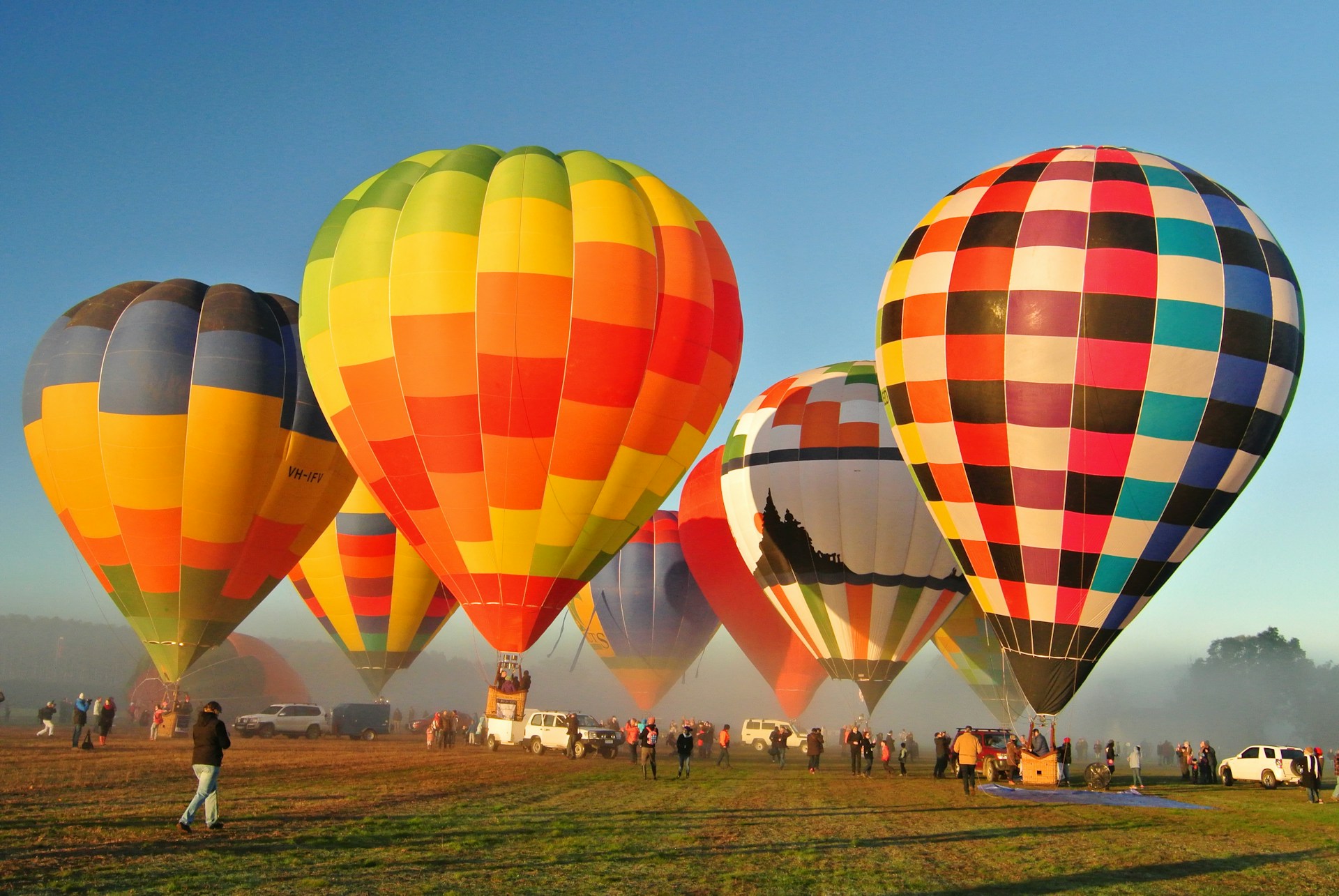
Photo by Mal Collins on Unsplash – it’s time to help your team take flight.

Planting Shade for Others

I don’t remember a lot from Mrs. Olsen’s first grade class. One event that stands out is the day we planted a bunch of seeds in a garden. First grade Bob enjoyed digging in the dirt, making small seed holes, dropping each seed into its place, and writing the plant names on popsicle sticks that we plunged into the dirt next to the seeds.

Then came the bad news.

We wouldn’t be able to see the plants we’d planted until weeks later, and they wouldn’t reach maturity (whatever that meant) for at least a year.

To a first grader, weeks (and especially a year) meant forever. First grade Bob was extremely disappointed. I never saw the plants that came from the seeds we planted that day. It would be decades before adult Bob would go to the trouble of planting seeds or transplanting potted plants into a garden.

Recently, I watched an Essential Craftsman video where he planted 25 new trees. He worked the soil, designed a hand-made watering system, dug 25 holes with exactly the right spacing, brought in a truckload of special soil, mixed it with his existing soil, and then carefully placed each tree in the ground.

At various points in this multi-week project, he worked alongside his grandsons, his wife, and one of his good friends. He said that working with them over the years, especially his wife, had made him a better person.

The finished line of trees looked amazing and will look even better over the next 10 – 20 years.

He reflected that it’s easy to take for granted the shade we enjoy from trees planted decades before. The journey from seed to shade provider is a long one, but it always begins with the person (or Nature) planting that seed.

So, what kind of “shade” are we planting today? Is it the kind that shelters others through encouragement, love, wisdom, opportunity, or sacrifice?

The things we do now may not seem significant in the moment. They may never fully bloom while we’re around to enjoy them. A kind word to a child. A story passed down. A habit of generosity. A newly taught skill. A quiet act of integrity. These are the seeds we plant for the future.

Sometimes, like first grade Bob, it’s easy to get frustrated when we don’t see results right away. We live in a world that loves fast feedback and instant gratification. But shade trees don’t grow overnight. Neither do strong families, good character, or traditions worth passing on.

What if our job, the most important job of all, is to plant and build for a future we’ll never see? To create a little more shelter for the people coming after us?

Few will notice what we’re planting. But that’s okay. We do it anyway. And someone else will get to rest in that shade.

That’s the kind of impact I hope to make. Something that lasts beyond my lifetime, even if no one remembers exactly which trees I planted.

So I’ll keep planting. I’ll keep building. I’ll keep encouraging…investing in the people I know will grow far beyond me.

Because someday, someone will enjoy the shade I may never see.

Adult Bob loves that.

“If your plan is for one year, plant rice. If your plan is for ten years, plant trees. If your plan is for one hundred years, educate children.” – Confucius

Photo by Danny Burke on Unsplash

Tacos and Time Travelers…a Dinner Conversation About the Future (and Everything That Matters)

The other night, over a casual taco dinner, one of my grandkids hit me with a question I wasn’t expecting.

“Grandpa, how old will you be in the year 2100?”

Without missing a beat, I shot back, “Nearly 140. Way too old to still be around!”

I may have been off by a few years, but we all agreed: the odds are stacked against me making it to 2100.

Then we started doing the math together, and that’s where things got interesting. They’ll be in their 90s by then. Their children and grandchildren—my great-grandchildren and great-great-grandchildren—will be alive and thriving in that future world. A reminder that we’re part of something much bigger. Connected to the past, but carried forward by those who will come long after we’ve gone.

“Okay, but how old will you be in 2050?”

That one felt closer, more real. “Well,” I said, “not quite 90, but almost. And you’ll be under 50.”

“What will we be doing in 2050, Grandpa?”

That’s a question only they can answer. I won’t pretend to know. I hope I’m there for at least part of it. I hope I get to laugh with them, to listen, to remind them where they came from, and to cheer them on wherever they’re headed.

Our conversation turned into something more than tacos and timelines. We started talking about how every generation builds on what came before. We carry what we’ve learned from our parents and grandparents, along with our own experiences, and hand all of that to our children and grandchildren. And they, in turn, will do the same.

Their children, my great-grandchildren, aren’t here yet, but I already have high hopes for them. I look forward to holding them, hearing their stories, and watching them discover the world just as their parents are starting to do today.

I hope they’ll learn the big things:

-How a starry sky can quiet our soul.

-How to throw and catch with confidence (it’s baseball season, so this one is top of mind right now).

-How warm and magical a campfire can be…and that S’mores taste better when your hands are sticky.

-How good it feels to help without being asked.

-How to sit quietly with someone we love and say nothing at all.

-How to cheer for someone else, even when the spotlight isn’t ours.

-The peace that comes from a walk in the woods or along a sandy shore.

But I also know they’ll learn things I’ll never understand. Things I can’t even imagine. And that’s exactly as it should be.

My deepest hope is that they’ll carry forward the timeless lessons. That love matters more than being right. That kindness isn’t weakness. That telling the truth is not only brave, but also the only way.

And that family stories are worth retelling…especially the funny ones.

So, here’s to future taco dinners, to great-grandkids I haven’t met, and to the storytellers of tomorrow.

May they keep the best of us within them always.

A Poem for My Grandkids

We sat with tacos, our chips in hand,
When you asked a question I hadn’t planned.
“Grandpa, will you still be here in 2100?”
“Not likely,” I laughed, “I’d be too old by then.”

And then we wondered who’ll be around,
Your kids and theirs, with dreams unbound.
Building a world we won’t see,
Carrying forward the best from you and from me.

We talked of shooting stars and catching balls,
Of S’mores by the fire and the night’s gentle call.
Of helping for nothing, of walking alone,
And learning to love with a heart fully grown.

You’ll learn things I’ll never know,
With gadgets and wonders I can’t imagine.
Even so, I hope what we’ve lived still finds its place,
In stories you tell with a smile on your face.

Here’s to the moments that grow into more,
To questions and memories, and tales we explore.
May love be your guide in all that you do,
And may our stories stay with you, and echo on through time.

p/c – That’s Charlie (in the cowboy hat) and Marcus from a few years ago, perfecting their marshmallow roasting techniques. 

A Love Letter to My Grandchildren

My Dear Grandchildren,

Thinking about how to tell you about the infinite power of love, I realize how important it is to share this letter with you.  To help you understand just how much love will shape your lives.

You’re still growing, discovering who you are and what you want from the world. As I reflect on everything I’ve learned and everything I’ve seen, I can’t help but realize that love has been the guiding force in all of it. If there’s one truth I want you to know, it’s this: love is the one thing that never runs out. It is truly infinite.

Love has no limits.  It’s a gift from God that never empties. “True love is infinite. It has no end, no limits, and no boundaries” (Unknown).  I want you to remember this when life gets tough or when you start to feel like there’s not enough love to go around. The love you give will always come back to you. It grows, just like a tiny mustard seed turns into a mighty tree. The more you pour out, the more you’ll have. And love? It keeps on giving.

Love has the power to change things.  To transform everything. It’s not just a feeling. It’s something far more powerful than that. Love is what changes hearts. It softens the hardest of feelings and brings people together.

I’ve seen this truth unfold many times in my life. When you approach someone with love, even if they’ve hurt you, that love has the power to melt away your bitterness, to open a door where there was once a wall. “Love is the only force capable of transforming an enemy into a friend” (Martin Luther King Jr.). That’s the kind of love I want for you. The kind that can heal, the kind that builds bridges instead of walls.

Love isn’t passive. It’s not something that just happens to you. It’s something you choose every day.  Love calls for action, for intention. It’s an active force. And when you lead with love, you’ll see the world differently. I’ve learned that love moves you in ways you can’t predict, but it will always be the guide that matters most.

You will never have all the answers. Just choose love. “To love is to will the good of another” (St. Thomas Aquinas). That’s the essence of it. When you love someone, you are choosing to want the best for them, to care for them, and to be there for them, even when it’s hard.

Sometimes, we make mistakes. We hurt each other. There are moments when we carry the burden of regret or hard feelings. But love, I’ve learned, is about letting go. It’s about forgiving. You can’t move forward while holding on to old wounds. Love is what frees you from that burden. It’s what gives you the strength to keep going, even when it feels impossible. “Love is an endless act of forgiveness” (Maya Angelou).  This resonates deeply with me, even when I forget its lesson. You see, when you forgive, you allow love to take root again, to grow and bring healing.

And the beautiful thing about love is that it never ends. Even when someone leaves us, their love remains. It stays with us. It lives on in the memories we carry and in the ways we continue to love others by their example. The love we give and receive stays with us, shaping us, and guiding us through the rest of our lives. “Love has no age, no limit; and no death” (John Galsworthy). When someone you love passes away, their love is still alive within you. It never dies. It’s a part of who you are forever.

I want you to know that love isn’t something you will always understand. It’s not something that always makes sense. Sometimes it feels irrational or confusing, but that’s what makes it so powerful.

Love comes from a place deep inside that logic can’t explain. It’s a mystery. “The heart has its reasons of which reason knows nothing” (Blaise Pascal).  That’s the beauty of love. It doesn’t need to be explained. You feel it. You know it. And that’s all there is.

Love is also not confined by time or space. It’s already free. “Love is an infinite ocean, where every drop is a reflection of the entire universe” (Unknown). Love stretches. It connects us all, no matter where we are, no matter what we’ve been through. It doesn’t have walls. Love is limitless.  It grows as we share it, and the more we live it.

I think about St. Paul’s words to the Corinthians when he wrote about love. It’s a love that’s patient and kind, that doesn’t boast or get angry easily. It’s love that seeks the good, that keeps no record of wrongs, that always protects, always trusts, always hopes. “Love is patient, love is kind. It does not envy, it does not boast, it is not proud. It does not dishonor others, it is not self-seeking, it is not easily angered, it keeps no record of wrongs. Love does not delight in evil but rejoices with the truth. It always protects, always trusts, always hopes, always perseveres” (1 Corinthians 13:4-7). That’s the love I want you to know. 

At its core, love is what makes life worth living. Without love, we would have nothing. Without love, we would be lost. “Love is the only reality, and it is not a mere sentiment. It is the ultimate truth that lies at the heart of creation” (Rabindranath Tagore). God’s creation.  It’s love that drives us to seek goodness for others, not just ourselves. It makes the world a better place, one loving act at a time. 

There’s one last thing I want you to know. Love never runs out. Its supply is unlimited. “There is no remedy for love but to love more” (Henry David Thoreau). That’s the key. The more you love, the more you’ll understand, the more you’ll see. Love opens new possibilities that you didn’t even know were there. It’s a wellspring that you can always draw upon, as long as you’re willing to give.

Love is the one thing that will always be with you. It doesn’t matter where life takes you or how far you go. It will be there. Love is constant, unchanging, but always expanding. And in that love, you’ll find the freedom to be who you’re meant to be, to live fully, by loving deeply.

The more you love, the freer you become. The more love you give, the more you’ll find in return.

As your grandpa, I love each of you with all my heart and soul. I want nothing more than for you to lead lives filled with love—guided by love, surrounded by love, and sharing love with everyone you meet.

A life full of love is a life full of joy and meaning.

Love always,

Grandpa Bob

Photo by Diane Anderson – That’s 7 of our 8 grandkids…and we have another on the way in May.  Diane is their great grandmother.  God is good.  

Goals for 2025

I’ve never been a New Year’s resolution person.

Maybe it’s all my time spent working in businesses over the past four decades. We often start each year with a set of specific strategic goals. Some are grounded and achievable; others are wish casting—a small dream of what we might accomplish if everything aligns perfectly (spoiler alert: it rarely does).

This year my goals are simple, but not easy: 

Serve the quests of others over my own.
True fulfillment comes from supporting others in their quest, even if that means setting aside my own ambitions.

Offer insights and advice, not direction.
The path others take isn’t mine to choose. My role is to illuminate possibilities, not dictate outcomes.

Push beyond my comfort zone and (hopefully) inspire others to do the same.
Growth begins at the edge of what’s familiar. By challenging my own boundaries, I hope to encourage others to stretch theirs as well.

Bring the loaves and fishes—and trust God with the rest.
(h/t to Dallas Jenkins for this beautiful idea) It’s a reminder to offer what I can and trust in someone much greater to amplify my impact.

Warmest wishes for a Happy New Year in 2025!

Photo by BoliviaInteligente on Unsplash

The Ripples We Leave Behind

“No one is finally dead until the ripples they cause in the world die away, until the clock wound up winds down, until the wine she made has finished its ferment, until the crop they planted is harvested. The span of someone’s life is only the core of their actual existence.” 

Terry Pratchett, Source: Reaper Man (h/t – James Clear)

Every so often, we’re reminded of our mortality…especially as we get older and face the loss of loved ones, both young and old. 

Truly, it’s a matter of time for each of us.  Not an if, but a when. 

I appreciated seeing this quote today. 

It’s a reminder of the enduring mark we leave on others.  Far beyond the days we live, we influence the lives we touch, leaving lasting impressions.  

A tribute to those we’ve lost and how they continue to be with us.  Our memories of them, the lessons they teach us, their legacy of connections.  All of it remains and echoes in our conversations, our thoughts, our choices, and even in the way we approach the rest of our life.    

We are here only briefly, but we’re each given the opportunity to plant seeds.  Seeds that, in time, may bear fruit for others long after we’re gone.    

A gentle reminder to make sure that our legacy is a positive one, filled with love, wisdom, and warmth.

So the ripples of our lives continue to inspire and uplift those we leave behind.

Photo by zhang kaiyv on Unsplash

Leaving on Time, the Next Higher Gear, and Traction: A few lessons Uncle Denby taught me

Most of my childhood outside of school is a blur of off-road riding and racing (and lots of water skiing, but that’s another story).

We were either preparing to ride, camping in the desert to ride, racing in the desert (although I didn’t race nearly as much as everyone else), or providing pit support for others who were racing.

By the time I was about 10 years old, Uncle Denby (my dad’s younger brother) had become a serious racer in Baja.  By the time I was about to enter high school, he was racing for Team Honda in Baja.  The Hilltoppers, the motorcycle club my dad and Uncle Denby belonged to (that I’d join a little later) put on annual Grand Prix races in Rosarito Beach. 

Between the Baja racing, pre-running trips, adventure riding to Mike’s Sky Ranch and San Felipe, and numerous trips to Rosarito Beach to set up the race each year, we were in Baja a lot.  I remember watching the Dallas “who shot JR” episode on a small television in a hotel bar in Rosarito Beach.

All of this meant I got to ride with Uncle Denby regularly.  He was always ready.  His bike was perfectly tuned.  His gear was impeccably organized.  He was dialed in.  He expected everyone around him to be as dialed in as he was. 

For most Baja rides, we had a scheduled time for departure.  Maybe at first light, or 7:30am.  To Uncle Denby, this meant we’d be putting our bikes in gear and leaving at the scheduled departure time.  Not putting gas in our bikes, trying to find our goggles, or figuring out why our backpack wouldn’t fit right.  He’d say, “Do all of that on your own time.  If you need an hour to get ready, wake up early and get it done.” 

Since I rarely knew where we were going, and Uncle Denby was usually leading the way, I quickly learned to be fully ready with my bike idling at departure time.  I operate this way today, even though I haven’t ridden a motorcycle in decades. 

Whoops are a fact of life in off-road riding.  These are undulations in the trail caused by countless vehicles digging a little bit of dirt and relocating it to the top of the whoop behind it as they race by.  Certain sections of the California desert where we used to ride are notorious for miles of 2-3 foot (or larger) whoops.  Sections of Baja are similarly whooped-out. 

I struggled with whoops.  I don’t know anyone who likes riding whoops, but some people can fly through them.  That wasn’t me.  Lucky for me, Uncle Denby happened to come up behind me in a whoop section.  He had stopped to help someone else, so I and many others in our group got ahead of him on the trail.  Once he was back on his bike, it didn’t take him long to catch me.    

This time, he didn’t pass.  He stayed behind me for a couple of miles.  Then he rolled on the throttle and went right by me, smooth as ever.  When we regrouped for gas a while later, he came over and asked me what gear I was in when he came past.  I was in third gear, maybe three-quarter throttle. 

He said I was riding in too low of a gear.  I needed to work on riding the next higher gear if I wanted to find a smooth way through the whoops.  He told me he was watching me ride and getting exhausted for me.  He could tell that I was working way too hard.  Moving to the next higher gear at half-throttle would get me on top of the whoops with more speed and reduce my workload on the bike. 

None of this was obvious to me, but second nature to Uncle Denby.  Later that day, we came up to another (shorter) section of whoops.  I eased into fourth gear and carried a lot more smoothness into the section.  The whoops were still challenging, but not nearly as hard as before…and I was moving at a much higher pace.  I was conserving energy and riding faster (and safer) by clicking up one gear.

Something else about that next higher gear…traction.  Ride in too low of a gear, especially on a two-stroke, and your back tire has a tough time staying stuck to the ground.  Forward motion is all about smooth and consistent traction.  If your power isn’t making it to the ground, you’re not moving.  A spinning rear tire isn’t taking you anywhere.  Everything is working hard, but nothing is happening. 

We had another riding day, this time out on the Rosarito Beach Grand Prix course.  We rode most of the loop together.  The course had lots of high-speed sections and fast turns.  We were having a great time, riding wheel-to-wheel.  Obviously, he could have left me in the dust, but he pushed me at my pace and showed me how to brake before the turns, and then accelerate out to maintain the most speed and control. 

Yet another aspect of traction.  No traction, no turning.  If you’re on the brakes in the turn, you don’t have the same traction and control as you do if you’re accelerating out of the top of the turn.  Timing when to get off the gas, when to brake, and when to accelerate made all the difference in the world. 

Something else Uncle Denby taught me that day.

I was sad to hear that Uncle Denby passed away last night.  He battled a tough disease for quite some time.

I will always treasure the lessons he taught me.  He probably thought he was teaching his nephew how to ride a motorcycle faster and smoother. 

But he was really teaching me how to dial myself in, how to find the next gear, and how to maintain proper traction in all situations.

Godspeed, Uncle Denby, and thank you for riding with me.

You Can’t Delegate Your Influence

A professional manager understands that managing is an active role. It requires proactive effort, not just sitting back and overseeing tasks. A good manager knows how to delegate responsibility and authority. It’s a key skill that helps multiply their impact and develop the next generation of leaders.

There’s no shortage of books and articles that dive deeply into the art of delegation. Many are worth reading and putting into practice. But here’s the thing: no matter how much you delegate, you can’t delegate your influence. That personal touch—the way you listen, share your perspective, and guide the conversation—is something only you can bring to the table.

Managers have a unique viewpoint. They understand the critical questions facing the organization in a way others often don’t. Their value lies in their ability to communicate directly, to really hear what’s being said (and often what isn’t), and to guide the organization toward the right path. That’s what makes their influence so crucial.

Now, picture this: a manager sends one of their team members to a meeting with internal customers. The goal? For the subordinate to represent the manager’s ability to listen, understand, and guide the discussion. Sure, it can work if that person has full decision-making authority and can make agreements that hold the manager accountable. But that’s rarely the case.

So, we come back to the reality: a manager has to prioritize where they spend their time and energy, making sure they’re showing up where their influence is most needed. It’s not just about sitting in meetings or making decisions on the fly—it’s about really understanding the dynamics in play, both spoken and unspoken.

A manager’s influence over the direction of projects, processes, and people can’t be handed off. At best, subordinates can carry a “shadow” of that influence. It might get the job done, but it’s not likely to push the organization in the bold direction it needs to go.

In the end, while delegation is a powerful tool, influence is personal. And if you’re serious about leading, you need to make sure you’re showing up where it counts.

Photo by Katja Anokhina on Unsplash

The Delicate Balance of Telling and Teaching

Your role as the teacher and mentor is to prepare your mentee to work independently and effectively…

“I can’t believe she can’t tie her own shoes.  She’s old enough to know by now.”

My friend was talking about his 5-year-old daughter at the time. 

I asked if he’d ever taken the time to teach her how to tie her shoes.  He stared at me and said that wasn’t his job and that she should have figured it out by now. 

Why tell this story (which really happened!)? 

To illustrate how important it is to teach and mentor others…whether they’re our kids, grandkids, employees, family, or friends. 

It should be obvious that if you don’t teach, your student misses out on the chance to truly learn and grow.  By choosing not to teach, you’re short-changing your mentee of the lessons you’ve learned through hard-earned experience.

In moments of urgency or simplicity, direct instructions are most appropriate, providing a clear roadmap for immediate action (telling).

But true teaching is the art of imparting understanding – the “why” behind actions. It requires a commitment of time and energy, and showcases the significance of tasks, the interconnections between steps, and the importance of specific approaches…usually through storytelling.  

What kinds of stories?  Stories that provide a personal connection, illustrate key points, and allow your learners to connect emotionally to what you’re teaching.  Stories also help students drop their defensiveness toward receiving new information.

Another great teaching method is to ask questions. Questions encourage critical thinking.  Ask the student why they think something is important, or how they view a situation.  What would they do in the situation?  What’s happening that may not be obvious? If their answers are incomplete or miss the nuances of a situation, you can provide additional perspectives and help them understand what to look for.

How can we tell stories and ask questions about something when it’s urgent?  We already learned that in urgent situations, telling is often the most appropriate way of getting the right action quickly.  To create truly teachable moments resulting from an urgent event, it’s critical that you take the time after the urgency has passed to discuss lessons learned, and maybe even how to avoid the urgency next time.  

Your role as the teacher and mentor is to prepare your mentee to work independently and effectively.  Not only how to tie their shoes, but why it’s important to tie them in the first place. 

I have one favor to ask:  If you find this information useful, please forward and recommend it to someone else.  Thanks! 

The Dance of Light and Dark

I originally wrote this poem eight or nine years ago.  It was an exercise in using contrasting words, contrasting rhythms, active and passive voices, sensory symbolism, and a few other style toys that I thought would be fun to try (for a hobbyist writing nerd).

As often happens when I write, the theme I had in mind when I started was quickly overtaken by other ideas.  The words and symbolism began pointing the way.  A new theme slowly emerged.

Then, just as I was gaining momentum, some shiny objects interrupted, and I set this poem aside.  A whole bunch of amazing life events started happening and years (eight or nine to be exact) came and went.

This poem sat on the hard drive of what would become my “old” computer.  When I moved over to the new computer, somehow all the data didn’t get transferred properly to the new computer (or to any of the cloud storage locations I use today).

I forgot about the poem until a couple of weeks ago when I was looking for a fictional story I’d written.  After some searching, I realized the only place it could be was on that old computer that we hadn’t turned on in years (and that we kept for some reason).  Imagine my surprise when I was able to boot it up and look around on the hard drive for some of my old (nearly lost) work.

I found that fictional story I was looking for (maybe I’ll publish it in some form in the future), along with a bunch of other work I had forgotten…including this poem.  Again, shiny objects intervened, and I didn’t get around to re-reading this poem until today.  The toys I’d been playing with so many years ago were just lying about where this big kid had left them.

I picked up my writing toys and continued playing with the words, the styles, and the symbols.  The theme that was there so many years ago was showing itself but in a new way that I hadn’t quite seen in the past.  Again, the words and symbols pointed the way (just like Mr. Cox told us in eleventh grade English class).

I hope you enjoy it.  Let me know what you think in the comments.


The Dance of Light and Dark

Lengthening shadows descend across the forest floor.

The perpetual dance as day gives way to night.

Glorious palettes of color and light,

Surrendering to shadows in the growing darkness.


The air grows cold with the smell of decay.

Death wins a battle in its forever war on life.


Your heartbeat echoes behind your ears.

A quiet rhythm of life.

You hear the mournful wail of a distant companion, howling for a moon not yet risen.


Stars shine like pinholes through a curtain.

The moon rises in the distance, casting new light in the dark.


While creatures of the night toil in the shadows,

Hunting and evading, hiding and pouncing, dying and surviving.

They don’t know what their future holds.

Pain or comfort.

Life or death.


Trees moan quietly as they sway against the wind’s unending assault.

Each is alone in the crowd to persevere as they must.

These trees know without knowing that morning will come.

A distant dream in the long cold night that’s just beginning.


Morning brings new light.

An eternity of hope.

Wistful breezes carry the freshness of this glorious day.

The sun lends its brilliant glow to all that it touches.


A new day, with promises to make.

Promises to fulfill.

Promises of life, of love, of laughter, and joy.


This dance of light and dark,

Of hope and despair,

Of life and death.

An eternity before,

An eternity after.

This dance is our journey.

This dance is each of us.


Photo by Casey Horner on Unsplash