The Day We Visited the Taj Mahal and Never Saw It

There are certain destinations in the world that feel larger than life. The Taj Mahal is one of those places. For many travelers, seeing it with their own eyes is a once-in-a-lifetime moment.

We were finally there. We had made it to Agra. All that remained was to step inside the gates and witness the iconic white marble glowing in the sun.

Only one problem.

There was no sun. There was no white marble. There was no Taj Mahal.

There was only fog.

We woke that morning filled with hope. The rooftop restaurant gave us a commanding view of… absolutely nothing. We stared into a wall of haze, sipping coffee and laughing at the absurdity of our timing. Surely the fog would lift. Surely the Taj Mahal would reveal itself.

Our guide, Kuldeep, assured us everything would be fine. He had led more than 500 tours of the Taj Mahal. He knew everything there was to know about its history and its beauty. We boarded our bus, grabbing our special cloth bags with a picture of the Taj printed on them. These were designed to hold the single water bottle we were allowed to bring inside the property. And we set off with excitement.

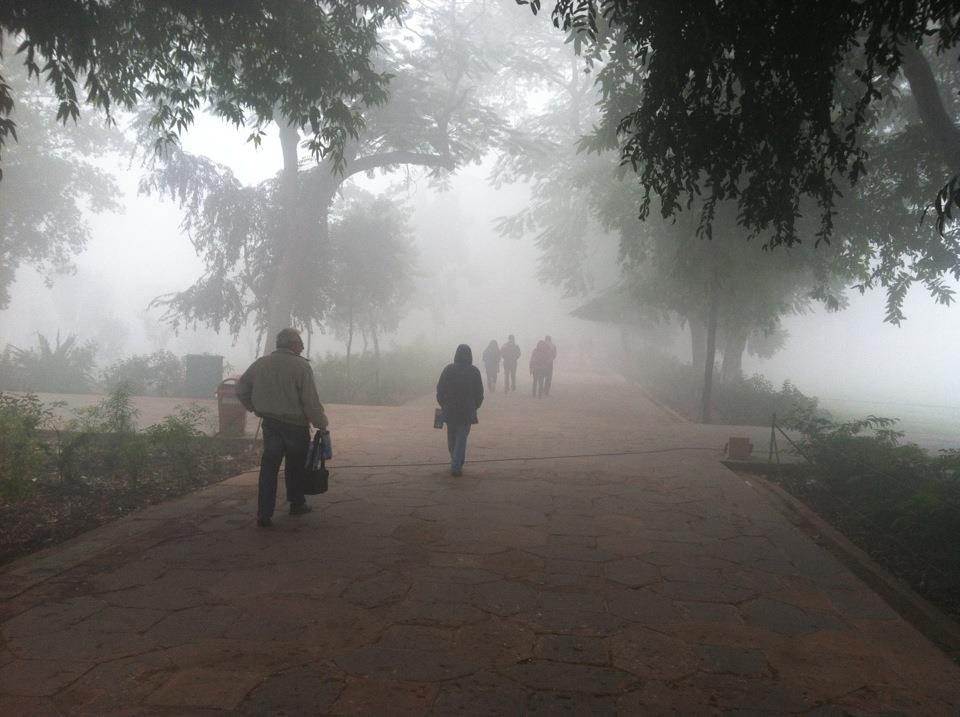
Fog. All the way there. Fog in the parking lot. Fog at the security lines. Fog as we walked the long approach toward the main viewing area. Each time Kuldeep stopped to point out an “excellent vantage point,” we nodded with wide eyes, imagining the magnificent structure hidden somewhere in the mist.

We took photos pointing at the picture on our water bottle bags. That was the only Taj Mahal available to us from any vantage point.

As we walked toward the building, we eventually reached the outer wall and finally saw something. White marble appeared just a few feet above our heads. Then the stone vanished again into the haze. The grand dome. The sweeping arches. The delicate inlays. All shrouded in fog.

We were standing beside one of the wonders of the world and could only see a sliver of it.

Our group laughed so much that day. Not because we had traveled halfway around the world only to miss the view. We laughed because we were sharing something unforgettable and slightly ridiculous. We were experiencing a story that would last much longer than a postcard-perfect photograph.

Kuldeep shook his head with disbelief. In all his tours, he had never experienced this. He told us we were a very select group of visitors who could claim something few on Earth could say. We visited the Taj Mahal, but we have never actually seen it.

He was right. I still have never seen the Taj Mahal in person.

The destination was never the prize

You might think this would be a disappointment. But when I look back on that trip, the fog made everything richer.

The destination was never the prize. The people were.

We shared meals and conversations and inside jokes. We tried foods that were new to us. We navigated chaos and beauty side by side. We saw India’s contrasts and colors and kindness. We saw devotion expressed in temples and marketplaces. We saw how history and modern life can exist on top of each other without barriers.

The Taj Mahal is extraordinary. I would love to see it someday with clear skies and a rising sun. Yet I already have what I came for.

When I think about all the amazing places I have been blessed to visit, a pattern appears. I never say, “Remember when we saw that famous landmark.” I say things like:

– Remember how we got lost trying to find it?
– Remember the tiny restaurant we discovered afterward?
– Remember the guide who became a friend?
– Remember that amazing gelato place in the middle of nowhere?

I have my memory of that rooftop breakfast. I have the echo of laughter on the bus. I have the photos of my family and friends pointing to a water bottle bag as if it were the crown jewel of Indian architecture.

The world is full of wonders. But relationships are the wonders that stay with us.

The real bucket list

If someday I return to the Taj Mahal and finally see it, I’ll smile and take it in. But I know the picture etched into my heart is already complete. It’s filled with faces and voices and laughter. It has the beauty of our shared experience.

Checklists are fine for airplanes. But our lives deserve something better.

The best adventures can’t be captured by a camera or a perfect view. What lasts are the relationships made stronger by shared surprises, setbacks, and moments of wonder.

This story, fog and all, remains one of my favorites.

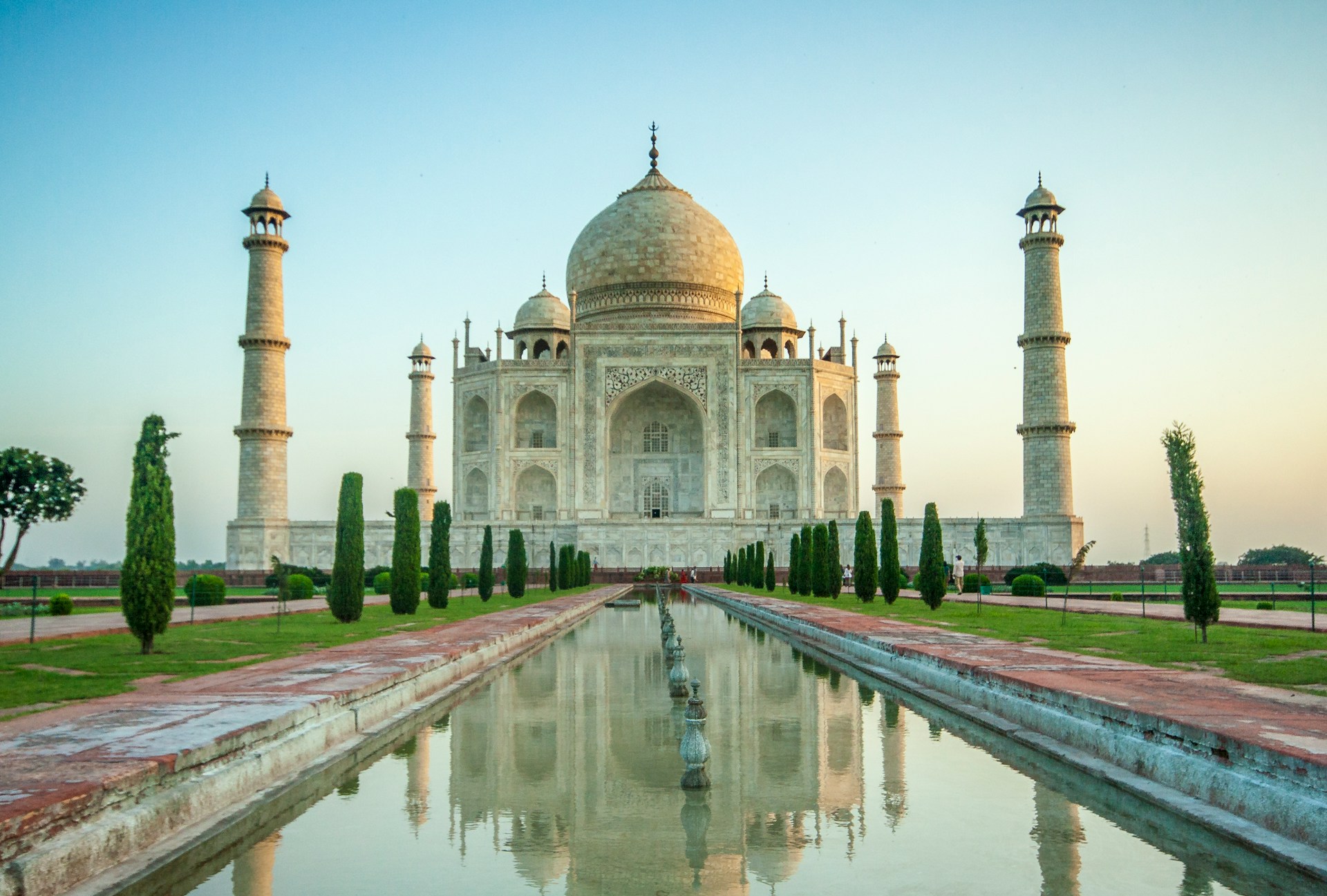
Photo by Mark Harpur on Unsplash showing the majestic beauty of the Taj without fog. 

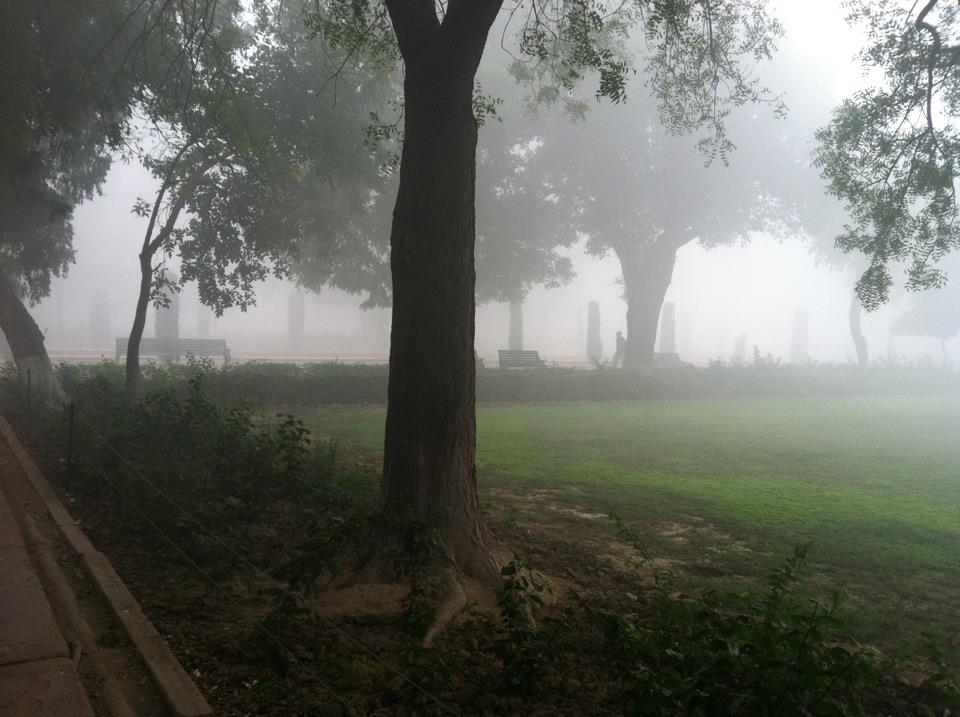
The photos below are mine showing what we actually saw.  Unfortunately, the amazing water bottle bag photos are stored on a drive I can’t see…a little bit like that morning in Agra more than a decade ago.    

Choosing Curiosity Over Fear

When we look toward the future, two voices compete for our attention. Fear tells us to run away. Curiosity invites us to step forward.

Fear whispers, “It’s too much. I can’t keep up. Better to stop trying.” Curiosity responds, “I don’t understand…yet. Let’s see what happens.”

Fear closes.

Curiosity opens.

Fear imagines disaster.

Curiosity imagines possibilities.

Fear isolates.

Curiosity connects.

The world is changing quickly. The pace can feel overwhelming. Many will react with fear. A curious spirit asks questions. It wonders what could be.

Curiosity doesn’t remove uncertainty but transforms how we deal with it. When we lead with curiosity, we move from paralysis to participation. We see the unknown as a chance to grow.

“Never let the future disturb you. You will meet it with the same weapons of reason which today arm you against the present.” – Marcus Aurelius

We already have the tools we need. Curiosity and our ability to learn. What we need is the courage to use them.

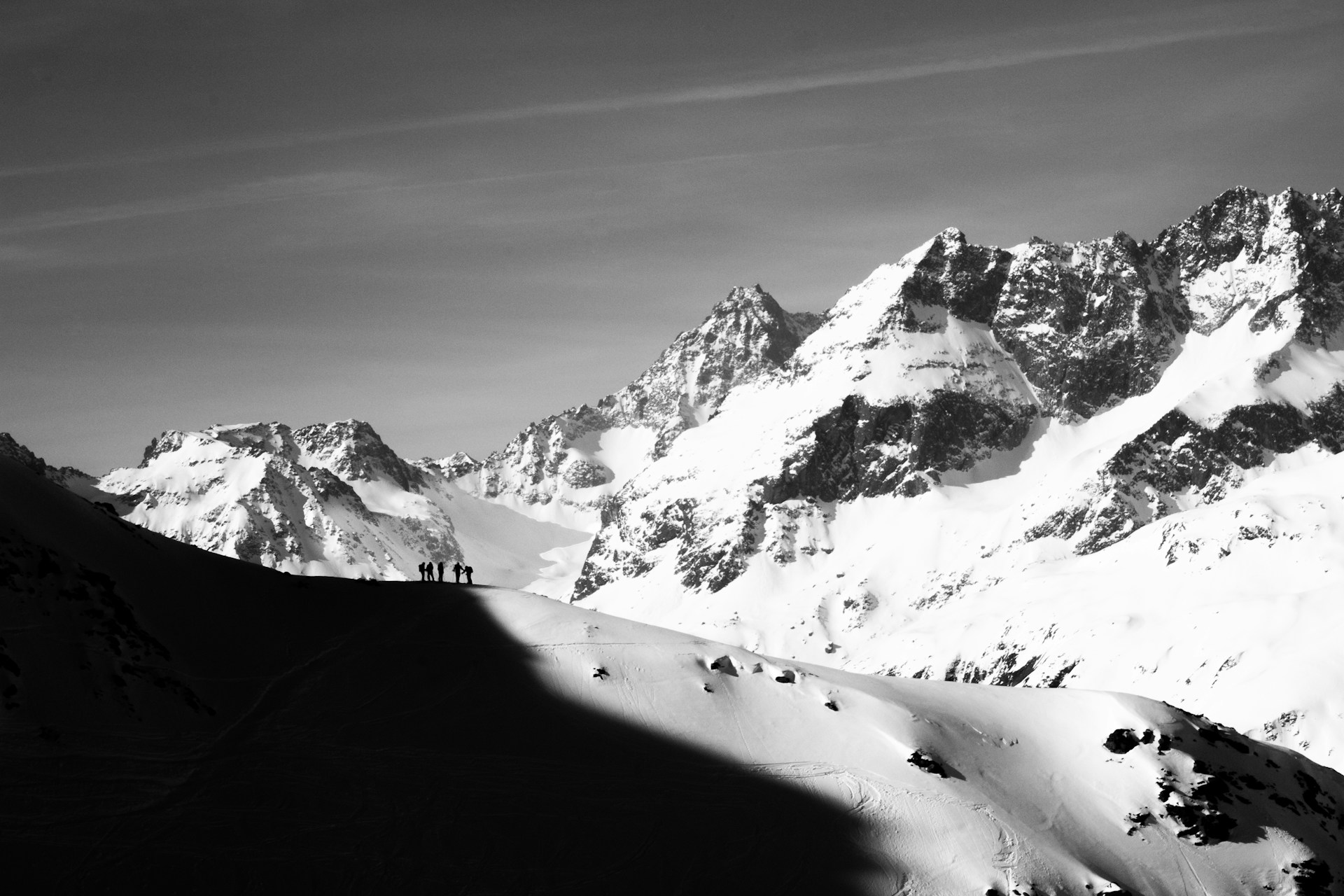
Photo by ALEXANDRE DINAUT on Unsplash

Climbing in Times of Change

René Daumal titled his unfinished novel, Mount Analogue. It describes a peak, “whose summit is inaccessible by ordinary means.” The mountain can only be reached through inner transformation, making it both a place and an analogy for our journey of struggle toward resilience and clarity in the fog.

Leadership in upheaval can feel similar. Our map runs out. The ground shifts. We carry only our memories. Some sharp with regret, others shining with joy. Yet even scars can become footholds for our climb.

Daumal wrote, “You cannot stay on the summit forever; you have to come down again. So why bother in the first place? Just this: what is above knows what is below, but what is below does not know what is above.”

The summit gives leaders perspective. From above, we see connections hidden from the valley floor. The shape of the landscape, how the streams converge, where the shadows fall and light breaks through. We descend changed by what we’ve seen, and those who walk beside us are steadied by our vision.

History shows us that change always reshapes our climb. The printing press, the steam engine, electricity, space travel, and global connectivity to name a few. Artificial intelligence is the latest steep slope, bringing fear, excitement, and possibility all at once.

Leaders can steady others by naming the change clearly, framing the opportunities, modeling ways to adapt, and keeping purpose at the center of the change.

Daumal died before finishing his book. It breaks off mid-sentence. A fitting metaphor for leadership. Unfinished, unresolved, always in motion.

Leadership is the willingness to prepare others for the climb, walking faithfully with them, and offering perspective so they can see what’s possible…and dare to tackle the climb themselves.

h/t – James Clear for showing a quote from this book that sent me down the path to learn more about Mount Analogue. 

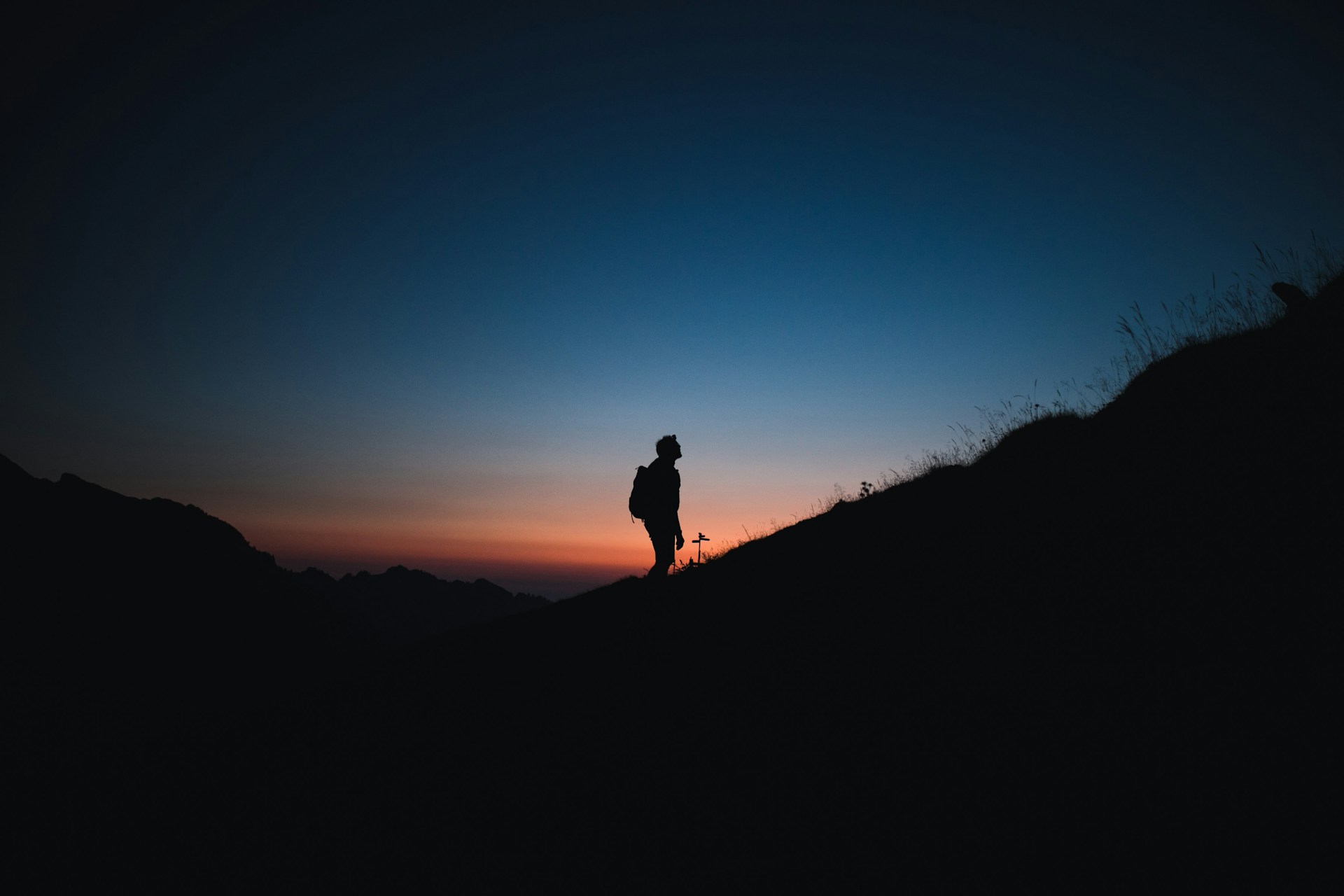
Photo by Caleb Lumingkit on Unsplash

Climbing 10% of the Mountain

“…climbing 10% of the mountain ten times is not as useful as climbing to the top once.” – Adam Mastroianni

This quote reminds me of the old adage about project resourcing: sometimes projects can’t be completed faster merely by adding more people to it.  After all, the story goes, nine women can’t make a baby in a month.

Does this climbing quote ignore our preparation?  Route scouting, equipment testing, and countless workouts that make the summit climb possible.  Not to mention the like-minded team we built to support the climb.

Maybe it’s not about preparation.  Maybe it’s about the false-starts, the simulated progress, the big talk and no action that we engage in to make it seem like we’re climbing when we’re not.  We think we’re fooling everyone, but we’re only fooling ourselves as we take the comfortable way out and choose not to climb at all.

It’s easy to climb 10% of the mountain or achieve 10% of the goal.  It’s easy to get 50%.  60%.  Even 75%.  But as the challenges compound near the top, we let doubts creep in.  The grinding effort becomes exhausting.  We lose sight of the summit or forget why we’re climbing in the first place. 

We make excuses.  We can come back another day and try again.  The summit will always be there, and maybe next time… 

That’s just it.  We’re rarely “ready” for the climbs that matter, whether in business, fitness, or life’s hardships.  Waiting for the perfect time often means waiting forever. 

You have the power to choose the summit run every time.  Committing 100% effort, even when you feel 60% ready.  Trusting that you’ll figure out the rest along the way. 

Life’s summits rarely wait for us to feel ready. The question is: will you take the first step…and then push beyond 10%, all the way to the top?

Photo by Paolo Feser on Unsplash

Running Through the Tall Grass

“You will know that your children will be many, and your descendants like the grass of the earth.” – Job 5:25

This image of my granddaughter running through the tall grass lingers in my mind, a snapshot of pure joy and freedom. The grass climbs high as her shoulders, swaying in the gentle breeze as she runs, her laughter echoing across the open field.

The sun, high in the sky, casts a warm glow across the landscape, reflecting off the stalks and highlighting the strands of her long blonde hair. It’s a moment of unbridled innocence, an expression of life at its most carefree—a reminder of the potential and possibilities that lie ahead in her life.

Watching her, I’m struck by how this simple act of running, so natural and effortless, captures the essence of childhood. Children have an innate ability to live fully in the present, to see the world as a place of wonder and adventure. For them, the future is not something to be feared, but something to eagerly anticipate. Every new experience is a chance to explore, to learn, to grow. In her dash through the tall grass, we get a glimpse of how life is meant to be lived—full of energy, curiosity, and a fearless embrace of the unknown.

As the years (decades) go by, it’s easy to lose our innocence, our thirst for adventure. We may see our future with a sense of foreboding, even doom…rather than an opportunity to expand our journey. We allow the sense of adventure that once propelled us forward to be dulled by the responsibilities and challenges that life inevitably brings. Our carefree days of childhood disappear into the past.

The passage of time doesn’t have to diminish our sense of adventure. We can choose to embrace life with the same enthusiasm and curiosity that we had as children. We can still find joy in the simple pleasures, still run toward the unknown with hope in our hearts.

Life’s journey is not about avoiding the tall grass, but about diving into it, feeling the sun warm our backs and the gentle breeze cooling our faces. It’s about seeing each day as an opportunity to expand our horizons, to live fully and freely, just as my grandkids do.

The tall grass may rise like a challenge, but it is also where the most profound discoveries await. And as I step into that field, I carry with me the certainty that the journey ahead, like the path I’ve already walked, holds boundless potential.

In a field of tall grass she runs,
her golden hair warmed by the sun,
each step a whisper of freedom,
the horizon an open invitation.

I watch her and remember—
the world for me was once this wide,
full of endless possibilities,
before fear narrowed that view.

But the grass still sways,
and I can still run,
following her laughter,
knowing the path ahead
will bring great discoveries,

a promise of new beginnings.

p/c – My daughter, Julianne, texted this photo earlier this week of Lizzy running through the tall grass of their pasture.  The moment I saw the photo, I knew the topic of my next blog post. 

The What If Game

Powering your day...

I recently saw this advice:

Asking what if about your past is a waste of time.  Asking what if about your future is tremendously productive. – Kevin Kelly

It’s easy to focus on what could have been, what you should have done, what someone did or didn’t do to you (or for you), and all the mistakes you’ve made.

It’s even easier to let all that stuff in the past dictate what you’ll do in the future.  Our past has tons of built-in excuses.  Excuses that help us stick with the status quo, protect us against taking new risks, prevent us from trying something new, or exploring where we’ve never been. 

Our lizard brains love the barriers that the past can provide.  Like a protective cocoon…one we never have to leave.

What if you choose your future without the limitations or excuses of your past? 

That’s the harder and much more rewarding path.  You might fail.  You might be embarrassed.  You’ll surely make new mistakes. 

But you might succeed, and you’ll probably discover something you never knew you were seeking.

You can accept the lessons of your past as you drop the past from your thinking. 

When was the last time you did something for the first time? 

Did you take more than 30 seconds to answer that question? 

What if you purposely pursue the surprises that come from diving headfirst into new experiences and adventures?

It’s time to find out.    

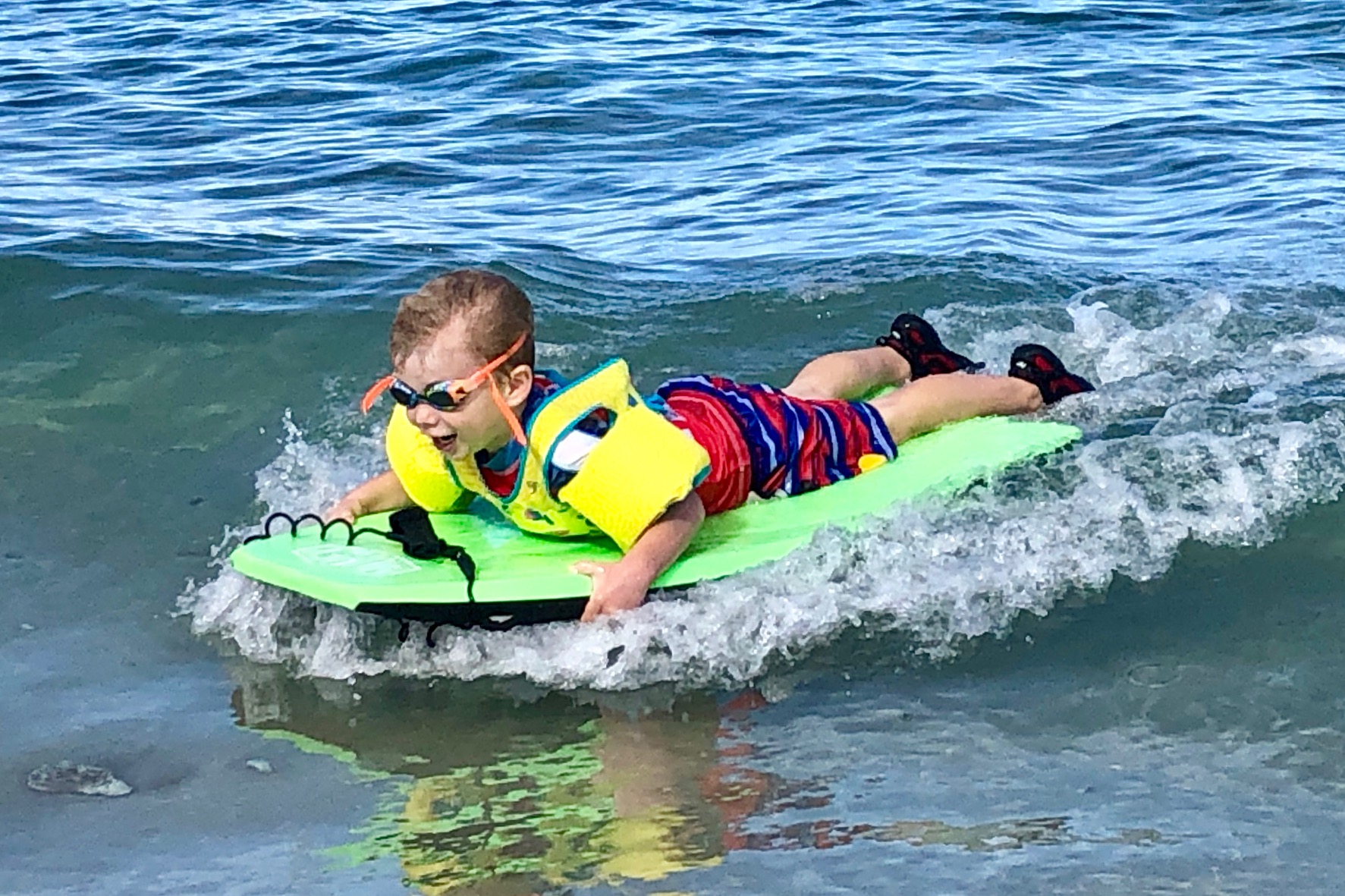
Photo: My grandson, Charlie, boogie boarding for the first time (about 5 years ago). May we each experience the same joy when we’re trying something for the first time.

Beyond the No Wake Zone

True adventure happens out past the buoys…

nowakezonebuoy_keaalliance

I get seasick easily, especially on sailboats (and fighter jets).  I’ve been on a few sailing trips.  They all had one thing in common.  Once we’re outside the no wake zone, my nausea starts.  Things go downhill from there until my head is buried under a towel and I try to sleep until we get to dry land.  Needless to say, I avoid sailing trips.

I don’t have a problem on cruise ships, except in rough seas.  Cruise ships are engineered to deliver a smooth ride for their passengers.  Most swells go unnoticed.  Passengers wake up in a new port almost every day, and the food and entertainment are usually spectacular.

Harbor cruises work for me.  I can handle cruising around inside the no wake zone, looking at all of the boats in their slips, the nice homes on the shoreline, and passing other boats as they make their way out to sea.  Christmas time, with all the lights and decorations is the best.  It’s relaxing and safe.  There are no swells to cause nausea and seasickness.

Every sailor knows the opportunity for new discovery lies beyond the no wake zone.  True adventure happens out past the buoys, past the breakwater, and out in the wind and waves.  Riding around in the harbor, or lazily enjoying a multi-course dinner on a cruise ship are fun and sometimes exotic.  But, neither compare to the adventure of plying the seas in a forty-foot sailboat, with your hand on the tiller.

What about the risks?  Staying on shore has risks.  Cruise ships certainly carry risk (and sometimes, viruses).  We may take comfort that others are managing our risks for us, but nothing is risk free.  Storms and rough seas will hit, no matter who drives the boat.  Understanding the risks, planning and preparing for them, and facing our challenges head-on is the only consistent winning strategy…at sea, and in life.

What about seasickness?  I remember talking with a sailor in Tahiti.  We had flown in for a vacation, and met my mother-, and father-in-law, who were sailing their boat across the South Pacific.  The sailor was a friend of theirs.  I mentioned my problem with seasickness, and how it would prevent me from making such a voyage.

He laughed and said, “The seasickness usually passes after three days at sea.  After that, it’s an adventure of a lifetime.”

He was right.