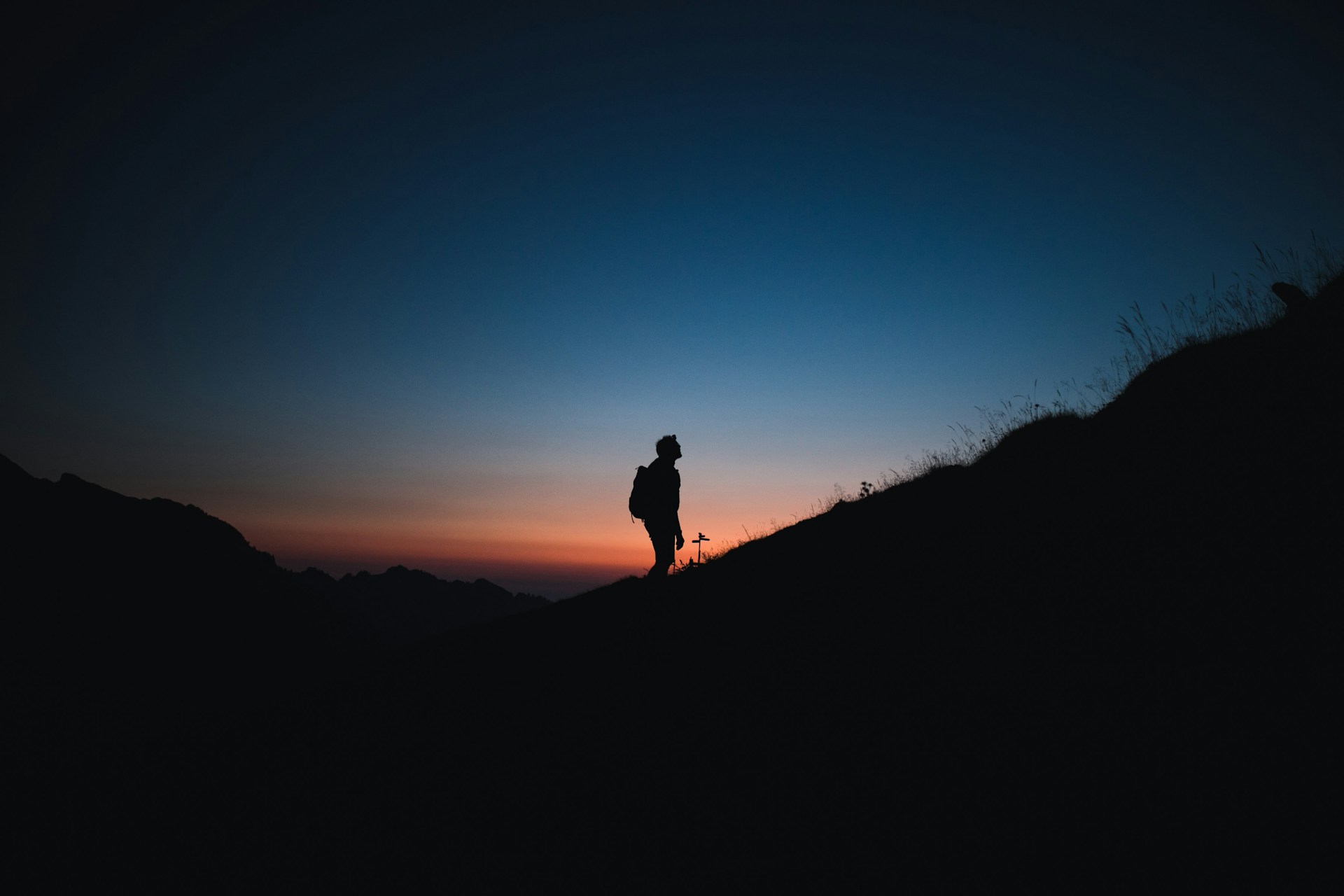
Always Improve Your Position

A few days ago, I was listening to Jocko Willink speak about the quiet discipline behind Brazilian jiu-jitsu. I’m not a jiu-jitsu person, but one idea landed for me. It’s a truth I already knew but had never heard spoken so simply:

Always improve your position.

In jiu-jitsu, nothing happens all at once. A submission arrives like lightning, but only to the untrained eye. What looks like a sudden victory is really the final expression of dozens of subtle movements that came before it. A hip shifts. A grip tightens. An elbow gains an inch of space. Most of these moves go unnoticed. Each small adjustment creates a little more room, a little more leverage, a little more advantage.

I’ve always believed real progress works this way. It’s rarely dramatic. It’s quiet and patient. The accumulated effect of showing up, learning something new, adding a bit more care, and preparing a little more than required.

Breakthroughs rarely come from a single moment of inspiration. They come from the quiet work no one sees. The thoughtful practice that sharpens your skills, the trust built over months of ordinary conversations, the time spent learning before making a decision. When opportunity arrives, it looks sudden to others. To you, it feels like the next logical step.

This truth showed up clearly for me after a derecho tore through our property on Father’s Day weekend a few years ago. Ninety-mile-per-hour winds knocked down at least thirty trees across multiple acres. When I walked our land the next morning, everything felt broken and overwhelming. The cleanup looked like a project that would take months. I didn’t have months to devote to it.

But I did have mornings. So, I decided to work for an hour and a half every day before work. I cleared a small section each morning. It was incredibly slow. I dragged branches, cut trunks, chipped debris, split firewood, and made countless trips to our local dump. Small steps, small progress, one morning at a time.

Over the course of a year (maybe more), I worked my way across our entire property. Along the way, I cut in new hiking trails and removed a number of unhealthy trees. What started as a mess became a healthier stand of trees and a network of paths that look like they’ve been here forever.

Out of destruction came a daily habit that changed my life. I still work outside every morning. Clearing brush, trimming trees, expanding trails, building chicken coops, restoring a rustic barn. All in small ninety-minute bites. It’s like a time-lapse video created through countless quiet mornings of small improvements.

The pattern I saw on my land is exactly what Jocko described on the mat. I didn’t need a grand plan or a burst of superhuman effort. I needed to improve my position every day, just by a little.

Improve your position today, even by an inch, and tomorrow becomes easier. Improve it again tomorrow, and the day after that reveals options that didn’t exist before. You don’t need surges of motivation or dramatic reinvention. You only need the willingness to keep moving, always improving.

Careers grow this way. Trust grows this way. Faith deepens this way. Families strengthen this way.

Progress won’t always be linear. Some days distractions will pull us off course, or setbacks will undo work we thought was finished. All of this is part of the journey. Even then, the way forward still comes through small steps. Imperfect, uneven, but the work of always improving our position remains the same.

We improve our position slowly, almost without noticing. That’s enough. Tomorrow, we’ll improve again. Then one day, we’ll find ourselves able to take a step that would have felt impossible a year ago.

Focus on the next inch. The miles will take care of themselves.

Photo by Walter Martin on Unsplash – a great rendition of my early morning work environment for at least a year.

Beautiful Things Don’t Ask for Attention

I saw The Secret Life of Walter Mitty on an airplane ride recently. At a significant moment in the story, we hear the line, “Beautiful things don’t ask for attention.”

The photographer in the story chooses not to take a coveted photo of the elusive snow leopard. Instead, he simply enjoys the beautiful moment with his own eyes.

Real beauty doesn’t need to perform. It’s authentic and humble, whether anyone stops to notice or not.

A person of character lives this way. They have no need to prove themselves. They show up with kindness, consistency, and honesty. The neighbor who shovels snow from an elderly woman’s driveway before dawn, leaving no trace. Or the teacher who stays late to help a struggling student, never mentioning it to anyone.

The beauty of their character reveals itself in the way they live each day.

Humility makes this possible. It allows a life to shine without glare, to influence others by being genuine. Like mountains that reflect the glow of sunrise or wildflowers blooming unseen in a meadow, people of quiet integrity embody a beauty that doesn’t depend on recognition.

In our culture that rewards noise and spectacle, this is easy to forget. We’re told to broadcast accomplishments and measure our worth by attention. Yet the most meaningful lives belong to those who live true to themselves, free from the need for applause.

The things that endure, whether in people or in nature, carry their beauty without fanfare. They simply are.

There’s a paradox in writing about something that exists most powerfully in silence. Maybe that’s the point. Celebrating this kind of beauty without claiming it for ourselves.

But we can learn to recognize it. To be shaped and inspired by it. And, in our quieter moments, we can strive to live it.

Photo by Patrick Schaudel on Unsplash – some of my fondest memories involve waking up in a tent on crisp mountain mornings, basking in the beautiful glow of the rising sun.

Climbing in Times of Change

René Daumal titled his unfinished novel, Mount Analogue. It describes a peak, “whose summit is inaccessible by ordinary means.” The mountain can only be reached through inner transformation, making it both a place and an analogy for our journey of struggle toward resilience and clarity in the fog.

Leadership in upheaval can feel similar. Our map runs out. The ground shifts. We carry only our memories. Some sharp with regret, others shining with joy. Yet even scars can become footholds for our climb.

Daumal wrote, “You cannot stay on the summit forever; you have to come down again. So why bother in the first place? Just this: what is above knows what is below, but what is below does not know what is above.”

The summit gives leaders perspective. From above, we see connections hidden from the valley floor. The shape of the landscape, how the streams converge, where the shadows fall and light breaks through. We descend changed by what we’ve seen, and those who walk beside us are steadied by our vision.

History shows us that change always reshapes our climb. The printing press, the steam engine, electricity, space travel, and global connectivity to name a few. Artificial intelligence is the latest steep slope, bringing fear, excitement, and possibility all at once.

Leaders can steady others by naming the change clearly, framing the opportunities, modeling ways to adapt, and keeping purpose at the center of the change.

Daumal died before finishing his book. It breaks off mid-sentence. A fitting metaphor for leadership. Unfinished, unresolved, always in motion.

Leadership is the willingness to prepare others for the climb, walking faithfully with them, and offering perspective so they can see what’s possible…and dare to tackle the climb themselves.

h/t – James Clear for showing a quote from this book that sent me down the path to learn more about Mount Analogue. 

Photo by Caleb Lumingkit on Unsplash

Planting Shade for Others

I don’t remember a lot from Mrs. Olsen’s first grade class. One event that stands out is the day we planted a bunch of seeds in a garden. First grade Bob enjoyed digging in the dirt, making small seed holes, dropping each seed into its place, and writing the plant names on popsicle sticks that we plunged into the dirt next to the seeds.

Then came the bad news.

We wouldn’t be able to see the plants we’d planted until weeks later, and they wouldn’t reach maturity (whatever that meant) for at least a year.

To a first grader, weeks (and especially a year) meant forever. First grade Bob was extremely disappointed. I never saw the plants that came from the seeds we planted that day. It would be decades before adult Bob would go to the trouble of planting seeds or transplanting potted plants into a garden.

Recently, I watched an Essential Craftsman video where he planted 25 new trees. He worked the soil, designed a hand-made watering system, dug 25 holes with exactly the right spacing, brought in a truckload of special soil, mixed it with his existing soil, and then carefully placed each tree in the ground.

At various points in this multi-week project, he worked alongside his grandsons, his wife, and one of his good friends. He said that working with them over the years, especially his wife, had made him a better person.

The finished line of trees looked amazing and will look even better over the next 10 – 20 years.

He reflected that it’s easy to take for granted the shade we enjoy from trees planted decades before. The journey from seed to shade provider is a long one, but it always begins with the person (or Nature) planting that seed.

So, what kind of “shade” are we planting today? Is it the kind that shelters others through encouragement, love, wisdom, opportunity, or sacrifice?

The things we do now may not seem significant in the moment. They may never fully bloom while we’re around to enjoy them. A kind word to a child. A story passed down. A habit of generosity. A newly taught skill. A quiet act of integrity. These are the seeds we plant for the future.

Sometimes, like first grade Bob, it’s easy to get frustrated when we don’t see results right away. We live in a world that loves fast feedback and instant gratification. But shade trees don’t grow overnight. Neither do strong families, good character, or traditions worth passing on.

What if our job, the most important job of all, is to plant and build for a future we’ll never see? To create a little more shelter for the people coming after us?

Few will notice what we’re planting. But that’s okay. We do it anyway. And someone else will get to rest in that shade.

That’s the kind of impact I hope to make. Something that lasts beyond my lifetime, even if no one remembers exactly which trees I planted.

So I’ll keep planting. I’ll keep building. I’ll keep encouraging…investing in the people I know will grow far beyond me.

Because someday, someone will enjoy the shade I may never see.

Adult Bob loves that.

“If your plan is for one year, plant rice. If your plan is for ten years, plant trees. If your plan is for one hundred years, educate children.” – Confucius

Photo by Danny Burke on Unsplash

Have You Ever Seen the Rain?

I sit uncomfortably and motionless in the back of the plane. Two hours into our flight. The Credence channel beckons. I nestle into the channel’s first song, and I’m visited by a memory like a warm blanket on a frosty morning.

Someone told me long ago
There’s a calm before the storm
I know; it’s been comin’ for some time

It was the summer of ’78, or close to it. My dad was proud as he could be of our 19-foot jet ski boat. He couldn’t wait to hit the glassy sunrise waters of Lake Havasu and watch his sons ski. One, then the other.

When it’s over, so they say
It’ll rain a sunny day
I know; shinin’ down like water

Putting on a single ski binding requires a blend of finesse and strength. At least as much strength as a seventh grader can muster. The secret is to let the ski vest do the heavy lifting and just relax.

I wanna know
Have you ever seen the rain?

Moments later, the rope pulls taut, my ski is aligned just right. I’m ready and yell, “Hit it!”

I wanna know
Have you ever seen the rain
Comin’ down on a sunny day?

All 455 cubic inches of the inboard Oldsmobile engine roar to life. In seconds, the boat and the kid behind it launch out of the water.

There’s a moment, right as you break free of the lake, when all the pulling eases off at once. Water skims effortlessly under the ski.

Thoughts of speed and daring take over. I lean into my first glassy turn. My ski hums a high note as my grip tightens against the pull of the rope.

Yesterday and days before
Sun is cold and rain is hard
I know; been that way for all my time

It’s a blur of jumps and splashes. Long pulls to the side. Deep, slow turns in the opposite direction. Always a glance back to admire the rooster tail…especially when the sun catches it just right, holding the spray in the air like magic.

No time to admire it too long. Time to hammer the oncoming wake, trying to clear the other side, then do it all again. Pull wide. Pause. Dig in. Turn hard. Admire the rooster tail.

‘Til forever, on it goes
Through the circle, fast and slow
I know; it can’t stop, I wonder

The song ends, and I’m back where I started. My neighbor taps my shoulder. He needs to get to the bathroom.

We’re on our way to live new stories and make new memories. Life’s adventure continues.

I wanna know
Have you ever seen the rain?

But it sure is nice to visit with a cherished memory. Like that friend who we see less than we should…but always pick up our conversation right where we left off.

I wanna know
Have you ever seen the rain
Comin’ down on a sunny day?

No matter how long it’s been.

Photo by Ethan Walsweer on Unsplash – not a 7th grader, but a cool water skiing photo.

In the Steps of Trailblazers

I’ve probably hiked or biked hundreds, maybe thousands of trail miles in my life.  Most of the trails had been there for many years…even decades. 

Other than clearing some fallen branches from a trail or participating in a trail volunteer day, I never gave much thought to how the trails were built, or who originally built them.  They were always there.  It didn’t matter if the trails started out as animal paths, or were built by hand, carved through the forest.  The trails seemed to belong right where they were.  

My perspective shifted when we were fortunate enough to purchase acreage that includes a forested hillside, a mostly dry pond, rocky escarpments, and a meadow thick with trees and scrub brush. 

Where others may have seen a tangle of impenetrable forest, I could see trails winding through it, paths crisscrossing up and down the hill, around the pond, and maybe a little campsite down in the meadow under the tall trees. 

I had no idea where to start or where exactly the trails would go.  I just knew the hillside and meadow were calling for a trail system and a campsite that my family and friends could enjoy exploring for years to come.    

When we moved here, I didn’t own a chain saw, a tractor, or any of the fancy attachments that make tractors such useful (and fun) tools.  I had the standard set of homeowner hand tools from our lifetime of living in a tract home that didn’t have a yard big enough for a lawn.

The real work began when our new property was hit by a 90 mile per hour derecho that effectively found all the unhealthy trees and snapped them in half or knocked them to the ground.  As I worked my way across our property over the next six months, cutting and clearing all of the downed trees (40-50 trees in all), I got a ton of practice with my new chainsaws, my upgraded tractor (the small one we purchased initially didn’t cut it, so I did what every tractor guy worth his salt does when faced with this dilemma…I upsized), the 5-foot brush hog attachment, and the front loader grapple attachment. 

As I worked to complete the clearing process, I could see where new trails might go.  As I brush-hogged large swaths of overgrown scrub brush and brambles, new openings showed themselves.  In the areas where I cleared away the dead and fallen trees, nice new grassy areas greeted the sunlight that finally penetrated to the ground.  I could see how trimming up some of the remaining trees would improve the sight lines through the area. 

Once the land clearing process was mostly done, the real trailblazing process began. Deciding exactly where to cut the trails, which routes worked best given the lay of the land, the gradient of the hillside, natural features, and tree coverage.  Could I veer up and to the right a bit to maintain the trail flow while leaving more trees intact?  Will a hiker be able to maintain their footing if I use the existing (slightly) flatter terrain on the hillside?  Can I make this trail intersect in an interesting way with the other one that’s 200 yards away? 

So far, I’ve been talking about literal trails and the (rewarding) process of carving a trail system by hand into my property.  I’ve known my share of trailblazers in life and work, and I’ve even been one myself on occasion. It’s funny how, like the paths I was carving through the woods, new trails—whether they’re businesses, inventions, ideas, or methods—often seem inevitable after the fact.

Once they’re established, they feel as if they’ve always been there. But every one of those trails began with someone willing to face the unknown, to push forward without a clear end in sight, risking failure or embarrassment in the name of carving a new path. 

Only the people who actually built these trails know what it took to get there.  The obstacles that had to be moved, the dead ends they hit along the way, their moments of doubt. They alone understand the learning curve, the time, and the sheer energy it took to bring the trail to life. And as they move forward, bit by bit, the final route often ends up looking different from what they first imagined.

Our new trail system is amazing.  It has straight sections, switchback sections, offshoots, shortcuts, climbs, and descents.  Parts of the trail are under a tunnel-like canopy of thick forest and other areas open to the sky, providing amazing hilltop views.  Walking along the trails feels like the landscape was made for them…even though there were countless hours of planning, experimenting, cutting, clearing, and adapting along the way.     

Sometimes the trailblazer is driven by an obsessive need to see where the trail can go.  To see what lies over the next hill, or around the next bend.  Others visualize how their trail will be enjoyed for years (decades?) to come. 

While their motivations may differ, the result is often the same.  A path that seems to have always been, enjoyed by countless people who may never stop to wonder how it got there. 

For those who wonder, the trail offers something more than just a route.  It’s a reminder that someone, somewhere, once walked an untamed path and decided it was worth carving a trail for those who’d come later. 

Photo by Judy Beth Morris on Unsplash

Who We Follow (What We Can Learn from Sheep)

Living next to a farm with about forty sheep has given me a front-row seat to their daily lives. Over the past year, I’ve seen them at all hours and noticed some interesting patterns that remind me of a lot of human behavior.

Sticking Together

Sheep love being in groups. They usually form smaller sub-groups of 5-7 sheep within the larger herd.  Reminds me of people having their close-knit circles within bigger communities, generally preferring company over solitude.

Group Dynamics and Hierarchy

Within these small groups, there’s occasional head-butting and shoving, but mostly they’re focused on grazing, lounging around, or scratching against trees. Similar to humans at work or in social settings, where there’s a bit of jockeying for position, but everyone hopefully gets on with their day.

Follow the Leader

One of the funniest things I’ve seen is how a couple of sheep will suddenly start trotting off for no apparent reason.  The rest of their group will follow, clearly not knowing why they’re running. The “leaders” that start the trotting vary from day to day.  How often have you seen this type of “herd mentality,” where people follow trends or actions without really knowing why.

Fear of Missing Out (FOMO)

If a sub-group that has decided to run catches the attention of another sub-group, the two sub-groups might quickly merge.  The sheep don’t know why they’re running, or where they’re going…but they don’t want to miss out.  FOMO is a big deal for sheep…much like humans. 

The Scramble for Resources

When the farmer’s family arrives with grain, the entire herd rushes to the troughs, leading to a chaotic scramble. Despite having abundant grass resources in the pasture, each sheep’s behavior reflects their drive to secure for themselves what they perceive as limited (before any of the other sheep can do the same). Humans, too, often scramble for limited resources or opportunities, even when there are other alternatives.

Jostling for Position

Despite having lots of shade and pasture available, sheep still push each other around to control certain spots. This behavior shows their competitive nature and a focus on what others have, reflecting human tendencies to compete for the best spots or the latest trends, even when they’re not necessary.

Sheeple? 

Watching sheep has given me some surprising insights into human behavior. Their actions highlight our social nature, competitive streak, and tendency to follow others for fear of missing out. Next time you find yourself in a crowd or following the latest trend, ask yourself: are you leading, following, or just trying to keep up with the flock?

It’s surprising how much we have in common with our woolly friends—even if we’d rather not admit it.

Perception is Reality

The scene:  A late afternoon hike as the sun begins to set.

View 1–through the eyes of someone mourning the loss of a loved one

Lengthening shadows descend upon the forest floor.  The never ending dance of day and night continues without interruption.  Glorious palettes of color and texture give way to an infinite collection of shadows and silhouettes.  Plaintive moans emanate from the forest as trees sway against the wind’s relentless onslaught.  Each is alone in the crowded forest to persevere as they must.

The air is thick with the smell of decay.  Death wins another battle in its perpetual war with the living.  The breeze carries hints of a familiar perfume from years past.  A reminder of a life of joy, a life of sorrow, a life of love.  In the darkness, there is only one sound.  The beats of a broken heart.  A companion to the mournful wail of a distant coyote, howling at a moon not yet risen.  He cries for an answer that will never come.  A far off dream in a long cold night has just begun.

View 2–through the eyes of someone who has just met the love of his life

Afternoon sun caresses the forest floor through pin holes in a daylight curtain.  Daffodils and honeysuckles dance in its warming light.  The fresh smell of pine fills the spirit.  The trail ahead is clear, as the forest welcomes its newest guest.

The air is filled with the sounds of bird song.  A cool breeze rustles through the trees.  It carries a salty hint of a distant shoreline and a barefoot walk, holding hands.  The horizon is a view into infinite possibilities.

Which description is accurate?  Both, depending on the perspective of the traveler.

Reality is shaped by the perspective and attitudes of those experiencing it.  Taken another way, perception is reality…