We call it Artificial Intelligence, but large language models don’t think, reason, or understand in human terms.
A more accurate description might be Artificial Idea Iteration since these tools dramatically compress the cycles of research, drafting, testing, and revision.
SpaceX didn’t transform spaceflight by having perfect ideas. They collapsed the time between ideas and reality. Failing fast, learning quickly, and iterating relentlessly.
AI creates the same dynamic for knowledge work, letting us move from intuition to articulation to revision in hours instead of weeks.
Engineers rely on wind tunnels to test aircraft designs before committing real materials and lives. AI does this for thinking.
Iteration itself isn’t new. What’s new is the scale for iteration that we now have at our fingertips. We can explore multiple paths, abandon weak directions quickly, and refine promising ones without the time, coordination, and risk that once kept ideas locked in our heads.
When iteration becomes inexpensive, we can take more intellectual risks and shift from trying to always be right to trying to always get better.
It’s ironic that as iteration is becoming cheaper and faster with AI tools, human judgment becomes more valuable. Someone still needs to know what’s worth developing, what deserves refinement, and when something is complete rather than exhausted.
The intelligence was never in the machine. AI simply gives us the capacity to develop ideas, test them against reality, and learn from the results at a scale and speed we’ve never had before.
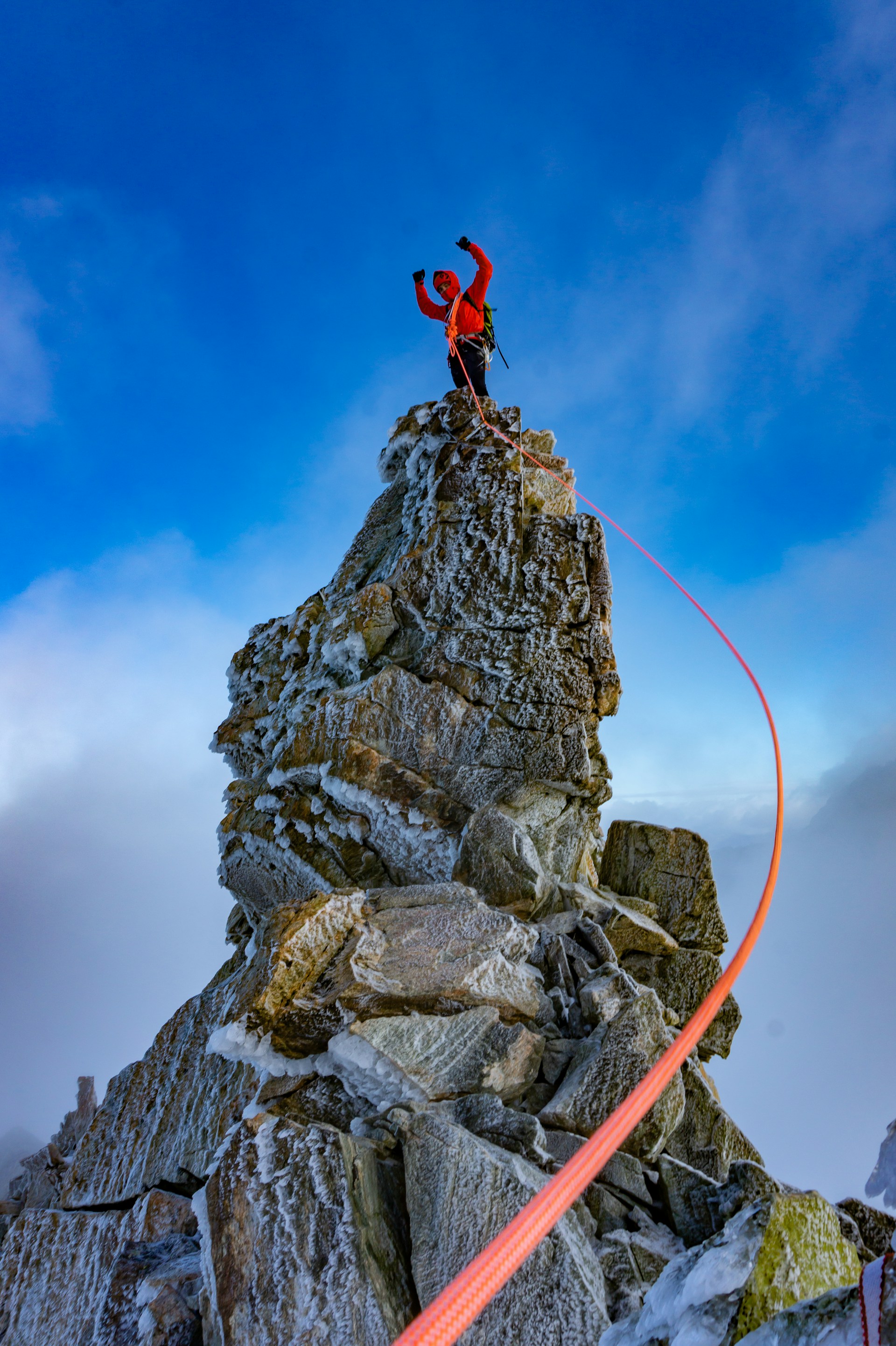
Photo by SpaceX on Unsplash – when SpaceX proposed the idea of landing and reusing their rocket boosters after each launch, the idea seemed impossible. Now it’s happening about 3 times per week…and they’re just getting started.
Some leaders wear the line outside their door like a badge of honor. People waiting with questions, approvals, decisions.
It feels like proof of trust. Proof of competence. Proof of necessity. If the team can’t move forward without your judgment, surely that means you are at the center of the work.
In many ways, you are.
But there’s a second truth hidden inside that scene. When every decision depends on you, you become the one point your organization can’t outrun.
The line reveals the fragility that forms when decisions stay in one place instead of growing across the organization.
At a certain level of responsibility, leadership effectiveness isn’t measured by the number of good decisions you make. It’s measured by whether the organization can make good decisions without you having to approve each one.
Leadership at this level is staying at the wheel while helping others learn to steer.
High-pressure operators know instinctively that a bad decision leaves a mark. A slow decision leaves a gap. Most organizations struggle more with waiting than with trying. That line at your door, day after day, is the quiet proof. The whole operation can only move as fast as the person at the center of its decisions.
There’s a time in every leader’s career when the instinct to take control is the right one. When the team is inexperienced, when stakes are high, when the risk is real and present, you become the center of gravity because someone has to be.
But later, if the business grows and the structure doesn’t change, this habit of control becomes limiting. What protected the organization early can start to quietly cap its potential, because your bandwidth is finite.
There’s a moment when the senior leader’s job shifts from “Do we have the right answer today?”to “Will we have the right judgment tomorrow?”
That shift feels slow. It feels inefficient. It feels like a luxury.
It isn’t.
It’s a protective move.
Teaching someone how to make a decision can feel like taking the long way around the problem. You could make the call in 30 seconds. Walking someone through the context and reasoning might take half an hour.
It’s natural to skip teaching and just decide. It feels faster. And today, it is.
But tomorrow it isn’t. Because they come back with the next decision. And the next. And the line gets longer.
Here’s a simple practice that changes the arc of your relationship without exposing the business to risk. When someone comes to you with a decision, don’t give the answer first. Ask them, “What would you do?”
You’re not surrendering the decision. You’re building their capacity to make it. You’re seeing how they think. You’re catching errors before they matter. You’re adding the perspective that builds judgment.
It is controlled delegation, not abandonment. Nothing is handed off recklessly.
When someone brings an answer that is close to right, you supply the context they don’t have, and then you say something specific and concrete:
“Next time this situation comes up, you can make that decision.”
Not in general. Not theoretically. For this exact decision, with a shared understanding of why it works.
Over time, the pattern shifts. Fewer decisions reach you. The ones that do are larger, higher consequence, more strategic. The team develops in the shadow of your reasoning, not separate from it. And the bench of judgment widens beneath you.
This is what protects the business from single-threaded leadership. Not a gesture toward empowerment, but a strategy of risk reduction.
Leaders don’t become less important by creating decision-makers. They become less fragile.
The organization becomes capable of sound judgment when you’re not there. The most durable form of control a leader creates.
If the business only works at full strength when you are present, you haven’t reduced the risk. You’ve concentrated it.
At the top levels of leadership, the question is rarely, “Can you decide?”Of course you can.
The real question is, “Can others decide well when you aren’t in the room?”
That’s the difference between being the operator and building the operation.
It begins quietly. A question reflected back. A recommendation explored. A context added. A decision shared. A leader shaped, one situation at a time.
The line at your door gets shorter and your organization gains strength. Not because you step away from accountability, but because you’ve built accountability into the people who stand in that line.
Leadership Homework
One question to sit with, without rationalizing it away:
If you disappeared for 30 days, what decisions would the organization be unable to make without you?
Not decisions they might make differently, different is acceptable. Decisions they could not make.
That answer will show you where the real bottleneck lives.
And where the next generation of leadership needs your attention.
In sales, there’s an old saying that has echoed through offices and training rooms for decades.
Always be closing.
It’s meant to keep the salesperson focused on their end goal. Keep the deal moving forward. Stay alert to opportunity. Maintain momentum.
Over the years, I’ve come to believe leaders need a different version of that advice.
Always be coaching.
As a leader, your mission is to develop the people who will come after you. You lift others through quiet, daily work that helps them grow. Your job is to bring out the best in yourself and in the people who will eventually step into your role. Coaching drives growth and keeps it moving forward.
Coaching your team is a way of saying, “Your future matters to me.” Coaching your children says, “I believe you have more inside you than you can see today.” And coaching yourself acknowledges the simple truth that growth must continue throughout life, especially for the leader.
Great coaches do more than explain ideas. They create space for practice. They help others turn new knowledge into muscle memory. They offer challenges sized just right for the moment. They ask questions that change how a person thinks about a problem. They reveal a new angle or a new path forward when something feels unsolvable.
Coaching takes learning to the next level. You learn something. You put it into practice. Then you pass it on. Teaching anchors the lesson. It deepens the insight. It turns wisdom into a gift you can hand to others.
Coaching doesn’t require perfect knowledge. It requires humble generosity. Share the insight you gained from yesterday’s challenge. Share the questions that helped you see an issue more clearly. Share the perspective that lifted your confidence when you needed it most.
Leadership is a relay. Someone handed the baton to you. One day you’ll hand it to someone else. The best leaders prepare the people who will run ahead long after they’ve finished their leg of the race.
Who have you coached today? This week? This month?
This is your responsibility. Your opportunity. Your mission.
In the early 1990s, the term Peace Dividend appeared in headlines and boardrooms. The Cold War had ended, and nations began asking what they might gain by redirecting the resources once committed to defense.
Today the conflict is between our old ways of working and the new reality AI brings. After denial (it’s just a fad), anger (it’s taking our jobs), withdrawal (I’ll wait this one out), and finally acceptance (maybe I should learn how to use AI tools), the picture is clear. AI is here, and it’s reshaping how we think, learn, and work.
Which leads to the natural question. What is our AI Dividend?
Leaders everywhere are trying to measure it. Some ask how many people they can eliminate. Others ask how much more their existing teams can achieve. The real opportunity sits between these two questions.
Few leaders look at this across the right horizon. Every major technological shift starts out loud, then settles into a steady climb toward real value. AI will follow that same pattern.
The early dividends won’t show up on a budget line. They’ll show up in the work. Faster learning inside teams. More accurate decisions. More experiments completed in a week instead of a quarter.
When small gains compound, momentum builds. Work speeds up. Confidence rises. People will begin treating AI as a partner in thinking, not merely a shortcut for output.
At that point the important questions show themselves. Are ideas moving to action faster? Are we correcting less and creating more? Are our teams becoming more curious, more capable, and more energized?
The most valuable AI Dividend is actually the Human Dividend. As machines handle the mechanical, people reclaim their time and attention for creative work, deeper customer relationships, and more purpose-filled contributions. This dividend can’t be measured only in savings or productivity. It will be seen in what people build when they have room to imagine again.
In the years ahead, leaders who measure wisely will look beyond immediate cost savings and focus on what their organizations can create that couldn’t have existed before.
Photo by C Bischoff on Unsplash – because some of the time we gain from using AI will free us up to work on non-AI pursuits.
“There is no Frigate like a Book / To take us Lands away.”
Emily Dickinson wrote these words in her quiet room, understanding something I didn’t grasp for decades. The greatest journeys begin within.
I know her poem only because of my 11th grade AP English teacher, Mr. Cox. As a rambunctious and cocky 11th grader, would I have taken any of my “super valuable” time to read poems, sonnets, short stories, even books? No way.
But because of his work (and the work of countless other teachers along the way), I did read. A lot. I learned tons of material and information that didn’t matter to me at the time…but matter a lot today.
My focus back then was simple. Be the best student, get the highest test scores, pass as many AP tests as possible, and earn varsity letters in multiple sports. Mostly, I wanted to beat everyone else, pure and simple. It helped that I was blessed with an almost photographic memory and could recall facts and formulas with ease (sadly, not so much nowadays).
I carried that mindset into college. I loved being the student who defined the grading curve for the class. I was annoyed if I didn’t get every single point on an assignment, midterm, or final. I had an almost uncontrollable drive to outshine everyone…as if that was all that mattered.
I was completely wrong.
On the bright side, that drive and motivation made me a successful student and propelled me into my early career.
On the other hand, seeing everyone as my competition, and less as people, meant I probably missed out on a lot of fun. And lots of friendships that never happened. I was so focused on the destination that I forgot to notice who was traveling with me.
That realization connects me back to Dickinson’s frigate in ways I never expected. She saw the book as a vessel capable of carrying anyone, anywhere, without cost or permission. But what I’ve learned over nearly fifty years since high school is that I was asking the wrong question. It was never “How far can I go?” It was “Who am I becoming, and who’s helping me understand?”
My journey from that hyper-competitive teenager to what I hope is a much more caring, thoughtful, empathetic, nuanced, and life-giving person has been propelled by those same teachers I mentioned earlier, and a longer line of guides who keep showing up at the right time in my life.
I didn’t realize it then, but those books, poems, and teachers were all part of my fleet of frigates. Each one quietly helped me close the distance between knowledge and understanding, between my ambition and wisdom.
My mentors, family, and friends have all been vessels that carried me through changing seas. Some taught me to sail straight into the wind. Others reminded me that drifting for a while can be part of my journey as well. Each lesson mattered, even the ones that didn’t make sense at the time…especially those.
Over time, life has a way of sanding down our sharper edges, revealing something deeper underneath. My focus slowly shifted from being the best at something to becoming the best version of myself.
Now, when I think about Emily Dickinson’s frigate, I picture something far greater than a book. I picture a lifetime of learning, carried by the people who invested their time, wisdom, and patience in me. Mr. Cox, and others who gave freely of their time and wisdom, helped me see that the destination isn’t solely becoming the top of the class. It’s finding a profound depth of understanding, the expansion of empathy, and the ability to see beauty and meaning in small, unexpected places.
If I could go back and talk to that 16-year-old version of myself, I’d tell him the real tests aren’t scored on paper. They’re graded every day in how we treat people, how we listen, and how we show grace.
I’d tell him that the frigate he thinks he’s steering alone has always been guided by grace. The true measure of his voyage will be how much space he makes for others to come aboard.
We’re all learning to sail, carried by the steady hand of God.
There are times when we are firmly in the right. The facts are clear. The other person made a mistake or caused harm. In that moment, we face a choice. We can leverage our position of strength and press our advantage. Or we can give grace.
Grace is the strength to let go of proving a point. The willingness to give someone space to recognize what went wrong and find their way back. Every one of us needs that space, because every one of us makes mistakes.
Grace holds truth in one hand and love in the other. It sees what happened and names it honestly. It also holds out the invitation to begin again. In this way, grace strengthens relationships and helps keep them whole.
Grace looks to the future. A person rarely grows when held down by another’s righteousness. They grow when they feel the freedom to face their mistakes with dignity. Grace creates space for that freedom.
The flow of grace is a gift that we depend on. It honors truth. It protects relationships. When we give grace, we often find that it changes us as well.
We may discover that the person we extend grace to carries burdens we never knew about. When we choose grace over vindication, we become more human, more aware of our own weaknesses, and more capable of genuine compassion.
“Put on then, as God’s chosen ones, holy and beloved, heartfelt compassion, kindness, humility, gentleness, and patience, bearing with one another and forgiving one another, if one has a grievance against another; as the Lord has forgiven you, so must you also do.” – Col 3:12–13
There once was a village named Smithville, tucked neatly beneath a mountain. Life was simple until the mayor spotted a massive boulder teetering on the slope. Experts confirmed the obvious. The massive boulder might fall and crush the town.
In a flash of civic urgency, the mayor declared: “We must secure the boulder!” And so they did. With ropes, pulleys, and sheer determination, ten villagers at a time held the lines to keep the boulder in place. They rotated shifts around the clock. It became routine, then tradition, then law.
Children sang, “Hold the boulder, hold the boulder, we must resolve to hold that boulder!” before school each morning. A cabin was built for the rope holders. A trail crew was hired to keep the path safe for the endless march of workers. Rope suppliers prospered since the intricate rope system required constant maintenance. Soon, nearly half the town’s budget went to “boulder security.”
Still, the village flourished. Visitors came to marvel at the rope-wrapped rock. “Come see our mighty gravity defying boulder!” proclaimed their glossy posters. A bond was passed to fund a visitor center and tour buses. Hotels filled. Restaurants boomed. Property values soared near “Boulder View Estates.”
One day, a newcomer named Brunswick questioned the logic of leaving the boulder where it was. “Why not break the boulder into smaller, harmless pieces?” The council laughed at his question.
The mayor beamed with pride, “Our boulder isn’t a threat. It’s our livelihood! Besides, we have a rope system to protect us.”
The townspeople nodded, waving their SAVE OUR BOULDER signs in support.
Who could argue with prosperity?
Brunswick left shaking his head.
Years later, despite the ropes, despite the cables, despite the slogans, the inevitable happened. That winter, the boulder grew heavier than ever with snow and ice. Villagers had trouble reaching the ropes, as storms blocked the trail. Shifts went unfilled. Fewer villagers meant fewer ropes to hold the boulder.
“The forecasters said it wouldn’t be this bad,” the mayor reassured them, as though the weather itself had broken its promise.
Workers tugged and shouted, trying to keep their grip. Fingers numbed, feet slipped, and a few gave up entirely. The remaining ropes snapped one by one. The sound echoed through the valley like rifle shots. The mountain itself seemed to groan.
Then came the moment. The final rope gave way with a thunderous crack. The boulder lurched forward, dragging what remained of the cable nets with it.
As it tumbled down the mountain, the ground shook violently. Houses rattled, dishes shattered, and children screamed.
The mighty rock careened toward the valley, smashing trees like twigs and carving deep scars into the earth. Clouds of dust rose as if the mountain were on fire. Each bounce sent shockwaves through Smithville, knocking people off their feet. The villagers ran in terror, listening to the deafening roar as the great stone rolled ever closer.
When it finally came to rest, the devastation was complete. The visitor center lay in ruins. Boulder View Estates was flattened into rubble. Streets were cracked, and smoke rose from shattered chimneys.
Yet by some miracle, no one was hurt. The thunder of the falling boulder gave everyone time to flee. Amid the destruction, whispers of a miracle could be heard all over the battered town.
As the dust cleared, townsfolk began to consider their plans for rebuilding. Some sketched designs for a grand new visitor center. This one would tell the story of The Great Fall.
A five-year plan was drafted to study rope alternatives, complete with a Rope Oversight Committee and quarterly progress reports.
Bureaucracy bloomed again, strong as ever.
Though no one mentioned the missing boulder.
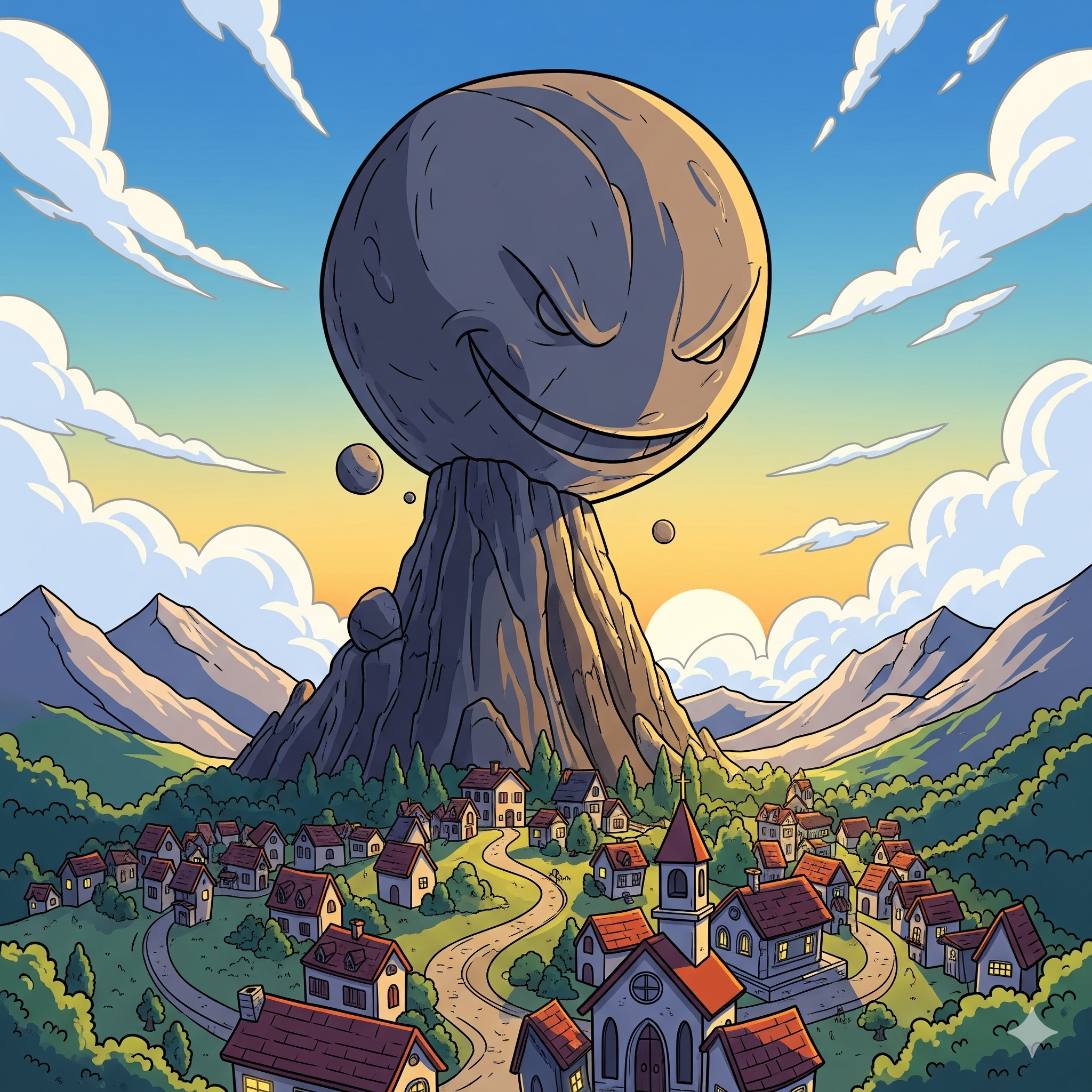
Story behind the image – I used Google’s new Nano Banana image generator for this image. I asked it to produce a large and evil boulder sitting on top of a mountain, held by ropes, overlooking a nice town that it’s threatening…in a cartoonish style. This is the first image it produced. It missed the part about the ropes, but I like the over-the-top (see what I did there?) theme of this rendering. And that boulder may appear in a few more stories in the future.
I don’t remember a lot from Mrs. Olsen’s first grade class. One event that stands out is the day we planted a bunch of seeds in a garden. First grade Bob enjoyed digging in the dirt, making small seed holes, dropping each seed into its place, and writing the plant names on popsicle sticks that we plunged into the dirt next to the seeds.
Then came the bad news.
We wouldn’t be able to see the plants we’d planted until weeks later, and they wouldn’t reach maturity (whatever that meant) for at least a year.
To a first grader, weeks (and especially a year) meant forever. First grade Bob was extremely disappointed. I never saw the plants that came from the seeds we planted that day. It would be decades before adult Bob would go to the trouble of planting seeds or transplanting potted plants into a garden.
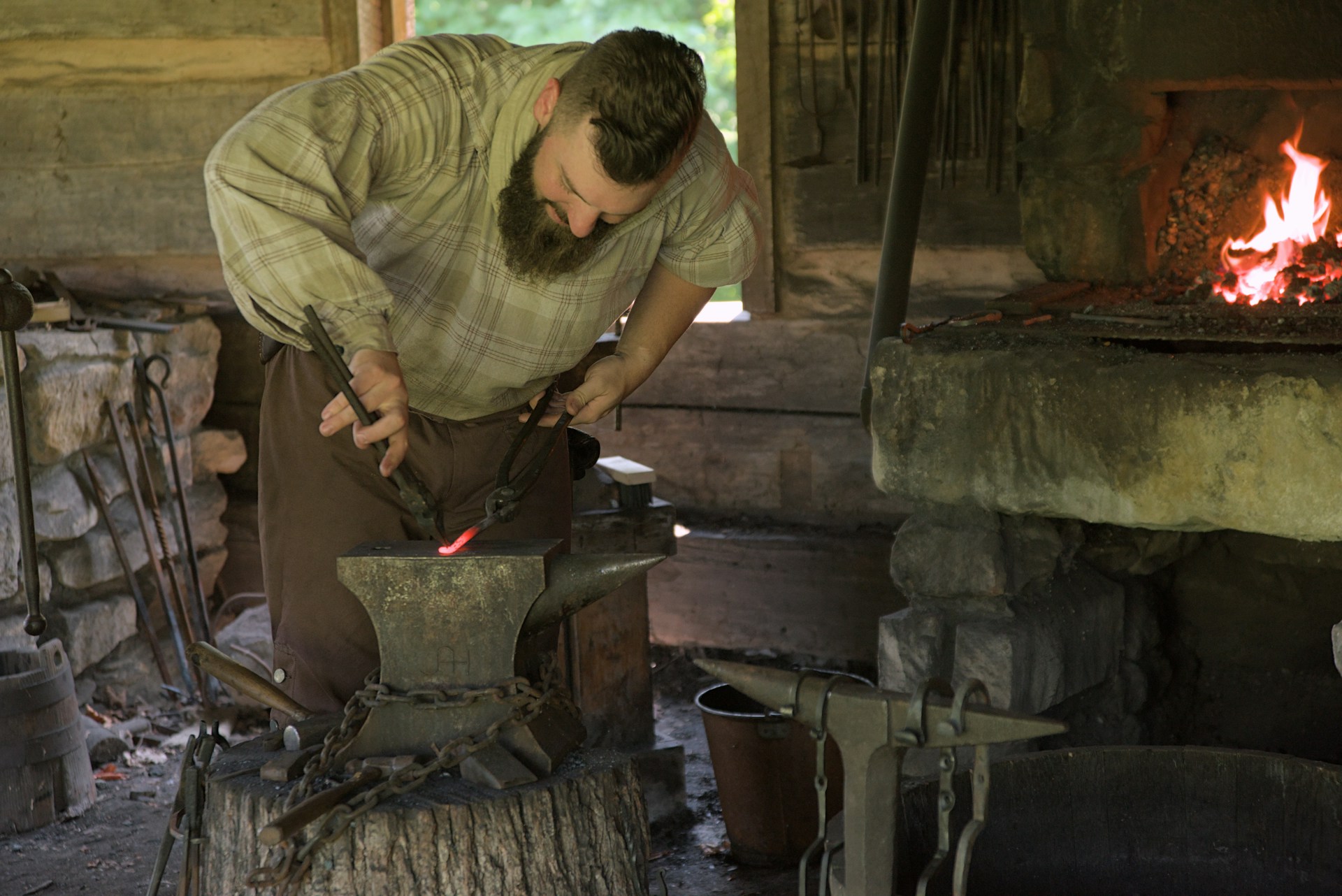
Recently, I watched an Essential Craftsman video where he planted 25 new trees. He worked the soil, designed a hand-made watering system, dug 25 holes with exactly the right spacing, brought in a truckload of special soil, mixed it with his existing soil, and then carefully placed each tree in the ground.
At various points in this multi-week project, he worked alongside his grandsons, his wife, and one of his good friends. He said that working with them over the years, especially his wife, had made him a better person.
The finished line of trees looked amazing and will look even better over the next 10 – 20 years.
He reflected that it’s easy to take for granted the shade we enjoy from trees planted decades before. The journey from seed to shade provider is a long one, but it always begins with the person (or Nature) planting that seed.
So, what kind of “shade” are we planting today? Is it the kind that shelters others through encouragement, love, wisdom, opportunity, or sacrifice?
The things we do now may not seem significant in the moment. They may never fully bloom while we’re around to enjoy them. A kind word to a child. A story passed down. A habit of generosity. A newly taught skill. A quiet act of integrity. These are the seeds we plant for the future.
Sometimes, like first grade Bob, it’s easy to get frustrated when we don’t see results right away. We live in a world that loves fast feedback and instant gratification. But shade trees don’t grow overnight. Neither do strong families, good character, or traditions worth passing on.
What if our job, the most important job of all, is to plant and build for a future we’ll never see? To create a little more shelter for the people coming after us?
Few will notice what we’re planting. But that’s okay. We do it anyway. And someone else will get to rest in that shade.
That’s the kind of impact I hope to make. Something that lasts beyond my lifetime, even if no one remembers exactly which trees I planted.
So I’ll keep planting. I’ll keep building. I’ll keep encouraging…investing in the people I know will grow far beyond me.
Because someday, someone will enjoy the shade I may never see.
Adult Bob loves that.
“If your plan is for one year, plant rice. If your plan is for ten years, plant trees. If your plan is for one hundred years, educate children.” – Confucius
I sat down recently to write a letter to my cousin (technically my first cousin once removed), who just started basic training in the Air Force.
What began as a quick note turned into something more. A personal reflection, a bit of a manifesto, and a stack of lessons I wish someone had handed to me when I was just setting out.
By the time I hit “save,” I realized this may be worth sharing with any young person taking their first real steps into the adult world.
The letter was full of life updates, jokes, birthday party planning, movie recommendations, and the occasional 10-year-old version of myself asking random questions. But the main message was you can do hard things, and you’re not alone.
What follows are some ideas that come from years of learning, leading, failing, and reflecting. These are lessons for anyone who finds themselves on the edge of something new.
Leadership begins and ends in your head. Most of your real battles are internal. That voice in your head? It can lift you up or hold you back. Especially in an environment full of rules and pressure, how you think will define who you become. Supportive self-talk, resilient thinking, steady choices. These are the foundational traits for leadership.
Start before you’re ready. Showing up takes more courage than people realize. You will rarely have everything figured out before you begin. Your best opportunities for growth will come from figuring things out while under pressure. That discomfort you feel is a sign that you’re on the edge of growth.
Do the next right thing. When life gets overwhelming (and it will), it helps to stop trying to solve everything all at once. Pause. Breathe. Do the next right thing. That’s enough. The bigger picture tends to take care of itself when we’re faithful and focus on the next indicated step.
You belong here. The feeling that maybe you’re not ready, or that someone else would be better suited for the challenge in front of you. That’s normal. But it doesn’t mean you don’t belong. The truth is you do belong. You’ve earned the right to be where you are. And you’re growing stronger every day, even if it doesn’t feel like it in the moment.
Respect is the foundation of everything. Not just the kind of respect that comes from rank or titles, but the kind you live out through humility, consistency, and quiet honor. When you offer that kind of respect, you build trust. And trust is what makes people want to follow your lead.
When the going gets tough, remember why you started. Every hard day will test your resolve. Every early morning, every setback, every lonely hour…these are the places where you’ll either lose sight of your purpose or anchor more deeply into it. Purpose doesn’t remove difficulty, but it gives meaning to the difficulty. And that’s enough to carry you through.
Discipline equals freedom. I shared this piece of advice that comes from Jocko Willink, former Navy SEAL, war veteran, and a powerful voice on discipline and leadership. He says, “Discipline equals freedom.” The more discipline you have, the more freedom you gain.
Discipline gives you control. Over your body, your mind, and your choices. Freedom to choose your future. Freedom to trust yourself. Freedom to follow through, especially when motivation fades.
You won’t always feel motivated. That’s okay. Stay disciplined. Show up. Do the work. That’s how you earn freedom. One decision at a time.
“Don’t wish it were easier. Wish you were better.” A classic quote from Jim Rohn. There’s no shortage of obstacles. The goal isn’t to escape them. It’s to grow strong enough to rise above them. The learning curve is real. Learn, adapt, overcome…become better and things will become much easier.
About those movie recommendations I mentioned earlier. It’s probably more accurate to call them story recommendations. Stories about honor, resilience, human ingenuity, and the willingness to keep going when things are difficult.
We Were Soldiers, an amazingly good movie about strategic servant leadership (which is my preferred style of management), bravery, and the love that comrades in arms have for one another. It’s a great tribute to the men who fought (many who gave their lives for the guy next to them) and their brave families back home. I think I’ve seen it at least 25 times and I’m happy to watch it anytime. Each time I watch it, I tear up in at least 2 or 3 places in the movie.
Ocean’s 11 and The Sting, two films that focus on creative problem solving and teamwork…though our “heroes” in these movies are con men and thieves.
The Princess Bride made the list. The value of honor (even among combatants), mixed with the comedic and spoofy scenes make it a classic. Even in a world of duels and danger, kindness, respect and loyalty still matter.
I suggested Seveneves by Neal Stephenson. A science fiction novel (my favorite genre for at least the past 10 years) about human survival, adaptation, and rebuilding civilization after catastrophe. The premise is that an asteroid causes the moon to shatter. What starts out as an oddity in the sky becomes a calamity as the moon breaks up into a ring and then begins to rain down to Earth (something they call the Hard Rain). Great sci-fi, lots of human ingenuity and adaptability, and a story that covers about 5,000 years. It’ll take some time to read, but it’s worth it.
Two books by Andy Weir. The first is The Martian (which became a movie starring Matt Damon), and the second is Project Hail Mary. Andy wrote The Martian in 2011 and self-published it on Amazon. It picked up fans and became a bestseller without an “official” publisher. His second book was called Artemis (takes place on the Moon). It was good, but not quite as good as The Martian (which is a high standard, so I’m probably being unfair).
His third book was Project Hail Mary. This one is also being made into a movie, starring Ryan Gosling. It is excellent.
The big thing about Andy’s books is that they are scientifically accurate. His characters deal with extremely complex challenges that require thinking and ingenuity to overcome. He writes in a way that entertains and teaches things you never knew.
I love that Andy wrote his first book from beginning to end without any publisher involved. Nobody was there to tell him what he was doing was the right thing. He believed in himself, believed in the story he was telling, focused on the work, delivered a high-quality product, and proceeded to find his audience one reader at a time.
All these stories reflect truths about the path ahead. Your journey will be hard. You’ll need grit, creativity, and perseverance. You’ll need others (family, friends, mentors, even strangers). More often than not, the tools to overcome life’s challenges will come from within yourself, quietly shaped by the stories you carry and the habits you form.
Whatever new thing you’re stepping into, whether it’s basic training, a new job, a cross-country move, or a new phase in your life, know that it’s okay to be unsure. It’s okay to feel stretched. Just remember your “why,” do the next right thing, and keep showing up with courage.
And who knows? Maybe decades from now you’ll be the one writing a letter like this, passing along what you’ve learned…
“Nothing in the world is as soft and yielding as water. Yet for dissolving the hard and inflexible, nothing can surpass it.” – Tao Te Ching, Chapter 78
Water moves around, through, or beneath whatever resists it. It adapts. And in doing so, it shapes mountains, smooths stone and carves out entire landscapes. Its quiet and steady strength endures, and transforms.
Some of history’s greatest leaders have embodied this same soft strength…few more clearly than Saint Teresa of Calcutta.
She was small in stature and quiet when she spoke. She lived a life defined by simplicity and humility. But her leadership moved nations.
Heads of state sought her advice. Governments stepped aside to let her mission continue. And her Missionaries of Charity, formed with only a handful of sisters, grew into an international force of compassion serving the poorest of the poor.
When the Indian government initially refused her permission to work in Calcutta’s slums, she didn’t protest or make demands. She simply thanked them, smiled, and began serving the dying on the streets anyway.
Her quiet, consistent actions spoke louder than any argument. Within months, officials were granting her permission and offering resources and support.
Like water finding its way through the smallest cracks in stone, she found the path through quiet, faithful persistence.
“Not all of us can do great things. But we can do small things with great love.” – Saint Teresa of Calcutta
In leadership, force can create motion, but usually at the expense of trust, creativity, and ownership from the people you’re leading. When leaders rely on authority, titles, or pressure to drive results, they may achieve short-term compliance, but they rarely inspire long-term commitment or innovation.
Instead, they create environments where people focus on rules more than results, and on compliance rather than creative contribution.
Gentle, listening-based leadership works differently.
It adapts without losing direction. It invites people to bring the best version of themselves and creates space for their growth. Like water, it finds ways around obstacles, sometimes slowly and sometimes all at once…but always with clarity and purpose.
Water teaches us that soft can be strong. Let it shape how you lead.
Soft, persistent power moves mountains, changes hearts, and builds trust.








 Grandpa Bob Encouraging Leadership
You must be logged in to post a comment.