Always Improve Your Position

A few days ago, I was listening to Jocko Willink speak about the quiet discipline behind Brazilian jiu-jitsu. I’m not a jiu-jitsu person, but one idea landed for me. It’s a truth I already knew but had never heard spoken so simply:

Always improve your position.

In jiu-jitsu, nothing happens all at once. A submission arrives like lightning, but only to the untrained eye. What looks like a sudden victory is really the final expression of dozens of subtle movements that came before it. A hip shifts. A grip tightens. An elbow gains an inch of space. Most of these moves go unnoticed. Each small adjustment creates a little more room, a little more leverage, a little more advantage.

I’ve always believed real progress works this way. It’s rarely dramatic. It’s quiet and patient. The accumulated effect of showing up, learning something new, adding a bit more care, and preparing a little more than required.

Breakthroughs rarely come from a single moment of inspiration. They come from the quiet work no one sees. The thoughtful practice that sharpens your skills, the trust built over months of ordinary conversations, the time spent learning before making a decision. When opportunity arrives, it looks sudden to others. To you, it feels like the next logical step.

This truth showed up clearly for me after a derecho tore through our property on Father’s Day weekend a few years ago. Ninety-mile-per-hour winds knocked down at least thirty trees across multiple acres. When I walked our land the next morning, everything felt broken and overwhelming. The cleanup looked like a project that would take months. I didn’t have months to devote to it.

But I did have mornings. So, I decided to work for an hour and a half every day before work. I cleared a small section each morning. It was incredibly slow. I dragged branches, cut trunks, chipped debris, split firewood, and made countless trips to our local dump. Small steps, small progress, one morning at a time.

Over the course of a year (maybe more), I worked my way across our entire property. Along the way, I cut in new hiking trails and removed a number of unhealthy trees. What started as a mess became a healthier stand of trees and a network of paths that look like they’ve been here forever.

Out of destruction came a daily habit that changed my life. I still work outside every morning. Clearing brush, trimming trees, expanding trails, building chicken coops, restoring a rustic barn. All in small ninety-minute bites. It’s like a time-lapse video created through countless quiet mornings of small improvements.

The pattern I saw on my land is exactly what Jocko described on the mat. I didn’t need a grand plan or a burst of superhuman effort. I needed to improve my position every day, just by a little.

Improve your position today, even by an inch, and tomorrow becomes easier. Improve it again tomorrow, and the day after that reveals options that didn’t exist before. You don’t need surges of motivation or dramatic reinvention. You only need the willingness to keep moving, always improving.

Careers grow this way. Trust grows this way. Faith deepens this way. Families strengthen this way.

Progress won’t always be linear. Some days distractions will pull us off course, or setbacks will undo work we thought was finished. All of this is part of the journey. Even then, the way forward still comes through small steps. Imperfect, uneven, but the work of always improving our position remains the same.

We improve our position slowly, almost without noticing. That’s enough. Tomorrow, we’ll improve again. Then one day, we’ll find ourselves able to take a step that would have felt impossible a year ago.

Focus on the next inch. The miles will take care of themselves.

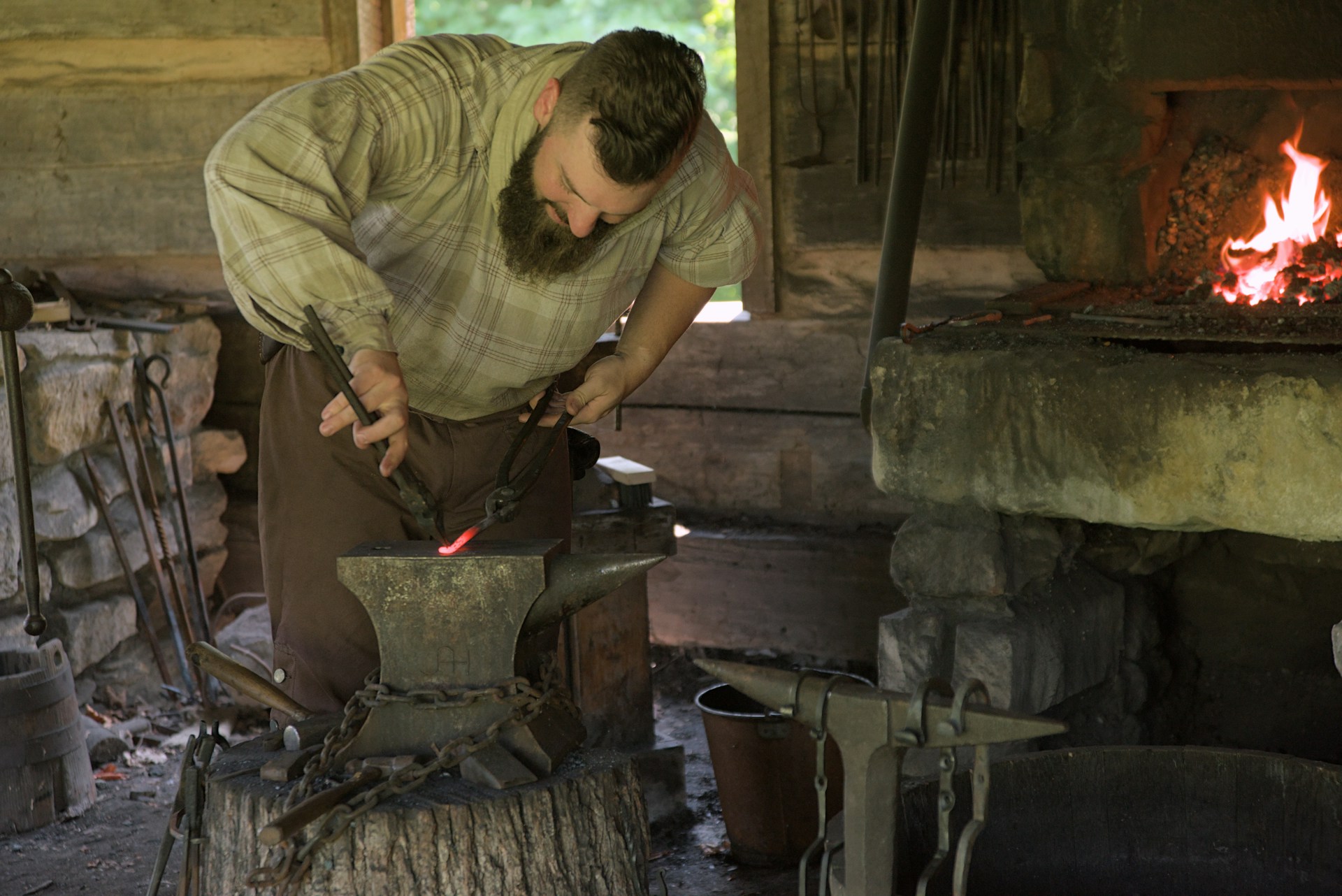
Photo by Walter Martin on Unsplash – a great rendition of my early morning work environment for at least a year.

Measuring the AI Dividend

In the early 1990s, the term Peace Dividend appeared in headlines and boardrooms. The Cold War had ended, and nations began asking what they might gain by redirecting the resources once committed to defense.

Today the conflict is between our old ways of working and the new reality AI brings. After denial (it’s just a fad), anger (it’s taking our jobs), withdrawal (I’ll wait this one out), and finally acceptance (maybe I should learn how to use AI tools), the picture is clear. AI is here, and it’s reshaping how we think, learn, and work.

Which leads to the natural question. What is our AI Dividend?

Leaders everywhere are trying to measure it. Some ask how many people they can eliminate. Others ask how much more their existing teams can achieve. The real opportunity sits between these two questions.

Few leaders look at this across the right horizon. Every major technological shift starts out loud, then settles into a steady climb toward real value. AI will follow that same pattern.

The early dividends won’t show up on a budget line. They’ll show up in the work. Faster learning inside teams. More accurate decisions. More experiments completed in a week instead of a quarter.

When small gains compound, momentum builds. Work speeds up. Confidence rises. People will begin treating AI as a partner in thinking, not merely a shortcut for output.

At that point the important questions show themselves. Are ideas moving to action faster? Are we correcting less and creating more? Are our teams becoming more curious, more capable, and more energized?

The most valuable AI Dividend is actually the Human Dividend. As machines handle the mechanical, people reclaim their time and attention for creative work, deeper customer relationships, and more purpose-filled contributions. This dividend can’t be measured only in savings or productivity. It will be seen in what people build when they have room to imagine again.

In the years ahead, leaders who measure wisely will look beyond immediate cost savings and focus on what their organizations can create that couldn’t have existed before.

Photo by C Bischoff on Unsplash – because some of the time we gain from using AI will free us up to work on non-AI pursuits. 

When an Idea Stops Being Yours Alone

There’s a quiet moment in meaningful work when your idea begins to live in someone else. You see it in the way they talk about it. You hear it in their enthusiasm. You notice how they add their experience and their language to it until the idea carries their imprint as much as yours.

It can feel strange the first time it happens. You know the origin, but they suddenly feel the spark of the idea for themselves. That’s the moment you know your idea has begun to grow.

Real success often arrives like this, but we don’t always notice it. People begin to adopt your idea, reshape it, and eventually believe in it with a conviction that can be surprising. They explain it to others in their own voice. They defend it. They improve it. If the idea spreads far enough, some will forget where it began. Your name may fade from the origin story. That loss of attribution can sting if you hold the idea too tightly. It should feel like success instead.

Leaders have a responsibility here. Ideas rarely spread through logic alone. They spread through emotional ownership that grows when people discover a piece of themselves in the idea. When that happens, they carry the idea farther than you ever could by insisting on authorship.

A leader’s task is to create the conditions for this transfer. You offer the early shape of the idea, then invite others to step inside and help build the next version. You ask for their insight, their experience, and their concerns. You let their fingerprints gather on the surface until the idea becomes a shared creation. People support what they help to shape.

As others begin to adopt your idea, they’ll need to feel safety in their new enthusiasm. They need to know they’re not the only ones who believe in this direction. A wise leader pays attention to this. They take the people who have embraced their idea and introduce them to others who have done the same. They form new connections, helping to create a small community where confidence strengthens and courage grows. When people see others adopting the same idea, they feel validated, understood, and ready to act.

This is how ideas gain momentum inside organizations. One person sees the promise. Another begins to shape it. A third begins to feel inspired. Before long, it becomes a shared narrative. It starts with your imagination, but it continues through their belief and conviction.

Once people begin to adopt your idea, you must release it. You may or may not receive credit for it. Either outcome is acceptable.

The goal was never to build a monument to your creativity. The goal was to move the organization forward. When others bring your idea into new conversations without you, your contribution has done its job.

Your attention can return to the horizon. There’s always another idea waiting for you, another possibility that needs your curiosity, another problem that needs new framing.

Good leaders plant seeds. Great leaders celebrate when those seeds take root across the organization.

Inspired by Dr. Michael Levin’s post, h/t – Tim Ferriss

Photo by Alex Beauchamp on Unsplash – a new idea taking root and growing beyond its beginning.

Why Curiosity Is the New Competitive Advantage

Imagine two managers sitting at their desks, both using the same AI tool.

The first asks it to write the same weekly report, just faster. Three hours saved. Nothing new learned. Box checked.

The second uses the AI differently. She asks it to analyze six months of data and search for hidden patterns. It reveals that half the metrics everyone tracks have no real connection to success. Two new questions emerge. She rebuilds the entire process from scratch.

Same tool. Different questions. One finds speed. The other finds wisdom.

This is the divide that will define the next decade of work.

For a long time, leadership revolved around structure and repetition. The best organizations built systems that ran like clockwork. Discipline became an art. Efficiency became a mantra.

Books like Good to Great showed how rigorous process could transform good companies into great ones through consistent execution. When competitive advantage came from doing the same thing better and faster than everyone else, process was power.

AI changes this equation entirely. It makes these processes faster, yes, but it also asks a more unsettling question. Why are you doing this at all?

Speed alone means little when the racetrack itself is disappearing.

Curiosity in the age of AI means something specific. It asks “why” when everyone else asks “how.” It uses AI to question assumptions rather than simply execute them. It treats every automated task as an opportunity to rethink the underlying goal. And it accepts the possibility that your job, as you currently do it, might need to change entirely.

That last part is uncomfortable. Many people fear AI will replace them. Paradoxically, the people most at risk are those who refuse to use AI to reimagine their own work. The curious ones are already replacing themselves with something better.

Many organizations speak of innovation, but their true values show in what they celebrate. Do they promote the person who completes fifty tasks efficiently, or the one who eliminates thirty through reinvention? Most choose the first. They reward throughput. They measure activity. They praise the person who worked late rather than the one who made late nights unnecessary.

This worked when efficiency was scarce. Now efficiency can be abundant. AI will handle efficiency. What remains scarce is the imagination to ask what we should be doing instead. Organizations that thrive will use AI to do entirely different things. Things that were impossible or invisible before.

Working with AI requires more than technical skills. The syntax is easy. The prompts are learnable. Connecting AI to our applications isn’t the challenge. The difficulty is our mindset. Having the patience to experiment when you could just execute. The humility to see that the way you’ve always done things may no longer be the best way. The courage to ask “what if” when your entire career has been built on knowing “how to.”

This is why curiosity has become a competitive advantage. The willingness to probe, to question, to let AI reveal what you’ve been missing. Because AI is a mirror. It reflects whatever you bring to it, amplified. Bring efficiency-seeking and get marginal gains. Bring genuine curiosity and discover new possibilities.

Here’s something to try this week. Take your most routine task. The report, the analysis, the update you’ve done a hundred times. Before asking AI to replicate it, ask a different question. What would make this unnecessary? What question should we be asking instead?

You might discover the task still matters. Or you might realize you’ve been generating reports nobody reads, tracking metrics nobody uses, or solving problems that stopped being relevant two years ago.

Efficiency fades. What feels efficient today becomes everyone’s baseline tomorrow. But invention endures. The capacity to see what others miss, to ask what others skip, to build what nobody else imagines yet.

The curious will see opportunity. The creative will see possibility. The courageous will see permission. Together they will build what comes next.

The tools are here. The door is open. Work we haven’t imagined yet waits on the other side. Solving problems not yet seen, creating value in ways that don’t exist today.

Only if you’re willing to ask better questions.

Photo by Subhasish Dutta on Unsplash – the path to reinvention

Providing Room to Fail

Organizational culture, not technology, is the hardest part of innovation

How many of your projects are truly innovative? If you have any, what’s your success rate? Would you consider your success rate to be all-star caliber?

This baseball analogy is almost a cliché, but it holds up. A professional hitter with a .300 average is considered excellent (all-star?). That means they fail seven times out of ten.

Now imagine applying this to innovation. What if only 30% of your projects succeed? At first glance, that sounds like a losing record. But if the successful projects provide 10x productivity increases, transform your customer’s experience, or massively boost profitability…30% success would yield incredible results for your organization.

This is the kind of opportunity in front of us today with AI. Tools are maturing quickly. The potential is staggering. Every company, large or small, is beginning to experiment.

Some will tiptoe. Others will dive headfirst. All will face a mix of breakthroughs and busts.

There will be tools that don’t deliver on promises, pilots that fizzle, and teams that struggle with adoption. But there will also be amazing homeruns. Projects that reshape the business and redefine what’s possible.

Many leaders today are focusing on which AI tools to purchase and how to train their teams. That’s the easy part.

The harder part is creating space for both the hits and the strikeouts. If people feel they must succeed every time, they probably won’t swing at all. They’ll play it safe and stick with what they know.

Innovation will grind to a halt.

Providing room to fail doesn’t mean celebrating mistakes. It means making sure your team knows that experiments, even the ones that fall short, are part of making progress. Leaders who demand perfection get compliance. Leaders who make room for failure get innovation.

As you lead your organization into AI and beyond, remember that your job isn’t to guarantee every swing is a hit.

Your job is building a culture where people are willing to keep taking swings.

Photo by Chris Chow on Unsplash

Optimize Today, Invent Tomorrow

Automation makes the machine run smoother. Innovation changes where the machine is going.

Automation hunts for efficiency. It tries to do what we did yesterday, but faster and cheaper. It targets the transactional and trims overhead. It removes steps and reduces friction. When done well, it buys back time.

Automation is valuable work and the price of admission for any organization.

But efficiency alone won’t differentiate.

Innovation asks different questions. Harder questions. Where are we trying to take our customers next? What experience would make them rethink what’s possible with us?

Innovation seeks to create new value.

Innovation needs space, a space that promotes bold and creative thinking.

It might mean dedicating 20% of a team’s work to exploring customer problems without predetermined solutions.

Or creating quarterly “innovation days” where normal metrics don’t apply.

Or creating time in leadership meetings for “what if” conversations instead of only “what’s broken” discussions.

Leaders set the tone. They can focus solely on efficiency, or they can ask questions that point their organization toward innovation.

If your new system creates fewer clicks, fewer steps, and lower costs, you automated.

If you created a new customer journey or opened a new market category, you innovated.

Do both well and you reshape the game.

Automation keeps us strong today. Innovation makes us irreplaceable tomorrow.

Photo by Ben Soyka on Unsplash

100 Lessons for Playing (and Winning) the Long Game of Leadership

Ideas and wisdom often arrive with familiar roots.

My views on leadership come from my lived experiences and lessons I’ve learned from great builders and thinkers like Andrew Carnegie, Peter Drucker, Tom Peters, Ken Blanchard, Marshall Goldsmith, Zig Ziglar, Stephen Covey, Jack Welch, Seth Godin, Jeff Bezos, Gary Vaynerchuk, Tim Ferriss, Jocko Willink, James Clear, and countless others.

I’ve also worked with amazing managers and mentors over many decades, including a few who taught me what not to do.

Since I find myself often returning to these lessons, I thought it would be useful to write them down in a list for easier reference.

Leadership Foundations

1. Leadership begins in your mind long before it shows up in your actions.

2. Self-awareness is a leader’s first and most enduring responsibility. Know how your actions land, then lead on purpose.

3. Character outweighs credentials over the long haul.

4. Integrity compounds like interest. The longer you hold on to it, the more it grows.

5. Values are the compass that keep you on course when circumstances shift.

6. Humility is the strength to put others first.

7. Influence comes from trust, not job descriptions.

Vision and Direction

8. A leader’s vision must be big enough to inspire, but clear enough to act on today.

9. Clarity reduces fear. Ambiguity fuels it.

10. Momentum builds when people see the destination and believe they can reach it.

11. Vision is not just what you see. It’s what you help others see.

12. The clearer you are about the goal, the less room there is for fear to grow.

13. Purpose is the map. Storms are just temporary detours.

14. Belief in the destination turns small steps into powerful strides.

15. Every action should feel like part of the same bigger story.

16. Sometimes waiting is the boldest move you can make. Strategic patience is powerful (and extremely difficult).

People and Relationships

17. The right people in the right roles multiply results beyond what you can imagine.

18. A culture of respect will outlast a culture of urgency.

19. Listen like the person speaking might hand you the missing puzzle piece.

20. Pass the applause to others but keep the accountability close to your chest.

21. Trust is invisible, but when it’s gone, everything feels heavier.

22. Relationships need regular deposits of attention, not just withdrawals of effort.

23. Helping someone else win creates a tailwind for your own success.

Decision-Making

24. Good decisions blend facts, values, and the courage to act.

25. The first idea is often just the trailhead. Walk farther.

26. Energy without wisdom burns out. Wisdom without energy gathers dust.

27. Choose the option you can defend in the daylight and live with in the dark.

28. A quick, small decision can open doors a perfect plan never reaches.

29. It’s easier to fix a wrong turn early than to build a new road later.

30. Never cash in tomorrow’s credibility for today’s convenience.

Resilience and Adaptability

31. A setback is a classroom, not a graveyard.

32. Flexibility is a skill, not a personality trait. Practice it.

33. Change is the proving ground where talk becomes action. Priorities sharpen, assumptions get tested, and leadership shows up in decisions, owners, and dates. If nothing changes (no decision, no owner, no date) it was only talk.

34. Adapt your tactics, but never your core.

35. The best views are earned with effort you once thought impossible.

36. Challenges test your limits so you can discover you’re stronger than you ever imagined.

37. Sticking with it usually turns “almost” into “done.”

Growth and Learning

38. The best questions are the ones you don’t yet know how to answer.

39. The moment you stop learning, you stop leading. Sometimes before you notice.

40. Pride blocks the front door to growth. Curiosity leaves it wide open.

41. Ask for feedback before circumstances force it on you.

42. Teach your knowledge, always remembering that your actions teach your values.

43. Every conversation nudges someone closer to, or further from, their best self.

44. Failure carries lessons that success hides. Corollary: High water covers a lot of stumps.

Impact and Legacy

45. Success without significance is empty.

46. The influence you have on people’s lives will outlast your achievements.

47. Your legacy is written in the lives you touch, not in the titles you hold.

48. Leadership is something you borrow from the future. It must be returned in good condition.

49. The most meaningful titles are the ones people give you, not the ones on your nameplate.

50. Think in decades when deciding what to plant today.

51. Your success is multiplied when others stand taller because of you.

52. The best proof of leadership is when growth continues without your hand on the wheel.

53. Leave every place and every person better than they were when you arrived.

Communication & Culture

54. Say the quiet part kindly and clearly. Clarity without kindness bruises. Kindness without clarity confuses.

55. Stories travel farther (and faster) than memos. Stories move people. Memos inform them. Stories turn intention into action.

56. Consistency in small signals (tone, timing, follow-through) builds culture faster than slogans.

57. Meetings should create movement. Reserve live time for decisions and collaboration. End with owners and dates. If it’s just a podcast, send an email. If only two people need to talk, make it a call and give everyone else their time back.

58. Celebrate progress out loud so people know what “right” looks like.

59. Honesty scales when leaders go first. Name the hard thing and show how to address it.

60. Culture forms around what you tolerate as much as what you teach.

Execution & Accountability

61. Strategy stalls without a calendar. Put names and dates on intentions.

62. Start now. Ship one useful thing today. Ride the wave of momentum that follows.

63. Priorities aren’t what you say first. They’re what you do first.

64. When everything is urgent, nothing is important. Choose the one thing that unlocks the next three.

65. Inspect what you expect. Review, refine, and recommit in frequent loops.

66. Own the miss publicly and fix it quickly. Speed heals trust.

67. Scoreboards matter. People work smarter when progress (or lack thereof) is visible.

Faith, Purpose & Centering

68. Quiet time isn’t empty time. It’s where courage and wisdom refuel.

69. Purpose steadies the hands when the work gets heavy.

70. Gratitude turns pressure into perspective.

71. Servant leadership begins by asking, “Who needs strength from me today?”

72. Hope is a discipline. Practice it especially when results lag.

Leading Through Change & Uncertainty

73. Name the uncertainty. People handle the unknown better when it has boundaries.

74. Trade predictions for scenarios. Prepare for several futures, not just your favorite one.

75. Replan without blame. The map changes when the terrain does.

76. Communicate more than feels necessary. The vacuum of silence fills quickly with speculation.

77. Keep experiments small and reversible, so learning is fast and affordable.

78. Endurance is contagious. Your calm can be the team’s shelter in a hard storm.

Coaching & Talent Development

79. Grow people on purpose. Make development a standing agenda item.

80. Coach with questions that build judgment and ownership.

81. When you delegate the result, delegate the authority to achieve it. Authority and responsibility should be in balance.

82. Set intent and boundaries. Agree on check-ins. Then step back so the team can step up.

83. Size stretch work to the person’s readiness. Provide the right challenge, real help, and visible sponsorship. It’s okay if they reach the result by a different route than yours.

84. Build a bench before you need one. Succession begins on day one.

Supportive Organizational Behavior

85. Make it safe to disagree. Invite the view that challenges yours.

86. Credit ideas to their source. Recognition fuels contribution.

87. Write agendas as outcomes, not topics.

Systems Thinking & Process

88. Correct the mistake and improve the system that allowed it.

89. Turn recurring work into checklists and rhythms so excellence is repeatable. Then automate it.

90. Map the flow of work end to end. Prune any step that adds no value. Unblock the rest.

91. Measure what matters. Review it at a pace that improves the work.

Stakeholders & Customer Focus

92. Start with the customer and work back to today’s priorities.

93. Define success in customer outcomes, then align processes, metrics, and rewards.

94. Close the loop by telling people what changed and why.

Conflict & Courageous Conversations

95. Address tension early while the knot is small.

96. Separate the person from the problem. Aim at the issue, not the identity.

97. Put the real issue (the skunk) on the table. Agree on facts before you debate fixes.

Energy & Well-Being

98. Protect time for deep work and recovery so decisions are sharp.

99. Model healthy boundaries. Your example sets the team’s norms.

100. Choose a sustainable pace over heroic sprints. Consistency wins the long game.

Leadership is a skill to be learned and practiced over a lifetime. It grows through steady reflection, small improvements, course corrections, and new discoveries. These reminders pull us back to what matters when life and work get noisy.

Whether you lead a company, a classroom, a project, or a family, your influence reaches far beyond the moment.

The truest measure of leadership is the people we serve and the leaders they become.

Photo by Marcus Woodbridge on Unsplash – I love the idea of a lighthouse showing the way, standing firm and steady especially when the waves are their scariest.

The Way of Water

“Nothing in the world is as soft and yielding as water. Yet for dissolving the hard and inflexible, nothing can surpass it.” – Tao Te Ching, Chapter 78

Water moves around, through, or beneath whatever resists it. It adapts. And in doing so, it shapes mountains, smooths stone and carves out entire landscapes. Its quiet and steady strength endures, and transforms.

Some of history’s greatest leaders have embodied this same soft strength…few more clearly than Saint Teresa of Calcutta.

She was small in stature and quiet when she spoke. She lived a life defined by simplicity and humility. But her leadership moved nations.

Heads of state sought her advice. Governments stepped aside to let her mission continue. And her Missionaries of Charity, formed with only a handful of sisters, grew into an international force of compassion serving the poorest of the poor.

When the Indian government initially refused her permission to work in Calcutta’s slums, she didn’t protest or make demands. She simply thanked them, smiled, and began serving the dying on the streets anyway.

Her quiet, consistent actions spoke louder than any argument. Within months, officials were granting her permission and offering resources and support.

Like water finding its way through the smallest cracks in stone, she found the path through quiet, faithful persistence.

“Not all of us can do great things. But we can do small things with great love.” – Saint Teresa of Calcutta

In leadership, force can create motion, but usually at the expense of trust, creativity, and ownership from the people you’re leading. When leaders rely on authority, titles, or pressure to drive results, they may achieve short-term compliance, but they rarely inspire long-term commitment or innovation.

Instead, they create environments where people focus on rules more than results, and on compliance rather than creative contribution.

Gentle, listening-based leadership works differently.

It adapts without losing direction. It invites people to bring the best version of themselves and creates space for their growth. Like water, it finds ways around obstacles, sometimes slowly and sometimes all at once…but always with clarity and purpose. 

Water teaches us that soft can be strong. Let it shape how you lead.

Soft, persistent power moves mountains, changes hearts, and builds trust.

One quiet drop at a time. 

Photo by Trac Vu on Unsplash

Leadership That Lasts Beyond the Finish Line

In high school, I had the good fortune of running cross country under a man named Mr. Smuts. Our coach and my 11th grade AP U.S. History teacher. He was the kind of leader who quietly influenced growth in those around him. 

He didn’t bark commands or demand the spotlight. On race day, while other coaches were shouting themselves hoarse, Mr. Smuts would position himself at the mile markers. Calm, steady, present. As we passed, he’d simply call out our split times. No cheering. No panic. Just numbers.

We didn’t need anything else.

He had trained us so well that those times were all the feedback we needed. We knew what they meant. We knew what he expected. And we knew he believed in each of us (even the slow guys, like me).

When we crossed the finish line, sometimes ahead of the competition, sometimes not, he’d quietly remind us that the real opponent wasn’t the other team. It was the clock. It was ourselves.

That quiet challenge made us better. Not just as runners, but as young men.

Mr. Smuts embodied a rare approach to leadership. Seeing others more than being seen. His confidence in us was contagious. His calm became our calm. His consistency helped us believe that showing up and giving our best effort, day after day, was enough to grow into something exceptional.

For a bunch of teenagers full of energy and bravado, his presence could have been drowned out by flash and high school nonsense. But instead, we listened closely. We trusted deeply. And we ran harder.

His leadership style reminds me of a line from the Tao Te Ching:

“When the best leader’s work is done, the people say, ‘We did it ourselves.’”

That’s exactly how it felt. We crossed those finish lines thinking we had pulled it off on our own. Only because he had quietly laid the foundation beneath our feet.

True leaders create space for others to rise.

The Tao Te Ching calls it wu wei, effortless action. Like a river flowing around rocks instead of smashing into them. Doing the right thing at the right time and then stepping back to let the results take root.

Ronald Reagan once said, “There is no limit to what a man can do or where he can go if he doesn’t mind who gets the credit.”

This could have been written about Mr. Smuts.

He led in a way that called attention to others rather than himself. His approach shaped how we performed, how we grew, and how we learned to lead ourselves. His impact showed itself in the confidence he helped us build and the standard of excellence we still carry with us today.

The next time you find yourself in a leadership role at work, in your family, or on any team, ask yourself:

-Am I trying to be the hero, or trying to build others up?

-How can I lead with quiet influence?

-Can I let go of credit and trust the process I’ve helped shape?

The best leaders don’t stand in front of their people. They stand with them, sometimes just off to the side, calmly calling out split times as the race unfolds.

And when it’s over, they nod to themselves, knowing they’ve done their job.

The rest of the story: Mr. Smuts earned his doctorate in Leadership and became Dr. Smuts not long after my time at Cerritos High School (Class of 1984).  He went on to become the school’s principal and ultimately the school district’s Superintendent of Schools for many years, before retiring in 2012. He continues to enjoy his retirement years.

Dr. Smuts is a leader who inspired (literally) thousands of kids (and adults). 

This video provides a brief glimpse of this truly inspiring and gentle man in 2012 as he prepared to retire. It also highlights my high school campus that looks very much like it did four decades ago.  

What Your 70-Year-Old Self Knows That You Don’t

We know about Maslow’s Hierarchy of Needs and how our wants and desires are like a pyramid that goes from our basic needs up to our desire for self-actualization. The Pareto Principle reminds us that 80% of our results come from 20% of our efforts, helping us focus on what truly moves the needle. Saint Ignatius’s Spiritual Exercises guide us through discernment, teaching us to distinguish between what brings life and what drains it.

But there’s another framework worth considering: the evolution of what we consider important throughout our lives.

As kids, we know what’s most important. It usually revolves around attention, followed by winning at whatever we are doing, which we think will get us more of that attention we crave. Everything feels urgent. Every disappointment feels permanent. The world revolves around us, and that’s exactly as it should be for a child learning to navigate life.

Teenagers start to focus on freedom, independence, and figuring out what they’re going to do when they grow up (whatever that means). They often reject what their parents value. Sometimes for good reasons, sometimes solely because rebellion feels necessary for finding their own path. What matters most is breaking free from the constraints that feel suffocating, even when those constraints were designed to protect them.

As young adults, we’re getting started, establishing our independent life, our financial foundations, our career foundations…at least we’re trying to get these things established. We’re in acquisition mode: getting the job, the apartment (maybe a house), the relationship, the respect (something we crave more than attention at this stage). We often dismiss advice from older generations, convinced they don’t understand how different the world is now.

Then something interesting happens.

As the decades flow by, what was important a few years ago, isn’t. We start to think about how to serve others, help our kids flourish, help their kids flourish. The shift is gradual but profound. From getting to giving, from proving ourselves to improving the lives of others.

Major life events accelerate this evolution. A health scare makes us realize that all the success in the world doesn’t matter if we’re not here to enjoy the fruits of our labor. The birth of a child or grandchild suddenly makes legacy more important than achievement. The loss of a parent reminds us that time is finite, and relationships are irreplaceable.

Sometimes the shift happens more quietly. Earlier this week, two co-workers were discussing the NBA finals and asked me what I thought of Game 2.  I had to admit that I haven’t followed basketball since the Magic Johnson era of the Lakers. As we talked, it became clear to me that I haven’t followed any sports—except for the Savannah Bananas baseball team’s shenanigans—in many years.

What captures my attention now? I’m drawn to watching people live their best lives in rural settings, building homesteads for themselves and their families. I find myself rooting for others to succeed in their chosen vocations, nothing more, nothing less. It’s not that sports became unimportant because they were bad. They just became less important than something else that feeds my soul more deeply.

As we get older, preserving our health, and the freedom that comes with it, moves toward the top of our priority list. Interesting how the freedom we sought as teenagers is still important to us in our senior years, but for different reasons. Then, we wanted freedom and thought we were ready for responsibility.

Now, we want freedom to focus on what truly matters. Freedom to be present for the people we love, freedom to contribute in meaningful ways, freedom from the noise that once seemed so important.

There’s a beautiful irony in how we often spend the first half of our lives accumulating things, achievements, and accolades, only to spend the second half learning to let go of what doesn’t serve us. We chase complexity when we’re young and value simplicity as we mature.

Questions worth considering:

– What would happen if we could skip ahead and see what our 70-year-old self considers important? What about our 80-year-old self? Would we make different choices today knowing what they know?

– Why do we have to learn the hard way that some of the things we chase don’t matter? Is there wisdom in the struggle, or are we just stubborn?

– How can we be more intentional about evolving our priorities on our terms instead of waiting for time to do it?

– What if we could honor the lessons each life stage provides without completely losing face and dismissing what came before?

The evolution of importance isn’t about getting it right or wrong at any particular stage. It’s recognizing that growth means what we value will shift.

That’s not a bug in the system. It’s a feature. The teenager’s desire for freedom isn’t foolish. It’s necessary for their development. The young adult’s focus on building a foundation isn’t shallow. It’s essential for future stability.

Perhaps the real wisdom comes in staying curious about what matters most. Knowing that the answer will keep evolving. And maybe, just maybe, we can learn to trust that each stage of life has something valuable to teach us about what’s truly important.

The key is staying awake to the lessons, even when they challenge what we thought we knew for certain.

Photo by Filip Kominik on Unsplash