Some of the fears running things in our lives were never ours to begin with. We watched someone lose and decided losing was the lesson. We watched someone speak up and get burned, so we got quiet. We watched someone try and then called their failure a warning. We told ourselves we were being realistic when we were just hiding safely behind their wreckage.
We rarely see the whole picture of someone else’s failure. We don’t see the blind spots, the ignored warnings, the weak foundation, the compromises nobody talked about, or the timing that was just off. We only see the ending, and then we build ourselves a new law out of it.
Something inside us says, See? That’s what happens.
No. That’s what happened.
One word. One syllable. The difference between a lesson and a life sentence.
Fear is a fast learner. It sees one example and it moves. It doesn’t wait for data. It doesn’t wait for context. It doesn’t wait for us to think.
Sometimes that’s exactly right. Some roads do end in ruin. Some boundaries are wisdom. There are dangers in life that should be taken seriously the first time, not the fifth.
But fear can collapse categories too quickly. It can treat a predator and a conversation as though they deserve the same response.
One difficult conversation becomes I’ll never bring that up again. One rejection becomes I’m done. One betrayal becomes Trust no one.
Fear stops being a warning. It becomes a tyrant. And tyrants imprison more than they protect.
Sometimes it isn’t safety we’re protecting. It’s our pride. Our delicate image. The deep terror of being seen trying and coming up short. That type of fear can sound like logic. It can sound like experience. And it can rob us quietly for years.
I’ve seen people let one example define them. One disappointment. One humiliation. One loss. One story, often somebody else’s story, lodged deep in their imagination.
But one example is a terrible god. It asks for too much. It explains too little. And it leaves too many good things untried.
Fear only needs one example.
Our wisdom must decide how much authority we give it.
Every generation believes it’s living through extraordinary change.
And in a way, every generation is right.
Economic strain, political division, conflict, and rapid technological change appear in different forms, but the underlying tension remains the same.
Ray Dalio describes what he calls the Big Cycle. The rise and decline of nations shaped by debt, money, internal division, and shifting global power. He would say we’re late in that cycle, marked by high debt, widening wealth gaps, and growing competition among world powers.
Harry Dent approaches history through demographics, studying population growth, and generational spending patterns. From his view, today’s economic strain reflects aging populations, slower growth, and the unwinding of decades of expansion.
Different perspectives. Similar conclusions.
Neither claim to predict the future with precision. Debt cycles, demographic waves, generational moods, technological revolutions, and geopolitical tensions move simultaneously. Understanding these forces and their patterns helps us recognize the currents. How we live within them is still our responsibility.
I remember the OPEC oil embargo of the 1970s and gas lines stretching for blocks. I was in elementary school as interest rates climbed above twenty percent. I watched the Reagan Revolution reshape economic thinking and bring supply-side theory into the mainstream.
I lived through the Iranian Revolution in 1979, the taking of US hostages, and the subsequent spread of militant extremism across parts of the Muslim world over the next four decades. I watched an airplane strike the World Trade Center in real time.
I grew up under the shadow of the Cold War, when nuclear conflict felt possible at any moment. I saw the optimism that followed the fall of the Soviet Union and then watched China open to the world after decades of isolation. I remember the theories about how expanding capitalism in China might soften their communist approach to governing.
I witnessed the savings and loan collapse, multiple stock market crashes, the Great Recession, and a global pandemic that disrupted economies, institutions, and families alike. I watched how strongly governments grasp control when certainty disappears.
I saw personal computers and then the internet transform daily life, followed by the digital economy, smartphones, social media, and now artificial intelligence reshaping work itself.
I can think of countless other historical events that have happened in the span of one life. Each moment felt unprecedented. Each reshaped the world, sometimes positively, sometimes negatively.
And yet, life continued.
When history is written, it focuses almost entirely on macro events. The narratives are dominated by wars, collapses, elections, revolutions, and markets. What rarely appears are the countless individual lives unfolding quietly alongside these events.
History does not record families eating dinner together during times of high inflation. Nor does it record weddings that took place during recessions or children born during wars. It overlooks the laughter that survived fear and the quiet courage required to just keep going.
But these individual experiences of life form the definition of humanity.
For every name preserved in textbooks, millions of people were doing what people have always done. They worked. They loved. They raised children. They cared for neighbors. They hoped tomorrow might be a little better than today.
Macro forces shape conditions. They influence opportunity and may narrow our options. They may, unfortunately, end our life or the lives of someone we love. But they don’t define a life.
Inside every macro upheaval exists our “micro” life. The life lived within the headlines rather than dictated by them.
The world may determine interest rates. It does not decide whether we act with kindness. It may influence careers, but it does not control our integrity. It may introduce hardship, but it does not determine how we respond.
Our response is where freedom still lives.
Viktor Frankl understood this more clearly than almost anyone. After enduring unimaginable suffering in Nazi concentration camps, he observed that nearly all external freedoms can be taken from a person. One freedom remains intact. The ability to choose one’s attitude and response to circumstances.
Events may constrain us. They may demand adaptation. They will never own our human spirit.
In my office, I have a wall filled with photographs. Family gatherings. Wedding days. Trips taken together. Beautiful places. Ordinary moments that became lasting memories.
When I step back and look at this wall, patterns appear.
We worked hard.
We made time for one another.
We traveled together.
We celebrated milestones.
We were living out our hopes and dreams, and we still are.
My wall has no charts or financial forecasts. No macro trend lines. But it tells the story of what matters most.
None of these moments waited for ideal conditions. They unfolded alongside inflation, recessions, political change, and uncertainty. The photographs capture lives shaped by ordinary but important choices made amid extraordinary times.
As we traveled, we met families across many countries. Different customs. Different faiths. Different governments. Yet everywhere we went, the hopes sounded familiar. Parents wanting the best for their children. Families striving for opportunity. Communities longing to contribute and belong.
The differences emphasized by the world shrink quickly when people speak about those they love.
Human aspirations remain remarkably consistent.
History changes its outward form. The heart changes very little.
You will live through upheavals of your own. Some will be frightening. Some will be unfair. Some will test your trust in institutions or leaders.
Remember this.
You are not responsible for controlling history. You are responsible for how you live inside it.
You will not choose the history that surrounds you. You will choose the values you carry through it.
You choose how you treat people.
You choose how to adapt.
You choose how you show up for your family.
You choose whether uncertainty hardens you or deepens your compassion.
You choose whether fear leads or faith steadies you.
These are your choices. Always.
Humanity endures because ordinary people continue to build their lives amid uncertainty. They love, they work, they fail, they adapt, and they hope, even while larger forces move around them.
While empires rise and fall, families persist.
That is the quiet march you belong to. Rarely captured by historians yet carried forward by generations.
History happens around you.
Life happens within you.
Live your life well. Love deeply. Work honestly. Stay flexible. Hold your faith. Care for one another.
If you do that, you will live a meaningful life regardless of when you were born.
As I was finishing this post, I found these quotes from George Bernard Shaw. The words come from two different writings of his from the early 1900’s. Together they express something important about what it means to live well within whatever history hands us.
“This is the true joy in life, the being used for a purpose recognized by yourself as a mighty one; the being a force of Nature instead of a feverish, selfish little clod of ailments and grievances complaining that the world will not devote itself to making you happy. “
“I am of the opinion that my life belongs to the whole community, and as long as I live it is my privilege to do for it whatsoever I can. I want to be thoroughly used up when I die, for the harder I work the more I live. I rejoice in life for its own sake. Life is no ‘brief candle’ for me. It is a sort of splendid torch, which I have got hold of for the moment; and I want to make it burn as brightly as possible before handing it on to future generations.”
As we enter 2026, it’s tempting to look for a new system, a better plan, or the perfect moment to begin.
Most of the time, the real answer is simpler.
Just show up.
The secret to progress isn’t brilliance or motivation. It isn’t certainty or confidence. It’s presence.
Show up every day. Show up when it’s easy. Show up when it’s uncomfortable. Show up when you don’t know what comes next.
Show up and be present. Show up and handle your business. Show up and figure it out as you go. Show up for the people you love. Show up for the work that matters. Show up for yourself.
When you’re unsure what to do next, don’t overthink it. Show up and take the next step. Clarity usually follows movement.
The alternative is standing down. Waiting. Drifting. Quietly giving up ground you were meant to claim.
You’re stronger than that.
Progress is rarely dramatic. It’s built through consistency. Through ordinary days stacked on top of each other. Choosing to show up when no one is watching.
The hard things happen because you showed up. The meaningful things happen because you stayed. The impossible things only happen when you refuse to disappear.
There’s another truth hidden in showing up.
When you show up, you give others permission to do the same. Your presence becomes proof. Your consistency becomes encouragement. People notice. They realize they can take the next step too.
So how do you crush your goals in 2026?
You don’t wait for the perfect plan. You don’t wait to feel ready.
You show up. You make it happen.
Because that’s what you do. And this is how things get done.
We turn it over in our head. We ask a few more questions. We look for one more data point. We check with another person whose opinion we respect. We wait for the timing to feel right.
And still, we hesitate.
We tell ourselves we need more information. More time. More certainty.
Indecision usually grows from very human places. Fear of being wrong. Fear of being blamed. Fear of choosing a path that can’t be undone. Fear of embarrassment.
Add decision fatigue to the mix and postponement starts to feel reasonable.
Meanwhile, the cost of waiting accumulates quietly. Teams stall. Momentum fades. Confidence erodes. What began as a thoughtful pause turns into drift.
Most leadership decisions are made without perfect information. Progress rarely waits for certainty.
So, what is our hesitation really telling us?
Sometimes, it’s a clear no. A request pulls us away from what matters most. We don’t like what we see, but we’re not sure why. Maybe a partnership doesn’t sit right with our values. In these moments, extended thinking isn’t searching for clarity. It’s searching for a way to explain our decision.
Other times, we hesitate because the decision stretches us. It introduces uncertainty. It raises our visibility. It asks more of us than we feel ready to give. Growth decisions usually feel uncomfortable before they feel right.
At some point, the data stops improving and the waiting stops helping.
Start small. Take a step that tests the decision rather than locking it in. Forward motion reveals new information…something thinking alone can’t.
A decision that turns out to be wrong isn’t failure.
It’s feedback.
And feedback points us toward our next decision.
“Whenever you see a successful business, someone once made a courageous decision.” — Peter F. Drucker
Photo by ChatGPT’s new image generator, which is way better than prior versions of the tool.
From thirty thousand feet, the land below looks like a patchwork of roads and fields. Each marks a choice someone once made about where to go. Some stretch straight and steady. Others twist through hills or fade out of sight. Together they form a map of movement and direction, a living story of people who kept choosing the next road.
Life feels the same way. The routes change, but the invitation stays the same. Keep moving to find greater meaning.
The most rewarding paths often pass through three places. Serving others, staying curious, and daring to pursue new goals.
Service opens our heart. When we give to something beyond ourselves, our life expands. For the younger generation, it teaches them that purpose grows through generosity and connection. Helping a friend, joining a cause, or showing up for someone who needs encouragement builds an identity rooted in contribution. Later in life, service transforms experience into legacy. It turns lessons into guidance and presence into impact. Every act of service whispers that we still matter.
Curiosity keeps that whisper alive. It invites discovery and reminds us that wonder never expires. For young adults, curiosity shifts attention from comparison to possibility. It fuels creativity and builds resilience (because nobody said it would be easy). For those further down the road, curiosity revives joy. Learning something new, exploring unfamiliar tools, or asking deeper questions renews their spirit.
Big goals complete the trio. Ambition alone can fade, but big dreams shaped by purpose bring hope to life. For the young, bold goals turn uncertainty into motion. For the experienced, they rekindle the thrill of becoming. The thrill of pursuing. Every goal, whether to build, create, teach, or grow, reminds the soul that movement still matters. Hope rises with every goal we dare to pursue.
Many people never take these paths. Fear of failure, fear of embarrassment, fear of losing face…they each build fences where we can hide. Quiet excuses convincing us to play small and call it wisdom.
Fear says, “Stay comfortable.” Curiosity says, “Let’s see what happens.”
When fear wins, both young and old lose sight of their forward motion. The young adult who fears being judged easily drifts into hopelessness. The older adult who hesitates to dream again slips into quiet surrender. The reasons sound different, yet the root feels the same. Fear has taken the wheel. Stagnation and hopelessness follow.
Purpose waits just ahead. It lives in the next act of kindness, the next mystery to be solved, the next dream still worth chasing.
The pathways to a rewarding life have no finish line. Every act of service, every curious step, every daring goal breathes new life into our soul.
When we explore these paths, joy and fulfillment will be our companion.
Photo by Line Kjær on Unsplash – I wonder what’s in the next valley. Let’s go find out.
Writing a song is like fishing, Kenny Chesney once said. Some days you catch something beautiful. The melody, the moment, the truth. Other days, you sit there all day with nothing but frustration and a stubborn belief that it’s still worth being out there.
That kind of wisdom transcends genres. Ernest Hemingway spent his life circling the same idea. That real art happens when we show up. Whether facing a blank page, a marlin that wouldn’t bite, or a battle that couldn’t be won, he believed the only way to live fully was to move, to act, to engage.
His work embodied a simple truth. The shortest answer is doing the thing. For him, wisdom wasn’t found in thinking about life, but in living it. No clever phrasing. No shortcuts. Just the act itself. Simple, honest, alive.
We spend so much of life thinking about what we might do, planning what we should do, waiting until we feel ready to begin. But readiness rarely arrives on its own. The line stays slack until you cast it. The song stays silent until you play it. The story remains untold until you write it.
Sometimes we catch something incredible. Other times, nothing.
Either way, we were there. Present. Awake. Participating in the work and wonder of life.
Maybe that’s the whole point.
A life well-lived must first be lived.
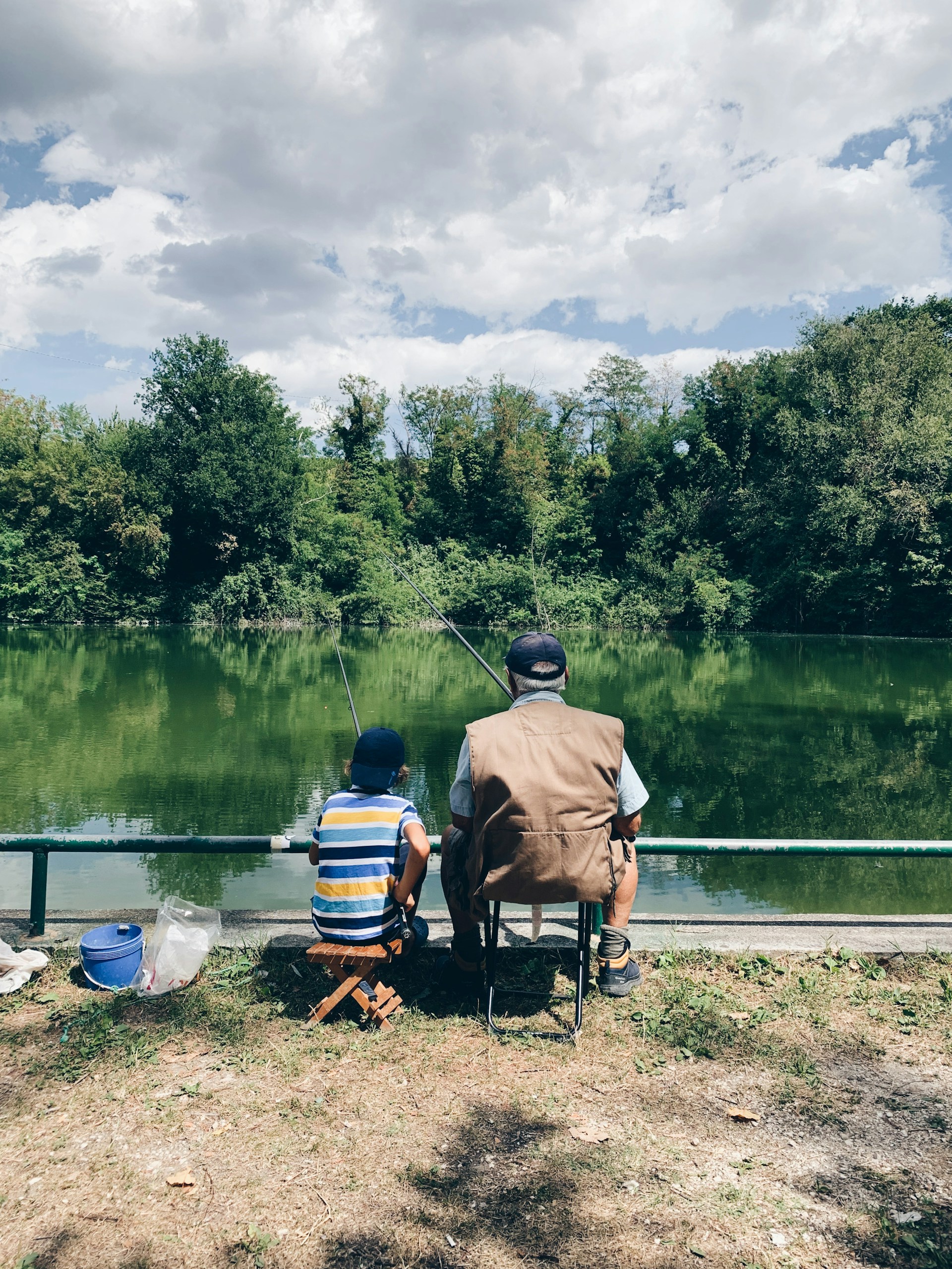
Photo by Shojol Islam on Unsplash – I wonder if he’ll catch something on this cast. Maybe. Maybe not. But, he’s in the game, giving it his best shot and that’s what matters.
It’s like having a guy working the door at a nightclub, deciding who or what gets in.
We assume we already know everything, so we stop listening. We nod politely. But inwardly we’ve already dismissed the person speaking. Or the article. Or the correction.
There’s often good reason for our defensiveness. Being wrong about something important can have real consequences. Our ego is trying to protect us from the genuine discomfort and potential costs of being mistaken.
The paradox is that the very thing protecting us from being wrong in the moment often prevents us from being more right in the future.
What if instead of having a bouncer who turns everyone away, we hired a smarter gatekeeper? One who doesn’t just protect us from being wrong, but actually helps us get better at being right?
What if we treat new information, even the stuff that contradicts what we think we know, as an invitation?
An opportunity to level up. To upgrade our understanding. To sharpen our thinking.
What happens when we level up? Our predictions start getting more accurate. Our explanations become clearer and more useful to others. We catch our own mistakes faster…sometimes before they even leave our mouth. We become more curious about the very areas we feel most certain.
The next time someone disagrees with you or presents information that challenges what you believe, pause before your ego’s bouncer slams the door.
Ask yourself, “What if they’re right? Can I learn something new?”
This doesn’t mean accepting everything that comes your way. But you can listen. Examine the ideas. Question them. Test them against what you know.
That’s true intellectual courage.
And it’s the only way to keep growing in a world that never stops changing.
“It is impossible for a man to learn what he thinks he already knows.” – Epictetus
The blinking cursor on a blank document. The empty stretch of land where you’ll soon be building a shop. The new web application your company wants to develop that will revolutionize your industry. These are just a few examples of standing on the edge of something new, something important, yet feeling completely unsure of where to begin.
You might have a vision of the final result—the finished document, the completed shop, the fully functioning app. But that doesn’t mean you know how to get there.
It’s easy to get lost in the variables and the endless possibilities. What if I make the wrong decision? Are there more resources out there? What do other people think? Should I read more articles? Watch more videos? Seek more advice? What if I mess it all up?
In every case, the hardest part is starting.
It’s taking that first step. Writing the first sentence. Sketching out the first screen of an app. Nailing the first stakes into the ground—the ones you’ll attach a string to, so you can visualize where your new shop will go.
It’s a commitment to action over hesitation. A moment of bravery that marks the beginning of making something real.
An amazing thing happens when you start. Your mind shifts from a place of endless “what-ifs” to a place of positive motion. You begin to focus on the next steps and real solutions. All the challenges you imagined before starting—that, in many cases, won’t even come to pass—are forgotten. The path ahead becomes clearer, and each small step forward makes your next decision easier.
Does this mean everything goes perfectly after you start? Of course not. You’ll make mistakes, adjust, learn, and pivot along the way.
But here’s where starting becomes crucial: it provides a tangible foundation. It gives you something to measure against, something to refine, something to edit. You might completely change your initial idea, but you wouldn’t have discovered the need to change if you hadn’t started.
Starting is hard, but it’s also the most important part.
Take the first step, even if it feels uncomfortable. You’ll learn more from those first few steps than you will from standing still…wondering what might happen.
Once you start, momentum kicks in. And from there, the possibilities are endless.
Fear is like that well-meaning friend who occasionally oversteps boundaries. It’s a survival instinct, a leftover trait from our ancestors who needed it to avoid becoming someone else’s lunch. It can guide us toward wise choices and help us steer clear of danger.
Our imagination, on the other hand, is a bit of a storyteller, especially when it comes to tales that can hold us back. With all our experiences and secrets tucked away in our minds, our imagination can whip up some remarkably dreadful future scenarios. And our lizard brains? They thrive on responding to fear.
Fear is undoubtedly real. The fear of failure, loss, embarrassment, injury, loneliness, helplessness, and death can have profound impacts on our thoughts and actions. However, if we recognize, understand, and confront these fears head-on, it will be like flicking on the lights in a dark room – suddenly, the monsters lose their scariness.
By acknowledging that fear is a living part of us, we can take steps toward asserting our control over it. Fear shouldn’t be in the driver’s seat.
“Yea, though I walk through the valley of the shadow of death, I will fear no evil: for thou art with me; thy rod and thy staff they comfort me.” – Psalm 23
We aren’t alone in this journey of conquering fear. We have a loving God, supportive family, and caring friends to help us face our fears. They can offer a broader perspective and lend a hand when we need it most.
Life is a rollercoaster of unknowns, and fear hates rollercoasters. Instead of fearing the unknown, befriend it. New ideas, experiences, and relationships? Embrace them as opportunities, be curious, and let the adventure unfold.
Life is rarely easy, and sometimes truly terrible things happen to us. But, fear should be the backseat driver, not our navigator.
“I must not fear. Fear is the mind-killer.
Fear is the little-death that brings total obliteration.
I will face my fear. I will permit it to pass over me and through me.
And, when it has gone past, I will turn the inner eye to see its path.
Where the fear has gone there will be nothing. Only I will remain.”
–Paul Atreides in the novel Dune, by Frank Herbert
Photo: Why hot air balloons? Well, taking a ride in a hot air balloon would not be possible if we let fear make the decision. I’m happy to report the balloon ride was amazing!
I have one favor to ask: If you find this information useful, please forward and recommend it to someone else. Thanks!
I get seasick easily, especially on sailboats (and fighter jets). I’ve been on a few sailing trips. They all had one thing in common. Once we’re outside the no wake zone, my nausea starts. Things go downhill from there until my head is buried under a towel and I try to sleep until we get to dry land. Needless to say, I avoid sailing trips.
I don’t have a problem on cruise ships, except in rough seas. Cruise ships are engineered to deliver a smooth ride for their passengers. Most swells go unnoticed. Passengers wake up in a new port almost every day, and the food and entertainment are usually spectacular.
Harbor cruises work for me. I can handle cruising around inside the no wake zone, looking at all of the boats in their slips, the nice homes on the shoreline, and passing other boats as they make their way out to sea. Christmas time, with all the lights and decorations is the best. It’s relaxing and safe. There are no swells to cause nausea and seasickness.
Every sailor knows the opportunity for new discovery lies beyond the no wake zone. True adventure happens out past the buoys, past the breakwater, and out in the wind and waves. Riding around in the harbor, or lazily enjoying a multi-course dinner on a cruise ship are fun and sometimes exotic. But, neither compare to the adventure of plying the seas in a forty-foot sailboat, with your hand on the tiller.
What about the risks? Staying on shore has risks. Cruise ships certainly carry risk (and sometimes, viruses). We may take comfort that others are managing our risks for us, but nothing is risk free. Storms and rough seas will hit, no matter who drives the boat. Understanding the risks, planning and preparing for them, and facing our challenges head-on is the only consistent winning strategy…at sea, and in life.
What about seasickness? I remember talking with a sailor in Tahiti. We had flown in for a vacation, and met my mother-, and father-in-law, who were sailing their boat across the South Pacific. The sailor was a friend of theirs. I mentioned my problem with seasickness, and how it would prevent me from making such a voyage.
He laughed and said, “The seasickness usually passes after three days at sea. After that, it’s an adventure of a lifetime.”








 Grandpa Bob Encouraging Leadership
You must be logged in to post a comment.