Uncle Lou lived a life that, on paper, sounds larger than life.
He was a thoracic surgeon who quite literally saved lives on a regular basis. He could have filled every family gathering with stories of operating rooms, impossible cases, and professional milestones. But that’s not the way Uncle Lou did things.
Uncle Lou was far more interested in our stories than his own. He wanted to know what we were learning, what we were building, what we were excited about. He led with curiosity and humility when he had every reason to lead with his own accomplishments.
He was a craftsman in the truest sense of the word. One of his hobbies, passion really, was working in his woodshop. His healing hands created fine wood furniture that he mostly gave away to family and friends. We are blessed to have a miniature grandfather clock that he made for us, and a wooden inlaid box that sits on my nightstand.
He was an excellent golfer. I wasn’t good enough to golf in his circle, although I think he may have caught video of me hitting a tee shot backwards once (that’s a story for another time).
I learned how to play a mean air trombone from Uncle Lou. A skill he showed off many times.
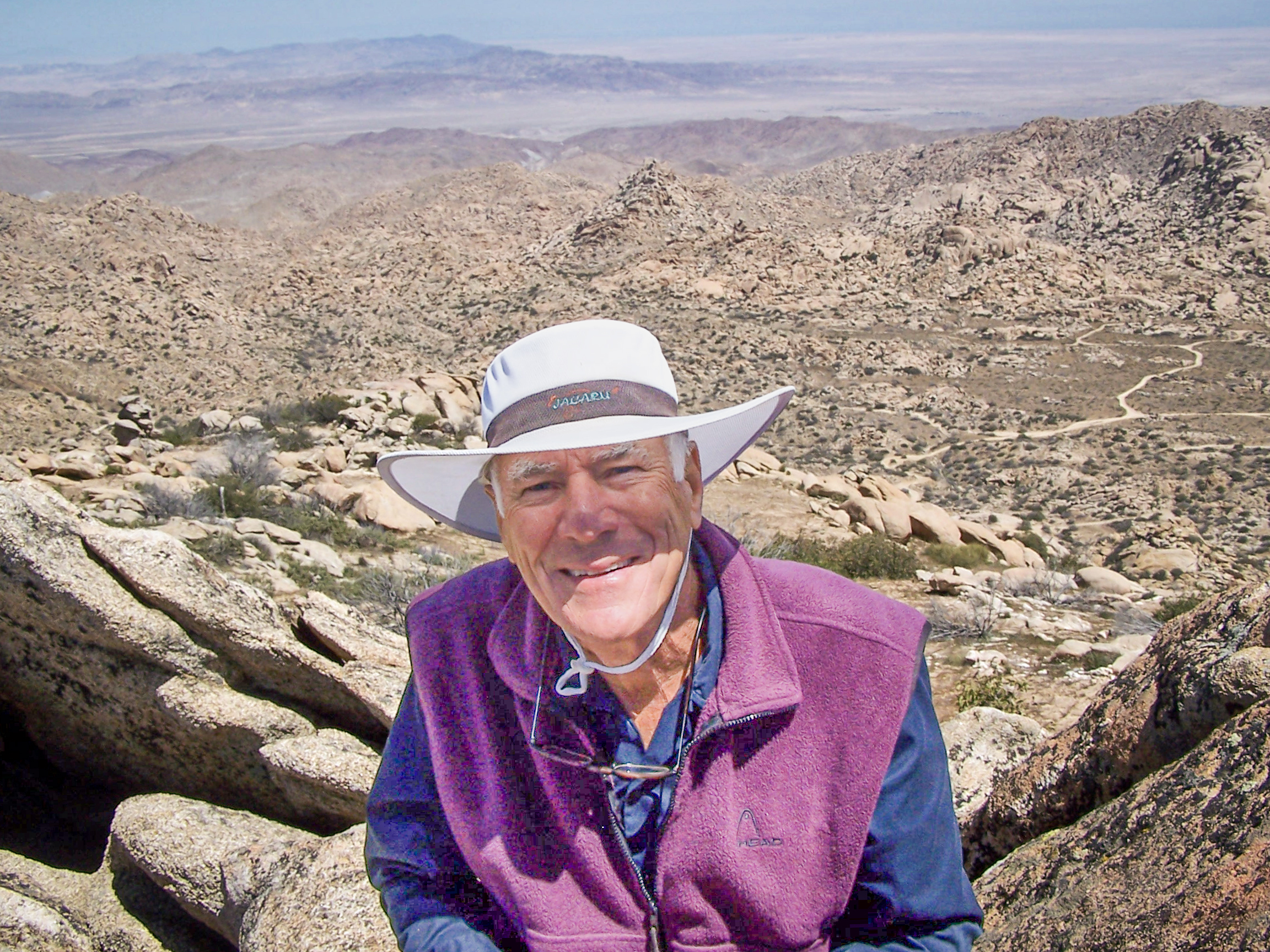
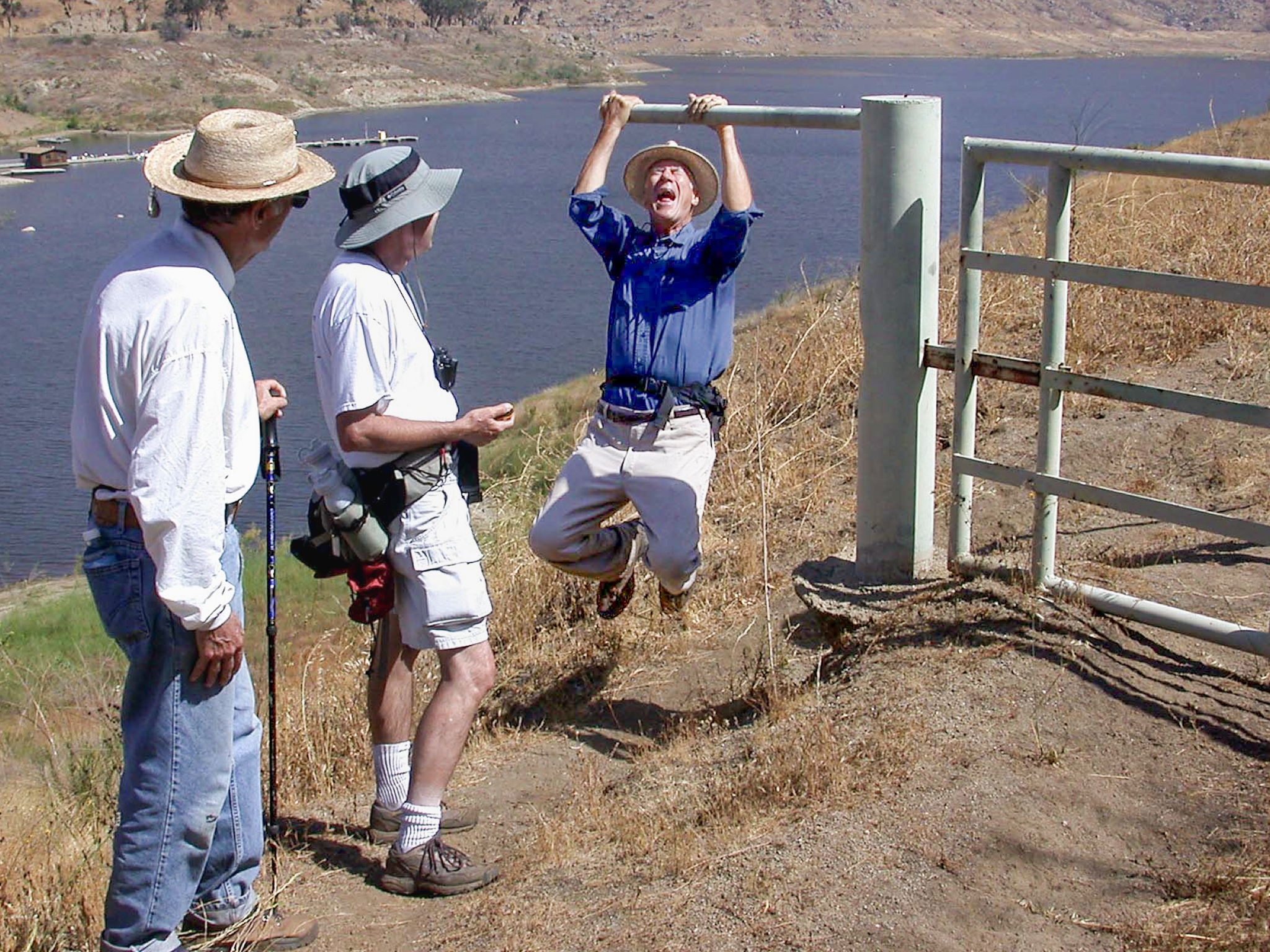
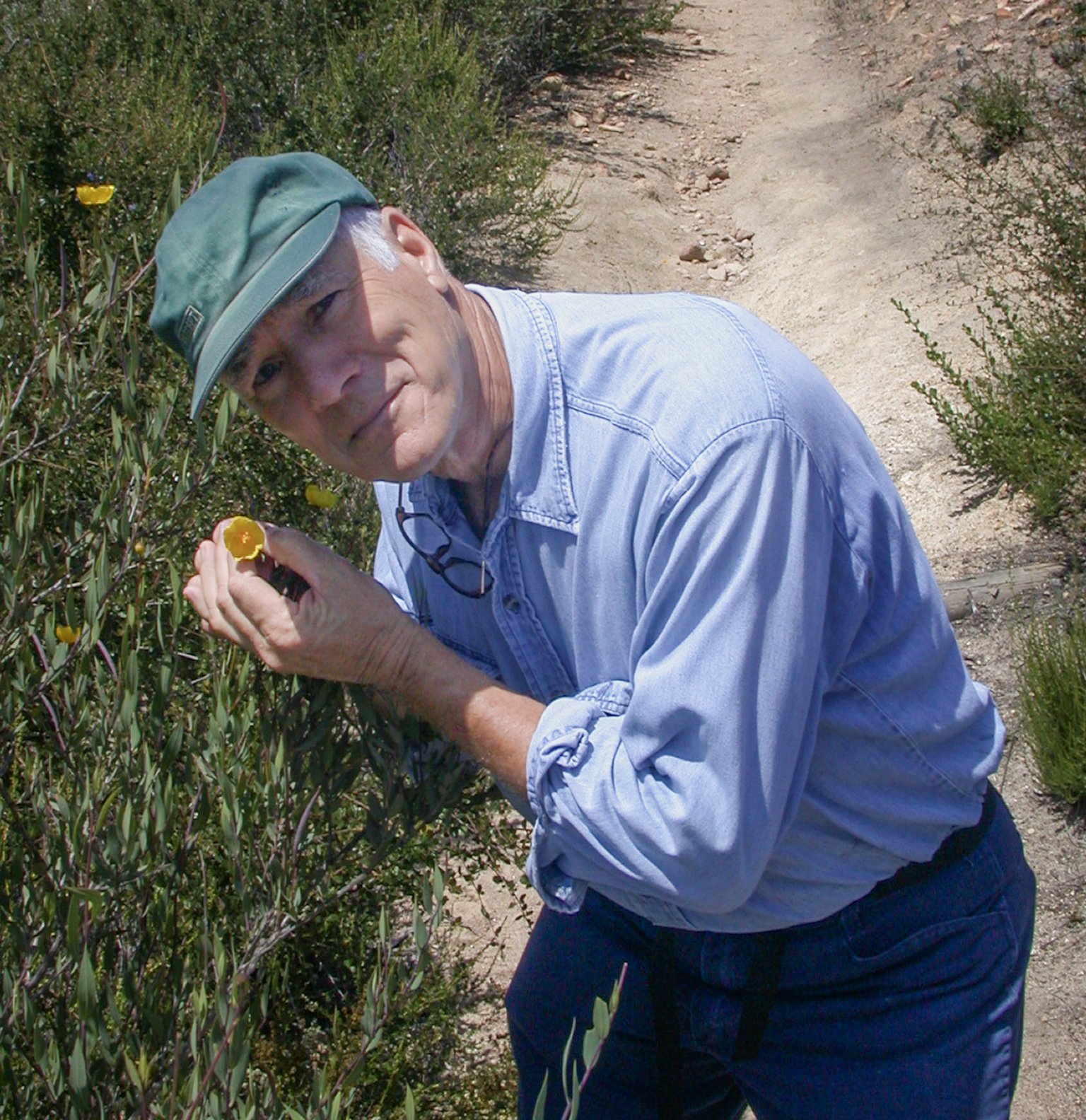
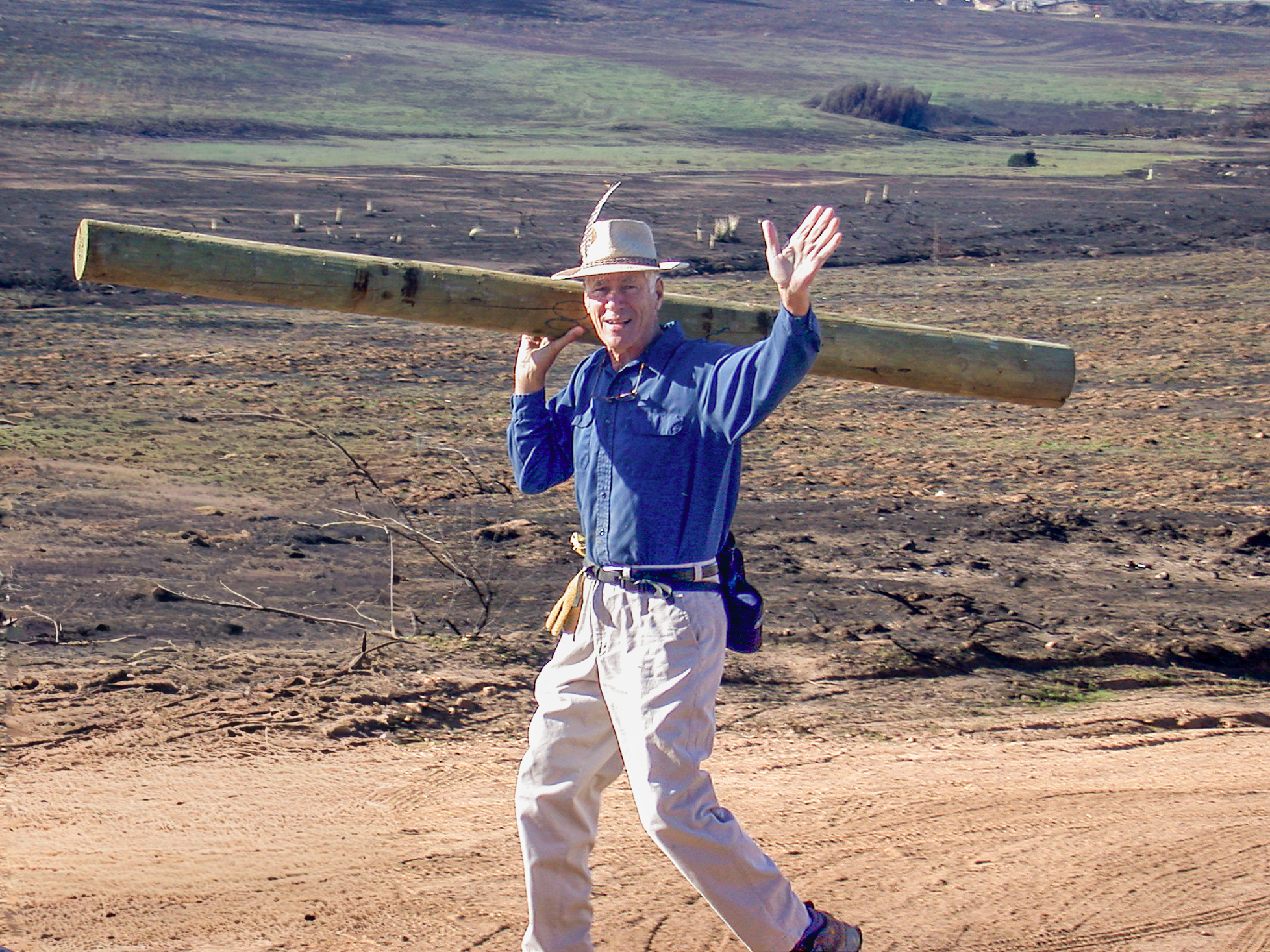
Did I mention that he was an avid hiker? His retiree group, the Kaiser Retired Association of Physicians (KRAP) hiked all over the greater San Diego area. It’s clear that the KRAP group is filled with like-minded super talented, but humble, individuals who get a well-earned kick out of the acronym for their group.
His curiosity never retired. Even as his body slowed in recent years, his mind never did. I remember recent conversations with him about computers, AI technology, and rockets. He approached new ideas the same way he approached everything else…with interest, openness, and the quiet confidence of a lifelong learner. I suspect he was still reading about something new right up until the end.
As I was putting the finishing touches on this post, I realized I had left out one more facet of Uncle Lou’s amazing life. He was also a pilot. He flew his plane far and wide, often to sample the cuisine at a distant airport diner, but always for the simple joy of seeing the world from above. It seems perfectly fitting for someone so curious and alive to experience life from every vantage point. A true Renaissance man if ever I knew one.
Uncle Lou’s legacy isn’t only in the lives he saved, the furniture he built, the miles he hiked, the miles he flew, or the videos he recorded of family moments. He always made you feel you were worthy of his full attention.
Uncle Lou reminds us that a life of great achievement shines even brighter when it’s paired with humility, curiosity, and genuine interest in others.
I’ll miss his wry grin, and that twinkle in his eye that let you know he was a very serious person who didn’t take himself too seriously.
There are times when we are firmly in the right. The facts are clear. The other person made a mistake or caused harm. In that moment, we face a choice. We can leverage our position of strength and press our advantage. Or we can give grace.
Grace is the strength to let go of proving a point. The willingness to give someone space to recognize what went wrong and find their way back. Every one of us needs that space, because every one of us makes mistakes.
Grace holds truth in one hand and love in the other. It sees what happened and names it honestly. It also holds out the invitation to begin again. In this way, grace strengthens relationships and helps keep them whole.
Grace looks to the future. A person rarely grows when held down by another’s righteousness. They grow when they feel the freedom to face their mistakes with dignity. Grace creates space for that freedom.
The flow of grace is a gift that we depend on. It honors truth. It protects relationships. When we give grace, we often find that it changes us as well.
We may discover that the person we extend grace to carries burdens we never knew about. When we choose grace over vindication, we become more human, more aware of our own weaknesses, and more capable of genuine compassion.
“Put on then, as God’s chosen ones, holy and beloved, heartfelt compassion, kindness, humility, gentleness, and patience, bearing with one another and forgiving one another, if one has a grievance against another; as the Lord has forgiven you, so must you also do.” – Col 3:12–13
I don’t remember a lot from Mrs. Olsen’s first grade class. One event that stands out is the day we planted a bunch of seeds in a garden. First grade Bob enjoyed digging in the dirt, making small seed holes, dropping each seed into its place, and writing the plant names on popsicle sticks that we plunged into the dirt next to the seeds.
Then came the bad news.
We wouldn’t be able to see the plants we’d planted until weeks later, and they wouldn’t reach maturity (whatever that meant) for at least a year.
To a first grader, weeks (and especially a year) meant forever. First grade Bob was extremely disappointed. I never saw the plants that came from the seeds we planted that day. It would be decades before adult Bob would go to the trouble of planting seeds or transplanting potted plants into a garden.
Recently, I watched an Essential Craftsman video where he planted 25 new trees. He worked the soil, designed a hand-made watering system, dug 25 holes with exactly the right spacing, brought in a truckload of special soil, mixed it with his existing soil, and then carefully placed each tree in the ground.
At various points in this multi-week project, he worked alongside his grandsons, his wife, and one of his good friends. He said that working with them over the years, especially his wife, had made him a better person.
The finished line of trees looked amazing and will look even better over the next 10 – 20 years.
He reflected that it’s easy to take for granted the shade we enjoy from trees planted decades before. The journey from seed to shade provider is a long one, but it always begins with the person (or Nature) planting that seed.
So, what kind of “shade” are we planting today? Is it the kind that shelters others through encouragement, love, wisdom, opportunity, or sacrifice?
The things we do now may not seem significant in the moment. They may never fully bloom while we’re around to enjoy them. A kind word to a child. A story passed down. A habit of generosity. A newly taught skill. A quiet act of integrity. These are the seeds we plant for the future.
Sometimes, like first grade Bob, it’s easy to get frustrated when we don’t see results right away. We live in a world that loves fast feedback and instant gratification. But shade trees don’t grow overnight. Neither do strong families, good character, or traditions worth passing on.
What if our job, the most important job of all, is to plant and build for a future we’ll never see? To create a little more shelter for the people coming after us?
Few will notice what we’re planting. But that’s okay. We do it anyway. And someone else will get to rest in that shade.
That’s the kind of impact I hope to make. Something that lasts beyond my lifetime, even if no one remembers exactly which trees I planted.
So I’ll keep planting. I’ll keep building. I’ll keep encouraging…investing in the people I know will grow far beyond me.
Because someday, someone will enjoy the shade I may never see.
Adult Bob loves that.
“If your plan is for one year, plant rice. If your plan is for ten years, plant trees. If your plan is for one hundred years, educate children.” – Confucius
“Nothing in the world is as soft and yielding as water. Yet for dissolving the hard and inflexible, nothing can surpass it.” – Tao Te Ching, Chapter 78
Water moves around, through, or beneath whatever resists it. It adapts. And in doing so, it shapes mountains, smooths stone and carves out entire landscapes. Its quiet and steady strength endures, and transforms.
Some of history’s greatest leaders have embodied this same soft strength…few more clearly than Saint Teresa of Calcutta.
She was small in stature and quiet when she spoke. She lived a life defined by simplicity and humility. But her leadership moved nations.
Heads of state sought her advice. Governments stepped aside to let her mission continue. And her Missionaries of Charity, formed with only a handful of sisters, grew into an international force of compassion serving the poorest of the poor.
When the Indian government initially refused her permission to work in Calcutta’s slums, she didn’t protest or make demands. She simply thanked them, smiled, and began serving the dying on the streets anyway.
Her quiet, consistent actions spoke louder than any argument. Within months, officials were granting her permission and offering resources and support.
Like water finding its way through the smallest cracks in stone, she found the path through quiet, faithful persistence.
“Not all of us can do great things. But we can do small things with great love.” – Saint Teresa of Calcutta
In leadership, force can create motion, but usually at the expense of trust, creativity, and ownership from the people you’re leading. When leaders rely on authority, titles, or pressure to drive results, they may achieve short-term compliance, but they rarely inspire long-term commitment or innovation.
Instead, they create environments where people focus on rules more than results, and on compliance rather than creative contribution.
Gentle, listening-based leadership works differently.
It adapts without losing direction. It invites people to bring the best version of themselves and creates space for their growth. Like water, it finds ways around obstacles, sometimes slowly and sometimes all at once…but always with clarity and purpose.
Water teaches us that soft can be strong. Let it shape how you lead.
Soft, persistent power moves mountains, changes hearts, and builds trust.
I received an email from Noah Kagan this week. Not because we’re personal friends, but because I subscribe to his newsletter. Noah, the CEO of AppSumo, often shares practical insights and thought-provoking questions from his journey in the tech world.
This particular message stood out. He talked about being fearful for his 10-month-old daughter’s future. With all the chaos in the world, the deepening divides, the rise of AI and robotics, the general noise of modern life, he wonders what kind of world she’ll inherit.
But instead of spiraling into worry, Noah laid out how he’s choosing to respond: by creating clarity, limiting distractions, and doubling down on the things that matter most. He’s building a foundation, not just for his own peace of mind, but for his daughter to inherit.
His email reminded me of a quote often attributed to Mark Twain: “The future is in the hands of a generation that isn’t ready for it.”
We didn’t have AI, social media, or the internet back in Mr. Twain’s day. But even then, concerns about “the next generation” were nothing new. Parents, teachers, and elders across every era in history have wondered if the next generation is truly ready.
Noah’s concern isn’t just that the next generation might be unprepared. It’s that the world itself might be too broken to navigate well. But history offers some perspective.
Every generation has faced challenges. Wars, famines, political collapse, pandemics, technological upheaval, moral drift. And yet, the world moves forward. Somehow, each generation rises to meet its moment…even if their preparation feels lacking.
We don’t get to control the future, but we do influence it by how we live, what we model, and what we choose to pass on. We can’t predict what our children and grandchildren will face, or how they’ll respond. But we can teach them how to think, how to hold on to timeless values, and how to walk through hardship with strength and grace.
It’s natural to worry.
Let’s not forget that hardship doesn’t cancel out beauty.
Struggles don’t erase joy.
There will be triumphs ahead, too. If we’ve taught them well, they’ll learn to spot their small victories, celebrate them, and then pass along what matters to those who come after.
The future always arrives in the hands of the young—and the young are never quite ready. But then again, neither were we.
We know about Maslow’s Hierarchy of Needs and how our wants and desires are like a pyramid that goes from our basic needs up to our desire for self-actualization. The Pareto Principle reminds us that 80% of our results come from 20% of our efforts, helping us focus on what truly moves the needle. Saint Ignatius’s Spiritual Exercises guide us through discernment, teaching us to distinguish between what brings life and what drains it.
But there’s another framework worth considering: the evolution of what we consider important throughout our lives.
As kids, we know what’s most important. It usually revolves around attention, followed by winning at whatever we are doing, which we think will get us more of that attention we crave. Everything feels urgent. Every disappointment feels permanent. The world revolves around us, and that’s exactly as it should be for a child learning to navigate life.
Teenagers start to focus on freedom, independence, and figuring out what they’re going to do when they grow up (whatever that means). They often reject what their parents value. Sometimes for good reasons, sometimes solely because rebellion feels necessary for finding their own path. What matters most is breaking free from the constraints that feel suffocating, even when those constraints were designed to protect them.
As young adults, we’re getting started, establishing our independent life, our financial foundations, our career foundations…at least we’re trying to get these things established. We’re in acquisition mode: getting the job, the apartment (maybe a house), the relationship, the respect (something we crave more than attention at this stage). We often dismiss advice from older generations, convinced they don’t understand how different the world is now.
Then something interesting happens.
As the decades flow by, what was important a few years ago, isn’t. We start to think about how to serve others, help our kids flourish, help their kids flourish. The shift is gradual but profound. From getting to giving, from proving ourselves to improving the lives of others.
Major life events accelerate this evolution. A health scare makes us realize that all the success in the world doesn’t matter if we’re not here to enjoy the fruits of our labor. The birth of a child or grandchild suddenly makes legacy more important than achievement. The loss of a parent reminds us that time is finite, and relationships are irreplaceable.
Sometimes the shift happens more quietly. Earlier this week, two co-workers were discussing the NBA finals and asked me what I thought of Game 2. I had to admit that I haven’t followed basketball since the Magic Johnson era of the Lakers. As we talked, it became clear to me that I haven’t followed any sports—except for the Savannah Bananas baseball team’s shenanigans—in many years.
What captures my attention now? I’m drawn to watching people live their best lives in rural settings, building homesteads for themselves and their families. I find myself rooting for others to succeed in their chosen vocations, nothing more, nothing less. It’s not that sports became unimportant because they were bad. They just became less important than something else that feeds my soul more deeply.
As we get older, preserving our health, and the freedom that comes with it, moves toward the top of our priority list. Interesting how the freedom we sought as teenagers is still important to us in our senior years, but for different reasons. Then, we wanted freedom and thought we were ready for responsibility.
Now, we want freedom to focus on what truly matters. Freedom to be present for the people we love, freedom to contribute in meaningful ways, freedom from the noise that once seemed so important.
There’s a beautiful irony in how we often spend the first half of our lives accumulating things, achievements, and accolades, only to spend the second half learning to let go of what doesn’t serve us. We chase complexity when we’re young and value simplicity as we mature.
Questions worth considering:
– What would happen if we could skip ahead and see what our 70-year-old self considers important? What about our 80-year-old self? Would we make different choices today knowing what they know?
– Why do we have to learn the hard way that some of the things we chase don’t matter? Is there wisdom in the struggle, or are we just stubborn?
– How can we be more intentional about evolving our priorities on our terms instead of waiting for time to do it?
– What if we could honor the lessons each life stage provides without completely losing face and dismissing what came before?
The evolution of importance isn’t about getting it right or wrong at any particular stage. It’s recognizing that growth means what we value will shift.
That’s not a bug in the system. It’s a feature. The teenager’s desire for freedom isn’t foolish. It’s necessary for their development. The young adult’s focus on building a foundation isn’t shallow. It’s essential for future stability.
Perhaps the real wisdom comes in staying curious about what matters most. Knowing that the answer will keep evolving. And maybe, just maybe, we can learn to trust that each stage of life has something valuable to teach us about what’s truly important.
The key is staying awake to the lessons, even when they challenge what we thought we knew for certain.
The other night, over a casual taco dinner, one of my grandkids hit me with a question I wasn’t expecting.
“Grandpa, how old will you be in the year 2100?”
Without missing a beat, I shot back, “Nearly 140. Way too old to still be around!”
I may have been off by a few years, but we all agreed: the odds are stacked against me making it to 2100.
Then we started doing the math together, and that’s where things got interesting. They’ll be in their 90s by then. Their children and grandchildren—my great-grandchildren and great-great-grandchildren—will be alive and thriving in that future world. A reminder that we’re part of something much bigger. Connected to the past, but carried forward by those who will come long after we’ve gone.
“Okay, but how old will you be in 2050?”
That one felt closer, more real. “Well,” I said, “not quite 90, but almost. And you’ll be under 50.”
“What will we be doing in 2050, Grandpa?”
That’s a question only they can answer. I won’t pretend to know. I hope I’m there for at least part of it. I hope I get to laugh with them, to listen, to remind them where they came from, and to cheer them on wherever they’re headed.
Our conversation turned into something more than tacos and timelines. We started talking about how every generation builds on what came before. We carry what we’ve learned from our parents and grandparents, along with our own experiences, and hand all of that to our children and grandchildren. And they, in turn, will do the same.
Their children, my great-grandchildren, aren’t here yet, but I already have high hopes for them. I look forward to holding them, hearing their stories, and watching them discover the world just as their parents are starting to do today.
I hope they’ll learn the big things:
-How a starry sky can quiet our soul.
-How to throw and catch with confidence (it’s baseball season, so this one is top of mind right now).
-How warm and magical a campfire can be…and that S’mores taste better when your hands are sticky.
-How good it feels to help without being asked.
-How to sit quietly with someone we love and say nothing at all.
-How to cheer for someone else, even when the spotlight isn’t ours.
-The peace that comes from a walk in the woods or along a sandy shore.
But I also know they’ll learn things I’ll never understand. Things I can’t even imagine. And that’s exactly as it should be.
My deepest hope is that they’ll carry forward the timeless lessons. That love matters more than being right. That kindness isn’t weakness. That telling the truth is not only brave, but also the only way.
And that family stories are worth retelling…especially the funny ones.
So, here’s to future taco dinners, to great-grandkids I haven’t met, and to the storytellers of tomorrow.
May they keep the best of us within them always.
A Poem for My Grandkids
We sat with tacos, our chips in hand, When you asked a question I hadn’t planned. “Grandpa, will you still be here in 2100?” “Not likely,” I laughed, “I’d be too old by then.”
And then we wondered who’ll be around, Your kids and theirs, with dreams unbound. Building a world we won’t see, Carrying forward the best from you and from me.
We talked of shooting stars and catching balls, Of S’mores by the fire and the night’s gentle call. Of helping for nothing, of walking alone, And learning to love with a heart fully grown.
You’ll learn things I’ll never know, With gadgets and wonders I can’t imagine. Even so, I hope what we’ve lived still finds its place, In stories you tell with a smile on your face.
Here’s to the moments that grow into more, To questions and memories, and tales we explore. May love be your guide in all that you do, And may our stories stay with you, and echo on through time.
p/c – That’s Charlie (in the cowboy hat) and Marcus from a few years ago, perfecting their marshmallow roasting techniques.
At kilometer 32 just south of San Felipe, where warm breezes wandered, and stars blanketed the sky — more stars than anywhere I’ve ever been.
Off-road racing brought us there, wide sandy beaches just a short walk away, bathtub-warm waters stretching out forever, the tides carving their quiet stories in the sand.
Under their shady palapa, watching the sun rise and fall on the horizon, Mom and Dad built their place from scratch, one humble project at a time. It was luxury camping at its very best.
Their place was just across the arroyo from the beach, where Dad taught Julianne to drive a stick shift on the wide-open sand.
How I long to beam back there. To see them again.
To hear their voices busy with new plans, to see what they’ve been working on, to sit with them in the shade at cocktail hour, chips, salsa, and all the shrimp we could eat, as the afternoon melts softly into evening.
I’d love to hear who’s come to visit lately.
Both are gone now, but the memories remain. Their laughter rides the breeze, as fresh as the salty air, that still stirs in my heart.
Backstory: A Campo Sahuaro Adventure
When Mom and Dad bought their lot around 1988, it was nothing more than a small concrete slab and four stakes marking the corners of their sandy “oasis.” What made this campo special was its access to a fresh water well…rare in that part of Baja.
Their lot sat on a bluff overlooking an arroyo, with the Sea of Cortez just beyond the sandy beach. In Mexico, buying a lot like this meant purchasing a long-term lease from the property owner. As long as you pay the annual lease (which was under $1,000 per year) you control the land. Anything they built on it was theirs.
Because Mexico has nationalized property in the past, many Americans build semi-permanent structures that can be dismantled and hauled away if needed. That kind of caution remains, even though nothing like that has happened in a very long time.
Being a concrete guy, Dad’s priority was pouring a lot of concrete. He laid down a huge patio that would become the base for everything else, including one of the largest shade structures I’ve ever seen. It didn’t happen overnight. This was a multi-trip (multi-year) endeavor, often coinciding with supporting Team Honda’s off-road racing efforts. They’d haul supplies and tools down along with pit equipment. In the early ’90s, sourcing building materials in Baja was still hit or miss so they brought most of what they needed with them.
By around 1991, Dad was ready to build a workshop. It would be like a shipping container, made of wood, with big swing-down doors on each end that doubled as ramps. He welded little leveling stands to the top of each door so they could serve as sleeping platforms when opened. I slept on those doors under the stars every chance I got.
As with everything at Campo Sahuaro, there’s a story behind that build.
We were down there pitting for Team Honda, which meant several fellow pit crew members were staying at my parents’ place. At that point, it was mostly a shaded patio and a small pump room. Many of the guys were carpenters, so they brought their tools and were ready to build.
Dad’s motorhome was packed. The center aisle was filled with 2x4s, stacked at least five feet high. Getting around inside was nearly impossible. Behind the motorhome, he towed a converted motorcycle trailer that he’d built at least ten years earlier. It was loaded with a perfectly stacked cube of 4×8 plywood sheets. The walls of the future workshop.
I happened to be traveling with them on that trip, ready to help with both pitting and construction. About 50 miles from the campo, we heard a loud crash and scraping noise. We were driving across a dry lakebed, the road raised 15–20 feet above the flat terrain. I looked out just in time to see the trailer tumbling down the embankment.
Dad got the motorhome stopped, and we rushed out to assess the damage. The trailer tongue had sheared clean off under the weight of the plywood. Thankfully, it hadn’t failed earlier, during high-traffic sections of our trip. The trailer was upside down in the lakebed, still lashed to its cargo. That cube of plywood was completely intact.
Within minutes, two vans carrying some of our crew pulled up behind us. We counted heads — at least ten of us, including a few high school football players. It wouldn’t take long to relocate all that wood.
A chain gang formed. We passed sheet after sheet of plywood up the embankment and loaded it onto the vans, lashing them down with tie-downs and ropes we’d salvaged from the trailer. We even hauled the trailer carcass back up the hill. At the very least, we figured we’d salvage the tires and axle.
That’s when an old Toyota pickup rolled up. A local man hopped out. I greeted him with my high-school-turned-Baja-race-pit-guy-Spanish. Lots of smiling, gesturing, and broken sentences later, we learned he was a welder and fabricator. He was heading to San Felipe to visit family and watch the race.
He looked over our trailer, nodding thoughtfully. He said he could take the trailer on his truck bed along with the remains of the tongue and hitch. He’d rebuild it and leave the rebuilt trailer at his brother’s restaurant in San Felipe. We asked him how much he’d charge us for that service. His response was $20(!).
I confirmed that his plan was to haul our trailer back to his shop (about 40-50 miles back), rebuild it, and then he’d tow it all the way down to San Felipe for $20. We told him there was no way we’d let him do that for anything less than $200. His eyes got real wide. I don’t think he believed what I was saying. I said that we’d gladly pay him that amount for all that he’d be doing for us.
We loaded the trailer carcass onto his truck bed, shook his hand, and paid him the agreed $200. We wouldn’t be able to see him at the conclusion of the job, so pre-payment was our only option. He turned around with his new load and headed back to his shop.
We mounted up and continued to Campo Sahuaro, wondering if we’d ever see that trailer again.
The Workshop Rises
The race went great. The workshop was built in a day or two with the expert help of our crew. The carpenters led the way and the rest of us did our best to help and stay out of their way. Copious amounts of alcohol were consumed around the campfire, many snacks and excellent meals were eaten, heroic stories (some of them true) were shared with lots of laughter along the way.
On the way home, we stopped at Baja 2000, the restaurant where our mystery welder said he’d leave the repaired trailer. And there it was.
Not only had he fixed it. He’d reinforced it, straightened the bent parts, and welded it all back together better than before.
Legacy
Over the years, I visited Campo Sahuaro many times, sometimes with my wife and daughters. As mentioned earlier, Dad taught my oldest daughter to drive a stick shift truck on the beach in front of their place when she was probably 12 or 13 years old.
I loved knowing the stories behind everything built there. Most of the stories involved improvisation, imagination, and always perseverance. There were a ton of lessons at their property about staying focused and overcoming obstacles in the pursuit of your goals.
I loved sleeping under that blanket of stars, watching satellites traverse the sky (there’s a lot more of them up there nowadays). I loved swimming in the warm ocean. Most of all, I loved being with Mom and Dad, sharing good times and making memories with them at their special place, 32 kilometers south of San Felipe.
p/c – I asked ChatGPT to make an image of a starry night on the beach based on my story. Amazingly, the image it rendered is mostly how I remember it…except for the houses on the front row (Mom and Dad’s place was on the second row), and the dry-docked fishing skiffs that used the campo as their base of operations.
I heard this a while back and it resonated with me. That it’s a privilege to be under pressure.
At first, this may seem counterintuitive. Pressure can feel heavy. It weighs on us, steals our sleep, tightens our chest.
The pressure to perform. Pressure to deliver results. Pressure to be the best spouse, parent, grandparent, or friend we can be.
Pressure to grow. Improve. Rise to the moment.
We feel pressure because someone is counting on us. Our family. Our coworkers. Our teams. Our communities.
That pressure? It only exists where there’s a purpose. It’s a signal that we matter to someone. That our role isn’t meaningless. That someone out there is relying on us to show up, do our best, and help them move forward.
The alternative?
No responsibilities. No pressure at all. No one looking our way. No one expecting anything from us. No one counting on us.
No promises, no demands (we don’t get enough Love is a Battlefield references in life).
Maybe, no purpose.
The next time you feel the world pressing in, take a deep breath and reframe the situation.
That weight on your shoulders? It’s a sign of trust. A signal of opportunity. A reminder that you have a place in someone else’s story.
In the end, pressure is a byproduct of the privilege to lead, to love, and to serve.
Thinking about how to tell you about the infinite power of love, I realize how important it is to share this letter with you. To help you understand just how much love will shape your lives.
You’re still growing, discovering who you are and what you want from the world. As I reflect on everything I’ve learned and everything I’ve seen, I can’t help but realize that love has been the guiding force in all of it. If there’s one truth I want you to know, it’s this: love is the one thing that never runs out. It is truly infinite.
Love has no limits. It’s a gift from God that never empties. “True love is infinite. It has no end, no limits, and no boundaries” (Unknown). I want you to remember this when life gets tough or when you start to feel like there’s not enough love to go around. The love you give will always come back to you. It grows, just like a tiny mustard seed turns into a mighty tree. The more you pour out, the more you’ll have. And love? It keeps on giving.
Love has the power to change things. To transform everything. It’s not just a feeling. It’s something far more powerful than that. Love is what changes hearts. It softens the hardest of feelings and brings people together.
I’ve seen this truth unfold many times in my life. When you approach someone with love, even if they’ve hurt you, that love has the power to melt away your bitterness, to open a door where there was once a wall. “Love is the only force capable of transforming an enemy into a friend” (Martin Luther King Jr.). That’s the kind of love I want for you. The kind that can heal, the kind that builds bridges instead of walls.
Love isn’t passive. It’s not something that just happens to you. It’s something you choose every day. Love calls for action, for intention. It’s an active force. And when you lead with love, you’ll see the world differently. I’ve learned that love moves you in ways you can’t predict, but it will always be the guide that matters most.
You will never have all the answers. Just choose love. “To love is to will the good of another” (St. Thomas Aquinas). That’s the essence of it. When you love someone, you are choosing to want the best for them, to care for them, and to be there for them, even when it’s hard.
Sometimes, we make mistakes. We hurt each other. There are moments when we carry the burden of regret or hard feelings. But love, I’ve learned, is about letting go. It’s about forgiving. You can’t move forward while holding on to old wounds. Love is what frees you from that burden. It’s what gives you the strength to keep going, even when it feels impossible. “Love is an endless act of forgiveness” (Maya Angelou). This resonates deeply with me, even when I forget its lesson. You see, when you forgive, you allow love to take root again, to grow and bring healing.
And the beautiful thing about love is that it never ends. Even when someone leaves us, their love remains. It stays with us. It lives on in the memories we carry and in the ways we continue to love others by their example. The love we give and receive stays with us, shaping us, and guiding us through the rest of our lives. “Love has no age, no limit; and no death” (John Galsworthy). When someone you love passes away, their love is still alive within you. It never dies. It’s a part of who you are forever.
I want you to know that love isn’t something you will always understand. It’s not something that always makes sense. Sometimes it feels irrational or confusing, but that’s what makes it so powerful.
Love comes from a place deep inside that logic can’t explain. It’s a mystery. “The heart has its reasons of which reason knows nothing” (Blaise Pascal). That’s the beauty of love. It doesn’t need to be explained. You feel it. You know it. And that’s all there is.
Love is also not confined by time or space. It’s already free. “Love is an infinite ocean, where every drop is a reflection of the entire universe” (Unknown). Love stretches. It connects us all, no matter where we are, no matter what we’ve been through. It doesn’t have walls. Love is limitless. It grows as we share it, and the more we live it.
I think about St. Paul’s words to the Corinthians when he wrote about love. It’s a love that’s patient and kind, that doesn’t boast or get angry easily. It’s love that seeks the good, that keeps no record of wrongs, that always protects, always trusts, always hopes. “Love is patient, love is kind. It does not envy, it does not boast, it is not proud. It does not dishonor others, it is not self-seeking, it is not easily angered, it keeps no record of wrongs. Love does not delight in evil but rejoices with the truth. It always protects, always trusts, always hopes, always perseveres” (1 Corinthians 13:4-7). That’s the love I want you to know.
At its core, love is what makes life worth living. Without love, we would have nothing. Without love, we would be lost. “Love is the only reality, and it is not a mere sentiment. It is the ultimate truth that lies at the heart of creation” (Rabindranath Tagore). God’s creation. It’s love that drives us to seek goodness for others, not just ourselves. It makes the world a better place, one loving act at a time.
There’s one last thing I want you to know. Love never runs out. Its supply is unlimited. “There is no remedy for love but to love more” (Henry David Thoreau). That’s the key. The more you love, the more you’ll understand, the more you’ll see. Love opens new possibilities that you didn’t even know were there. It’s a wellspring that you can always draw upon, as long as you’re willing to give.
Love is the one thing that will always be with you. It doesn’t matter where life takes you or how far you go. It will be there. Love is constant, unchanging, but always expanding. And in that love, you’ll find the freedom to be who you’re meant to be, to live fully, by loving deeply.
The more you love, the freer you become. The more love you give, the more you’ll find in return.
As your grandpa, I love each of you with all my heart and soul. I want nothing more than for you to lead lives filled with love—guided by love, surrounded by love, and sharing love with everyone you meet.
A life full of love is a life full of joy and meaning.
Love always,
Grandpa Bob
Photo by Diane Anderson – That’s 7 of our 8 grandkids…and we have another on the way in May. Diane is their great grandmother. God is good.









 Grandpa Bob Encouraging Leadership
You must be logged in to post a comment.