Over the last 15 years, I’ve written a lot of words.
Words shaped by work and leadership challenges.
Words that grew out of quiet reflection or things that caught my attention at just the right moment.
Many of them were also shaped by family, faith, mistakes, and moments that stayed with me longer than I expected.
More than a few people have suggested I start a podcast. They’d tell me it’s a lot easier to listen than it is to keep up with a bunch of new reading assignments each week.
While my mom was still alive and living with significant vision loss from macular degeneration, I gave the idea serious thought. Listening would have been the only practical way for her to “read” my posts.
Unfortunately, that “serious thought” didn’t turn into action in time for her to benefit.
Ironically, for someone who usually believes in starting, then figuring things out along the way, I let all the steps required to set up a podcast get in the way of beginning.
Until now.
So today, I’m launching a new podcast:
Grandpa Bob Encouraging Leadership
This podcast is a series of short reflections on leadership, life, and learning. I’m sharing them first and foremost with my grandchildren…and with anyone else who might be listening in.
The episodes are intentionally brief, thoughtful, and unhurried.
They’re the kind of reflections you can listen to on a walk, during a quiet drive, or at the start or end of your day.
They’re meant to create space, not fill it.
Who it’s for
At its heart, this podcast is for my grandkids.
Someday, years from now, I want them to be able to hear my voice and know what mattered to me.
The things I noticed. What I learned the hard way. What I hope they carry with them as they find their own way in the world.
But leadership lessons rarely belong to just one audience.
So, if you’re listening, as a parent, a leader, a teacher, or simply someone trying to live well, you’re welcome here too.
What we’ll talk about
Each episode explores a simple idea. Here are some examples:
-Showing up when progress feels slow
-Letting go of certainty
-Choosing gratitude over entitlement
-Learning to wait without drifting
-Leading with trust, humility, and patience
-Paying attention to what’s quietly shaping us
There won’t be hype. There won’t be slogans. There certainly won’t be any fancy edits.
I’ll discuss questions worth talking about, and observations a loving grandfather hopes to pass along to his grandkids.
An invitation
You can find Grandpa Bob Encouraging Leadership wherever you listen to podcasts.
Don’t worry if you can’t listen to every episode.
Please feel free to disagree with anything I say. I don’t have a monopoly on the right answers.
If even one episode helps you pause, notice something new, or steady yourself a little, then it’s doing what it was meant to do.
Thanks for listening.
And if you’re one of my grandkids reading this someday, know that I believe in you and I’m always rooting for you.
If you’re listening alongside them, the same is true for you.
“There is no Frigate like a Book / To take us Lands away.”
Emily Dickinson wrote these words in her quiet room, understanding something I didn’t grasp for decades. The greatest journeys begin within.
I know her poem only because of my 11th grade AP English teacher, Mr. Cox. As a rambunctious and cocky 11th grader, would I have taken any of my “super valuable” time to read poems, sonnets, short stories, even books? No way.
But because of his work (and the work of countless other teachers along the way), I did read. A lot. I learned tons of material and information that didn’t matter to me at the time…but matter a lot today.
My focus back then was simple. Be the best student, get the highest test scores, pass as many AP tests as possible, and earn varsity letters in multiple sports. Mostly, I wanted to beat everyone else, pure and simple. It helped that I was blessed with an almost photographic memory and could recall facts and formulas with ease (sadly, not so much nowadays).
I carried that mindset into college. I loved being the student who defined the grading curve for the class. I was annoyed if I didn’t get every single point on an assignment, midterm, or final. I had an almost uncontrollable drive to outshine everyone…as if that was all that mattered.
I was completely wrong.
On the bright side, that drive and motivation made me a successful student and propelled me into my early career.
On the other hand, seeing everyone as my competition, and less as people, meant I probably missed out on a lot of fun. And lots of friendships that never happened. I was so focused on the destination that I forgot to notice who was traveling with me.
That realization connects me back to Dickinson’s frigate in ways I never expected. She saw the book as a vessel capable of carrying anyone, anywhere, without cost or permission. But what I’ve learned over nearly fifty years since high school is that I was asking the wrong question. It was never “How far can I go?” It was “Who am I becoming, and who’s helping me understand?”
My journey from that hyper-competitive teenager to what I hope is a much more caring, thoughtful, empathetic, nuanced, and life-giving person has been propelled by those same teachers I mentioned earlier, and a longer line of guides who keep showing up at the right time in my life.
I didn’t realize it then, but those books, poems, and teachers were all part of my fleet of frigates. Each one quietly helped me close the distance between knowledge and understanding, between my ambition and wisdom.
My mentors, family, and friends have all been vessels that carried me through changing seas. Some taught me to sail straight into the wind. Others reminded me that drifting for a while can be part of my journey as well. Each lesson mattered, even the ones that didn’t make sense at the time…especially those.
Over time, life has a way of sanding down our sharper edges, revealing something deeper underneath. My focus slowly shifted from being the best at something to becoming the best version of myself.
Now, when I think about Emily Dickinson’s frigate, I picture something far greater than a book. I picture a lifetime of learning, carried by the people who invested their time, wisdom, and patience in me. Mr. Cox, and others who gave freely of their time and wisdom, helped me see that the destination isn’t solely becoming the top of the class. It’s finding a profound depth of understanding, the expansion of empathy, and the ability to see beauty and meaning in small, unexpected places.
If I could go back and talk to that 16-year-old version of myself, I’d tell him the real tests aren’t scored on paper. They’re graded every day in how we treat people, how we listen, and how we show grace.
I’d tell him that the frigate he thinks he’s steering alone has always been guided by grace. The true measure of his voyage will be how much space he makes for others to come aboard.
We’re all learning to sail, carried by the steady hand of God.
When we look toward the future, two voices compete for our attention. Fear tells us to run away. Curiosity invites us to step forward.
Fear whispers, “It’s too much. I can’t keep up. Better to stop trying.” Curiosity responds, “I don’t understand…yet. Let’s see what happens.”
Fear closes.
Curiosity opens.
Fear imagines disaster.
Curiosity imagines possibilities.
Fear isolates.
Curiosity connects.
The world is changing quickly. The pace can feel overwhelming. Many will react with fear. A curious spirit asks questions. It wonders what could be.
Curiosity doesn’t remove uncertainty but transforms how we deal with it. When we lead with curiosity, we move from paralysis to participation. We see the unknown as a chance to grow.
“Never let the future disturb you. You will meet it with the same weapons of reason which today arm you against the present.” – Marcus Aurelius
We already have the tools we need. Curiosity and our ability to learn. What we need is the courage to use them.
It’s like having a guy working the door at a nightclub, deciding who or what gets in.
We assume we already know everything, so we stop listening. We nod politely. But inwardly we’ve already dismissed the person speaking. Or the article. Or the correction.
There’s often good reason for our defensiveness. Being wrong about something important can have real consequences. Our ego is trying to protect us from the genuine discomfort and potential costs of being mistaken.
The paradox is that the very thing protecting us from being wrong in the moment often prevents us from being more right in the future.
What if instead of having a bouncer who turns everyone away, we hired a smarter gatekeeper? One who doesn’t just protect us from being wrong, but actually helps us get better at being right?
What if we treat new information, even the stuff that contradicts what we think we know, as an invitation?
An opportunity to level up. To upgrade our understanding. To sharpen our thinking.
What happens when we level up? Our predictions start getting more accurate. Our explanations become clearer and more useful to others. We catch our own mistakes faster…sometimes before they even leave our mouth. We become more curious about the very areas we feel most certain.
The next time someone disagrees with you or presents information that challenges what you believe, pause before your ego’s bouncer slams the door.
Ask yourself, “What if they’re right? Can I learn something new?”
This doesn’t mean accepting everything that comes your way. But you can listen. Examine the ideas. Question them. Test them against what you know.
That’s true intellectual courage.
And it’s the only way to keep growing in a world that never stops changing.
“It is impossible for a man to learn what he thinks he already knows.” – Epictetus
Ask someone how their day went, and odds are, they’ll say, “Busy.”
Dig a little deeper, and you’ll hear about the fires they had to put out, the urgent requests from their boss, or the upset customers they had to talk in off the ledge. Everyone’s racing from task to task, reacting to whatever pops up next.
What you don’t hear—at least not often—is someone saying, “Today I worked on our 30-day goals,” or, “I spent the afternoon exploring how AI might streamline our operations,” or, “I studied what our competitors are doing better than we are.”
Most people are caught in an infinite response loop. The big questions get pushed to tomorrow, especially if the boss isn’t asking about them anyway. And often, he’s just as busy reacting to his own list of urgent problems.
Response mode is easy. You don’t have to choose what matters most. Just deal with what’s in front of you. There’s no time for stepping back, rethinking the process, or preventing tomorrow’s fires today. You stay busy. That way, you can tell yourself you’re still needed.
And when the day ends, you can point to everything you handled and feel like you earned your paycheck.
But the real questions are: Did you move any of your monthly, quarterly, or annual goals forward? Do you even know what they are?
For many, the answers are no and definitely no.
Working in the business is the default. It’s safe and familiar. It keeps your hands full.
Working on the business is different. It takes time, thought, and courage. It means facing questions without clear answers. It means exploring new tools, unlearning old habits, and imagining better ways to serve your customers.
No fires today? Is your boss on vacation? Sounds like an easy day.
But if no one thinks about what’s next, if no one is asking what should change or improve, and if no one is steering the ship, that ship will eventually drift. Maybe into a storm. Maybe into the rocks.
And no one will notice until it’s too late.
So, ask yourself: Are you steering, or just responding?
Side note: These questions apply outside of work. If we’re not actively steering in our personal lives, we can just as easily find ourselves in a storm we could have avoided, running aground on some rocks, or drifting aimlessly out to sea.
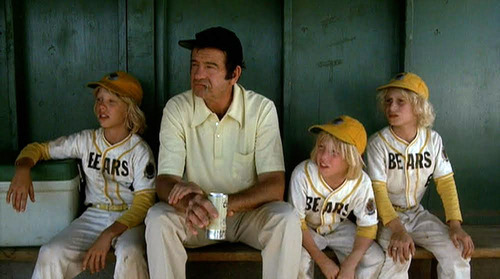
Park league baseball season came to an end recently. We had four grandsons between the ages of 8 and 10 playing on teams. The teams had a few “veteran” players, but for most of the players this was their first experience playing organized baseball. They had a lot to learn…and we saw amazing improvements in all the players in one short season.
It’s clear that the lessons they learned can extend far beyond the field, if we are willing to pay attention.
Panicking When the Ball Comes
My most vivid memory from the season is seeing the panic for many of the kids when the ball would come their way. Will they catch the ball? Where will they throw it once they have it? Do they know why they’re throwing it in a particular direction? Will the player they’re throwing to catch the ball?
The drama was real. It was clear that a lot of the kids didn’t expect the ball to come toward them. I saw a few kids jump away from the ball to avoid fielding it.
As a spectator, it’s easy to see what’s happening. It’s easy to assume that surely, we’d field the ball properly, and immediately know where to go with the play.
It’s not always as easy as it looks. Unexpected situations arise, and our response (or lack thereof) can significantly impact what happens next. Learning to stay calm and doing some pre-thinking about our actions (before the play) will significantly improve our chance of success.
Understanding Game Situations
Many young players struggle with understanding the game situation—who’s on base, how many outs are there, what’s the best play to make when the ball comes to them, and how to act strategically.
This lack of situational awareness highlights a crucial lesson: the importance of context and awareness in decision-making. Understanding the bigger picture allows for more informed and effective actions. The coaches encouraged the kids to think ahead (pre-thinking) and consider various outcomes. Whether the kids listened and embraced their advice was another thing entirely.
Are you thinking about your “game” situation? The macro and micro aspects of the challenges you and your organization are facing. Are you thinking ahead and considering various outcomes as part of your decision-making process?
Learning the Basics: Throwing and Catching
It’s not uncommon for young players to throw the ball the wrong way or miss it entirely. These fundamental skills require practice and patience. This aspect of the game underscores the importance of mastering basics before tackling more complex tasks. In any field, solid foundational skills are essential for success. Nearly every pursuit or profession has basic foundational skills that need to be mastered along the way toward more advanced skills. A football analogy fits well here…it’s important to understand the blocking and tackling part of the game before you can advance to running with the ball.
Position-Specific Skills and Aspiration
In youth park league baseball, most of the hits stay in the infield. This leaves the outfielders without much to do. I heard lots of outfielders wishing they could play an infield position like second base, or catcher. None of them understood what those positions entailed, but they knew that those positions had more action.
A few of them took the time to learn about the infield positions from their coach. They showed their interest and willingness to work their way to the infield. This shows the value of preparation and skills development. It’s important to work on the necessary skills before aiming for a specific role, whether in sports or any other endeavor. It also emphasizes the value of seeing a goal and then taking the concrete steps to learn, grow, and achieve that goal.
Strikeouts Aren’t Failures
Consider that an excellent hitter in the big leagues gets a hit about 30% of the time. They may get walked occasionally, but the rest of their at bats result in fly outs, ground outs, or strikeouts.
We saw a ton of strikeouts this past season. I was always impressed with the kids who struck out and immediately came back to the dugout to ask their coach what they should be doing to avoid striking out next time. Each strikeout was a learning opportunity…but only if the player saw it that way.
We saw a few kids melt down in disappointment and embarrassment. One kid from an opposing team stomped off the field and took himself out of the game (an extremely negative response to be sure).
When things go wrong, or we don’t get the result we want, that’s the time to buckle down and learn why it happened. Consider ways to improve so the results can improve next time. It’s only a failure if you give up.
Teamwork and Collective Goals
We are all self-centered. As we mature, we usually learn how to control our self-centeredness or at least how to channel it productively. Ten-year-old kids are no different. Their focus is on their own performance. Whether or not they’re hitting the ball. Whether or not they made the right play.
They often forget that the goal is for their team to win. They can help the team achieve that goal by having a strong performance, but also by helping and supporting their teammates. This is a powerful reminder of the importance of teamwork and the collective effort required to achieve a common goal. It’s easy to get caught up in individual performance, but true success usually comes from working together and supporting each other. Collaboration and shared successes build strong teams. Strong teams create successful outcomes.
Consistency Matters
Ask an excellent bowler, pitcher, batter, shooter (basketballs or bullets), pole vaulter, or pickle ball player how they deliver such excellent results. They’ll mention practice, dedication, and a strong mental approach. Eventually they’ll talk about consistency. Each of these pursuits (and countless others) require consistency above all else. The exact motions, body positions, eye contact, and calmness of breath that they can count on happening whether they consciously think about it or not.
Their practice process is all about achieving repeatable actions that their body remembers…every time. They also know that they aren’t swinging for the fences every time they’re at bat, not trying to set the world record or do something extraordinary with every outing.
They are working to become a steady and consistent performer at the highest level possible…and always reaching a little higher.
Consistency, patience, and incremental progress should be the goals…repeatable excellent outcomes will happen as a result of achieving these goals.
Park league baseball is a ton of fun. The drama is real. Teams experienced the “thrill of victory and the agony of defeat” throughout the season. We saw players improving and gaining confidence as the season unfolded.
I don’t know where the teams ended up in the standings at the end of the season.
I know the kids learned a lot and hopefully they’ll incorporate some of what they learned well beyond the game.
Your role as the teacher and mentor is to prepare your mentee to work independently and effectively…
“I can’t believe she can’t tie her own shoes. She’s old enough to know by now.”
My friend was talking about his 5-year-old daughter at the time.
I asked if he’d ever taken the time to teach her how to tie her shoes. He stared at me and said that wasn’t his job and that she should have figured it out by now.
Why tell this story (which really happened!)?
To illustrate how important it is to teach and mentor others…whether they’re our kids, grandkids, employees, family, or friends.
It should be obvious that if you don’t teach, your student misses out on the chance to truly learn and grow. By choosing not to teach, you’re short-changing your mentee of the lessons you’ve learned through hard-earned experience.
In moments of urgency or simplicity, direct instructions are most appropriate, providing a clear roadmap for immediate action (telling).
But true teaching is the art of imparting understanding – the “why” behind actions. It requires a commitment of time and energy, and showcases the significance of tasks, the interconnections between steps, and the importance of specific approaches…usually through storytelling.
What kinds of stories? Stories that provide a personal connection, illustrate key points, and allow your learners to connect emotionally to what you’re teaching. Stories also help students drop their defensiveness toward receiving new information.
Another great teaching method is to ask questions. Questions encourage critical thinking. Ask the student why they think something is important, or how they view a situation. What would they do in the situation? What’s happening that may not be obvious? If their answers are incomplete or miss the nuances of a situation, you can provide additional perspectives and help them understand what to look for.
How can we tell stories and ask questions about something when it’s urgent? We already learned that in urgent situations, telling is often the most appropriate way of getting the right action quickly. To create truly teachable moments resulting from an urgent event, it’s critical that you take the time after the urgency has passed to discuss lessons learned, and maybe even how to avoid the urgency next time.
Your role as the teacher and mentor is to prepare your mentee to work independently and effectively. Not only how to tie their shoes, but why it’s important to tie them in the first place.
I have one favor to ask: If you find this information useful, please forward and recommend it to someone else. Thanks!
It used to be important. Its strength was unquestionable.
Ever noticed it sitting there, sometimes coiled neatly, but usually just piled in a corner? It used to be important. Its strength was unquestionable. Its purpose was clear.
Now it sits, out of sight, and out of mind. It waits for a call to action that will never come. Many of its links are bent and twisted. Rust has taken its shine and luster. Time has sapped its strength.
The rusted chain rests. Its inevitable return to Nature has begun.
It has no memories. Its time and experience will add no wisdom. It has no strength of character. No moral values to impart. No lessons to teach. Nothing to pass on to future generations.
I’m told that this is one of the top questions students (and parents) ask of teachers.
I’m told that this is one of the top questions students (and parents) ask of teachers.
Test questions in school come in many standard forms: true or false, multiple choice, essay…just to name a few. Oh yeah, and word problems! Decipher the riddle, find all the numbers that fit into formulas, and arrive at an answer (hopefully, the correct one). And, of course, remember to show your work.
We’re taught in school that there is only one correct answer to most questions. Columbus discovered the New World in 1492, not 1493. It takes two hydrogens and one oxygen to make water, not two oxygens and one hydrogen. The student’s job is to learn (memorize?) the correct answers and then “ace” their test by answering all of the questions correctly.
It’s no wonder students ask what will be on their tests. After all, their grade is in play. Who wouldn’t want to know what they should study, and what they can ignore? So much is riding on the outcome.
Tests outside of school aren’t as easy. The questions don’t come from our teachers. Variables are often missing, and formulas rarely provide one definitive answer. They aren’t always fair. They don’t come with a study guide. There’s no advice about what should be studied, or ignored. Real life tests come from our family, friends, customers, co-workers, managers, elected officials, our children’s teachers, strangers, and ourselves…on a daily basis. A lot more than a grade is in play with most of these tests.
Attention to detail, listening to what is said and unsaid, curiosity, creativity, openness to risk, connecting with others we trust, and a clear sense of right and wrong are the guides we have in answering the real life test questions we face.
What’ll be on your next test? Everything you’ve experienced in life up to this point, and probably a few things you haven’t seen before. Here’s hoping you studied well.
Test Question: What’s the connection between this post and the sunrise photo?
You try to listen and stay focused. Your mind wanders a bit. You force it back in line. After all, there may be something useful here that you can apply to your work…
You’re sitting in a training class. The instructor is describing some new set of management concepts or the latest system enhancements. You try to listen and stay focused. Your mind wanders a bit. You force it back in line. After all, there may be something useful here that you can apply to your work.
Later, someone asks you how the class went. You shrug your shoulders, reporting that you learned a couple of new things. You then have trouble describing what you’ve learned. Not an inspiring endorsement.
Imagine the same training class. But, now you’re there to learn the material well enough to present the same class to another group next week.
You don’t get to pick and choose what applies to your work. You need to learn the subject in its entirety. Preparing to teach a subject requires active learning. You’ll watch how the material is presented, the visual aids and examples the presenter uses, and the way the presenter moves around the room. Nothing less than full mastery of the information will suffice. Anything less could lead to failure when it’s your turn to teach.
Do yourself a favor. Prepare like a teacher, learn like a teacher, and think like a teacher. The truth is, you will be teaching this class next week…to yourself, as you try to remember and apply what you learned in the class.








 Grandpa Bob Encouraging Leadership
You must be logged in to post a comment.