For the next two weeks, I’ll be doing something new.
Marshall Goldsmith is encouraging people to ask themselves six questions every day. That’s the whole experiment.
Six questions. Asked at night. Answered honestly.
They all start the same way:
Did I do my best to…
The questions don’t ask what happened to me today. They ask what I did with today.
During his webinar introducing the experiment, Mr. Goldsmith referred to the Rigveda, an ancient poem from India that he described as being thousands of years old. He just mentioned it and moved on.
I had never heard of the Rigveda, so down the rabbit hole I went after his webinar ended.
The Rigveda is a collection of hymns. A lot of it is about everyday things. The sun rising. Fire. Breath. Life continuing. There’s a sense that daily life matters. That how we live each day counts.
People have been trying to figure out how to live a good life for a long time. Way before self-help and leadership books. Way before webinars and podcasts.
St. Ignatius of Loyola comes to mind. He developed something called the Daily Examen. It’s a review of the day. You look back. You notice where you were grateful. You notice where you fell short. You think about tomorrow.
Different times. Different traditions. Same basic ideas.
At the end of the day, pause and ask, “How did I live today?”
Goldsmith’s six questions fit right into that pattern.
Did I do my best to be happy today?
The question hits differently when the day is already over. I can see clearly whether I purposely enjoyed the day or just rushed through it.
Did I do my best to build positive relationships?
Now I’m thinking about the way I spoke to someone. Whether I listened. Whether I gave someone my full attention.
The questions are short. The reflections take some time.
Goldsmith describes happiness as “enjoyment with the process of life itself.” Happiness lives inside the day. It grows out of our engagement with what’s already in front of us.
The writers of the Rigveda seemed to understand that. Ignatius understood it too. They’re asking us to pay attention to our life and actively engage in it.
I’m only a few days into this experiment. Nothing dramatic has happened. No big breakthroughs.
But I know I’ll be answering these six questions later. I move through the day with more awareness. I catch myself sooner. I stay present a little longer. I think twice before reacting.
It’s a small shift…but small shifts repeated over time shape our lives.
Thousands of years have passed since the Rigveda was written. Centuries since Ignatius taught people to examine their day.
Our modern life looks very different, but the question remains the same.
How did I live today?
Here are Goldsmith’s six questions:
–Did I do my best to set clear goals today?
-Did I do my best to make progress towards my goals today?
-Did I do my best to find meaning today?
-Did I do my best to be happy today?
-Did I do my best to build positive relationships today?
Every generation believes it’s living through extraordinary change.
And in a way, every generation is right.
Economic strain, political division, conflict, and rapid technological change appear in different forms, but the underlying tension remains the same.
Ray Dalio describes what he calls the Big Cycle. The rise and decline of nations shaped by debt, money, internal division, and shifting global power. He would say we’re late in that cycle, marked by high debt, widening wealth gaps, and growing competition among world powers.
Harry Dent approaches history through demographics, studying population growth, and generational spending patterns. From his view, today’s economic strain reflects aging populations, slower growth, and the unwinding of decades of expansion.
Different perspectives. Similar conclusions.
Neither claim to predict the future with precision. Debt cycles, demographic waves, generational moods, technological revolutions, and geopolitical tensions move simultaneously. Understanding these forces and their patterns helps us recognize the currents. How we live within them is still our responsibility.
I remember the OPEC oil embargo of the 1970s and gas lines stretching for blocks. I was in elementary school as interest rates climbed above twenty percent. I watched the Reagan Revolution reshape economic thinking and bring supply-side theory into the mainstream.
I lived through the Iranian Revolution in 1979, the taking of US hostages, and the subsequent spread of militant extremism across parts of the Muslim world over the next four decades. I watched an airplane strike the World Trade Center in real time.
I grew up under the shadow of the Cold War, when nuclear conflict felt possible at any moment. I saw the optimism that followed the fall of the Soviet Union and then watched China open to the world after decades of isolation. I remember the theories about how expanding capitalism in China might soften their communist approach to governing.
I witnessed the savings and loan collapse, multiple stock market crashes, the Great Recession, and a global pandemic that disrupted economies, institutions, and families alike. I watched how strongly governments grasp control when certainty disappears.
I saw personal computers and then the internet transform daily life, followed by the digital economy, smartphones, social media, and now artificial intelligence reshaping work itself.
I can think of countless other historical events that have happened in the span of one life. Each moment felt unprecedented. Each reshaped the world, sometimes positively, sometimes negatively.
And yet, life continued.
When history is written, it focuses almost entirely on macro events. The narratives are dominated by wars, collapses, elections, revolutions, and markets. What rarely appears are the countless individual lives unfolding quietly alongside these events.
History does not record families eating dinner together during times of high inflation. Nor does it record weddings that took place during recessions or children born during wars. It overlooks the laughter that survived fear and the quiet courage required to just keep going.
But these individual experiences of life form the definition of humanity.
For every name preserved in textbooks, millions of people were doing what people have always done. They worked. They loved. They raised children. They cared for neighbors. They hoped tomorrow might be a little better than today.
Macro forces shape conditions. They influence opportunity and may narrow our options. They may, unfortunately, end our life or the lives of someone we love. But they don’t define a life.
Inside every macro upheaval exists our “micro” life. The life lived within the headlines rather than dictated by them.
The world may determine interest rates. It does not decide whether we act with kindness. It may influence careers, but it does not control our integrity. It may introduce hardship, but it does not determine how we respond.
Our response is where freedom still lives.
Viktor Frankl understood this more clearly than almost anyone. After enduring unimaginable suffering in Nazi concentration camps, he observed that nearly all external freedoms can be taken from a person. One freedom remains intact. The ability to choose one’s attitude and response to circumstances.
Events may constrain us. They may demand adaptation. They will never own our human spirit.
In my office, I have a wall filled with photographs. Family gatherings. Wedding days. Trips taken together. Beautiful places. Ordinary moments that became lasting memories.
When I step back and look at this wall, patterns appear.
We worked hard.
We made time for one another.
We traveled together.
We celebrated milestones.
We were living out our hopes and dreams, and we still are.
My wall has no charts or financial forecasts. No macro trend lines. But it tells the story of what matters most.
None of these moments waited for ideal conditions. They unfolded alongside inflation, recessions, political change, and uncertainty. The photographs capture lives shaped by ordinary but important choices made amid extraordinary times.
As we traveled, we met families across many countries. Different customs. Different faiths. Different governments. Yet everywhere we went, the hopes sounded familiar. Parents wanting the best for their children. Families striving for opportunity. Communities longing to contribute and belong.
The differences emphasized by the world shrink quickly when people speak about those they love.
Human aspirations remain remarkably consistent.
History changes its outward form. The heart changes very little.
You will live through upheavals of your own. Some will be frightening. Some will be unfair. Some will test your trust in institutions or leaders.
Remember this.
You are not responsible for controlling history. You are responsible for how you live inside it.
You will not choose the history that surrounds you. You will choose the values you carry through it.
You choose how you treat people.
You choose how to adapt.
You choose how you show up for your family.
You choose whether uncertainty hardens you or deepens your compassion.
You choose whether fear leads or faith steadies you.
These are your choices. Always.
Humanity endures because ordinary people continue to build their lives amid uncertainty. They love, they work, they fail, they adapt, and they hope, even while larger forces move around them.
While empires rise and fall, families persist.
That is the quiet march you belong to. Rarely captured by historians yet carried forward by generations.
History happens around you.
Life happens within you.
Live your life well. Love deeply. Work honestly. Stay flexible. Hold your faith. Care for one another.
If you do that, you will live a meaningful life regardless of when you were born.
As I was finishing this post, I found these quotes from George Bernard Shaw. The words come from two different writings of his from the early 1900’s. Together they express something important about what it means to live well within whatever history hands us.
“This is the true joy in life, the being used for a purpose recognized by yourself as a mighty one; the being a force of Nature instead of a feverish, selfish little clod of ailments and grievances complaining that the world will not devote itself to making you happy. “
“I am of the opinion that my life belongs to the whole community, and as long as I live it is my privilege to do for it whatsoever I can. I want to be thoroughly used up when I die, for the harder I work the more I live. I rejoice in life for its own sake. Life is no ‘brief candle’ for me. It is a sort of splendid torch, which I have got hold of for the moment; and I want to make it burn as brightly as possible before handing it on to future generations.”
As we enter 2026, it’s tempting to look for a new system, a better plan, or the perfect moment to begin.
Most of the time, the real answer is simpler.
Just show up.
The secret to progress isn’t brilliance or motivation. It isn’t certainty or confidence. It’s presence.
Show up every day. Show up when it’s easy. Show up when it’s uncomfortable. Show up when you don’t know what comes next.
Show up and be present. Show up and handle your business. Show up and figure it out as you go. Show up for the people you love. Show up for the work that matters. Show up for yourself.
When you’re unsure what to do next, don’t overthink it. Show up and take the next step. Clarity usually follows movement.
The alternative is standing down. Waiting. Drifting. Quietly giving up ground you were meant to claim.
You’re stronger than that.
Progress is rarely dramatic. It’s built through consistency. Through ordinary days stacked on top of each other. Choosing to show up when no one is watching.
The hard things happen because you showed up. The meaningful things happen because you stayed. The impossible things only happen when you refuse to disappear.
There’s another truth hidden in showing up.
When you show up, you give others permission to do the same. Your presence becomes proof. Your consistency becomes encouragement. People notice. They realize they can take the next step too.
So how do you crush your goals in 2026?
You don’t wait for the perfect plan. You don’t wait to feel ready.
You show up. You make it happen.
Because that’s what you do. And this is how things get done.
Every December, I return to a familiar practice. I reread a few of my older posts, looking for threads that might help clarify my thinking about the year ahead. Last year, on the final day of 2024, I wrote a short post on my goals for 2025:
-Serve the quests of others over my own -Offer insights and advice, not direction -Push beyond my comfort zone and inspire others to do the same -Bring the loaves and fishes, and trust God with the rest
I see that I longed for simplicity without mentioning it directly. I wanted more presence, more clarity, more intention, and a little less noise in a world that seems to generate more every year.
This week, as I listened to Tim Ferriss speak with Derek Sivers, Seth Godin, and Martha Beck about simplifying life, I realized this desire has been with me for a long time. More than a decade ago, I wrote a short post called Becoming a Chief Simplicity Officer, describing how organizations thrive when they remove friction and create clean intuitive paths so people can focus on what truly matters. The idea was straightforward. When systems run smoothly, people flourish.
It turns out this Chief Simplicity Officer role fits in life just as well as leadership. Someone needs to step into the work of reducing complexity, eliminating friction, and clearing space for the things that deserve attention. Someone needs to guard the essentials by shedding the excess.
That someone is me, and it’s you in your life.
From Tim Ferriss’s Podcast
Derek Sivers: Simple Isn’t Easy, but It Is Freedom
Derek Sivers says simplicity requires intention. It doesn’t appear just because we cut a few tasks or say no occasionally. It takes shape when we clear away commitments that no longer belong and choose what contributes to the life we want to live. He often talks about building life from first principles instead of living on top of default settings.
Every recurring obligation fills space that could hold something meaningful. Every dependency adds weight. Every unfinished task pulls at the edges of our attention.
What possibilities would rise if complexity stopped crowding the edges of your life?
Seth Godin: Boundaries Create Clarity
Seth Godin approaches simplicity through the lens of clarity. When you know exactly who your work is for, you stop bending your days around expectations that were never meant to guide your decisions. Clear boundaries turn vague intentions into choices you can actually live out.
Simplicity often follows sharper edges. Define your edges, and the path through each day becomes easier to walk.
Martha Beck: Choose Joy, Not Habit
Martha Beck speaks of simplicity in the language of joy. She tells a story from her twenties when she made a single choice that reshaped her life. She turned toward joy and stepped away from misery, even when the joyful path cost more in the moment. Joy has a way of clearing the fog. It cuts through distraction and highlights what brings life.
Her words invite us to examine the decisions we’ve kept out of habit or comfort. Some habits strengthen our soul. Others only multiply clutter. Joy reveals the difference.
Ten Simplicity Moves for the Start of 2026
These actions are small, but each one lightens the load. They remove stones from a shoe you may have been walking with for years without realizing.
Cancel one subscription that no longer serves you. Even a small change can create a surprising sense of clarity.
Choose one non-negotiable time boundary and honor it. Maybe evening email and scrolling limits or a weekly focus block on your calendar. Small open spaces accumulate over time.
Simplify one recurring decision. Automate it, template it, or eliminate it entirely.
Pause one habit you maintain out of inertia. Give yourself a week to assess its value.
Identify one activity that consistently brings joy and schedule time for it this week.
Unsubscribe from three email lists that add noise instead of value.
Clear one surface you see every day. A calm space refreshes the mind.
Revisit your goals from last year and carry forward only what still matters. Release the rest.
Decide who you are working for. Clarity about your audience sharpens the work you choose to do.
Ask yourself one grounding question: What do I truly need to live the life I want? Let your answer shape what stays and what goes.
Looking Back at 2025 and Forward Into 2026
My goals for 2025 were aimed at deeper alignment with the things I care about. They served me well and opened my heart to possibilities I never would have imagined. I’ll carry these goals into 2026 (and beyond).
For 2026, I’m adding one specific goal to my list. I started working on this goal a few months ago, and it’s pushing me way outside of my comfort zone. While it’s a personal quest (and not one that serves the quests of others over my own), I believe it will serve others on their journey. I’ll be bringing the loaves and fishes and trusting God to do the rest. I’ll share more details later.
A Closing Invitation
Simplicity grows as unnecessary weight falls away and clarity rises in its place. You don’t need a title or a plan to begin.
You only need to choose.
Choose clarity.
Choose boundaries.
Choose joy.
Choose to be the Chief Simplicity Officer in your own life.
Let this be the year you simplify your days and rediscover the freedom and clarity that come from intentional living.
In sales, there’s an old saying that has echoed through offices and training rooms for decades.
Always be closing.
It’s meant to keep the salesperson focused on their end goal. Keep the deal moving forward. Stay alert to opportunity. Maintain momentum.
Over the years, I’ve come to believe leaders need a different version of that advice.
Always be coaching.
As a leader, your mission is to develop the people who will come after you. You lift others through quiet, daily work that helps them grow. Your job is to bring out the best in yourself and in the people who will eventually step into your role. Coaching drives growth and keeps it moving forward.
Coaching your team is a way of saying, “Your future matters to me.” Coaching your children says, “I believe you have more inside you than you can see today.” And coaching yourself acknowledges the simple truth that growth must continue throughout life, especially for the leader.
Great coaches do more than explain ideas. They create space for practice. They help others turn new knowledge into muscle memory. They offer challenges sized just right for the moment. They ask questions that change how a person thinks about a problem. They reveal a new angle or a new path forward when something feels unsolvable.
Coaching takes learning to the next level. You learn something. You put it into practice. Then you pass it on. Teaching anchors the lesson. It deepens the insight. It turns wisdom into a gift you can hand to others.
Coaching doesn’t require perfect knowledge. It requires humble generosity. Share the insight you gained from yesterday’s challenge. Share the questions that helped you see an issue more clearly. Share the perspective that lifted your confidence when you needed it most.
Leadership is a relay. Someone handed the baton to you. One day you’ll hand it to someone else. The best leaders prepare the people who will run ahead long after they’ve finished their leg of the race.
Who have you coached today? This week? This month?
This is your responsibility. Your opportunity. Your mission.
From thirty thousand feet, the land below looks like a patchwork of roads and fields. Each marks a choice someone once made about where to go. Some stretch straight and steady. Others twist through hills or fade out of sight. Together they form a map of movement and direction, a living story of people who kept choosing the next road.
Life feels the same way. The routes change, but the invitation stays the same. Keep moving to find greater meaning.
The most rewarding paths often pass through three places. Serving others, staying curious, and daring to pursue new goals.
Service opens our heart. When we give to something beyond ourselves, our life expands. For the younger generation, it teaches them that purpose grows through generosity and connection. Helping a friend, joining a cause, or showing up for someone who needs encouragement builds an identity rooted in contribution. Later in life, service transforms experience into legacy. It turns lessons into guidance and presence into impact. Every act of service whispers that we still matter.
Curiosity keeps that whisper alive. It invites discovery and reminds us that wonder never expires. For young adults, curiosity shifts attention from comparison to possibility. It fuels creativity and builds resilience (because nobody said it would be easy). For those further down the road, curiosity revives joy. Learning something new, exploring unfamiliar tools, or asking deeper questions renews their spirit.
Big goals complete the trio. Ambition alone can fade, but big dreams shaped by purpose bring hope to life. For the young, bold goals turn uncertainty into motion. For the experienced, they rekindle the thrill of becoming. The thrill of pursuing. Every goal, whether to build, create, teach, or grow, reminds the soul that movement still matters. Hope rises with every goal we dare to pursue.
Many people never take these paths. Fear of failure, fear of embarrassment, fear of losing face…they each build fences where we can hide. Quiet excuses convincing us to play small and call it wisdom.
Fear says, “Stay comfortable.” Curiosity says, “Let’s see what happens.”
When fear wins, both young and old lose sight of their forward motion. The young adult who fears being judged easily drifts into hopelessness. The older adult who hesitates to dream again slips into quiet surrender. The reasons sound different, yet the root feels the same. Fear has taken the wheel. Stagnation and hopelessness follow.
Purpose waits just ahead. It lives in the next act of kindness, the next mystery to be solved, the next dream still worth chasing.
The pathways to a rewarding life have no finish line. Every act of service, every curious step, every daring goal breathes new life into our soul.
When we explore these paths, joy and fulfillment will be our companion.
Photo by Line Kjær on Unsplash – I wonder what’s in the next valley. Let’s go find out.
I saw The Secret Life of Walter Mitty on an airplane ride recently. At a significant moment in the story, we hear the line, “Beautiful things don’t ask for attention.”
The photographer in the story chooses not to take a coveted photo of the elusive snow leopard. Instead, he simply enjoys the beautiful moment with his own eyes.
Real beauty doesn’t need to perform. It’s authentic and humble, whether anyone stops to notice or not.
A person of character lives this way. They have no need to prove themselves. They show up with kindness, consistency, and honesty. The neighbor who shovels snow from an elderly woman’s driveway before dawn, leaving no trace. Or the teacher who stays late to help a struggling student, never mentioning it to anyone.
The beauty of their character reveals itself in the way they live each day.
Humility makes this possible. It allows a life to shine without glare, to influence others by being genuine. Like mountains that reflect the glow of sunrise or wildflowers blooming unseen in a meadow, people of quiet integrity embody a beauty that doesn’t depend on recognition.
In our culture that rewards noise and spectacle, this is easy to forget. We’re told to broadcast accomplishments and measure our worth by attention. Yet the most meaningful lives belong to those who live true to themselves, free from the need for applause.
The things that endure, whether in people or in nature, carry their beauty without fanfare. They simply are.
There’s a paradox in writing about something that exists most powerfully in silence. Maybe that’s the point. Celebrating this kind of beauty without claiming it for ourselves.
But we can learn to recognize it. To be shaped and inspired by it. And, in our quieter moments, we can strive to live it.
Photo by Patrick Schaudel on Unsplash – some of my fondest memories involve waking up in a tent on crisp mountain mornings, basking in the beautiful glow of the rising sun.
Somewhere along the way, I’ve noticed a quiet truth.
The thing I was working toward (the goal, the vision, the project, the finish line) always required other steps. Preparation. Research. Practice. Training. A foundation. A warm-up.
While I tried to focus on the thing I wanted to do, most of my time was spent doing all the other things that needed to happen first.
Building a deck means hauling lumber, squaring the posts, digging holes…and at least three trips to Home Depot. Writing a book means staring at blank pages, deleting paragraphs (and chapters), and researching obscure details that may never make it to print. Staying in shape means lacing up your shoes at dawn when no one else is watching. Starting a business means filling out countless forms, talking to lots of people who say no, and revisiting your reasons why, countless times.
These tasks are not detours or distractions. They are merely steps on the journeys we’ve chosen.
If we can learn to love these quiet and often unnoticed tasks that prepare the way, we may find the joy we’re seeking was there all along.
We might discover that the thing we’re chasing isn’t the prize. It only led us to the road we were meant to walk. To meet the people we were meant to meet.
So go ahead. Lace up your shoes at dawn. Cut that first board. Tape off all the areas you don’t want to paint. Make that first sales pitch. Get to know people you never expected to meet.
Embrace all the steps that come before the thing.
It turns out, they are the thing.
“Give me six hours to chop down a tree and I will spend the first four sharpening the axe.” — Abraham Lincoln
Sometimes the hardest limits aren’t what we believe we are…but what we’ve decided we’re not.
Leader: I’m hitting a wall. No matter how hard I try, something’s stuck. Coach: Where? Leader: Connecting with my direct reports. The one-on-one meetings. All the details. I’m just not wired for any of it. Coach: You sure? Leader: I’ve never been good at connection. I’m not super technical. I’m not touchy-feely. I’m not a detail person. Coach: Sounds like you’ve got your “not” list down cold. Leader: Isn’t that just self-awareness? Coach: Could be. Or maybe you’re protecting yourself with that list. Leader: I’m not trying to be someone I’m not. Coach: Are you avoiding someone you could become? What if the growth you’ve been chasing is on the other side of “I’m not”? Leader: What if I do all that work and don’t like what I find? Coach: Then you’ll learn something real. But what if you find a strength you didn’t know you had? Leader: That feels like a stretch. Coach: Growth usually does.
“Ego is as much what you don’t think you are as what you think you are.” – Joe Hudson
We usually spot ego in people who overestimate themselves. Their arrogance and swagger enter the room before they do.
But ego has a quieter side. It hides in the limits we quietly accept. Not in who we think we are, but in who we’ve decided we’re not.
“I’m not technical.” “I’m not good at details.” “I hate public speaking.”
These negations, the things we distance ourselves from, might feel like declarations of strength and clarity.
But often they are boundaries we’ve unconsciously placed around our identity. Once we’ve drawn these lines, we stop growing beyond them. They protect us from challenges, discomfort, and the hard work we know will be required.
Leaders who define themselves by what they aren’t often:
-Avoid feedback that challenges their identity.
-Miss chances to adapt or grow.
-Choose the path of least resistance.
-Struggle to connect with different types of people.
-Dismiss skills they haven’t developed (yet).
If you’re feeling stuck, ask yourself:
-What am I avoiding by saying, “I’m not that”?
-What am I protecting by holding on to that story?
-What might open up if I let it go?
Sometimes the next chapter of growth begins not with a new strength, but with a willingness to loosen our grip on the stories we tell ourselves.
If you want to grow as a leader—or help others grow—it’s not enough to ask, “Who am I?”
You also have to ask, “What am I willing to become?”
We know about Maslow’s Hierarchy of Needs and how our wants and desires are like a pyramid that goes from our basic needs up to our desire for self-actualization. The Pareto Principle reminds us that 80% of our results come from 20% of our efforts, helping us focus on what truly moves the needle. Saint Ignatius’s Spiritual Exercises guide us through discernment, teaching us to distinguish between what brings life and what drains it.
But there’s another framework worth considering: the evolution of what we consider important throughout our lives.
As kids, we know what’s most important. It usually revolves around attention, followed by winning at whatever we are doing, which we think will get us more of that attention we crave. Everything feels urgent. Every disappointment feels permanent. The world revolves around us, and that’s exactly as it should be for a child learning to navigate life.
Teenagers start to focus on freedom, independence, and figuring out what they’re going to do when they grow up (whatever that means). They often reject what their parents value. Sometimes for good reasons, sometimes solely because rebellion feels necessary for finding their own path. What matters most is breaking free from the constraints that feel suffocating, even when those constraints were designed to protect them.
As young adults, we’re getting started, establishing our independent life, our financial foundations, our career foundations…at least we’re trying to get these things established. We’re in acquisition mode: getting the job, the apartment (maybe a house), the relationship, the respect (something we crave more than attention at this stage). We often dismiss advice from older generations, convinced they don’t understand how different the world is now.
Then something interesting happens.
As the decades flow by, what was important a few years ago, isn’t. We start to think about how to serve others, help our kids flourish, help their kids flourish. The shift is gradual but profound. From getting to giving, from proving ourselves to improving the lives of others.
Major life events accelerate this evolution. A health scare makes us realize that all the success in the world doesn’t matter if we’re not here to enjoy the fruits of our labor. The birth of a child or grandchild suddenly makes legacy more important than achievement. The loss of a parent reminds us that time is finite, and relationships are irreplaceable.
Sometimes the shift happens more quietly. Earlier this week, two co-workers were discussing the NBA finals and asked me what I thought of Game 2. I had to admit that I haven’t followed basketball since the Magic Johnson era of the Lakers. As we talked, it became clear to me that I haven’t followed any sports—except for the Savannah Bananas baseball team’s shenanigans—in many years.
What captures my attention now? I’m drawn to watching people live their best lives in rural settings, building homesteads for themselves and their families. I find myself rooting for others to succeed in their chosen vocations, nothing more, nothing less. It’s not that sports became unimportant because they were bad. They just became less important than something else that feeds my soul more deeply.
As we get older, preserving our health, and the freedom that comes with it, moves toward the top of our priority list. Interesting how the freedom we sought as teenagers is still important to us in our senior years, but for different reasons. Then, we wanted freedom and thought we were ready for responsibility.
Now, we want freedom to focus on what truly matters. Freedom to be present for the people we love, freedom to contribute in meaningful ways, freedom from the noise that once seemed so important.
There’s a beautiful irony in how we often spend the first half of our lives accumulating things, achievements, and accolades, only to spend the second half learning to let go of what doesn’t serve us. We chase complexity when we’re young and value simplicity as we mature.
Questions worth considering:
– What would happen if we could skip ahead and see what our 70-year-old self considers important? What about our 80-year-old self? Would we make different choices today knowing what they know?
– Why do we have to learn the hard way that some of the things we chase don’t matter? Is there wisdom in the struggle, or are we just stubborn?
– How can we be more intentional about evolving our priorities on our terms instead of waiting for time to do it?
– What if we could honor the lessons each life stage provides without completely losing face and dismissing what came before?
The evolution of importance isn’t about getting it right or wrong at any particular stage. It’s recognizing that growth means what we value will shift.
That’s not a bug in the system. It’s a feature. The teenager’s desire for freedom isn’t foolish. It’s necessary for their development. The young adult’s focus on building a foundation isn’t shallow. It’s essential for future stability.
Perhaps the real wisdom comes in staying curious about what matters most. Knowing that the answer will keep evolving. And maybe, just maybe, we can learn to trust that each stage of life has something valuable to teach us about what’s truly important.
The key is staying awake to the lessons, even when they challenge what we thought we knew for certain.


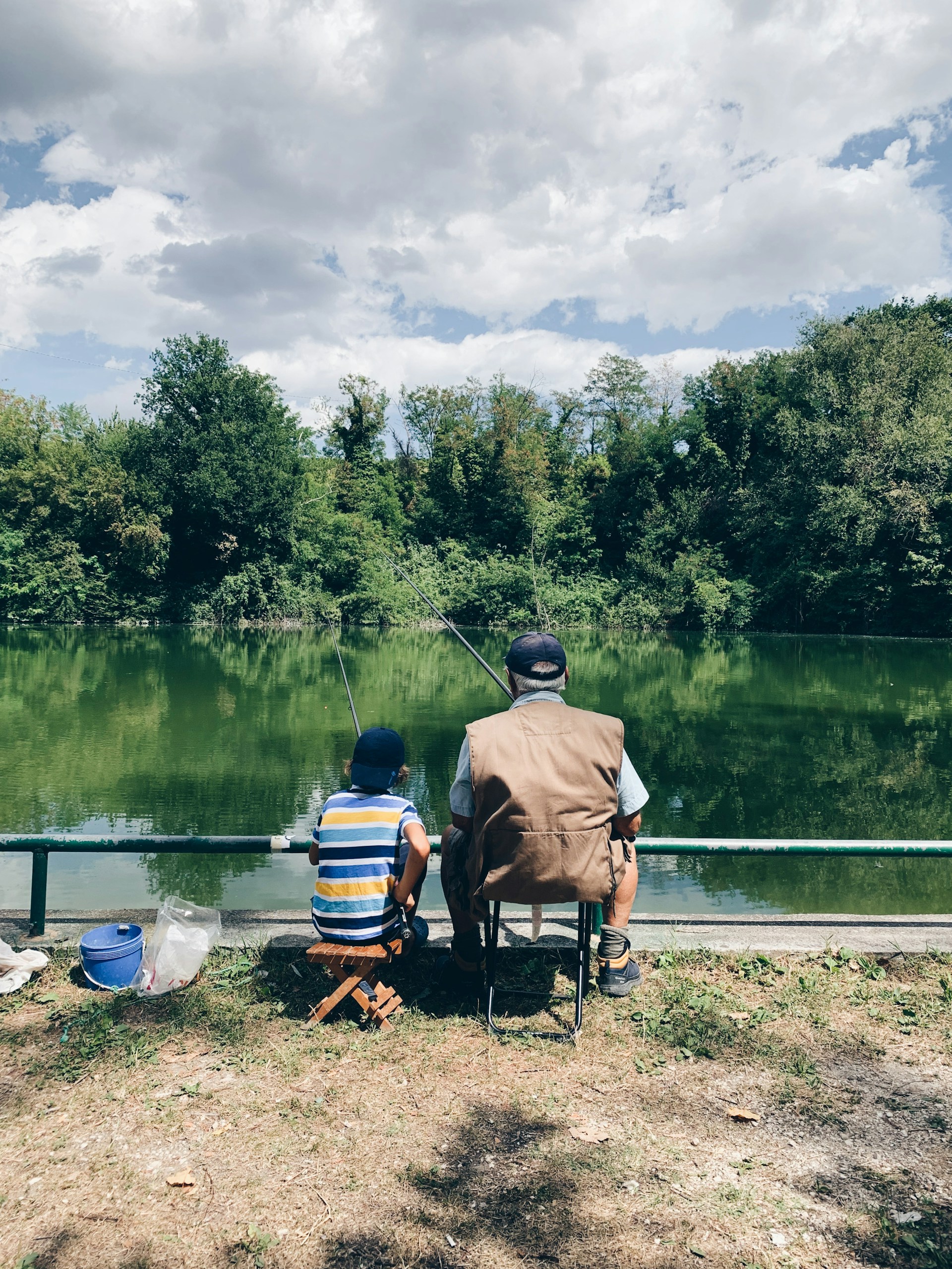





 Grandpa Bob Encouraging Leadership
You must be logged in to post a comment.