Simplifying 2026, One Decision at a Time

Every December, I return to a familiar practice. I reread a few of my older posts, looking for threads that might help clarify my thinking about the year ahead. Last year, on the final day of 2024, I wrote a short post on my goals for 2025:

-Serve the quests of others over my own
-Offer insights and advice, not direction
-Push beyond my comfort zone and inspire others to do the same
-Bring the loaves and fishes, and trust God with the rest

I see that I longed for simplicity without mentioning it directly. I wanted more presence, more clarity, more intention, and a little less noise in a world that seems to generate more every year.

This week, as I listened to Tim Ferriss speak with Derek Sivers, Seth Godin, and Martha Beck about simplifying life, I realized this desire has been with me for a long time. More than a decade ago, I wrote a short post called Becoming a Chief Simplicity Officer, describing how organizations thrive when they remove friction and create clean intuitive paths so people can focus on what truly matters. The idea was straightforward. When systems run smoothly, people flourish.

It turns out this Chief Simplicity Officer role fits in life just as well as leadership. Someone needs to step into the work of reducing complexity, eliminating friction, and clearing space for the things that deserve attention. Someone needs to guard the essentials by shedding the excess.

That someone is me, and it’s you in your life.

From Tim Ferriss’s Podcast

Derek Sivers: Simple Isn’t Easy, but It Is Freedom

Derek Sivers says simplicity requires intention. It doesn’t appear just because we cut a few tasks or say no occasionally. It takes shape when we clear away commitments that no longer belong and choose what contributes to the life we want to live. He often talks about building life from first principles instead of living on top of default settings.

Every recurring obligation fills space that could hold something meaningful. Every dependency adds weight. Every unfinished task pulls at the edges of our attention.

What possibilities would rise if complexity stopped crowding the edges of your life?

Seth Godin: Boundaries Create Clarity

Seth Godin approaches simplicity through the lens of clarity. When you know exactly who your work is for, you stop bending your days around expectations that were never meant to guide your decisions. Clear boundaries turn vague intentions into choices you can actually live out.

Simplicity often follows sharper edges. Define your edges, and the path through each day becomes easier to walk.

Martha Beck: Choose Joy, Not Habit

Martha Beck speaks of simplicity in the language of joy. She tells a story from her twenties when she made a single choice that reshaped her life. She turned toward joy and stepped away from misery, even when the joyful path cost more in the moment. Joy has a way of clearing the fog. It cuts through distraction and highlights what brings life.

Her words invite us to examine the decisions we’ve kept out of habit or comfort. Some habits strengthen our soul. Others only multiply clutter. Joy reveals the difference.

Ten Simplicity Moves for the Start of 2026

These actions are small, but each one lightens the load. They remove stones from a shoe you may have been walking with for years without realizing.

  1. Cancel one subscription that no longer serves you. Even a small change can create a surprising sense of clarity.
  2. Choose one non-negotiable time boundary and honor it. Maybe evening email and scrolling limits or a weekly focus block on your calendar. Small open spaces accumulate over time.
  3. Simplify one recurring decision. Automate it, template it, or eliminate it entirely.
  4. Pause one habit you maintain out of inertia. Give yourself a week to assess its value.
  5. Identify one activity that consistently brings joy and schedule time for it this week.
  6. Unsubscribe from three email lists that add noise instead of value.
  7. Clear one surface you see every day. A calm space refreshes the mind.
  8. Revisit your goals from last year and carry forward only what still matters. Release the rest.
  9. Decide who you are working for. Clarity about your audience sharpens the work you choose to do.
  10. Ask yourself one grounding question: What do I truly need to live the life I want? Let your answer shape what stays and what goes.

Looking Back at 2025 and Forward Into 2026

My goals for 2025 were aimed at deeper alignment with the things I care about. They served me well and opened my heart to possibilities I never would have imagined. I’ll carry these goals into 2026 (and beyond).

For 2026, I’m adding one specific goal to my list. I started working on this goal a few months ago, and it’s pushing me way outside of my comfort zone. While it’s a personal quest (and not one that serves the quests of others over my own), I believe it will serve others on their journey. I’ll be bringing the loaves and fishes and trusting God to do the rest. I’ll share more details later.

A Closing Invitation

Simplicity grows as unnecessary weight falls away and clarity rises in its place. You don’t need a title or a plan to begin.

You only need to choose.

Choose clarity.

Choose boundaries.

Choose joy.

Choose to be the Chief Simplicity Officer in your own life.

Let this be the year you simplify your days and rediscover the freedom and clarity that come from intentional living.

Photo by Paul Earle on Unsplash

Please share this post with at least one person. Thanks!

The Pathways to a Rewarding Life

Finding Purpose at Every Age

From thirty thousand feet, the land below looks like a patchwork of roads and fields. Each marks a choice someone once made about where to go. Some stretch straight and steady. Others twist through hills or fade out of sight. Together they form a map of movement and direction, a living story of people who kept choosing the next road.

Life feels the same way. The routes change, but the invitation stays the same. Keep moving to find greater meaning.

The most rewarding paths often pass through three places. Serving others, staying curious, and daring to pursue new goals.

Service opens our heart. When we give to something beyond ourselves, our life expands. For the younger generation, it teaches them that purpose grows through generosity and connection. Helping a friend, joining a cause, or showing up for someone who needs encouragement builds an identity rooted in contribution. Later in life, service transforms experience into legacy. It turns lessons into guidance and presence into impact. Every act of service whispers that we still matter.

Curiosity keeps that whisper alive. It invites discovery and reminds us that wonder never expires. For young adults, curiosity shifts attention from comparison to possibility. It fuels creativity and builds resilience (because nobody said it would be easy). For those further down the road, curiosity revives joy. Learning something new, exploring unfamiliar tools, or asking deeper questions renews their spirit.

Big goals complete the trio. Ambition alone can fade, but big dreams shaped by purpose bring hope to life. For the young, bold goals turn uncertainty into motion. For the experienced, they rekindle the thrill of becoming. The thrill of pursuing. Every goal, whether to build, create, teach, or grow, reminds the soul that movement still matters. Hope rises with every goal we dare to pursue.

Many people never take these paths. Fear of failure, fear of embarrassment, fear of losing face…they each build fences where we can hide.  Quiet excuses convincing us to play small and call it wisdom.

Fear says, “Stay comfortable.” Curiosity says, “Let’s see what happens.”

When fear wins, both young and old lose sight of their forward motion. The young adult who fears being judged easily drifts into hopelessness. The older adult who hesitates to dream again slips into quiet surrender. The reasons sound different, yet the root feels the same. Fear has taken the wheel. Stagnation and hopelessness follow.

Purpose waits just ahead. It lives in the next act of kindness, the next mystery to be solved, the next dream still worth chasing.

The pathways to a rewarding life have no finish line. Every act of service, every curious step, every daring goal breathes new life into our soul.

When we explore these paths, joy and fulfillment will be our companion.

Photo by Line Kjær on Unsplash – I wonder what’s in the next valley.  Let’s go find out. 

How Limits Bring Art to Life

Inspired by G. K. Chesterton

I’ve come to believe what Chesterton once said. Art is limitation, and the essence of every picture is the frame. It took me time to see that truth.

Many of us grow up thinking freedom creates great work. Unlimited time. Unlimited canvas. Unlimited choice.

But if you’ve ever stared too long at a blank page, you know what real freedom can feel like. Paralyzing.

Nothing takes shape until the edges appear. A story waits forever if the writer can’t decide where it begins. Music is noisy until the composer chooses a key. The frame gives the work its purpose.

The same is true in leadership and life. A budget helps us decide what we value. A deadline turns a dream into something real. A small team learns to trade excess for imagination. Limited resources push us to invent new ways to adapt. The frame brings focus.

Still, the frame itself matters. A picture can feel cramped when the frame becomes too tight. A project can drift when the wrong thing fills the center. When the boundaries are off, the whole image loses clarity. That’s why wise leaders spend time defining the edges before the work begins.

Whenever I work on a puzzle, I start by finding all the edge pieces. Once the border comes together, I can see how everything else might fit. The same principle applies to creative work and leadership. The edges give us context. They help us imagine where the middle pieces belong and how the picture will come to life.

Frames should change as we grow. The world shifts. We learn more about what we’re building. Every so often, we step back and see whether the picture still fits. Sometimes the frame needs widening. Sometimes the colors need more light. Adjusting the frame keeps the beauty true.

Constraints give possibility its shape. They reveal what truly matters. Choosing the right limitations helps us see what is essential.

When you feel boxed in or limited, pause before you push against the edges. The frame around your work may be the very thing helping the picture appear. And when the picture becomes clear, refresh the frame so the beauty within it continues to grow.

Thanks to James Clear for sharing this G. K. Chesterton quote: “Art is limitation; the essence of every picture is the frame.”

Photo by pine watt on Unsplash

Doing the Thing

Writing a song is like fishing, Kenny Chesney once said. Some days you catch something beautiful. The melody, the moment, the truth. Other days, you sit there all day with nothing but frustration and a stubborn belief that it’s still worth being out there.

That kind of wisdom transcends genres. Ernest Hemingway spent his life circling the same idea. That real art happens when we show up. Whether facing a blank page, a marlin that wouldn’t bite, or a battle that couldn’t be won, he believed the only way to live fully was to move, to act, to engage.

His work embodied a simple truth. The shortest answer is doing the thing. For him, wisdom wasn’t found in thinking about life, but in living it. No clever phrasing. No shortcuts. Just the act itself. Simple, honest, alive.

We spend so much of life thinking about what we might do, planning what we should do, waiting until we feel ready to begin. But readiness rarely arrives on its own. The line stays slack until you cast it. The song stays silent until you play it. The story remains untold until you write it.

Sometimes we catch something incredible. Other times, nothing.

Either way, we were there. Present. Awake. Participating in the work and wonder of life.

Maybe that’s the whole point.

A life well-lived must first be lived.

Photo by Shojol Islam on Unsplash – I wonder if he’ll catch something on this cast. Maybe. Maybe not. But, he’s in the game, giving it his best shot and that’s what matters.

Beautiful Things Don’t Ask for Attention

I saw The Secret Life of Walter Mitty on an airplane ride recently. At a significant moment in the story, we hear the line, “Beautiful things don’t ask for attention.”

The photographer in the story chooses not to take a coveted photo of the elusive snow leopard. Instead, he simply enjoys the beautiful moment with his own eyes.

Real beauty doesn’t need to perform. It’s authentic and humble, whether anyone stops to notice or not.

A person of character lives this way. They have no need to prove themselves. They show up with kindness, consistency, and honesty. The neighbor who shovels snow from an elderly woman’s driveway before dawn, leaving no trace. Or the teacher who stays late to help a struggling student, never mentioning it to anyone.

The beauty of their character reveals itself in the way they live each day.

Humility makes this possible. It allows a life to shine without glare, to influence others by being genuine. Like mountains that reflect the glow of sunrise or wildflowers blooming unseen in a meadow, people of quiet integrity embody a beauty that doesn’t depend on recognition.

In our culture that rewards noise and spectacle, this is easy to forget. We’re told to broadcast accomplishments and measure our worth by attention. Yet the most meaningful lives belong to those who live true to themselves, free from the need for applause.

The things that endure, whether in people or in nature, carry their beauty without fanfare. They simply are.

There’s a paradox in writing about something that exists most powerfully in silence. Maybe that’s the point. Celebrating this kind of beauty without claiming it for ourselves.

But we can learn to recognize it. To be shaped and inspired by it. And, in our quieter moments, we can strive to live it.

Photo by Patrick Schaudel on Unsplash – some of my fondest memories involve waking up in a tent on crisp mountain mornings, basking in the beautiful glow of the rising sun.

59 Lessons at 59

I recently turned 59. Not the big 60 milestone but knocking on the door. In honor of this “almost-milestone” birthday, here are 59 lessons or truths I’ve picked up along the way that may be helpful for you:

  1. Family is the greatest treasure. I’ve learned this from countless dinners, phone calls, and quiet moments of simply being together.
  2. Love grows when you give it away.
  3. Small kindnesses matter more than big speeches. Holding a door, writing a note, or showing up means more than most people will admit.
  4. A campfire has a way of pulling people closer. Some of our best conversations happened with smoke in our face and stars overhead.
  5. Walks in the woods teach patience. The trail never hurries, but it always leads you somewhere good, even if the trail leads back to where you started.
  6. Listening is often better than speaking.
  7. Start, even if you don’t know the finish line.
  8. Forgiveness frees the forgiver.
  9. Work hard, but not so hard you miss the laughter at the dinner table. That laughter is life fuel.
  10. Friendships need tending like gardens.
  11. A calm mind shapes a calm day. How you manage your thoughts sets the tone for how you live, not just how you lead.
  12. Prayer steadies shaky ground.
  13. Scars are inevitable but can become footholds.
  14. Your children and grandchildren remember the times you kept your word. Integrity is how love earns trust over a lifetime.
  15. Music can heal a weary spirit.
  16. Laughter with grandchildren is holy ground. Even the silliest joke can create amazing memories.
  17. Take pictures but also put your phone down.
  18. The best conversations happen unplanned, often on the way to somewhere else.
  19. God shows up in ordinary moments.
  20. Start with what you have, not what you lack.
  21. Be quick to encourage. A word of encouragement can feel like oxygen to someone gasping for air.
  22. Time with your spouse is the best investment you’ll ever make.
  23. A sunrise reminds us the story isn’t over.
  24. Be generous with money, with time, and with grace.
  25. Don’t underestimate a good meal shared…even a bad meal shared.
  26. Patience is a form of love.
  27. Read good books slowly. And read them aloud. I’ll never forget the nights of reading Harry Potter chapters to my kids, one voice carrying us all to another world.
  28. Children teach us as much as we teach them.
  29. A soft answer turns away wrath.
  30. Slow down for sunsets.
  31. Stay curious, even at 59.
  32. Hold babies gently, but often.
  33. Let go of what you can’t control.
  34. Keep your promises, even the small ones. If you can’t be trusted in the little things, no one will trust you with the big ones.
  35. Coffee or a meal with a friend beats any meeting.
  36. Rest is productive.
  37. Gratitude doesn’t just brighten the day. It multiplies joy in ways you can’t measure. It shifts ordinary moments into holy ones.
  38. The journey matters more than the finish line.
  39. Never be too proud to say, “I was wrong.” Or “I don’t know.”
  40. Faith isn’t about knowing all the answers.
  41. Celebrate progress, not perfection.
  42. Trails are better with company. I’ve seen some of the deepest conversations unfold at mile three.
  43. Be the first to say “thank you.”
  44. Find work you believe in, but don’t let it define you.
  45. Love is the legacy worth leaving.
  46. Don’t compare. Contentment is wealth.
  47. Your words can build or break. Choose to build. Always.
  48. A long hug can mend a broken heart. I’ve felt that healing in the arms of family.
  49. Keep learning, keep growing. Continuous improvement matters. Even the smallest step forward is still forward.
  50. Tradition ties generations together, especially if that tradition involves an old family recipe that takes hours and lots of teamwork to make.
  51. Tell stories. Your family needs them. Stories pass down more than facts. They carry history and identity.
  52. Choose wonder over cynicism.
  53. You can’t outgive God, but you can follow His example.
  54. Every season has its beauty. Even Oklahoma summers with their heat and humidity have sunsets worth pausing for (clearly I appreciate sunrises and sunsets).
  55. Be present. Tomorrow isn’t promised.
  56. Family trust is sacred. Break it once, and it may never return the same. Protect it as carefully as you protect your home.
  57. Celebrate the small wins. A child’s smile, a project finished, or a quiet evening with family. Cherish these moments.
  58. Joy often hides in the small, ordinary things.
  59. Life is a gift. At every age, unwrap it with wonder.

4 Bonus Lessons (which means I came up with four more that I didn’t want to exclude)

  1. Adapt or be left behind. If you’re the best buggy whip maker, prepare to adapt when automobiles come out. Don’t cling to the past so tightly that you miss the future.
  2. The quiet miracle of savings and compound interest. Einstein was right. Compound interest is the most amazing thing. Steadily and quietly setting aside a portion of your income builds your wealth over time. It also provides peace of mind and freedom for your future self.
  3. Learn outside your lane. Take time to study things that don’t seem connected to your work. The most important lessons often come from entirely different fields.
  4. Travel opens two windows. When you visit a new country, you learn about their culture, their food, their people. But you also return seeing your own home differently…with gratitude, with perspective, and with fresh eyes.

Photo by Mantas Hesthaven on Unsplash

Who Will Hold the Boulder? (a short parable)

There once was a village named Smithville, tucked neatly beneath a mountain. Life was simple until the mayor spotted a massive boulder teetering on the slope. Experts confirmed the obvious. The massive boulder might fall and crush the town.

In a flash of civic urgency, the mayor declared: “We must secure the boulder!” And so they did. With ropes, pulleys, and sheer determination, ten villagers at a time held the lines to keep the boulder in place. They rotated shifts around the clock. It became routine, then tradition, then law.

Children sang, “Hold the boulder, hold the boulder, we must resolve to hold that boulder!” before school each morning. A cabin was built for the rope holders. A trail crew was hired to keep the path safe for the endless march of workers. Rope suppliers prospered since the intricate rope system required constant maintenance. Soon, nearly half the town’s budget went to “boulder security.”

Still, the village flourished. Visitors came to marvel at the rope-wrapped rock. “Come see our mighty gravity defying boulder!” proclaimed their glossy posters. A bond was passed to fund a visitor center and tour buses. Hotels filled. Restaurants boomed. Property values soared near “Boulder View Estates.”

One day, a newcomer named Brunswick questioned the logic of leaving the boulder where it was. “Why not break the boulder into smaller, harmless pieces?” The council laughed at his question.

The mayor beamed with pride, “Our boulder isn’t a threat. It’s our livelihood! Besides, we have a rope system to protect us.”

The townspeople nodded, waving their SAVE OUR BOULDER signs in support.

Who could argue with prosperity?

Brunswick left shaking his head.

Years later, despite the ropes, despite the cables, despite the slogans, the inevitable happened. That winter, the boulder grew heavier than ever with snow and ice. Villagers had trouble reaching the ropes, as storms blocked the trail. Shifts went unfilled. Fewer villagers meant fewer ropes to hold the boulder.

“The forecasters said it wouldn’t be this bad,” the mayor reassured them, as though the weather itself had broken its promise.

Workers tugged and shouted, trying to keep their grip. Fingers numbed, feet slipped, and a few gave up entirely.  The remaining ropes snapped one by one. The sound echoed through the valley like rifle shots. The mountain itself seemed to groan.

Then came the moment. The final rope gave way with a thunderous crack. The boulder lurched forward, dragging what remained of the cable nets with it.

As it tumbled down the mountain, the ground shook violently. Houses rattled, dishes shattered, and children screamed.

The mighty rock careened toward the valley, smashing trees like twigs and carving deep scars into the earth. Clouds of dust rose as if the mountain were on fire. Each bounce sent shockwaves through Smithville, knocking people off their feet. The villagers ran in terror, listening to the deafening roar as the great stone rolled ever closer.

When it finally came to rest, the devastation was complete. The visitor center lay in ruins. Boulder View Estates was flattened into rubble. Streets were cracked, and smoke rose from shattered chimneys.

Yet by some miracle, no one was hurt. The thunder of the falling boulder gave everyone time to flee. Amid the destruction, whispers of a miracle could be heard all over the battered town. 

As the dust cleared, townsfolk began to consider their plans for rebuilding. Some sketched designs for a grand new visitor center. This one would tell the story of The Great Fall.

A five-year plan was drafted to study rope alternatives, complete with a Rope Oversight Committee and quarterly progress reports.

Bureaucracy bloomed again, strong as ever.

Though no one mentioned the missing boulder.

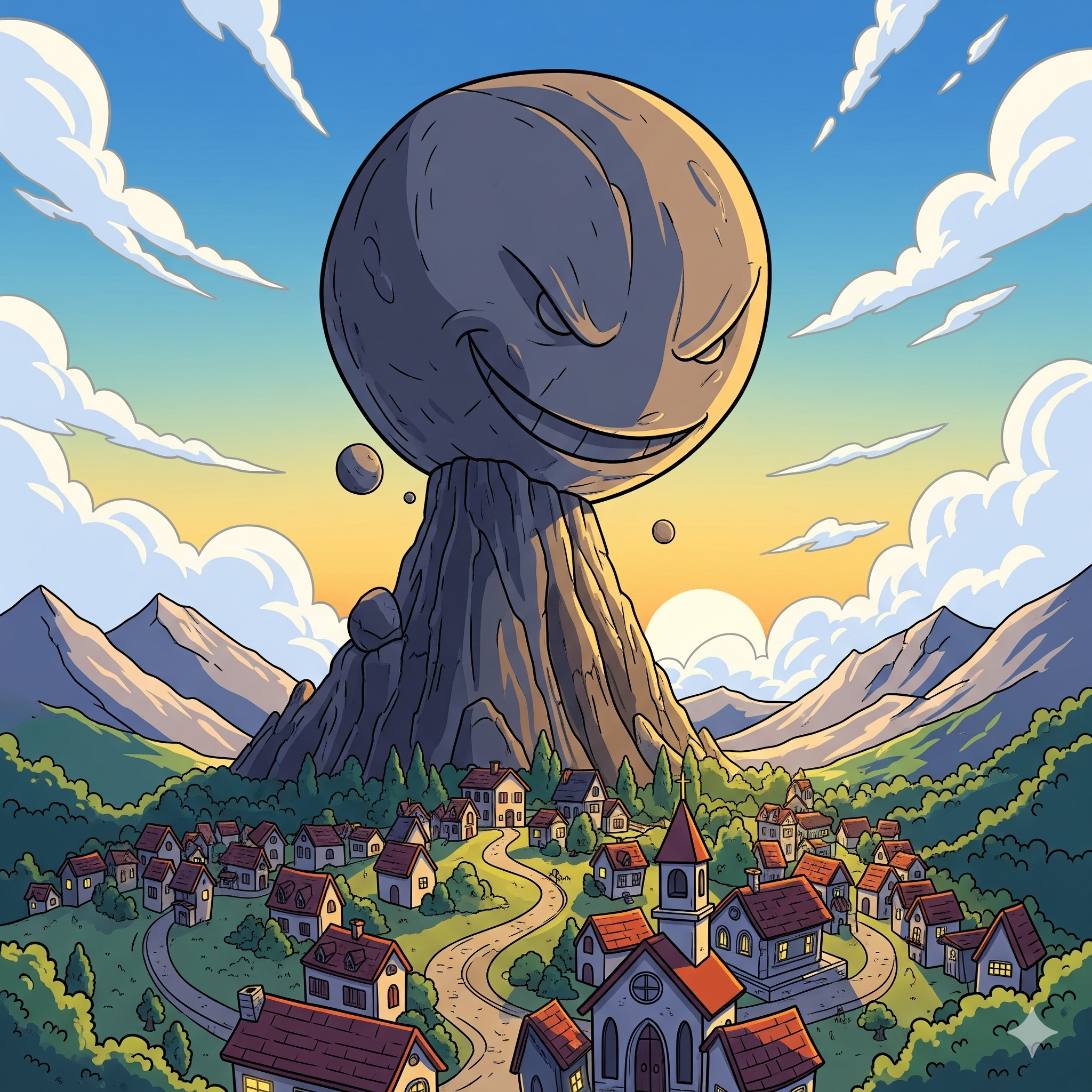
Story behind the image – I used Google’s new Nano Banana image generator for this image. I asked it to produce a large and evil boulder sitting on top of a mountain, held by ropes, overlooking a nice town that it’s threatening…in a cartoonish style. This is the first image it produced. It missed the part about the ropes, but I like the over-the-top (see what I did there?) theme of this rendering. And that boulder may appear in a few more stories in the future.

© 2025 Bob Dailey. Licensed under Creative Commons BY-NC-ND 4.0.

100 Lessons for Playing (and Winning) the Long Game of Leadership

Ideas and wisdom often arrive with familiar roots.

My views on leadership come from my lived experiences and lessons I’ve learned from great builders and thinkers like Andrew Carnegie, Peter Drucker, Tom Peters, Ken Blanchard, Marshall Goldsmith, Zig Ziglar, Stephen Covey, Jack Welch, Seth Godin, Jeff Bezos, Gary Vaynerchuk, Tim Ferriss, Jocko Willink, James Clear, and countless others.

I’ve also worked with amazing managers and mentors over many decades, including a few who taught me what not to do.

Since I find myself often returning to these lessons, I thought it would be useful to write them down in a list for easier reference.

Leadership Foundations

1. Leadership begins in your mind long before it shows up in your actions.

2. Self-awareness is a leader’s first and most enduring responsibility. Know how your actions land, then lead on purpose.

3. Character outweighs credentials over the long haul.

4. Integrity compounds like interest. The longer you hold on to it, the more it grows.

5. Values are the compass that keep you on course when circumstances shift.

6. Humility is the strength to put others first.

7. Influence comes from trust, not job descriptions.

Vision and Direction

8. A leader’s vision must be big enough to inspire, but clear enough to act on today.

9. Clarity reduces fear. Ambiguity fuels it.

10. Momentum builds when people see the destination and believe they can reach it.

11. Vision is not just what you see. It’s what you help others see.

12. The clearer you are about the goal, the less room there is for fear to grow.

13. Purpose is the map. Storms are just temporary detours.

14. Belief in the destination turns small steps into powerful strides.

15. Every action should feel like part of the same bigger story.

16. Sometimes waiting is the boldest move you can make. Strategic patience is powerful (and extremely difficult).

People and Relationships

17. The right people in the right roles multiply results beyond what you can imagine.

18. A culture of respect will outlast a culture of urgency.

19. Listen like the person speaking might hand you the missing puzzle piece.

20. Pass the applause to others but keep the accountability close to your chest.

21. Trust is invisible, but when it’s gone, everything feels heavier.

22. Relationships need regular deposits of attention, not just withdrawals of effort.

23. Helping someone else win creates a tailwind for your own success.

Decision-Making

24. Good decisions blend facts, values, and the courage to act.

25. The first idea is often just the trailhead. Walk farther.

26. Energy without wisdom burns out. Wisdom without energy gathers dust.

27. Choose the option you can defend in the daylight and live with in the dark.

28. A quick, small decision can open doors a perfect plan never reaches.

29. It’s easier to fix a wrong turn early than to build a new road later.

30. Never cash in tomorrow’s credibility for today’s convenience.

Resilience and Adaptability

31. A setback is a classroom, not a graveyard.

32. Flexibility is a skill, not a personality trait. Practice it.

33. Change is the proving ground where talk becomes action. Priorities sharpen, assumptions get tested, and leadership shows up in decisions, owners, and dates. If nothing changes (no decision, no owner, no date) it was only talk.

34. Adapt your tactics, but never your core.

35. The best views are earned with effort you once thought impossible.

36. Challenges test your limits so you can discover you’re stronger than you ever imagined.

37. Sticking with it usually turns “almost” into “done.”

Growth and Learning

38. The best questions are the ones you don’t yet know how to answer.

39. The moment you stop learning, you stop leading. Sometimes before you notice.

40. Pride blocks the front door to growth. Curiosity leaves it wide open.

41. Ask for feedback before circumstances force it on you.

42. Teach your knowledge, always remembering that your actions teach your values.

43. Every conversation nudges someone closer to, or further from, their best self.

44. Failure carries lessons that success hides. Corollary: High water covers a lot of stumps.

Impact and Legacy

45. Success without significance is empty.

46. The influence you have on people’s lives will outlast your achievements.

47. Your legacy is written in the lives you touch, not in the titles you hold.

48. Leadership is something you borrow from the future. It must be returned in good condition.

49. The most meaningful titles are the ones people give you, not the ones on your nameplate.

50. Think in decades when deciding what to plant today.

51. Your success is multiplied when others stand taller because of you.

52. The best proof of leadership is when growth continues without your hand on the wheel.

53. Leave every place and every person better than they were when you arrived.

Communication & Culture

54. Say the quiet part kindly and clearly. Clarity without kindness bruises. Kindness without clarity confuses.

55. Stories travel farther (and faster) than memos. Stories move people. Memos inform them. Stories turn intention into action.

56. Consistency in small signals (tone, timing, follow-through) builds culture faster than slogans.

57. Meetings should create movement. Reserve live time for decisions and collaboration. End with owners and dates. If it’s just a podcast, send an email. If only two people need to talk, make it a call and give everyone else their time back.

58. Celebrate progress out loud so people know what “right” looks like.

59. Honesty scales when leaders go first. Name the hard thing and show how to address it.

60. Culture forms around what you tolerate as much as what you teach.

Execution & Accountability

61. Strategy stalls without a calendar. Put names and dates on intentions.

62. Start now. Ship one useful thing today. Ride the wave of momentum that follows.

63. Priorities aren’t what you say first. They’re what you do first.

64. When everything is urgent, nothing is important. Choose the one thing that unlocks the next three.

65. Inspect what you expect. Review, refine, and recommit in frequent loops.

66. Own the miss publicly and fix it quickly. Speed heals trust.

67. Scoreboards matter. People work smarter when progress (or lack thereof) is visible.

Faith, Purpose & Centering

68. Quiet time isn’t empty time. It’s where courage and wisdom refuel.

69. Purpose steadies the hands when the work gets heavy.

70. Gratitude turns pressure into perspective.

71. Servant leadership begins by asking, “Who needs strength from me today?”

72. Hope is a discipline. Practice it especially when results lag.

Leading Through Change & Uncertainty

73. Name the uncertainty. People handle the unknown better when it has boundaries.

74. Trade predictions for scenarios. Prepare for several futures, not just your favorite one.

75. Replan without blame. The map changes when the terrain does.

76. Communicate more than feels necessary. The vacuum of silence fills quickly with speculation.

77. Keep experiments small and reversible, so learning is fast and affordable.

78. Endurance is contagious. Your calm can be the team’s shelter in a hard storm.

Coaching & Talent Development

79. Grow people on purpose. Make development a standing agenda item.

80. Coach with questions that build judgment and ownership.

81. When you delegate the result, delegate the authority to achieve it. Authority and responsibility should be in balance.

82. Set intent and boundaries. Agree on check-ins. Then step back so the team can step up.

83. Size stretch work to the person’s readiness. Provide the right challenge, real help, and visible sponsorship. It’s okay if they reach the result by a different route than yours.

84. Build a bench before you need one. Succession begins on day one.

Supportive Organizational Behavior

85. Make it safe to disagree. Invite the view that challenges yours.

86. Credit ideas to their source. Recognition fuels contribution.

87. Write agendas as outcomes, not topics.

Systems Thinking & Process

88. Correct the mistake and improve the system that allowed it.

89. Turn recurring work into checklists and rhythms so excellence is repeatable. Then automate it.

90. Map the flow of work end to end. Prune any step that adds no value. Unblock the rest.

91. Measure what matters. Review it at a pace that improves the work.

Stakeholders & Customer Focus

92. Start with the customer and work back to today’s priorities.

93. Define success in customer outcomes, then align processes, metrics, and rewards.

94. Close the loop by telling people what changed and why.

Conflict & Courageous Conversations

95. Address tension early while the knot is small.

96. Separate the person from the problem. Aim at the issue, not the identity.

97. Put the real issue (the skunk) on the table. Agree on facts before you debate fixes.

Energy & Well-Being

98. Protect time for deep work and recovery so decisions are sharp.

99. Model healthy boundaries. Your example sets the team’s norms.

100. Choose a sustainable pace over heroic sprints. Consistency wins the long game.

Leadership is a skill to be learned and practiced over a lifetime. It grows through steady reflection, small improvements, course corrections, and new discoveries. These reminders pull us back to what matters when life and work get noisy.

Whether you lead a company, a classroom, a project, or a family, your influence reaches far beyond the moment.

The truest measure of leadership is the people we serve and the leaders they become.

Photo by Marcus Woodbridge on Unsplash – I love the idea of a lighthouse showing the way, standing firm and steady especially when the waves are their scariest.

Mesmerism and the Rhythm of Showing Up

“When I’m in writing mode for a novel, I get up at four a.m. and work for five to six hours. In the afternoon, I run for ten kilometers or swim for fifteen hundred meters (or do both), then I read a bit and listen to some music. I go to bed at nine p.m. I keep to this routine every day without variation. The repetition itself becomes the important thing; it’s a form of mesmerism. I mesmerize myself to reach a deeper state of mind.” — Haruki Murakami

Haruki Murakami has written some of the most widely read novels and screenplays — Norwegian Wood, Kafka on the Shore, 1Q84, and others. His stories are wide and varied. But his process? Based on this quote, it’s as simple as it gets (on first glance).

He wakes early. He works. He exercises. He reads. He rests. Then he does it all again. Every day. Without variation.

What makes that interesting isn’t just the discipline. It’s what that discipline creates. He calls it mesmerism.

He’s not trying to force creativity. He’s building a space, mentally and physically, where creativity knows it’s welcome. And he shows up to that space every day, without fail.

This kind of repetition, over time, can shift your state of mind. It can take you to a quieter, more focused place. It can help you bypass distraction and access something deeper.

He doesn’t wait for inspiration to strike. He prepares for it. He builds a rhythm and shows up to it daily. Over time, his mind knows—it’s time to create. And that, he says, is when the real writing happens.

It’s easy to think of habits as something utilitarian. A way to squeeze productivity out of our day. But what if repetition isn’t just a tool for efficiency? What if it’s a path into something more meaningful?

What if the act of doing the same thing, at the same time, in the same way, becomes a form of permission to go deeper?

Murakami’s routine isn’t about optimization. It’s about entry. It’s a way of reaching the part of himself that doesn’t respond well to noise, pressure, or force. And the only way in is repetition.

This idea of mesmerism applies to more than writing novels or screenplays.

Maybe your “deep work” is building a business, raising a family, managing a new venture, or simply trying to stay anchored when life is anything but steady.

The specific rhythm doesn’t matter. What matters is that it’s yours. That it becomes familiar enough, trusted enough, to lower your resistance and invite your mind to settle.

A short walk each morning before the day begins.

A time and place for reading, thinking, or praying without interruption.

A quiet moment after dinner, before sleep.

These aren’t productivity hacks. They’re entry points. Invitations to go below the surface of reaction and noise.  To meet yourself in a more focused, honest way.

Reflecting on this quote, I see it as less about writing and more about living on purpose.

There’s no perfect rhythm. No universal method. But there is something powerful in choosing to show up each day, in the same way, with the same posture of readiness…even if it feels small.

Because over time, that rhythm changes us. It makes us less reliant on inspiration and more connected to our purpose.

Less reactive, more rooted. Less scattered, steadier.

Show up.
Repeat.
Let the repetition carry you deeper.

That’s where the real work—and the real exploration—can begin.

h/t – once again, Tim Ferris’s 5 Bullet Friday newsletter.  He recently highlighted this Murakami quote.  When I first read it, it didn’t make much of an impression.  Who uses mesmerism in a sentence?  Then I decided to re-read it, even though it’s a long one.   

On my second reading, the quote sunk in and got me thinking about how his process of mesmerizing through repetition can be applied to anything we’re trying to accomplish (it even showed me how to use the word mesmerizing in a sentence). It takes us past brute discipline and into a rhythm-based approach that prepares our mind to do the work we want it to do; in the space that repetition provides.   

Photo by Jack Sharp on Unsplash

Permission to Conclude – and Get Started

A friend called recently. He’s been running his own business successfully for over a decade. Things are going well, really well.  That’s why he reached out.

He wanted to talk through some ideas. Usually when I get these calls, it’s because a business owner is thinking about making a major change.  Maybe selling, maybe acquiring another business, maybe just trying to get unstuck from a rut. But this wasn’t that kind of conversation.

He explained that his team is doing great work. His own role had evolved into mostly business development and handling occasional fire drills. Lately, there haven’t been many fires. The business is running so smoothly that, for the first time in years, he has time on his hands. Unexpected free time.

That’s usually a good thing, right?

He thought so too at first. He ramped up his business development efforts (always wise to add growth fuel to a business), and then he did something else.  He stepped back and watched. Observed. Assessed.

For the first time in a while, he was able to look at the processes and tools his company uses with a fresh set of eyes. The eyes of an outsider.

That’s when he saw the gaps.

Not because things were falling apart. But because, with a little perspective, he realized how much better things could be. He saw inefficiencies, opportunities for automation, outdated systems, and new tools that could transform how they operate.

His brain lit up. Ideas started flowing. He made lists. And more lists. He started thinking through what needed to change, planning what to build, what to retire, and how to bring the team into the improvement process.

That’s when he called me.  Not for help solving the problems, but because he suddenly had too many ideas and plans.

He’d become overwhelmed by the possibilities.

So, I asked him: What would it take to give yourself permission to conclude the brainstorming, the planning…and begin?

He paused.

As the boss, no one else was going to tell him to stop generating ideas and to start work on executing them. There’s no urgent deadline forcing a decision. No one asking for a status update. The machine is humming along, profitably. But he can see how much more potential is just sitting there waiting to be tapped.

We didn’t talk about his ideas or operations at all. We talked about how to decide. How to identify the vital few initiatives that would make the biggest difference. How to involve his team. How to get moving.

We talked about starting, and how starting builds momentum.

Our brains love ideation. There are no limits, no constraints. It’s energizing to imagine improvements, design new systems, and sketch out possibilities. We feel smart. We feel alive.

But our minds? They get restless. We lie awake at night, spinning. We second-guess ourselves. We get caught in the loop of “what if” and “maybe later.”

That’s where permission to conclude enters the picture.

It’s the quiet decision that says: “I’ve thought enough. I’ve explored enough. I may not have a perfect plan, but I have enough to begin.”

It’s the green light we must give ourselves.  To start, to build, to test, to course-correct.

It’s a commitment. Not to perfection, but to movement.

To gain clarity through execution. To action that reveals what thinking alone cannot.

If you find yourself spinning with ideas, take a deep breath.

Give yourself permission to conclude.

And start.

Photo by Isaac Mugwe on Unsplash – the rider has no idea what lies ahead…only guesses, maybe some visualization of what could be lurking around that dark corner. The only way to find out is to start and figure it out along the way.

h/t – I learned about the concept of the “vital few” over 20 years ago from MAP Consulting. A simple yet powerful realization that we can only work on a few things at any one time. Choose the vital few, work on them, then move to the next set of vital few items after that.