Parenting is one of the clearest places where faith meets daily life. It calls us to humility, patience, courage, generosity, and the kind of love that stretches us far beyond what we believed we could give.
It invites us to trust God with the people most precious to us, even when the path ahead is uncertain and far beyond our view.
The prayer below is one I’ve been working on for a while. It’s a prayer for parents at every stage of life…those just beginning, and those watching their grown children take their first steps into adulthood. It’s also for those whose children are becoming parents and carrying this calling into a new generation.
It is a reminder that God accompanies us in the noise and the silence, the ordinary and the holy, the days that feel long and the years that pass so quickly.
May this prayer strengthen your heart and deepen your hope as you walk this sacred calling.
A Parenting Prayer
God, please grant me The wisdom to guide my children with patience, clarity, and love And the humility to grow alongside them as they grow. Teach me to choose presence over hurry, Trust over fear, and connection over control.
Give me the courage to admit when I am wrong And the grace to show my children that learning never ends, Not at 7, not at 17, not at 70.
Help me see the world through their eyes, Eyes that understand wonder, Eyes that welcome the new with unguarded joy. Let their curiosity rekindle my own, So our home becomes a place where questions are celebrated And imagination roams freely.
Give me integrity in the quiet moments, When my child is learning from what I do. Give me a heart strong enough to support them And gentle enough that they always feel safe coming to me.
Teach me to treasure the small things: The bedtime stories, The long drives, The conversations over tacos, The ordinary afternoons that turn into lifelong memories. Remind me that these simple moments Will matter far more than the schedules we keep Or the outcomes we chase.
Loving God, Free me from comparing my family to others. You did not design my children to fit anyone’s timeline but Yours. Help me trust the pace of their becoming And see their strengths even when they are wrapped in struggle.
Guard me from chasing achievements that impress the world But neglect the souls under my roof. Let our home be defined by gratitude, peace, and laughter, With the quiet confidence that love is our foundation.
Help me pass down what truly endures: Character over perfection, Kindness over victory, Service over status, Gratitude over entitlement.
May the stories I tell, the choices I make, And the way I show up each day Become part of the heritage my children carry forward. Help me become an example worth following, One who lives with faithfulness, honesty, and a willingness to learn.
Give me strength for the hard times And calm for the anxious nights. Give me a long view of parenting, Seeing not just who my children are today But who they are becoming by Your grace.
Teach me to listen more than I lecture, To encourage more than I correct, And to guide without stifling the person You created them to be.
Grant me the courage to give responsibility as they mature And the faith to let them walk their own path, Even when that path stretches beyond my view.
Lord, may our home reflect Your kingdom, A place of welcome, forgiveness, generosity, and joy. Let my children feel seen, valued, and deeply loved, Not for what they do, but for who they are.
I invite You into every step of this sacred calling. Walk with me in the noise and the silence, In the exhaustion and the celebration, In the days that feel long And the years that pass too quickly.
Grant me the peace that comes from Your eternal and infinite love, Now and forever.
From thirty thousand feet, the land below looks like a patchwork of roads and fields. Each marks a choice someone once made about where to go. Some stretch straight and steady. Others twist through hills or fade out of sight. Together they form a map of movement and direction, a living story of people who kept choosing the next road.
Life feels the same way. The routes change, but the invitation stays the same. Keep moving to find greater meaning.
The most rewarding paths often pass through three places. Serving others, staying curious, and daring to pursue new goals.
Service opens our heart. When we give to something beyond ourselves, our life expands. For the younger generation, it teaches them that purpose grows through generosity and connection. Helping a friend, joining a cause, or showing up for someone who needs encouragement builds an identity rooted in contribution. Later in life, service transforms experience into legacy. It turns lessons into guidance and presence into impact. Every act of service whispers that we still matter.
Curiosity keeps that whisper alive. It invites discovery and reminds us that wonder never expires. For young adults, curiosity shifts attention from comparison to possibility. It fuels creativity and builds resilience (because nobody said it would be easy). For those further down the road, curiosity revives joy. Learning something new, exploring unfamiliar tools, or asking deeper questions renews their spirit.
Big goals complete the trio. Ambition alone can fade, but big dreams shaped by purpose bring hope to life. For the young, bold goals turn uncertainty into motion. For the experienced, they rekindle the thrill of becoming. The thrill of pursuing. Every goal, whether to build, create, teach, or grow, reminds the soul that movement still matters. Hope rises with every goal we dare to pursue.
Many people never take these paths. Fear of failure, fear of embarrassment, fear of losing face…they each build fences where we can hide. Quiet excuses convincing us to play small and call it wisdom.
Fear says, “Stay comfortable.” Curiosity says, “Let’s see what happens.”
When fear wins, both young and old lose sight of their forward motion. The young adult who fears being judged easily drifts into hopelessness. The older adult who hesitates to dream again slips into quiet surrender. The reasons sound different, yet the root feels the same. Fear has taken the wheel. Stagnation and hopelessness follow.
Purpose waits just ahead. It lives in the next act of kindness, the next mystery to be solved, the next dream still worth chasing.
The pathways to a rewarding life have no finish line. Every act of service, every curious step, every daring goal breathes new life into our soul.
When we explore these paths, joy and fulfillment will be our companion.
Photo by Line Kjær on Unsplash – I wonder what’s in the next valley. Let’s go find out.
There are certain destinations in the world that feel larger than life. The Taj Mahal is one of those places. For many travelers, seeing it with their own eyes is a once-in-a-lifetime moment.
We were finally there. We had made it to Agra. All that remained was to step inside the gates and witness the iconic white marble glowing in the sun.
Only one problem.
There was no sun. There was no white marble. There was no Taj Mahal.
There was only fog.
We woke that morning filled with hope. The rooftop restaurant gave us a commanding view of… absolutely nothing. We stared into a wall of haze, sipping coffee and laughing at the absurdity of our timing. Surely the fog would lift. Surely the Taj Mahal would reveal itself.
Our guide, Kuldeep, assured us everything would be fine. He had led more than 500 tours of the Taj Mahal. He knew everything there was to know about its history and its beauty. We boarded our bus, grabbing our special cloth bags with a picture of the Taj printed on them. These were designed to hold the single water bottle we were allowed to bring inside the property. And we set off with excitement.
Fog. All the way there. Fog in the parking lot. Fog at the security lines. Fog as we walked the long approach toward the main viewing area. Each time Kuldeep stopped to point out an “excellent vantage point,” we nodded with wide eyes, imagining the magnificent structure hidden somewhere in the mist.
We took photos pointing at the picture on our water bottle bags. That was the only Taj Mahal available to us from any vantage point.
As we walked toward the building, we eventually reached the outer wall and finally saw something. White marble appeared just a few feet above our heads. Then the stone vanished again into the haze. The grand dome. The sweeping arches. The delicate inlays. All shrouded in fog.
We were standing beside one of the wonders of the world and could only see a sliver of it.
Our group laughed so much that day. Not because we had traveled halfway around the world only to miss the view. We laughed because we were sharing something unforgettable and slightly ridiculous. We were experiencing a story that would last much longer than a postcard-perfect photograph.
Kuldeep shook his head with disbelief. In all his tours, he had never experienced this. He told us we were a very select group of visitors who could claim something few on Earth could say. We visited the Taj Mahal, but we have never actually seen it.
He was right. I still have never seen the Taj Mahal in person.
The destination was never the prize
You might think this would be a disappointment. But when I look back on that trip, the fog made everything richer.
The destination was never the prize. The people were.
We shared meals and conversations and inside jokes. We tried foods that were new to us. We navigated chaos and beauty side by side. We saw India’s contrasts and colors and kindness. We saw devotion expressed in temples and marketplaces. We saw how history and modern life can exist on top of each other without barriers.
The Taj Mahal is extraordinary. I would love to see it someday with clear skies and a rising sun. Yet I already have what I came for.
When I think about all the amazing places I have been blessed to visit, a pattern appears. I never say, “Remember when we saw that famous landmark.” I say things like:
– Remember how we got lost trying to find it? – Remember the tiny restaurant we discovered afterward? – Remember the guide who became a friend? – Remember that amazing gelato place in the middle of nowhere?
I have my memory of that rooftop breakfast. I have the echo of laughter on the bus. I have the photos of my family and friends pointing to a water bottle bag as if it were the crown jewel of Indian architecture.
The world is full of wonders. But relationships are the wonders that stay with us.
The real bucket list
If someday I return to the Taj Mahal and finally see it, I’ll smile and take it in. But I know the picture etched into my heart is already complete. It’s filled with faces and voices and laughter. It has the beauty of our shared experience.
Checklists are fine for airplanes. But our lives deserve something better.
The best adventures can’t be captured by a camera or a perfect view. What lasts are the relationships made stronger by shared surprises, setbacks, and moments of wonder.
This story, fog and all, remains one of my favorites.
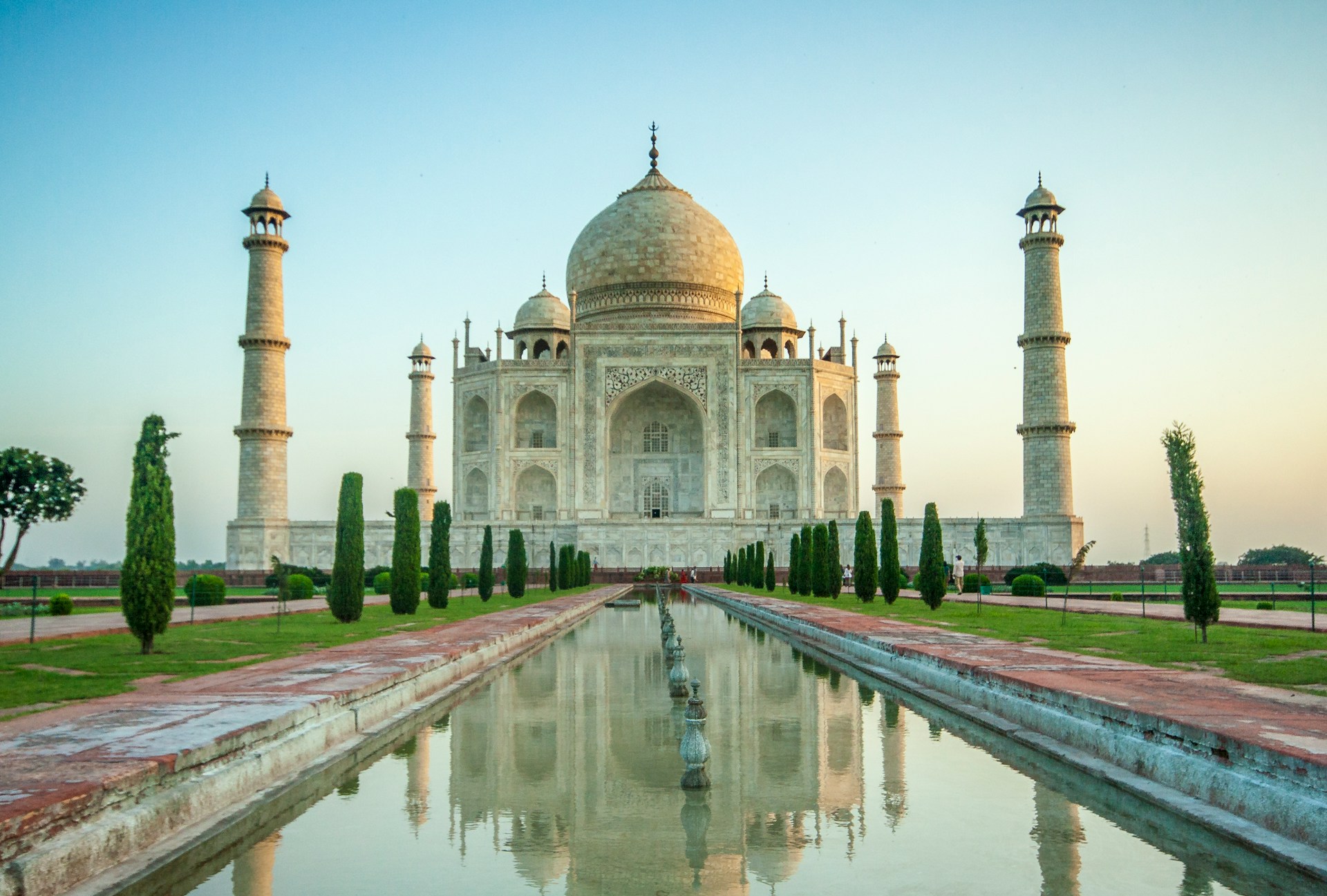
Photo by Mark Harpur on Unsplash showing the majestic beauty of the Taj without fog.
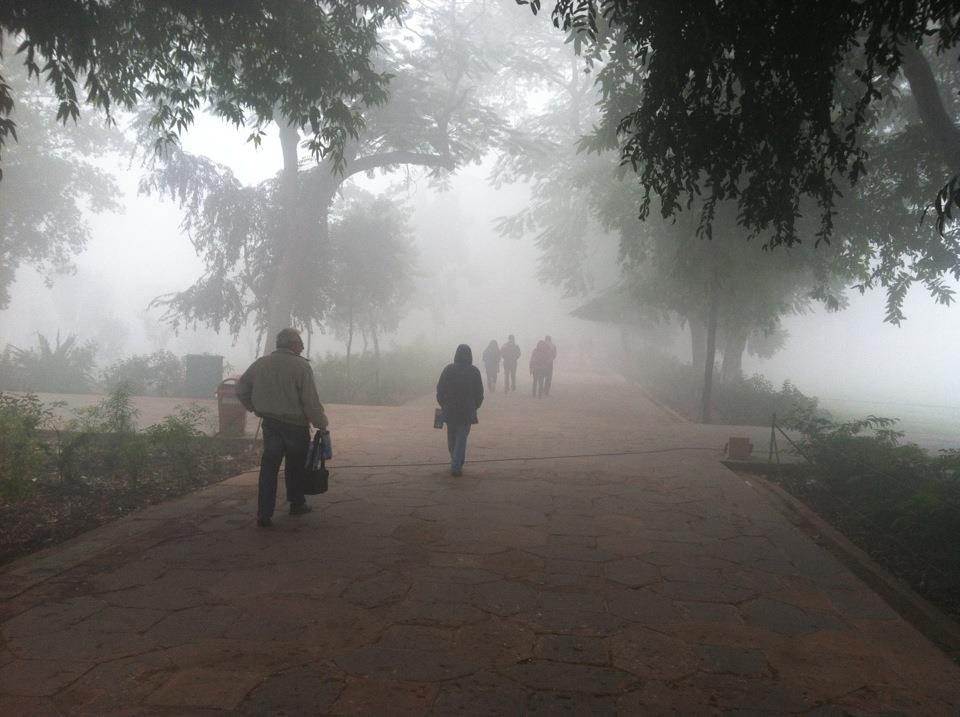
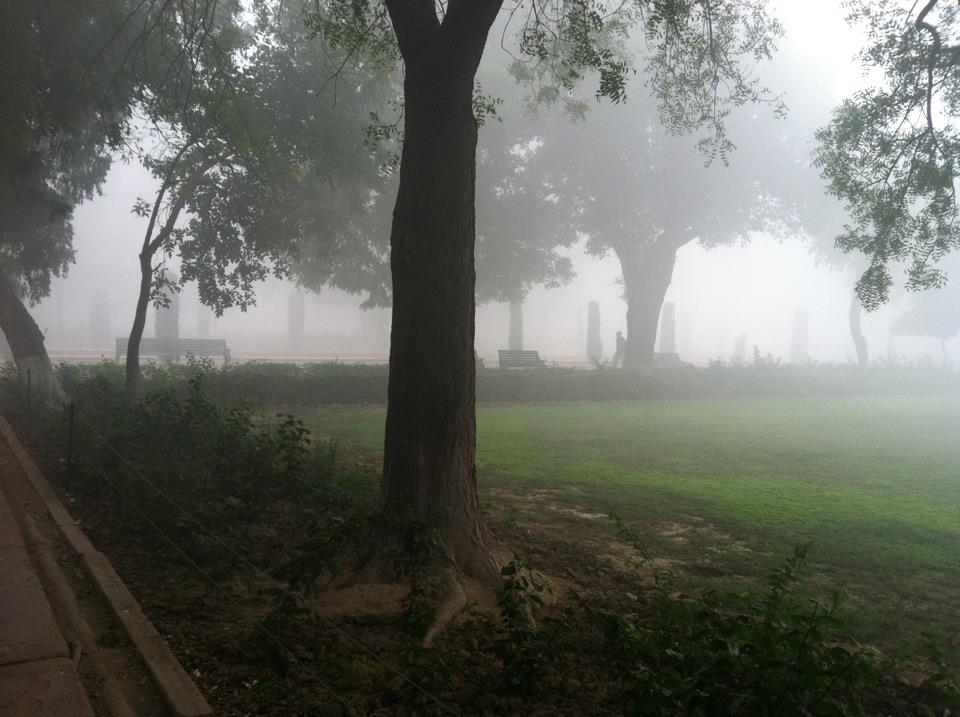
The photos below are mine showing what we actually saw. Unfortunately, the amazing water bottle bag photos are stored on a drive I can’t see…a little bit like that morning in Agra more than a decade ago.
There it is!Can you see the Taj in the background?Can you see the Taj on the right?
I received an email from Noah Kagan this week. Not because we’re personal friends, but because I subscribe to his newsletter. Noah, the CEO of AppSumo, often shares practical insights and thought-provoking questions from his journey in the tech world.
This particular message stood out. He talked about being fearful for his 10-month-old daughter’s future. With all the chaos in the world, the deepening divides, the rise of AI and robotics, the general noise of modern life, he wonders what kind of world she’ll inherit.
But instead of spiraling into worry, Noah laid out how he’s choosing to respond: by creating clarity, limiting distractions, and doubling down on the things that matter most. He’s building a foundation, not just for his own peace of mind, but for his daughter to inherit.
His email reminded me of a quote often attributed to Mark Twain: “The future is in the hands of a generation that isn’t ready for it.”
We didn’t have AI, social media, or the internet back in Mr. Twain’s day. But even then, concerns about “the next generation” were nothing new. Parents, teachers, and elders across every era in history have wondered if the next generation is truly ready.
Noah’s concern isn’t just that the next generation might be unprepared. It’s that the world itself might be too broken to navigate well. But history offers some perspective.
Every generation has faced challenges. Wars, famines, political collapse, pandemics, technological upheaval, moral drift. And yet, the world moves forward. Somehow, each generation rises to meet its moment…even if their preparation feels lacking.
We don’t get to control the future, but we do influence it by how we live, what we model, and what we choose to pass on. We can’t predict what our children and grandchildren will face, or how they’ll respond. But we can teach them how to think, how to hold on to timeless values, and how to walk through hardship with strength and grace.
It’s natural to worry.
Let’s not forget that hardship doesn’t cancel out beauty.
Struggles don’t erase joy.
There will be triumphs ahead, too. If we’ve taught them well, they’ll learn to spot their small victories, celebrate them, and then pass along what matters to those who come after.
The future always arrives in the hands of the young—and the young are never quite ready. But then again, neither were we.
Tim Ferris has a weekly newsletter – 5 Bullet Friday. In last Friday’s update, he highlighted a quote from The Way to Love, by Anthony de Mello. This post isn’t related to that quote (although it could be). It’s based on the rabbit hole I dove into, reading other parts of the book. Right out of the gate, de Mello offers a short parable that’s simple at first glance but goes deeper the longer you sit with it.
“A group of tourists sits on a bus that is passing through gorgeously beautiful country, lakes and mountains and green fields and rivers. But the shades of the bus are pulled down. They don’t have the slightest idea of what lies beyond the windows of the bus. All the time of their journey is spent in squabbling over who will have the seat of honor in the bus, who will be applauded, who will be well considered. And so they remain until the journey’s end.”
It’s not a long parable, but it says a lot.
We are each on this ride. This one journey through life. And all around us is beauty: the people we love, small joys, the smell of fresh rain, a child’s laughter, songbirds chirping right outside our window, the warmth of a good cup of coffee in the morning.
But our shades are down. We don’t see any beauty, because we’re too busy with things that don’t matter.
We’re measuring. Comparing. Ranking. Arguing about position, prestige, attention. Scrolling, reacting. Meanwhile, the scenery goes by. Gorgeous, wild, and fleeting. We barely glance out the window.
What struck me about de Mello’s story wasn’t the travelers’ arguments. It’s the view that was always there. The view never stopped being beautiful. The issue wasn’t the lack of beauty. The issue was where they were looking.
This parable is a quiet reminder to lift the shade. To let in the light. To remember that it’s not about getting the “best seat on the bus.” It’s about not missing the view.
So today, maybe take a breath. Look around. Listen a little longer. Smile at someone. Appreciate a small thing that usually passes by unnoticed.
Another of de Mello’s insights that’s in line with his parable:
“The most difficult thing in the world is to listen, to see. We don’t want to look, because if we do, we may change. We don’t want to look, because we may discover that the world is not what we thought it was.”
Sometimes the shades stay down not because we’re distracted, but because we’re afraid. If we truly see what matters, we might have to stop chasing things that don’t. We might have to let go of the version of ourselves that depends on being applauded or admired or seen in a certain way.
But what if that’s the invitation? Not to force ourselves to change, but to wake up to what’s real in our lives. To notice the world again. To feel the wonder again.
The awareness de Mello points to is freeing, like the child’s creativity in my previous post.
It’s the kind of awareness that reminds us we’re not stuck in the noise unless we choose to be. We can pull up the shade. We can look.
Because the ride is short. The view is worth seeing.
And in that beauty, we can see we are never really far from joy.
It happens to all of us this time of year. The days get shorter, the winds grow crisper. Something stirs within us that doesn’t quite fit the mold of any other season. There’s joy, sure—joy enough to make us believe in miracles again. But alongside that joy, like the shadows cast by twinkling lights, there’s a touch of sorrow. Like an old friend who shows up every December, pulls up a chair, and says nothing at all.
Words that lie dormant eleven months out of the year come alive at Christmas time. Jingle Bells. Rudolph. Good tidings. Noel. The Manger. Words so beautiful and strange, yet they create beautiful poetry on our hearts. Sugarplums dancing in dreams. Mulling spices on the stove. Decorations we see only in this season but remember more fondly with each passing year—twinkles of joy at their best, empty reminders at their worst. And somehow, merriment and brightness find their way in, even when the years haven’t always been kind.
If you listen closely, you can hear hymns calling us across the cold and lonely nights:
“O come, O come, Emmanuel”
“Silent Night”
“What Child is This?”
There’s a funny thing about Christmas—it’s a season of paradox. A time for rejoicing, and a time for remembering. For celebrating, and for mourning. All in the same breath.
Every year, the world gathers around a single story. A manger in Bethlehem, where our Savior came as a child. It’s a story that whispers hope into the cracks of our broken hearts.
“Fear not, O Zion, be not discouraged!” That’s what the prophet Zephaniah said. “The Lord, your God, is in your midst.” And somehow, two thousand years later, we do believe. We light candles and sing songs of joy—because we need to. Because joy matters.
It’s funny how much effort we put into this season. Trees trimmed. Ornaments hung. Villages built. Wishes made. And when the last batch of cookies or Cornish pasties come out of the oven, we sit at tables crowded with food, and laughter, and the people we love. Sometimes we even catch a glimpse of something eternal in it all—the way the lights reflect off the fancy silverware, or how a child’s eyes light up at the first sight of presents.
But there are empty chairs. They’re harder to discuss. Maybe it’s a father, a mother, a grandparent, or a sister. Maybe it’s a friend, a brother, an aunt or an uncle who have gone far too soon. We feel their absence even more at Christmas. We see them in the lights we hang, and the hot chocolates that we make. We hear them in old songs, the ones we used to sing.
And then there are the faces we miss in another way—our family who are still with us but just too far away. The ones across states, oceans, and time zones. We think of them when we pull out the old family recipes and photo albums. We wish they could be here to see the kids open presents, to share in the laughter over the pies that we burned, or took out too soon. But instead, we send texts and pictures, leave voicemails, and whisper a prayer hoping they know how much they’re loved, even from so far away.
Yet even in sorrow, there’s something beautiful. Because love never really leaves us. And maybe that’s the greatest promise of Christmas—the one hidden behind all the ornaments and stockings, and twinkling lights. That the Child who came to a manger promises us something more. He promises that the story isn’t over. That one day, we’ll all sit at a table that never empties, in a place where joy knows no end.
For now, we celebrate as best we can. We bake our pies and pour our cider. We listen for sleigh bells in the distance and leave room in our hearts for joy to enter—just like it always does.
And when the night gets quiet, and the fire burns low, we remember. We remember the ones we’ve loved, the ones we’ve lost, the ones too far away to join us, and the One who came to bring us home.
That’s Christmas. A little light, a little shadow. A little merry, a little sorrow. A season that changes the very words we speak and, if we let it, changes the very hearts we carry.
So if you’re out there tonight, sipping mulled cider by the window, just know this:
You’re not alone. The Savior is here. He’s in the manger. He’s in the laughter. And He’s in the quiet, too.
And maybe—just maybe—He’s singing over you, as one sings at a festival.
The Bible verse that inspired this post when I heard it in Church last Sunday:
Shout for joy, O daughter Zion! Sing joyfully, O Israel! Be glad and exult with all your heart, O daughter Jerusalem! The LORD has removed the judgment against you he has turned away your enemies; the King of Israel, the LORD, is in your midst, you have no further misfortune to fear. On that day, it shall be said to Jerusalem: Fear not, O Zion, be not discouraged! The LORD, your God, is in your midst, a mighty savior; he will rejoice over you with gladness, and renew you in his love, he will sing joyfully because of you, as one sings at festivals.
“You will know that your children will be many, and your descendants like the grass of the earth.” – Job 5:25
This image of my granddaughter running through the tall grass lingers in my mind, a snapshot of pure joy and freedom. The grass climbs high as her shoulders, swaying in the gentle breeze as she runs, her laughter echoing across the open field.
The sun, high in the sky, casts a warm glow across the landscape, reflecting off the stalks and highlighting the strands of her long blonde hair. It’s a moment of unbridled innocence, an expression of life at its most carefree—a reminder of the potential and possibilities that lie ahead in her life.
Watching her, I’m struck by how this simple act of running, so natural and effortless, captures the essence of childhood. Children have an innate ability to live fully in the present, to see the world as a place of wonder and adventure. For them, the future is not something to be feared, but something to eagerly anticipate. Every new experience is a chance to explore, to learn, to grow. In her dash through the tall grass, we get a glimpse of how life is meant to be lived—full of energy, curiosity, and a fearless embrace of the unknown.
As the years (decades) go by, it’s easy to lose our innocence, our thirst for adventure. We may see our future with a sense of foreboding, even doom…rather than an opportunity to expand our journey. We allow the sense of adventure that once propelled us forward to be dulled by the responsibilities and challenges that life inevitably brings. Our carefree days of childhood disappear into the past.
The passage of time doesn’t have to diminish our sense of adventure. We can choose to embrace life with the same enthusiasm and curiosity that we had as children. We can still find joy in the simple pleasures, still run toward the unknown with hope in our hearts.
Life’s journey is not about avoiding the tall grass, but about diving into it, feeling the sun warm our backs and the gentle breeze cooling our faces. It’s about seeing each day as an opportunity to expand our horizons, to live fully and freely, just as my grandkids do.
The tall grass may rise like a challenge, but it is also where the most profound discoveries await. And as I step into that field, I carry with me the certainty that the journey ahead, like the path I’ve already walked, holds boundless potential.
In a field of tall grass she runs, her golden hair warmed by the sun, each step a whisper of freedom, the horizon an open invitation.
I watch her and remember— the world for me was once this wide, full of endless possibilities, before fear narrowed that view.
But the grass still sways, and I can still run, following her laughter, knowing the path ahead will bring great discoveries,
a promise of new beginnings.
p/c – My daughter, Julianne, texted this photo earlier this week of Lizzy running through the tall grass of their pasture. The moment I saw the photo, I knew the topic of my next blog post.
Asking what if about your past is a waste of time. Asking what if about your future is tremendously productive. – Kevin Kelly
It’s easy to focus on what could have been, what you should have done, what someone did or didn’t do to you (or for you), and all the mistakes you’ve made.
It’s even easier to let all that stuff in the past dictate what you’ll do in the future. Our past has tons of built-in excuses. Excuses that help us stick with the status quo, protect us against taking new risks, prevent us from trying something new, or exploring where we’ve never been.
Our lizard brains love the barriers that the past can provide. Like a protective cocoon…one we never have to leave.
What if you choose your future without the limitations or excuses of your past?
That’s the harder and much more rewarding path. You might fail. You might be embarrassed. You’ll surely make new mistakes.
But you might succeed, and you’ll probably discover something you never knew you were seeking.
You can accept the lessons of your past as you drop the past from your thinking.
When was the last time you did something for the first time?
Did you take more than 30 seconds to answer that question?
What if you purposely pursue the surprises that come from diving headfirst into new experiences and adventures?
It’s time to find out.
Photo: My grandson, Charlie, boogie boarding for the first time (about 5 years ago). May we each experience the same joy when we’re trying something for the first time.
Sadness can find us with little or no effort…sometimes on a daily basis.
I see trees of green, red roses too. I see them bloom, for me and you. And I think to myself, what a wonderful world.
Sadness, defined as anything that’s the opposite of joy:
Emotional pain
Feelings of disadvantage
Loss
Despair
Grief
Anger
Helplessness
Disappointment
Sorrow
Frustration
Guilt
I see skies of blue,
And clouds of white.
The bright blessed day,
The dark sacred night.
And I think to myself,
What a wonderful world
Oddly, we sometimes seek out sadness for our own purposes. Maybe we need an excuse for not being the person we know we can be. Maybe we find comfort in burdening others with our pain.
The colors of the rainbow,
So pretty in the sky.
Are also on the faces,
Of people going by,
I see friends shaking hands.
Saying, “How do you do?”
They’re really saying,
“I love you”.
When sadness in its many forms pays a visit, we have two fundamental questions to ask ourselves:
What will we allow inside?
How long will we allow it to stay?
It’s easy to say that we get to decide. That doesn’t mean it’s easy to kick sadness out once it arrives for a visit.
I hear babies cry,
I watch them grow,
They’ll learn much more,
Than I’ll ever know.
What to do? Here’s a list that I have to remind myself of from time to time:
Tune your mind to find joy in the simple things
Seek out and cherish love in your life
Offer forgiveness to yourself and others
Share your time and attention with others
Seek opportunities to serve others first
Observe life with a sense of awe and gratitude.
Joy won’t find us the way sadness can. Joy only shows itself when we take action to greet it warmly with open arms and outstretched hands.









 Grandpa Bob Encouraging Leadership
You must be logged in to post a comment.