The idea was simple. If you look closely at life, you’ll see that everyone is climbing something.
A career. A relationship. A difficult time in their lives. A personal challenge.
Life has a way of placing mountains in front of us. Or maybe…we’re just good at finding them.
As I wrote back then, the climb only makes sense from the inside. Watching others or hearing their stories are no substitute for taking it on yourself.
There was another part of the metaphor that mattered even more.
Many of us start the climb with backpacks full of things that make our journey harder than it needs to be. Old resentments. Lingering disappointments. Criticism that stuck with us longer than it should have. Sometimes we even carry baggage that belongs to someone else.
Years later, I came across a Buddhist parable that gave a new wrapper to this idea. It described people walking through life carrying large boulders. Anger. Ego. Grudges. The suffering didn’t come from the boulders themselves. It came from choosing to pick them up.
Whenever a hill approached, I had a habit of shifting into an easier gear before the climb even began. It felt like preparation. It felt like the smart thing to do.
One day I tried something different. Instead of downshifting, I shifted to a higher gear and pushed harder.
To my surprise, I climbed much faster than before, without bonking like I thought might happen.
Sometimes growth means discovering we’re stronger than we realize.
That experience raised questions I still ask myself.
Where else in life do I downshift before the hill arrives?
Am I protecting myself from difficulty…or underestimating what I’m capable of?
Recently, I read a post by Tim Ferriss about the “self-help trap.” He described sitting around a campfire one evening with a small group of close friends, the kind of unhurried night where the conversation slows down enough for truths to surface. He found himself thinking about the fire, and then realizing the fire wasn’t the point. The people sitting around it were.
He described how easily we can become so absorbed in optimizing ourselves, tracking progress, chasing improvement, climbing toward our next summit, that we lose sight of why we started climbing in the first place.
Summits will eventually fade. Our achievements will blur with time. Recognition disappears quicker than we expect.
Perhaps the real work of self-improvement is simpler than we think.
The rocks we’re carrying were never necessary.
The hills we fear are usually smaller than we imagine, or remember.
And the fire, the one worth tending, isn’t the one powering our ambition. It’s the one we gather around with the people we love.
For centuries, those words marked a moment of transition in a monarchy. They acknowledged loss while declaring that the kingdom would continue.
One reign ends. Another begins. The work continues.
Modern organizations operate in much the same way, just without the ceremony.
When the Ball Changes Hands
Sometimes the transition is visible. A retirement announcement made months in advance. A company-wide gathering, a slideshow of memories, a few stories capturing the arc of a career. Handshakes and hugs. People are grateful for the chance to say thank you.
Other departures unfold quietly. A decision formed over time. A conversation held in private. Recognition that the moment has arrived for something different to begin.
At times, the individual chooses the timing, sensing it’s time to redirect their energy or reclaim parts of life that have waited patiently. At other times, the organization makes the call.
It’s like a manager walking to the mound and asking the starting pitcher for the ball. The pitcher may have thrown well and kept the team in the game. A new batter steps in, and the situation calls for a different arm. The decision reflects what the moment requires. What the pitcher deserved is a different conversation.
The Half-Life of Professional Memory
Spend any time inside large organizations and you’ve witnessed what follows.
A respected leader leaves after a long and meaningful tenure. Their name surfaces occasionally.
Over time, new colleagues arrive who never worked with them. New leaders establish their own ways of operating. The organization adapts.
Work progresses while memories fade into the background.
Institutions carry short memories because continuity is the center of their purpose. Time spent dwelling on the past subtracts from their responsibility to build what comes next. This quality allows organizations to endure. From the inside, it can still be painful.
The Grief No One Mentions
We rarely dwell on the plain truth that this process hurts.
Years of personal investment in people, in solving problems, and in creating a supportive culture eventually become part of who we are. When the organization moves forward without us, it can feel like we’re diminished. Like our work didn’t matter as much as we believed.
That feeling deserves to be called grief. The natural response to losing something we genuinely loved.
Our mistake is letting that grief become a verdict.
The organization’s short memory says nothing about the value of what we contributed. It says something about how institutions are built to function. They’re designed for mission and continuity, with memory serving a different purpose. Understanding the difference doesn’t make the feeling disappear, but it does change what the feeling means.
Where Influence Actually Lives
Our work never disappears. Its impact simply resides in a different place.
The confidence someone discovers because we believed in them. The standards we upheld when it would have been easier to compromise. The steadiness we showed under pressure. The thinking patterns others continue to use long after they’ve forgotten the source.
These moments accumulate.
Lasting influence rarely lives in titles, completed initiatives, or improved metrics. Those matter deeply in their time, yet they rarely define what lasts.
Most of us can trace core insights to a teacher or mentor who shaped us. Someone who challenged us to think beyond ourselves or our capabilities, changing how we see the world. Their insight became part of who we are.
In the same way, we become that teacher in someone else’s story.
The Metric That Matters Most
Leaders who sustain themselves over the long term tend to live with dual awareness. They engage fully and care deeply about the organization’s mission. They invest in people and outcomes.
At the same time, their sense of self rests on something broader. Family, faith, health, curiosity, service, and community form a foundation that holds steady regardless of their title.
They recognize that one day the organization will continue without them, and they choose to lead in ways that remain meaningful regardless. This awareness strengthens their commitment rather than weakening it, because it clarifies what actually matters.
Eventually, each of us hand over the ball. The badge stops working. The inbox grows quiet. Someone else takes the chair.
Our opportunity is to contribute in ways that remain useful long after our names fade from conversation. Lessons carried forward through people we may never meet.
For the next two weeks, I’ll be doing something new.
Marshall Goldsmith is encouraging people to ask themselves six questions every day. That’s the whole experiment.
Six questions. Asked at night. Answered honestly.
They all start the same way:
Did I do my best to…
The questions don’t ask what happened to me today. They ask what I did with today.
During his webinar introducing the experiment, Mr. Goldsmith referred to the Rigveda, an ancient poem from India that he described as being thousands of years old. He just mentioned it and moved on.
I had never heard of the Rigveda, so down the rabbit hole I went after his webinar ended.
The Rigveda is a collection of hymns. A lot of it is about everyday things. The sun rising. Fire. Breath. Life continuing. There’s a sense that daily life matters. That how we live each day counts.
People have been trying to figure out how to live a good life for a long time. Way before self-help and leadership books. Way before webinars and podcasts.
St. Ignatius of Loyola comes to mind. He developed something called the Daily Examen. It’s a review of the day. You look back. You notice where you were grateful. You notice where you fell short. You think about tomorrow.
Different times. Different traditions. Same basic ideas.
At the end of the day, pause and ask, “How did I live today?”
Goldsmith’s six questions fit right into that pattern.
Did I do my best to be happy today?
The question hits differently when the day is already over. I can see clearly whether I purposely enjoyed the day or just rushed through it.
Did I do my best to build positive relationships?
Now I’m thinking about the way I spoke to someone. Whether I listened. Whether I gave someone my full attention.
The questions are short. The reflections take some time.
Goldsmith describes happiness as “enjoyment with the process of life itself.” Happiness lives inside the day. It grows out of our engagement with what’s already in front of us.
The writers of the Rigveda seemed to understand that. Ignatius understood it too. They’re asking us to pay attention to our life and actively engage in it.
I’m only a few days into this experiment. Nothing dramatic has happened. No big breakthroughs.
But I know I’ll be answering these six questions later. I move through the day with more awareness. I catch myself sooner. I stay present a little longer. I think twice before reacting.
It’s a small shift…but small shifts repeated over time shape our lives.
Thousands of years have passed since the Rigveda was written. Centuries since Ignatius taught people to examine their day.
Our modern life looks very different, but the question remains the same.
How did I live today?
Here are Goldsmith’s six questions:
–Did I do my best to set clear goals today?
-Did I do my best to make progress towards my goals today?
-Did I do my best to find meaning today?
-Did I do my best to be happy today?
-Did I do my best to build positive relationships today?
Every generation believes it’s living through extraordinary change.
And in a way, every generation is right.
Economic strain, political division, conflict, and rapid technological change appear in different forms, but the underlying tension remains the same.
Ray Dalio describes what he calls the Big Cycle. The rise and decline of nations shaped by debt, money, internal division, and shifting global power. He would say we’re late in that cycle, marked by high debt, widening wealth gaps, and growing competition among world powers.
Harry Dent approaches history through demographics, studying population growth, and generational spending patterns. From his view, today’s economic strain reflects aging populations, slower growth, and the unwinding of decades of expansion.
Different perspectives. Similar conclusions.
Neither claim to predict the future with precision. Debt cycles, demographic waves, generational moods, technological revolutions, and geopolitical tensions move simultaneously. Understanding these forces and their patterns helps us recognize the currents. How we live within them is still our responsibility.
I remember the OPEC oil embargo of the 1970s and gas lines stretching for blocks. I was in elementary school as interest rates climbed above twenty percent. I watched the Reagan Revolution reshape economic thinking and bring supply-side theory into the mainstream.
I lived through the Iranian Revolution in 1979, the taking of US hostages, and the subsequent spread of militant extremism across parts of the Muslim world over the next four decades. I watched an airplane strike the World Trade Center in real time.
I grew up under the shadow of the Cold War, when nuclear conflict felt possible at any moment. I saw the optimism that followed the fall of the Soviet Union and then watched China open to the world after decades of isolation. I remember the theories about how expanding capitalism in China might soften their communist approach to governing.
I witnessed the savings and loan collapse, multiple stock market crashes, the Great Recession, and a global pandemic that disrupted economies, institutions, and families alike. I watched how strongly governments grasp control when certainty disappears.
I saw personal computers and then the internet transform daily life, followed by the digital economy, smartphones, social media, and now artificial intelligence reshaping work itself.
I can think of countless other historical events that have happened in the span of one life. Each moment felt unprecedented. Each reshaped the world, sometimes positively, sometimes negatively.
And yet, life continued.
When history is written, it focuses almost entirely on macro events. The narratives are dominated by wars, collapses, elections, revolutions, and markets. What rarely appears are the countless individual lives unfolding quietly alongside these events.
History does not record families eating dinner together during times of high inflation. Nor does it record weddings that took place during recessions or children born during wars. It overlooks the laughter that survived fear and the quiet courage required to just keep going.
But these individual experiences of life form the definition of humanity.
For every name preserved in textbooks, millions of people were doing what people have always done. They worked. They loved. They raised children. They cared for neighbors. They hoped tomorrow might be a little better than today.
Macro forces shape conditions. They influence opportunity and may narrow our options. They may, unfortunately, end our life or the lives of someone we love. But they don’t define a life.
Inside every macro upheaval exists our “micro” life. The life lived within the headlines rather than dictated by them.
The world may determine interest rates. It does not decide whether we act with kindness. It may influence careers, but it does not control our integrity. It may introduce hardship, but it does not determine how we respond.
Our response is where freedom still lives.
Viktor Frankl understood this more clearly than almost anyone. After enduring unimaginable suffering in Nazi concentration camps, he observed that nearly all external freedoms can be taken from a person. One freedom remains intact. The ability to choose one’s attitude and response to circumstances.
Events may constrain us. They may demand adaptation. They will never own our human spirit.
In my office, I have a wall filled with photographs. Family gatherings. Wedding days. Trips taken together. Beautiful places. Ordinary moments that became lasting memories.
When I step back and look at this wall, patterns appear.
We worked hard.
We made time for one another.
We traveled together.
We celebrated milestones.
We were living out our hopes and dreams, and we still are.
My wall has no charts or financial forecasts. No macro trend lines. But it tells the story of what matters most.
None of these moments waited for ideal conditions. They unfolded alongside inflation, recessions, political change, and uncertainty. The photographs capture lives shaped by ordinary but important choices made amid extraordinary times.
As we traveled, we met families across many countries. Different customs. Different faiths. Different governments. Yet everywhere we went, the hopes sounded familiar. Parents wanting the best for their children. Families striving for opportunity. Communities longing to contribute and belong.
The differences emphasized by the world shrink quickly when people speak about those they love.
Human aspirations remain remarkably consistent.
History changes its outward form. The heart changes very little.
You will live through upheavals of your own. Some will be frightening. Some will be unfair. Some will test your trust in institutions or leaders.
Remember this.
You are not responsible for controlling history. You are responsible for how you live inside it.
You will not choose the history that surrounds you. You will choose the values you carry through it.
You choose how you treat people.
You choose how to adapt.
You choose how you show up for your family.
You choose whether uncertainty hardens you or deepens your compassion.
You choose whether fear leads or faith steadies you.
These are your choices. Always.
Humanity endures because ordinary people continue to build their lives amid uncertainty. They love, they work, they fail, they adapt, and they hope, even while larger forces move around them.
While empires rise and fall, families persist.
That is the quiet march you belong to. Rarely captured by historians yet carried forward by generations.
History happens around you.
Life happens within you.
Live your life well. Love deeply. Work honestly. Stay flexible. Hold your faith. Care for one another.
If you do that, you will live a meaningful life regardless of when you were born.
As I was finishing this post, I found these quotes from George Bernard Shaw. The words come from two different writings of his from the early 1900’s. Together they express something important about what it means to live well within whatever history hands us.
“This is the true joy in life, the being used for a purpose recognized by yourself as a mighty one; the being a force of Nature instead of a feverish, selfish little clod of ailments and grievances complaining that the world will not devote itself to making you happy. “
“I am of the opinion that my life belongs to the whole community, and as long as I live it is my privilege to do for it whatsoever I can. I want to be thoroughly used up when I die, for the harder I work the more I live. I rejoice in life for its own sake. Life is no ‘brief candle’ for me. It is a sort of splendid torch, which I have got hold of for the moment; and I want to make it burn as brightly as possible before handing it on to future generations.”
“There is no Frigate like a Book / To take us Lands away.”
Emily Dickinson wrote these words in her quiet room, understanding something I didn’t grasp for decades. The greatest journeys begin within.
I know her poem only because of my 11th grade AP English teacher, Mr. Cox. As a rambunctious and cocky 11th grader, would I have taken any of my “super valuable” time to read poems, sonnets, short stories, even books? No way.
But because of his work (and the work of countless other teachers along the way), I did read. A lot. I learned tons of material and information that didn’t matter to me at the time…but matter a lot today.
My focus back then was simple. Be the best student, get the highest test scores, pass as many AP tests as possible, and earn varsity letters in multiple sports. Mostly, I wanted to beat everyone else, pure and simple. It helped that I was blessed with an almost photographic memory and could recall facts and formulas with ease (sadly, not so much nowadays).
I carried that mindset into college. I loved being the student who defined the grading curve for the class. I was annoyed if I didn’t get every single point on an assignment, midterm, or final. I had an almost uncontrollable drive to outshine everyone…as if that was all that mattered.
I was completely wrong.
On the bright side, that drive and motivation made me a successful student and propelled me into my early career.
On the other hand, seeing everyone as my competition, and less as people, meant I probably missed out on a lot of fun. And lots of friendships that never happened. I was so focused on the destination that I forgot to notice who was traveling with me.
That realization connects me back to Dickinson’s frigate in ways I never expected. She saw the book as a vessel capable of carrying anyone, anywhere, without cost or permission. But what I’ve learned over nearly fifty years since high school is that I was asking the wrong question. It was never “How far can I go?” It was “Who am I becoming, and who’s helping me understand?”
My journey from that hyper-competitive teenager to what I hope is a much more caring, thoughtful, empathetic, nuanced, and life-giving person has been propelled by those same teachers I mentioned earlier, and a longer line of guides who keep showing up at the right time in my life.
I didn’t realize it then, but those books, poems, and teachers were all part of my fleet of frigates. Each one quietly helped me close the distance between knowledge and understanding, between my ambition and wisdom.
My mentors, family, and friends have all been vessels that carried me through changing seas. Some taught me to sail straight into the wind. Others reminded me that drifting for a while can be part of my journey as well. Each lesson mattered, even the ones that didn’t make sense at the time…especially those.
Over time, life has a way of sanding down our sharper edges, revealing something deeper underneath. My focus slowly shifted from being the best at something to becoming the best version of myself.
Now, when I think about Emily Dickinson’s frigate, I picture something far greater than a book. I picture a lifetime of learning, carried by the people who invested their time, wisdom, and patience in me. Mr. Cox, and others who gave freely of their time and wisdom, helped me see that the destination isn’t solely becoming the top of the class. It’s finding a profound depth of understanding, the expansion of empathy, and the ability to see beauty and meaning in small, unexpected places.
If I could go back and talk to that 16-year-old version of myself, I’d tell him the real tests aren’t scored on paper. They’re graded every day in how we treat people, how we listen, and how we show grace.
I’d tell him that the frigate he thinks he’s steering alone has always been guided by grace. The true measure of his voyage will be how much space he makes for others to come aboard.
We’re all learning to sail, carried by the steady hand of God.
There are certain destinations in the world that feel larger than life. The Taj Mahal is one of those places. For many travelers, seeing it with their own eyes is a once-in-a-lifetime moment.
We were finally there. We had made it to Agra. All that remained was to step inside the gates and witness the iconic white marble glowing in the sun.
Only one problem.
There was no sun. There was no white marble. There was no Taj Mahal.
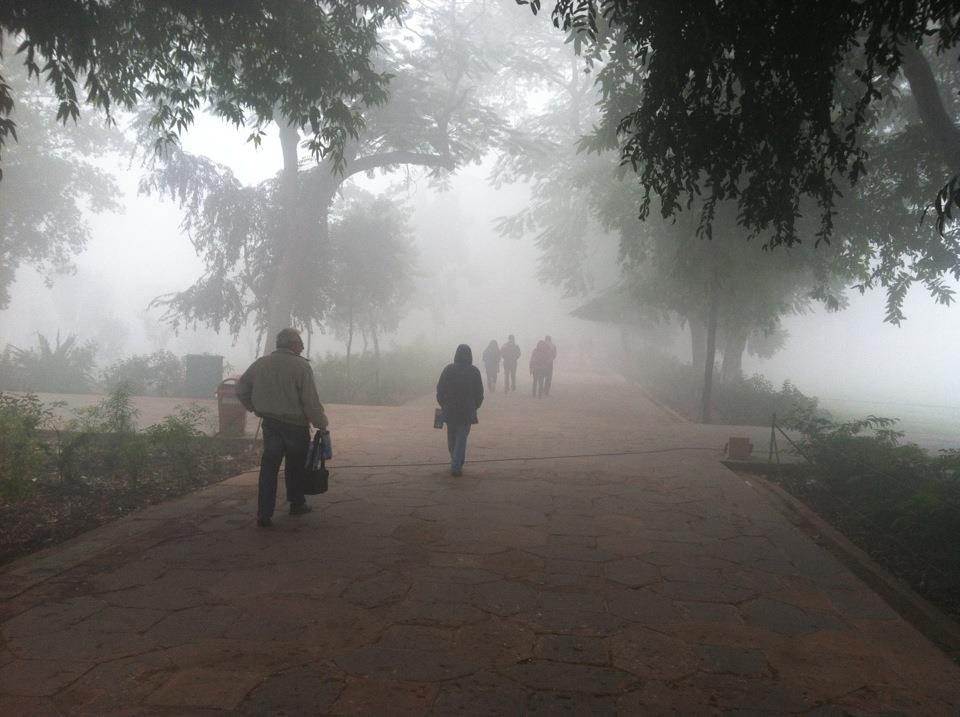
There was only fog.
We woke that morning filled with hope. The rooftop restaurant gave us a commanding view of… absolutely nothing. We stared into a wall of haze, sipping coffee and laughing at the absurdity of our timing. Surely the fog would lift. Surely the Taj Mahal would reveal itself.
Our guide, Kuldeep, assured us everything would be fine. He had led more than 500 tours of the Taj Mahal. He knew everything there was to know about its history and its beauty. We boarded our bus, grabbing our special cloth bags with a picture of the Taj printed on them. These were designed to hold the single water bottle we were allowed to bring inside the property. And we set off with excitement.
Fog. All the way there. Fog in the parking lot. Fog at the security lines. Fog as we walked the long approach toward the main viewing area. Each time Kuldeep stopped to point out an “excellent vantage point,” we nodded with wide eyes, imagining the magnificent structure hidden somewhere in the mist.
We took photos pointing at the picture on our water bottle bags. That was the only Taj Mahal available to us from any vantage point.
As we walked toward the building, we eventually reached the outer wall and finally saw something. White marble appeared just a few feet above our heads. Then the stone vanished again into the haze. The grand dome. The sweeping arches. The delicate inlays. All shrouded in fog.
We were standing beside one of the wonders of the world and could only see a sliver of it.
Our group laughed so much that day. Not because we had traveled halfway around the world only to miss the view. We laughed because we were sharing something unforgettable and slightly ridiculous. We were experiencing a story that would last much longer than a postcard-perfect photograph.
Kuldeep shook his head with disbelief. In all his tours, he had never experienced this. He told us we were a very select group of visitors who could claim something few on Earth could say. We visited the Taj Mahal, but we have never actually seen it.
He was right. I still have never seen the Taj Mahal in person.
The destination was never the prize
You might think this would be a disappointment. But when I look back on that trip, the fog made everything richer.
The destination was never the prize. The people were.
We shared meals and conversations and inside jokes. We tried foods that were new to us. We navigated chaos and beauty side by side. We saw India’s contrasts and colors and kindness. We saw devotion expressed in temples and marketplaces. We saw how history and modern life can exist on top of each other without barriers.
The Taj Mahal is extraordinary. I would love to see it someday with clear skies and a rising sun. Yet I already have what I came for.
When I think about all the amazing places I have been blessed to visit, a pattern appears. I never say, “Remember when we saw that famous landmark.” I say things like:
– Remember how we got lost trying to find it? – Remember the tiny restaurant we discovered afterward? – Remember the guide who became a friend? – Remember that amazing gelato place in the middle of nowhere?
I have my memory of that rooftop breakfast. I have the echo of laughter on the bus. I have the photos of my family and friends pointing to a water bottle bag as if it were the crown jewel of Indian architecture.
The world is full of wonders. But relationships are the wonders that stay with us.
The real bucket list
If someday I return to the Taj Mahal and finally see it, I’ll smile and take it in. But I know the picture etched into my heart is already complete. It’s filled with faces and voices and laughter. It has the beauty of our shared experience.
Checklists are fine for airplanes. But our lives deserve something better.
The best adventures can’t be captured by a camera or a perfect view. What lasts are the relationships made stronger by shared surprises, setbacks, and moments of wonder.
This story, fog and all, remains one of my favorites.
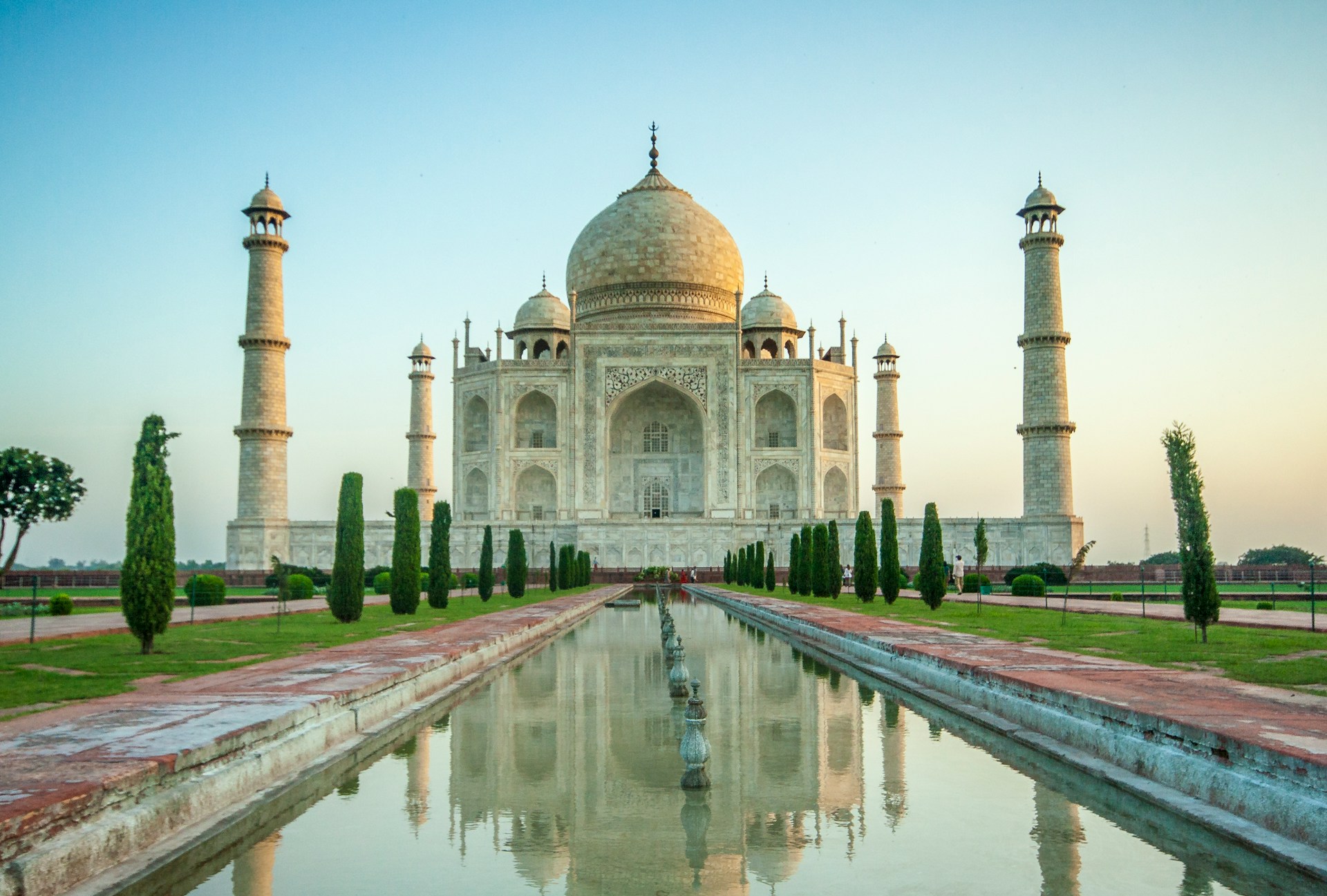
Photo by Mark Harpur on Unsplash showing the majestic beauty of the Taj without fog.
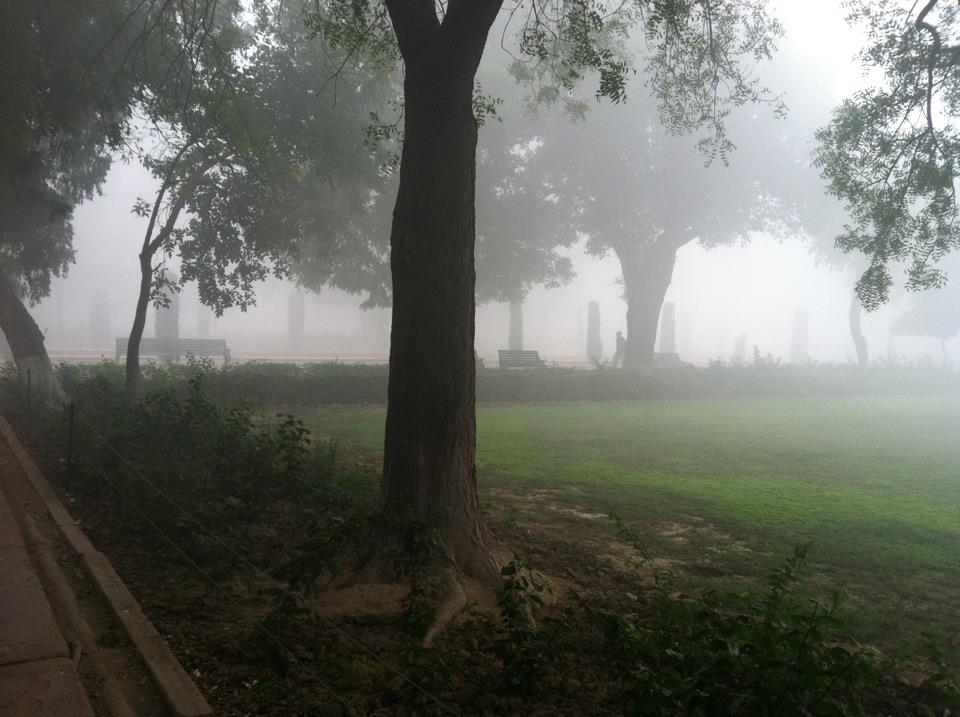
The photos below are mine showing what we actually saw. Unfortunately, the amazing water bottle bag photos are stored on a drive I can’t see…a little bit like that morning in Agra more than a decade ago.
There it is!Can you see the Taj in the background?Can you see the Taj on the right?
I saw The Secret Life of Walter Mitty on an airplane ride recently. At a significant moment in the story, we hear the line, “Beautiful things don’t ask for attention.”
The photographer in the story chooses not to take a coveted photo of the elusive snow leopard. Instead, he simply enjoys the beautiful moment with his own eyes.
Real beauty doesn’t need to perform. It’s authentic and humble, whether anyone stops to notice or not.
A person of character lives this way. They have no need to prove themselves. They show up with kindness, consistency, and honesty. The neighbor who shovels snow from an elderly woman’s driveway before dawn, leaving no trace. Or the teacher who stays late to help a struggling student, never mentioning it to anyone.
The beauty of their character reveals itself in the way they live each day.
Humility makes this possible. It allows a life to shine without glare, to influence others by being genuine. Like mountains that reflect the glow of sunrise or wildflowers blooming unseen in a meadow, people of quiet integrity embody a beauty that doesn’t depend on recognition.
In our culture that rewards noise and spectacle, this is easy to forget. We’re told to broadcast accomplishments and measure our worth by attention. Yet the most meaningful lives belong to those who live true to themselves, free from the need for applause.
The things that endure, whether in people or in nature, carry their beauty without fanfare. They simply are.
There’s a paradox in writing about something that exists most powerfully in silence. Maybe that’s the point. Celebrating this kind of beauty without claiming it for ourselves.
But we can learn to recognize it. To be shaped and inspired by it. And, in our quieter moments, we can strive to live it.
Photo by Patrick Schaudel on Unsplash – some of my fondest memories involve waking up in a tent on crisp mountain mornings, basking in the beautiful glow of the rising sun.
I recently turned 59. Not the big 60 milestone but knocking on the door. In honor of this “almost-milestone” birthday, here are 59 lessons or truths I’ve picked up along the way that may be helpful for you:
Family is the greatest treasure. I’ve learned this from countless dinners, phone calls, and quiet moments of simply being together.
Love grows when you give it away.
Small kindnesses matter more than big speeches. Holding a door, writing a note, or showing up means more than most people will admit.
A campfire has a way of pulling people closer. Some of our best conversations happened with smoke in our face and stars overhead.
Walks in the woods teach patience. The trail never hurries, but it always leads you somewhere good, even if the trail leads back to where you started.
Listening is often better than speaking.
Start, even if you don’t know the finish line.
Forgiveness frees the forgiver.
Work hard, but not so hard you miss the laughter at the dinner table. That laughter is life fuel.
Friendships need tending like gardens.
A calm mind shapes a calm day. How you manage your thoughts sets the tone for how you live, not just how you lead.
Prayer steadies shaky ground.
Scars are inevitable but can become footholds.
Your children and grandchildren remember the times you kept your word. Integrity is how love earns trust over a lifetime.
Music can heal a weary spirit.
Laughter with grandchildren is holy ground. Even the silliest joke can create amazing memories.
Take pictures but also put your phone down.
The best conversations happen unplanned, often on the way to somewhere else.
God shows up in ordinary moments.
Start with what you have, not what you lack.
Be quick to encourage. A word of encouragement can feel like oxygen to someone gasping for air.
Time with your spouse is the best investment you’ll ever make.
A sunrise reminds us the story isn’t over.
Be generous with money, with time, and with grace.
Don’t underestimate a good meal shared…even a bad meal shared.
Patience is a form of love.
Read good books slowly. And read them aloud. I’ll never forget the nights of reading Harry Potter chapters to my kids, one voice carrying us all to another world.
Children teach us as much as we teach them.
A soft answer turns away wrath.
Slow down for sunsets.
Stay curious, even at 59.
Hold babies gently, but often.
Let go of what you can’t control.
Keep your promises, even the small ones. If you can’t be trusted in the little things, no one will trust you with the big ones.
Coffee or a meal with a friend beats any meeting.
Rest is productive.
Gratitude doesn’t just brighten the day. It multiplies joy in ways you can’t measure. It shifts ordinary moments into holy ones.
The journey matters more than the finish line.
Never be too proud to say, “I was wrong.” Or “I don’t know.”
Faith isn’t about knowing all the answers.
Celebrate progress, not perfection.
Trails are better with company. I’ve seen some of the deepest conversations unfold at mile three.
Be the first to say “thank you.”
Find work you believe in, but don’t let it define you.
Love is the legacy worth leaving.
Don’t compare. Contentment is wealth.
Your words can build or break. Choose to build. Always.
A long hug can mend a broken heart. I’ve felt that healing in the arms of family.
Keep learning, keep growing. Continuous improvement matters. Even the smallest step forward is still forward.
Tradition ties generations together, especially if that tradition involves an old family recipe that takes hours and lots of teamwork to make.
Tell stories. Your family needs them. Stories pass down more than facts. They carry history and identity.
Choose wonder over cynicism.
You can’t outgive God, but you can follow His example.
Every season has its beauty. Even Oklahoma summers with their heat and humidity have sunsets worth pausing for (clearly I appreciate sunrises and sunsets).
Be present. Tomorrow isn’t promised.
Family trust is sacred. Break it once, and it may never return the same. Protect it as carefully as you protect your home.
Celebrate the small wins. A child’s smile, a project finished, or a quiet evening with family. Cherish these moments.
Joy often hides in the small, ordinary things.
Life is a gift. At every age, unwrap it with wonder.
4 Bonus Lessons (which means I came up with four more that I didn’t want to exclude)
Adapt or be left behind. If you’re the best buggy whip maker, prepare to adapt when automobiles come out. Don’t cling to the past so tightly that you miss the future.
The quiet miracle of savings and compound interest. Einstein was right. Compound interest is the most amazing thing. Steadily and quietly setting aside a portion of your income builds your wealth over time. It also provides peace of mind and freedom for your future self.
Learn outside your lane. Take time to study things that don’t seem connected to your work. The most important lessons often come from entirely different fields.
Travel opens two windows. When you visit a new country, you learn about their culture, their food, their people. But you also return seeing your own home differently…with gratitude, with perspective, and with fresh eyes.
“If you could erase one memory, what would it be?”
We all have memories that sting. Failures. Regrets. Accidents. Loss. Moments we wish had gone differently. It’s easy to imagine how much lighter life might feel if certain days had never happened.
I wouldn’t erase any of them.
Every memory, good and bad, shapes who I am today. The hard ones give me resilience, humility, and perspective. The joyful ones give me hope and fuel. Together, they’ve woven the story that brought me to this moment.
If I erased regret, I’d lose the lessons.
If I erased pain, I’d lose the growth.
If I erased loss, I’d lose the clarity it gave me about the value of life and love.
I carry each memory with gratitude. Gratitude that even the hardest chapters are part of a larger story. Gratitude that none of it was wasted.
Gratitude that grace has been big enough to redeem even the parts I once wished to forget.
Photo by Jason Thompson on Unsplash – because grace brings life out of the hardest places.
Ideas and wisdom often arrive with familiar roots.
My views on leadership come from my lived experiences and lessons I’ve learned from great builders and thinkers like Andrew Carnegie, Peter Drucker, Tom Peters, Ken Blanchard, Marshall Goldsmith, Zig Ziglar, Stephen Covey, Jack Welch, Seth Godin, Jeff Bezos, Gary Vaynerchuk, Tim Ferriss, Jocko Willink, James Clear, and countless others.
I’ve also worked with amazing managers and mentors over many decades, including a few who taught me what not to do.
Since I find myself often returning to these lessons, I thought it would be useful to write them down in a list for easier reference.
Leadership Foundations
1. Leadership begins in your mind long before it shows up in your actions.
2. Self-awareness is a leader’s first and most enduring responsibility. Know how your actions land, then lead on purpose.
3. Character outweighs credentials over the long haul.
4. Integrity compounds like interest. The longer you hold on to it, the more it grows.
5. Values are the compass that keep you on course when circumstances shift.
6. Humility is the strength to put others first.
7. Influence comes from trust, not job descriptions.
Vision and Direction
8. A leader’s vision must be big enough to inspire, but clear enough to act on today.
9. Clarity reduces fear. Ambiguity fuels it.
10. Momentum builds when people see the destination and believe they can reach it.
11. Vision is not just what you see. It’s what you help others see.
12. The clearer you are about the goal, the less room there is for fear to grow.
13. Purpose is the map. Storms are just temporary detours.
14. Belief in the destination turns small steps into powerful strides.
15. Every action should feel like part of the same bigger story.
16. Sometimes waiting is the boldest move you can make. Strategic patience is powerful (and extremely difficult).
People and Relationships
17. The right people in the right roles multiply results beyond what you can imagine.
18. A culture of respect will outlast a culture of urgency.
19. Listen like the person speaking might hand you the missing puzzle piece.
20. Pass the applause to others but keep the accountability close to your chest.
21. Trust is invisible, but when it’s gone, everything feels heavier.
22. Relationships need regular deposits of attention, not just withdrawals of effort.
23. Helping someone else win creates a tailwind for your own success.
Decision-Making
24. Good decisions blend facts, values, and the courage to act.
25. The first idea is often just the trailhead. Walk farther.
26. Energy without wisdom burns out. Wisdom without energy gathers dust.
27. Choose the option you can defend in the daylight and live with in the dark.
28. A quick, small decision can open doors a perfect plan never reaches.
29. It’s easier to fix a wrong turn early than to build a new road later.
30. Never cash in tomorrow’s credibility for today’s convenience.
Resilience and Adaptability
31. A setback is a classroom, not a graveyard.
32. Flexibility is a skill, not a personality trait. Practice it.
33. Change is the proving ground where talk becomes action. Priorities sharpen, assumptions get tested, and leadership shows up in decisions, owners, and dates. If nothing changes (no decision, no owner, no date) it was only talk.
34. Adapt your tactics, but never your core.
35. The best views are earned with effort you once thought impossible.
36. Challenges test your limits so you can discover you’re stronger than you ever imagined.
37. Sticking with it usually turns “almost” into “done.”
Growth and Learning
38. The best questions are the ones you don’t yet know how to answer.
39. The moment you stop learning, you stop leading. Sometimes before you notice.
40. Pride blocks the front door to growth. Curiosity leaves it wide open.
41. Ask for feedback before circumstances force it on you.
42. Teach your knowledge, always remembering that your actions teach your values.
43. Every conversation nudges someone closer to, or further from, their best self.
44. Failure carries lessons that success hides. Corollary: High water covers a lot of stumps.
Impact and Legacy
45. Success without significance is empty.
46. The influence you have on people’s lives will outlast your achievements.
47. Your legacy is written in the lives you touch, not in the titles you hold.
48. Leadership is something you borrow from the future. It must be returned in good condition.
49. The most meaningful titles are the ones people give you, not the ones on your nameplate.
50. Think in decades when deciding what to plant today.
51. Your success is multiplied when others stand taller because of you.
52. The best proof of leadership is when growth continues without your hand on the wheel.
53. Leave every place and every person better than they were when you arrived.
Communication & Culture
54. Say the quiet part kindly and clearly. Clarity without kindness bruises. Kindness without clarity confuses.
55. Stories travel farther (and faster) than memos. Stories move people. Memos inform them. Stories turn intention into action.
56. Consistency in small signals (tone, timing, follow-through) builds culture faster than slogans.
57. Meetings should create movement. Reserve live time for decisions and collaboration. End with owners and dates. If it’s just a podcast, send an email. If only two people need to talk, make it a call and give everyone else their time back.
58. Celebrate progress out loud so people know what “right” looks like.
59. Honesty scales when leaders go first. Name the hard thing and show how to address it.
60. Culture forms around what you tolerate as much as what you teach.
Execution & Accountability
61. Strategy stalls without a calendar. Put names and dates on intentions.
62. Start now. Ship one useful thing today. Ride the wave of momentum that follows.
63. Priorities aren’t what you say first. They’re what you do first.
64. When everything is urgent, nothing is important. Choose the one thing that unlocks the next three.
65. Inspect what you expect. Review, refine, and recommit in frequent loops.
66. Own the miss publicly and fix it quickly. Speed heals trust.
67. Scoreboards matter. People work smarter when progress (or lack thereof) is visible.
Faith, Purpose & Centering
68. Quiet time isn’t empty time. It’s where courage and wisdom refuel.
69. Purpose steadies the hands when the work gets heavy.
70. Gratitude turns pressure into perspective.
71. Servant leadership begins by asking, “Who needs strength from me today?”
72. Hope is a discipline. Practice it especially when results lag.
Leading Through Change & Uncertainty
73. Name the uncertainty. People handle the unknown better when it has boundaries.
74. Trade predictions for scenarios. Prepare for several futures, not just your favorite one.
75. Replan without blame. The map changes when the terrain does.
76. Communicate more than feels necessary. The vacuum of silence fills quickly with speculation.
77. Keep experiments small and reversible, so learning is fast and affordable.
78. Endurance is contagious. Your calm can be the team’s shelter in a hard storm.
Coaching & Talent Development
79. Grow people on purpose. Make development a standing agenda item.
80. Coach with questions that build judgment and ownership.
81. When you delegate the result, delegate the authority to achieve it. Authority and responsibility should be in balance.
82. Set intent and boundaries. Agree on check-ins. Then step back so the team can step up.
83. Size stretch work to the person’s readiness. Provide the right challenge, real help, and visible sponsorship. It’s okay if they reach the result by a different route than yours.
84. Build a bench before you need one. Succession begins on day one.
Supportive Organizational Behavior
85. Make it safe to disagree. Invite the view that challenges yours.
86. Credit ideas to their source. Recognition fuels contribution.
87. Write agendas as outcomes, not topics.
Systems Thinking & Process
88. Correct the mistake and improve the system that allowed it.
89. Turn recurring work into checklists and rhythms so excellence is repeatable. Then automate it.
90. Map the flow of work end to end. Prune any step that adds no value. Unblock the rest.
91. Measure what matters. Review it at a pace that improves the work.
Stakeholders & Customer Focus
92. Start with the customer and work back to today’s priorities.
93. Define success in customer outcomes, then align processes, metrics, and rewards.
94. Close the loop by telling people what changed and why.
Conflict & Courageous Conversations
95. Address tension early while the knot is small.
96. Separate the person from the problem. Aim at the issue, not the identity.
97. Put the real issue (the skunk) on the table. Agree on facts before you debate fixes.
Energy & Well-Being
98. Protect time for deep work and recovery so decisions are sharp.
99. Model healthy boundaries. Your example sets the team’s norms.
100. Choose a sustainable pace over heroic sprints. Consistency wins the long game.
Leadership is a skill to be learned and practiced over a lifetime. It grows through steady reflection, small improvements, course corrections, and new discoveries. These reminders pull us back to what matters when life and work get noisy.
Whether you lead a company, a classroom, a project, or a family, your influence reaches far beyond the moment.
The truest measure of leadership is the people we serve and the leaders they become.
Photo by Marcus Woodbridge on Unsplash – I love the idea of a lighthouse showing the way, standing firm and steady especially when the waves are their scariest.








 Grandpa Bob Encouraging Leadership
You must be logged in to post a comment.